
Search
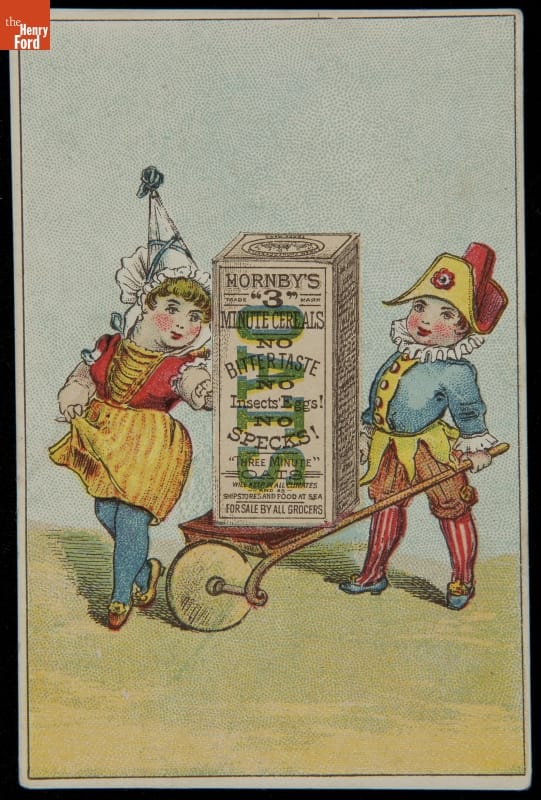
- Trade Card for Hornby's Steam Cooked Oats, 1870-1900 - In the last third of the nineteenth century, an unprecedented variety of consumer goods and services flooded the American market. Advertisers, armed with new methods of color printing, bombarded potential customers with trade cards. Americans enjoyed and often saved the vibrant little advertisements found in product packages or distributed by local merchants. Many survive as historical records of commercialism in the United States.
- 1870-1900
- Collections - Artifact
Trade Card for Hornby's Steam Cooked Oats, 1870-1900
In the last third of the nineteenth century, an unprecedented variety of consumer goods and services flooded the American market. Advertisers, armed with new methods of color printing, bombarded potential customers with trade cards. Americans enjoyed and often saved the vibrant little advertisements found in product packages or distributed by local merchants. Many survive as historical records of commercialism in the United States.
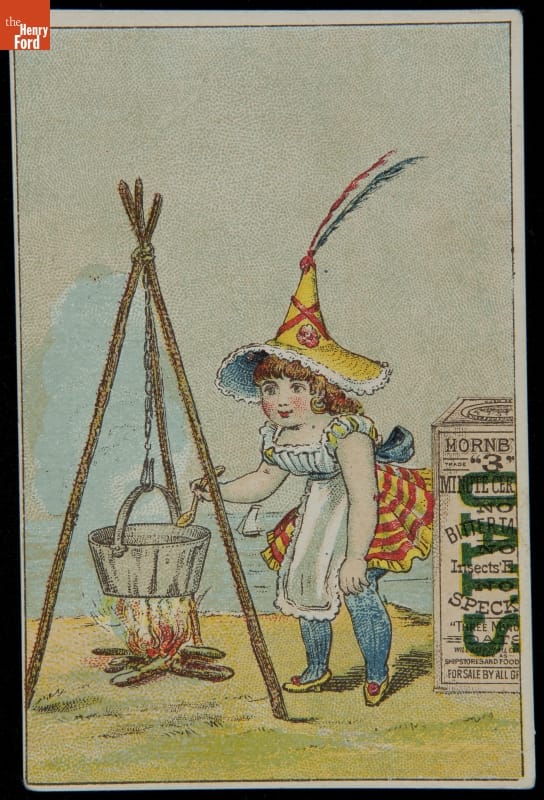
- Trade Card for Hornby's Steam Cooked Oats, 1870-1900 - In the last third of the nineteenth century, an unprecedented variety of consumer goods and services flooded the American market. Advertisers, armed with new methods of color printing, bombarded potential customers with trade cards. Americans enjoyed and often saved the vibrant little advertisements found in product packages or distributed by local merchants. Many survive as historical records of commercialism in the United States.
- 1870-1900
- Collections - Artifact
Trade Card for Hornby's Steam Cooked Oats, 1870-1900
In the last third of the nineteenth century, an unprecedented variety of consumer goods and services flooded the American market. Advertisers, armed with new methods of color printing, bombarded potential customers with trade cards. Americans enjoyed and often saved the vibrant little advertisements found in product packages or distributed by local merchants. Many survive as historical records of commercialism in the United States.
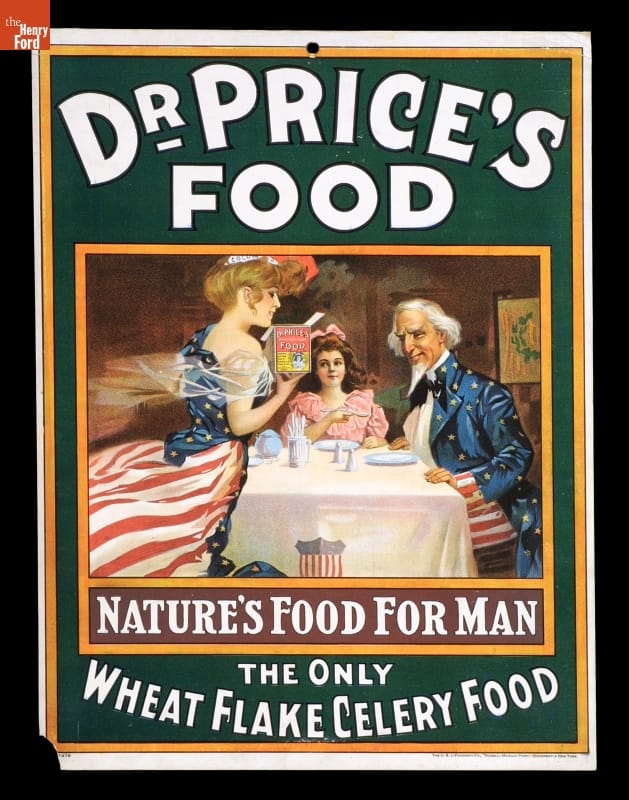
- Advertising Poster, "Dr. Price's Food, Nature's Food for Man, the Only Wheat Flake Celery Food," circa 1910 - Celery, the vegetable eaten around the world, attracted the attention of health food entrepreneurs like Dr. Vincent C. Price (1832-1914). He purchased Tryabita Celery Food Company in Battle Creek, Michigan, in 1902 and operated it as Price Cereal Food Company. He also produced and marketed Dr. Price's Wheat Flake Celery Food as essential for the health of vegetarians and the infirm.
- circa 1910
- Collections - Artifact
Advertising Poster, "Dr. Price's Food, Nature's Food for Man, the Only Wheat Flake Celery Food," circa 1910
Celery, the vegetable eaten around the world, attracted the attention of health food entrepreneurs like Dr. Vincent C. Price (1832-1914). He purchased Tryabita Celery Food Company in Battle Creek, Michigan, in 1902 and operated it as Price Cereal Food Company. He also produced and marketed Dr. Price's Wheat Flake Celery Food as essential for the health of vegetarians and the infirm.
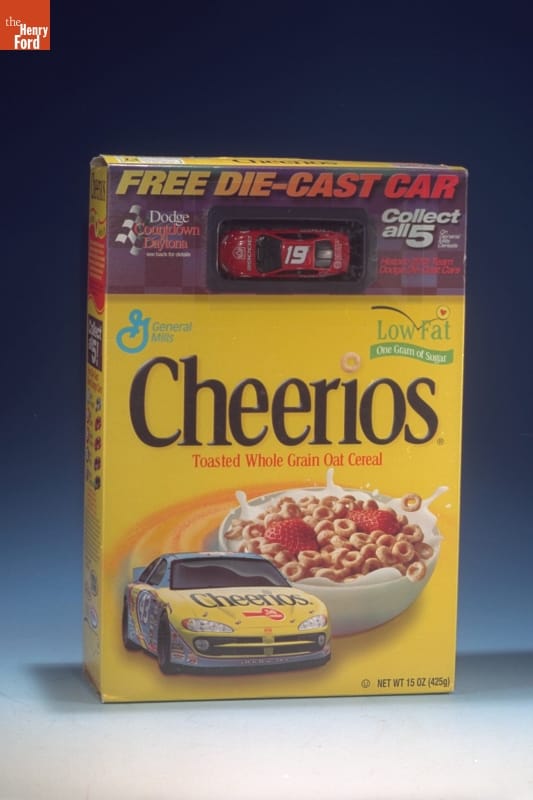
- Cheerios Breakfast Cereal Featuring Free Die-Cast Racing Car, 2001 - Stock car racing was the fastest-growing sport in the United States in the 1990s. NASCAR's success was reflected in this cereal box. Team sponsors long consisted mostly of companies associated with the automobile industry, or food and beverage makers whose products were sold at race tracks. By 2001, even breakfast cereals found potential customers in NASCAR's growing fan base.
- 2001
- Collections - Artifact
Cheerios Breakfast Cereal Featuring Free Die-Cast Racing Car, 2001
Stock car racing was the fastest-growing sport in the United States in the 1990s. NASCAR's success was reflected in this cereal box. Team sponsors long consisted mostly of companies associated with the automobile industry, or food and beverage makers whose products were sold at race tracks. By 2001, even breakfast cereals found potential customers in NASCAR's growing fan base.
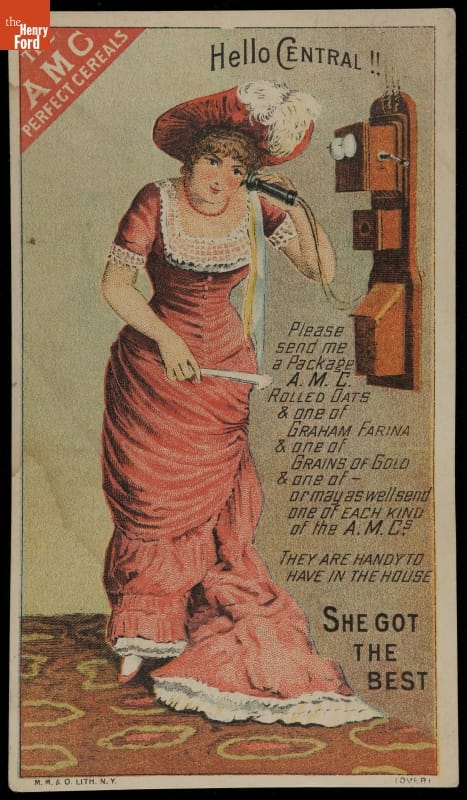
- Trade Card for A.M.C. Perfect Cereals, Akron Milling Company, 1885-1895 - This trade card uses the cachet of the home telephone to market oatmeal as a luxury product. In the 1880s telephones were still new and expensive, used only by businesses, hotels, and the affluent. On the trade card, a well-dressed woman calls the operator from her classic three box wall phone, urgently requesting AMC cereal products. The newest technologies lent an air of status to everyday products.
- 1885-1895
- Collections - Artifact
Trade Card for A.M.C. Perfect Cereals, Akron Milling Company, 1885-1895
This trade card uses the cachet of the home telephone to market oatmeal as a luxury product. In the 1880s telephones were still new and expensive, used only by businesses, hotels, and the affluent. On the trade card, a well-dressed woman calls the operator from her classic three box wall phone, urgently requesting AMC cereal products. The newest technologies lent an air of status to everyday products.
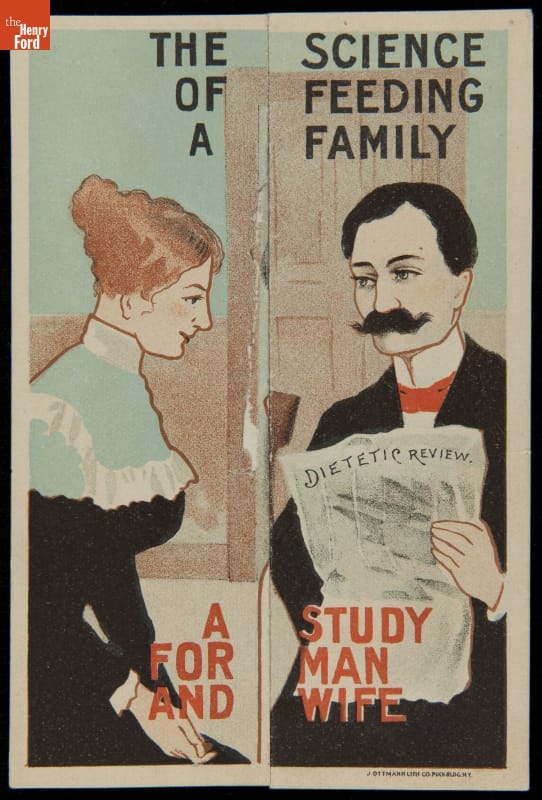
- Trade Card for the Franklin Mills Company, "The Science of Feeding a Family," circa 1900 - In the last third of the nineteenth century, an unprecedented variety of consumer goods and services flooded the American market. Advertisers, armed with new methods of color printing, bombarded potential customers with trade cards. Americans enjoyed and often saved the vibrant little advertisements found in product packages or distributed by local merchants. Many survive as historical records of commercialism in the United States.
- circa 1900
- Collections - Artifact
Trade Card for the Franklin Mills Company, "The Science of Feeding a Family," circa 1900
In the last third of the nineteenth century, an unprecedented variety of consumer goods and services flooded the American market. Advertisers, armed with new methods of color printing, bombarded potential customers with trade cards. Americans enjoyed and often saved the vibrant little advertisements found in product packages or distributed by local merchants. Many survive as historical records of commercialism in the United States.