
Search
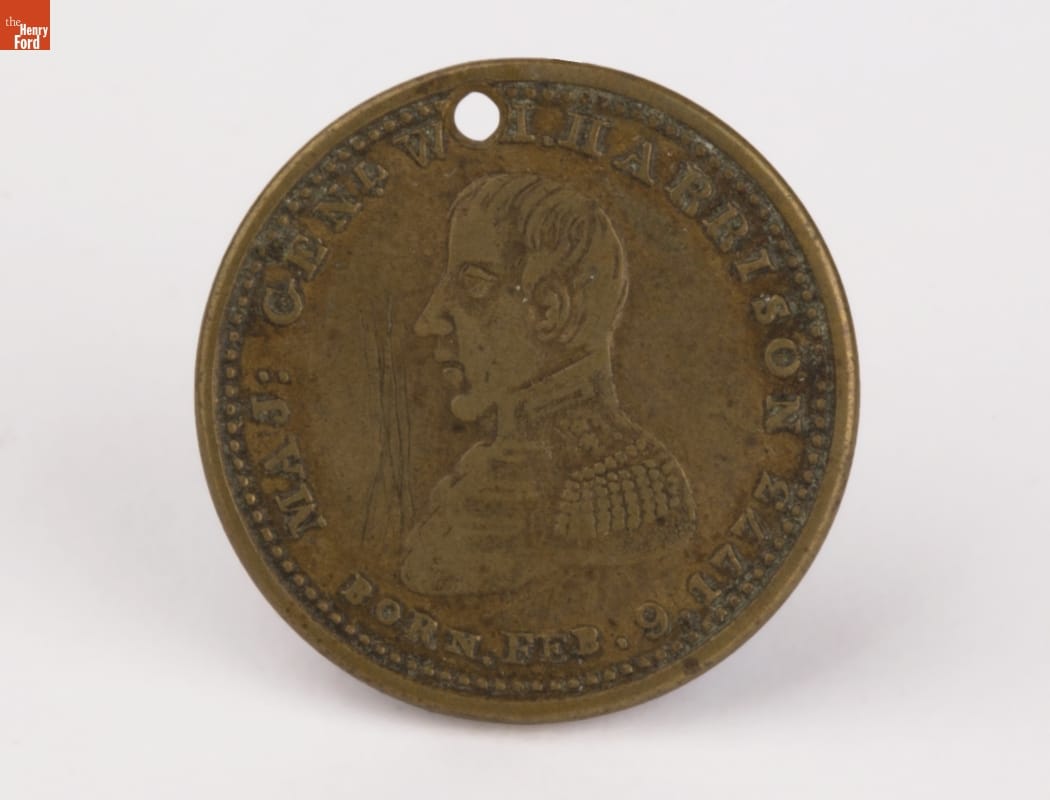
- William Henry Harrison Campaign Medal, 1840 - William Henry Harrison gained national fame in 1811 when he defeated a band of Native Americans at Tippecanoe near present-day Lafayette, Indiana. Though Harrison retired from the army in 1814, most Americans remembered his military service. When he ran for president in 1840, campaign slogans, songs and materials, such as this coin, constantly referred to Harrison as Tippecanoe.
- 1840
- Collections - Artifact
William Henry Harrison Campaign Medal, 1840
William Henry Harrison gained national fame in 1811 when he defeated a band of Native Americans at Tippecanoe near present-day Lafayette, Indiana. Though Harrison retired from the army in 1814, most Americans remembered his military service. When he ran for president in 1840, campaign slogans, songs and materials, such as this coin, constantly referred to Harrison as Tippecanoe.
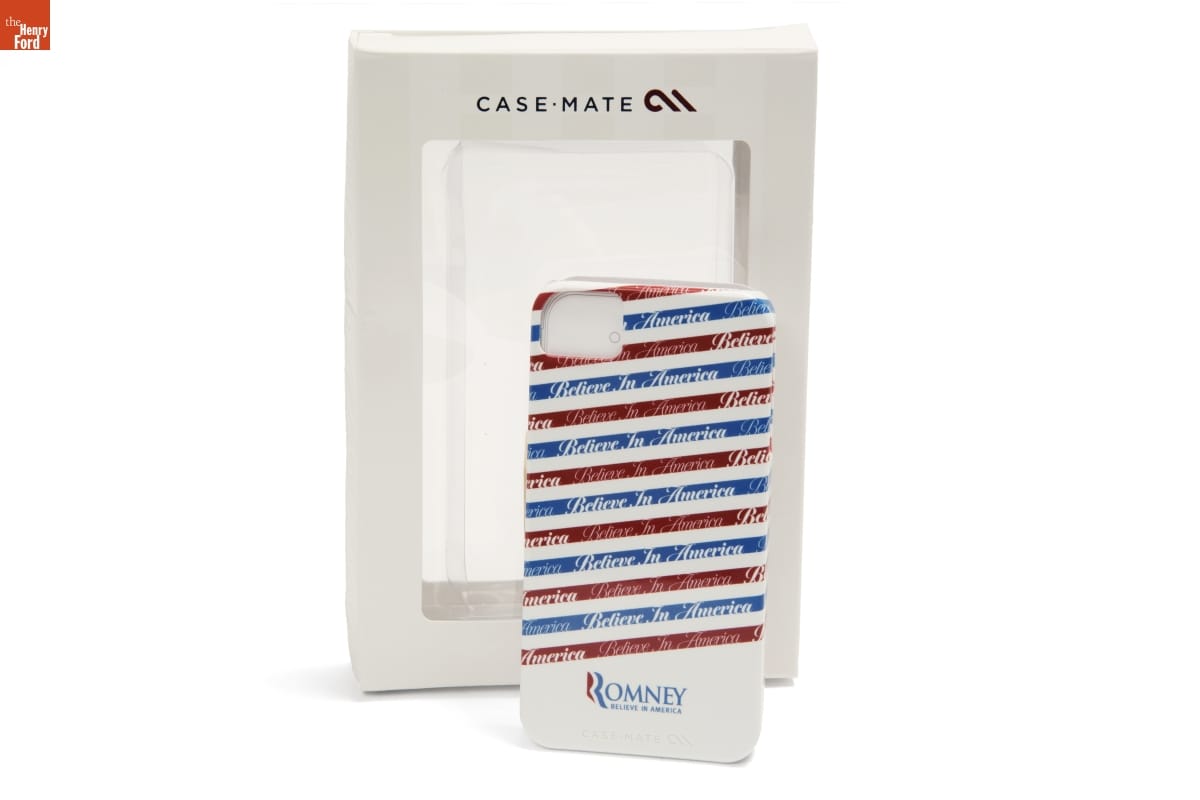
- Romney "Believe in America" iPhone Case, 2012 - Former Massachusetts governor Mitt Romney faced a field of Republican luminaries in a bruising intraparty campaign to become the Party's 2012 Presidential nominee. Republican delegates formally nominated Romney after a long primary campaign. Romney chose Wisconsin U.S. Representative Paul Ryan as his running mate. Their ticket lost to the Democratic incumbents, President Barack Obama and Vice President Joseph Biden.
- 2012
- Collections - Artifact
Romney "Believe in America" iPhone Case, 2012
Former Massachusetts governor Mitt Romney faced a field of Republican luminaries in a bruising intraparty campaign to become the Party's 2012 Presidential nominee. Republican delegates formally nominated Romney after a long primary campaign. Romney chose Wisconsin U.S. Representative Paul Ryan as his running mate. Their ticket lost to the Democratic incumbents, President Barack Obama and Vice President Joseph Biden.
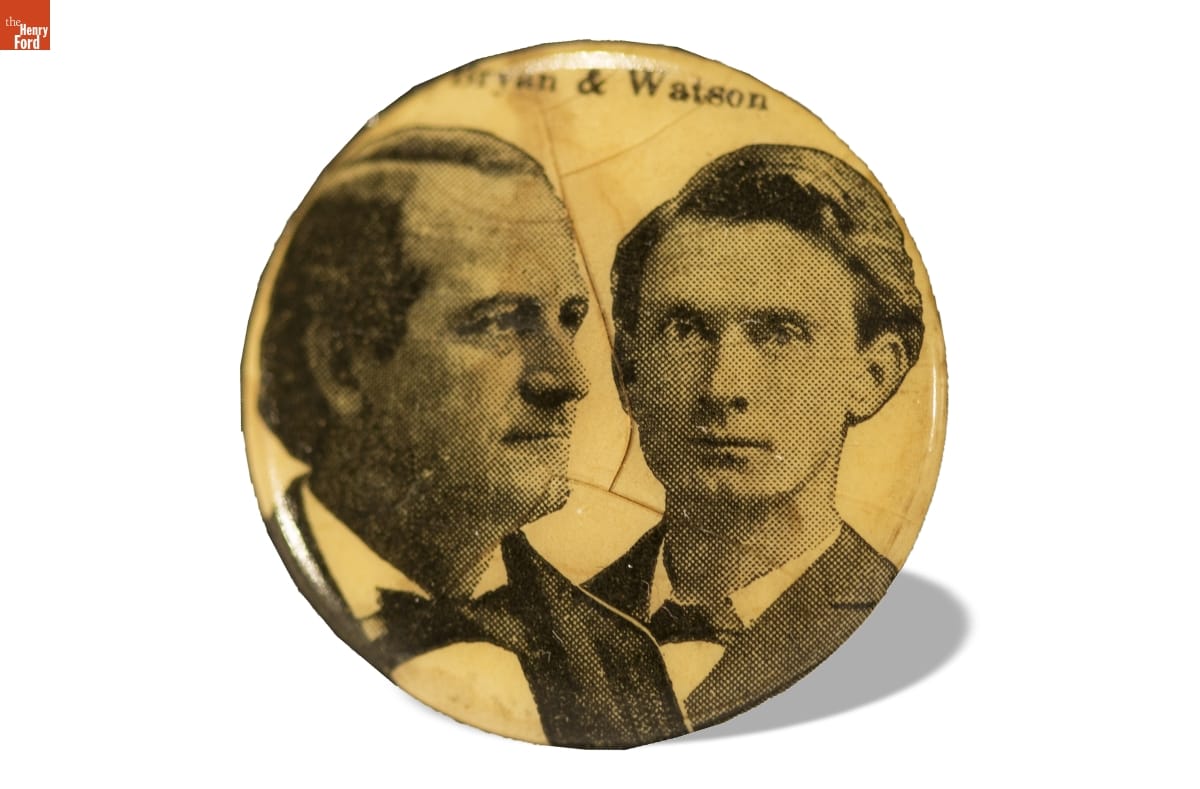
- Bryan-Watson Campaign Button, 1896 - In 1896, William Jennings Bryan captured both the Democratic and Populist Party's presidential nominations. Each party, however, nominated their own vice presidential candidates. The Democrats chose Arthur Sewall. The Populists chose Thomas E. Watson--pictured with Bryan on this campaign button. Neither ticket won. Bryan lost to the Republican nominee, William McKinley.
- 1896
- Collections - Artifact
Bryan-Watson Campaign Button, 1896
In 1896, William Jennings Bryan captured both the Democratic and Populist Party's presidential nominations. Each party, however, nominated their own vice presidential candidates. The Democrats chose Arthur Sewall. The Populists chose Thomas E. Watson--pictured with Bryan on this campaign button. Neither ticket won. Bryan lost to the Republican nominee, William McKinley.
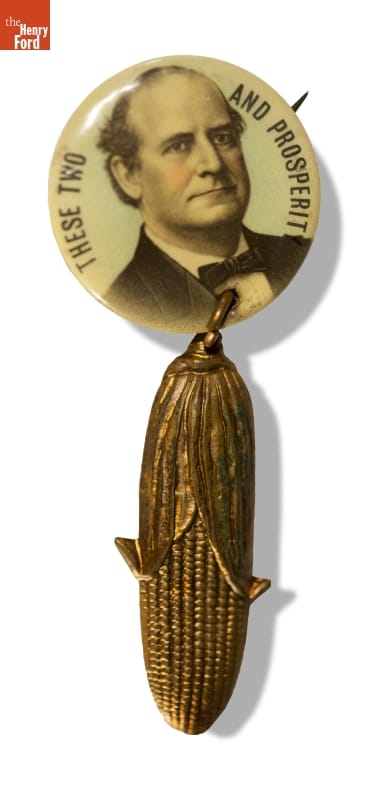
- William Bryan Campaign Button, 1908 - William Jennings Bryan made his third and last attempt to become president in 1908. Bryan and his running mate, Indiana Senator John Kern, tried to distinguish themselves from their Republican opponents by championing a variety of domestic reforms. It didn't work. Voters chose the safe, well-qualified William Howard Taft -- President Roosevelt's hand-picked successor.
- 1908
- Collections - Artifact
William Bryan Campaign Button, 1908
William Jennings Bryan made his third and last attempt to become president in 1908. Bryan and his running mate, Indiana Senator John Kern, tried to distinguish themselves from their Republican opponents by championing a variety of domestic reforms. It didn't work. Voters chose the safe, well-qualified William Howard Taft -- President Roosevelt's hand-picked successor.
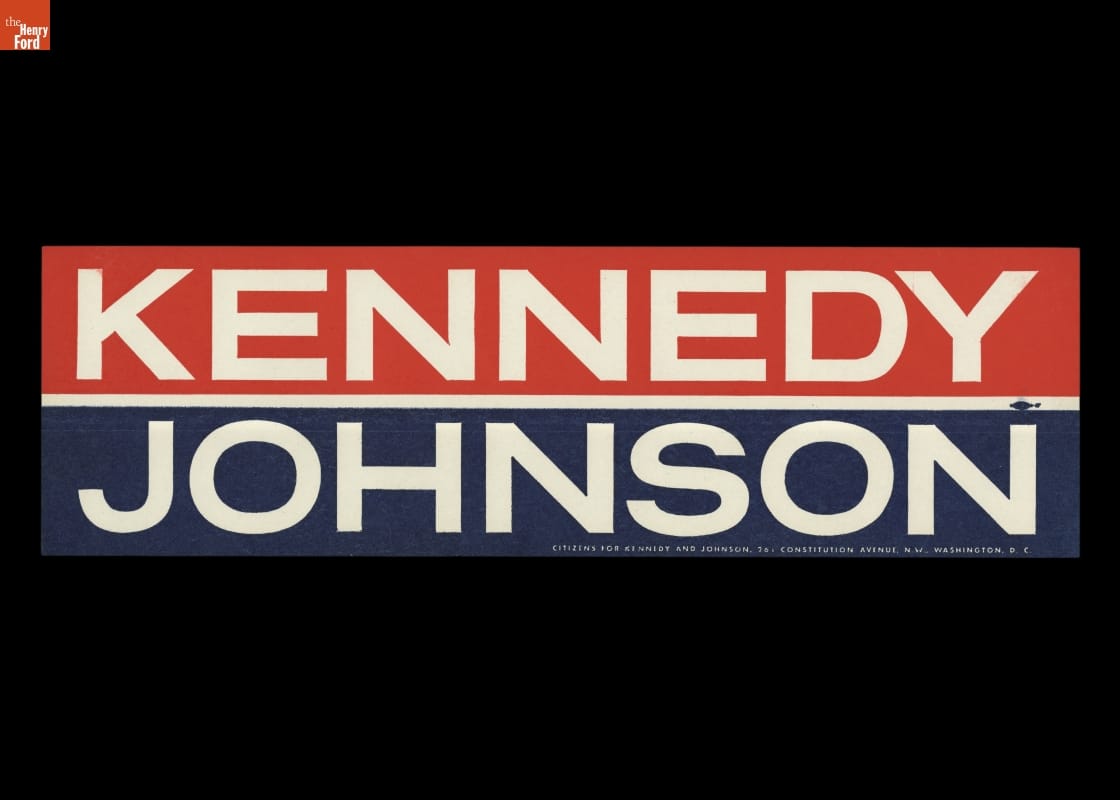
- Political Campaign Bumper Sticker, "Kennedy / Johnson," 1960 - This bumper sticker was produced for the 1960 Kennedy-Johnson presidential campaign. After John F. Kennedy defeated Texas Senator Lyndon B. Johnson in the 1960 Democratic primary, Kennedy named Johnson as his running mate. Johnson's addition brought on board an experienced old-school politician, and also provided a better chance of victory in the key swing states.
- 1960
- Collections - Artifact
Political Campaign Bumper Sticker, "Kennedy / Johnson," 1960
This bumper sticker was produced for the 1960 Kennedy-Johnson presidential campaign. After John F. Kennedy defeated Texas Senator Lyndon B. Johnson in the 1960 Democratic primary, Kennedy named Johnson as his running mate. Johnson's addition brought on board an experienced old-school politician, and also provided a better chance of victory in the key swing states.
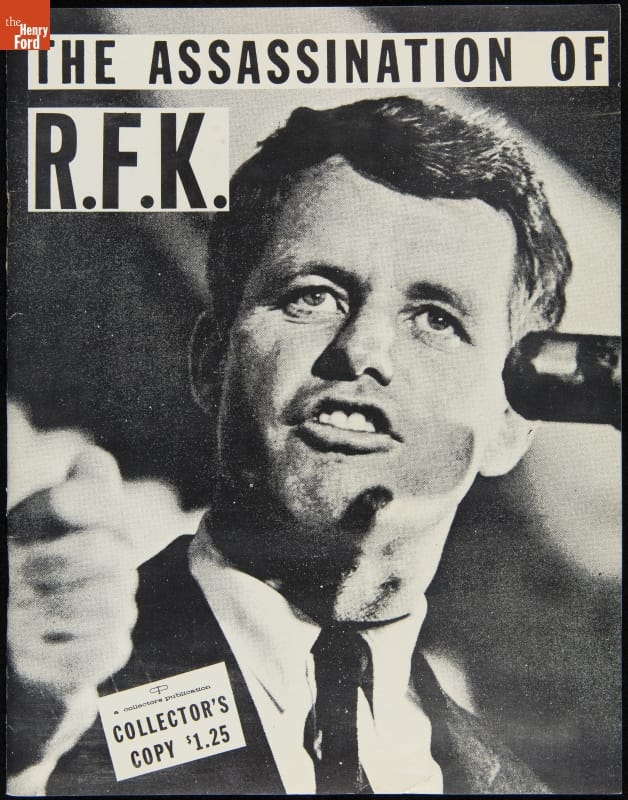
- Commemorative Book, "The Assassination of R.F.K.," 1968 - In 1968, many Americans asked themselves "What is happening to our country?" In June, Americans -- still reeling from the recent assassination of Martin Luther King, Jr. -- learned that Democratic Presidential candidate Robert "Bobby" Kennedy had been shot and mortally wounded. Many had hoped the brother of slain-President John F. Kennedy could restore faith in a country seemingly slipping into social and political turmoil.
- 1968
- Collections - Artifact
Commemorative Book, "The Assassination of R.F.K.," 1968
In 1968, many Americans asked themselves "What is happening to our country?" In June, Americans -- still reeling from the recent assassination of Martin Luther King, Jr. -- learned that Democratic Presidential candidate Robert "Bobby" Kennedy had been shot and mortally wounded. Many had hoped the brother of slain-President John F. Kennedy could restore faith in a country seemingly slipping into social and political turmoil.
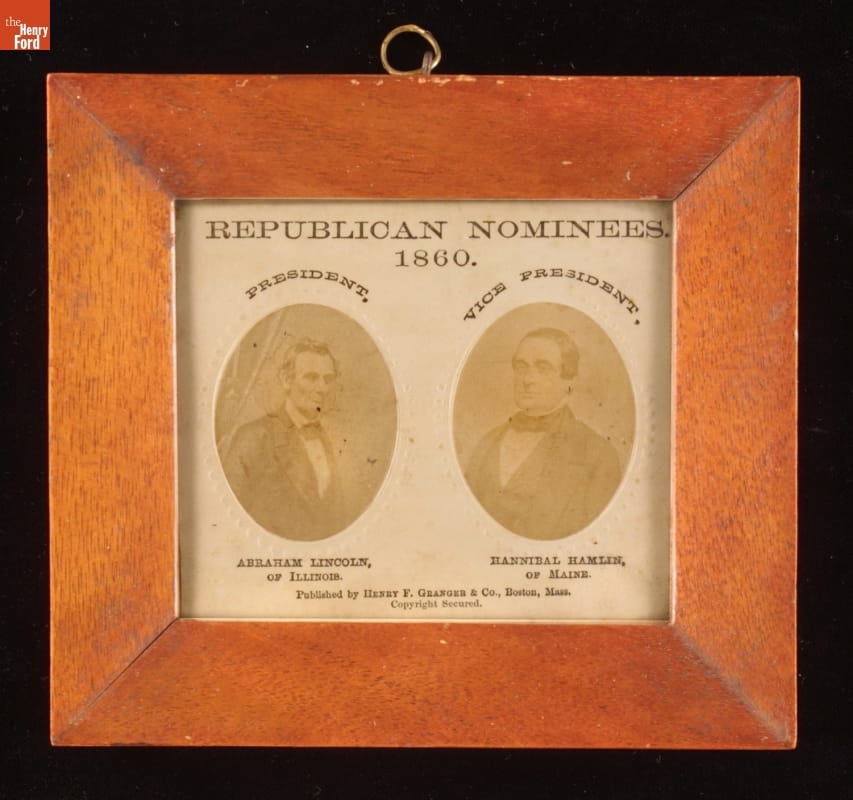
- Framed Photographs of Republican Presidential Nominees for President and Vice-President, 1860 - The emerging Republican Party favored a moderate, geographically balanced ticket for the 1860 presidential election. Party leaders nominated Abraham Lincoln of Illinois and Hannibal Hamlin of Maine for president and vice president. The two men had never met, but both were strong orators who opposed extending slavery into western territories. Lincoln-Hamlin would carry the election, despite receiving almost no Southern support.
- 1860
- Collections - Artifact
Framed Photographs of Republican Presidential Nominees for President and Vice-President, 1860
The emerging Republican Party favored a moderate, geographically balanced ticket for the 1860 presidential election. Party leaders nominated Abraham Lincoln of Illinois and Hannibal Hamlin of Maine for president and vice president. The two men had never met, but both were strong orators who opposed extending slavery into western territories. Lincoln-Hamlin would carry the election, despite receiving almost no Southern support.
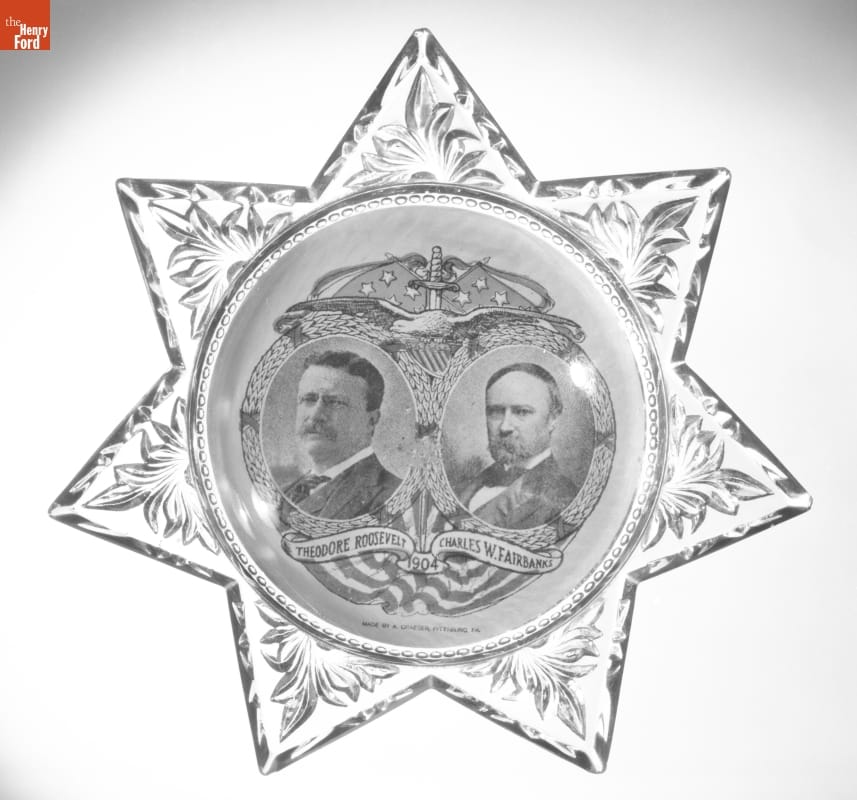
- Roosevelt-Fairbanks Campaign Paperweight, 1904 - Having assumed the presidency when McKinley was assassinated in 1901, Theodore Roosevelt was already immensely popular when he ran for president in 1904. His colorful and exuberant personality, range of interests and achievements, and skillful use of media gained him a wide following. Picking conservative Senator Charles W. Fairbanks as his running mate, Roosevelt was reelected in a landslide.
- 1904
- Collections - Artifact
Roosevelt-Fairbanks Campaign Paperweight, 1904
Having assumed the presidency when McKinley was assassinated in 1901, Theodore Roosevelt was already immensely popular when he ran for president in 1904. His colorful and exuberant personality, range of interests and achievements, and skillful use of media gained him a wide following. Picking conservative Senator Charles W. Fairbanks as his running mate, Roosevelt was reelected in a landslide.
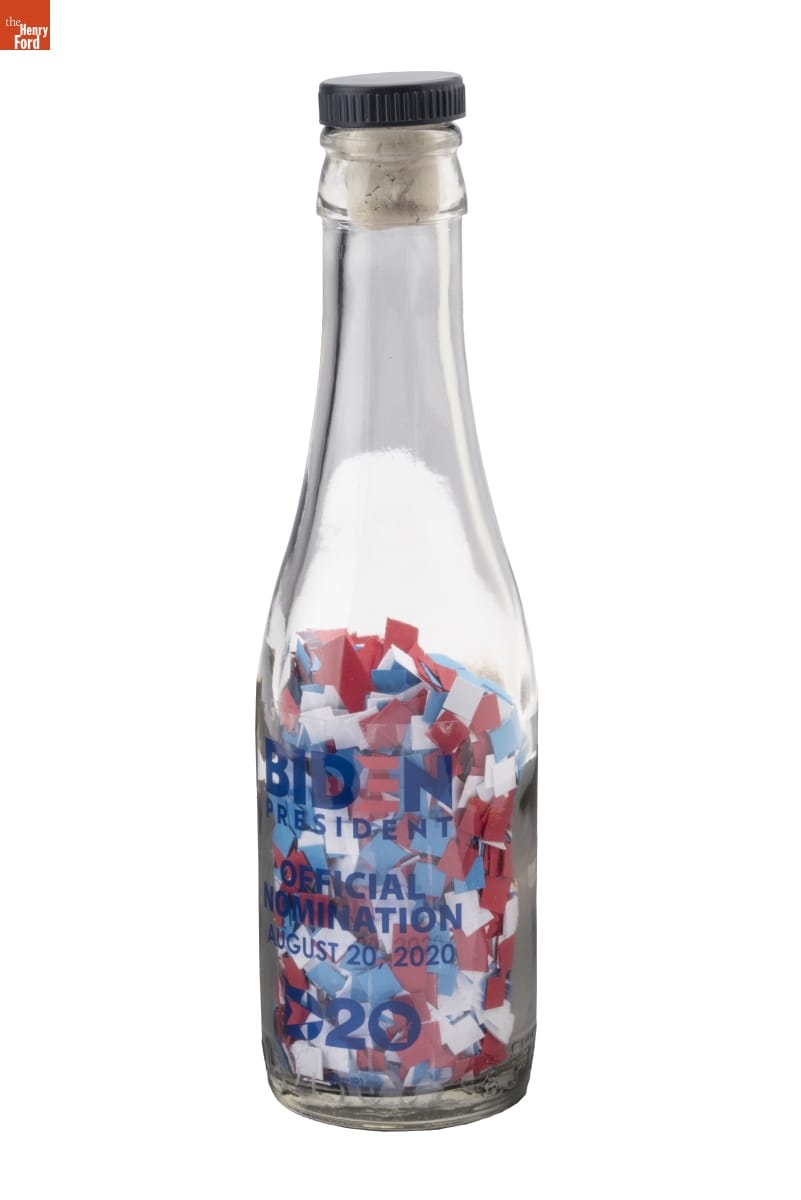
- Bottle of Confetti, Presented at 2020 Democratic National Convention, August 2020 - Democrats held a shortened and downsized national convention in August 2020 in Milwaukee, Wisconsin, due to the COVID-19 pandemic. Many meetings and activities were held virtually during the three-day convention. Still, delegates arrived and received campaign material supporting their nominees, Joseph "Joe" Biden and Kamala Harris. The ticket went on to win the election.
- 17 August 2020 - 20 August 2020
- Collections - Artifact
Bottle of Confetti, Presented at 2020 Democratic National Convention, August 2020
Democrats held a shortened and downsized national convention in August 2020 in Milwaukee, Wisconsin, due to the COVID-19 pandemic. Many meetings and activities were held virtually during the three-day convention. Still, delegates arrived and received campaign material supporting their nominees, Joseph "Joe" Biden and Kamala Harris. The ticket went on to win the election.
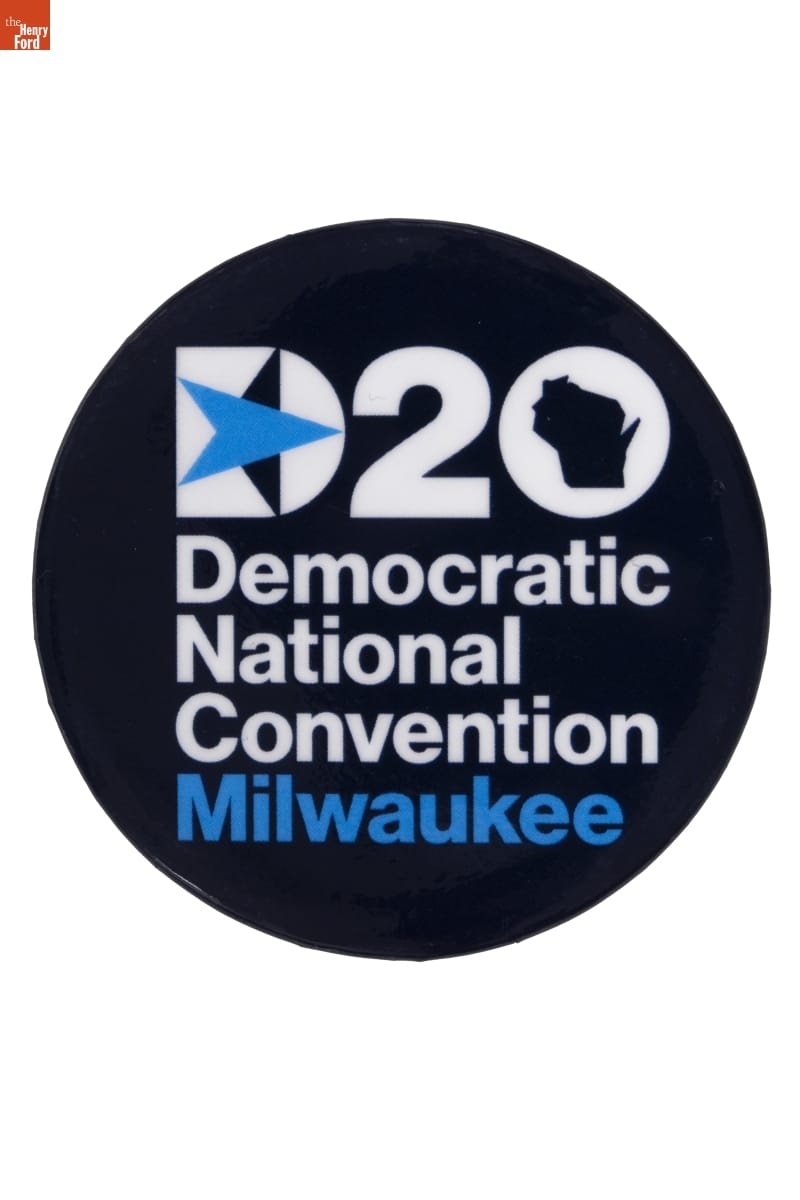
- Convention Button, Presented at 2020 Democratic National Convention, August 2020 - Democrats held a shortened and downsized national convention in August 2020 in Milwaukee, Wisconsin, due to the COVID-19 pandemic. Many meetings and activities were held virtually during the three-day convention. Still, delegates arrived and received campaign material supporting their nominees, Joseph "Joe" Biden and Kamala Harris. The ticket went on to win the election.
- 17 August 2020 - 20 August 2020
- Collections - Artifact
Convention Button, Presented at 2020 Democratic National Convention, August 2020
Democrats held a shortened and downsized national convention in August 2020 in Milwaukee, Wisconsin, due to the COVID-19 pandemic. Many meetings and activities were held virtually during the three-day convention. Still, delegates arrived and received campaign material supporting their nominees, Joseph "Joe" Biden and Kamala Harris. The ticket went on to win the election.