
Search
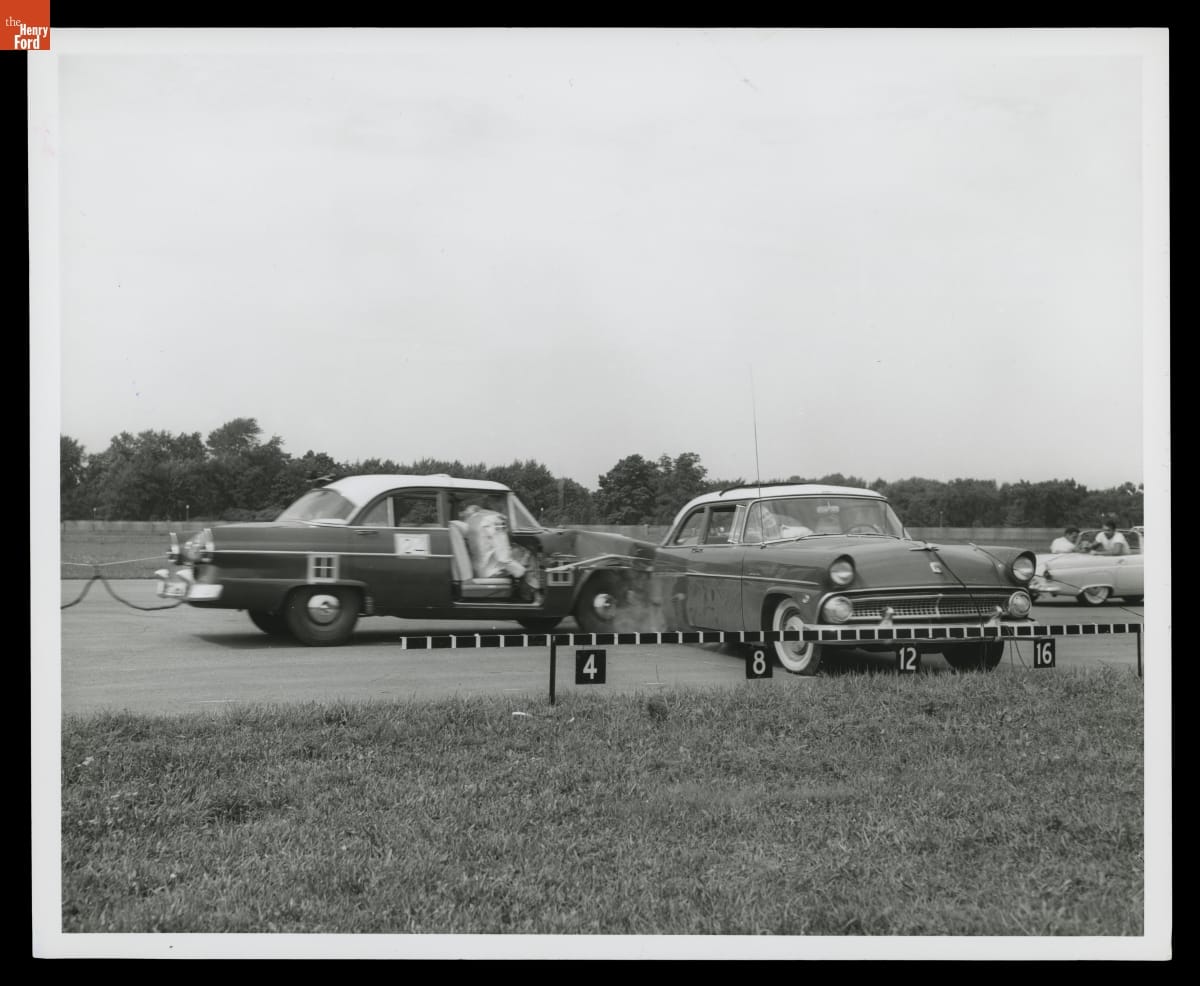
- Crash Testing at Ford Test Track, Dearborn, Michigan, 1955 - As automobiles grew larger and faster, dangers from accidents increased. Automakers began testing their vehicles in controlled collisions. In the 1950s, anthropomorphic dummies were added to the tests, to observe a crash's impact on the human body. More recently, dummies were equipped with highly sensitive instruments measuring the precise speeds and forces involved in a collision.
- August 16, 1955
- Collections - Artifact
Crash Testing at Ford Test Track, Dearborn, Michigan, 1955
As automobiles grew larger and faster, dangers from accidents increased. Automakers began testing their vehicles in controlled collisions. In the 1950s, anthropomorphic dummies were added to the tests, to observe a crash's impact on the human body. More recently, dummies were equipped with highly sensitive instruments measuring the precise speeds and forces involved in a collision.
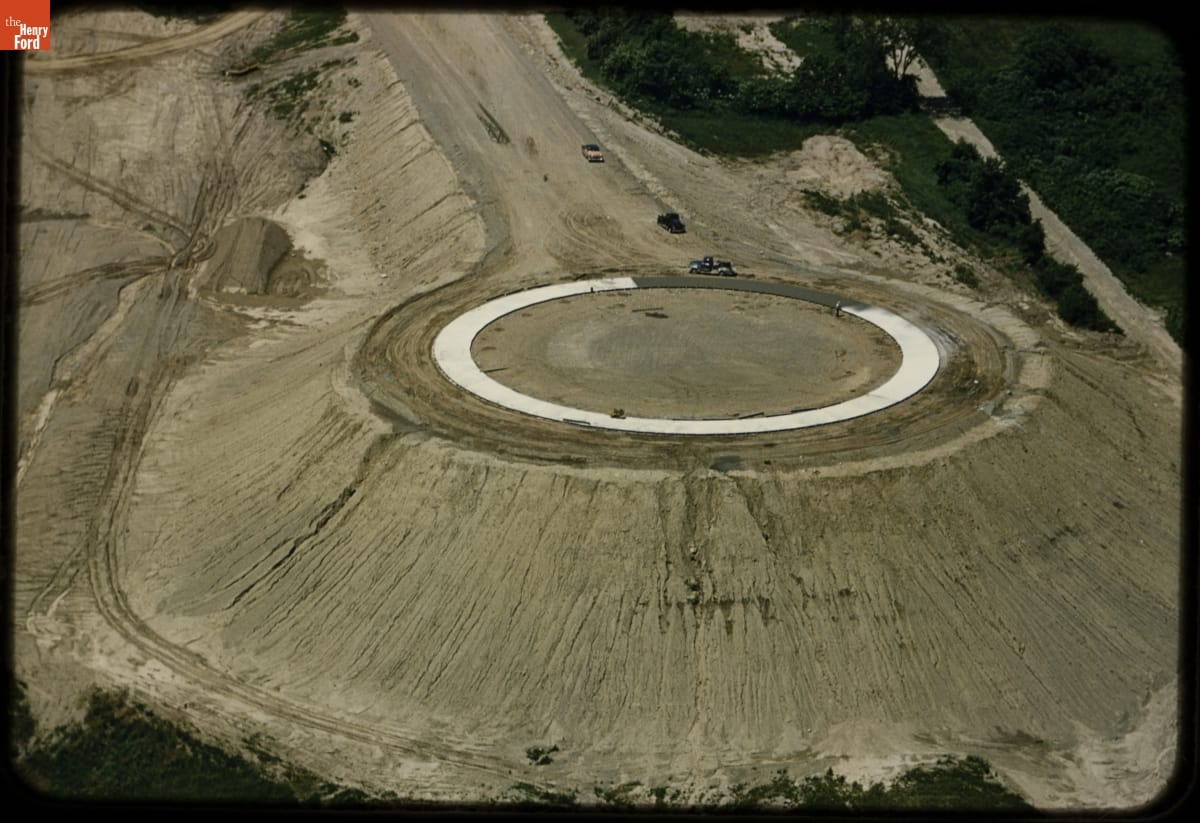
- Straightaway Turnaround, Michigan Proving Ground, circa 1955 - In 1957, Ford Motor Company opened a 4,000-acre proving ground near Romeo, Michigan. The facility included a high-speed test track, roads of various surfaces and topographies, a hill climb track, and a salt bath -- along with offices, garages and support structures. Press reports claimed it was "engineered with every conceivable device to test the durability of passenger cars."
- circa 1955
- Collections - Artifact
Straightaway Turnaround, Michigan Proving Ground, circa 1955
In 1957, Ford Motor Company opened a 4,000-acre proving ground near Romeo, Michigan. The facility included a high-speed test track, roads of various surfaces and topographies, a hill climb track, and a salt bath -- along with offices, garages and support structures. Press reports claimed it was "engineered with every conceivable device to test the durability of passenger cars."
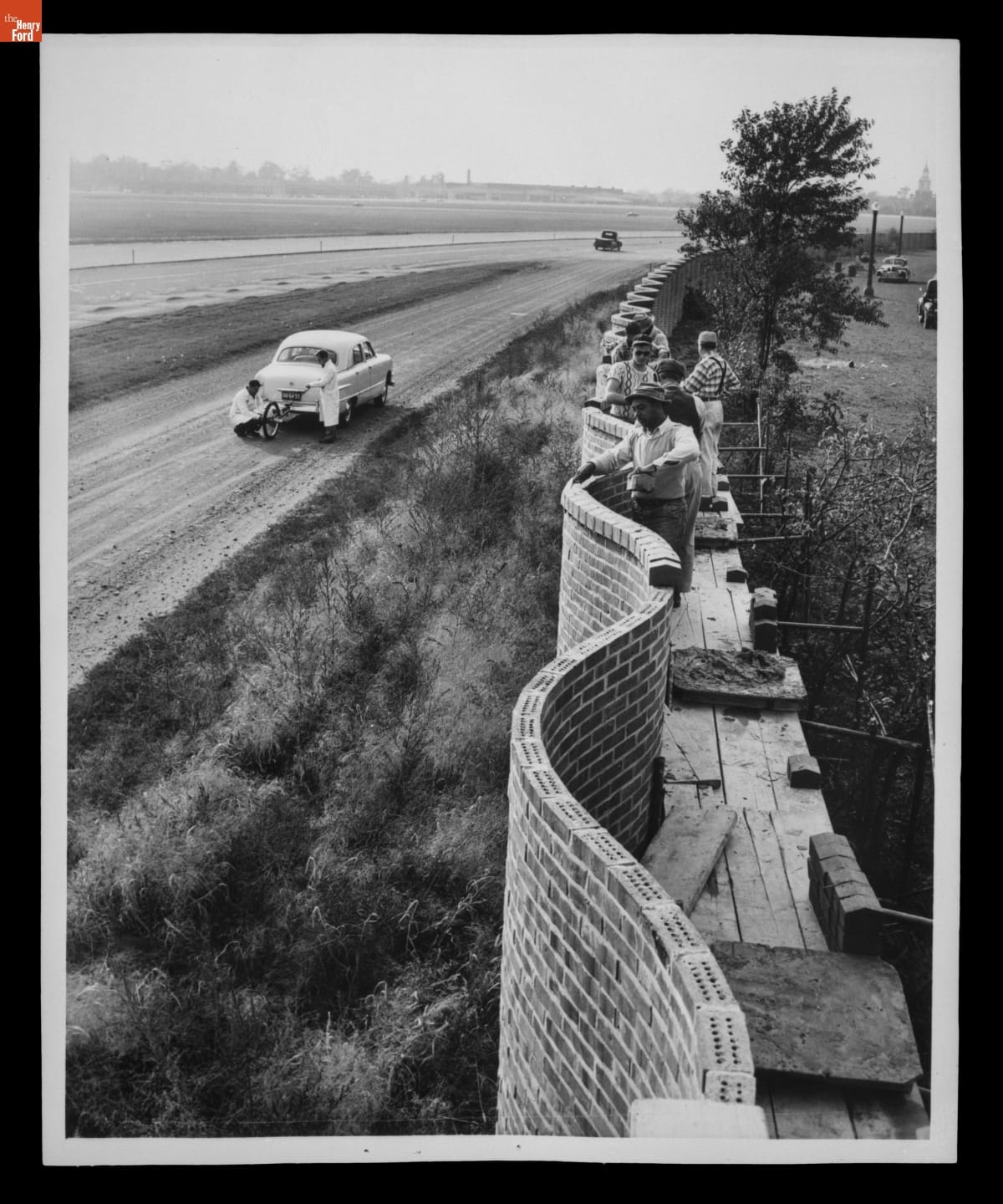
- Construction of Wall Between Ford Motor Company Test Track and Greenfield Village (Village Road), October 1951 - Ford Motor Company opened a formal proving ground, located on the former site of Ford Airport in Dearborn, Michigan, in the late 1930s. By the early 1950s, the facility included a water pit, a steep hill, and 11 miles of roadways with varying surfaces of concrete, cobblestone, macadam, gravel, and brick -- complete with potholes and simulated railroad crossings.
- October 18, 1951
- Collections - Artifact
Construction of Wall Between Ford Motor Company Test Track and Greenfield Village (Village Road), October 1951
Ford Motor Company opened a formal proving ground, located on the former site of Ford Airport in Dearborn, Michigan, in the late 1930s. By the early 1950s, the facility included a water pit, a steep hill, and 11 miles of roadways with varying surfaces of concrete, cobblestone, macadam, gravel, and brick -- complete with potholes and simulated railroad crossings.
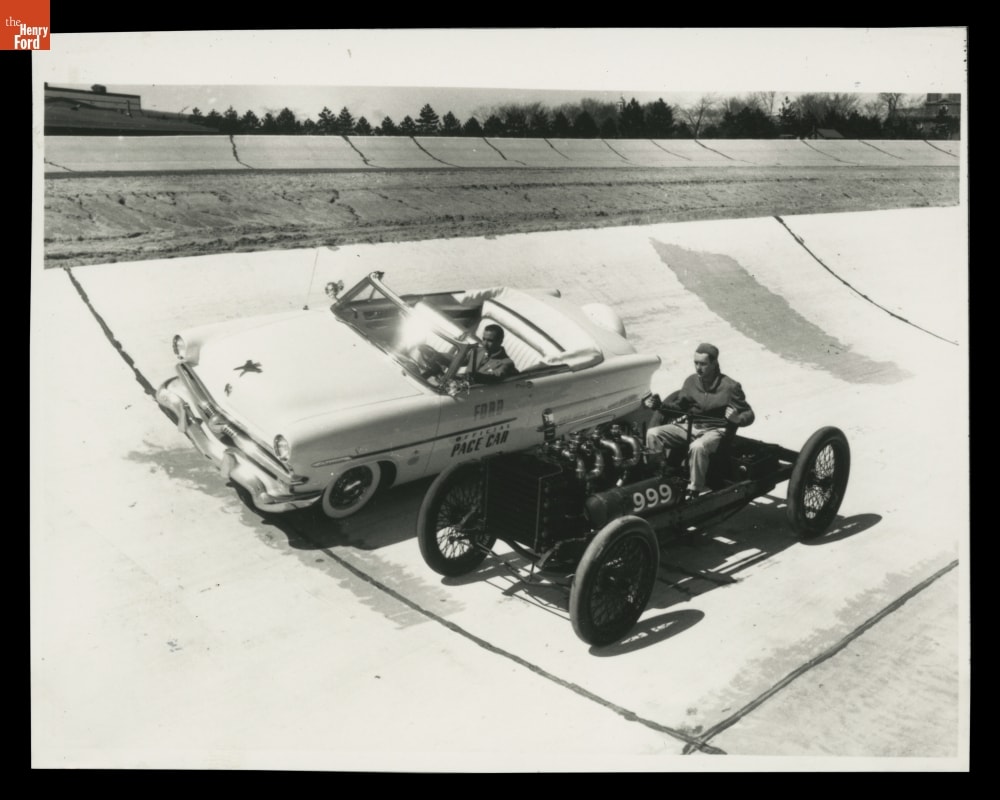
- William Clay Ford in 1953 Indianapolis 500 Pace Car, Ken Schuntz in "999" Racer, Ford Test Track, April 1953 - Ford Motor Company celebrated its 50th anniversary in 1953 and was invited to provide the pace car for that year's Indianapolis 500. Six weeks before the race, William Clay Ford and Ken Schuntz posed on the company's Dearborn test track with the pace car, a 1953 Ford Sunliner, and the "999," a race car built by Henry Ford in 1902.
- April 14, 1953
- Collections - Artifact
William Clay Ford in 1953 Indianapolis 500 Pace Car, Ken Schuntz in "999" Racer, Ford Test Track, April 1953
Ford Motor Company celebrated its 50th anniversary in 1953 and was invited to provide the pace car for that year's Indianapolis 500. Six weeks before the race, William Clay Ford and Ken Schuntz posed on the company's Dearborn test track with the pace car, a 1953 Ford Sunliner, and the "999," a race car built by Henry Ford in 1902.
- Hi-Point Farm Building, Michigan Proving Ground, circa 1955 - In 1957, Ford Motor Company opened a 4,000-acre proving ground near Romeo, Michigan. The facility included a high-speed test track, roads of various surfaces and topographies, a hill climb track, and a salt bath -- along with offices, garages and support structures. Press reports claimed it was "engineered with every conceivable device to test the durability of passenger cars."
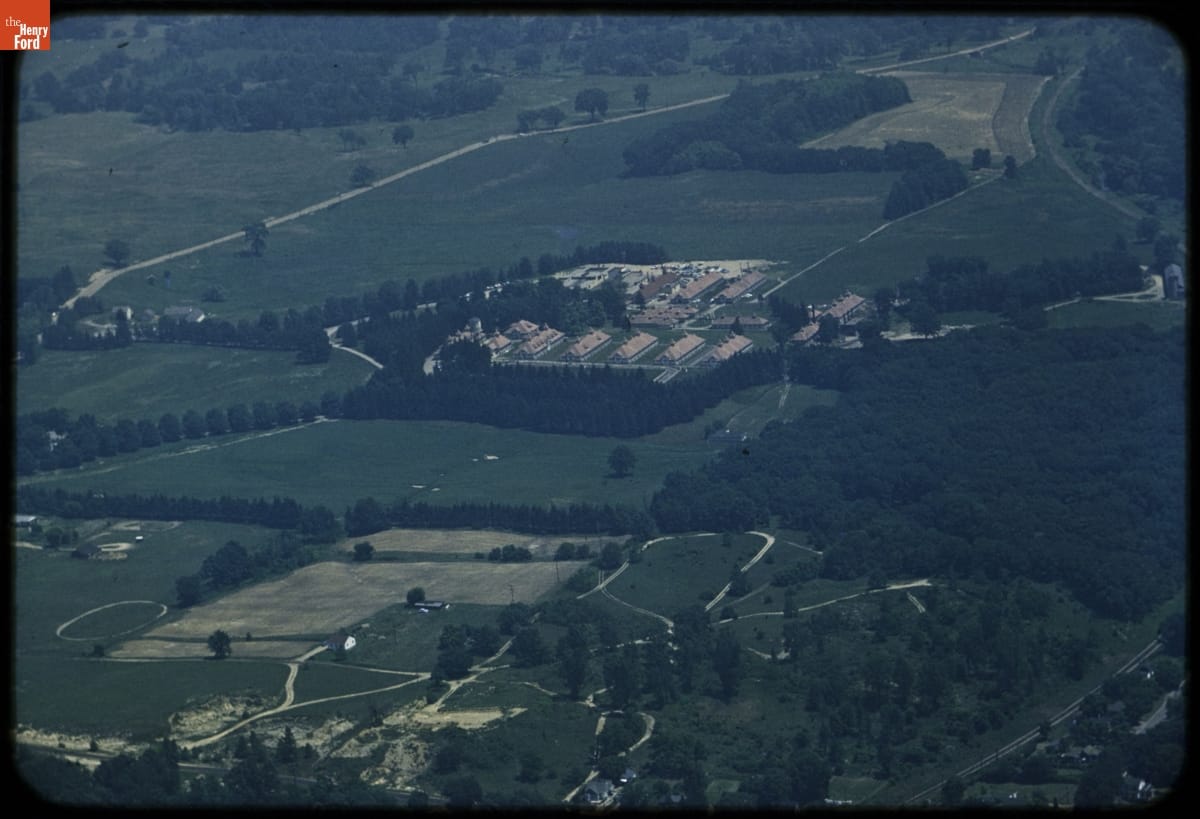
- circa 1955
- Collections - Artifact
Hi-Point Farm Building, Michigan Proving Ground, circa 1955
In 1957, Ford Motor Company opened a 4,000-acre proving ground near Romeo, Michigan. The facility included a high-speed test track, roads of various surfaces and topographies, a hill climb track, and a salt bath -- along with offices, garages and support structures. Press reports claimed it was "engineered with every conceivable device to test the durability of passenger cars."
- Hill Climb Summit with Construction Equipment, Michigan Proving Ground, circa 1955 - In 1957, Ford Motor Company opened a 4,000-acre proving ground near Romeo, Michigan. The facility included a high-speed test track, roads of various surfaces and topographies, a hill climb track, and a salt bath -- along with offices, garages and support structures. Press reports claimed it was "engineered with every conceivable device to test the durability of passenger cars."
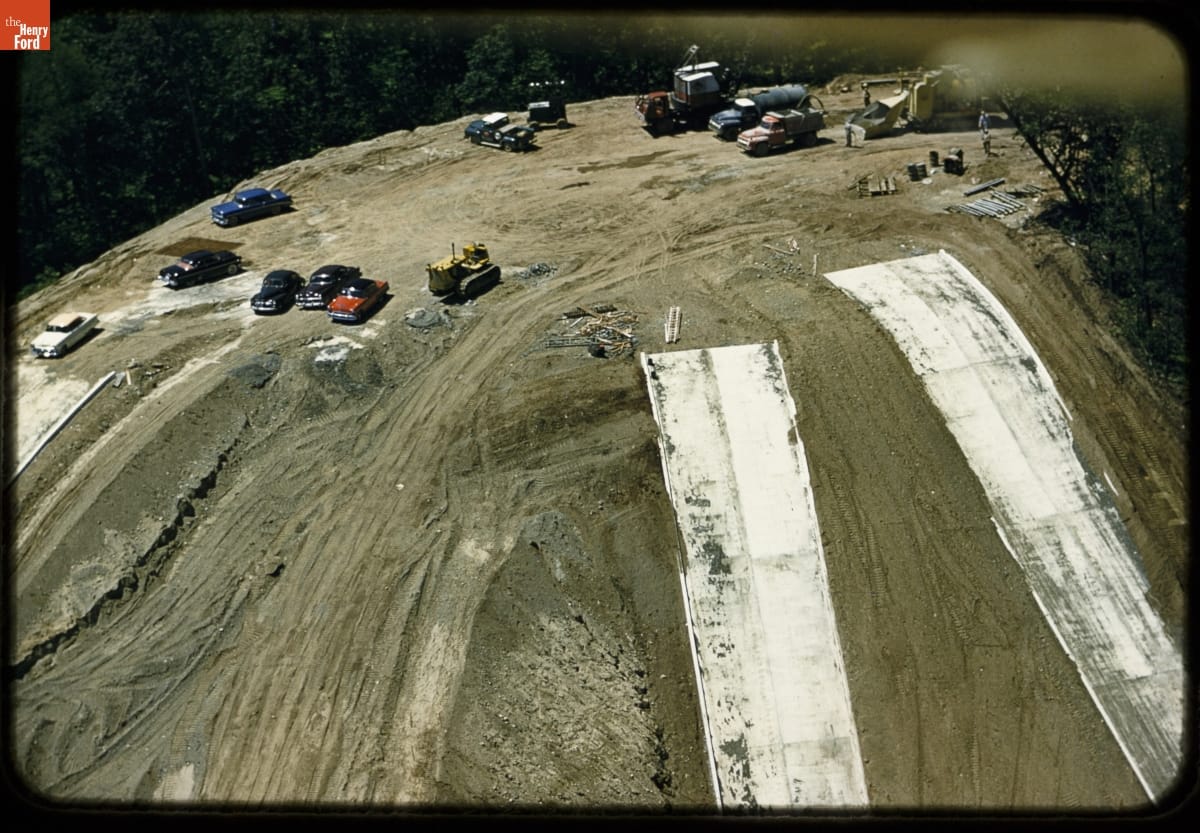
- circa 1955
- Collections - Artifact
Hill Climb Summit with Construction Equipment, Michigan Proving Ground, circa 1955
In 1957, Ford Motor Company opened a 4,000-acre proving ground near Romeo, Michigan. The facility included a high-speed test track, roads of various surfaces and topographies, a hill climb track, and a salt bath -- along with offices, garages and support structures. Press reports claimed it was "engineered with every conceivable device to test the durability of passenger cars."
- Straightaway Turnaround, Michigan Proving Ground, circa 1955 - In 1957, Ford Motor Company opened a 4,000-acre proving ground near Romeo, Michigan. The facility included a high-speed test track, roads of various surfaces and topographies, a hill climb track, and a salt bath -- along with offices, garages and support structures. Press reports claimed it was "engineered with every conceivable device to test the durability of passenger cars."
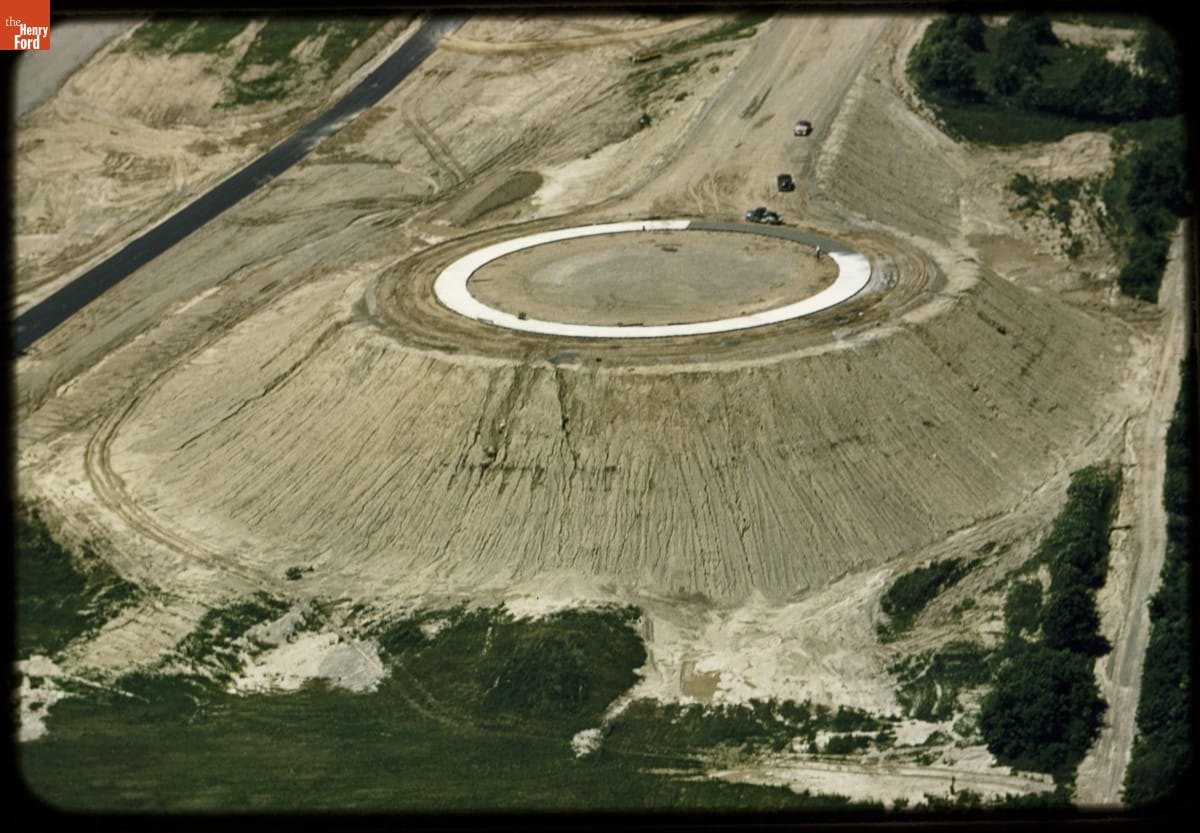
- circa 1955
- Collections - Artifact
Straightaway Turnaround, Michigan Proving Ground, circa 1955
In 1957, Ford Motor Company opened a 4,000-acre proving ground near Romeo, Michigan. The facility included a high-speed test track, roads of various surfaces and topographies, a hill climb track, and a salt bath -- along with offices, garages and support structures. Press reports claimed it was "engineered with every conceivable device to test the durability of passenger cars."
- William Clay Ford in 1953 Indianapolis 500 Pace Car, Ken Schuntz in "999" Racer, Ford Test Track, April 1953 - Ford Motor Company celebrated its 50th anniversary in 1953 and was invited to provide the pace car for that year's Indianapolis 500. Six weeks before the race, William Clay Ford and Ken Schuntz posed on the company's Dearborn test track with the pace car, a 1953 Ford Sunliner, and the "999," a race car built by Henry Ford in 1902.

- April 14, 1953
- Collections - Artifact
William Clay Ford in 1953 Indianapolis 500 Pace Car, Ken Schuntz in "999" Racer, Ford Test Track, April 1953
Ford Motor Company celebrated its 50th anniversary in 1953 and was invited to provide the pace car for that year's Indianapolis 500. Six weeks before the race, William Clay Ford and Ken Schuntz posed on the company's Dearborn test track with the pace car, a 1953 Ford Sunliner, and the "999," a race car built by Henry Ford in 1902.
- Attaching "Fifth Wheel" Testing Device at Ford Test Track, Dearborn, Michigan, 1952 - Ford Motor Company opened a formal proving ground, located on the former site of Ford Airport in Dearborn, Michigan, in the late 1930s. By the early 1950s, the facility included a water pit, a steep hill, and 11 miles of roadways with varying surfaces of concrete, cobblestone, macadam, gravel, and brick -- complete with potholes and simulated railroad crossings.
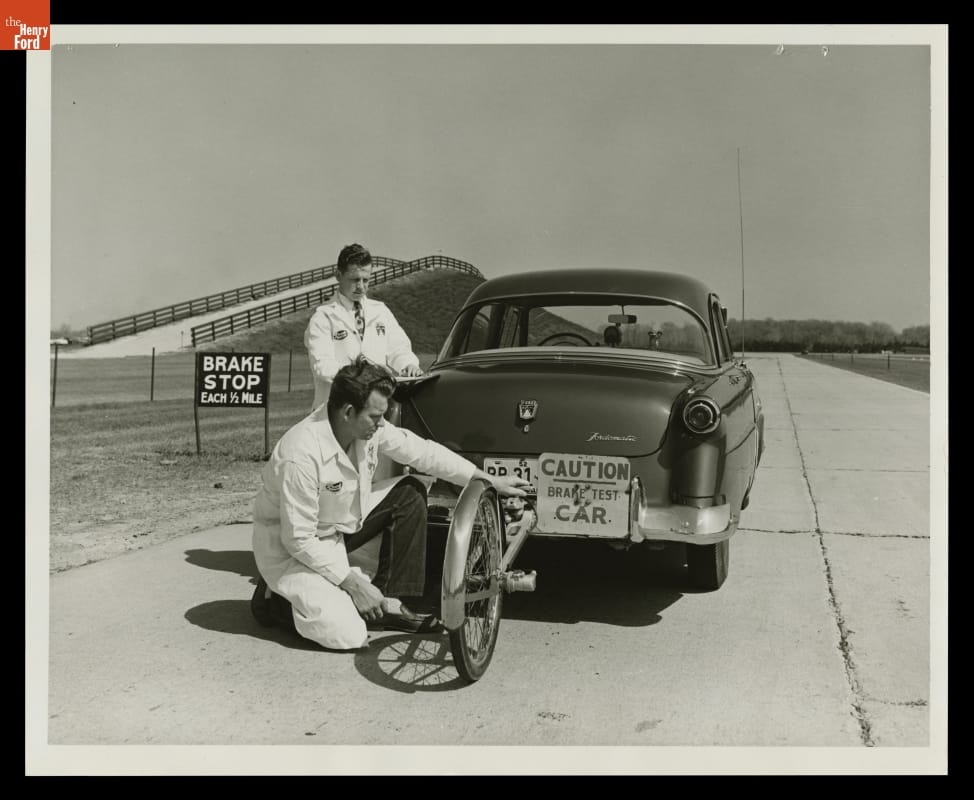
- 29 April 1952 - 04 June 1952
- Collections - Artifact
Attaching "Fifth Wheel" Testing Device at Ford Test Track, Dearborn, Michigan, 1952
Ford Motor Company opened a formal proving ground, located on the former site of Ford Airport in Dearborn, Michigan, in the late 1930s. By the early 1950s, the facility included a water pit, a steep hill, and 11 miles of roadways with varying surfaces of concrete, cobblestone, macadam, gravel, and brick -- complete with potholes and simulated railroad crossings.
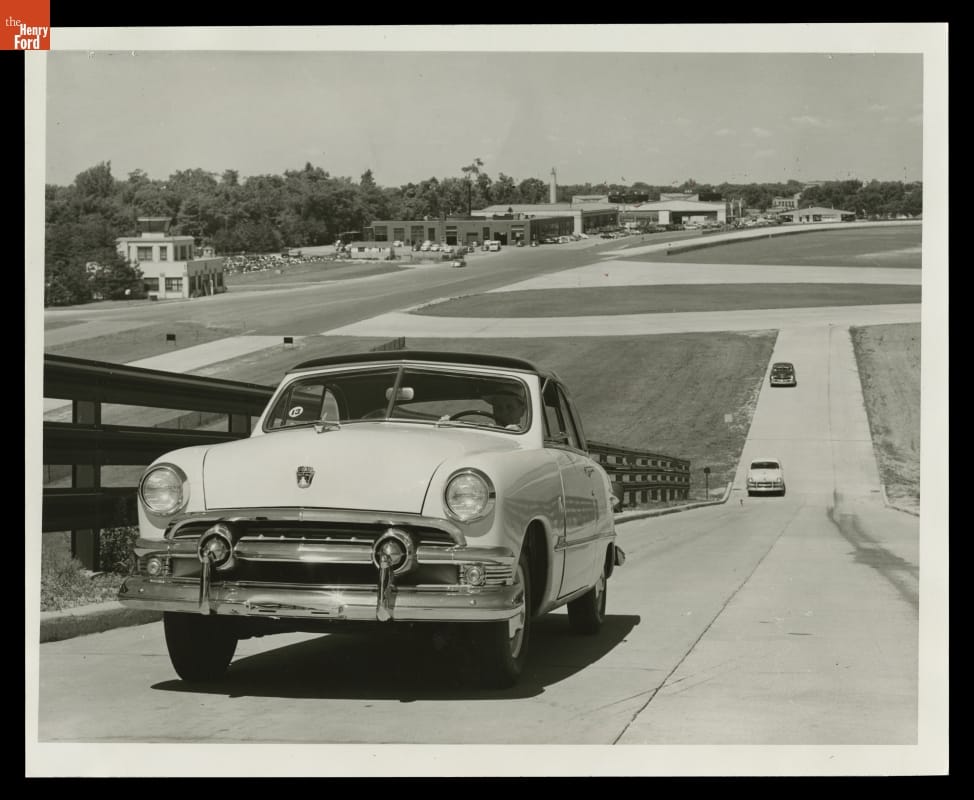
- 1952 Ford Automobiles on Ford Test Track, Dearborn, Michigan, 1951 - Ford Motor Company opened a formal proving ground, located on the former site of Ford Airport in Dearborn, Michigan, in the late 1930s. By the early 1950s, the facility included a water pit, a steep hill, and 11 miles of roadways with varying surfaces of concrete, cobblestone, macadam, gravel, and brick -- complete with potholes and simulated railroad crossings.
- 15 June 1951 - 10 January 1952
- Collections - Artifact
1952 Ford Automobiles on Ford Test Track, Dearborn, Michigan, 1951
Ford Motor Company opened a formal proving ground, located on the former site of Ford Airport in Dearborn, Michigan, in the late 1930s. By the early 1950s, the facility included a water pit, a steep hill, and 11 miles of roadways with varying surfaces of concrete, cobblestone, macadam, gravel, and brick -- complete with potholes and simulated railroad crossings.