
Search
- Newark Library, 1901-1915 - In 1890, Jenny Young Chandler, 25 years old and recently widowed, began working for the <EM>New York Herald</EM>. As a photojournalist and feature writer, Chandler captured life in Brooklyn, New York, and vicinity. By 1922, the time of her death, she had produced over 800 glass plate negatives. Her sensitive, insightful photographs depict people from all walks of life and the world in which they lived.
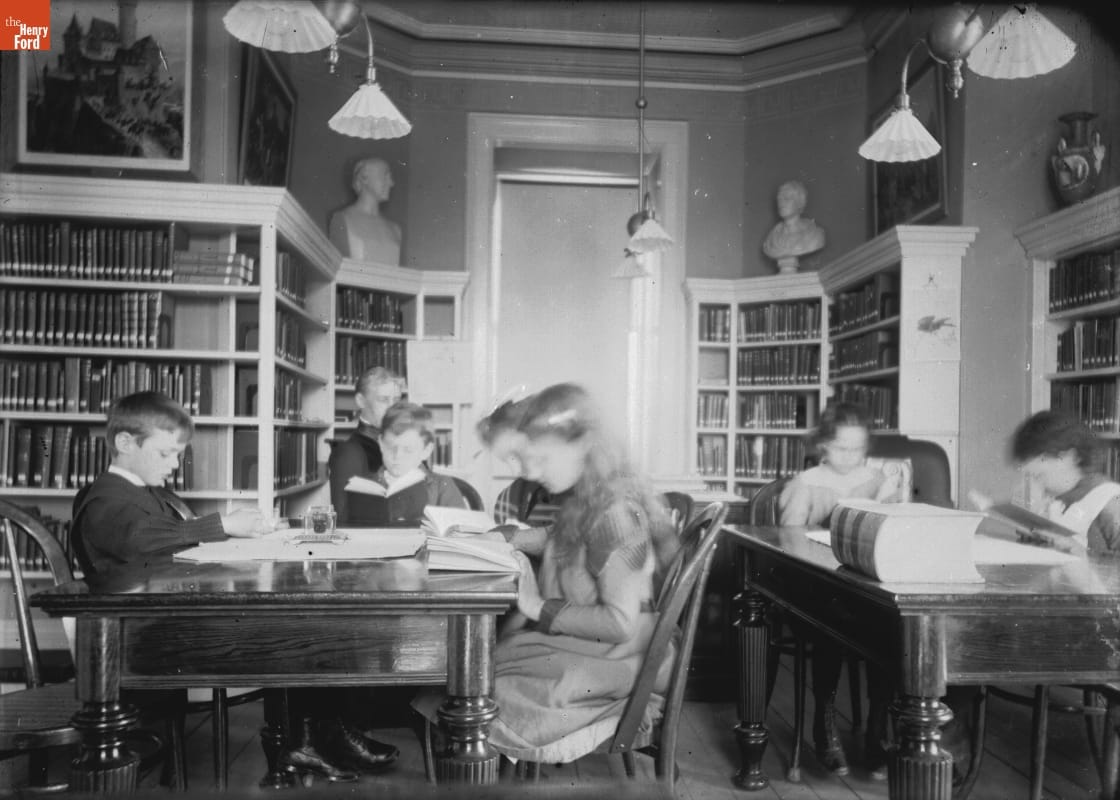
- 1901-1915
- Collections - Artifact
Newark Library, 1901-1915
In 1890, Jenny Young Chandler, 25 years old and recently widowed, began working for the New York Herald. As a photojournalist and feature writer, Chandler captured life in Brooklyn, New York, and vicinity. By 1922, the time of her death, she had produced over 800 glass plate negatives. Her sensitive, insightful photographs depict people from all walks of life and the world in which they lived.
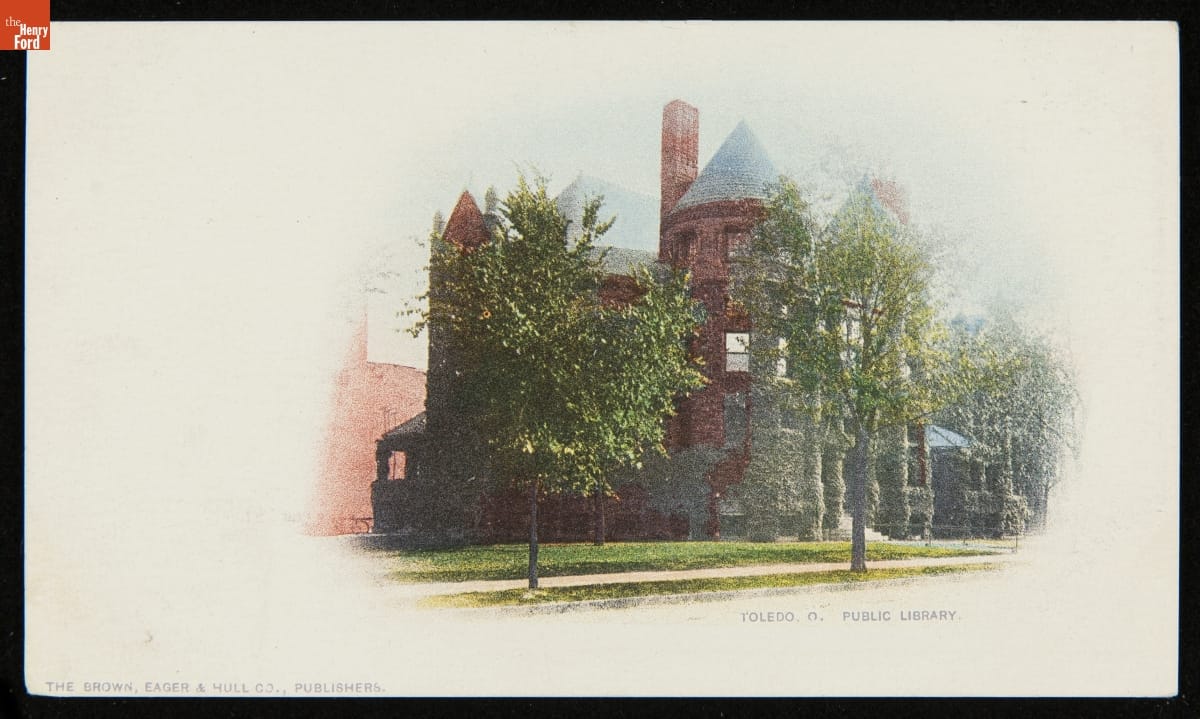
- Postcard, "Toledo, O. Public Library," circa 1900 - Until the 20th century, most book collections were not available to everyday Americans. They were either privately owned, accessible only by paid subscription, or stored away haphazardly. In communities with dedicated public library buildings (often among the most imposing structures in town), they were sources of civic pride. This building housed the Lucas County (Ohio) library from its opening in 1890 until 1940.
- circa 1900
- Collections - Artifact
Postcard, "Toledo, O. Public Library," circa 1900
Until the 20th century, most book collections were not available to everyday Americans. They were either privately owned, accessible only by paid subscription, or stored away haphazardly. In communities with dedicated public library buildings (often among the most imposing structures in town), they were sources of civic pride. This building housed the Lucas County (Ohio) library from its opening in 1890 until 1940.
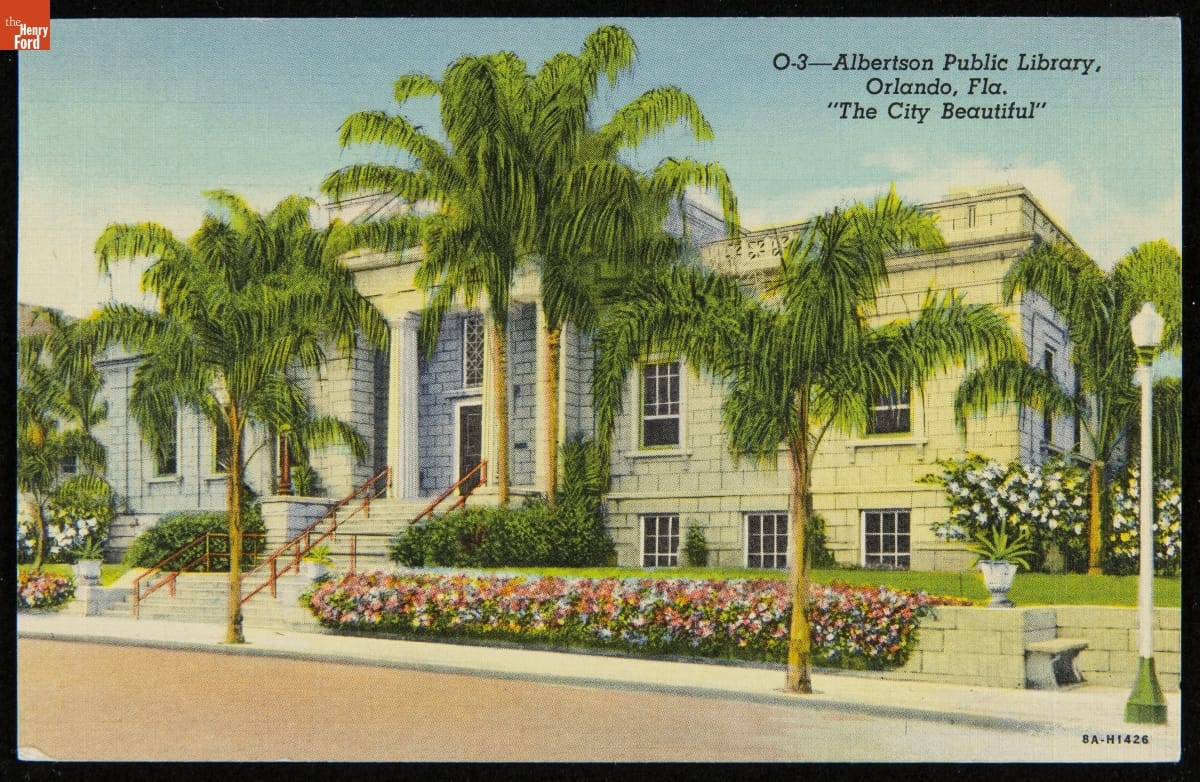
- Postcard, "Albertson Public Library, Orlando, Fla., 'The City Beautiful'," 1938 - Until the 20th century, most book collections were not available to everyday Americans. They were either privately owned, accessible only by paid subscription, or stored away haphazardly. Free public libraries began to spread in the early 1900s. For communities able to fund them, public library buildings -- usually among the most imposing structures in town -- became sources of civic pride.
- 1938
- Collections - Artifact
Postcard, "Albertson Public Library, Orlando, Fla., 'The City Beautiful'," 1938
Until the 20th century, most book collections were not available to everyday Americans. They were either privately owned, accessible only by paid subscription, or stored away haphazardly. Free public libraries began to spread in the early 1900s. For communities able to fund them, public library buildings -- usually among the most imposing structures in town -- became sources of civic pride.
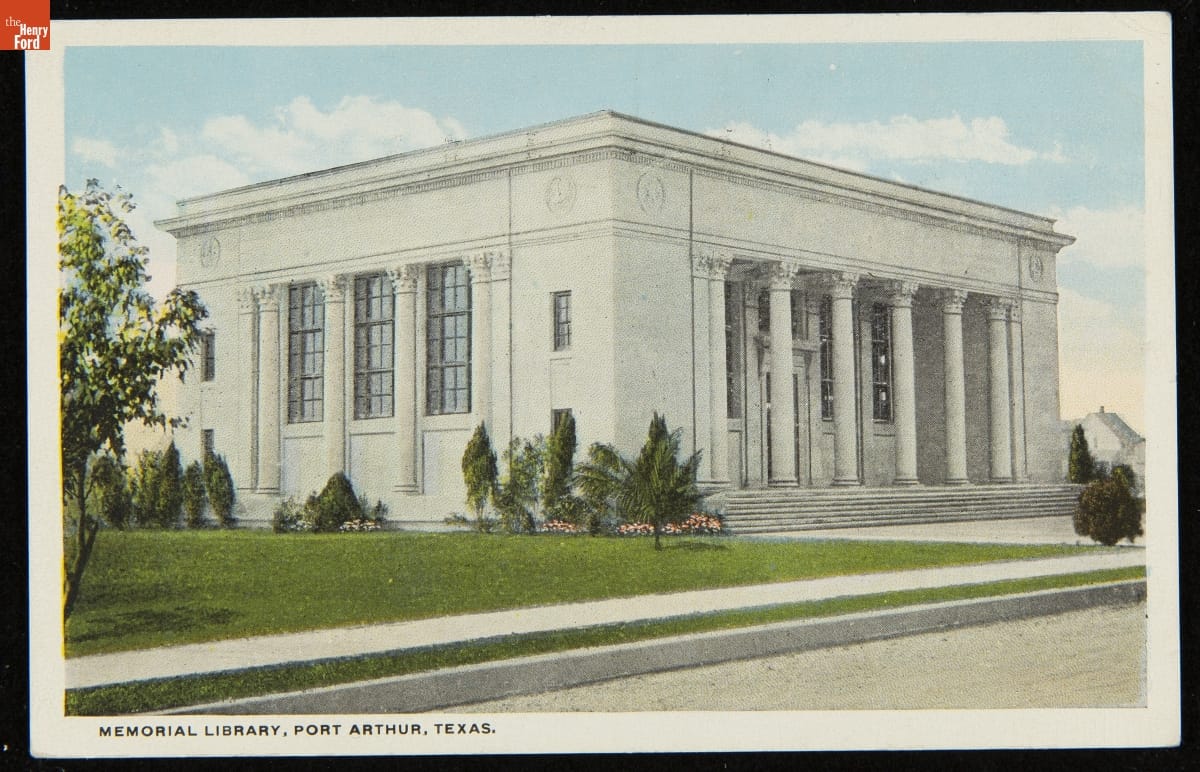
- Postcard, "Memorial Library, Port Arthur, Texas," circa 1925 - Until the 20th century, most book collections were not available to everyday Americans. They were either privately owned, accessible only by paid subscription, or stored away haphazardly. Free public libraries began to spread in the early 1900s. For communities able to fund them, public library buildings -- usually among the most imposing structures in town -- became sources of civic pride.
- circa 1925
- Collections - Artifact
Postcard, "Memorial Library, Port Arthur, Texas," circa 1925
Until the 20th century, most book collections were not available to everyday Americans. They were either privately owned, accessible only by paid subscription, or stored away haphazardly. Free public libraries began to spread in the early 1900s. For communities able to fund them, public library buildings -- usually among the most imposing structures in town -- became sources of civic pride.
- Postcard, "The Free Library of Philadelphia," circa 1930 - Until the 20th century, most book collections were not available to everyday Americans. They were either privately owned, accessible only by paid subscription, or stored away haphazardly. In some communities, wealthy citizens funded libraries. Philadelphia philanthropist George Seckel Pepper bequeathed $225,000 in 1889 to establish The Free Library of Philadelphia. The Free Library system's massive Central Library, pictured here, opened in 1927.
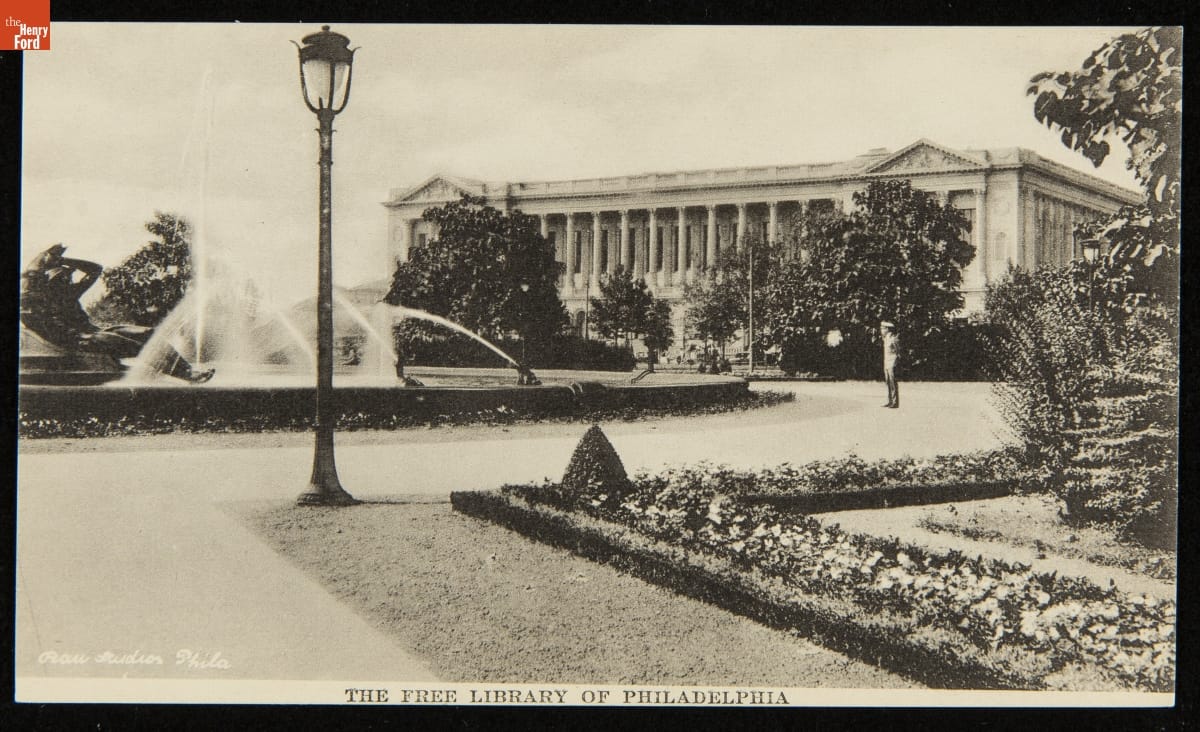
- circa 1930
- Collections - Artifact
Postcard, "The Free Library of Philadelphia," circa 1930
Until the 20th century, most book collections were not available to everyday Americans. They were either privately owned, accessible only by paid subscription, or stored away haphazardly. In some communities, wealthy citizens funded libraries. Philadelphia philanthropist George Seckel Pepper bequeathed $225,000 in 1889 to establish The Free Library of Philadelphia. The Free Library system's massive Central Library, pictured here, opened in 1927.
- Detroit Public Library, circa 1910 - Until the 20th century, most book collections were not available to everyday Americans. They were either privately owned, accessible only by paid subscription, or stored away haphazardly. For communities with dedicated public library buildings (often among the most imposing structures in town), they were sources of civic pride. Built to house the Detroit, Michigan, library, this structure opened in 1877.
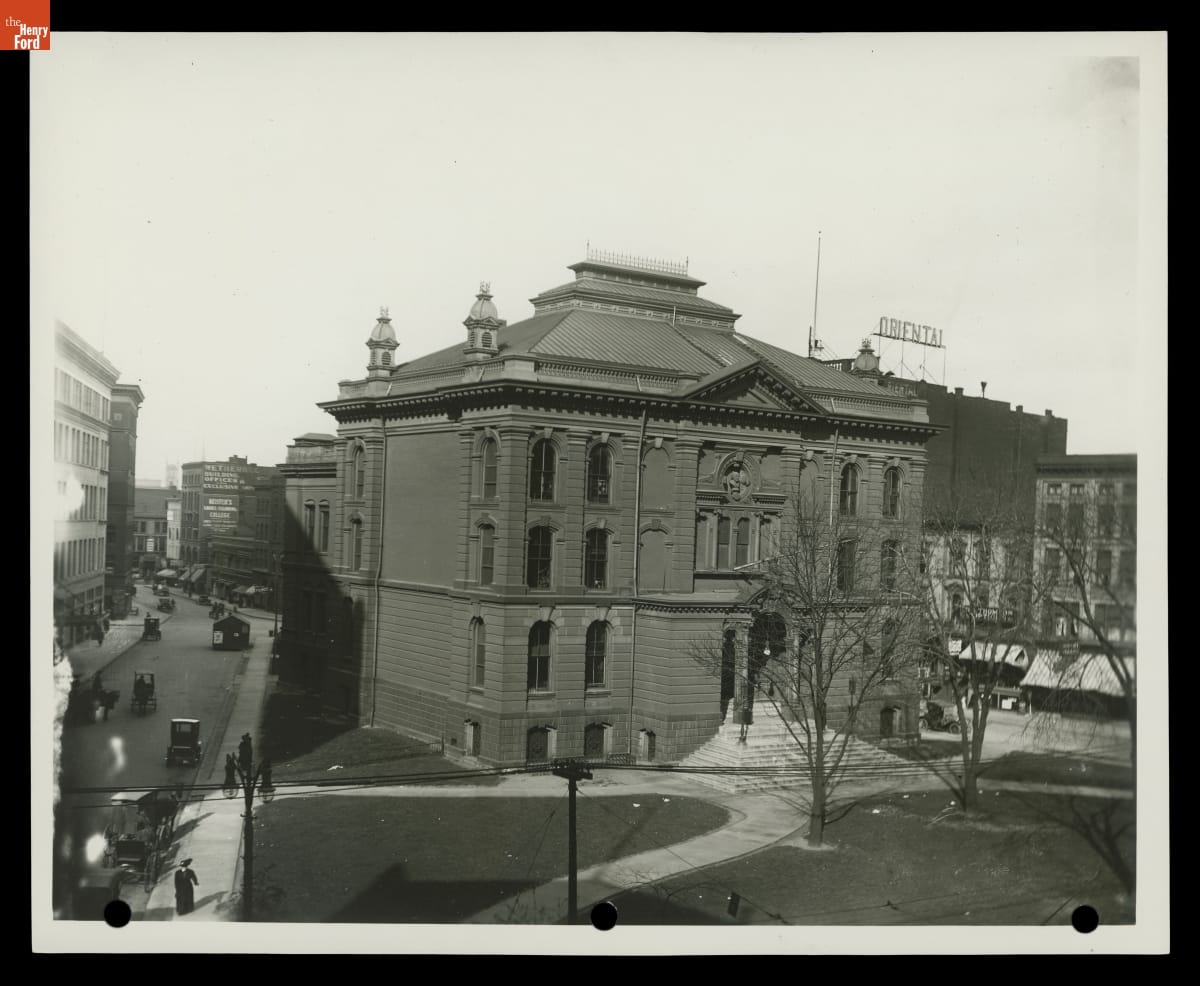
- circa 1910
- Collections - Artifact
Detroit Public Library, circa 1910
Until the 20th century, most book collections were not available to everyday Americans. They were either privately owned, accessible only by paid subscription, or stored away haphazardly. For communities with dedicated public library buildings (often among the most imposing structures in town), they were sources of civic pride. Built to house the Detroit, Michigan, library, this structure opened in 1877.
- Postcard, "Buffalo Public Library, Buffalo, N.Y.," circa 1938 - Until the 20th century, most book collections were not available to everyday Americans. They were either privately owned, accessible only by paid subscription, or stored away haphazardly. This building, which opened in 1887, originally housed the private subscription library of the Young Men's Association of Buffalo, New York. It became a free public library through an agreement with the city in 1897.
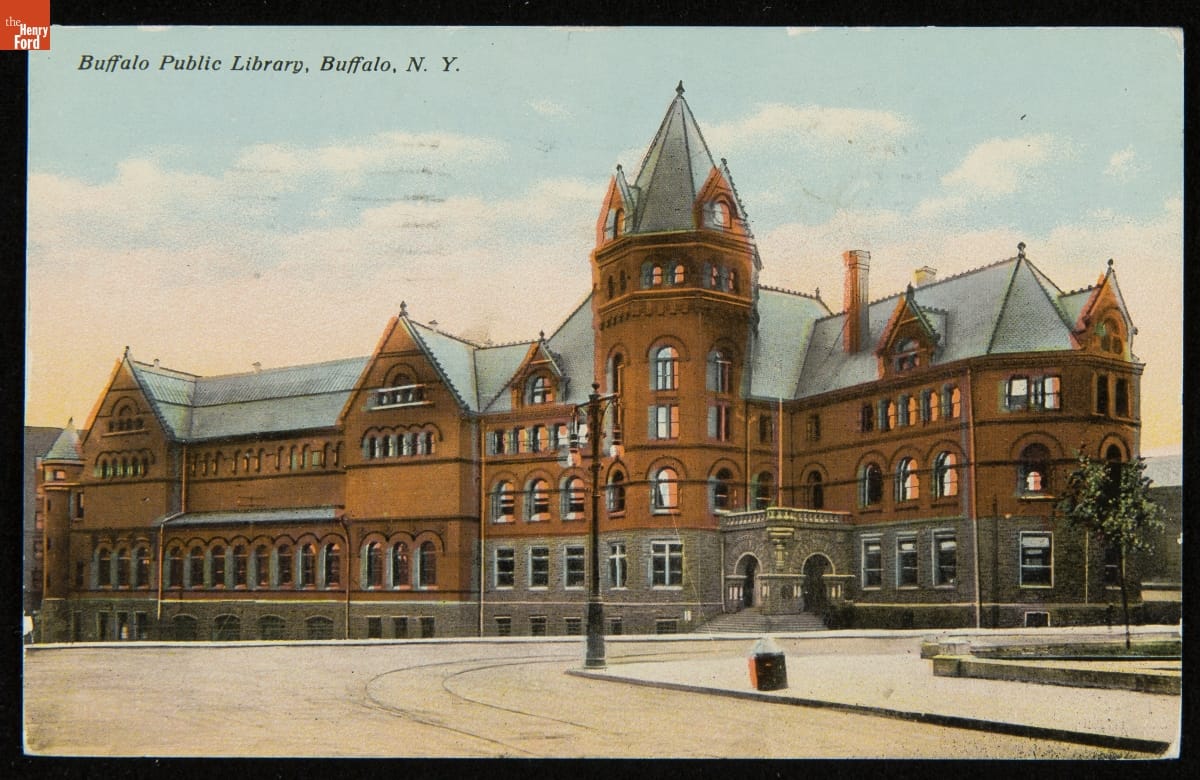
- circa 1938
- Collections - Artifact
Postcard, "Buffalo Public Library, Buffalo, N.Y.," circa 1938
Until the 20th century, most book collections were not available to everyday Americans. They were either privately owned, accessible only by paid subscription, or stored away haphazardly. This building, which opened in 1887, originally housed the private subscription library of the Young Men's Association of Buffalo, New York. It became a free public library through an agreement with the city in 1897.
- Postcard, "Public Library, Detroit, Mich.," circa 1915 - Until the 20th century, most book collections were not available to everyday Americans. They were either privately owned, accessible only by paid subscription, or stored away haphazardly. For communities with dedicated public library buildings (often among the most imposing structures in town), they were sources of civic pride. Built to house the Detroit, Michigan, library, this structure opened in 1877.
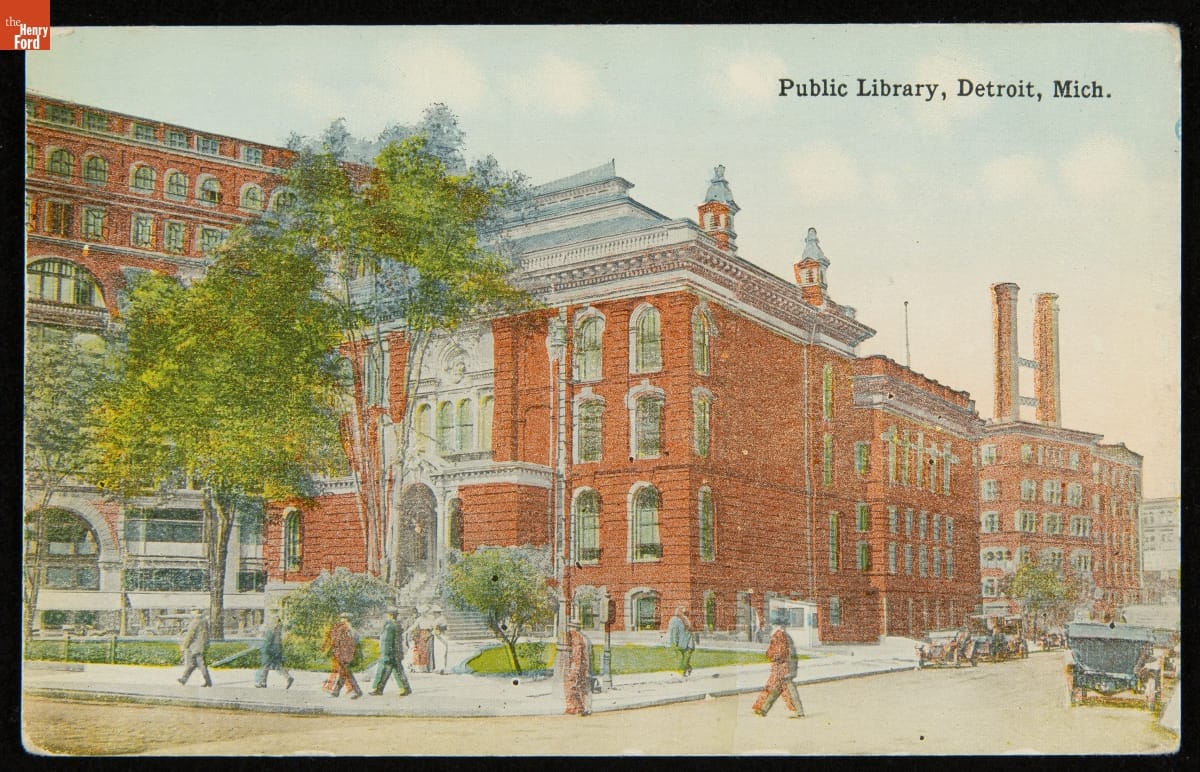
- circa 1915
- Collections - Artifact
Postcard, "Public Library, Detroit, Mich.," circa 1915
Until the 20th century, most book collections were not available to everyday Americans. They were either privately owned, accessible only by paid subscription, or stored away haphazardly. For communities with dedicated public library buildings (often among the most imposing structures in town), they were sources of civic pride. Built to house the Detroit, Michigan, library, this structure opened in 1877.
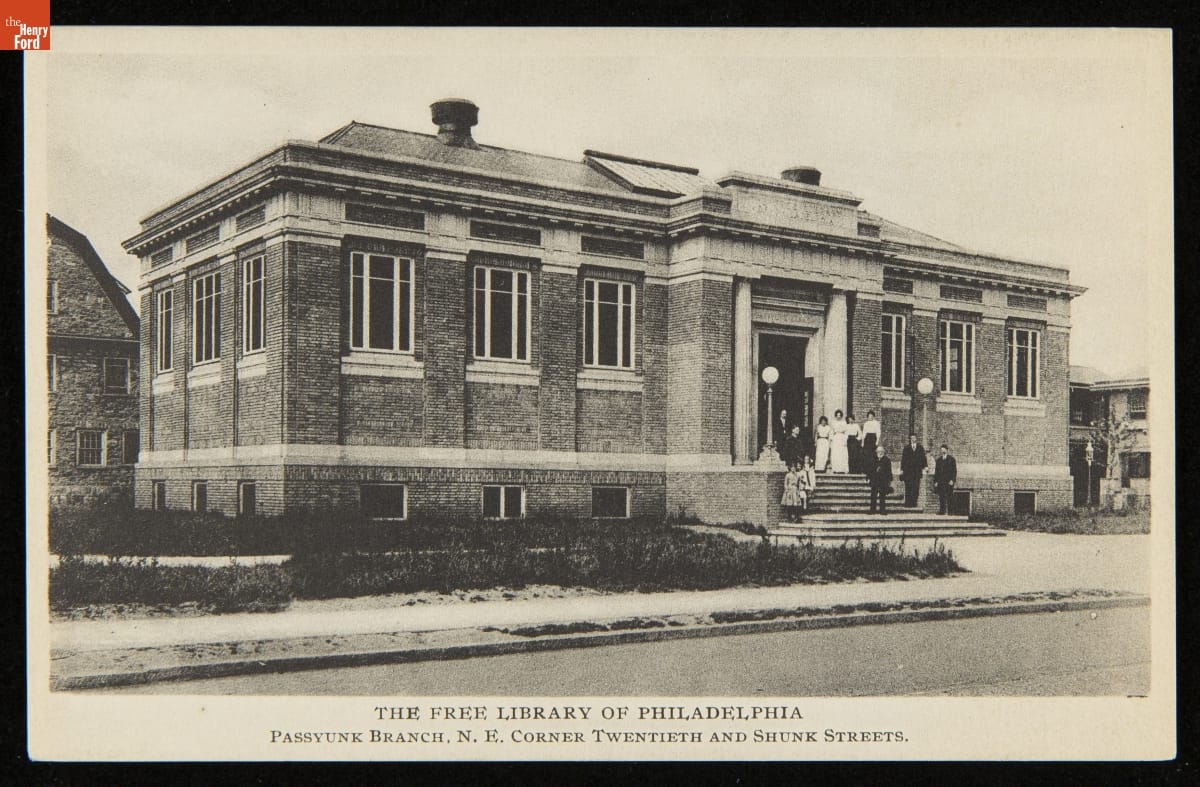
- Postcard, "The Free Library of Philadelphia: Passyunk Branch, NE Corner 20th & Shunk Streets," circa 1915 - Until the 20th century, most book collections were not available to everyday Americans. They were either privately owned, accessible only by paid subscription, or stored away haphazardly. In some communities, wealthy citizens funded libraries. Philadelphia philanthropist George Seckel Pepper bequeathed $225,000 to establish The Free Library of Philadelphia in 1889. Over time, the Free Library system grew to include many neighborhood branches.
- circa 1915
- Collections - Artifact
Postcard, "The Free Library of Philadelphia: Passyunk Branch, NE Corner 20th & Shunk Streets," circa 1915
Until the 20th century, most book collections were not available to everyday Americans. They were either privately owned, accessible only by paid subscription, or stored away haphazardly. In some communities, wealthy citizens funded libraries. Philadelphia philanthropist George Seckel Pepper bequeathed $225,000 to establish The Free Library of Philadelphia in 1889. Over time, the Free Library system grew to include many neighborhood branches.
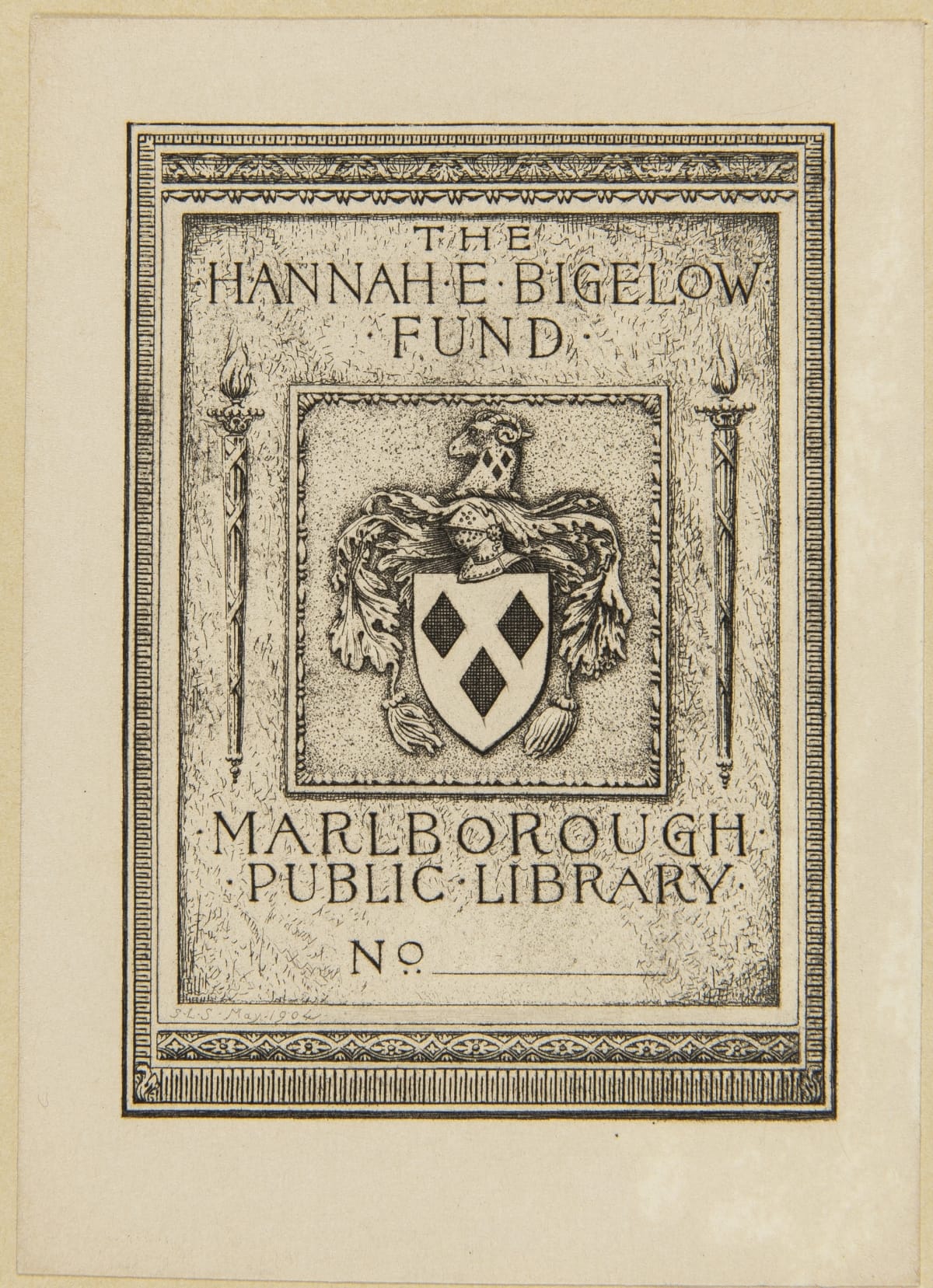
- Bookplate for The Hannah E. Bigelow Fund, Marlborough Public Library, 1898 - Bookplates show ownership, but they can also tell us more. Often pasted on the inside of a book's front cover or endpaper, these printed labels contain the owner's name and sometimes the words "ex-libris" (Latin for "from the library of"). Coats of arms, crests, other decorative images, poems, mottoes, and even font type provide insight into the beliefs, passions, and interests of the book's owner.
- 1898
- Collections - Artifact
Bookplate for The Hannah E. Bigelow Fund, Marlborough Public Library, 1898
Bookplates show ownership, but they can also tell us more. Often pasted on the inside of a book's front cover or endpaper, these printed labels contain the owner's name and sometimes the words "ex-libris" (Latin for "from the library of"). Coats of arms, crests, other decorative images, poems, mottoes, and even font type provide insight into the beliefs, passions, and interests of the book's owner.