
Search
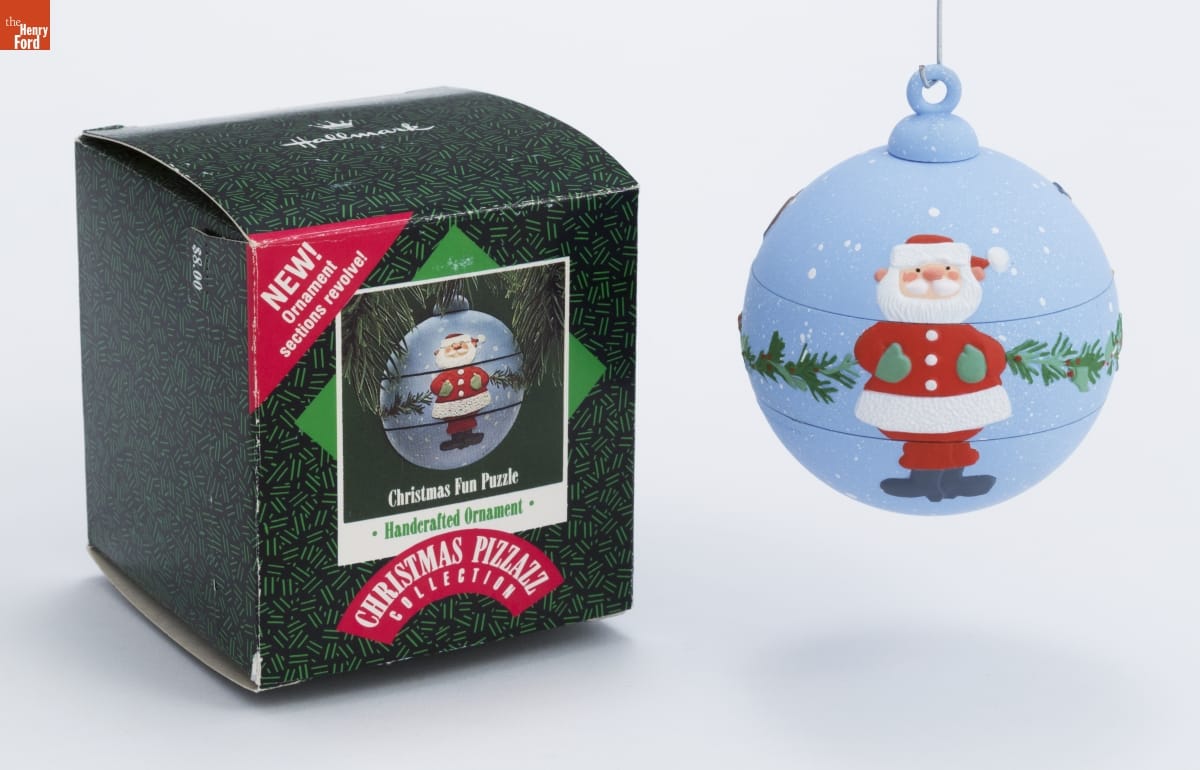
- Hallmark "Christmas Pizzazz Collection: Christmas Fun Puzzle" Christmas Ornament, 1987 - Already known for greeting cards, Hallmark introduced a line of Christmas ornaments in 1973. The company's annual release of an increasing array of ornaments revolutionized Christmas decorating, appealing to customers' interest in marking memories and milestones as well as expressing one's personality and unique tastes.
- 1987
- Collections - Artifact
Hallmark "Christmas Pizzazz Collection: Christmas Fun Puzzle" Christmas Ornament, 1987
Already known for greeting cards, Hallmark introduced a line of Christmas ornaments in 1973. The company's annual release of an increasing array of ornaments revolutionized Christmas decorating, appealing to customers' interest in marking memories and milestones as well as expressing one's personality and unique tastes.
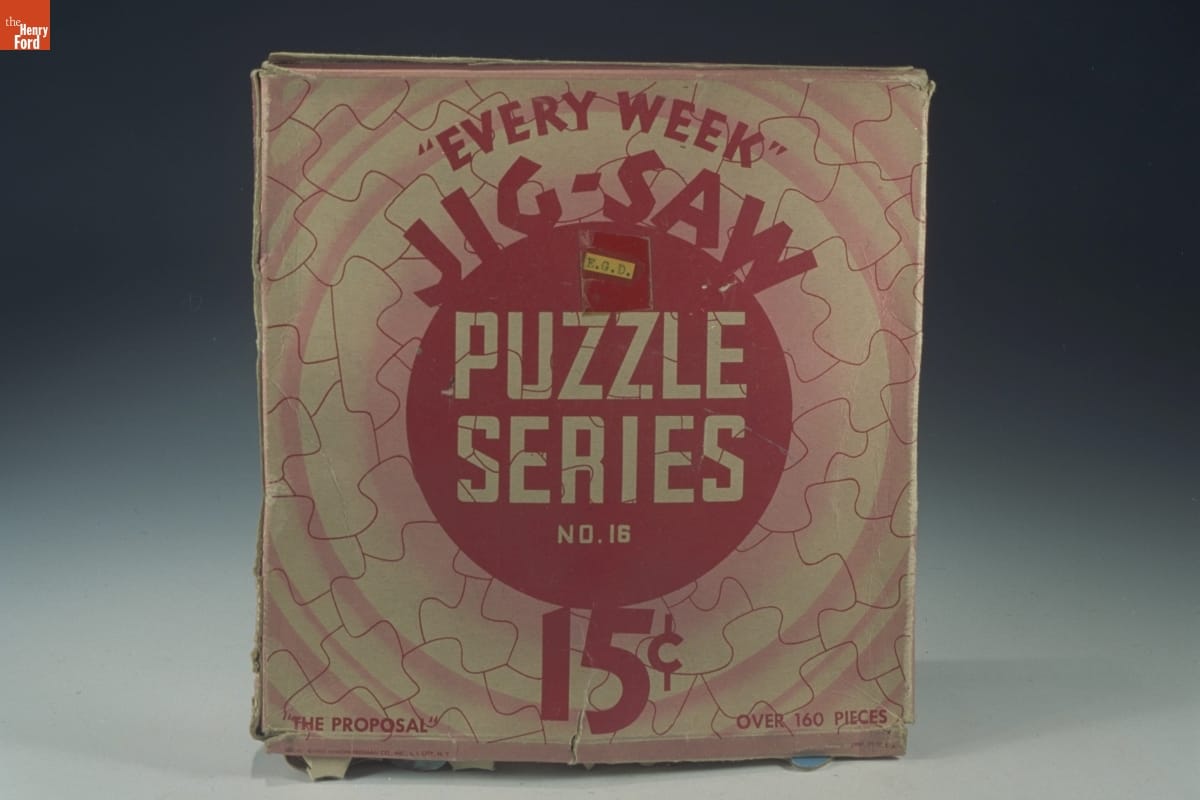
- Jigsaw Puzzle, "The Proposal," 1933 - Jigsaw puzzles contain interlocking pieces that creates a picture. A person fits the pieces together and then can take them apart when finished to start all over again. Einson-Freeman Publishing Corporation, the maker of this puzzle, was a significant puzzle manufacturer in the 1930s.
- 1933
- Collections - Artifact
Jigsaw Puzzle, "The Proposal," 1933
Jigsaw puzzles contain interlocking pieces that creates a picture. A person fits the pieces together and then can take them apart when finished to start all over again. Einson-Freeman Publishing Corporation, the maker of this puzzle, was a significant puzzle manufacturer in the 1930s.
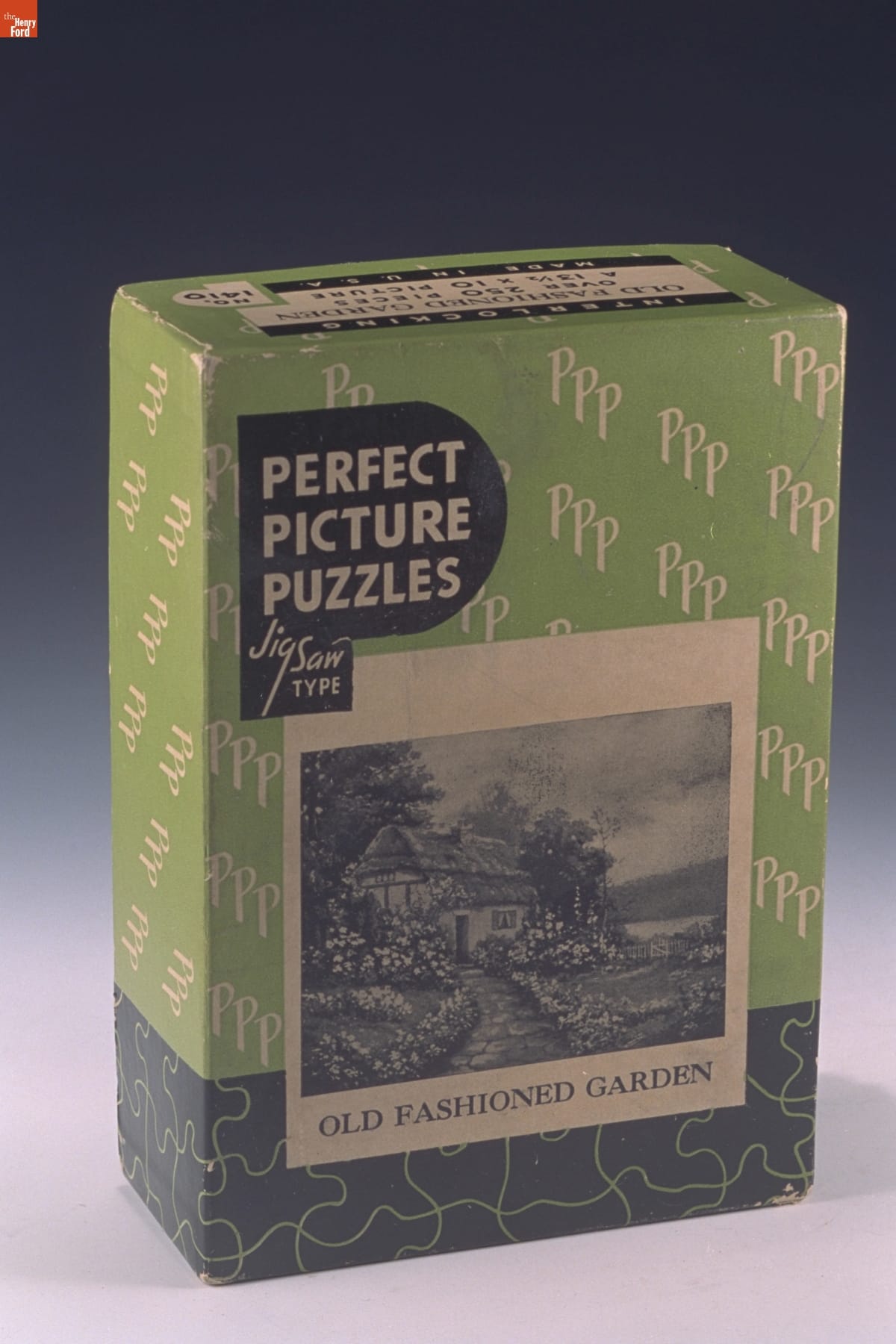
- Jigsaw Puzzle, "Old Fashioned Garden," Used by James Greenhoe, 1937-1946 -
- 1937-1946
- Collections - Artifact
Jigsaw Puzzle, "Old Fashioned Garden," Used by James Greenhoe, 1937-1946
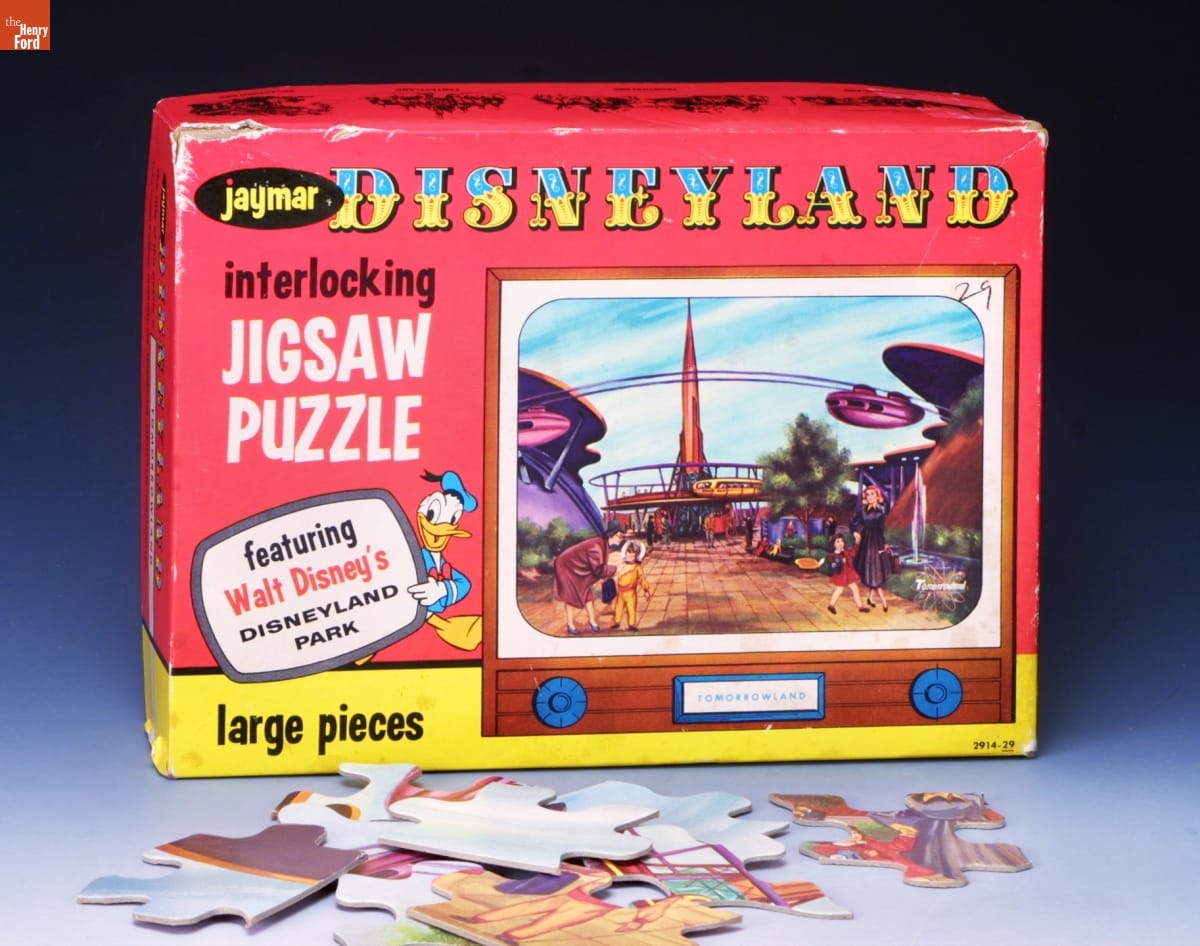
- Jigsaw Puzzle, "Disneyland: Tomorrowland," 1955-1960 -
- 1955-1960
- Collections - Artifact
Jigsaw Puzzle, "Disneyland: Tomorrowland," 1955-1960
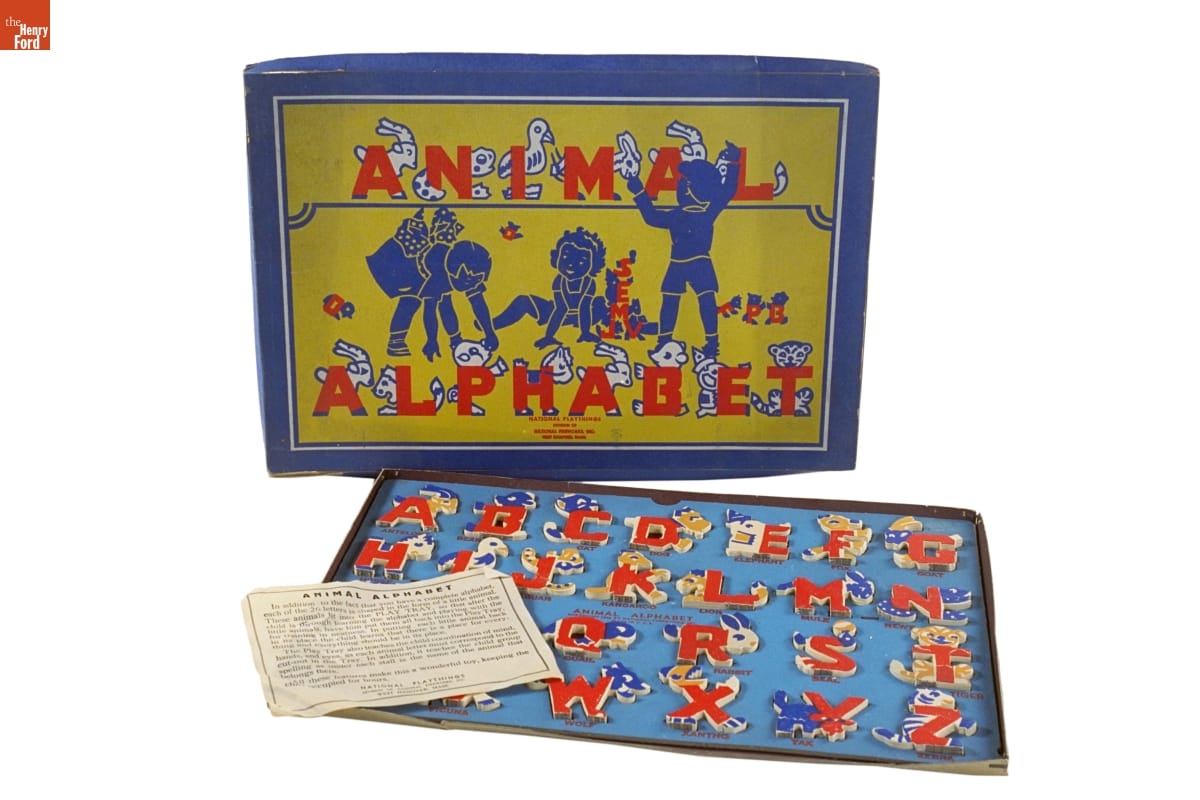
- Animal Alphabet Puzzle, 1940-1950 - This puzzle built for small hands helped develop motor skills while teaching the alphabet. Children could rely on visual cues to complete the puzzle. Cutouts match the shape of the pieces, which depict animals that correspond with words printed on the board, from "antelope" to "zebra."
- 1940-1950
- Collections - Artifact
Animal Alphabet Puzzle, 1940-1950
This puzzle built for small hands helped develop motor skills while teaching the alphabet. Children could rely on visual cues to complete the puzzle. Cutouts match the shape of the pieces, which depict animals that correspond with words printed on the board, from "antelope" to "zebra."
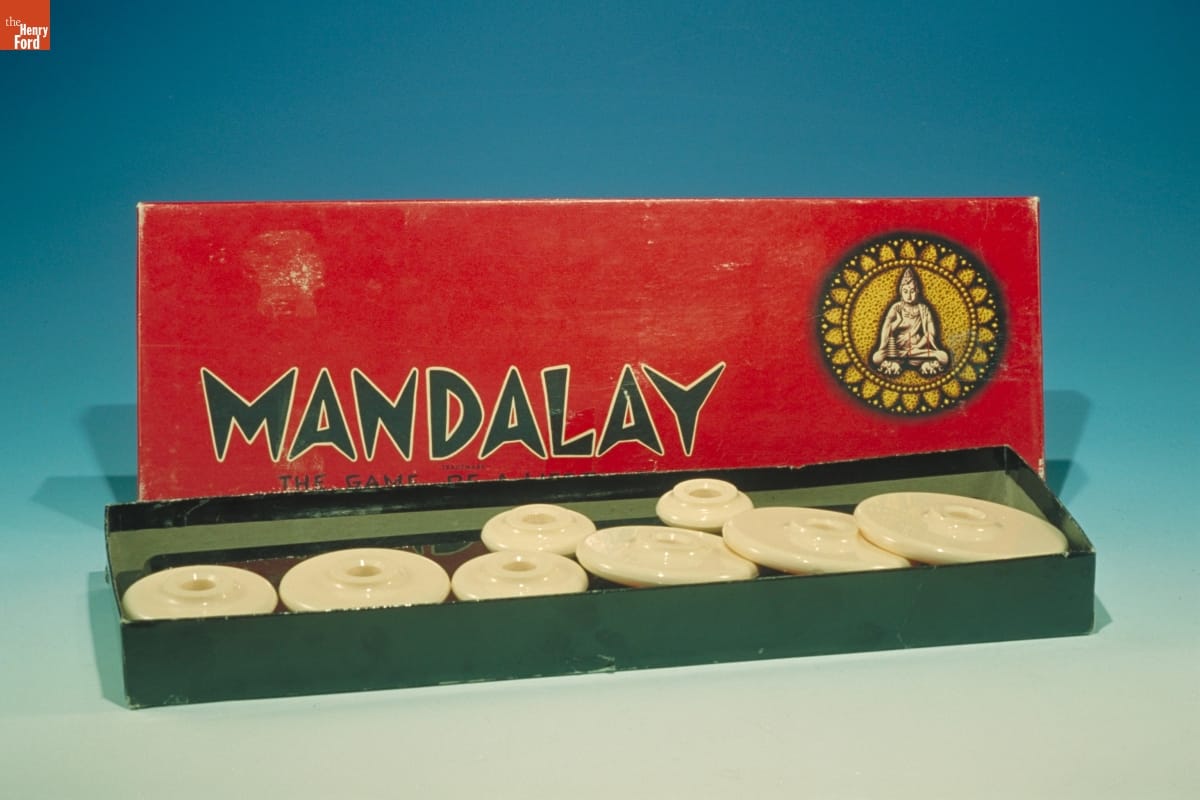
- Mandalay:The Game of a Lifetime, 1960-1965 - The objective of this puzzle game is to move all the discs from one post to another. Play begins with the discs stacked in a pyramid shape (largest to smallest) on one post. The player can move only one disc at a time. And there is a catch -- a larger piece cannot be placed on top of a smaller piece.
- 1960-1965
- Collections - Artifact
Mandalay:The Game of a Lifetime, 1960-1965
The objective of this puzzle game is to move all the discs from one post to another. Play begins with the discs stacked in a pyramid shape (largest to smallest) on one post. The player can move only one disc at a time. And there is a catch -- a larger piece cannot be placed on top of a smaller piece.
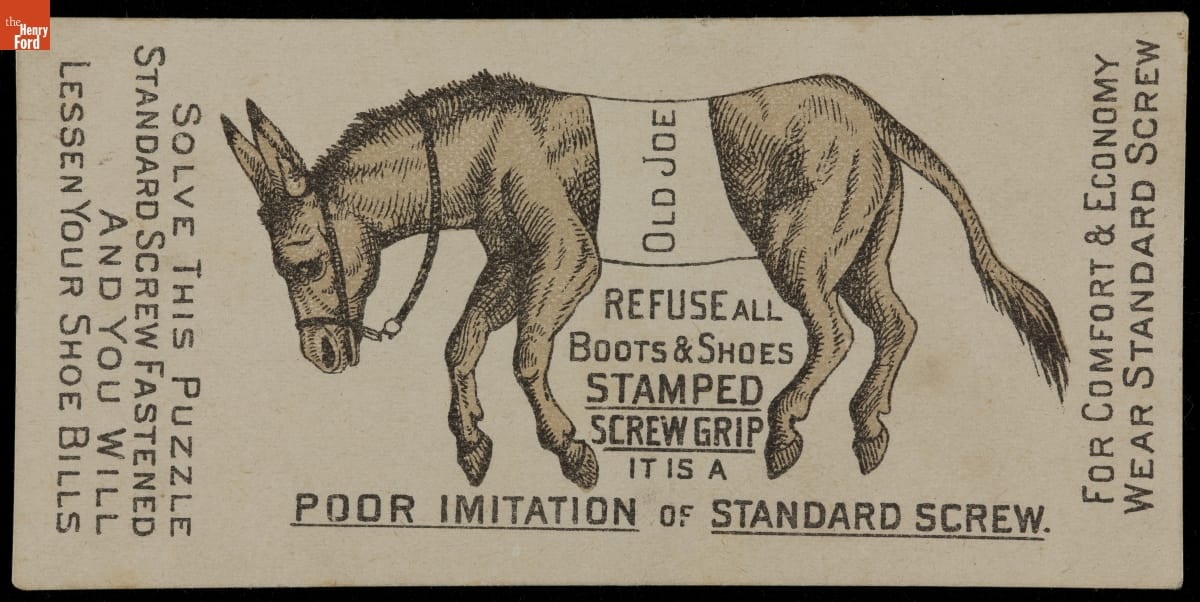
- Trade Card for Standard Screw-Fastened Boots & Shoes, American Co-Operative Boot & Shoe Co., circa 1886 - In the last third of the nineteenth century, an unprecedented variety of consumer goods flooded the American market. Some enterprising advertisers sought to distinguish their products from the competition, distributing trade cards that incorporated a puzzle or game. Americans enjoyed and often saved the popular little advertisements, which survive as historical records of consumerism in the United States.
- circa 1886
- Collections - Artifact
Trade Card for Standard Screw-Fastened Boots & Shoes, American Co-Operative Boot & Shoe Co., circa 1886
In the last third of the nineteenth century, an unprecedented variety of consumer goods flooded the American market. Some enterprising advertisers sought to distinguish their products from the competition, distributing trade cards that incorporated a puzzle or game. Americans enjoyed and often saved the popular little advertisements, which survive as historical records of consumerism in the United States.
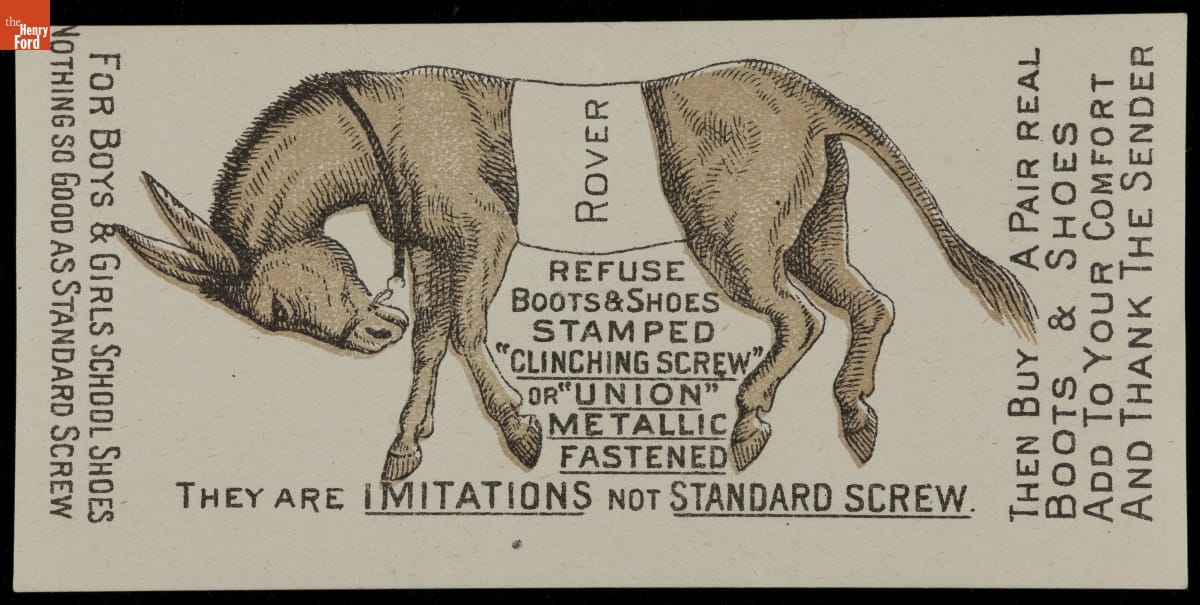
- Trade Card for American Co-Operative Boot & Shoe Co., circa 1886 - In the last third of the nineteenth century, an unprecedented variety of consumer goods flooded the American market. Some enterprising advertisers sought to distinguish their products from the competition, distributing trade cards that incorporated a puzzle or game. Americans enjoyed and often saved the popular little advertisements, which survive as historical records of consumerism in the United States.
- circa 1886
- Collections - Artifact
Trade Card for American Co-Operative Boot & Shoe Co., circa 1886
In the last third of the nineteenth century, an unprecedented variety of consumer goods flooded the American market. Some enterprising advertisers sought to distinguish their products from the competition, distributing trade cards that incorporated a puzzle or game. Americans enjoyed and often saved the popular little advertisements, which survive as historical records of consumerism in the United States.
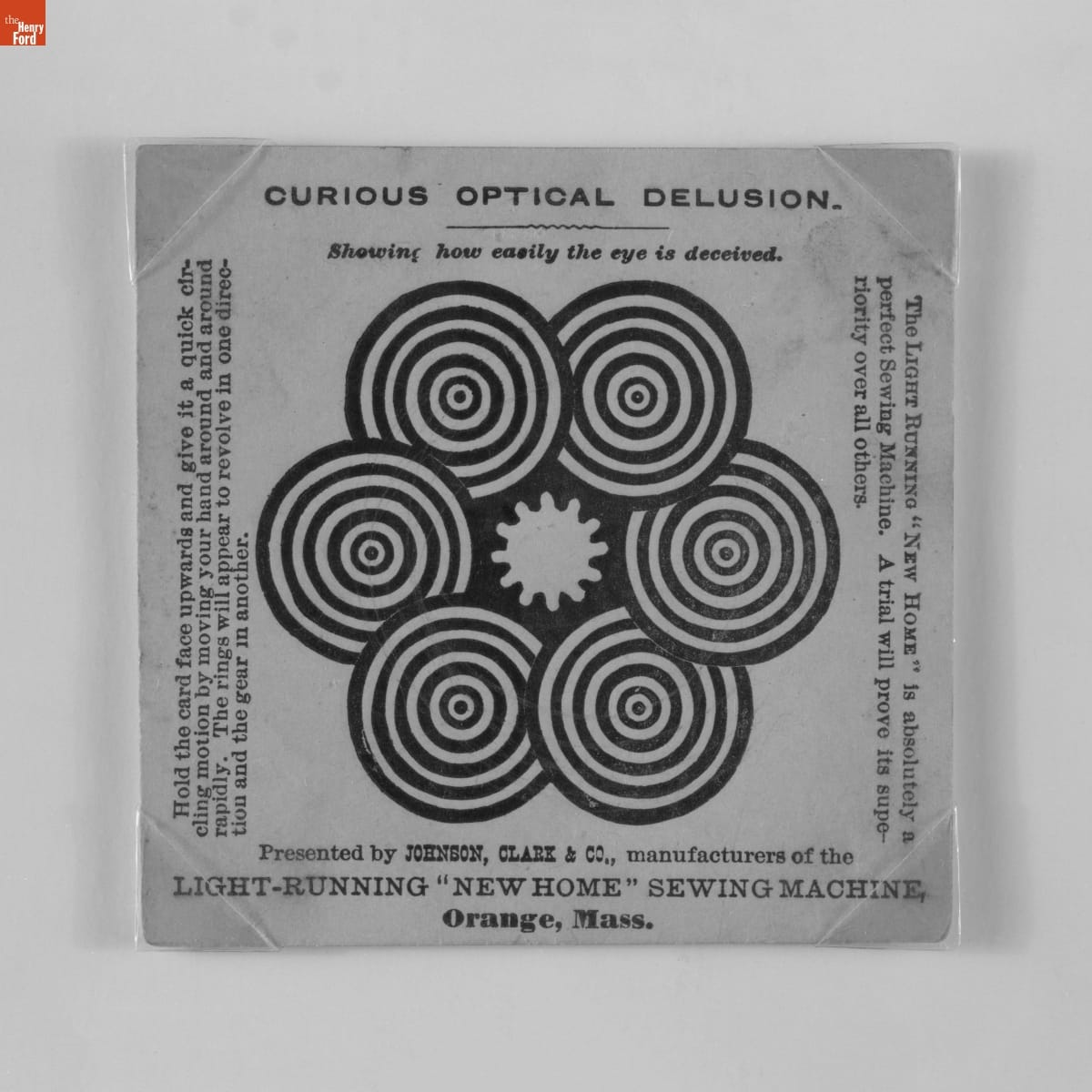
- Trade Card for the New Home Sewing Machine, 1870-1890 - In the last third of the nineteenth century, an unprecedented variety of consumer goods flooded the American market. Some enterprising advertisers sought to distinguish their products from the competition, distributing trade cards that incorporated a puzzle or game. Americans enjoyed and often saved the popular little advertisements, which survive as historical records of consumerism in the United States.
- 1870-1890
- Collections - Artifact
Trade Card for the New Home Sewing Machine, 1870-1890
In the last third of the nineteenth century, an unprecedented variety of consumer goods flooded the American market. Some enterprising advertisers sought to distinguish their products from the competition, distributing trade cards that incorporated a puzzle or game. Americans enjoyed and often saved the popular little advertisements, which survive as historical records of consumerism in the United States.
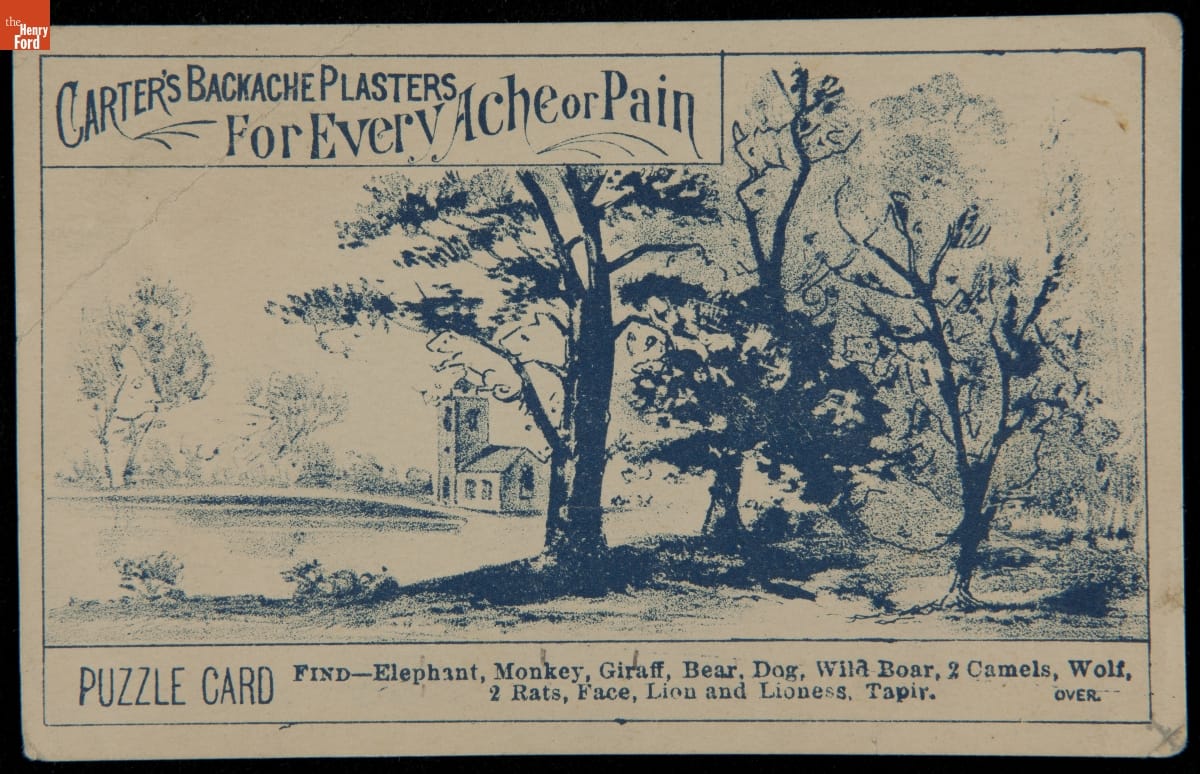
- Trade Card for Smart Weed and Belladonna Back Ache Plasters, Carter Medicine Co., 1880-1900 - In the last third of the nineteenth century, an unprecedented variety of consumer goods flooded the American market. Some enterprising advertisers sought to distinguish their products from the competition, distributing trade cards that incorporated a puzzle or game. Americans enjoyed and often saved the popular little advertisements, which survive as historical records of consumerism in the United States.
- 1880-1900
- Collections - Artifact
Trade Card for Smart Weed and Belladonna Back Ache Plasters, Carter Medicine Co., 1880-1900
In the last third of the nineteenth century, an unprecedented variety of consumer goods flooded the American market. Some enterprising advertisers sought to distinguish their products from the competition, distributing trade cards that incorporated a puzzle or game. Americans enjoyed and often saved the popular little advertisements, which survive as historical records of consumerism in the United States.