
Search
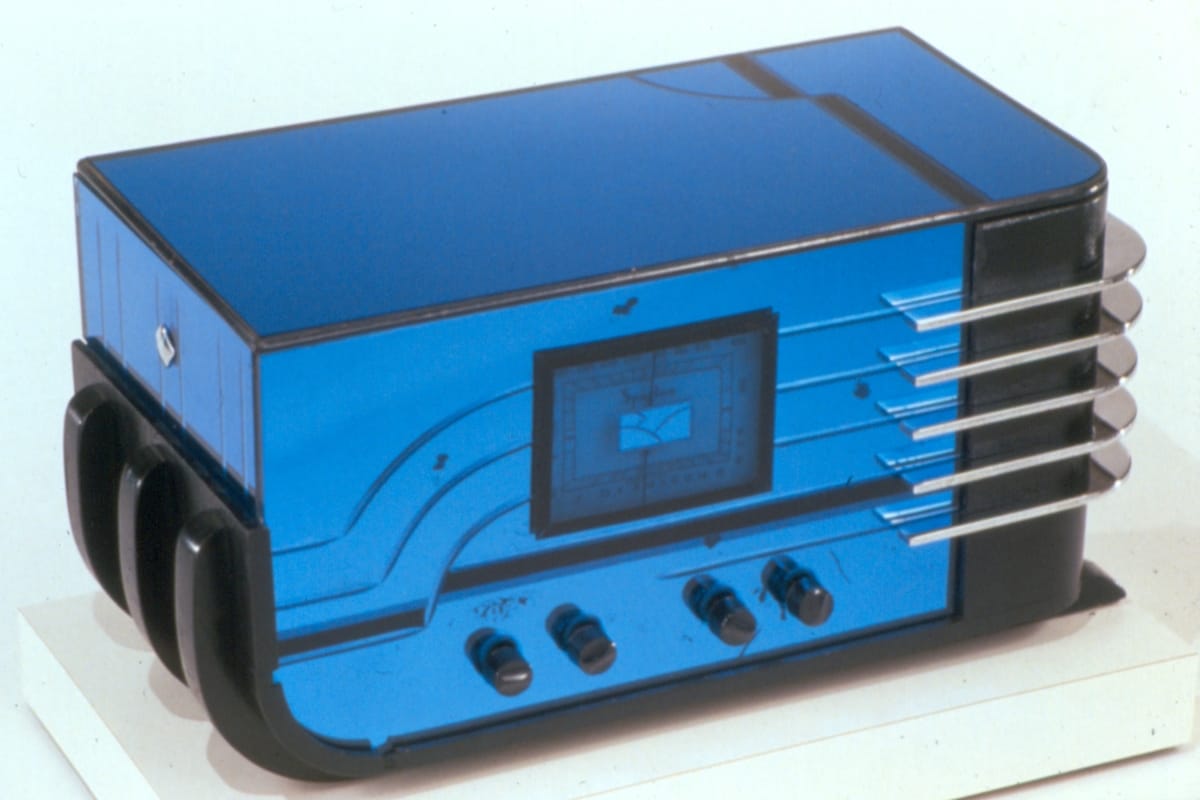
- Sparton Radio Model 558-B, 1937 - This 1937 Sparton radio was designed by Walter Dorwin Teague, a designer renowned for his use of streamlined forms. A study in contrasts -- the blue mirrored finish and curved sled-like base suggest speed while the five jutting parallel panels appear almost architectural -- this expensive and glamorous radio had a limited market during the Great Depression.
- 1937
- Collections - Artifact
Sparton Radio Model 558-B, 1937
This 1937 Sparton radio was designed by Walter Dorwin Teague, a designer renowned for his use of streamlined forms. A study in contrasts -- the blue mirrored finish and curved sled-like base suggest speed while the five jutting parallel panels appear almost architectural -- this expensive and glamorous radio had a limited market during the Great Depression.
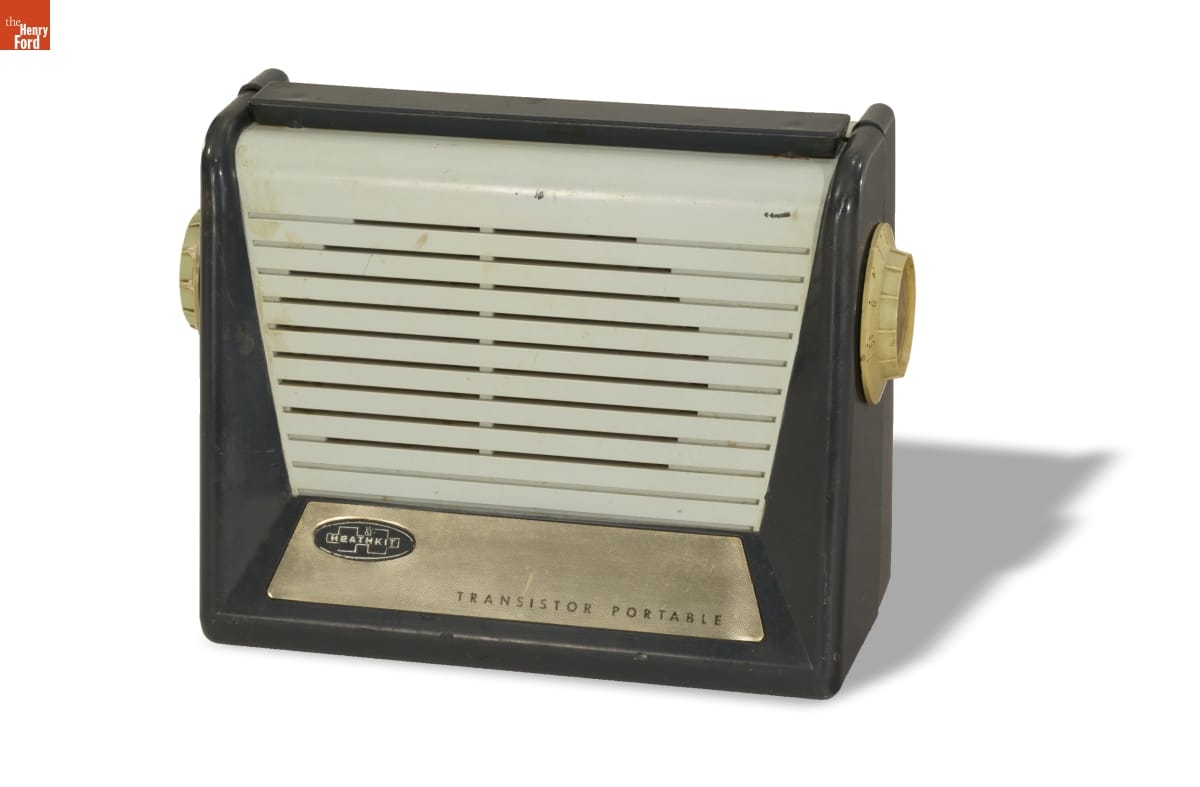
- Heathkit Portable AM Transistor Radio, Model XR-2P, circa 1962 - The Heath Company was founded in the 1920s as a "do-it-yourself" electronics kit provider. "Heathkits" provided simple, accessible instructions understandable to amateurs and experts alike. As hobbyists built radios, televisions, and computers from scratch, they gained electronics skills. These kits were not novelties, but emphasized access to affordable, advanced, high-performance technology. Parallels can easily be seen within present-day "Maker" culture.
- circa 1962
- Collections - Artifact
Heathkit Portable AM Transistor Radio, Model XR-2P, circa 1962
The Heath Company was founded in the 1920s as a "do-it-yourself" electronics kit provider. "Heathkits" provided simple, accessible instructions understandable to amateurs and experts alike. As hobbyists built radios, televisions, and computers from scratch, they gained electronics skills. These kits were not novelties, but emphasized access to affordable, advanced, high-performance technology. Parallels can easily be seen within present-day "Maker" culture.
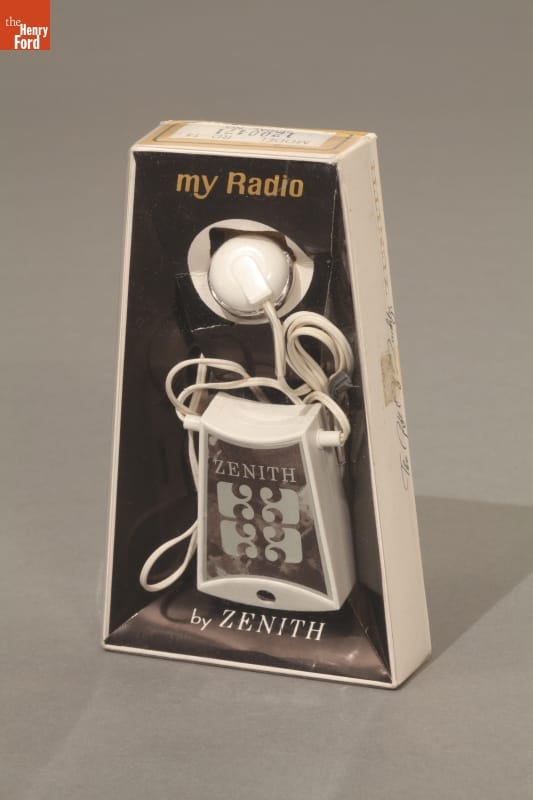
- Zenith "My Radio" Pendant Transistor Radio, circa 1970 - The size of radios shrank following the advent of transistor technology. Even the smallest vacuum tubes were bulky, and their power consumption ensured the need for large batteries. Transistor radios made of lightweight plastics were cheap and truly portable. With the addition of an earphone a radio such as this allowed the listener to enjoy a completely personal listening experience.
- circa 1970
- Collections - Artifact
Zenith "My Radio" Pendant Transistor Radio, circa 1970
The size of radios shrank following the advent of transistor technology. Even the smallest vacuum tubes were bulky, and their power consumption ensured the need for large batteries. Transistor radios made of lightweight plastics were cheap and truly portable. With the addition of an earphone a radio such as this allowed the listener to enjoy a completely personal listening experience.
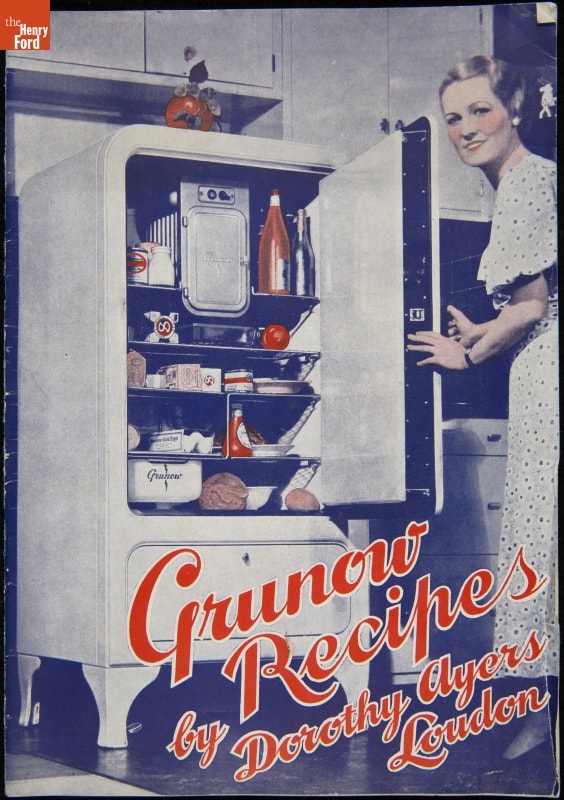
- "Grunow Recipes by Dorothy Ayers Loudon," circa 1934 -
- circa 1934
- Collections - Artifact
"Grunow Recipes by Dorothy Ayers Loudon," circa 1934
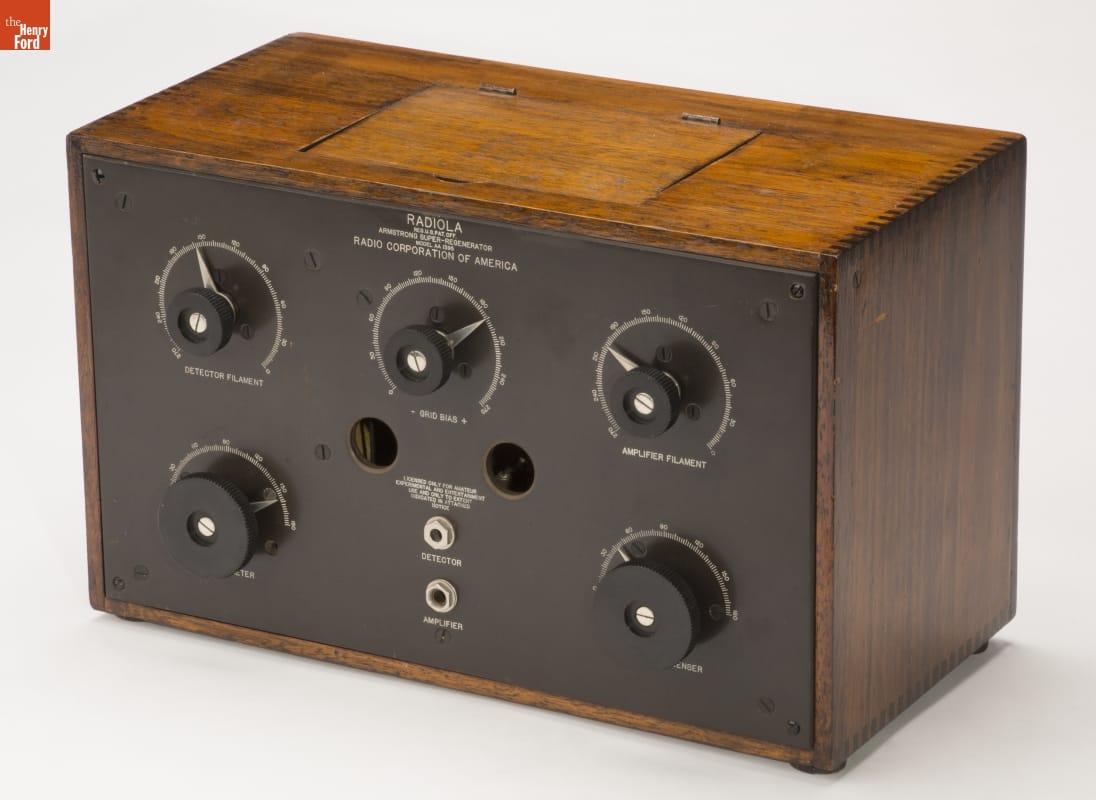
- Radiola Broadcast Receiver, Type 1375, Used at Tuckerton Wireless Station, 1922-1923 - This radio equipment was used at the German-built Tuckerton Wireless Station in New Jersey. A powerful 820-foot antenna communicated with an identical station in Germany. National security concerns during WWI led to the seizure of Tuckerton by the U.S. government in 1917. It is cited to be the origin of information leaks leading to the RMS <em>Lusitania</em> disaster through U-boat attack.
- 1922-1923
- Collections - Artifact
Radiola Broadcast Receiver, Type 1375, Used at Tuckerton Wireless Station, 1922-1923
This radio equipment was used at the German-built Tuckerton Wireless Station in New Jersey. A powerful 820-foot antenna communicated with an identical station in Germany. National security concerns during WWI led to the seizure of Tuckerton by the U.S. government in 1917. It is cited to be the origin of information leaks leading to the RMS Lusitania disaster through U-boat attack.
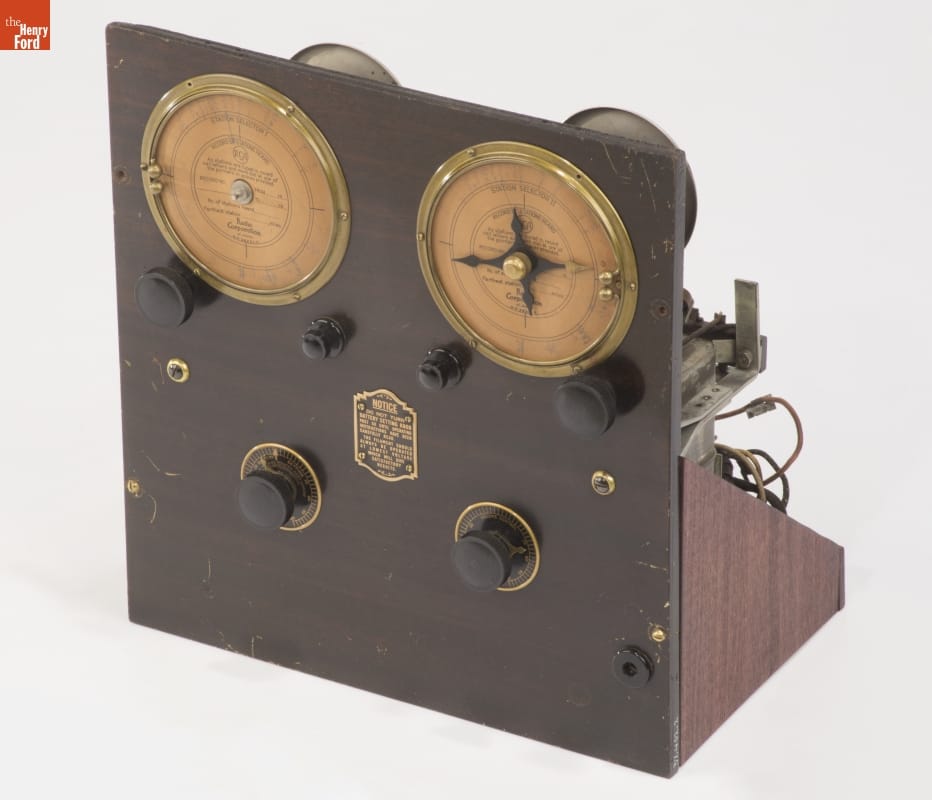
- Radiola Super-Heterodyne Radio Receiver Chassis, Type AR-813, 1924-1926 -
- 1924-1926
- Collections - Artifact
Radiola Super-Heterodyne Radio Receiver Chassis, Type AR-813, 1924-1926
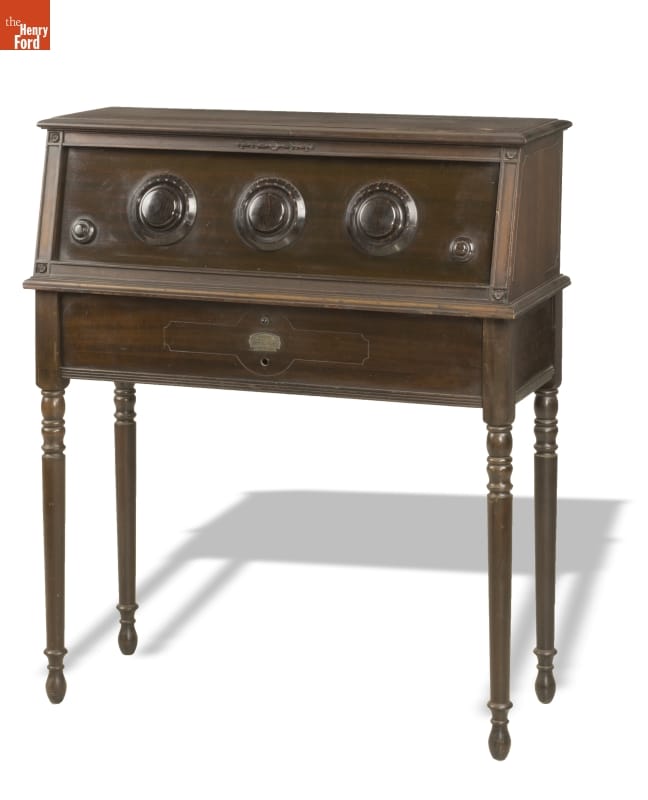
- Garod Console Radio, Model EA, 1926-1927 -
- 1926-1927
- Collections - Artifact
Garod Console Radio, Model EA, 1926-1927
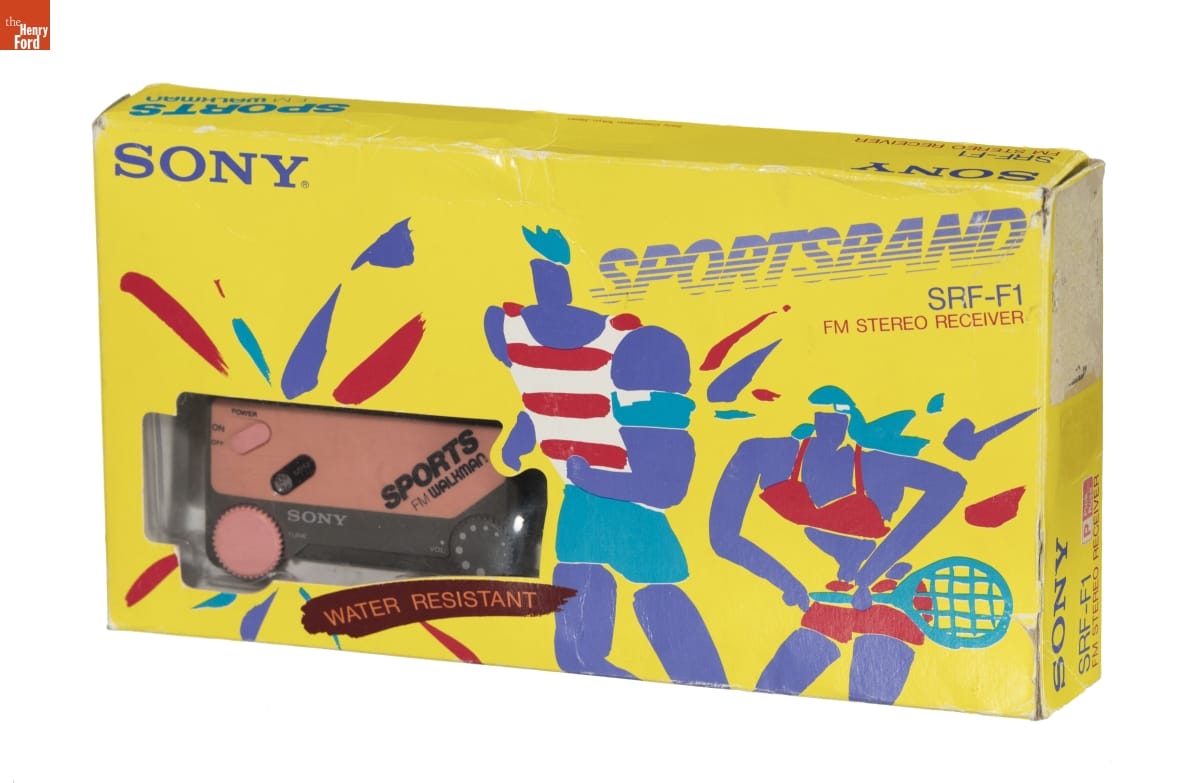
- Sony "Sportsband FM Stereo" Walkman, 1986 -
- 1986
- Collections - Artifact
Sony "Sportsband FM Stereo" Walkman, 1986
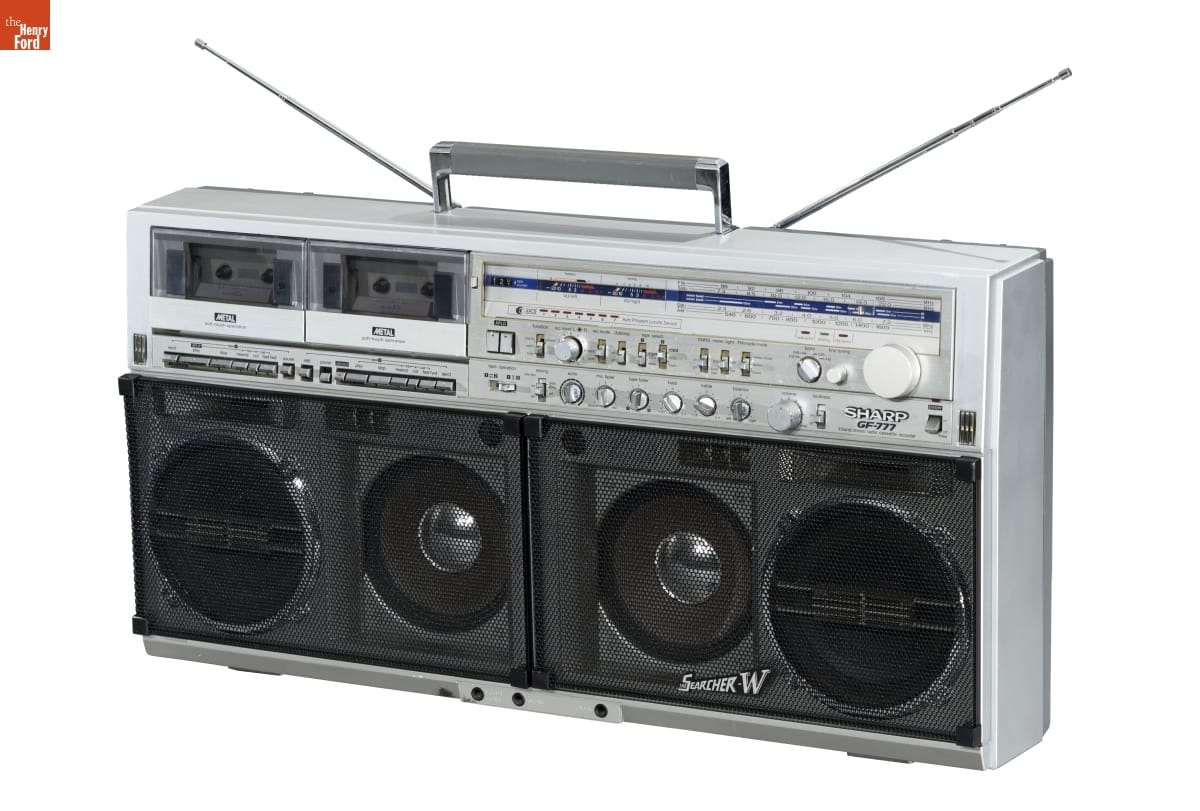
- Sharp GF-777 "The Searcher-W" Boombox, circa 1984 -
- circa 1984
- Collections - Artifact
Sharp GF-777 "The Searcher-W" Boombox, circa 1984
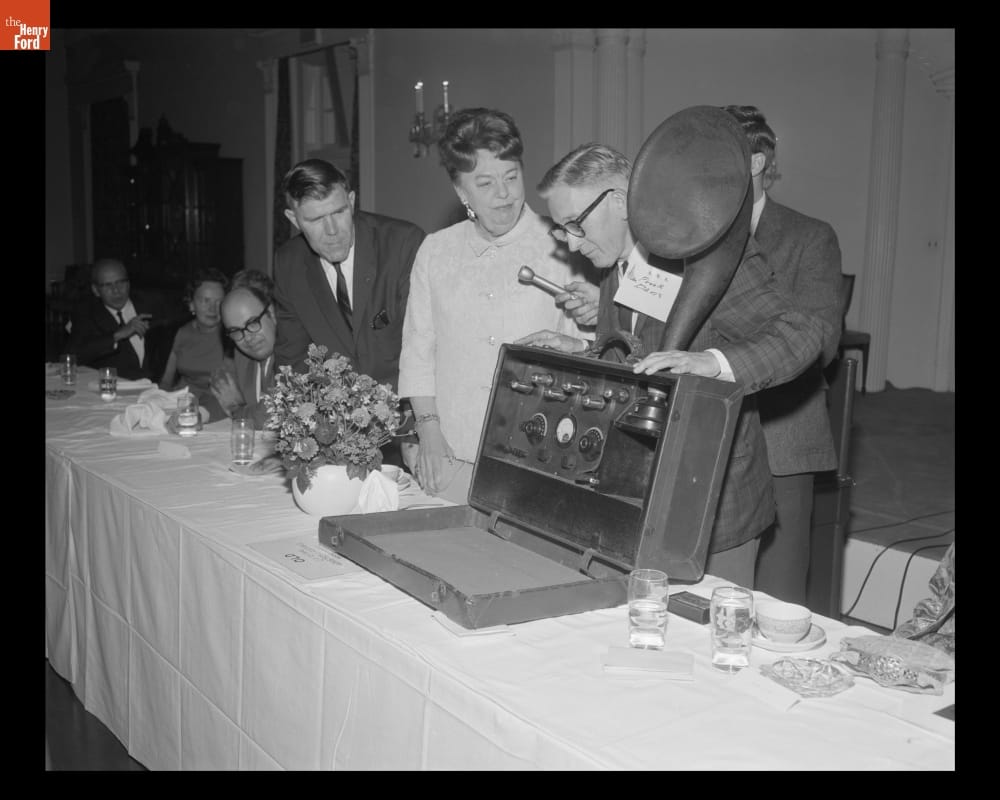
- Marion Armstrong Presents the First Portable Superheterodyne Radio Receiver to Henry Ford Museum, September 22, 1967 - This photograph shows the first portable superheterodyne radio receiver, designed by Edwin Armstrong. Superheterodying was a major communications discovery made by Armstrong. High and low frequencies were mixed to produce powerful, selective radio waves. Following his untimely death, Edwin's wife Marion Armstrong continued to preserve his legacy; she donated this radio to The Henry Ford museum in 1967.
- September 22, 1967
- Collections - Artifact
Marion Armstrong Presents the First Portable Superheterodyne Radio Receiver to Henry Ford Museum, September 22, 1967
This photograph shows the first portable superheterodyne radio receiver, designed by Edwin Armstrong. Superheterodying was a major communications discovery made by Armstrong. High and low frequencies were mixed to produce powerful, selective radio waves. Following his untimely death, Edwin's wife Marion Armstrong continued to preserve his legacy; she donated this radio to The Henry Ford museum in 1967.