
Search
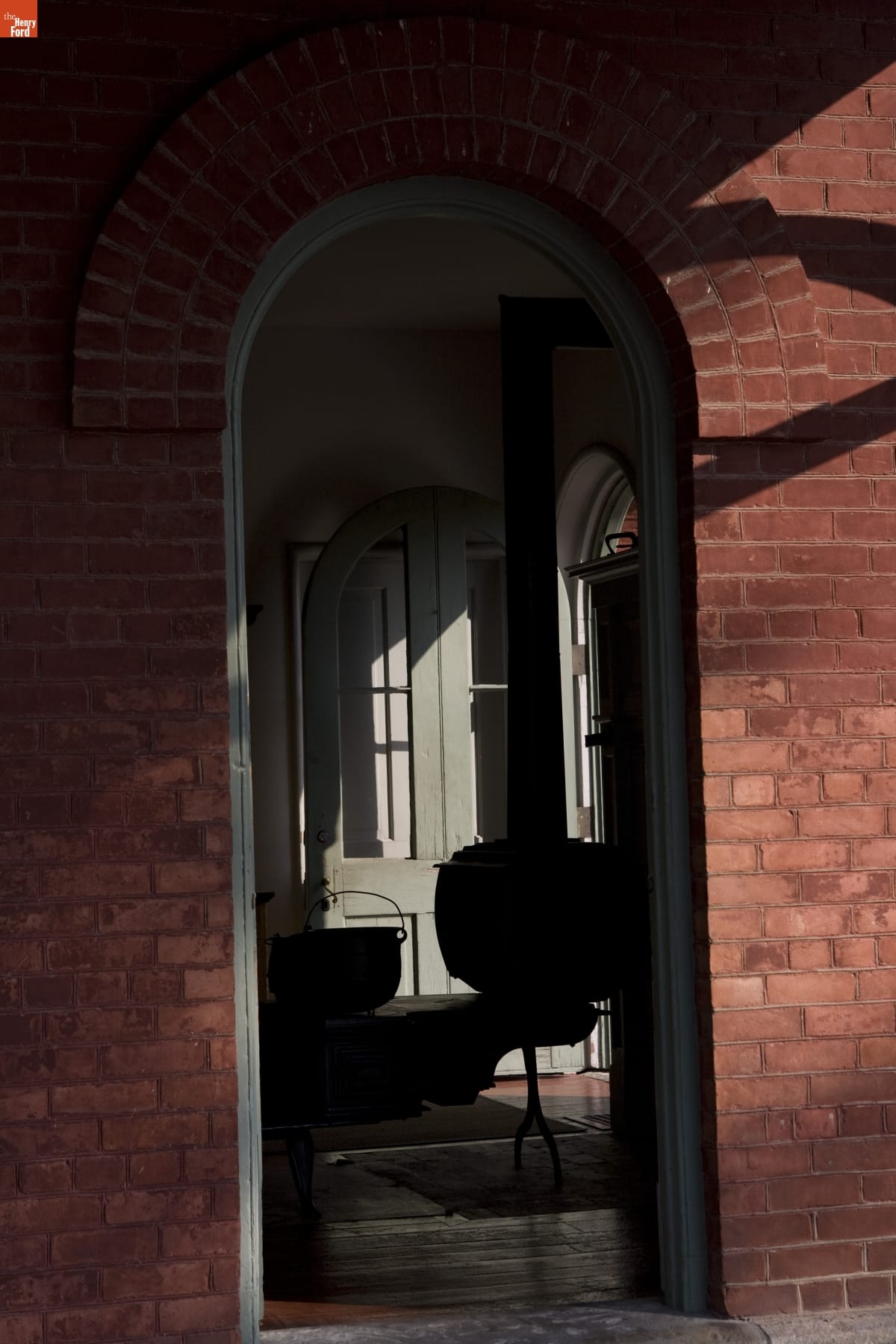
- Smiths Creek Depot in Greenfield Village, September 2007 - Henry Ford purchased Smiths Creek Depot from the Grand Trunk Western Railway in 1929. Thomas Edison passed the building often while working as a railroad newsboy. Originally located about nine miles southwest of Port Huron, Michigan, the depot was moved to Ford's museum complex in Dearborn, Michigan. This photo shows Smiths Creek Depot at Greenfield Village in 2007.
- September 01, 2007
- Collections - Artifact
Smiths Creek Depot in Greenfield Village, September 2007
Henry Ford purchased Smiths Creek Depot from the Grand Trunk Western Railway in 1929. Thomas Edison passed the building often while working as a railroad newsboy. Originally located about nine miles southwest of Port Huron, Michigan, the depot was moved to Ford's museum complex in Dearborn, Michigan. This photo shows Smiths Creek Depot at Greenfield Village in 2007.
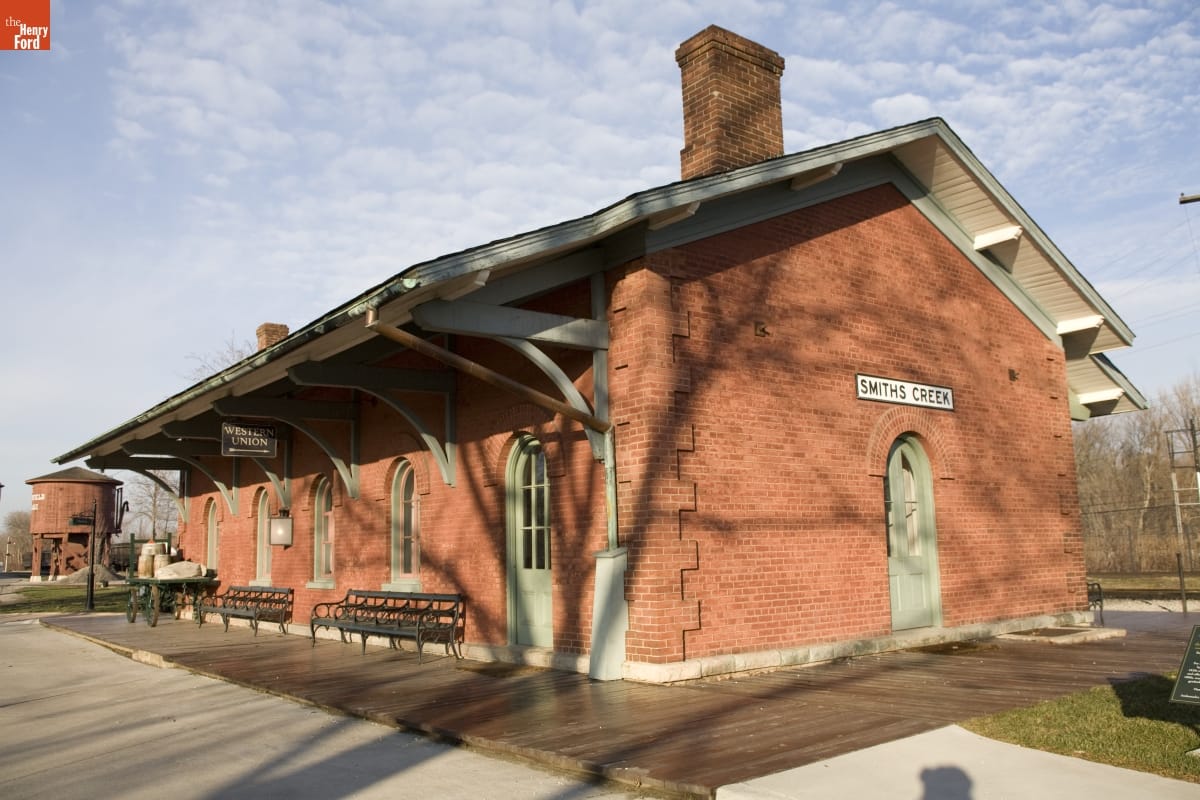
- Smiths Creek Depot in Greenfield Village, September 2007 - Henry Ford purchased Smiths Creek Depot from the Grand Trunk Western Railway in 1929. Thomas Edison passed the building often while working as a railroad newsboy. Originally located about nine miles southwest of Port Huron, Michigan, the depot was moved to Ford's museum complex in Dearborn, Michigan. This photo shows Smiths Creek Depot at Greenfield Village in 2007.
- September 01, 2007
- Collections - Artifact
Smiths Creek Depot in Greenfield Village, September 2007
Henry Ford purchased Smiths Creek Depot from the Grand Trunk Western Railway in 1929. Thomas Edison passed the building often while working as a railroad newsboy. Originally located about nine miles southwest of Port Huron, Michigan, the depot was moved to Ford's museum complex in Dearborn, Michigan. This photo shows Smiths Creek Depot at Greenfield Village in 2007.
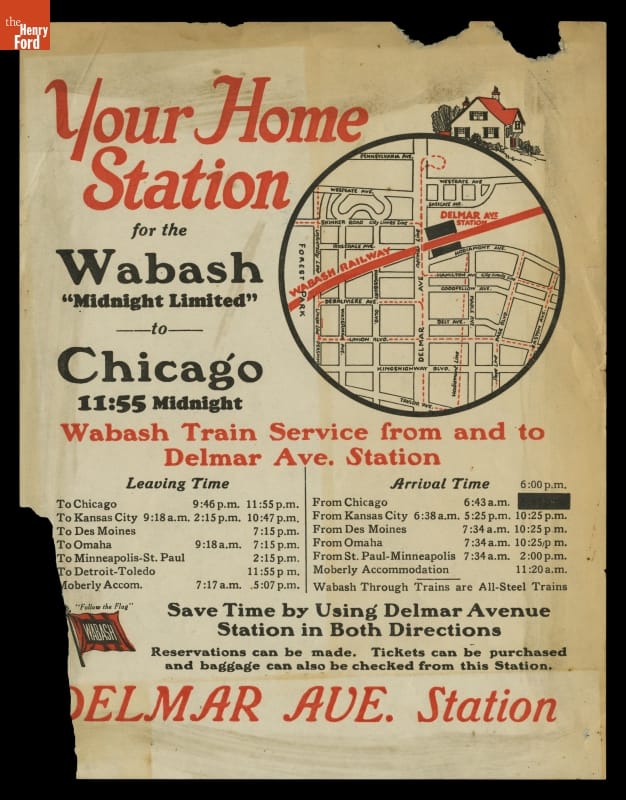
- Handbill and Timetable for Wabash Railway's "Midnight Limited," Leaving from Delmar Avenue Station, St. Louis, Missouri, 1929 - The Wabash Railway, with origins dating back to 1838, was a strong Midwestern carrier until Amtrak took over the national passenger railroad system in 1971. In 1928, the Wabash Railway erected the Delmar Avenue Station, providing west-end and suburban St. Louis residents -- particularly businessmen -- convenient access to their railroad system without having to go all the way downtown.
- 1929
- Collections - Artifact
Handbill and Timetable for Wabash Railway's "Midnight Limited," Leaving from Delmar Avenue Station, St. Louis, Missouri, 1929
The Wabash Railway, with origins dating back to 1838, was a strong Midwestern carrier until Amtrak took over the national passenger railroad system in 1971. In 1928, the Wabash Railway erected the Delmar Avenue Station, providing west-end and suburban St. Louis residents -- particularly businessmen -- convenient access to their railroad system without having to go all the way downtown.
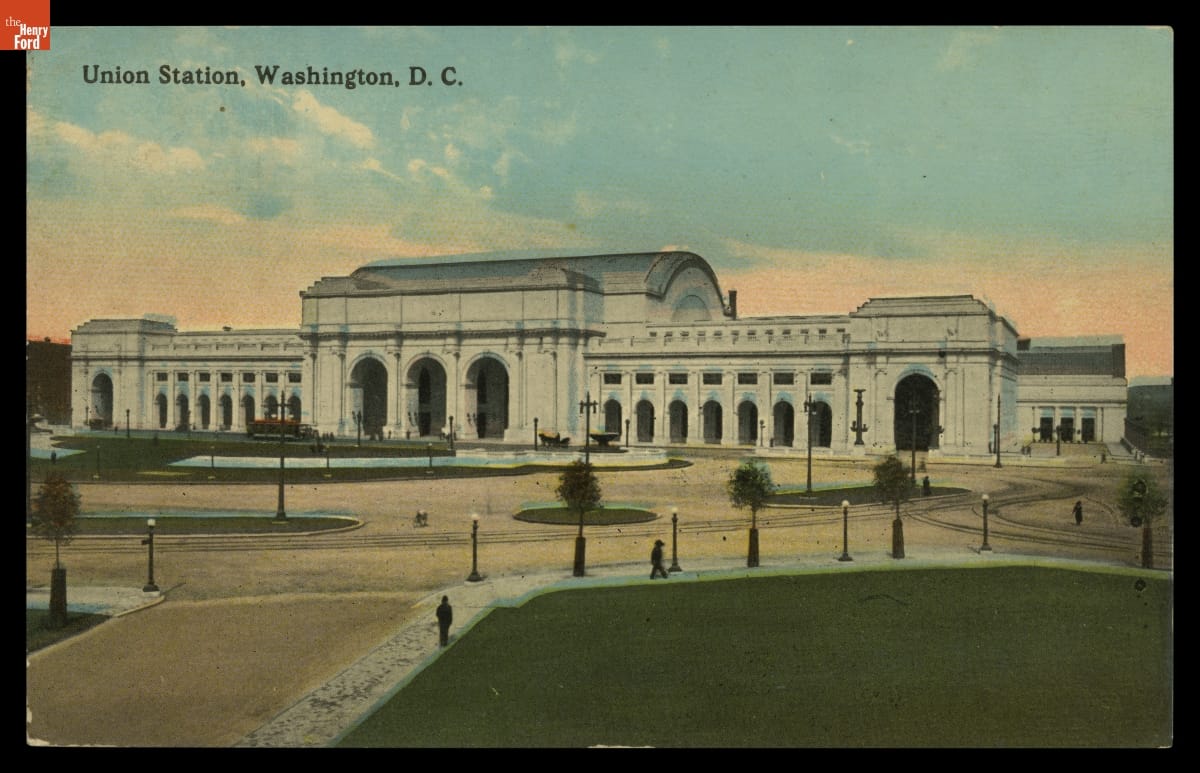
- Union Station, Washington, D.C., circa 1913 - Washington's Union Station was opened by the Baltimore & Ohio and Pennsylvania Railroads in 1907. The monumental building -- well suited to a city of monuments -- was part of a larger project to beautify the nation's capital in the early 1900s. Removal of the Pennsylvania Railroad's previous station, located directly on the National Mall, was a major component of the plan.
- April 27, 1913
- Collections - Artifact
Union Station, Washington, D.C., circa 1913
Washington's Union Station was opened by the Baltimore & Ohio and Pennsylvania Railroads in 1907. The monumental building -- well suited to a city of monuments -- was part of a larger project to beautify the nation's capital in the early 1900s. Removal of the Pennsylvania Railroad's previous station, located directly on the National Mall, was a major component of the plan.
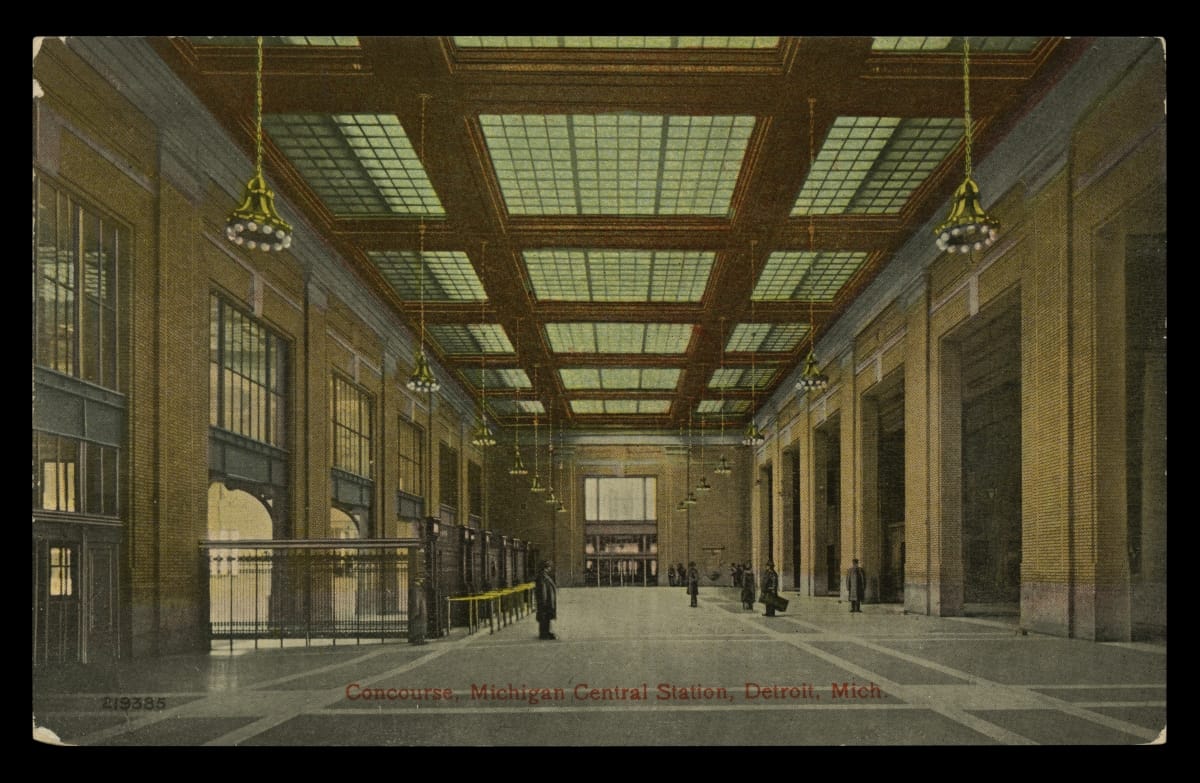
- "Concourse, Michigan Central Station, Detroit, Mich.," 1914 - In December 1913, the Michigan Central Railroad opened a new $2.5 million passenger station in Detroit's Corktown neighborhood. Its grand concourse included women's and men's waiting rooms, a barbershop, a reading room, a drug store, and three restaurants. The station's fortunes declined with those of railroad passenger service following World War II. It hosted its last passenger train in 1988.
- 1914
- Collections - Artifact
"Concourse, Michigan Central Station, Detroit, Mich.," 1914
In December 1913, the Michigan Central Railroad opened a new $2.5 million passenger station in Detroit's Corktown neighborhood. Its grand concourse included women's and men's waiting rooms, a barbershop, a reading room, a drug store, and three restaurants. The station's fortunes declined with those of railroad passenger service following World War II. It hosted its last passenger train in 1988.
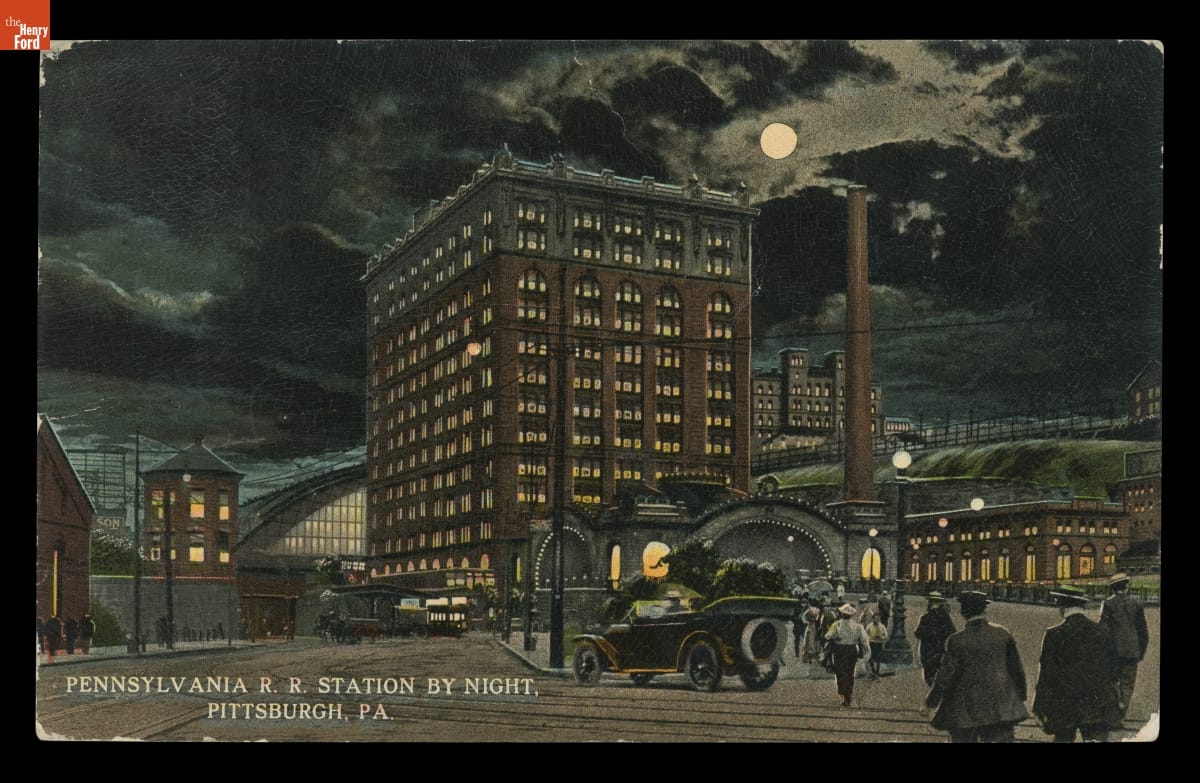
- "Pennsylvania R.R. Station By Night, Pittsburgh, PA," circa 1916 - Pittsburgh's Union Station, credited to Chicago architect Daniel Burnham, opened in 1901. Despite its name implying a union of multiple railroads, Union Station served only the Pennsylvania Railroad and its subsidiaries. Even so, at its peak the building handled hundreds of long-distance and commuter trains each day. Union Station was restored in 1988 and still hosts Amtrak passenger trains today.
- circa 1916
- Collections - Artifact
"Pennsylvania R.R. Station By Night, Pittsburgh, PA," circa 1916
Pittsburgh's Union Station, credited to Chicago architect Daniel Burnham, opened in 1901. Despite its name implying a union of multiple railroads, Union Station served only the Pennsylvania Railroad and its subsidiaries. Even so, at its peak the building handled hundreds of long-distance and commuter trains each day. Union Station was restored in 1988 and still hosts Amtrak passenger trains today.
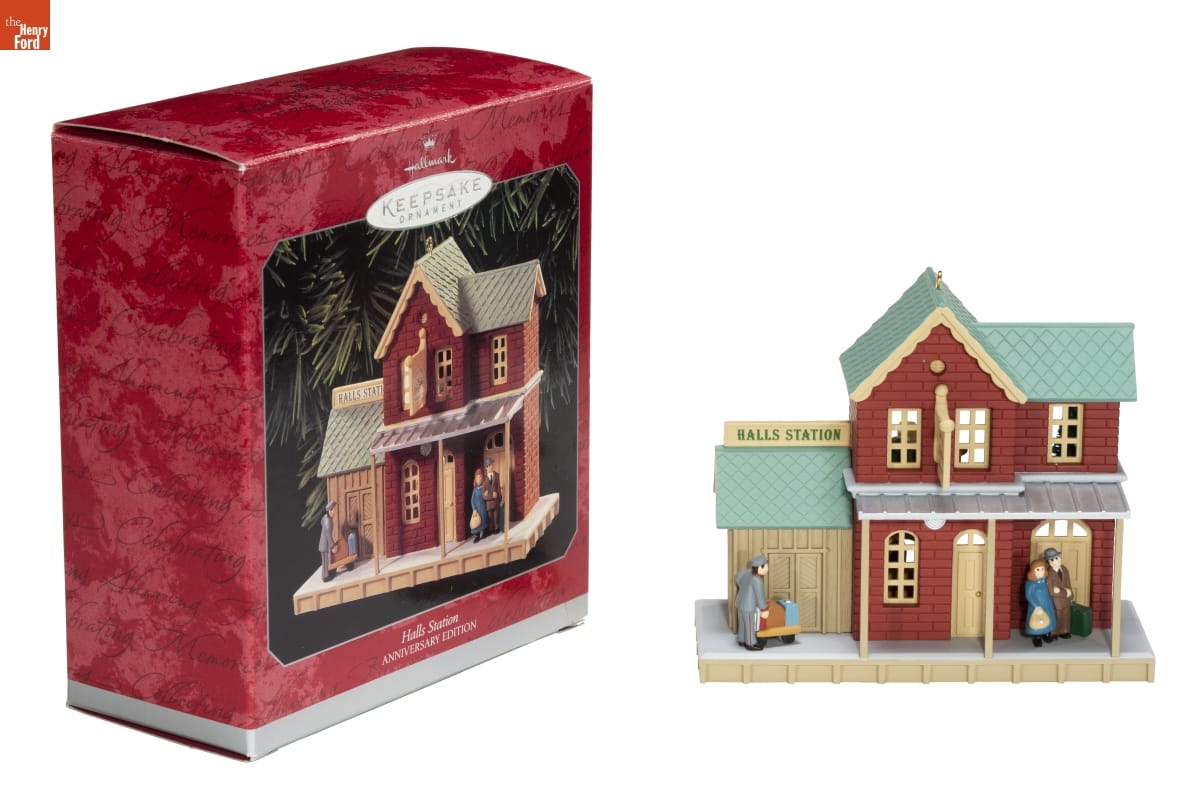
- Hallmark "Halls Station" Christmas Ornament, 1998 - Already known for greeting cards, Hallmark introduced a line of Christmas ornaments in 1973. The company's annual release of an increasing array of ornaments revolutionized Christmas decorating, appealing to customers' interest in marking memories and milestones as well as expressing one's personality and unique tastes.
- 1998
- Collections - Artifact
Hallmark "Halls Station" Christmas Ornament, 1998
Already known for greeting cards, Hallmark introduced a line of Christmas ornaments in 1973. The company's annual release of an increasing array of ornaments revolutionized Christmas decorating, appealing to customers' interest in marking memories and milestones as well as expressing one's personality and unique tastes.
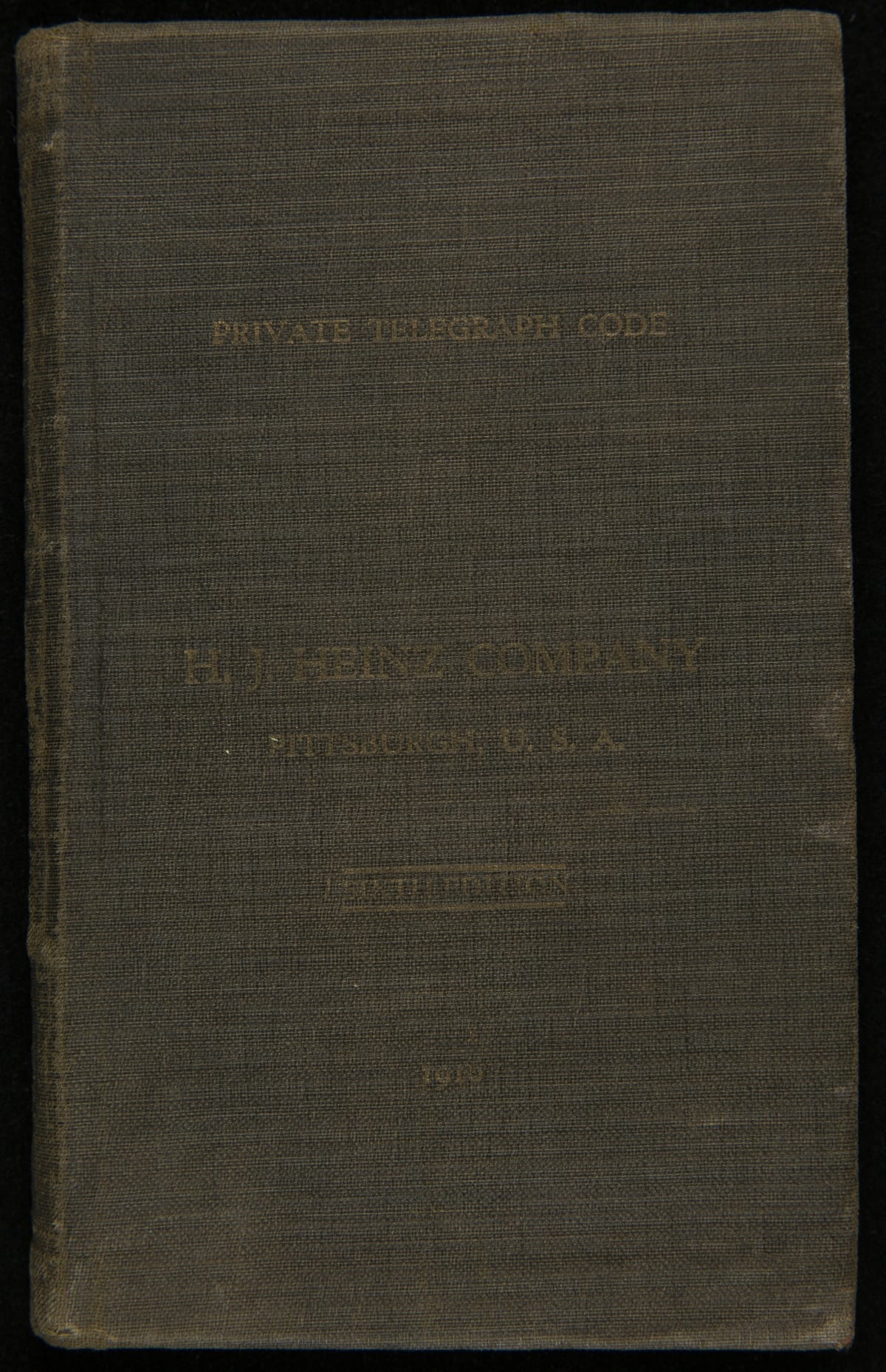
- H. J. Heinz Company Private Telegraph Code Book, April 1916 - Before telephones, a telegraph was used to transmit messages. Once sent, the message was written or printed and delivered by hand. This was an expensive mode of communication (often charging per word), encouraging companies to create unique codes for phrases to reduce cost. This Telegraph Code Book was used by the H.J. Heinz Company.
- April 01, 1916
- Collections - Artifact
H. J. Heinz Company Private Telegraph Code Book, April 1916
Before telephones, a telegraph was used to transmit messages. Once sent, the message was written or printed and delivered by hand. This was an expensive mode of communication (often charging per word), encouraging companies to create unique codes for phrases to reduce cost. This Telegraph Code Book was used by the H.J. Heinz Company.
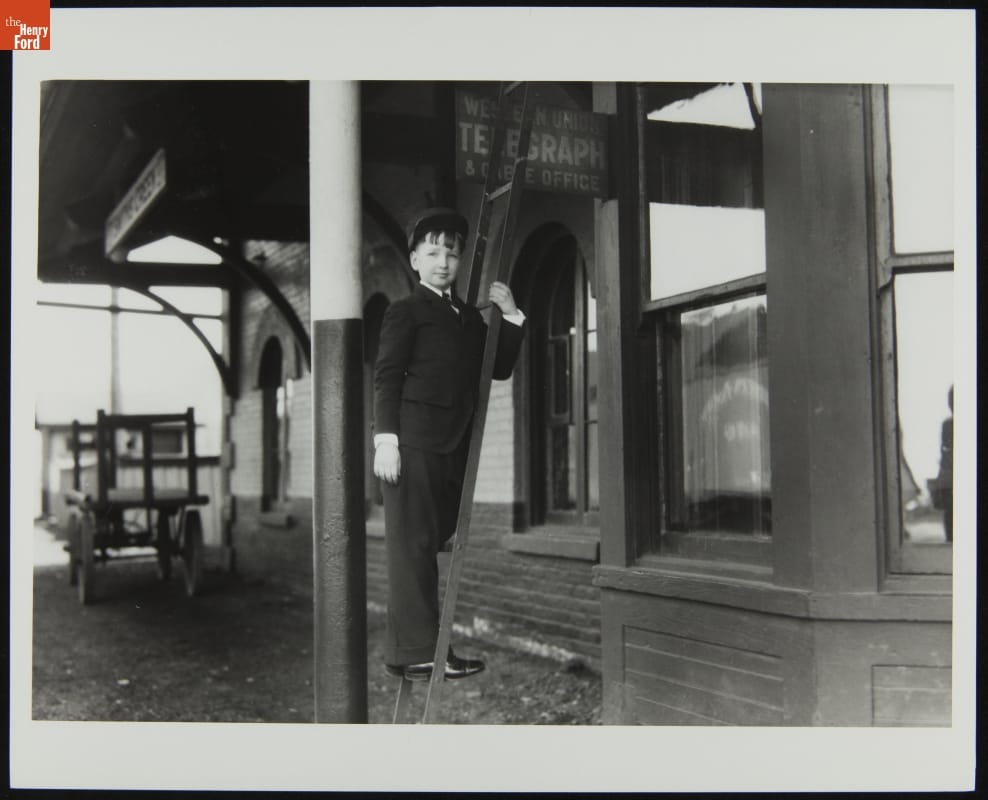
- Benson Ford at Smiths Creek Depot Before Its Relocation to Greenfield Village, April 1929 - Henry Ford purchased the Grand Trunk Western Railway's Smiths Creek Depot in 1929. Thomas Edison passed by it regularly while working as a railroad newsboy. Ford's grandsons, Henry Ford II and Benson Ford, posed for photos at the depot before it was moved to Greenfield Village. Henry Ford built GTW a new depot at the original Smiths Creek site.
- April 05, 1929
- Collections - Artifact
Benson Ford at Smiths Creek Depot Before Its Relocation to Greenfield Village, April 1929
Henry Ford purchased the Grand Trunk Western Railway's Smiths Creek Depot in 1929. Thomas Edison passed by it regularly while working as a railroad newsboy. Ford's grandsons, Henry Ford II and Benson Ford, posed for photos at the depot before it was moved to Greenfield Village. Henry Ford built GTW a new depot at the original Smiths Creek site.
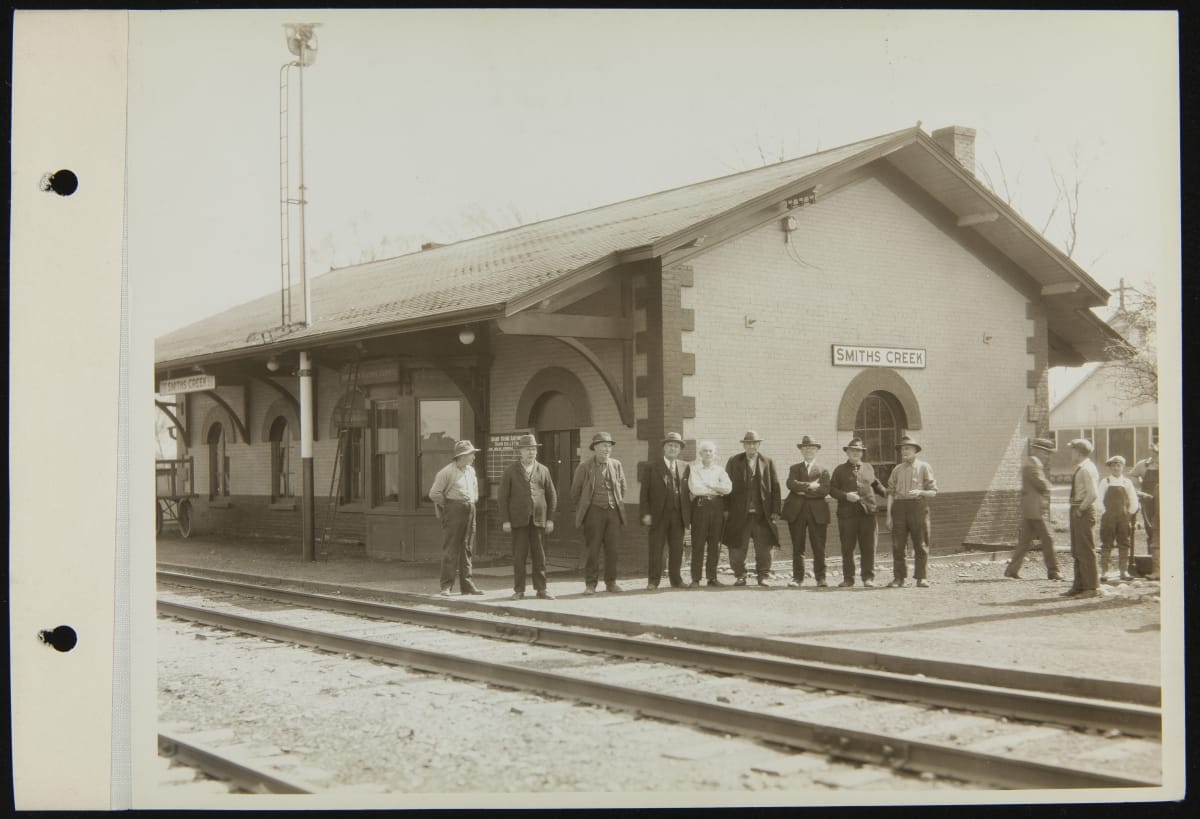
- Men Standing outside Smiths Creek Depot at its Original Site, Smiths Creek, Michigan, April 1929 - The railroad station was a center of 19th-century small-town life. This photo shows a crowd of people gathered at Smiths Creek Depot, at its original site about nine miles southwest of Port Huron, Michigan. Henry Ford purchased the depot from the Grand Trunk Western Railway in 1929, and he relocated it to his Greenfield Village museum complex.
- April 05, 1929
- Collections - Artifact
Men Standing outside Smiths Creek Depot at its Original Site, Smiths Creek, Michigan, April 1929
The railroad station was a center of 19th-century small-town life. This photo shows a crowd of people gathered at Smiths Creek Depot, at its original site about nine miles southwest of Port Huron, Michigan. Henry Ford purchased the depot from the Grand Trunk Western Railway in 1929, and he relocated it to his Greenfield Village museum complex.