
Search
- Henry Ford's Private Railroad Car "Fair Lane," 1921 - By 1920, Henry and Clara Ford found it increasingly difficult to travel with any degree of privacy. They purchased a private railcar and named it <EM>Fair Lane</EM>. The car had four private rooms, an observation lounge, a dining room, and a fully equipped kitchen. It could accommodate eight passengers. The couple made over 400 trips using <EM>Fair Lane</EM> before selling the passenger car in 1942.

- June 23, 1921
- Collections - Artifact
Henry Ford's Private Railroad Car "Fair Lane," 1921
By 1920, Henry and Clara Ford found it increasingly difficult to travel with any degree of privacy. They purchased a private railcar and named it Fair Lane. The car had four private rooms, an observation lounge, a dining room, and a fully equipped kitchen. It could accommodate eight passengers. The couple made over 400 trips using Fair Lane before selling the passenger car in 1942.
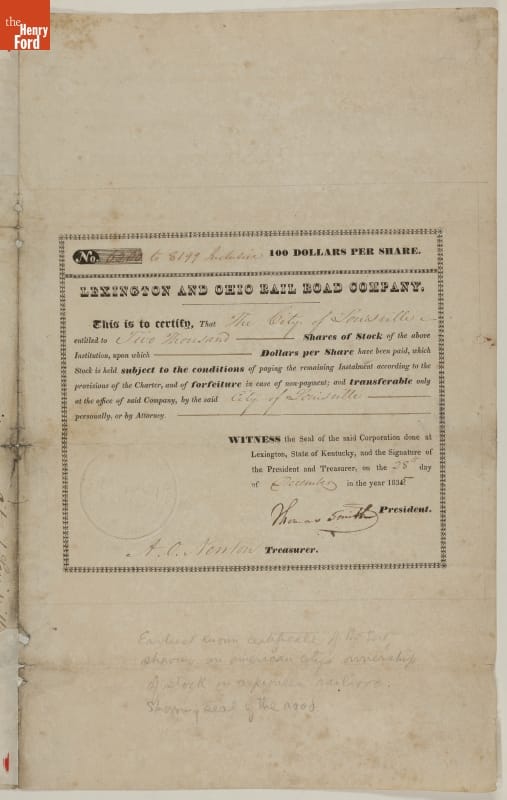
- Stock Certificate, Lexington and Ohio Rail Road Company, 1835 - A number of cities invested in early railroads. Louisville, Kentucky, acquired two thousand shares of the Lexington and Ohio Rail Road Company in 1835. The railroad, authorized in 1830, was to build a line from Lexington, Kentucky, west to the Ohio River. Money was a constant problem however and only a merger in 1858 completed the line.
- December 28, 1835
- Collections - Artifact
Stock Certificate, Lexington and Ohio Rail Road Company, 1835
A number of cities invested in early railroads. Louisville, Kentucky, acquired two thousand shares of the Lexington and Ohio Rail Road Company in 1835. The railroad, authorized in 1830, was to build a line from Lexington, Kentucky, west to the Ohio River. Money was a constant problem however and only a merger in 1858 completed the line.
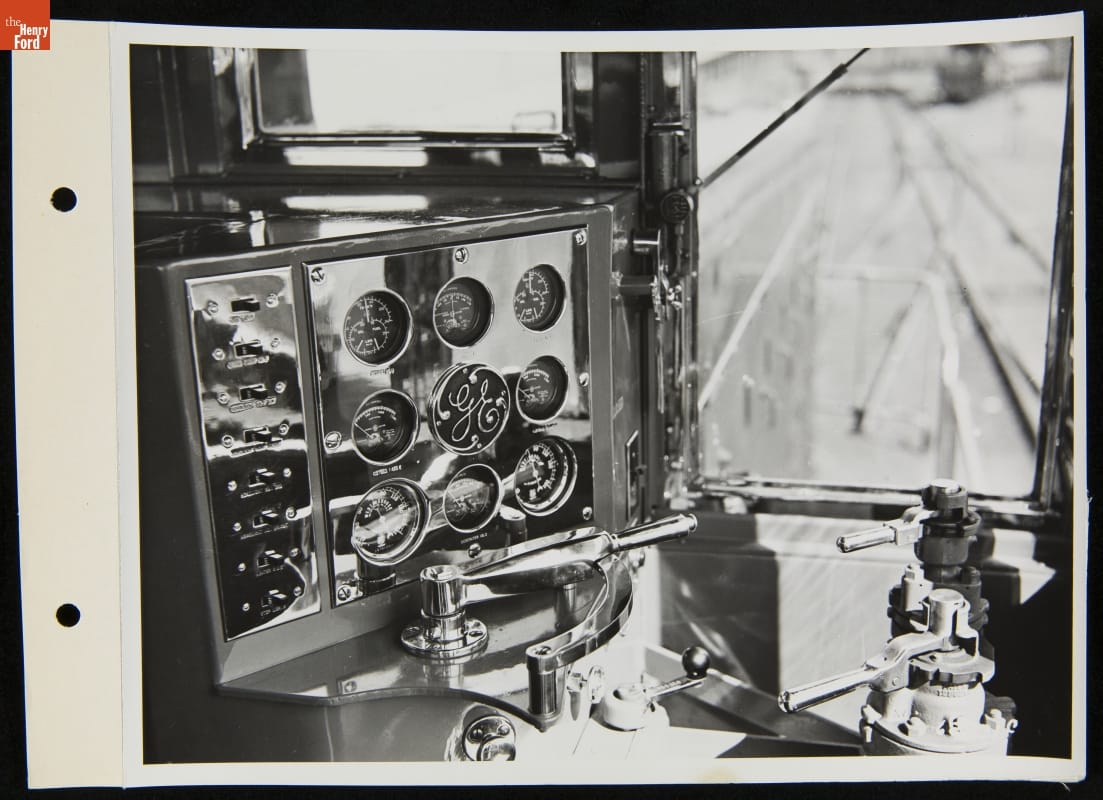
- Diesel Locomotive in North Yard, Ford Rouge Plant, September 1937 - Some 100 miles of railroad track covered the grounds of Ford Motor Company's Rouge plant. The automaker maintained its own fleet of locomotives to move incoming railcars loaded with raw materials, and outgoing railcars filled with finished parts and automobiles, around the complex. Additionally, specialized tank cars ferried molten iron from the factory's blast furnaces to its foundry.
- September 20, 1937
- Collections - Artifact
Diesel Locomotive in North Yard, Ford Rouge Plant, September 1937
Some 100 miles of railroad track covered the grounds of Ford Motor Company's Rouge plant. The automaker maintained its own fleet of locomotives to move incoming railcars loaded with raw materials, and outgoing railcars filled with finished parts and automobiles, around the complex. Additionally, specialized tank cars ferried molten iron from the factory's blast furnaces to its foundry.
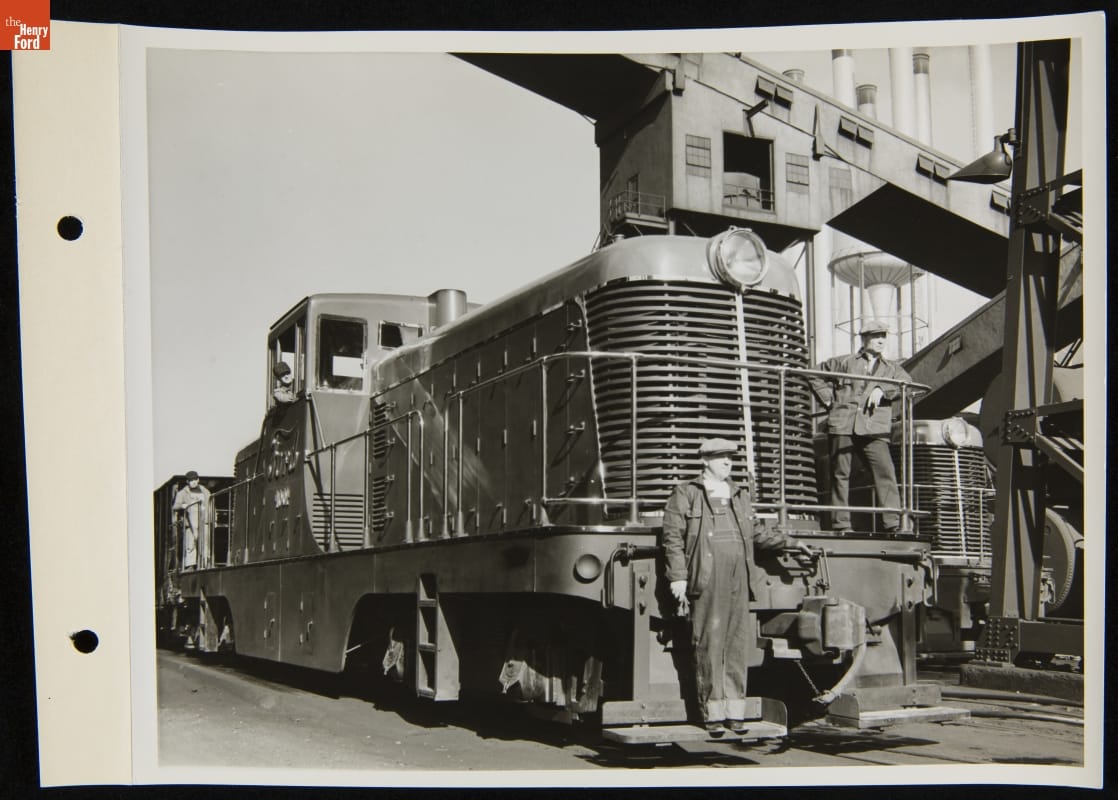
- Diesel Locomotives at the Ford Rouge Plant, November 1937 - Some 100 miles of railroad track covered the grounds of Ford Motor Company's Rouge plant. The automaker maintained its own fleet of locomotives to move incoming railcars loaded with raw materials, and outgoing railcars filled with finished parts and automobiles, around the complex. Additionally, specialized tank cars ferried molten iron from the factory's blast furnaces to its foundry.
- November 10, 1937
- Collections - Artifact
Diesel Locomotives at the Ford Rouge Plant, November 1937
Some 100 miles of railroad track covered the grounds of Ford Motor Company's Rouge plant. The automaker maintained its own fleet of locomotives to move incoming railcars loaded with raw materials, and outgoing railcars filled with finished parts and automobiles, around the complex. Additionally, specialized tank cars ferried molten iron from the factory's blast furnaces to its foundry.
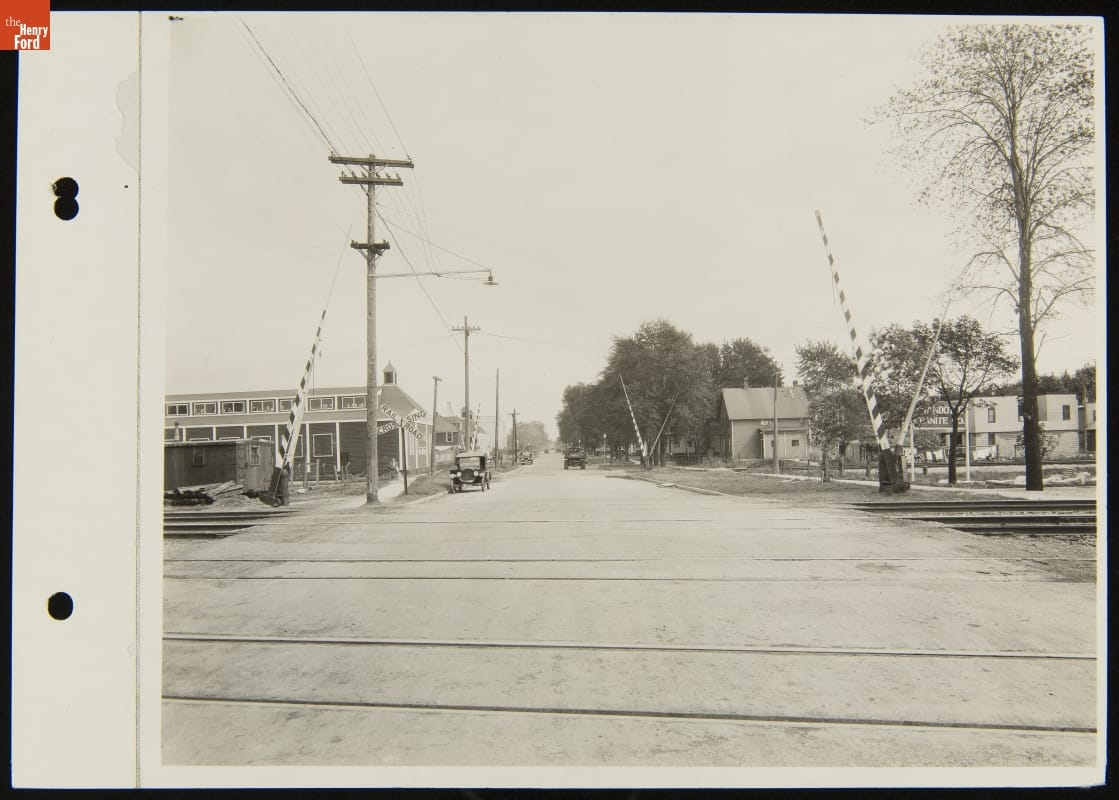
- Railroad Crossing, Wyandotte, Michigan, Detroit, Toledo & Ironton Railroad, October 1925 - Apart from eliminating it altogether, the safest way to protect a railroad crossing is with movable gates. The earliest gates, introduced around 1870, were hand-operated by an employee stationed at the crossing. Automated gates first appeared in the 1930s. Four-quadrant gates completely block off the road, while more common two-quadrant gates block each lane only in the direction of travel.
- October 01, 1925
- Collections - Artifact
Railroad Crossing, Wyandotte, Michigan, Detroit, Toledo & Ironton Railroad, October 1925
Apart from eliminating it altogether, the safest way to protect a railroad crossing is with movable gates. The earliest gates, introduced around 1870, were hand-operated by an employee stationed at the crossing. Automated gates first appeared in the 1930s. Four-quadrant gates completely block off the road, while more common two-quadrant gates block each lane only in the direction of travel.
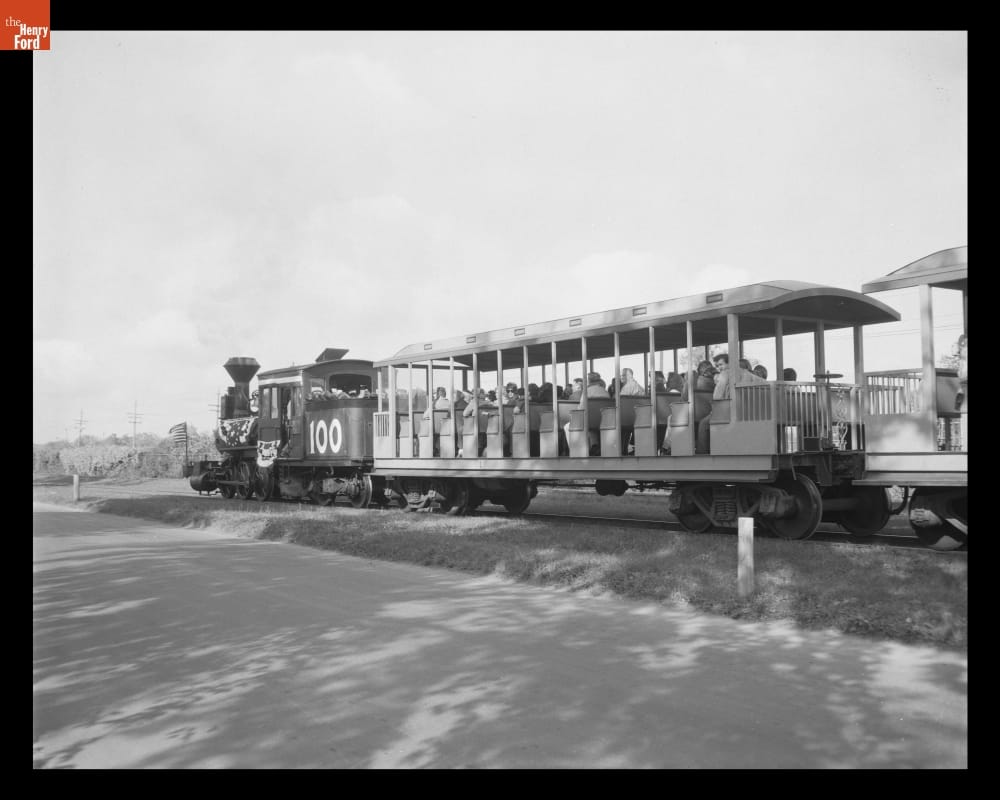
- Torch Lake Locomotive at its 100th Anniversary Celebration in Greenfield Village, October 1973 - Built by Mason Machine Works in 1873, the steam locomotive <EM>Torch Lake</EM> was used in copper mining operations in Michigan's Upper Peninsula until 1933. The Henry Ford acquired the locomotive in 1969. After its arrival here, the engine was returned to operating condition and put into service on the Greenfield Village railroad. In 1973, staff decorated the locomotive to celebrate its 100th anniversary.
- October 18, 1973
- Collections - Artifact
Torch Lake Locomotive at its 100th Anniversary Celebration in Greenfield Village, October 1973
Built by Mason Machine Works in 1873, the steam locomotive Torch Lake was used in copper mining operations in Michigan's Upper Peninsula until 1933. The Henry Ford acquired the locomotive in 1969. After its arrival here, the engine was returned to operating condition and put into service on the Greenfield Village railroad. In 1973, staff decorated the locomotive to celebrate its 100th anniversary.
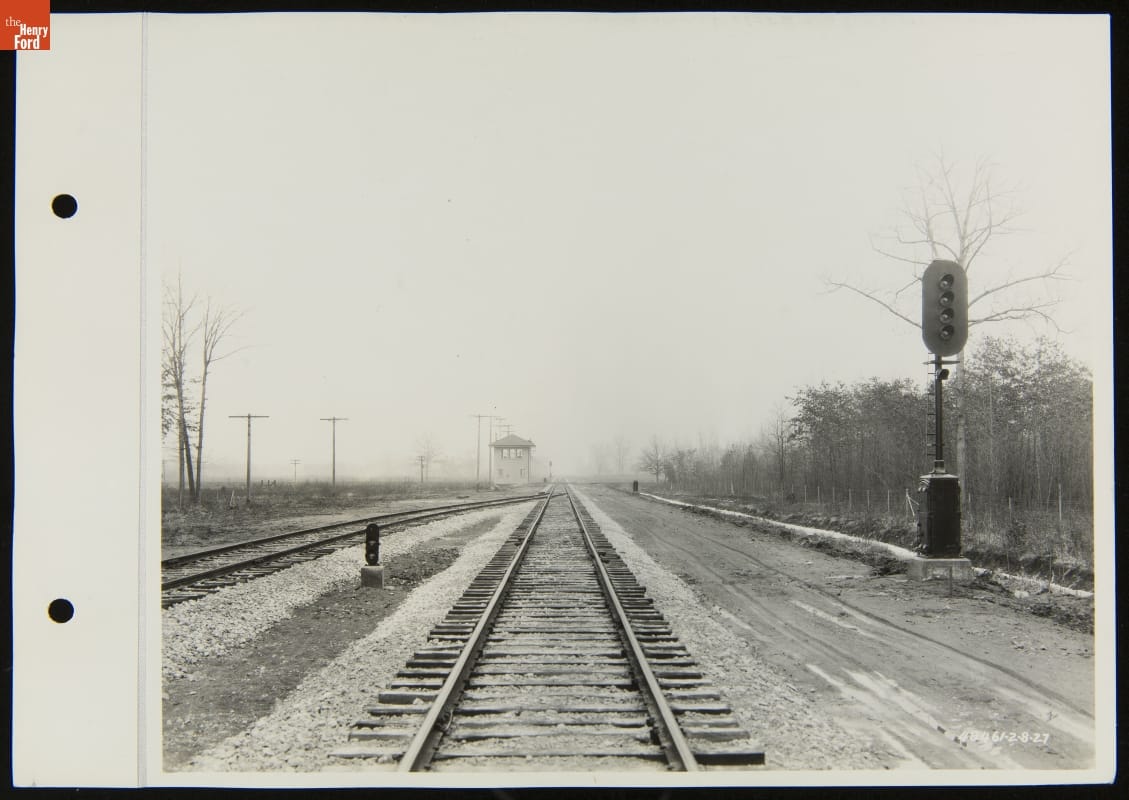
- Railroad Signal Light near the Diann Tower, Detroit, Toledo & Ironton Railroad, February 1927 - Traffic on many railroads is controlled by an automatic block signaling system. A railroad line is sectioned into blocks, and an electrical circuit in the track detects whether a train is in a given block. The circuit then operates differently colored signal lights, like these, that instruct an engineer how to proceed -- similar to an automobile traffic light.
- February 08, 1927
- Collections - Artifact
Railroad Signal Light near the Diann Tower, Detroit, Toledo & Ironton Railroad, February 1927
Traffic on many railroads is controlled by an automatic block signaling system. A railroad line is sectioned into blocks, and an electrical circuit in the track detects whether a train is in a given block. The circuit then operates differently colored signal lights, like these, that instruct an engineer how to proceed -- similar to an automobile traffic light.
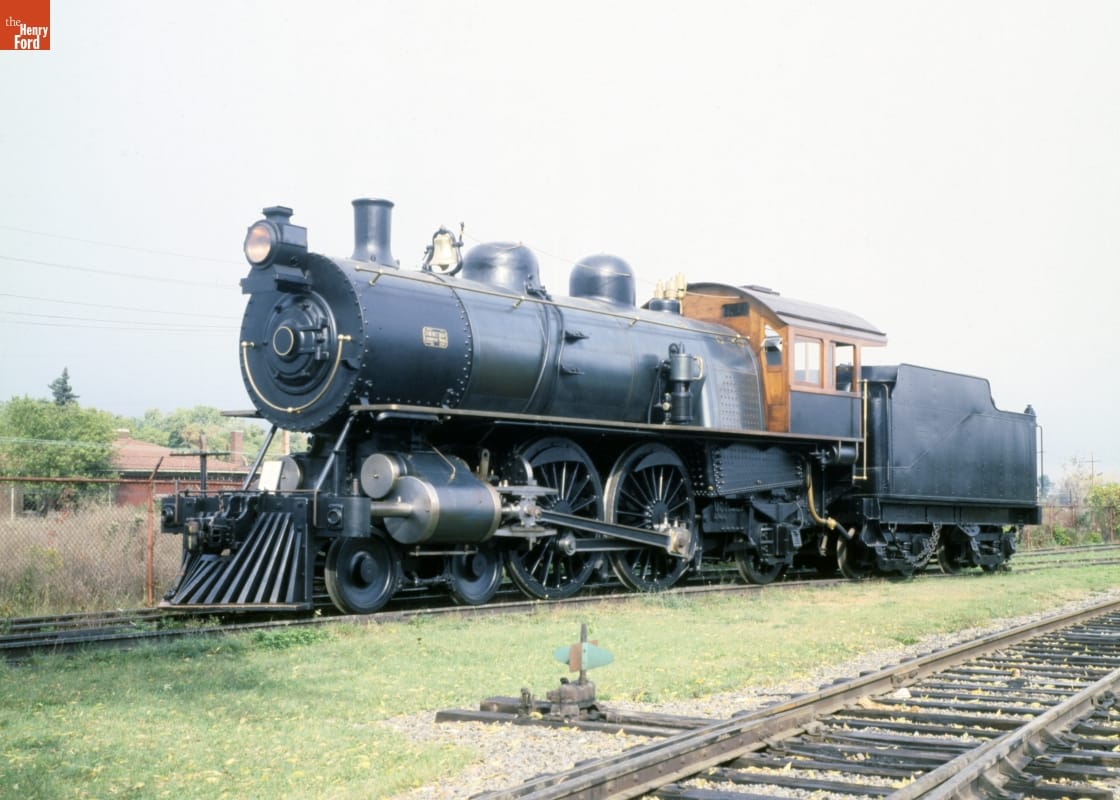
- American Locomotive Company Steam Locomotive, 1902 - The American Locomotive Company of Schenectady, New York, built this locomotive in 1902. It is a 4-4-2 Atlantic type, with four leading wheels, four driving wheels, and two trailing wheels. The Atlantic was designed to pull light wooden passenger cars at high speeds. This locomotive operated on the Michigan Central Railroad's Detroit-Chicago line until heavier steel cars made it obsolete.
- 1902
- Collections - Artifact
American Locomotive Company Steam Locomotive, 1902
The American Locomotive Company of Schenectady, New York, built this locomotive in 1902. It is a 4-4-2 Atlantic type, with four leading wheels, four driving wheels, and two trailing wheels. The Atlantic was designed to pull light wooden passenger cars at high speeds. This locomotive operated on the Michigan Central Railroad's Detroit-Chicago line until heavier steel cars made it obsolete.
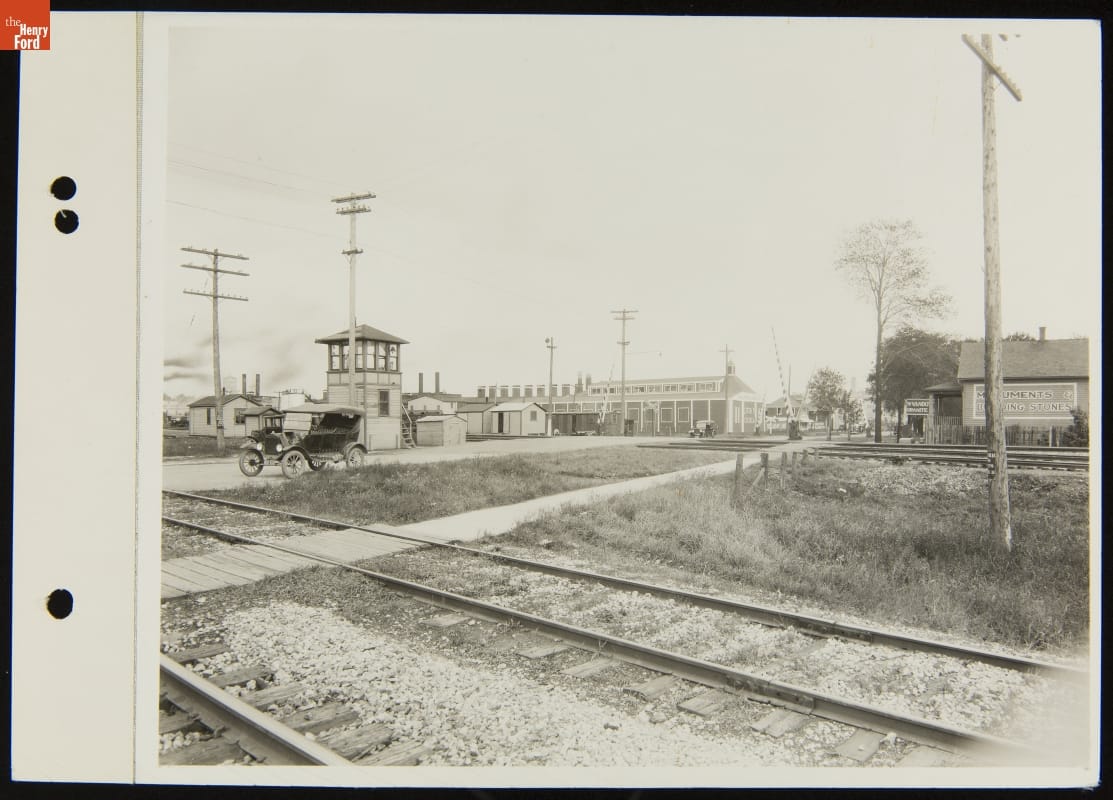
- Railroad Crossing, Wyandotte, Michigan, Detroit, Toledo & Ironton Railroad, October 1925 - Multiple-track railroad crossings, where a roadway crosses more than one railroad track, are particularly dangerous. A train on or near the crossing on one track can block motorists' view of another train approaching the crossing on a different track. Crossings like this were some of the first to be protected with automated warning devices and gates.
- October 01, 1925
- Collections - Artifact
Railroad Crossing, Wyandotte, Michigan, Detroit, Toledo & Ironton Railroad, October 1925
Multiple-track railroad crossings, where a roadway crosses more than one railroad track, are particularly dangerous. A train on or near the crossing on one track can block motorists' view of another train approaching the crossing on a different track. Crossings like this were some of the first to be protected with automated warning devices and gates.
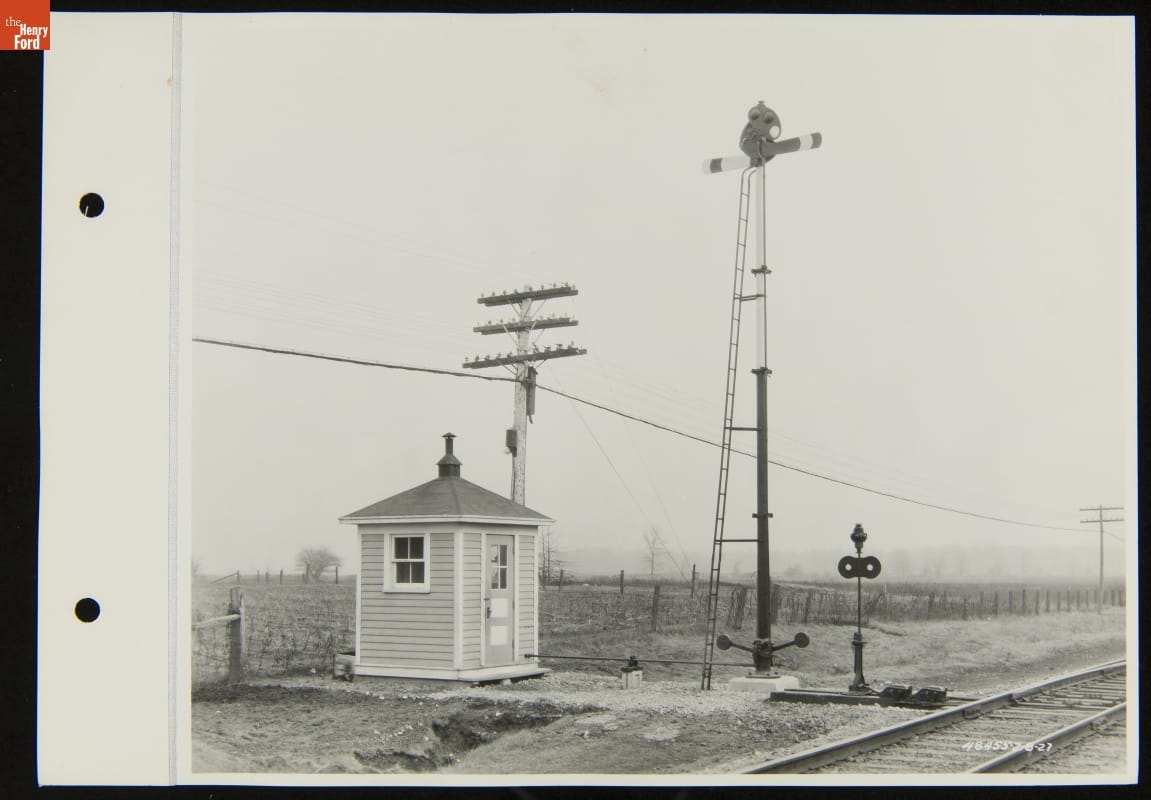
- Railroad Signal Lights, Detroit, Toledo & Ironton Railroad, February 1927 - The DT&I controlled train movements with an automatic block signaling system. The railroad line was sectioned into blocks. An electrical circuit in the track detected if a train was in a given block, or if the track was clear. The circuit then operated semaphore signals, like this one, that instructed an engineer how to proceed depending on the blade's position.
- February 08, 1927
- Collections - Artifact
Railroad Signal Lights, Detroit, Toledo & Ironton Railroad, February 1927
The DT&I controlled train movements with an automatic block signaling system. The railroad line was sectioned into blocks. An electrical circuit in the track detected if a train was in a given block, or if the track was clear. The circuit then operated semaphore signals, like this one, that instructed an engineer how to proceed depending on the blade's position.