
"Allegheny," "DeWitt Clinton," and "Sam Hill" Locomotives alongside New York Central Diesel Aerotrain, circa 1956
THF133487 / "Allegheny," "DeWitt Clinton," and "Sam Hill" Locomotives alongside New York Central Diesel Aerotrain, circa 1956
01
Artifact Overview
Three historic locomotives from The Henry Ford -- the DeWitt Clinton (replica of the 1831 original), Sam Hill (1858) and Allegheny (1941) -- pose alongside the Aerotrain in 1956. Railroads hoped that the streamlined Aerotrain, designed by General Motors, might lure travelers back onto trains. But its lightweight coaches gave a rough ride and Aerotrain failed to catch on with passengers.
Artifact Details
Artifact
Photographic transparency
Date Made
circa 1956
Subject Date
circa 1956
Collection Title
Location
By Request in the Benson Ford Research Center
Object ID
EI.1929.3308
Credit
From the Collections of The Henry Ford.
Technique
Chromogenic processes
Color
Multicolored
Dimensions
Height: 4 in
Width: 5 in
Keywords |
|---|
02
Related Artifacts
 Artifact
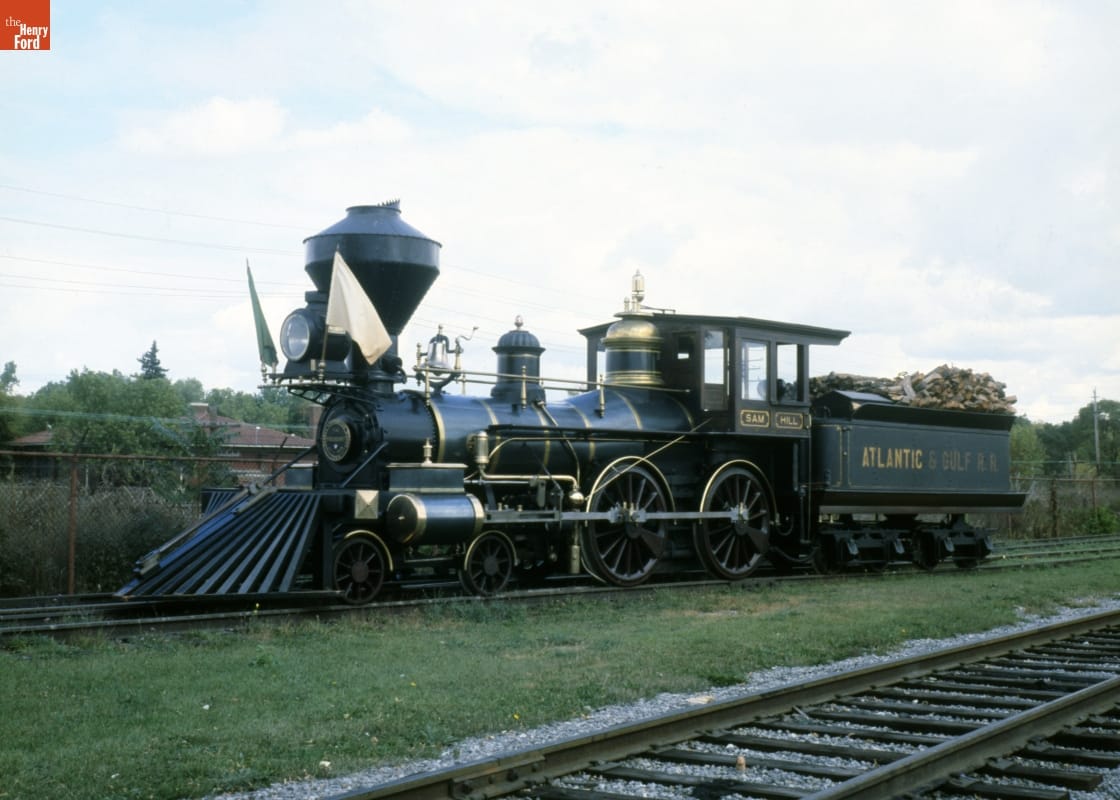
Steam Locomotive "Sam Hill," 1858
This 1858 Rogers steam locomotive is typical of those used in the United States in the second half of the 19th century. Its flexible wheel arrangement, high power output, and light weight were well suited to the tight curves, steep grades, and hastily constructed track that characterized American railroads. This locomotive struck an agreeable balance between practicality, safety, and economy.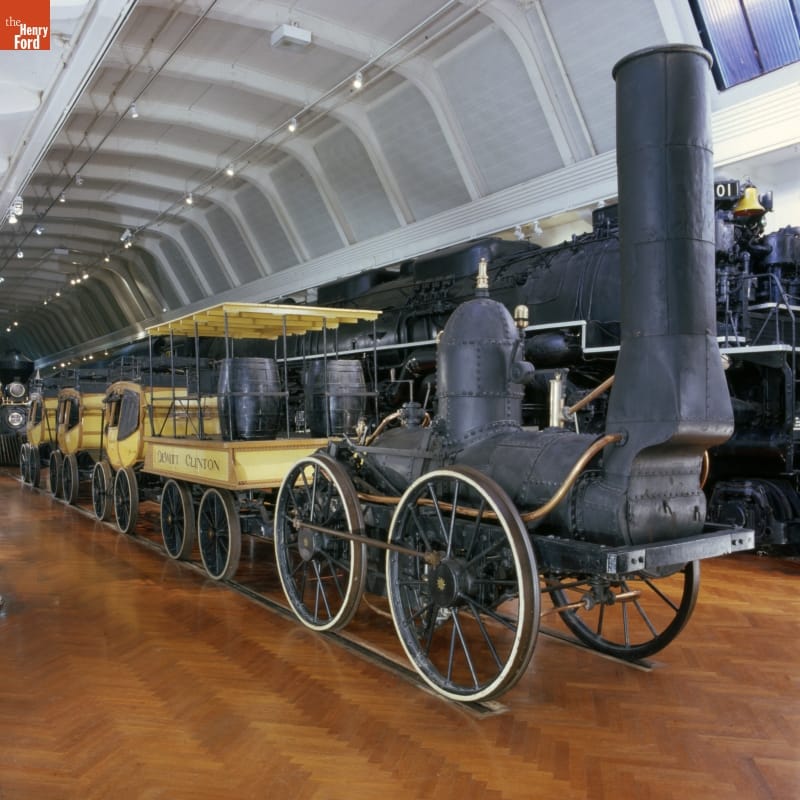 Artifact
Replica of 1831 "DeWitt Clinton" Steam Locomotive
The New York Central Railroad built this replica of the DeWitt Clinton for the 1893 World's Columbian Exposition in Chicago. The original locomotive was built in 1831 and operated on the Mohawk & Hudson Railroad, an NYC predecessor. The replica traveled to fairs, expositions, and promotional events across the NYC system into the 1950s.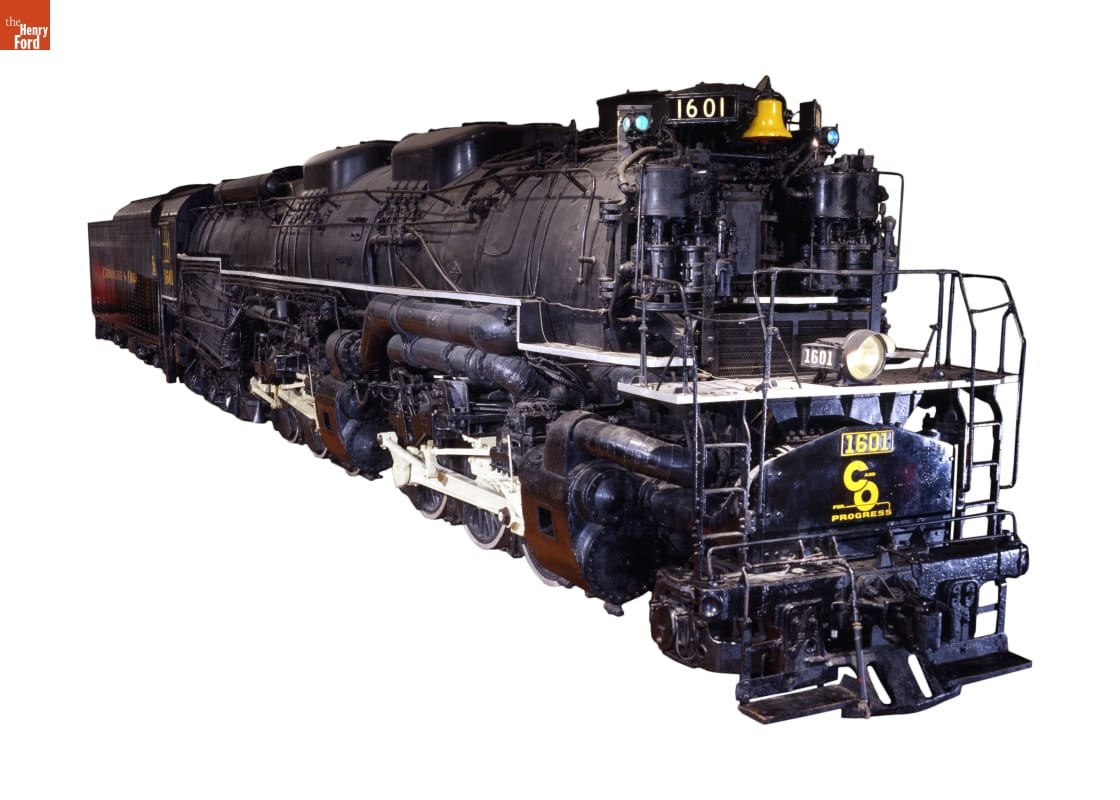 Artifact
Allegheny Steam Locomotive, 1941
The Chesapeake & Ohio Railway's massive Allegheny, introduced in 1941, represents the peak of steam railroad technology. Among the largest and most powerful steam locomotives ever built, it weighed 1.2 million pounds with its tender and could generate 7,500 horsepower. Just 11 years later, C&O began pulling these giants from service. Diesel-electric locomotives proved more flexible and less expensive.