
Search
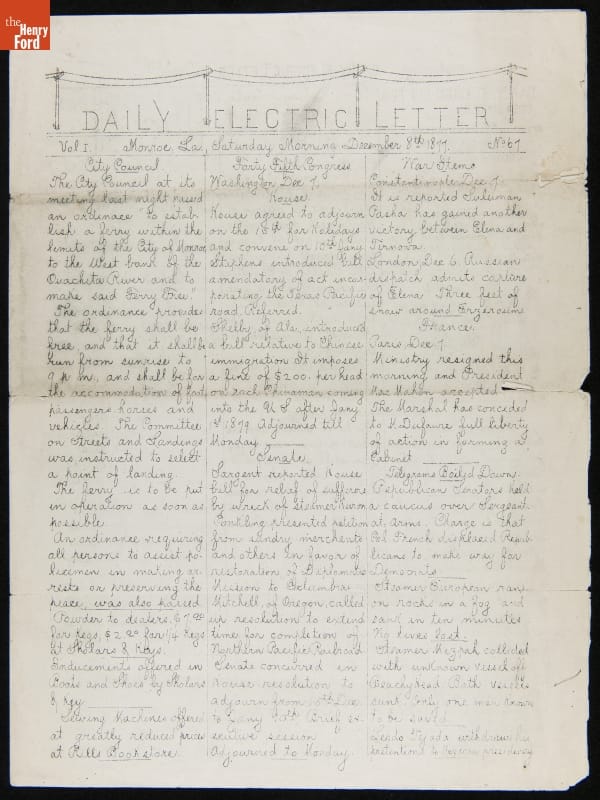
- "Daily Electric Letter" Newspaper for December 8, 1877, Vol. 1, No. 69, Made with the Edison Electric Pen and Duplicating Press -
- December 08, 1877
- Collections - Artifact
"Daily Electric Letter" Newspaper for December 8, 1877, Vol. 1, No. 69, Made with the Edison Electric Pen and Duplicating Press
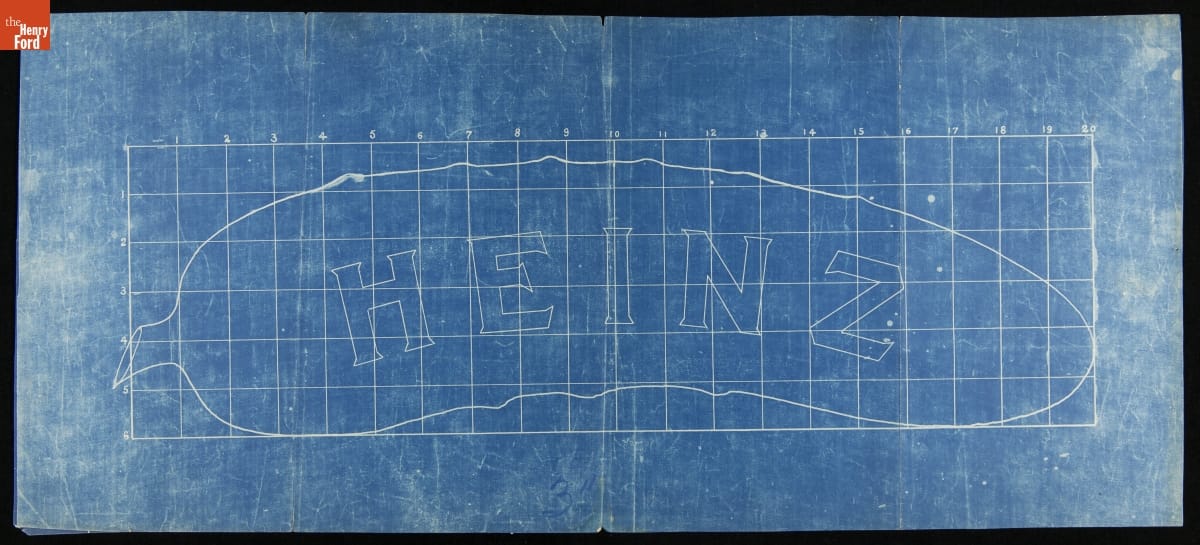
- Drawing of the H. J. Heinz Standard Pickle Advertising Logo, 1923 - The H.J. Heinz Company employed ambitious and comprehensive advertising strategies to meet consumers at home, in stores, and everywhere in between. By 1900, Heinz had created a strong brand identity and became a household name. The signature pickle seen here is the iconic advertising symbol of the Heinz brand.
- 1923
- Collections - Artifact
Drawing of the H. J. Heinz Standard Pickle Advertising Logo, 1923
The H.J. Heinz Company employed ambitious and comprehensive advertising strategies to meet consumers at home, in stores, and everywhere in between. By 1900, Heinz had created a strong brand identity and became a household name. The signature pickle seen here is the iconic advertising symbol of the Heinz brand.
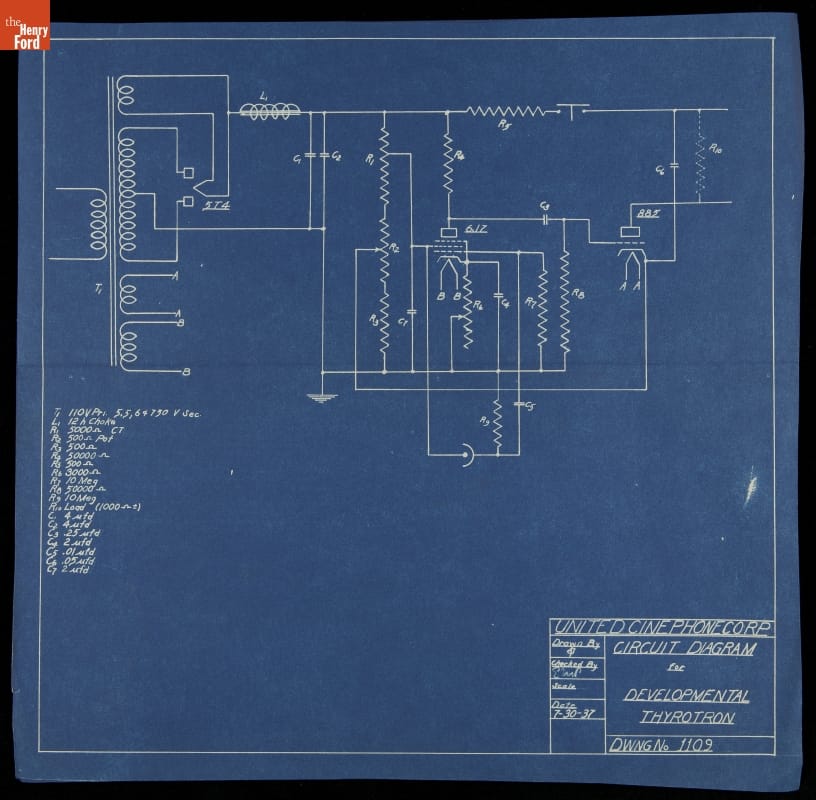
- Circuit Diagram for Developmental Thyrotron, Reference Number 1109 -
- July 30, 1937
- Collections - Artifact
Circuit Diagram for Developmental Thyrotron, Reference Number 1109
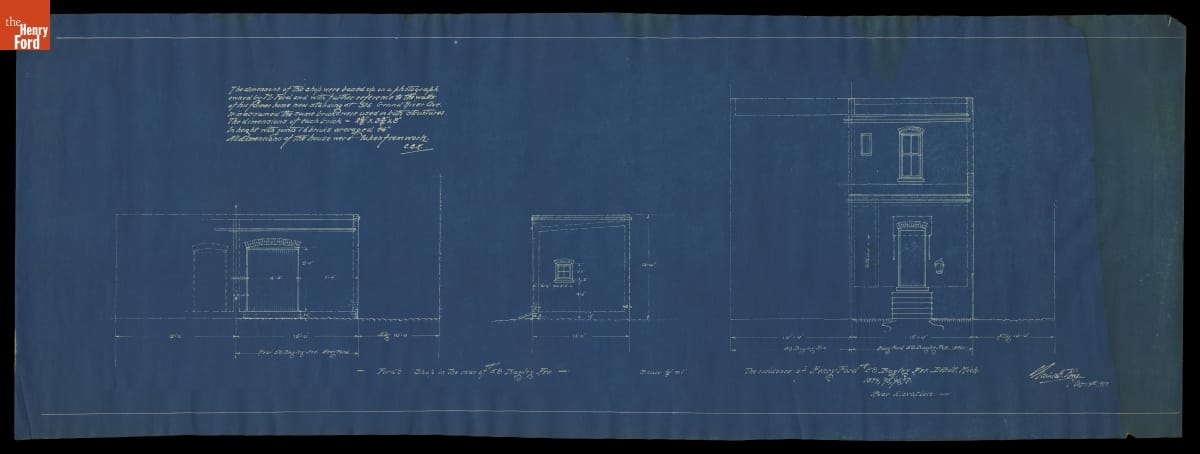
- Henry Ford Residence and Workshop at #58 Bagley Ave, Detroit, Michigan, 1894-1897 - From late 1893 to mid-1897, Henry and Clara Ford rented the left half of a duplex at 58 Bagley Avenue in Detroit. Henry built his first automobile, the 1896 Quadricycle, in a shed behind the house. Charles Brady King drew this blueprint of the Bagley Avenue buildings in 1929, by which time the house was converted into a tea room.
- October 14, 1929
- Collections - Artifact
Henry Ford Residence and Workshop at #58 Bagley Ave, Detroit, Michigan, 1894-1897
From late 1893 to mid-1897, Henry and Clara Ford rented the left half of a duplex at 58 Bagley Avenue in Detroit. Henry built his first automobile, the 1896 Quadricycle, in a shed behind the house. Charles Brady King drew this blueprint of the Bagley Avenue buildings in 1929, by which time the house was converted into a tea room.
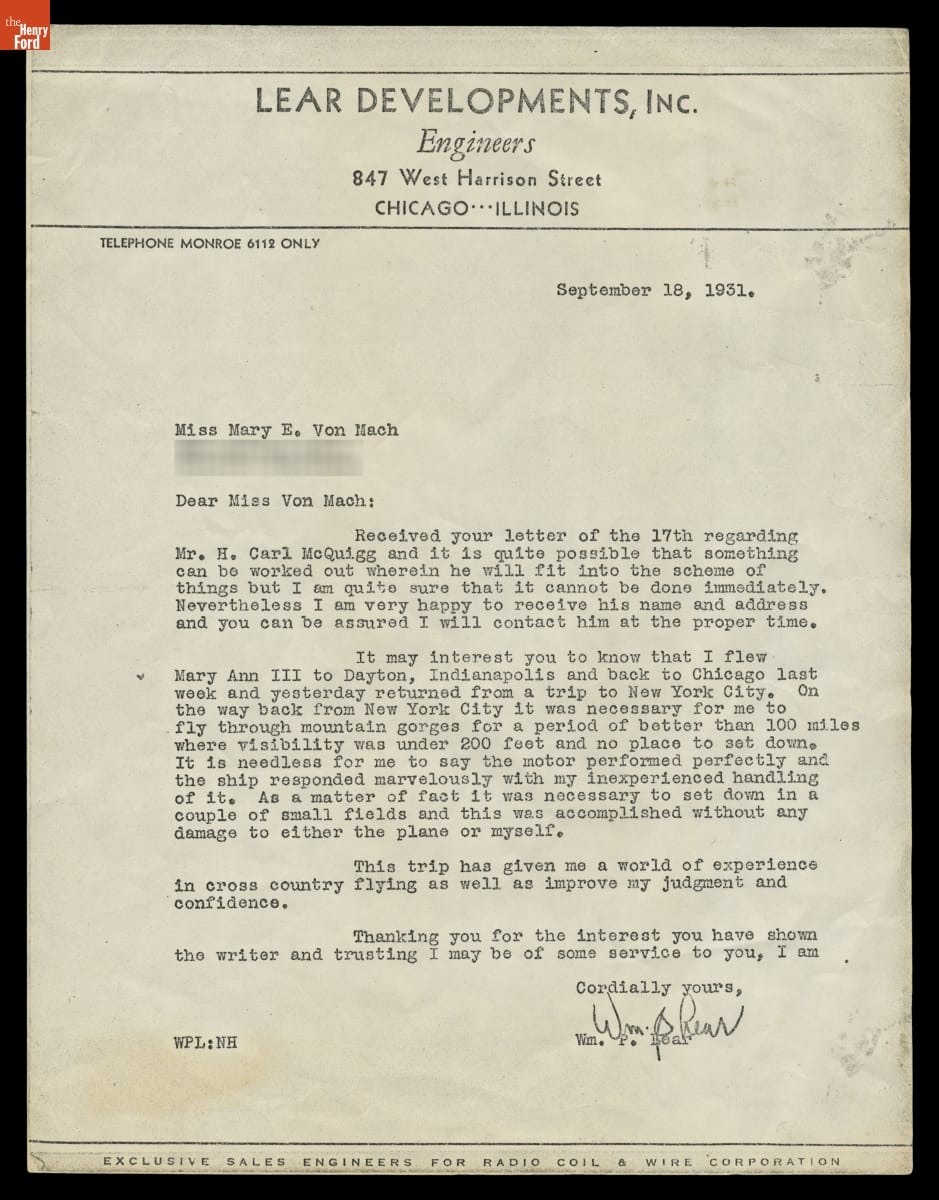
- Letter to Mary Von Mach from William P. Lear, September 18, 1931 - Mary E. Von Mach was Michigan's first licensed female pilot, earning her certificate in 1929. During World War II, Von Mach oversaw final inspection of the Pratt & Whitney engines installed in B-24 bomber airplanes at Ford's Willow Run plant. She was a charter member of the Ninety-Nines, an international organization that supported the work of women in aviation.
- September 18, 1931
- Collections - Artifact
Letter to Mary Von Mach from William P. Lear, September 18, 1931
Mary E. Von Mach was Michigan's first licensed female pilot, earning her certificate in 1929. During World War II, Von Mach oversaw final inspection of the Pratt & Whitney engines installed in B-24 bomber airplanes at Ford's Willow Run plant. She was a charter member of the Ninety-Nines, an international organization that supported the work of women in aviation.
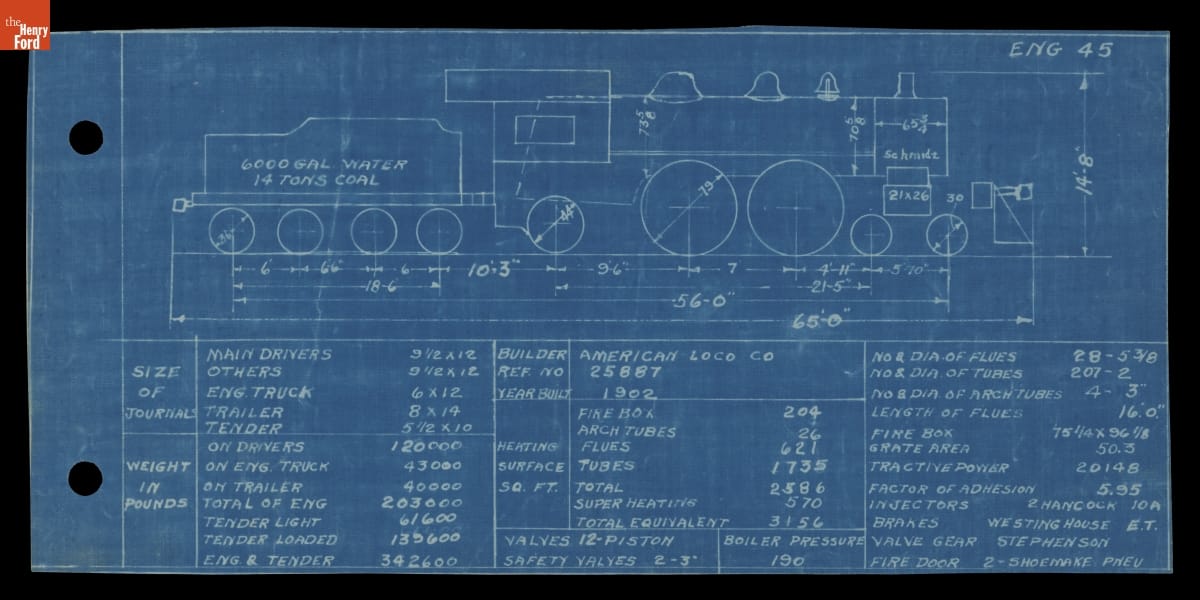
- Drawing of the 1902 American Locomotive Company Steam Locomotive, Engine 45 (Detroit, Toledo & Ironton Railroad) - Number 45, a 4-4-2 Atlantic-type steam locomotive, was purchased by the Detroit, Toledo & Ironton Railroad from the Michigan Central Railroad in 1926. Henry Ford, who owned DT&I at the time, had the locomotive rebuilt at Ford Motor Company's Rouge factory. Several of the engine's parts were plated with highly polished nickel, which encouraged DT&I workers to treat number 45 well.
- Collections - Artifact
Drawing of the 1902 American Locomotive Company Steam Locomotive, Engine 45 (Detroit, Toledo & Ironton Railroad)
Number 45, a 4-4-2 Atlantic-type steam locomotive, was purchased by the Detroit, Toledo & Ironton Railroad from the Michigan Central Railroad in 1926. Henry Ford, who owned DT&I at the time, had the locomotive rebuilt at Ford Motor Company's Rouge factory. Several of the engine's parts were plated with highly polished nickel, which encouraged DT&I workers to treat number 45 well.
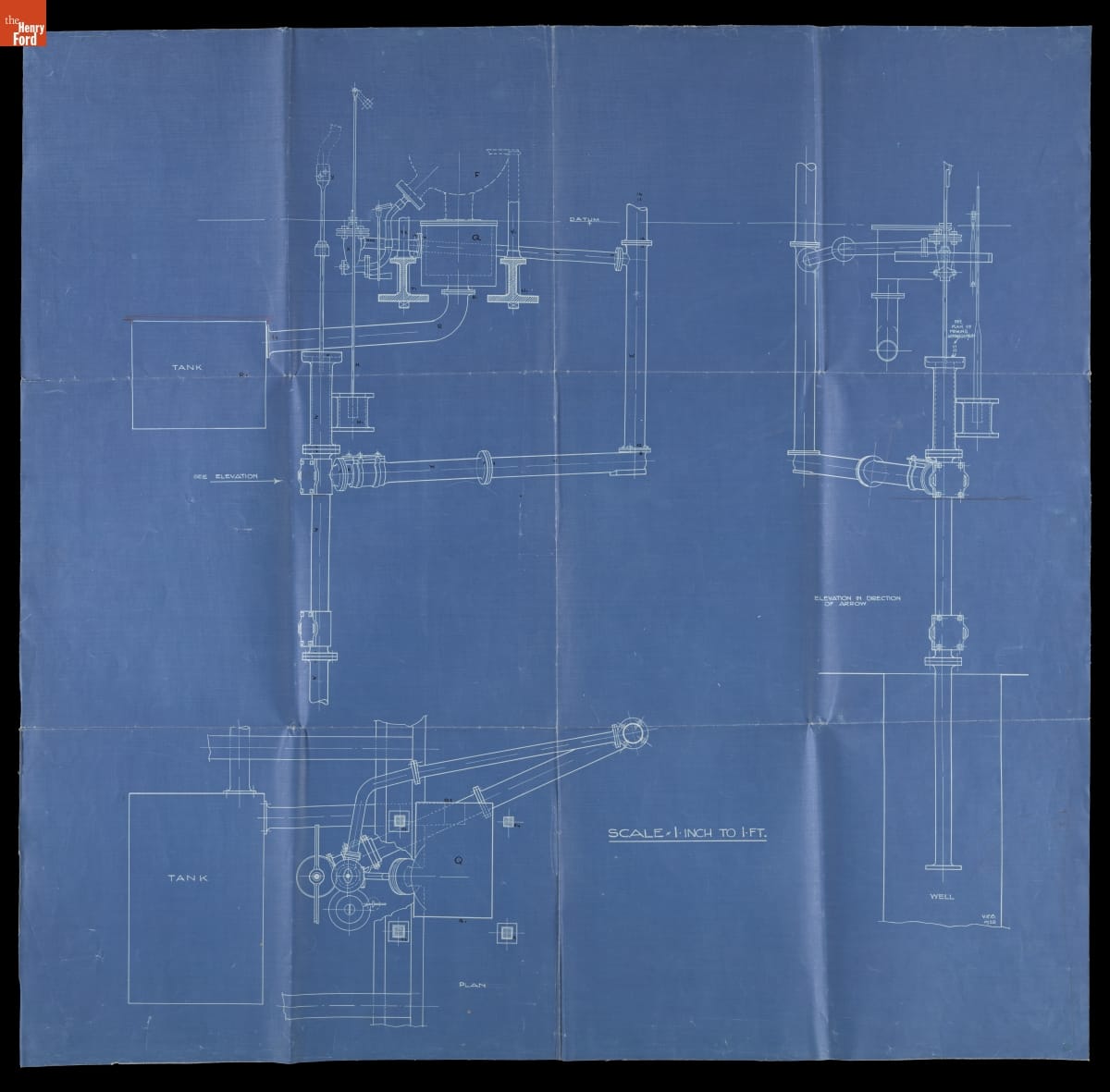
- Blueprint Drawing of the 1821 Moira Engine, 1928 -
- 1928
- Collections - Artifact
Blueprint Drawing of the 1821 Moira Engine, 1928
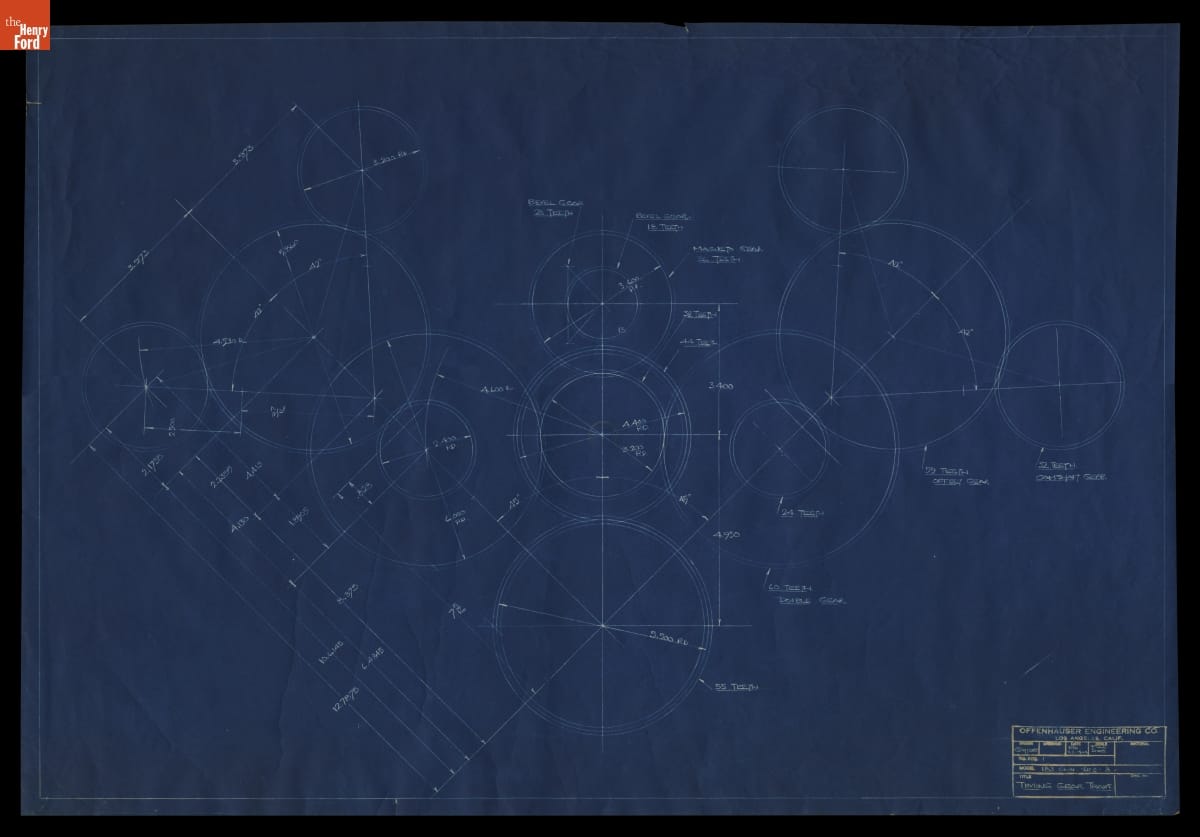
- Drawing, "Timing Gear Train," Offenhauser Engineering Co., Los Angeles, California, December 23, 1940 - This is one of countless technical drawings produced by Leo Goossen during his 55-year career. Goossen remains one of the most influential engine designers in American auto racing history. Goossen engines, built first with Harry Miller and then with Fred Offenhauser, dominated the Indianapolis 500 from the 1920s into the 1970s.
- December 23, 1940
- Collections - Artifact
Drawing, "Timing Gear Train," Offenhauser Engineering Co., Los Angeles, California, December 23, 1940
This is one of countless technical drawings produced by Leo Goossen during his 55-year career. Goossen remains one of the most influential engine designers in American auto racing history. Goossen engines, built first with Harry Miller and then with Fred Offenhauser, dominated the Indianapolis 500 from the 1920s into the 1970s.
- Circuit Diagram, Drawing 11, circa 1954 -
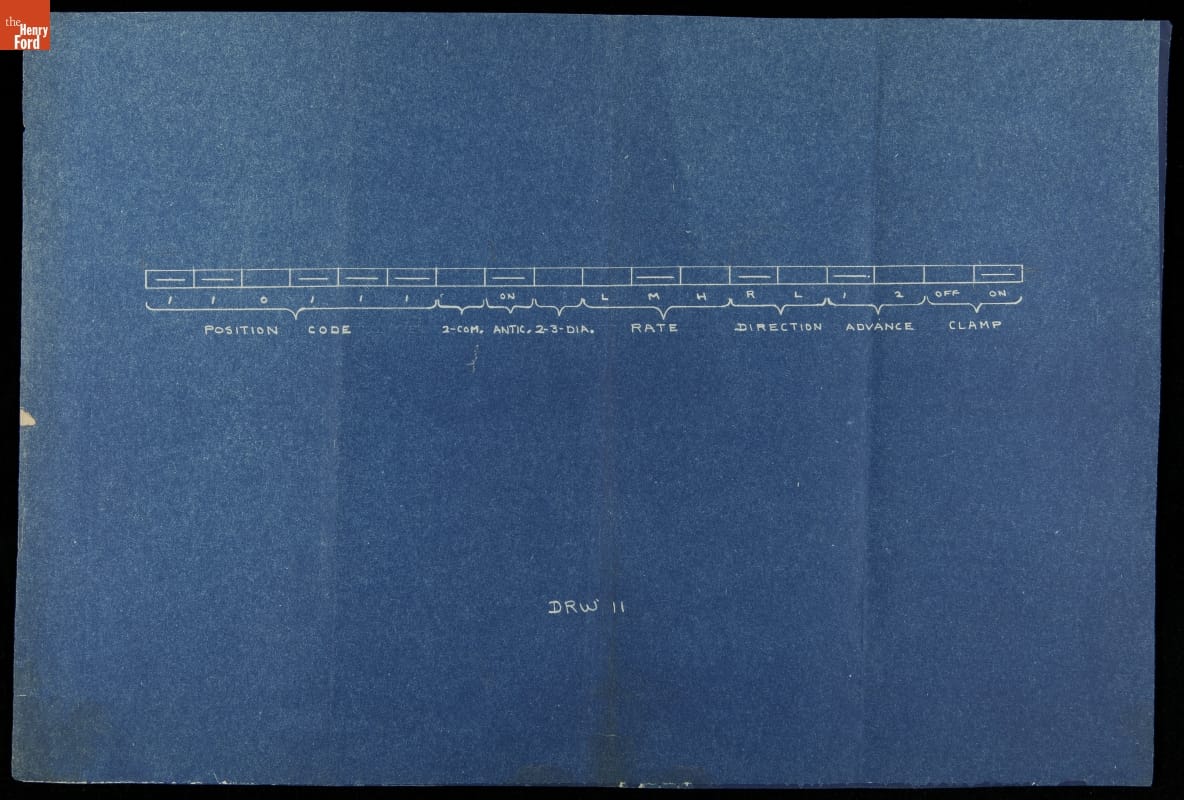
- circa 1954
- Collections - Artifact
Circuit Diagram, Drawing 11, circa 1954
- Blueprint, "Experimental Artificial Limb," 2Z12368, 21 June 1945 -
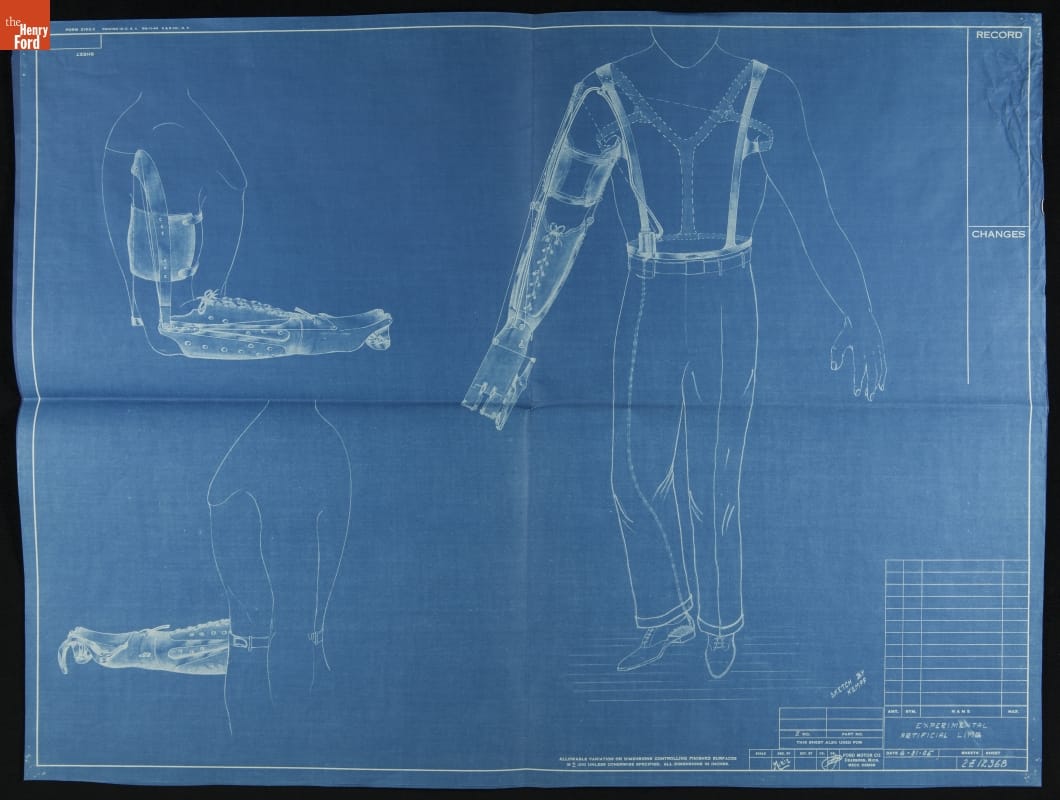
- June 21, 1945
- Collections - Artifact
Blueprint, "Experimental Artificial Limb," 2Z12368, 21 June 1945