
Search
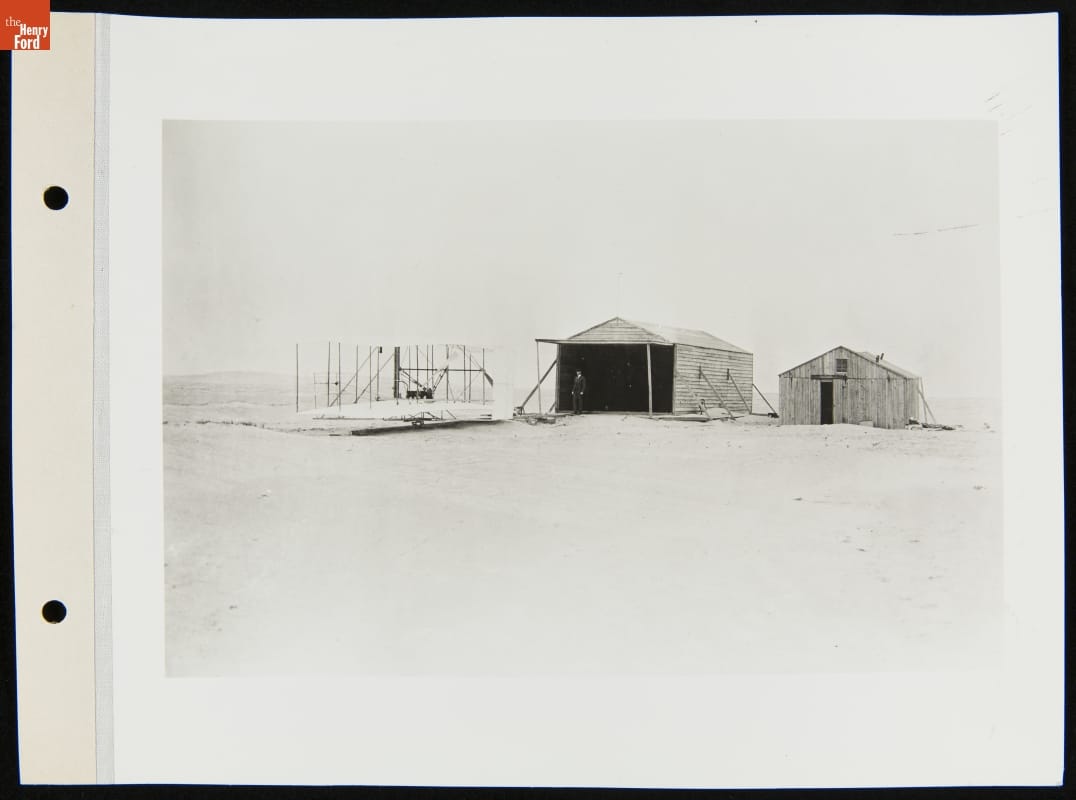
- The Wright Brothers' 1903 Flyer and Camp at Kill Devil Hills, North Carolina - Wilbur and Orville Wright established a modest camp among the sand dunes at Kill Devil Hills. They built a wooden shed to house their glider -- and themselves -- in 1901. When they returned with the powered Flyer airplane in 1903, the brothers built a new, larger hangar and converted the old shed into living quarters. Wilbur jokingly called it their "summer house."
- November 24, 1903
- Collections - Artifact
The Wright Brothers' 1903 Flyer and Camp at Kill Devil Hills, North Carolina
Wilbur and Orville Wright established a modest camp among the sand dunes at Kill Devil Hills. They built a wooden shed to house their glider -- and themselves -- in 1901. When they returned with the powered Flyer airplane in 1903, the brothers built a new, larger hangar and converted the old shed into living quarters. Wilbur jokingly called it their "summer house."
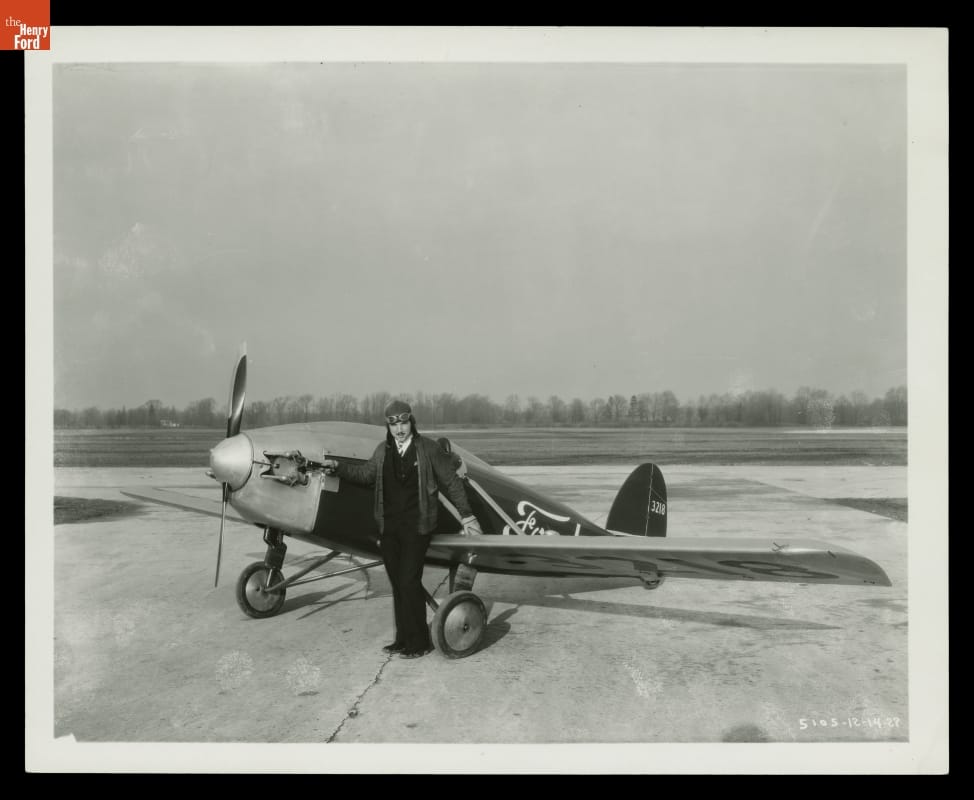
- Harry Brooks with Ford Flivver Airplane #3 at Ford Airport, December 1927 - Test pilot Harry Brooks posed with a Ford Flivver airplane in 1927. The Flivver was Henry Ford's attempt to create a small, affordable airplane that almost anyone could fly -- a Model T for the sky. Three or four prototypes were built, but Ford abandoned the project after Brooks died in a Flivver crash near Melbourne, Florida, in 1928.
- December 14, 1927
- Collections - Artifact
Harry Brooks with Ford Flivver Airplane #3 at Ford Airport, December 1927
Test pilot Harry Brooks posed with a Ford Flivver airplane in 1927. The Flivver was Henry Ford's attempt to create a small, affordable airplane that almost anyone could fly -- a Model T for the sky. Three or four prototypes were built, but Ford abandoned the project after Brooks died in a Flivver crash near Melbourne, Florida, in 1928.
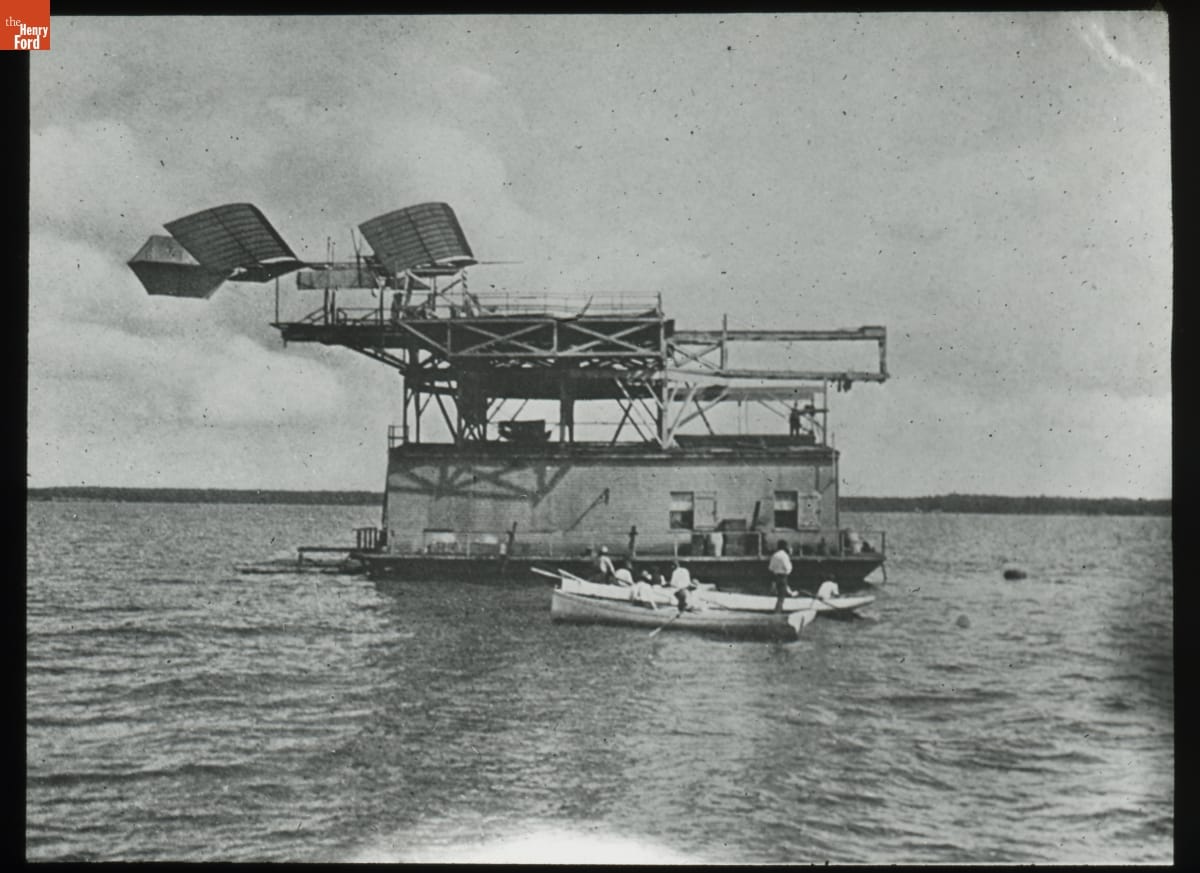
- "Langley Aerodrome," 1896 - Samuel Pierpont Langley, Secretary of the Smithsonian Institution, experimented successfully with unpiloted, steam-powered Aerodromes like the one seen here. He launched his aircraft from a houseboat on the Potomac River. Langley later designed a piloted, gasoline-powered version he called the Great Aerodrome, but two attempts to fly it in 1903 ended quickly with crashes into the river.
- 1896
- Collections - Artifact
"Langley Aerodrome," 1896
Samuel Pierpont Langley, Secretary of the Smithsonian Institution, experimented successfully with unpiloted, steam-powered Aerodromes like the one seen here. He launched his aircraft from a houseboat on the Potomac River. Langley later designed a piloted, gasoline-powered version he called the Great Aerodrome, but two attempts to fly it in 1903 ended quickly with crashes into the river.
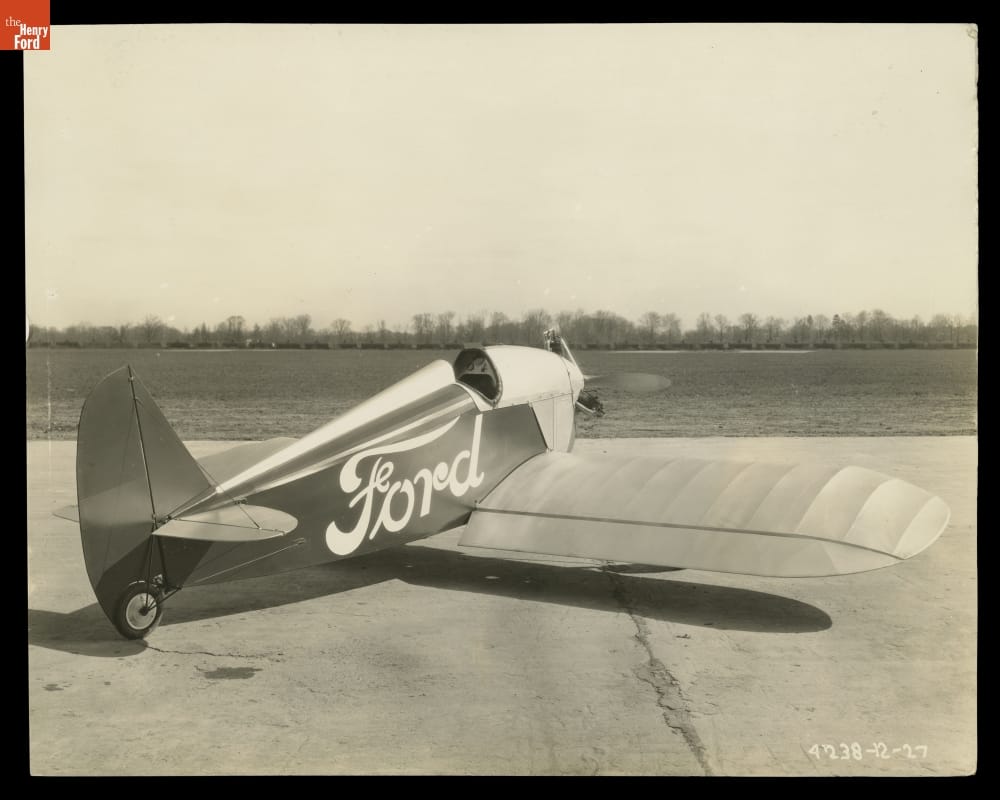
- Ford Flivver Airplane #1 at Ford Airport, April 12, 1927 - This is Ford's Flivver #1, a quick, highly maneuverable plane that created a media buzz when it was demonstrated at the 1926 Ford Reliability Tour. The press called the single-seat plane the "Model T of the air," but it was purely experimental. Ford would never mass produce the Flivver.
- April 12, 1927
- Collections - Artifact
Ford Flivver Airplane #1 at Ford Airport, April 12, 1927
This is Ford's Flivver #1, a quick, highly maneuverable plane that created a media buzz when it was demonstrated at the 1926 Ford Reliability Tour. The press called the single-seat plane the "Model T of the air," but it was purely experimental. Ford would never mass produce the Flivver.
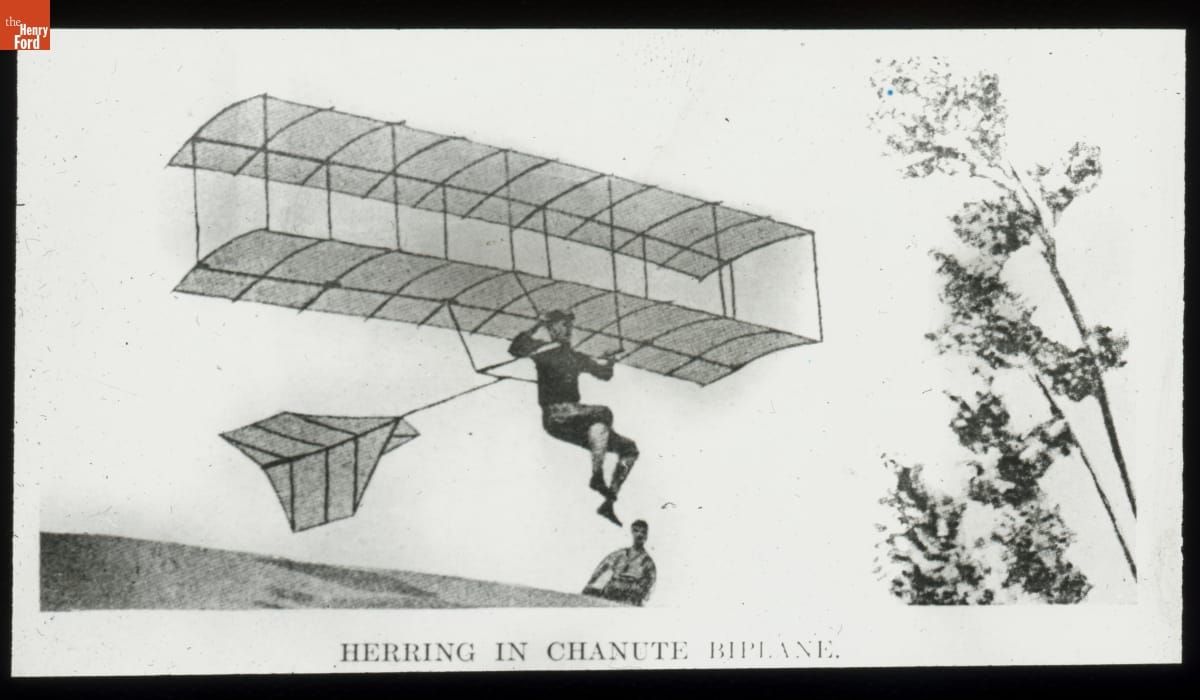
- "Herring in Chanute Biplane," 1896 - Augustus Herring experimented with gliders and powered aircraft, both on his own and in cooperation with Octave Chanute. This photo was taken in 1896 as Herring piloted a Chanute-designed glider at Miller Beach on Indiana's Lake Michigan shoreline. Herring later claimed to have made a short, powered flight using a compressed-air engine at St. Joseph, Michigan, in 1898.
- 1896
- Collections - Artifact
"Herring in Chanute Biplane," 1896
Augustus Herring experimented with gliders and powered aircraft, both on his own and in cooperation with Octave Chanute. This photo was taken in 1896 as Herring piloted a Chanute-designed glider at Miller Beach on Indiana's Lake Michigan shoreline. Herring later claimed to have made a short, powered flight using a compressed-air engine at St. Joseph, Michigan, in 1898.