
Search
- Letter from Clara Barrus to Mr. and Mrs. J. Edward B. Greene, December 30, 1915 - Dr. Clara Barrus was one of a small number of women who graduated from medical school in the late 19th century. In 1901, she began a close friendship with John Burroughs, the famous naturalist. Burroughs later named Barrus his literary executor and official biographer. Her correspondence covers a variety of subjects, including her relationship with Burroughs and her experiences setting up her own private sanatorium.
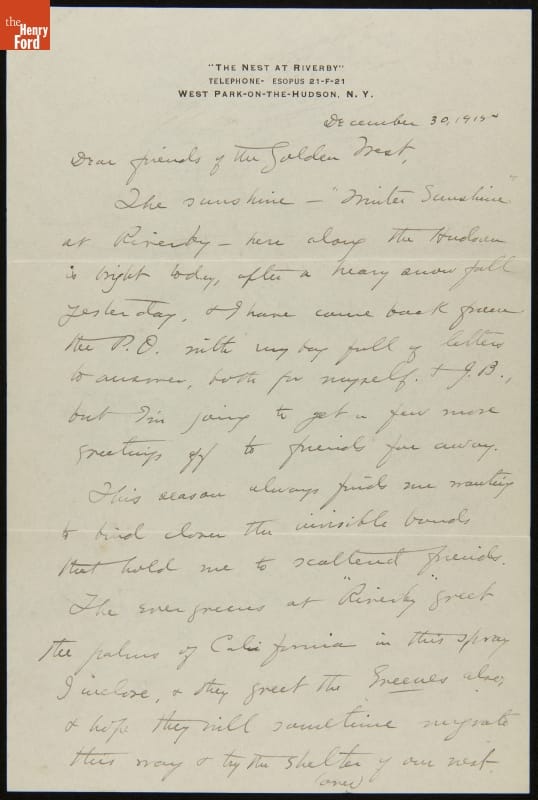
- December 30, 1915
- Collections - Artifact
Letter from Clara Barrus to Mr. and Mrs. J. Edward B. Greene, December 30, 1915
Dr. Clara Barrus was one of a small number of women who graduated from medical school in the late 19th century. In 1901, she began a close friendship with John Burroughs, the famous naturalist. Burroughs later named Barrus his literary executor and official biographer. Her correspondence covers a variety of subjects, including her relationship with Burroughs and her experiences setting up her own private sanatorium.
- Clara Barrus' Cottage at Riverby, "The Nest," circa 1915 -
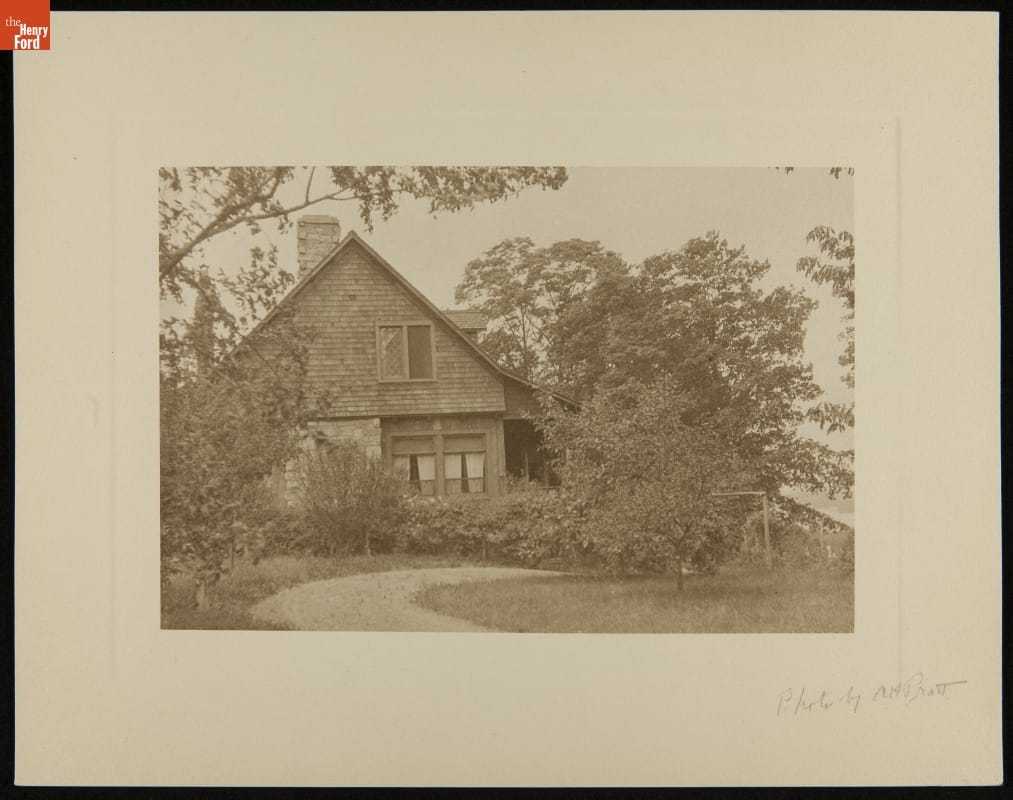
- circa 1915
- Collections - Artifact
Clara Barrus' Cottage at Riverby, "The Nest," circa 1915
- John Burroughs Holding a Ladder near Riverby, circa 1909 - John Burroughs (1837-1921) was an internationally known naturalist and essayist who wrote about accessible and familiar landscapes. In 1873, Burroughs bought a plot of land overlooking the Hudson in the Catskills of upstate New York and named it Riverby. Here, he farmed and cultivated grapes and fruit trees. He also erected a family home and built secluded retreats where he penned some of his most famous works.
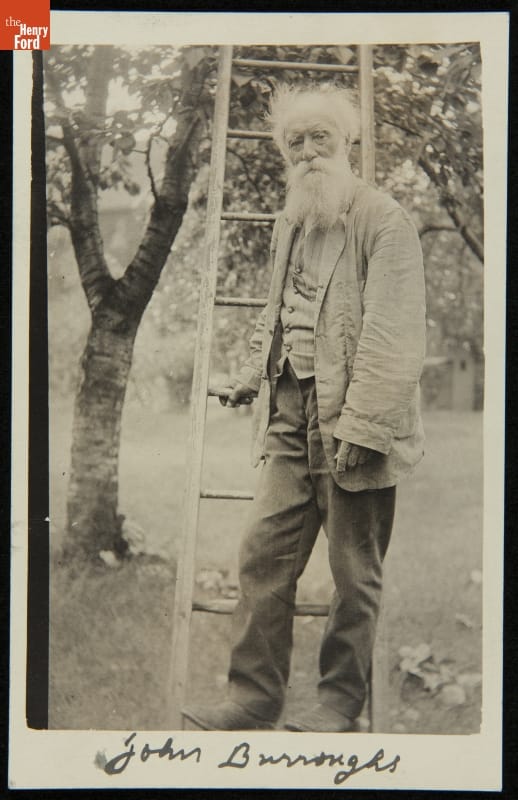
- circa 1909
- Collections - Artifact
John Burroughs Holding a Ladder near Riverby, circa 1909
John Burroughs (1837-1921) was an internationally known naturalist and essayist who wrote about accessible and familiar landscapes. In 1873, Burroughs bought a plot of land overlooking the Hudson in the Catskills of upstate New York and named it Riverby. Here, he farmed and cultivated grapes and fruit trees. He also erected a family home and built secluded retreats where he penned some of his most famous works.
- John Burroughs Putting up a Bluebird House at Riverby, 1902 - John Burroughs (1837-1921) was an internationally known naturalist and essayist who wrote about accessible and familiar landscapes. In 1873, Burroughs bought a plot of land overlooking the Hudson in the Catskills of upstate New York and named it Riverby. Here, he farmed and cultivated grapes and fruit trees. He also erected a family home and built secluded retreats where he penned some of his most famous works.
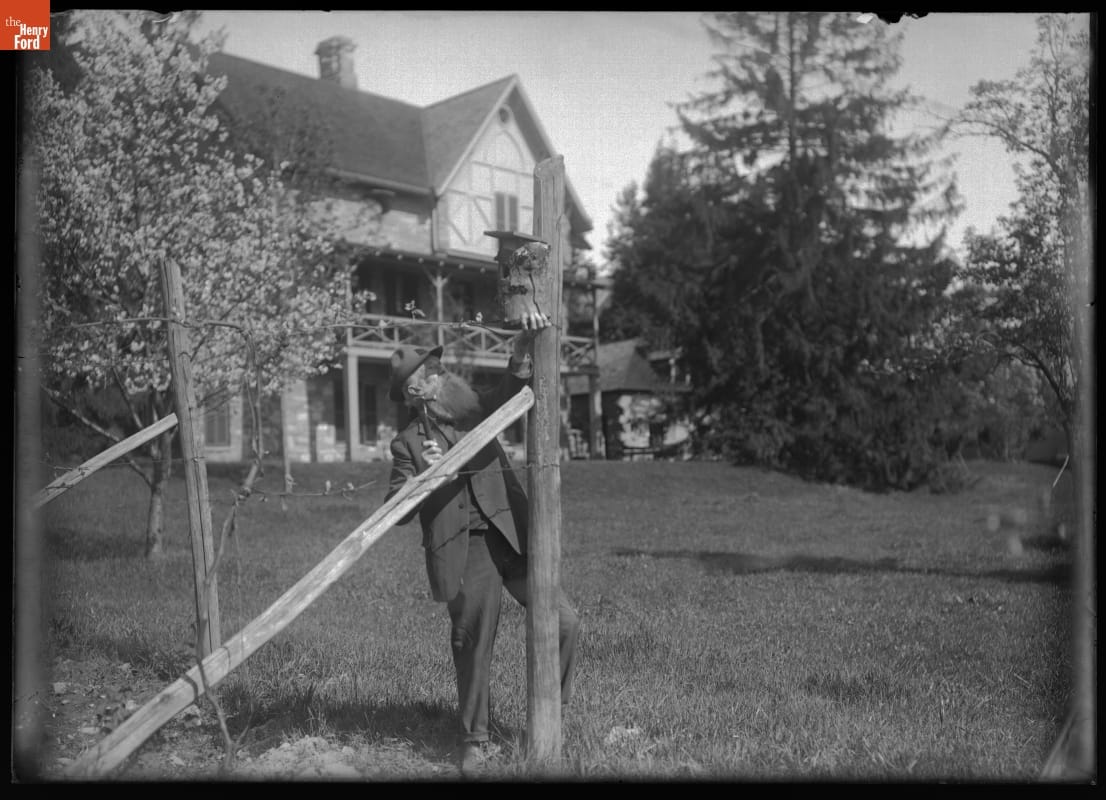
- February 01, 1902
- Collections - Artifact
John Burroughs Putting up a Bluebird House at Riverby, 1902
John Burroughs (1837-1921) was an internationally known naturalist and essayist who wrote about accessible and familiar landscapes. In 1873, Burroughs bought a plot of land overlooking the Hudson in the Catskills of upstate New York and named it Riverby. Here, he farmed and cultivated grapes and fruit trees. He also erected a family home and built secluded retreats where he penned some of his most famous works.
- John Burroughs outside His Bark Study at Riverby, 1910-1920 - John Burroughs (1837-1921) was an internationally known naturalist and essayist who wrote about accessible and familiar landscapes. In 1873, Burroughs bought a plot of land overlooking the Hudson in the Catskills of upstate New York and named it Riverby. Here, he farmed and cultivated grapes and fruit trees. He also erected a family home and built secluded retreats where he penned some of his most famous works.
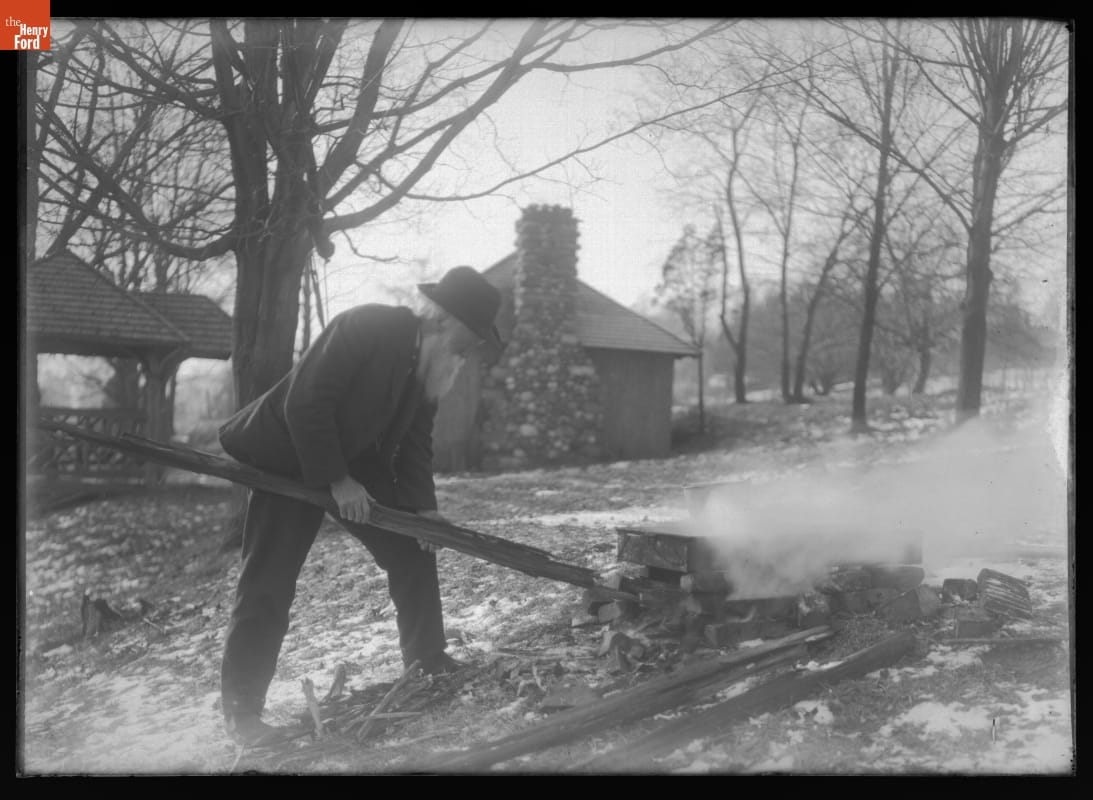
- 1910-1920
- Collections - Artifact
John Burroughs outside His Bark Study at Riverby, 1910-1920
John Burroughs (1837-1921) was an internationally known naturalist and essayist who wrote about accessible and familiar landscapes. In 1873, Burroughs bought a plot of land overlooking the Hudson in the Catskills of upstate New York and named it Riverby. Here, he farmed and cultivated grapes and fruit trees. He also erected a family home and built secluded retreats where he penned some of his most famous works.
- John Burroughs and Clara Barrus at Riverby, 1917 -
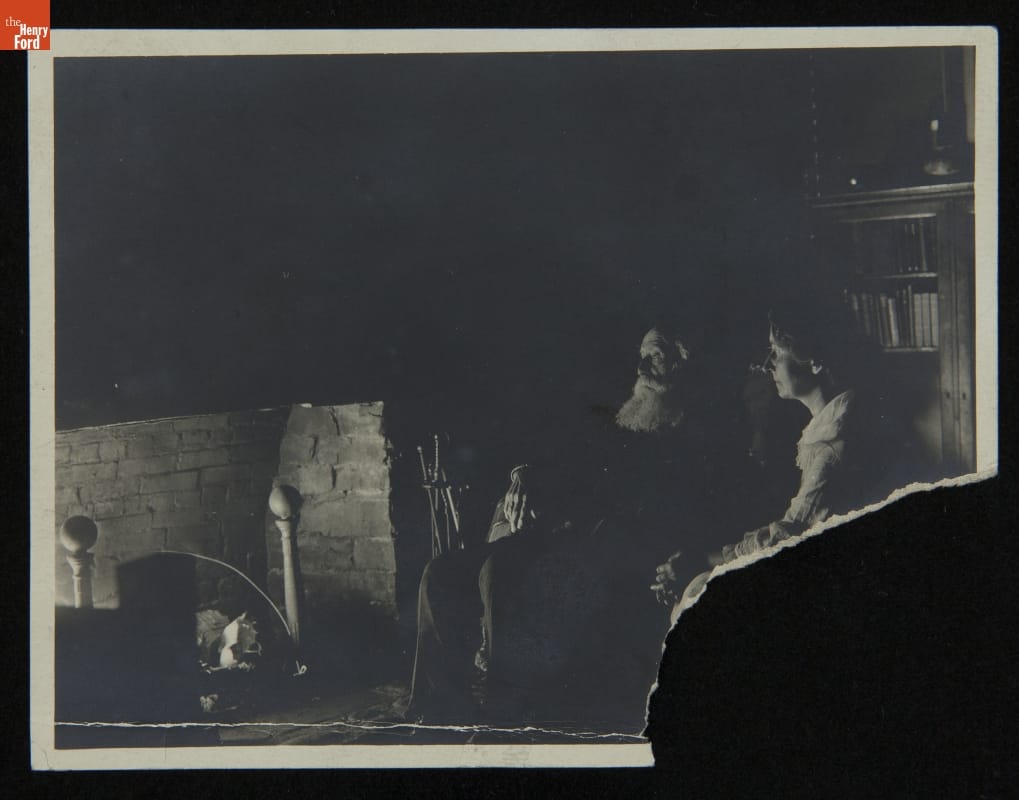
- May 26, 1917
- Collections - Artifact
John Burroughs and Clara Barrus at Riverby, 1917
- John Burroughs Examining a Rabbit's Nest at Riverby, 1901 - John Burroughs (1837-1921) was an internationally known naturalist and essayist who wrote about accessible and familiar landscapes. In 1873, Burroughs bought a plot of land overlooking the Hudson in the Catskills of upstate New York and named it Riverby. Here, he farmed and cultivated grapes and fruit trees. He also erected a family home and built secluded retreats where he penned some of his most famous works.
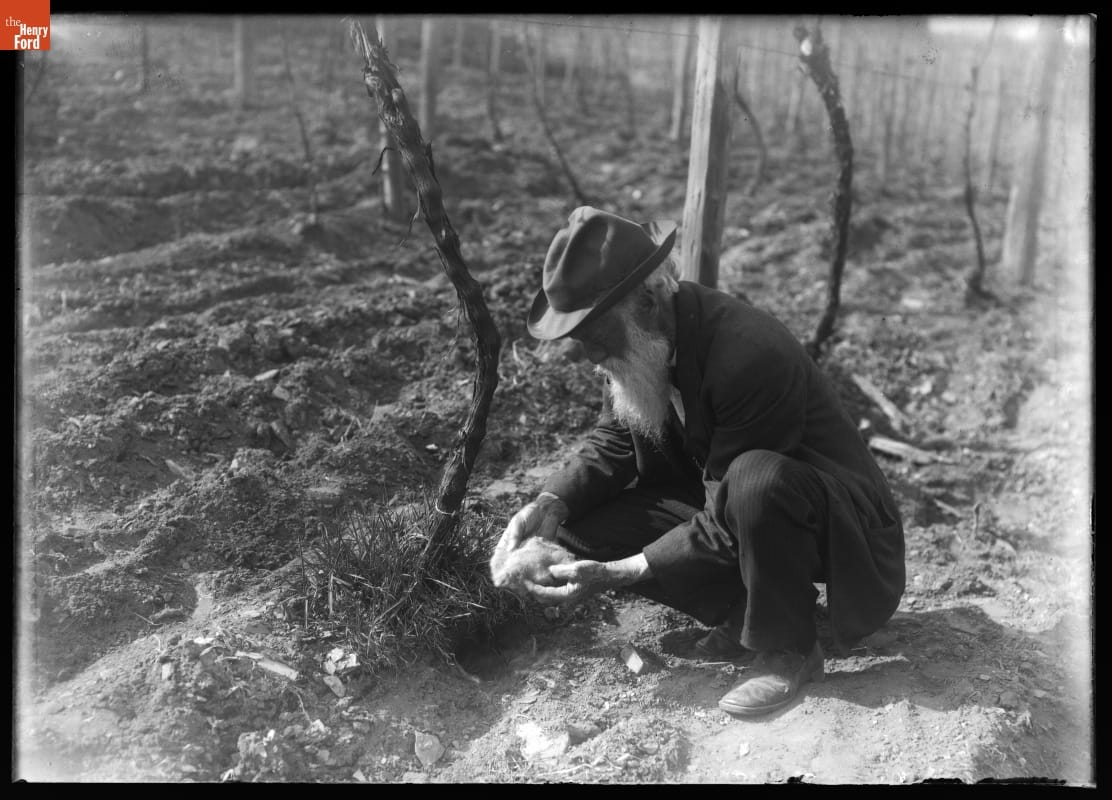
- March 26, 1901
- Collections - Artifact
John Burroughs Examining a Rabbit's Nest at Riverby, 1901
John Burroughs (1837-1921) was an internationally known naturalist and essayist who wrote about accessible and familiar landscapes. In 1873, Burroughs bought a plot of land overlooking the Hudson in the Catskills of upstate New York and named it Riverby. Here, he farmed and cultivated grapes and fruit trees. He also erected a family home and built secluded retreats where he penned some of his most famous works.
- John Burroughs Sawing Wood near His Study at Riverby, 1910-1920 - John Burroughs (1837-1921) was an internationally known naturalist and essayist who wrote about accessible and familiar landscapes. In 1873, Burroughs bought a plot of land overlooking the Hudson in the Catskills of upstate New York and named it Riverby. Here, he farmed and cultivated grapes and fruit trees. He also erected a family home and built secluded retreats where he penned some of his most famous works.
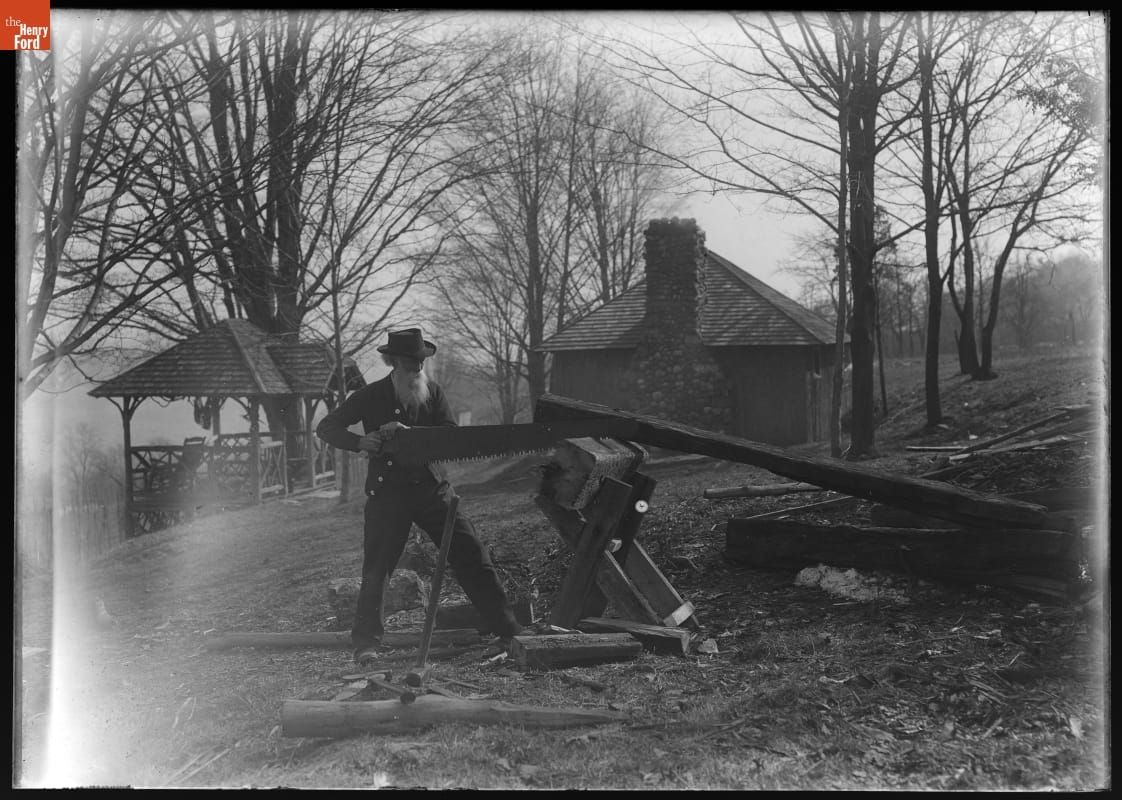
- 1910-1920
- Collections - Artifact
John Burroughs Sawing Wood near His Study at Riverby, 1910-1920
John Burroughs (1837-1921) was an internationally known naturalist and essayist who wrote about accessible and familiar landscapes. In 1873, Burroughs bought a plot of land overlooking the Hudson in the Catskills of upstate New York and named it Riverby. Here, he farmed and cultivated grapes and fruit trees. He also erected a family home and built secluded retreats where he penned some of his most famous works.
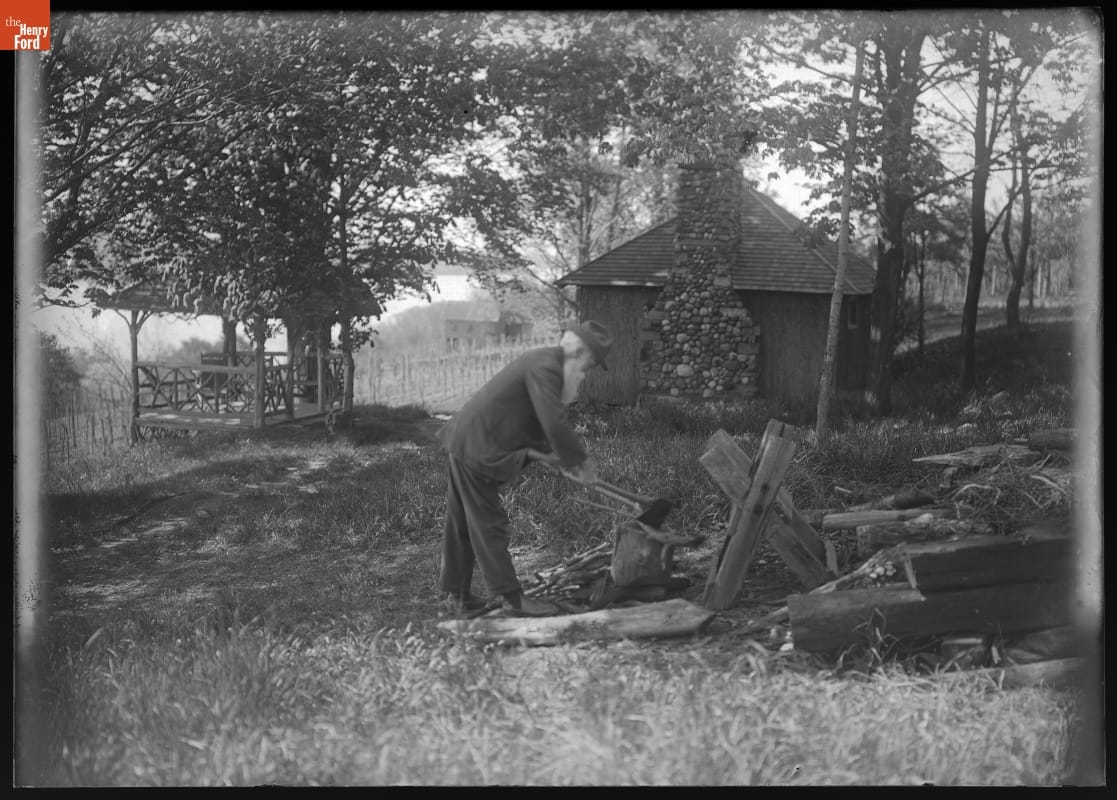
- John Burroughs Chopping Wood near His Study at Riverby, 1910-1920 - John Burroughs (1837-1921) was an internationally known naturalist and essayist who wrote about accessible and familiar landscapes. In 1873, Burroughs bought a plot of land overlooking the Hudson in the Catskills of upstate New York and named it Riverby. Here, he farmed and cultivated grapes and fruit trees. He also erected a family home and built secluded retreats where he penned some of his most famous works.
- 1910-1920
- Collections - Artifact
John Burroughs Chopping Wood near His Study at Riverby, 1910-1920
John Burroughs (1837-1921) was an internationally known naturalist and essayist who wrote about accessible and familiar landscapes. In 1873, Burroughs bought a plot of land overlooking the Hudson in the Catskills of upstate New York and named it Riverby. Here, he farmed and cultivated grapes and fruit trees. He also erected a family home and built secluded retreats where he penned some of his most famous works.
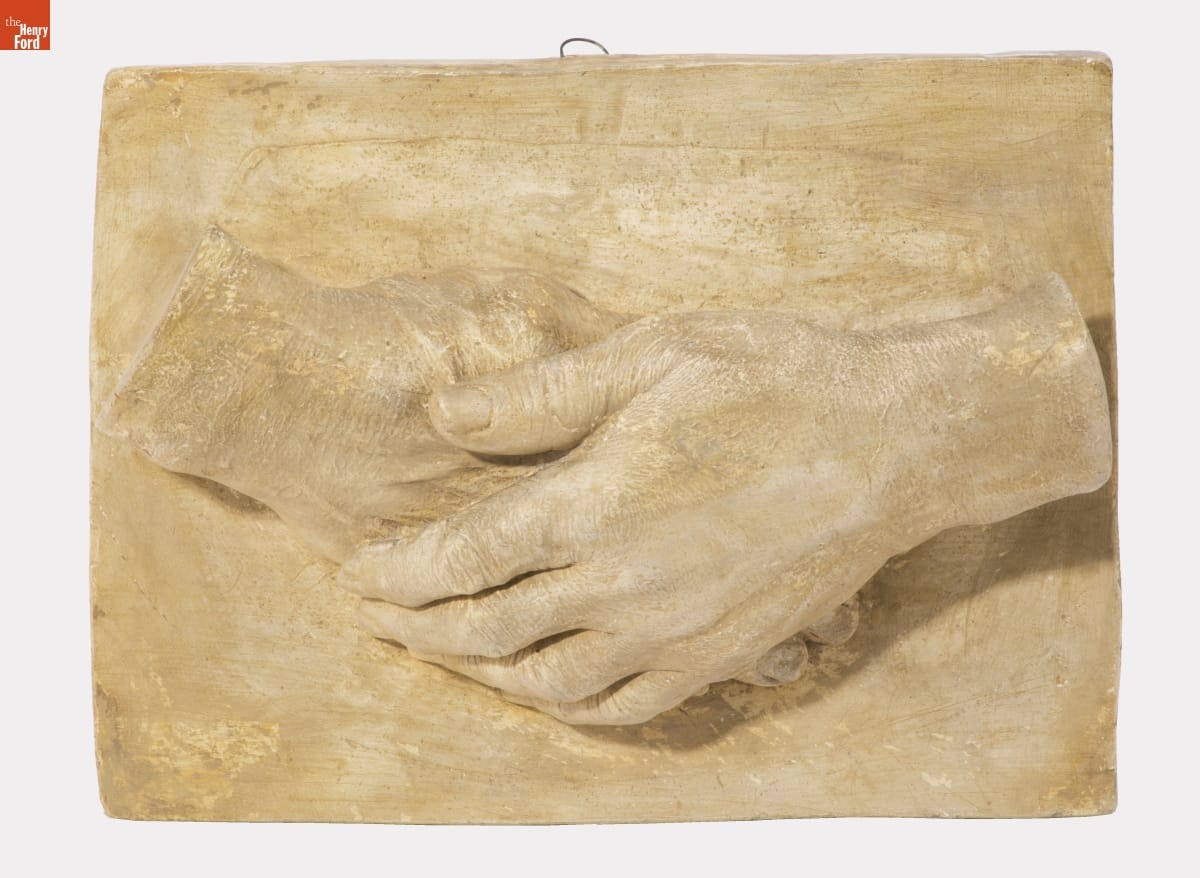
- Cast of John Burroughs's Hands, circa 1910 - Mary Burt--a teacher, writer, and lecturer--made this cast of John Burroughs's hands in the early 1900s. Burroughs was an internationally known naturalist and writer whose nature essays were well-received in both literary and scientific circles. Burt incorporated Burroughs's essays into her classroom when she taught elementary school in the 1880s. Later, she edited some of Burroughs's writings for use in textbooks for schoolchildren.
- circa 1910
- Collections - Artifact
Cast of John Burroughs's Hands, circa 1910
Mary Burt--a teacher, writer, and lecturer--made this cast of John Burroughs's hands in the early 1900s. Burroughs was an internationally known naturalist and writer whose nature essays were well-received in both literary and scientific circles. Burt incorporated Burroughs's essays into her classroom when she taught elementary school in the 1880s. Later, she edited some of Burroughs's writings for use in textbooks for schoolchildren.