
Search
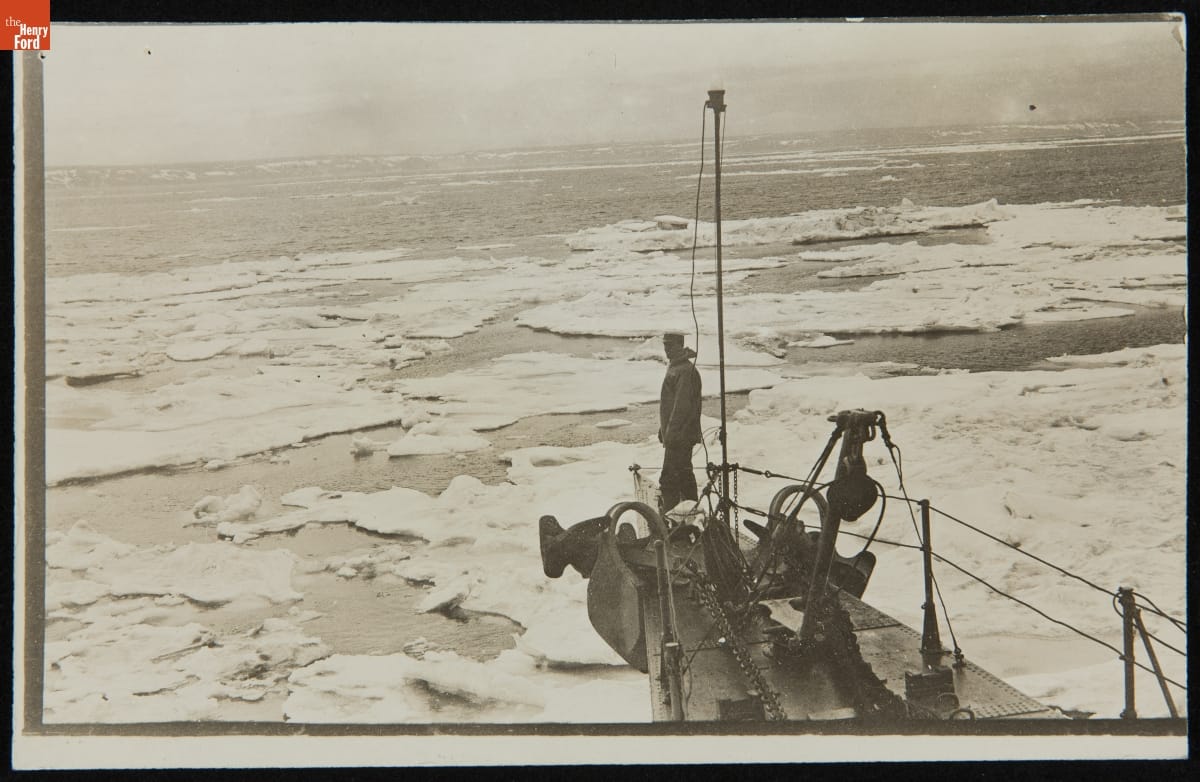
- USS Eagle Boat off Northern Russia, Bound for Arkhangelsk, June 14, 1919 - World War I ended before any of the 60 Ford-built Eagle submarine chasers could participate in the conflict. But three Eagle boats were sent to northern Russia in 1919 to aid the American Expeditionary Force in action against the Bolsheviks. The Americans landed at Arkhangelsk, near the Arctic Circle, and called themselves the "Polar Bears."
- June 14, 1919
- Collections - Artifact
USS Eagle Boat off Northern Russia, Bound for Arkhangelsk, June 14, 1919
World War I ended before any of the 60 Ford-built Eagle submarine chasers could participate in the conflict. But three Eagle boats were sent to northern Russia in 1919 to aid the American Expeditionary Force in action against the Bolsheviks. The Americans landed at Arkhangelsk, near the Arctic Circle, and called themselves the "Polar Bears."
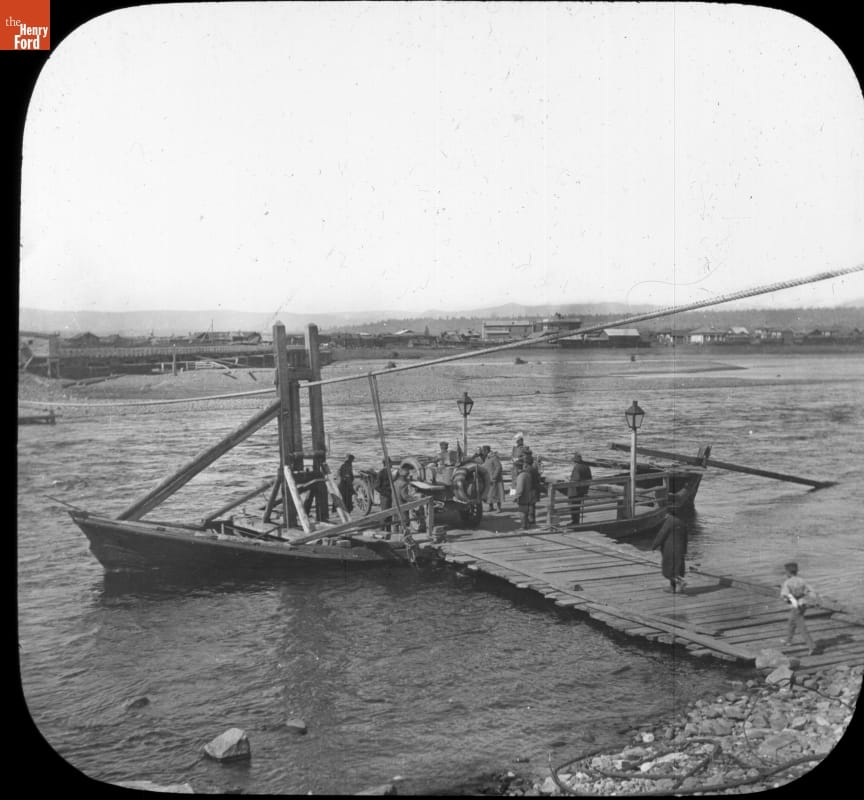
- Thomas Flyer aboard Ferry, Kazan, Russia, New York to Paris Race, 1908 - In February 1908, six automobiles began an around-the-world race from New York City to Paris, France. The contest took 169 days, covered 22,000 miles and spanned three continents. In May, the three remaining teams left Vladivostok, Russia, heading west. Each team would have to navigate around, over or through any lake, river or stream blocking their progress.
- 1908
- Collections - Artifact
Thomas Flyer aboard Ferry, Kazan, Russia, New York to Paris Race, 1908
In February 1908, six automobiles began an around-the-world race from New York City to Paris, France. The contest took 169 days, covered 22,000 miles and spanned three continents. In May, the three remaining teams left Vladivostok, Russia, heading west. Each team would have to navigate around, over or through any lake, river or stream blocking their progress.
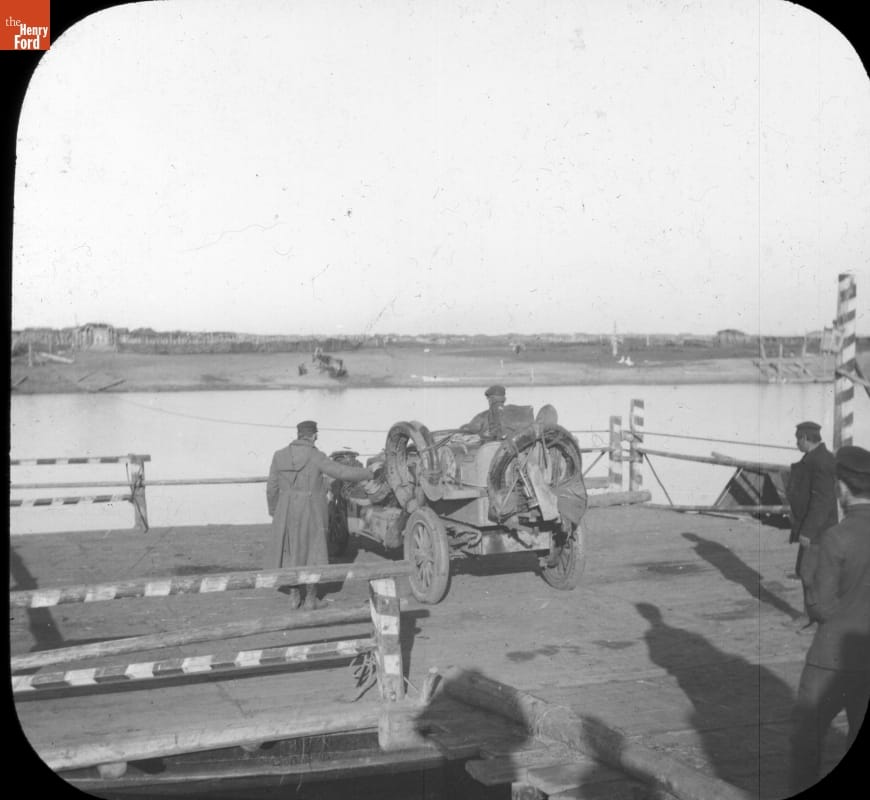
- George Schuster with the Thomas Flyer aboard a Russion Ferry in the New York to Paris Race, 1908 - In February 1908, six automobiles began an around-the-world race from New York City to Paris, France. The contest took 169 days, covered 22,000 miles and spanned three continents. In May, the three remaining teams left Vladivostok, Russia, heading west. Each team would have to navigate around, over or through any lake, river or stream blocking their progress.
- 1908
- Collections - Artifact
George Schuster with the Thomas Flyer aboard a Russion Ferry in the New York to Paris Race, 1908
In February 1908, six automobiles began an around-the-world race from New York City to Paris, France. The contest took 169 days, covered 22,000 miles and spanned three continents. In May, the three remaining teams left Vladivostok, Russia, heading west. Each team would have to navigate around, over or through any lake, river or stream blocking their progress.
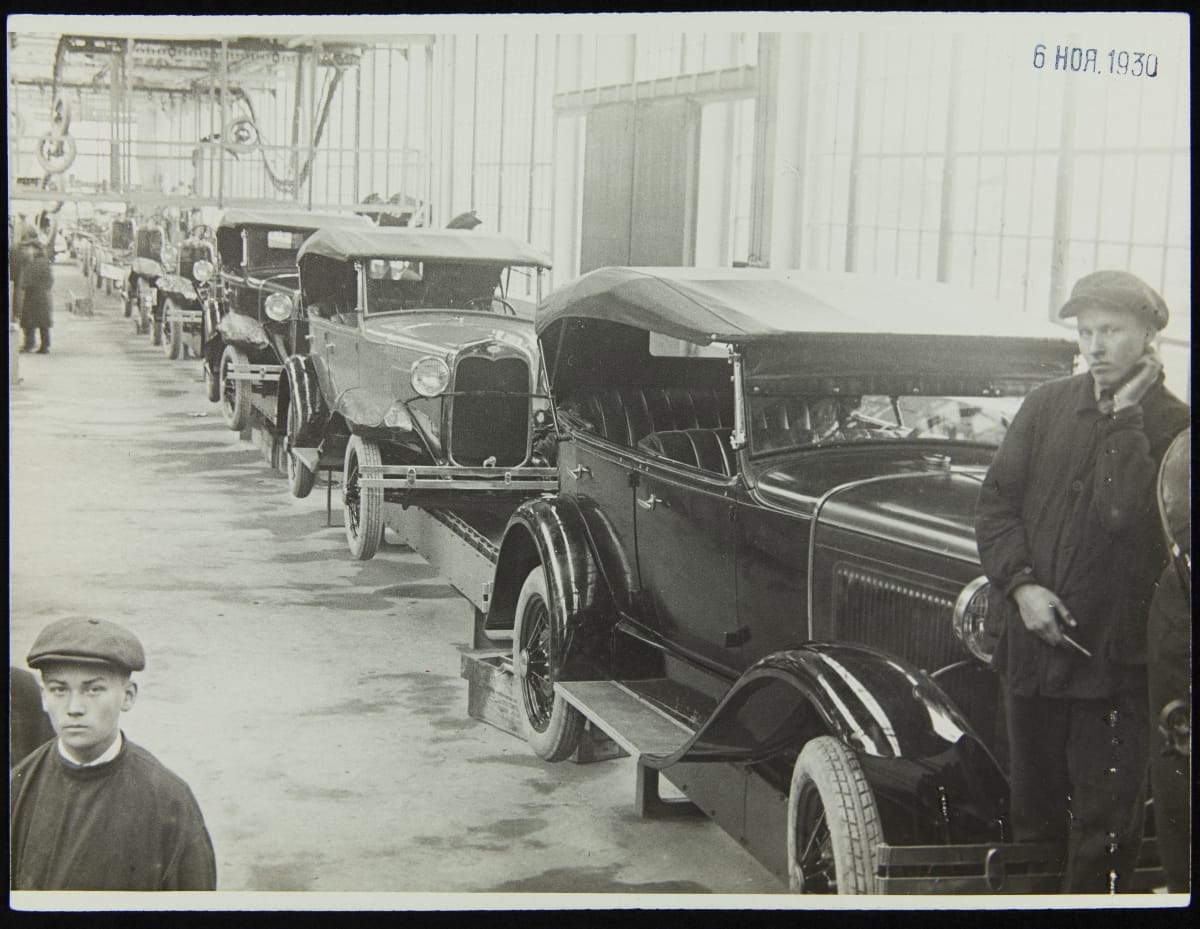
- Model A Assembly Line at Ford Motor Company's Moscow Factory, 1930 - In 1929, Ford Motor Company signed an agreement with the Soviet government to help open two plants in the U.S.S.R. at Nizhny Novgorod and Moscow. Ford provided detailed drawings of factory buildings and equipment, and it sent engineers and foremen to oversee construction and startup. Although Ford lost money on the venture, it earned favorable international publicity.
- November 06, 1930
- Collections - Artifact
Model A Assembly Line at Ford Motor Company's Moscow Factory, 1930
In 1929, Ford Motor Company signed an agreement with the Soviet government to help open two plants in the U.S.S.R. at Nizhny Novgorod and Moscow. Ford provided detailed drawings of factory buildings and equipment, and it sent engineers and foremen to oversee construction and startup. Although Ford lost money on the venture, it earned favorable international publicity.
- Fordson Tractor Repair Class, Russia, 1926 - In 1926, Ford Motor Company sent a team of experts to Russia, at the request of the Soviet government, to advise on the continued maintenance of some 25,000 Fordson tractors imported there since 1920. The Ford team spent four months touring the country, training Soviet technicians and evaluating possibilities for Ford factories in Russia.
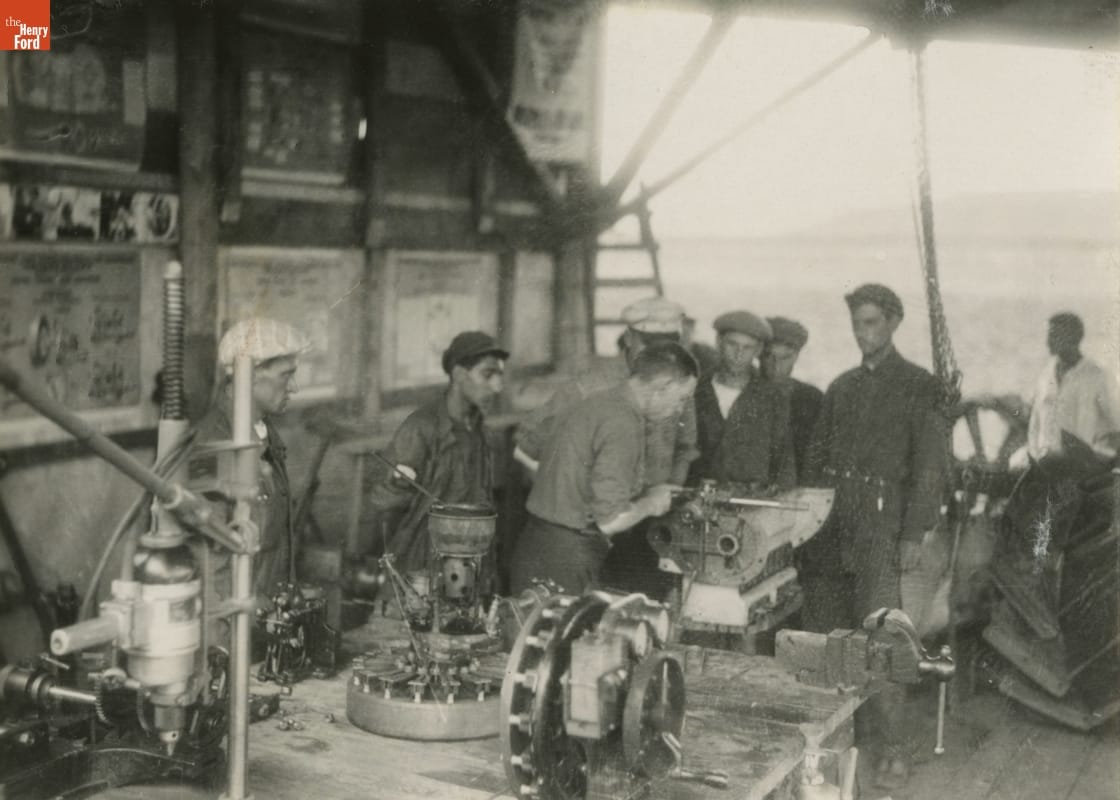
- 1926
- Collections - Artifact
Fordson Tractor Repair Class, Russia, 1926
In 1926, Ford Motor Company sent a team of experts to Russia, at the request of the Soviet government, to advise on the continued maintenance of some 25,000 Fordson tractors imported there since 1920. The Ford team spent four months touring the country, training Soviet technicians and evaluating possibilities for Ford factories in Russia.
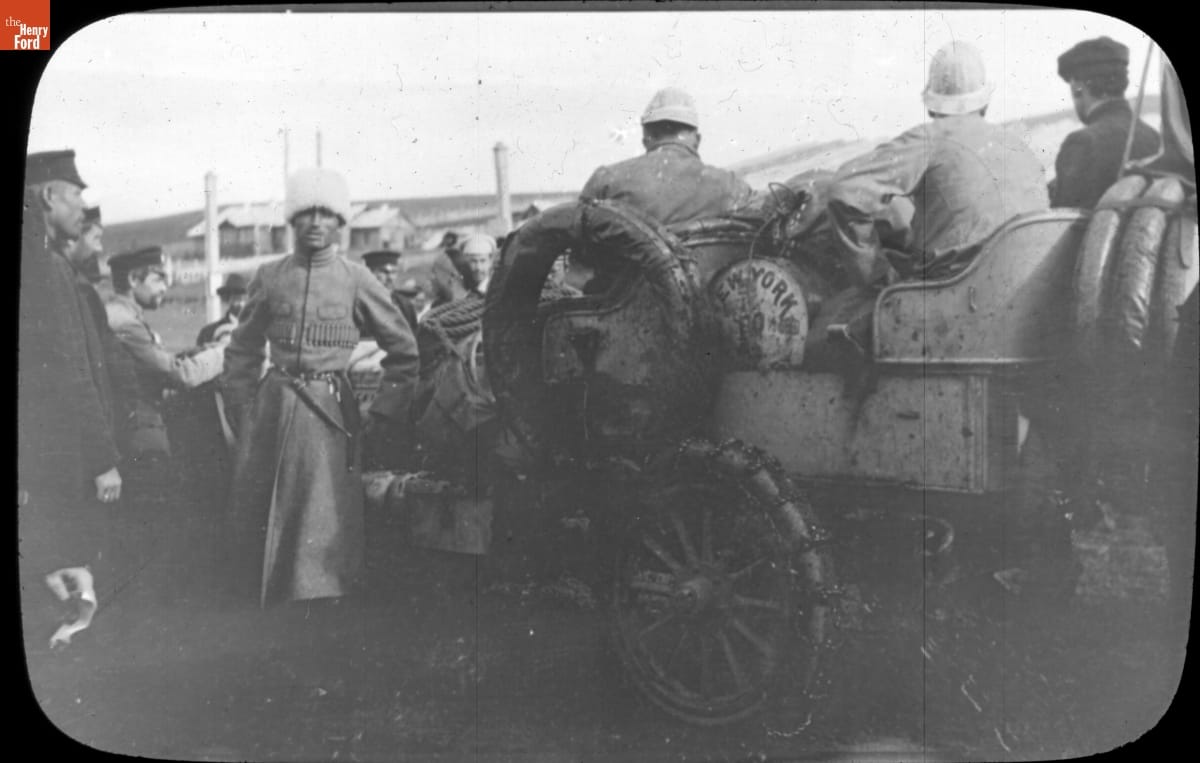
- Thomas Flyer Stopped between Vladivostok and Harbin, Russia, during New York to Paris Race, 1908 - The 1908 New York to Paris race was a 22,000-mile automobile endurance contest that spanned three continents. When the Thomas Flyer passed through towns and villages -- even those in the remote corners of Russia -- local officials and the public gathered to greet the American racers.
- 1908
- Collections - Artifact
Thomas Flyer Stopped between Vladivostok and Harbin, Russia, during New York to Paris Race, 1908
The 1908 New York to Paris race was a 22,000-mile automobile endurance contest that spanned three continents. When the Thomas Flyer passed through towns and villages -- even those in the remote corners of Russia -- local officials and the public gathered to greet the American racers.
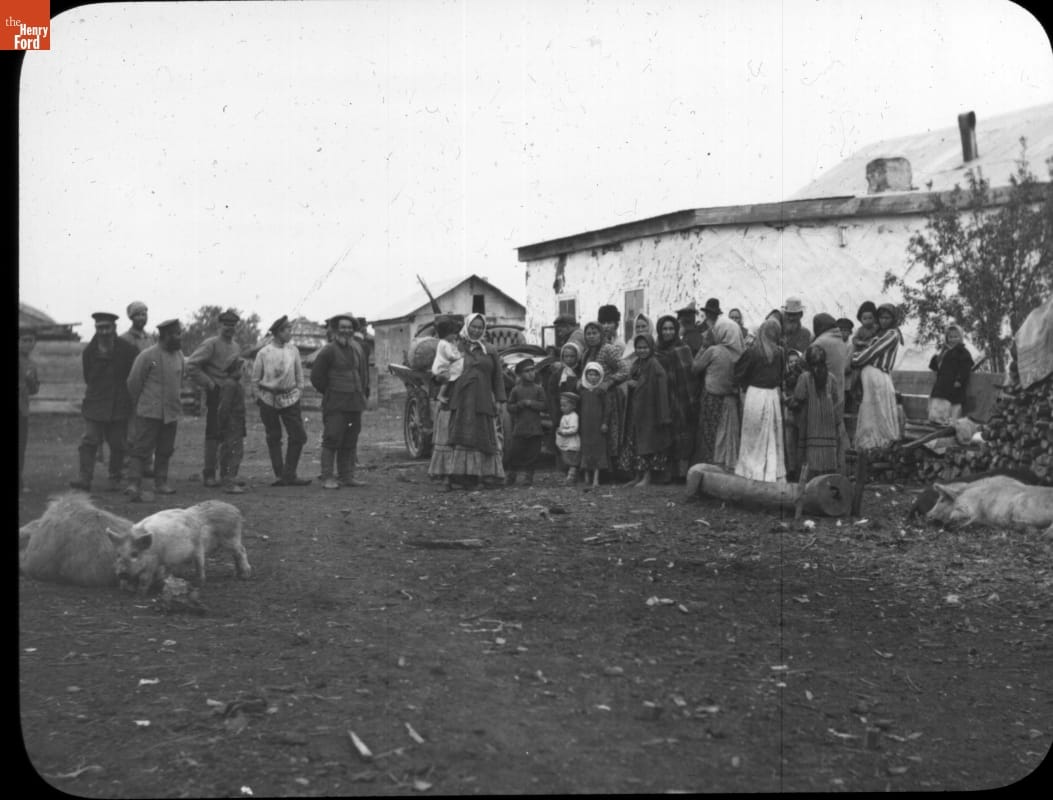
- Local Villagers in Russia, New York to Paris Race, 1908 - The 1908 New York to Paris race was a 22,000-mile automobile endurance contest that spanned three continents. When the Thomas Flyer passed through towns and villages -- even those in the remote corners of Russia -- local officials and the public gathered to greet the American racers.
- 1908
- Collections - Artifact
Local Villagers in Russia, New York to Paris Race, 1908
The 1908 New York to Paris race was a 22,000-mile automobile endurance contest that spanned three continents. When the Thomas Flyer passed through towns and villages -- even those in the remote corners of Russia -- local officials and the public gathered to greet the American racers.
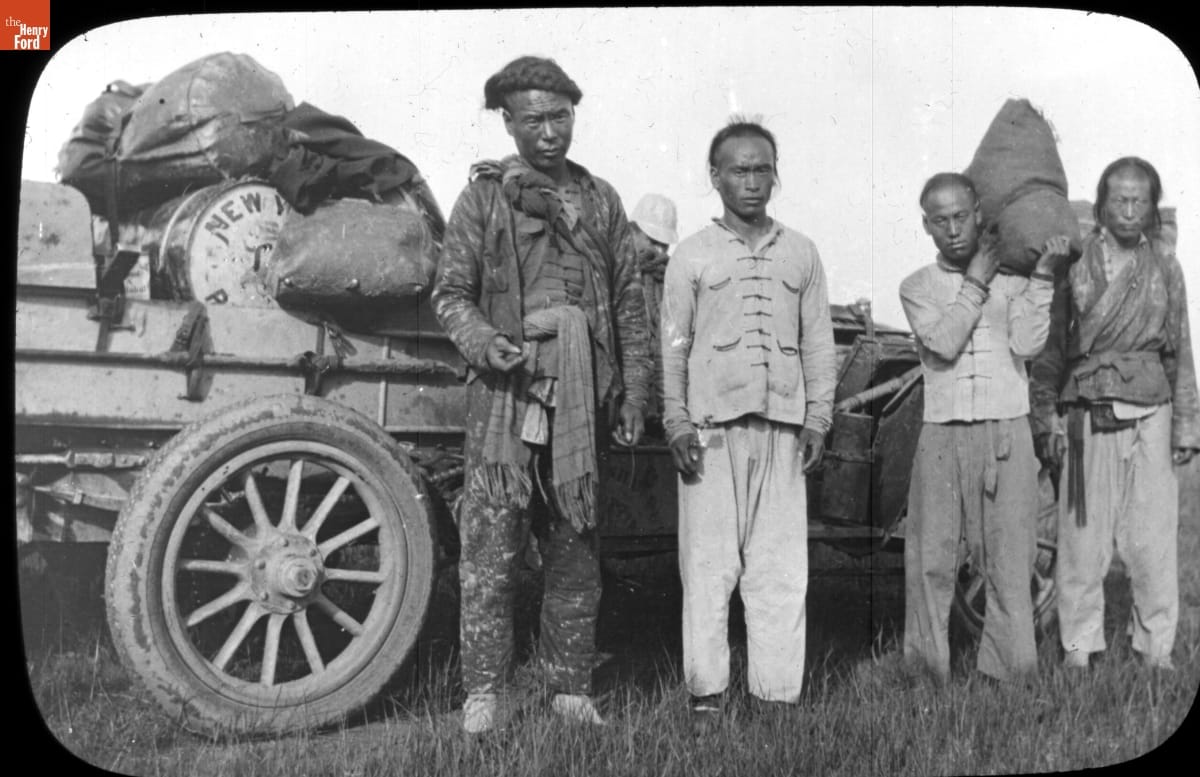
- Local Men with Thomas Flyer near Chita, Russia, New York to Paris Race, 1908 - In February 1908, six automobiles began an around-the-world race from New York City to Paris, France. The contest took 169 days, covered 22,000 miles and spanned three continents. In May, the three remaining teams left Vladivostok, Russia. For the next two to three months the teams made their way west across the Russian countryside.
- 1908
- Collections - Artifact
Local Men with Thomas Flyer near Chita, Russia, New York to Paris Race, 1908
In February 1908, six automobiles began an around-the-world race from New York City to Paris, France. The contest took 169 days, covered 22,000 miles and spanned three continents. In May, the three remaining teams left Vladivostok, Russia. For the next two to three months the teams made their way west across the Russian countryside.
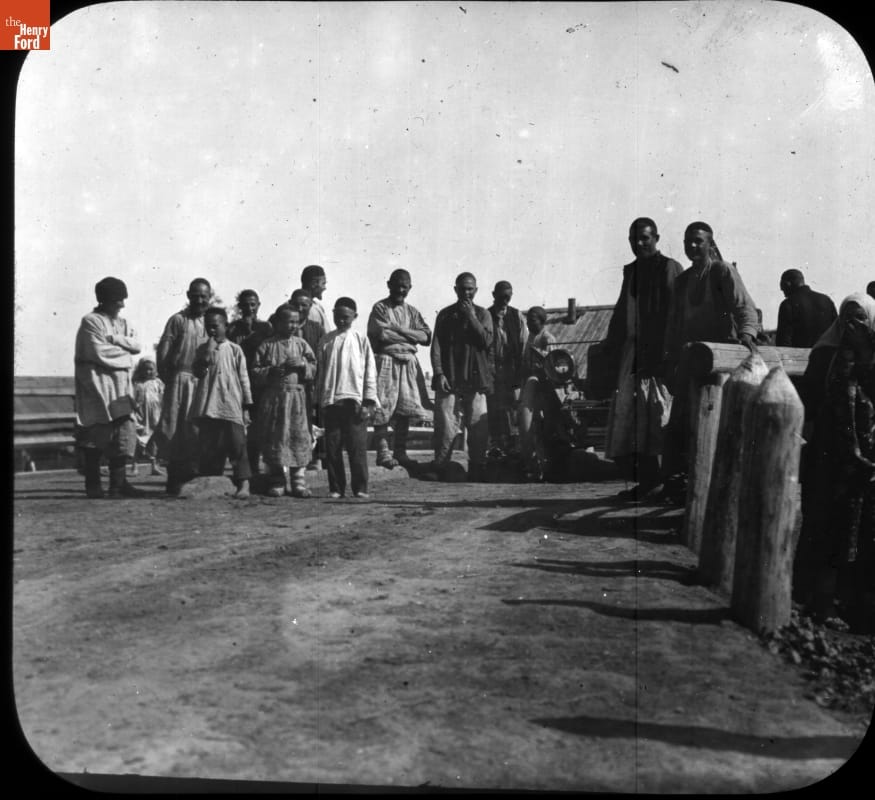
- Men and Boys with Thomas Flyer in Russia, New York to Paris Race, 1908 - The 1908 New York to Paris race was a 22,000-mile automobile endurance contest that spanned three continents. When the Thomas Flyer passed through towns and villages -- even those in the remote corners of Russia -- local officials and the public gathered to greet the American racers.
- 1908
- Collections - Artifact
Men and Boys with Thomas Flyer in Russia, New York to Paris Race, 1908
The 1908 New York to Paris race was a 22,000-mile automobile endurance contest that spanned three continents. When the Thomas Flyer passed through towns and villages -- even those in the remote corners of Russia -- local officials and the public gathered to greet the American racers.
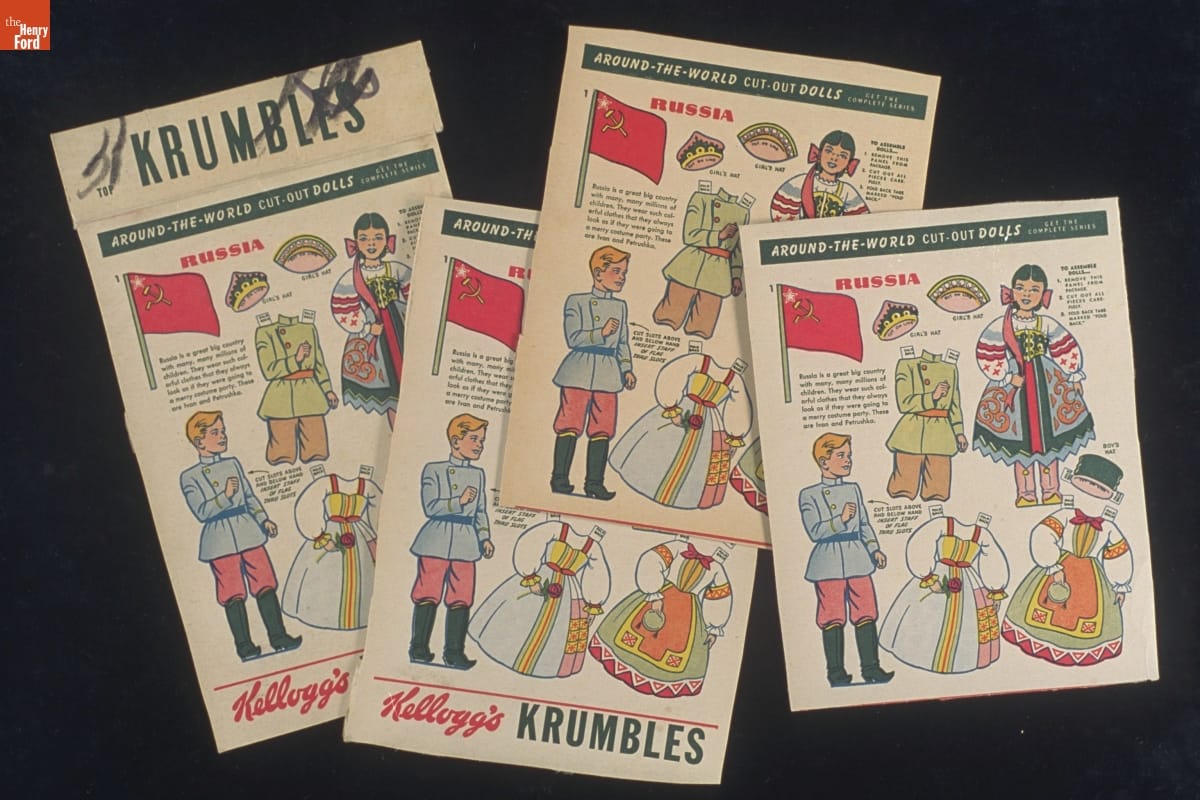
- Kellogg's Krumbles Around-the-World Cut-Out Dolls, Russia, 1946-1949 - The breakfast food manufacturer Kellogg's created attractive advertising premiums to entice customers to buy its products. In the late 1940s, as the United States became a global leader, the company printed cut-out paper dolls of children from around the world on the backs of Kellogg's Krumbles cereal boxes. Kellogg's Krumbles, a tasty toasted whole wheat cereal, was one of the company's best-selling products.
- 1946-1949
- Collections - Artifact
Kellogg's Krumbles Around-the-World Cut-Out Dolls, Russia, 1946-1949
The breakfast food manufacturer Kellogg's created attractive advertising premiums to entice customers to buy its products. In the late 1940s, as the United States became a global leader, the company printed cut-out paper dolls of children from around the world on the backs of Kellogg's Krumbles cereal boxes. Kellogg's Krumbles, a tasty toasted whole wheat cereal, was one of the company's best-selling products.