
Search
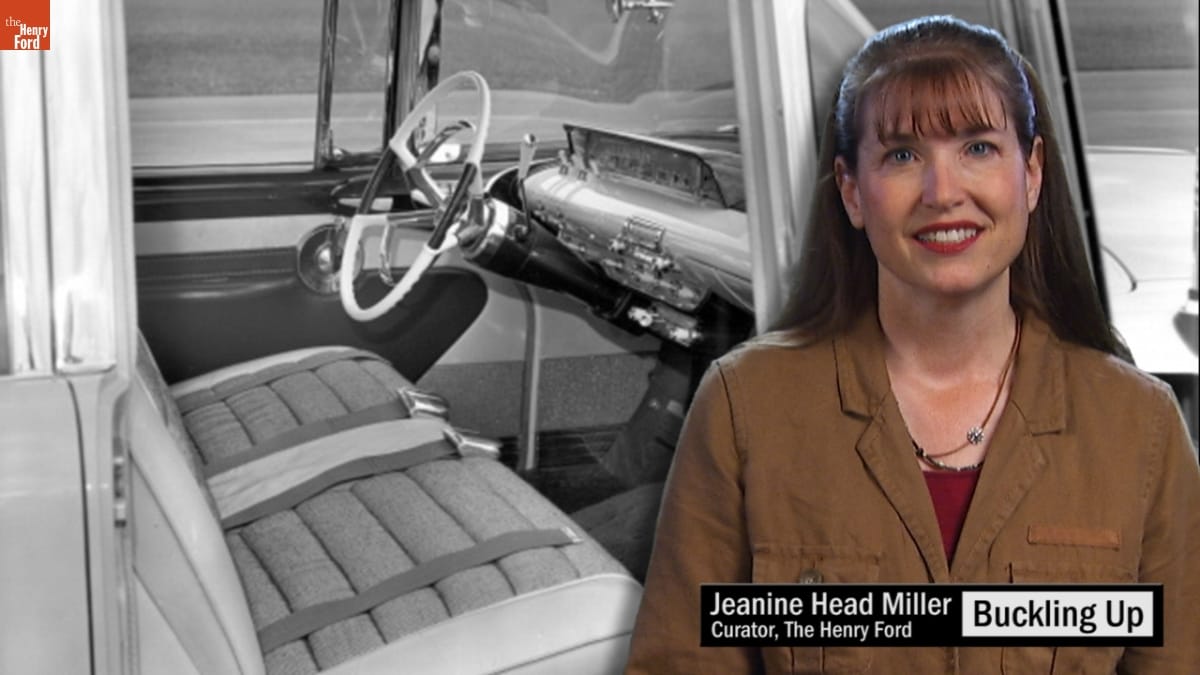
- "Buckling Up" Clip from Interview with Jeanine Head Miller, 2011 - Seat belts are the single most important safety device in an automobile. Nevertheless, drivers were slow to use them. State laws, public education campaigns, and short-lived ignition interlocks -- which prevented a car from starting unless seat belts were fastened -- all promoted seat belt use. By the 1990s, buckling up was a habit for American motorists.
- 2011
- Collections - Artifact
"Buckling Up" Clip from Interview with Jeanine Head Miller, 2011
Seat belts are the single most important safety device in an automobile. Nevertheless, drivers were slow to use them. State laws, public education campaigns, and short-lived ignition interlocks -- which prevented a car from starting unless seat belts were fastened -- all promoted seat belt use. By the 1990s, buckling up was a habit for American motorists.
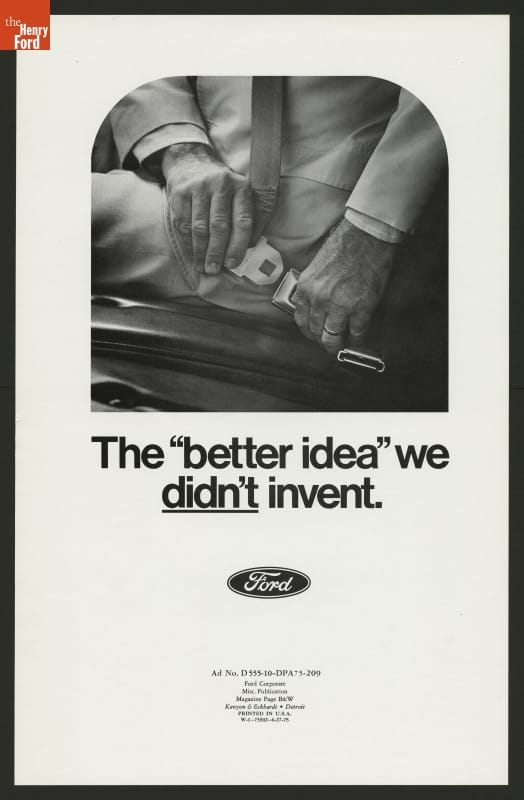
- 1975 Ford Advertisement for Using Seat Belts, "The Better Idea We Didn't Invent" - Ford offered factory-installed seat belts as optional equipment in some models in 1955. But people did not have to use them -- and most would not. By 1975, the time of this ad, seat belts were required equipment. And beginning in the 1980s, most states would pass laws enforcing passenger use of seat belts.
- June 27, 1975
- Collections - Artifact
1975 Ford Advertisement for Using Seat Belts, "The Better Idea We Didn't Invent"
Ford offered factory-installed seat belts as optional equipment in some models in 1955. But people did not have to use them -- and most would not. By 1975, the time of this ad, seat belts were required equipment. And beginning in the 1980s, most states would pass laws enforcing passenger use of seat belts.
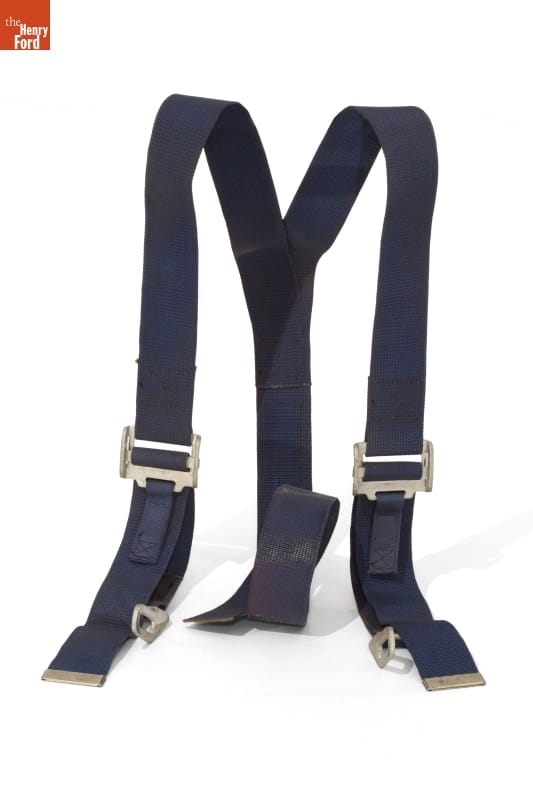
- Racing Harness, 1955-1960 - Driver safety improved dramatically over the more than 30 years that Bobby Unser raced. One of the most important precautions was simply to secure the race driver to the car with a safety harness. Racing safety belts evolved from simple straps to elaborate five-point harnesses. Unser used this harness, which he adapted from aircraft equipment, early in his career.
- 1955-1960
- Collections - Artifact
Racing Harness, 1955-1960
Driver safety improved dramatically over the more than 30 years that Bobby Unser raced. One of the most important precautions was simply to secure the race driver to the car with a safety harness. Racing safety belts evolved from simple straps to elaborate five-point harnesses. Unser used this harness, which he adapted from aircraft equipment, early in his career.
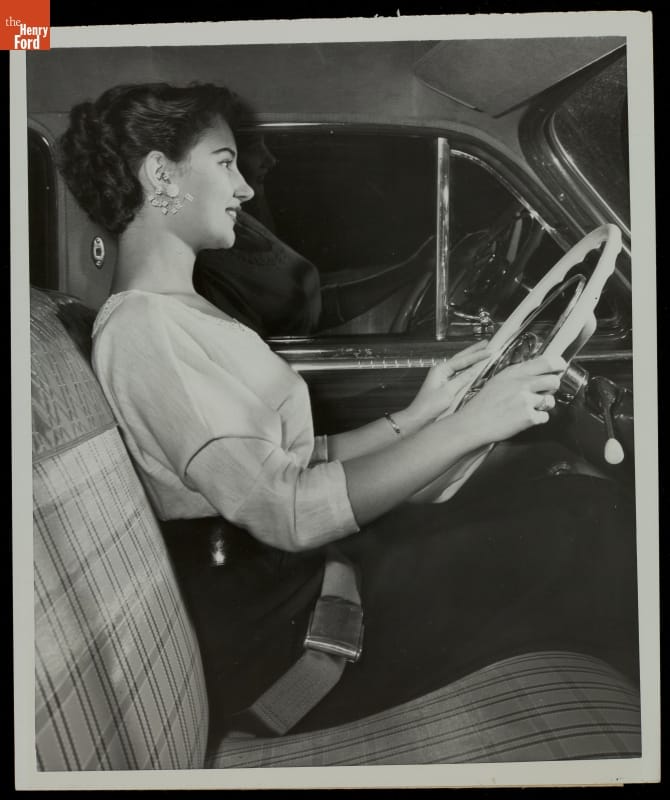
- Woman Modeling Automobile Seat Belt, 1952 - In the early 1950s, crash testing proved that seat belts could prevent injury or death during automobile accidents. This woman models appropriate safety belt use. The research was sound, but it did not persuade many Americans. Even after seat belts became standard equipment in automobiles in the mid-1960s, most drivers and passengers refused to use them.
- December 08, 1952
- Collections - Artifact
Woman Modeling Automobile Seat Belt, 1952
In the early 1950s, crash testing proved that seat belts could prevent injury or death during automobile accidents. This woman models appropriate safety belt use. The research was sound, but it did not persuade many Americans. Even after seat belts became standard equipment in automobiles in the mid-1960s, most drivers and passengers refused to use them.
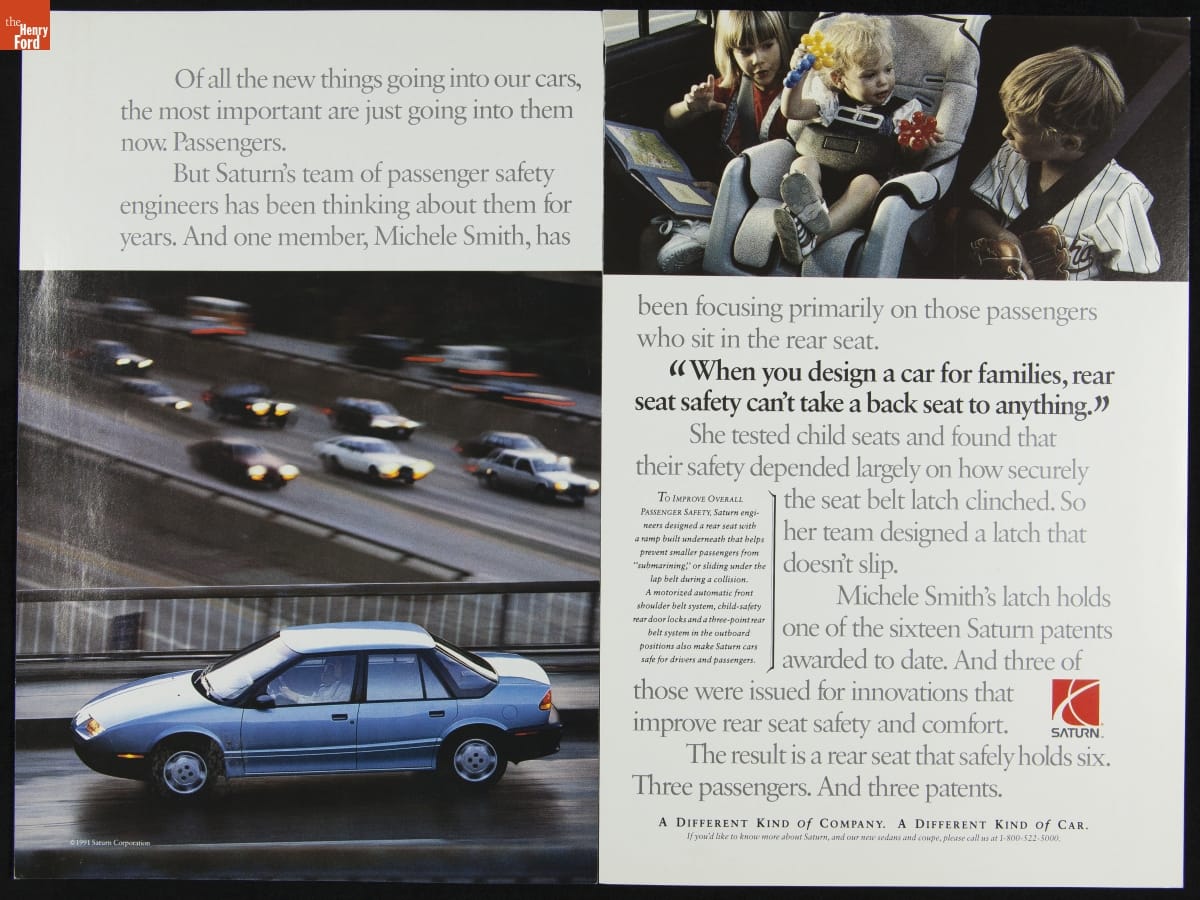
- Saturn Advertisement, 1991, "When You Design a Car for Families" - General Motors' Saturn Corporation, which produced cars from 1990 to 2010, built its brand on being different from other American carmakers. Its operations were in Spring Hill, Tennessee -- far from Detroit in distance and philosophy. This 1991 ad paints the Saturn as a car designed with passenger safety foremost in engineers' minds. Special latches and seat belts keep children secure.
- 1991
- Collections - Artifact
Saturn Advertisement, 1991, "When You Design a Car for Families"
General Motors' Saturn Corporation, which produced cars from 1990 to 2010, built its brand on being different from other American carmakers. Its operations were in Spring Hill, Tennessee -- far from Detroit in distance and philosophy. This 1991 ad paints the Saturn as a car designed with passenger safety foremost in engineers' minds. Special latches and seat belts keep children secure.
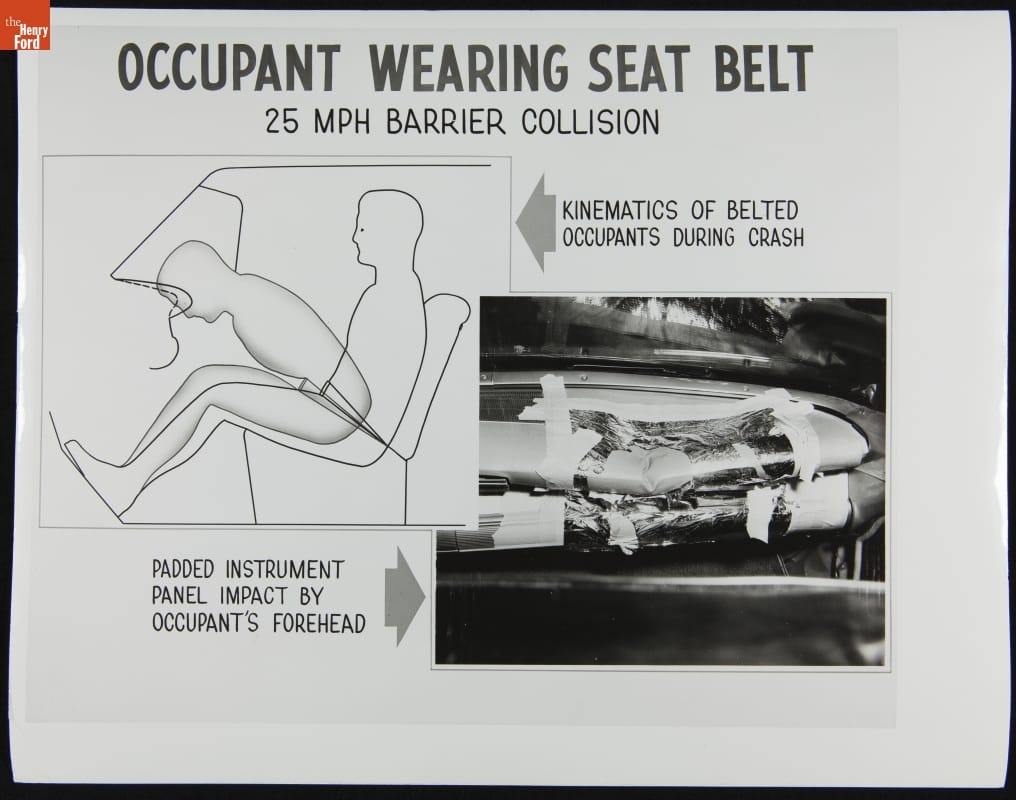
- "Occupant Wearing Seat Belt, 25 MPH Barrier Collision," 1958 - Seat belts were among the most important safety devices in an automobile. As this photo showed, even a low-speed crash could lead to serious injury, whether from broken glass or hard surfaces on the dashboard. Restraints protected people from these dangers. Seat belts were required on all cars sold in the United States starting with the 1968 model year.
- 1958
- Collections - Artifact
"Occupant Wearing Seat Belt, 25 MPH Barrier Collision," 1958
Seat belts were among the most important safety devices in an automobile. As this photo showed, even a low-speed crash could lead to serious injury, whether from broken glass or hard surfaces on the dashboard. Restraints protected people from these dangers. Seat belts were required on all cars sold in the United States starting with the 1968 model year.
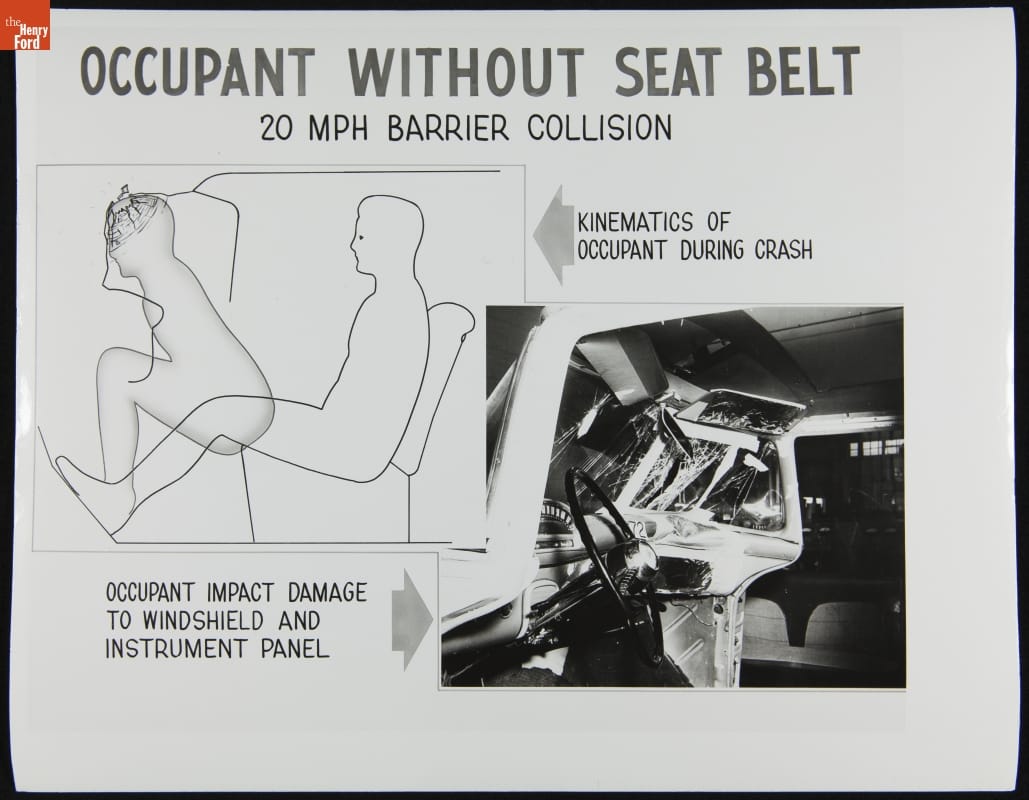
- Occupant Without Seat Belt, 20 MPH Barrier Collision," 1958 - Seat belts were among the most important safety devices in an automobile. As this photo showed, even a low-speed crash could lead to serious injury, whether from broken glass or hard surfaces on the dashboard. Restraints protected people from these dangers. Seat belts were required on all cars sold in the United States starting with the 1968 model year.
- 1958
- Collections - Artifact
Occupant Without Seat Belt, 20 MPH Barrier Collision," 1958
Seat belts were among the most important safety devices in an automobile. As this photo showed, even a low-speed crash could lead to serious injury, whether from broken glass or hard surfaces on the dashboard. Restraints protected people from these dangers. Seat belts were required on all cars sold in the United States starting with the 1968 model year.
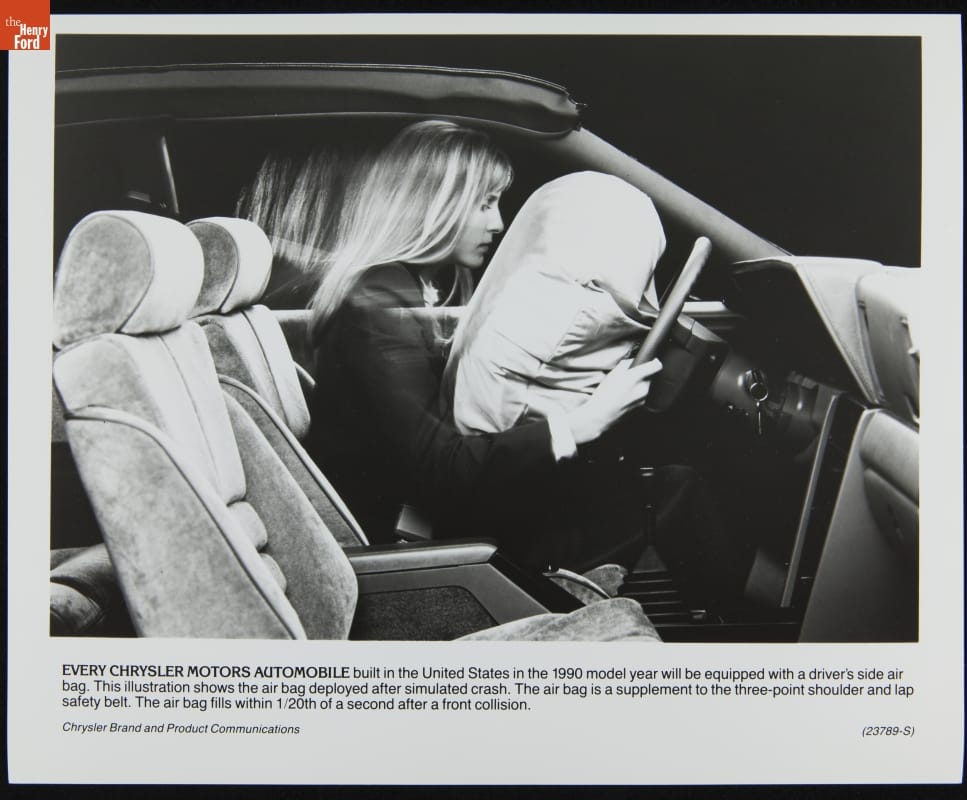
- Driver's Side Air Bag Deployed in Chrysler Motors Automobile, 1990 - Airbags first appeared in automobiles in the mid-1970s, and they became widespread in the 1990s. In a crash, a gas propellent quickly inflates a nylon bag that cushions and restrains a person during impact. Airbags are "passive" restraints because, unlike seat belts that must be fastened, they require no effort from vehicle occupants in order to work.
- 1990
- Collections - Artifact
Driver's Side Air Bag Deployed in Chrysler Motors Automobile, 1990
Airbags first appeared in automobiles in the mid-1970s, and they became widespread in the 1990s. In a crash, a gas propellent quickly inflates a nylon bag that cushions and restrains a person during impact. Airbags are "passive" restraints because, unlike seat belts that must be fastened, they require no effort from vehicle occupants in order to work.
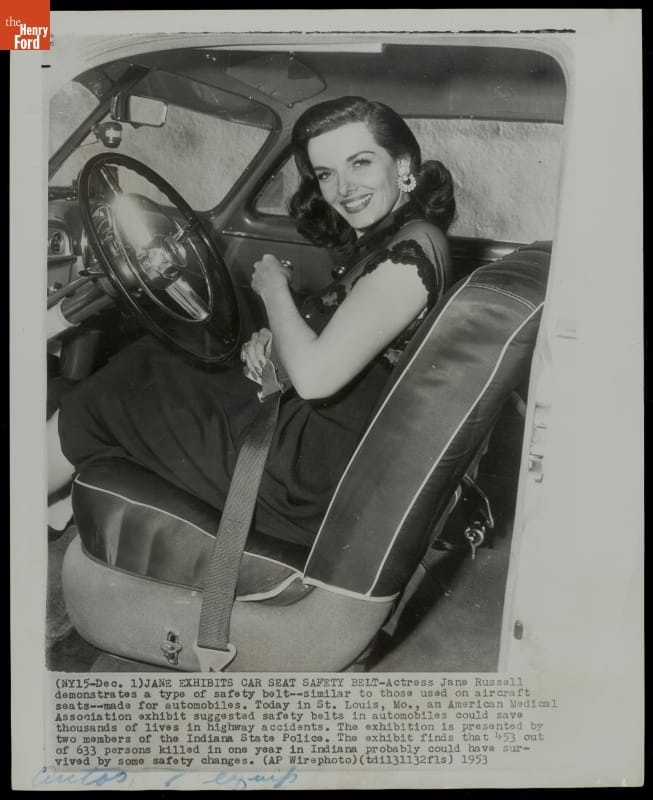
- Jane Russell Demonstrating Use of Car Safety Belts, 1953 - In the early 1950s, crash testing proved that seat belt use could prevent injury or death during automobile accidents. Indiana State Police officers used this photograph of actress Jane Russell in a presentation to persuade drivers and passengers to use safety belts. But Americans were stubborn. Even after seat belts became standard equipment in automobiles in the mid-1960s, most Americans refused to use them.
- December 01, 1953
- Collections - Artifact
Jane Russell Demonstrating Use of Car Safety Belts, 1953
In the early 1950s, crash testing proved that seat belt use could prevent injury or death during automobile accidents. Indiana State Police officers used this photograph of actress Jane Russell in a presentation to persuade drivers and passengers to use safety belts. But Americans were stubborn. Even after seat belts became standard equipment in automobiles in the mid-1960s, most Americans refused to use them.
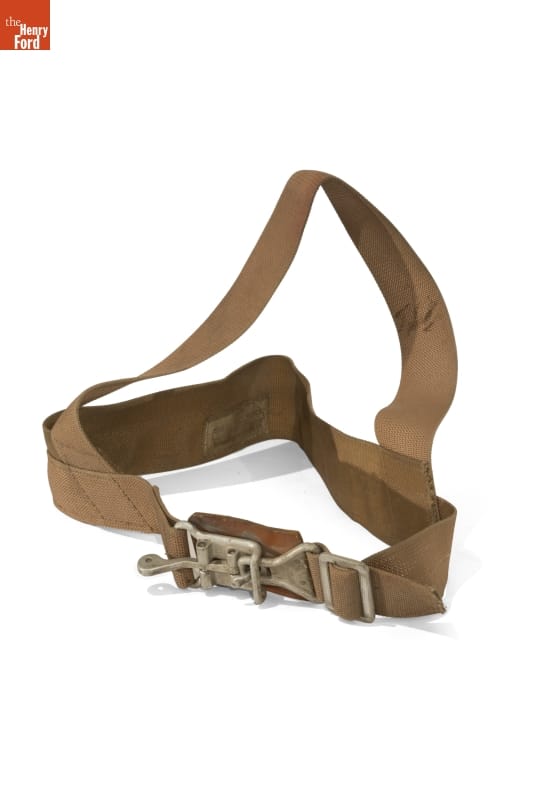
- Racing Harness, 1950-1960 - Driver safety improved dramatically over the more than 30 years that Bobby Unser raced. One of the most important precautions was simply to secure the race driver to the car with a safety harness. Racing safety belts evolved from simple straps to elaborate five-point harnesses. Unser used this harness, which he adapted from aircraft equipment, early in his career.
- 1950-1960
- Collections - Artifact
Racing Harness, 1950-1960
Driver safety improved dramatically over the more than 30 years that Bobby Unser raced. One of the most important precautions was simply to secure the race driver to the car with a safety harness. Racing safety belts evolved from simple straps to elaborate five-point harnesses. Unser used this harness, which he adapted from aircraft equipment, early in his career.