
Search
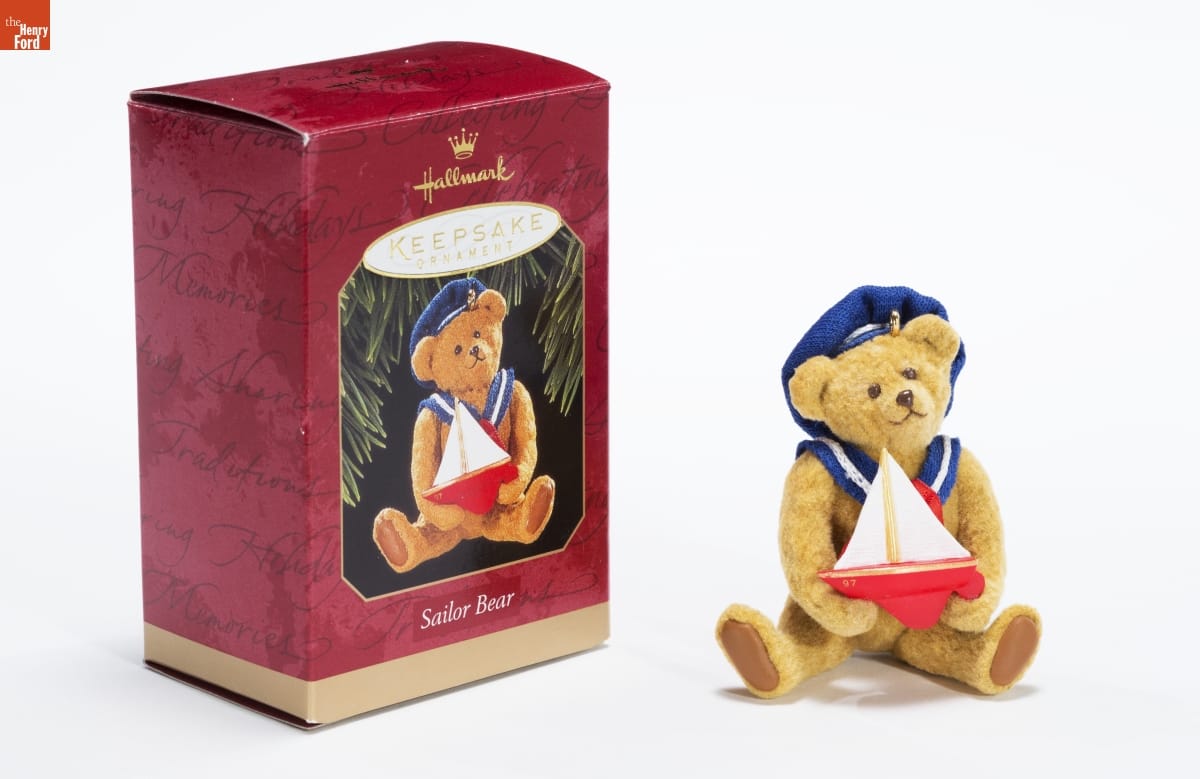
- Hallmark "Sailor Bear" Christmas Ornament, 1997 - Already known for greeting cards, Hallmark introduced a line of Christmas ornaments in 1973. The company's annual release of an increasing array of ornaments revolutionized Christmas decorating, appealing to customers' interest in marking memories and milestones as well as expressing one's personality and unique tastes.
- 1997
- Collections - Artifact
Hallmark "Sailor Bear" Christmas Ornament, 1997
Already known for greeting cards, Hallmark introduced a line of Christmas ornaments in 1973. The company's annual release of an increasing array of ornaments revolutionized Christmas decorating, appealing to customers' interest in marking memories and milestones as well as expressing one's personality and unique tastes.
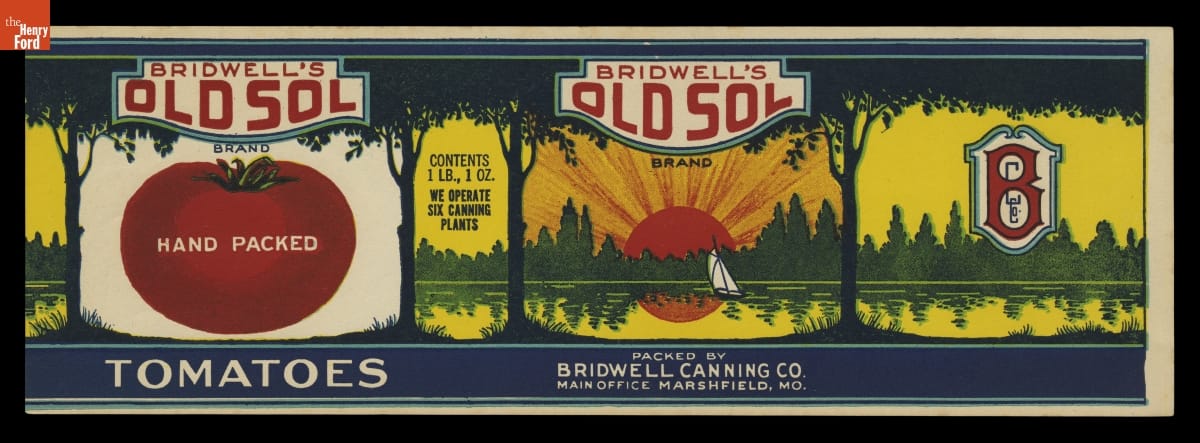
- "Bridwell's Old Sol Brand Tomatoes," 1930-1939 - Food companies sought ways to make their packaged goods stand out on store shelves from other similar products. Attractive labels, like this eye-catching design for Bridwell's Old Sol tomatoes, helped catch the attention of potential customers and encouraged them to purchase the company's product rather than that of a competitor.
- 1930-1939
- Collections - Artifact
"Bridwell's Old Sol Brand Tomatoes," 1930-1939
Food companies sought ways to make their packaged goods stand out on store shelves from other similar products. Attractive labels, like this eye-catching design for Bridwell's Old Sol tomatoes, helped catch the attention of potential customers and encouraged them to purchase the company's product rather than that of a competitor.
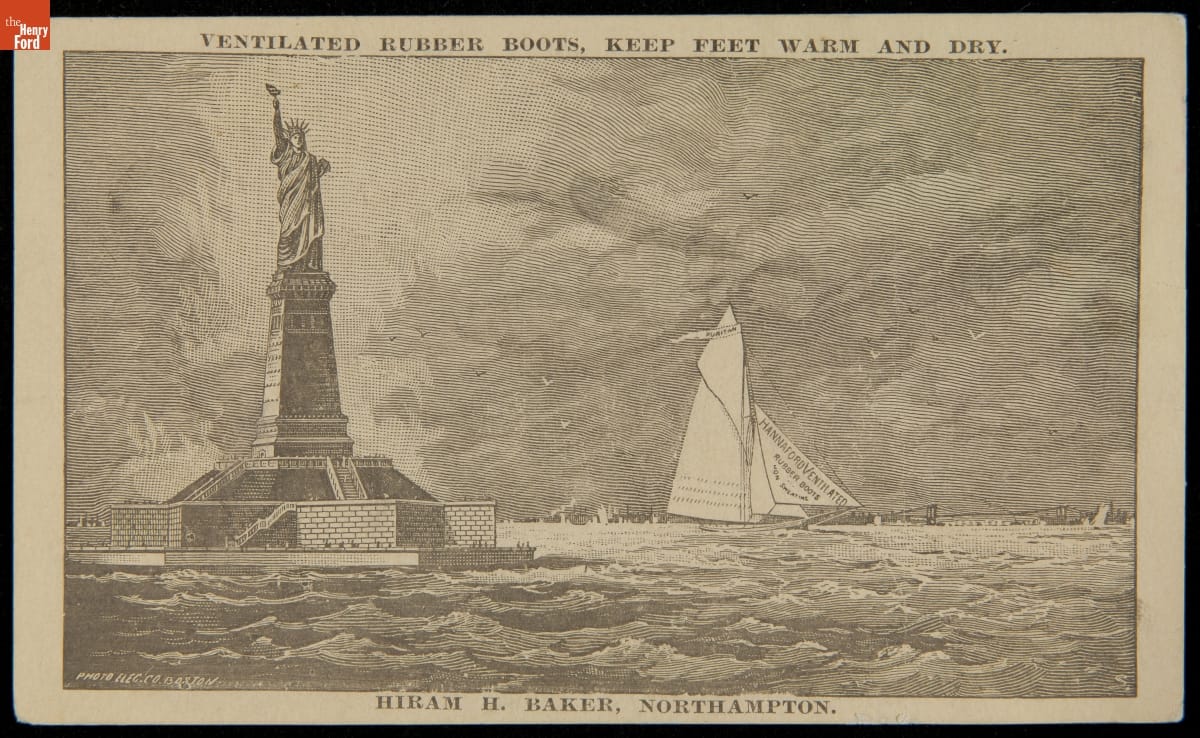
- Trade Card for Hannaford Ventilated Rubber Boots, "Keep Feet Warm and Dry," 1870-1890 - In the last third of the nineteenth century, an unprecedented variety of consumer goods and services flooded the American market. Advertisers, armed with new methods of color printing, bombarded potential customers with trade cards. Americans enjoyed and often saved the vibrant little advertisements found in product packages or distributed by local merchants. Many survive as historical records of commercialism in the United States.
- 1870-1890
- Collections - Artifact
Trade Card for Hannaford Ventilated Rubber Boots, "Keep Feet Warm and Dry," 1870-1890
In the last third of the nineteenth century, an unprecedented variety of consumer goods and services flooded the American market. Advertisers, armed with new methods of color printing, bombarded potential customers with trade cards. Americans enjoyed and often saved the vibrant little advertisements found in product packages or distributed by local merchants. Many survive as historical records of commercialism in the United States.
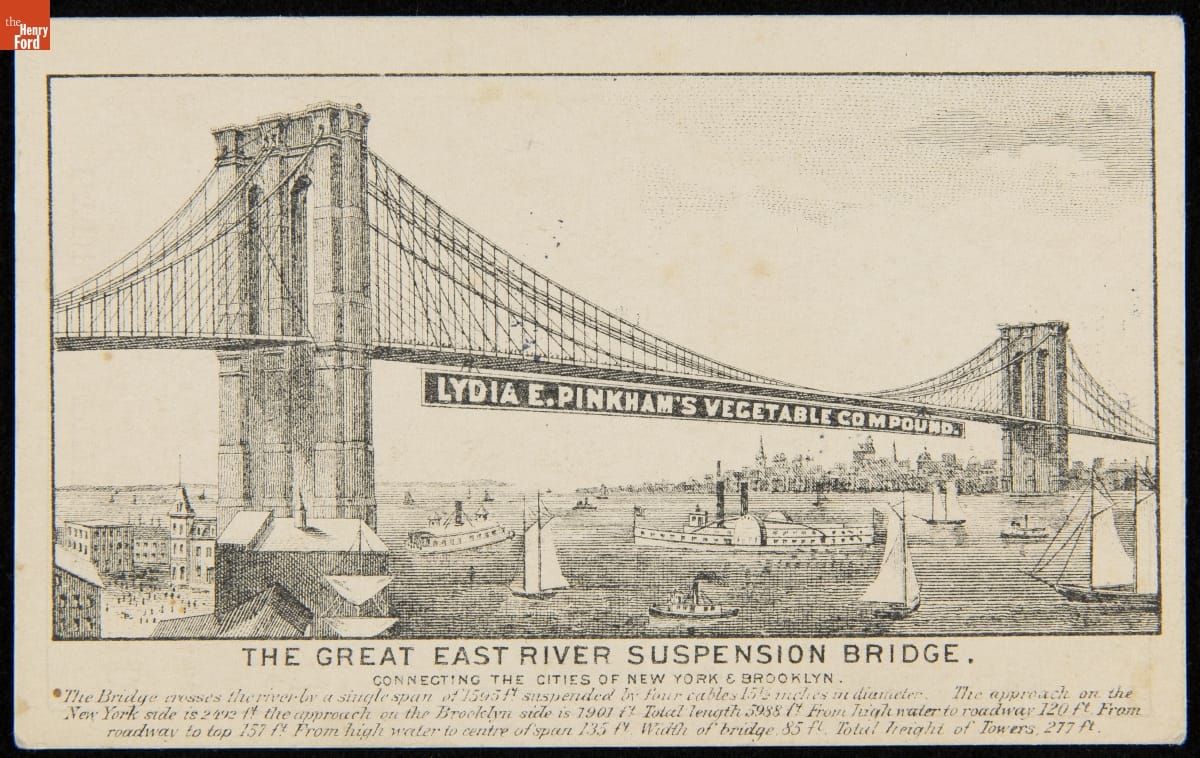
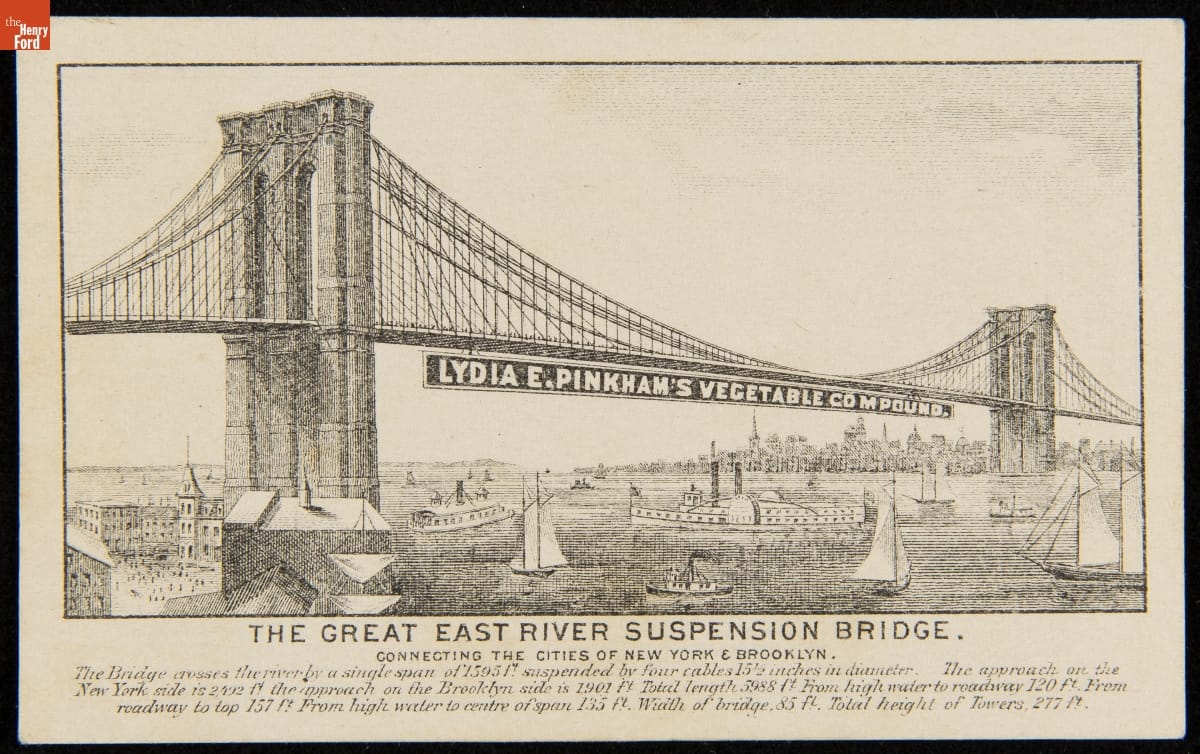
- Trade Card for Lydia E. Pinkham's Vegetable Compound, 1885-1900 - In 1873, Lydia E. Pinkham created "Pinkham's Vegetable Compound," a mixture of roots, herbs, and alcohol that she claimed would treat a variety of "female complaints." A few years later, Pinkham established a patent medicine company and began marketing and selling her product. Pinkham publicized the herbal remedy through pamphlets, magazine and newspaper advertisements, and small trade cards like this one.
- 1883-1900
- Collections - Artifact
Trade Card for Lydia E. Pinkham's Vegetable Compound, 1885-1900
In 1873, Lydia E. Pinkham created "Pinkham's Vegetable Compound," a mixture of roots, herbs, and alcohol that she claimed would treat a variety of "female complaints." A few years later, Pinkham established a patent medicine company and began marketing and selling her product. Pinkham publicized the herbal remedy through pamphlets, magazine and newspaper advertisements, and small trade cards like this one.
- Trade Card for Lydia E. Pinkham's Vegetable Compound, 1885-1900 - In 1873, Lydia E. Pinkham created "Pinkham's Vegetable Compound," a mixture of roots, herbs, and alcohol that she claimed would treat a variety of "female complaints." A few years later, Pinkham established a patent medicine company and began marketing and selling her product. Pinkham publicized the herbal remedy through pamphlets, magazine and newspaper advertisements, and small trade cards like this one.
- 1883-1900
- Collections - Artifact
Trade Card for Lydia E. Pinkham's Vegetable Compound, 1885-1900
In 1873, Lydia E. Pinkham created "Pinkham's Vegetable Compound," a mixture of roots, herbs, and alcohol that she claimed would treat a variety of "female complaints." A few years later, Pinkham established a patent medicine company and began marketing and selling her product. Pinkham publicized the herbal remedy through pamphlets, magazine and newspaper advertisements, and small trade cards like this one.
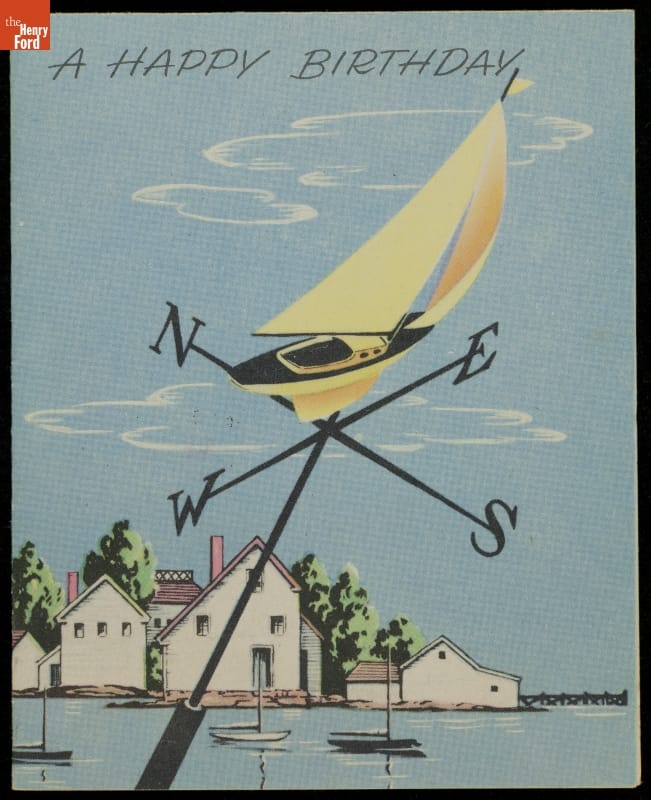
- Birthday Card, circa 1955 - This would have been a typical birthday card given to a boy in the 1950s.
- circa 1955
- Collections - Artifact
Birthday Card, circa 1955
This would have been a typical birthday card given to a boy in the 1950s.
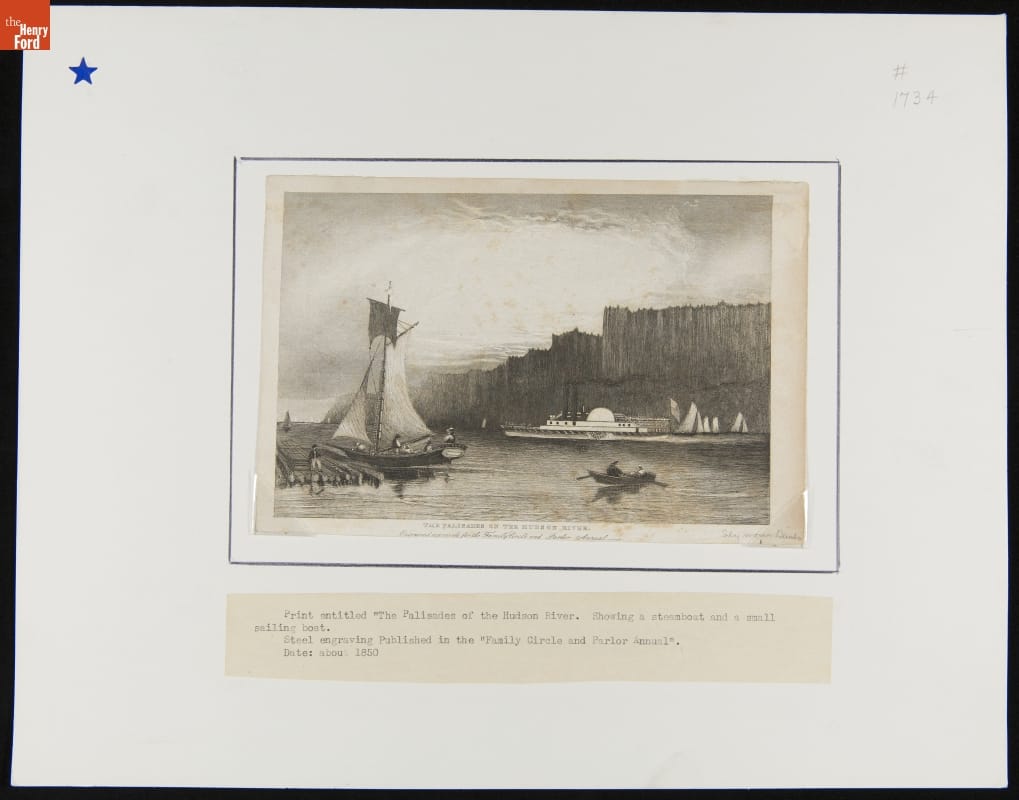
- "The Palisades on the Hudson River," circa 1850 - Robert Fulton operated the world's first commercially successful steamboat, <i>Clermont</i>, on the Hudson River in 1807. The Hudson was broad, deep and straight for many of the 150 miles between New York City and Albany. By the 1860s, steam-powered boats could cover that distance in about nine hours. Spacious, well-equipped steamboats offered a uniquely pleasant way to travel.
- circa 1850
- Collections - Artifact
"The Palisades on the Hudson River," circa 1850
Robert Fulton operated the world's first commercially successful steamboat, Clermont, on the Hudson River in 1807. The Hudson was broad, deep and straight for many of the 150 miles between New York City and Albany. By the 1860s, steam-powered boats could cover that distance in about nine hours. Spacious, well-equipped steamboats offered a uniquely pleasant way to travel.
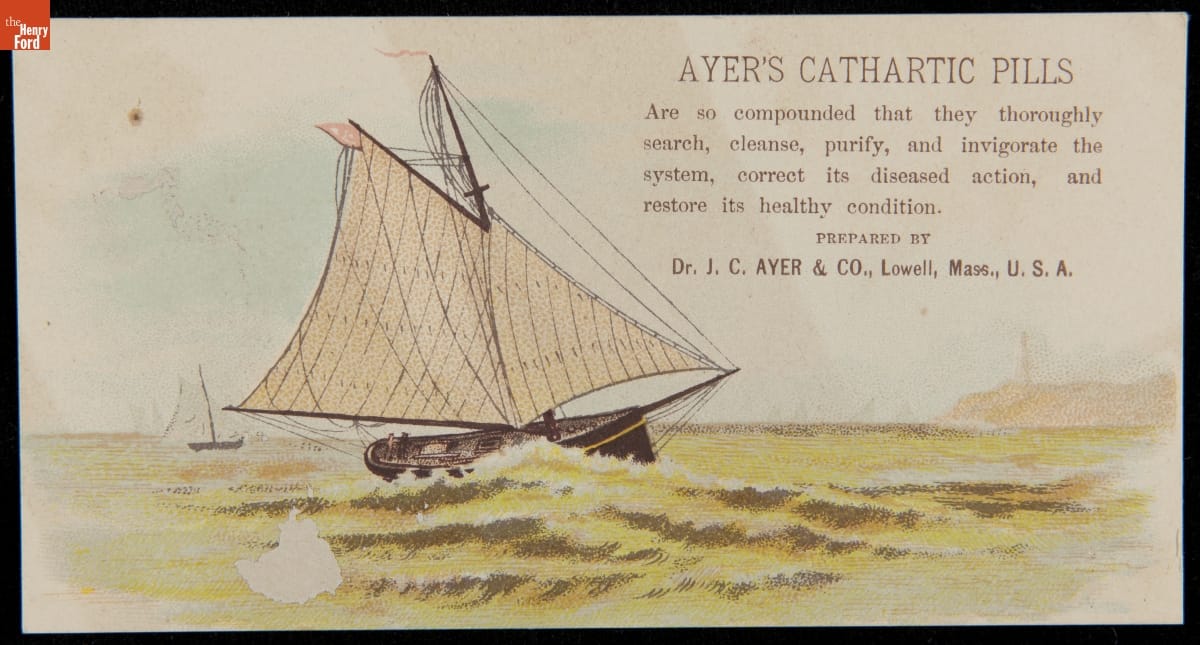
- Trade Card for Ayer's Cathartic Pills, 1880-1900 - In the last third of the nineteenth century, an unprecedented variety of consumer goods and services flooded the American market. Advertisers, armed with new methods of color printing, bombarded potential customers with trade cards. Americans enjoyed and often saved the vibrant little advertisements found in product packages or distributed by local merchants. Many survive as historical records of commercialism in the United States.
- 1880-1900
- Collections - Artifact
Trade Card for Ayer's Cathartic Pills, 1880-1900
In the last third of the nineteenth century, an unprecedented variety of consumer goods and services flooded the American market. Advertisers, armed with new methods of color printing, bombarded potential customers with trade cards. Americans enjoyed and often saved the vibrant little advertisements found in product packages or distributed by local merchants. Many survive as historical records of commercialism in the United States.
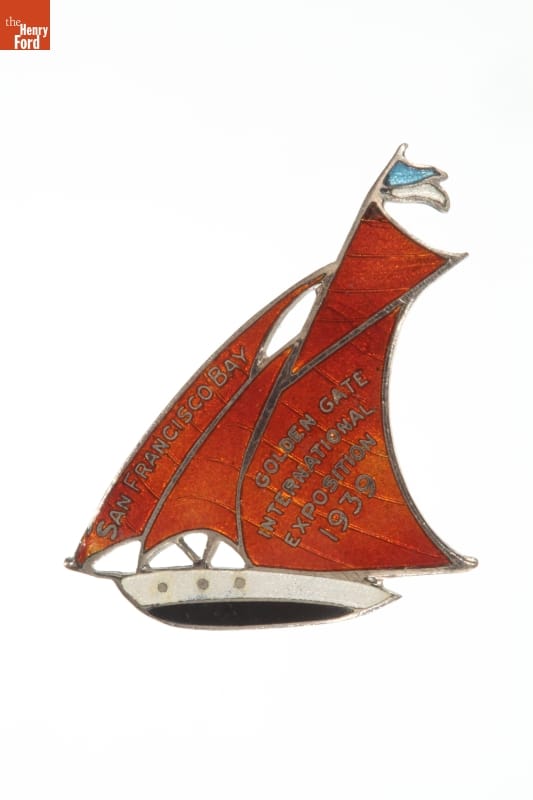
- Golden Gate International Exposition Souvenir Sailboat Pin, 1939 - The 1939 Golden Gate International Exposition reflected American aspirations at the end of the Great Depression. Held on a manmade island in San Francisco Bay, the fair celebrated the completion of the San Francisco-Oakland Bay and Golden Gate bridges. Many fairgoers left Treasure Island with mementos of the exhibition, such as this souvenir pin depicting a sailboat.
- 1939
- Collections - Artifact
Golden Gate International Exposition Souvenir Sailboat Pin, 1939
The 1939 Golden Gate International Exposition reflected American aspirations at the end of the Great Depression. Held on a manmade island in San Francisco Bay, the fair celebrated the completion of the San Francisco-Oakland Bay and Golden Gate bridges. Many fairgoers left Treasure Island with mementos of the exhibition, such as this souvenir pin depicting a sailboat.
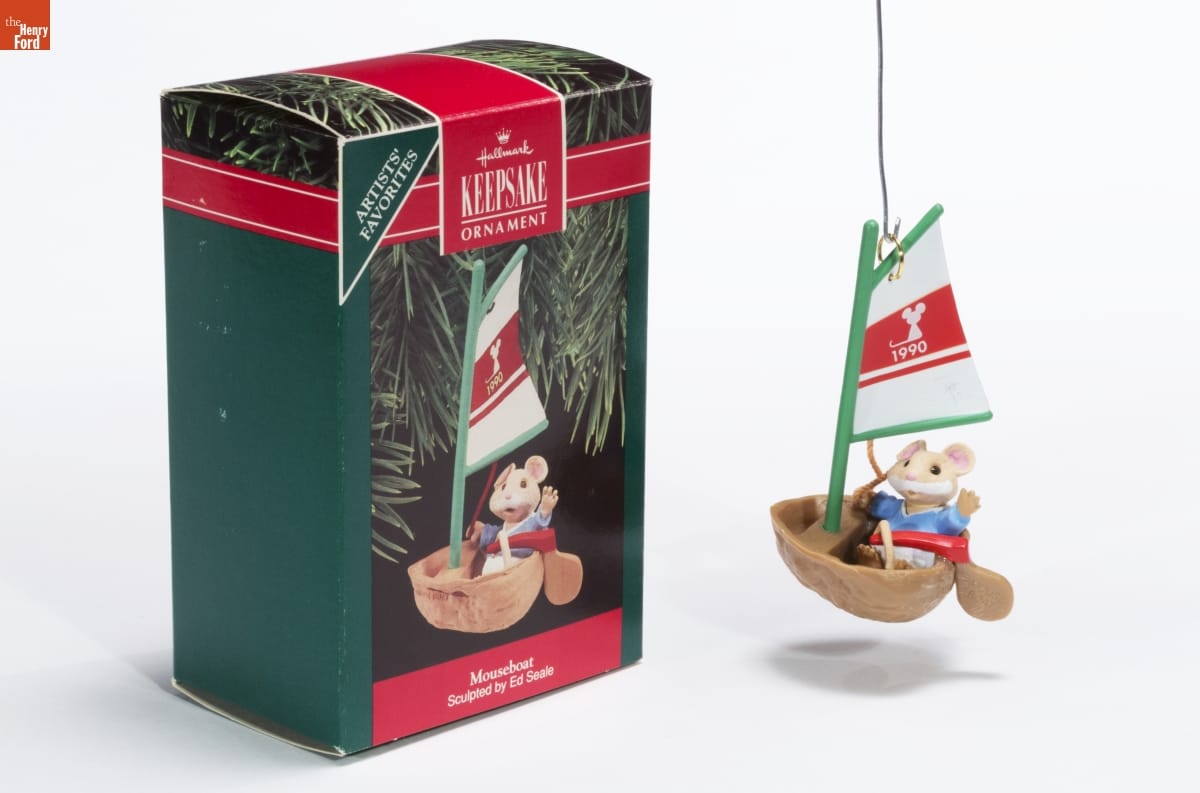
- Hallmark "Mouseboat" Christmas Ornament, 1990 - Already known for greeting cards, Hallmark introduced a line of Christmas ornaments in 1973. The company's annual release of an increasing array of ornaments revolutionized Christmas decorating, appealing to customers' interest in marking memories and milestones as well as expressing one's personality and unique tastes.
- 1990
- Collections - Artifact
Hallmark "Mouseboat" Christmas Ornament, 1990
Already known for greeting cards, Hallmark introduced a line of Christmas ornaments in 1973. The company's annual release of an increasing array of ornaments revolutionized Christmas decorating, appealing to customers' interest in marking memories and milestones as well as expressing one's personality and unique tastes.