
Search
- Label, "H. J. Heinz Brand Distilled White Vinegar," 1888-1940 - Manufacturers of similar products sought ways to make their companies' goods stand out on store shelves. Some companies established a uniform label design for their multi-product offerings -- a strategy which helped customers distinguish one brand over another. H.J. Heinz products were identified by the famous Heinz pickle and signature "keystone" logo. These design features are still found on Heinz products today.
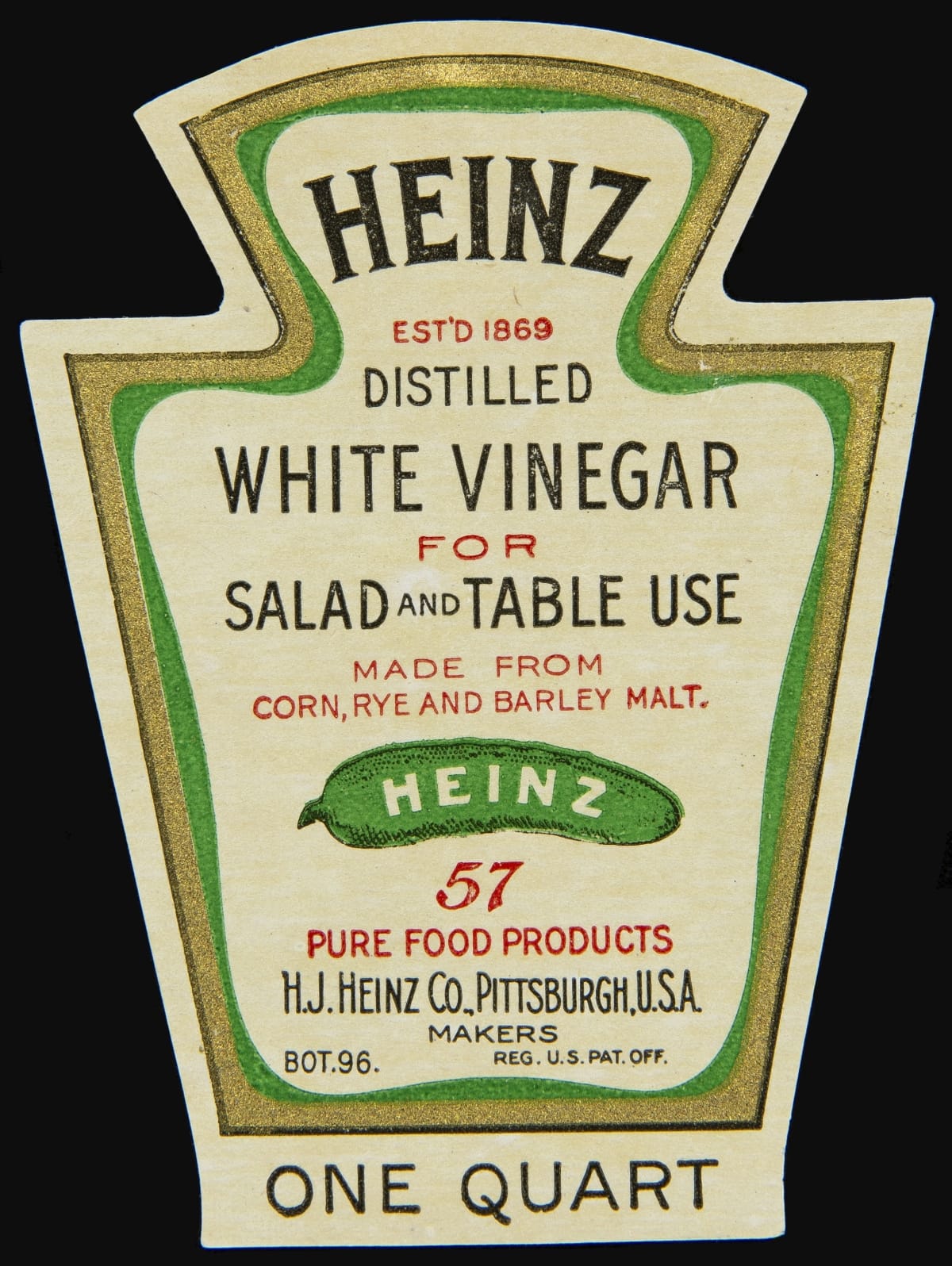
- 1888-1940
- Collections - Artifact
Label, "H. J. Heinz Brand Distilled White Vinegar," 1888-1940
Manufacturers of similar products sought ways to make their companies' goods stand out on store shelves. Some companies established a uniform label design for their multi-product offerings -- a strategy which helped customers distinguish one brand over another. H.J. Heinz products were identified by the famous Heinz pickle and signature "keystone" logo. These design features are still found on Heinz products today.
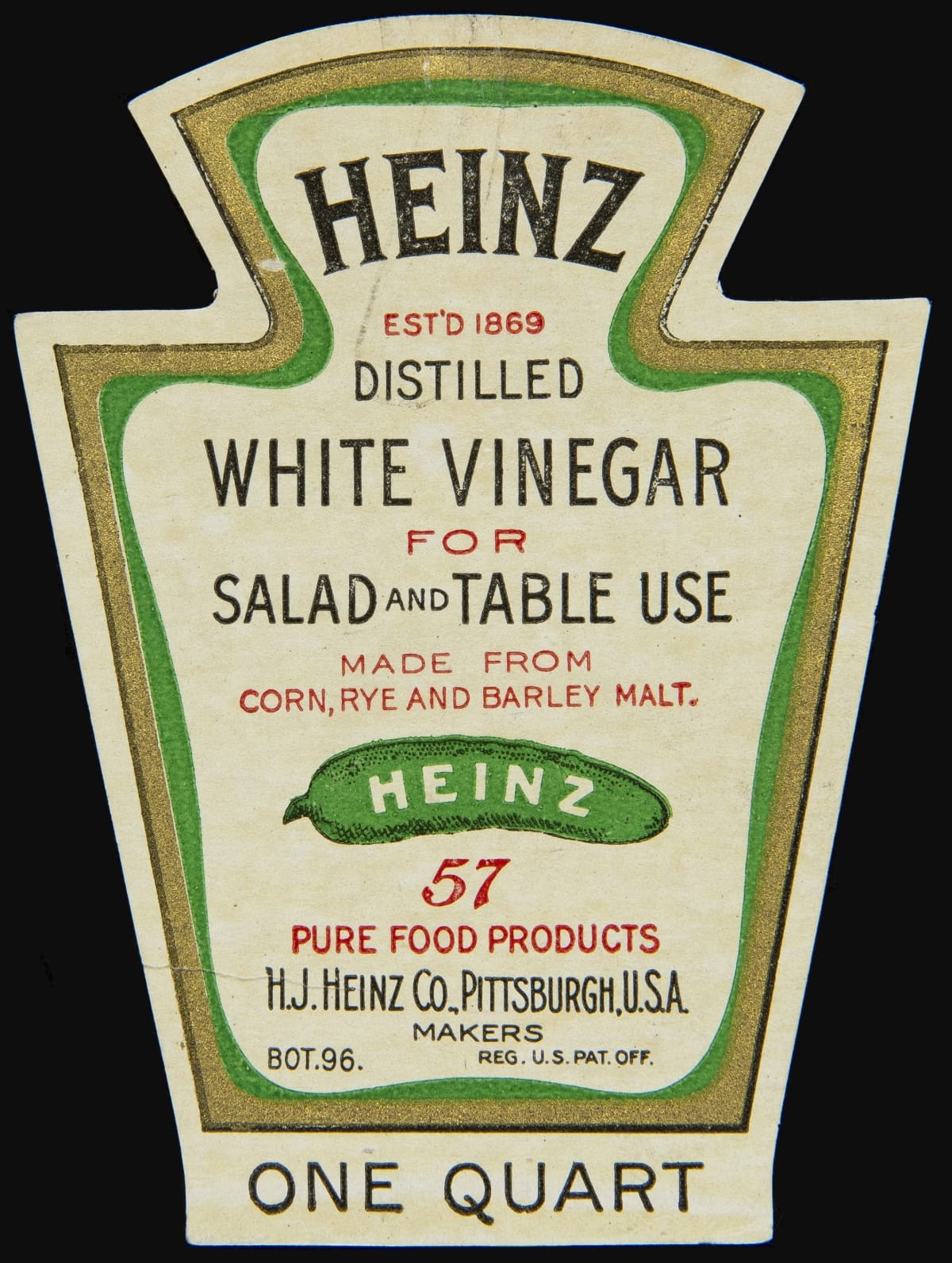
- Label, "H. J. Heinz Brand Distilled White Vinegar," 1888-1940 - Manufacturers of similar products sought ways to make their companies' goods stand out on store shelves. Some companies established a uniform label design for their multi-product offerings -- a strategy which helped customers distinguish one brand over another. H.J. Heinz products were identified by the famous Heinz pickle and signature "keystone" logo. These design features are still found on Heinz products today.
- 1888-1940
- Collections - Artifact
Label, "H. J. Heinz Brand Distilled White Vinegar," 1888-1940
Manufacturers of similar products sought ways to make their companies' goods stand out on store shelves. Some companies established a uniform label design for their multi-product offerings -- a strategy which helped customers distinguish one brand over another. H.J. Heinz products were identified by the famous Heinz pickle and signature "keystone" logo. These design features are still found on Heinz products today.
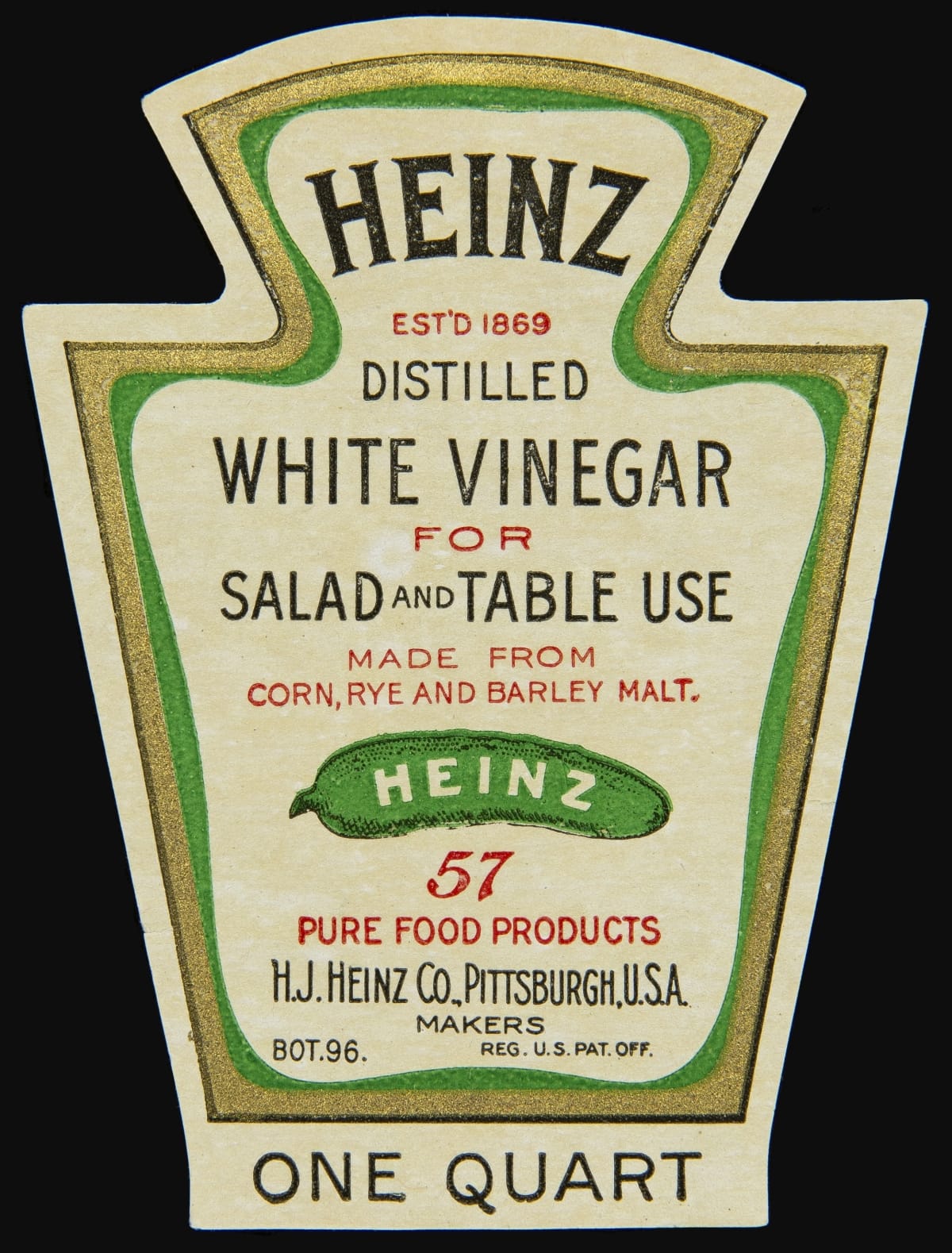
- Label, "H. J. Heinz Brand Distilled White Vinegar," 1888-1940 - Manufacturers of similar products sought ways to make their companies' goods stand out on store shelves. Some companies established a uniform label design for their multi-product offerings -- a strategy which helped customers distinguish one brand over another. H.J. Heinz products were identified by the famous Heinz pickle and signature "keystone" logo. These design features are still found on Heinz products today.
- 1888-1940
- Collections - Artifact
Label, "H. J. Heinz Brand Distilled White Vinegar," 1888-1940
Manufacturers of similar products sought ways to make their companies' goods stand out on store shelves. Some companies established a uniform label design for their multi-product offerings -- a strategy which helped customers distinguish one brand over another. H.J. Heinz products were identified by the famous Heinz pickle and signature "keystone" logo. These design features are still found on Heinz products today.
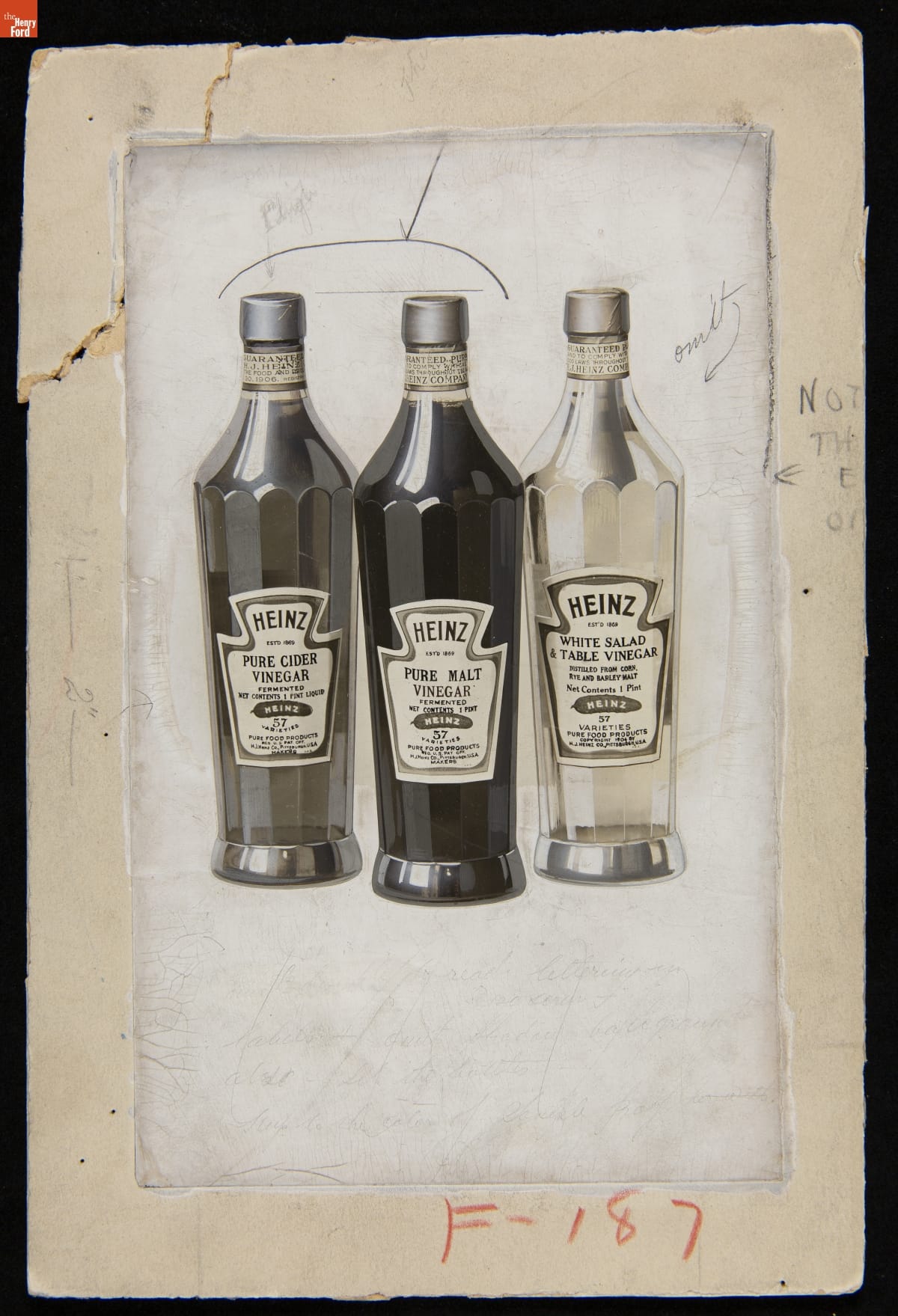
- Advertising Layout of Heinz Vinegar Products, circa 1935 - The H.J. Heinz Company employed ambitious and comprehensive advertising strategies to meet consumers at home, in stores, and everywhere in between. Drawings, illustrations and modified photographs of Heinz products were often used for advertising and in publications. This advertising layout represents a step in the marketing process where the size and arrangement are taken into consideration before the final advertisement is created.
- circa 1935
- Collections - Artifact
Advertising Layout of Heinz Vinegar Products, circa 1935
The H.J. Heinz Company employed ambitious and comprehensive advertising strategies to meet consumers at home, in stores, and everywhere in between. Drawings, illustrations and modified photographs of Heinz products were often used for advertising and in publications. This advertising layout represents a step in the marketing process where the size and arrangement are taken into consideration before the final advertisement is created.
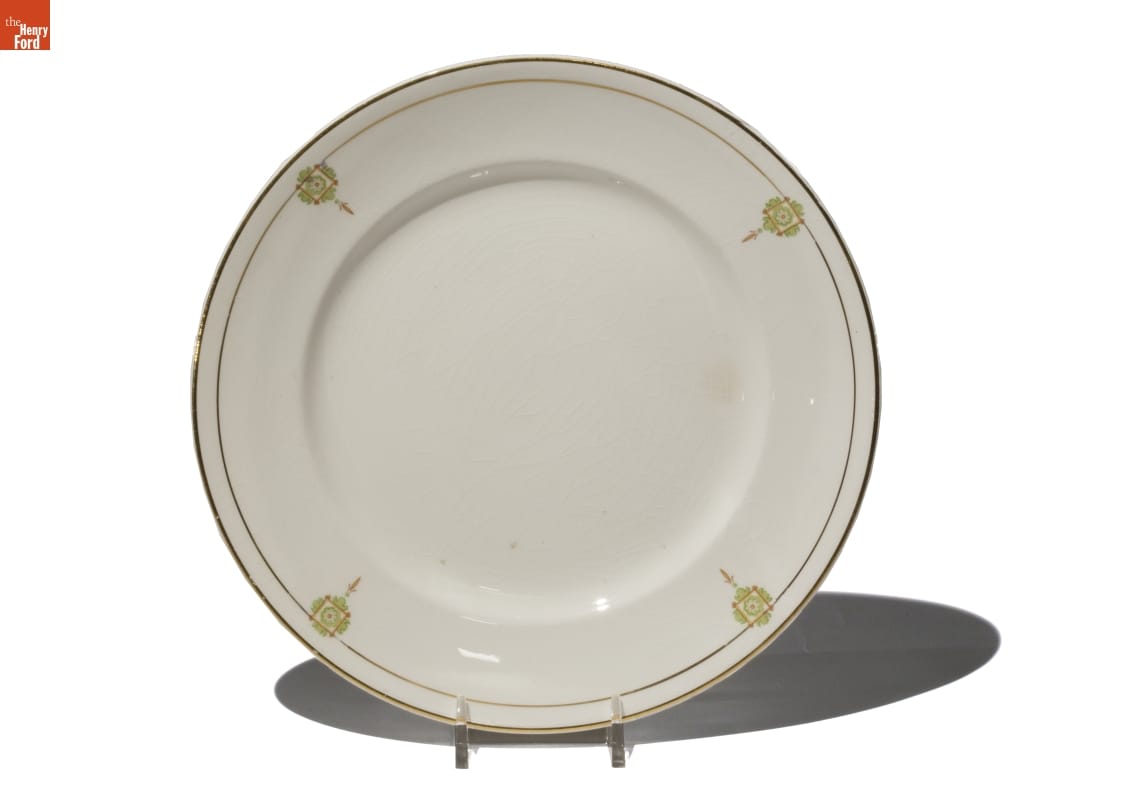
- Luncheon Plate, 1923 - Henry Ford, Thomas Edison, Harvey Firestone and naturalist John Burroughs embarked on a series of camping trips between 1916 and 1924. These self-proclaimed Vagabonds loved to explore nature and the pre-industrial landscape, but they also camped in style. This group of well-to-do adventurers brought along service staff and all needed amenities including a set of durable, Art and Crafts-patterned china.
- 1923
- Collections - Artifact
Luncheon Plate, 1923
Henry Ford, Thomas Edison, Harvey Firestone and naturalist John Burroughs embarked on a series of camping trips between 1916 and 1924. These self-proclaimed Vagabonds loved to explore nature and the pre-industrial landscape, but they also camped in style. This group of well-to-do adventurers brought along service staff and all needed amenities including a set of durable, Art and Crafts-patterned china.
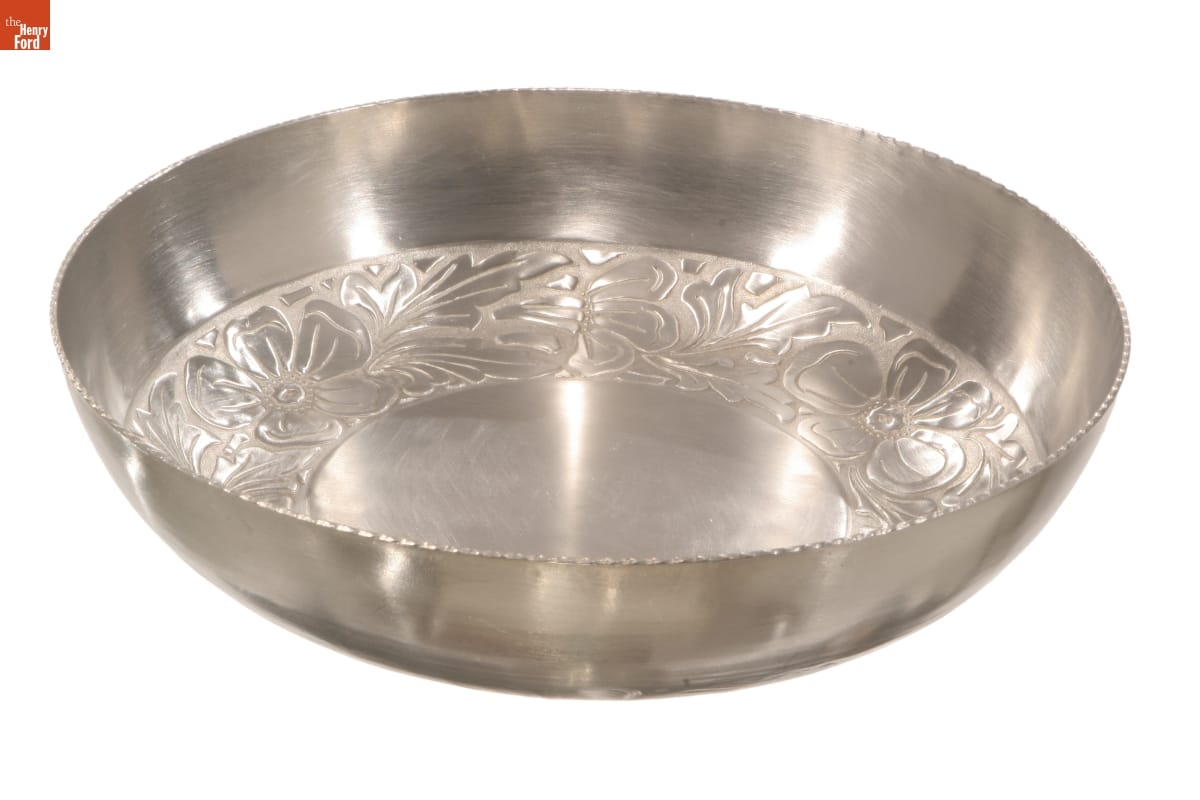
- Everlast "Intaglio Daisy" Salad Bowl, 1947-1950 - In 1932, Louis Schnitzer and Nathan Gelfman formed Everlast Metal Products Corporation, producing high-quality, hand-forged aluminum giftware. In an era of growing uniformity via factory production, the "made by hand" aspect of these products held an aesthetic appeal for consumers. By 1937, Everlast had introduced its "Intaglio" product line, featuring machine-stamped decorative motifs that were lighter in weight and more affordable than silver.
- 1947-1950
- Collections - Artifact
Everlast "Intaglio Daisy" Salad Bowl, 1947-1950
In 1932, Louis Schnitzer and Nathan Gelfman formed Everlast Metal Products Corporation, producing high-quality, hand-forged aluminum giftware. In an era of growing uniformity via factory production, the "made by hand" aspect of these products held an aesthetic appeal for consumers. By 1937, Everlast had introduced its "Intaglio" product line, featuring machine-stamped decorative motifs that were lighter in weight and more affordable than silver.
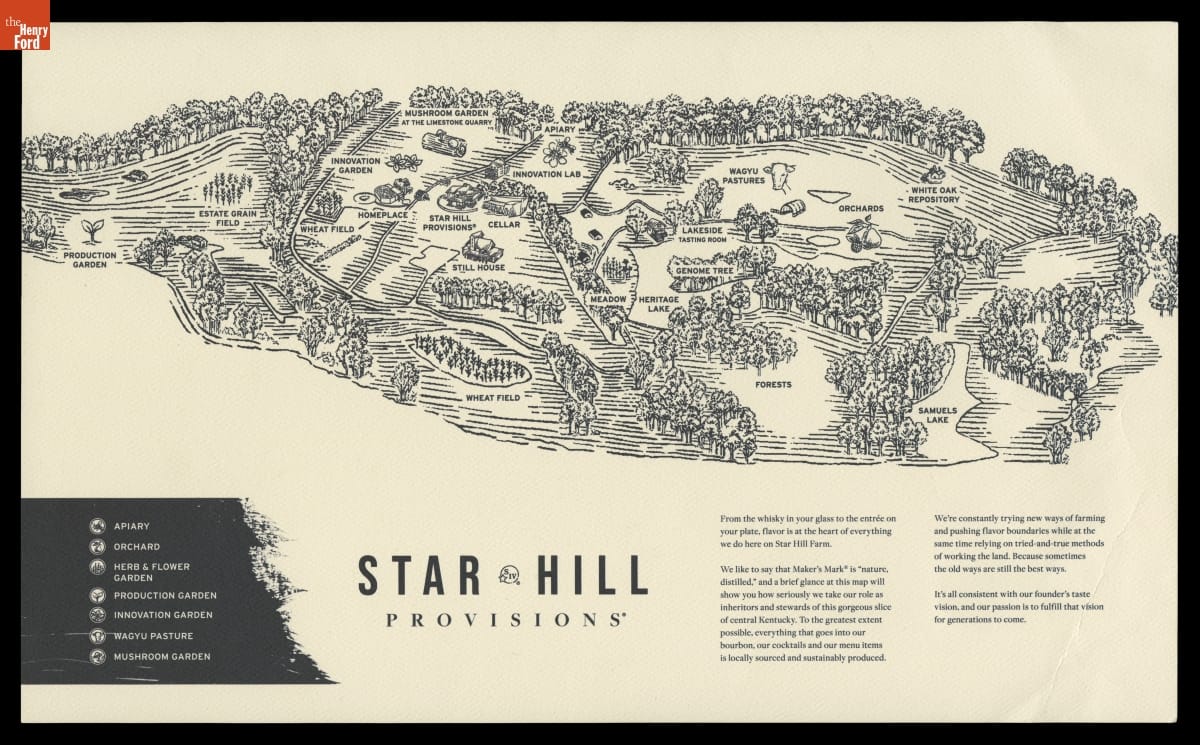
- Star Hill Provisions Menu, 2024 -
- 2024
- Collections - Artifact
Star Hill Provisions Menu, 2024
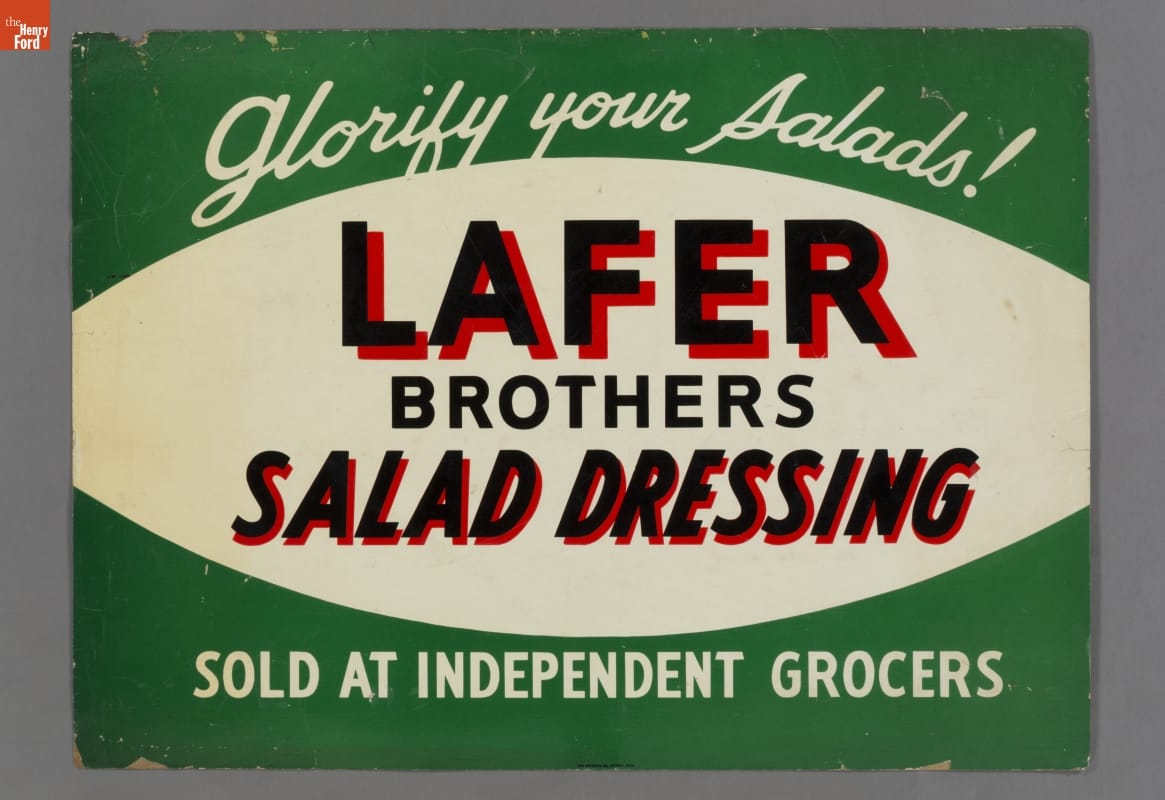
- Lafer Brothers Salad Dressing Sign, 1934-1951 -
- 1934-1951
- Collections - Artifact
Lafer Brothers Salad Dressing Sign, 1934-1951
- "Old Company Plate Signature" Flatware Set with Case, 1950-1955 -
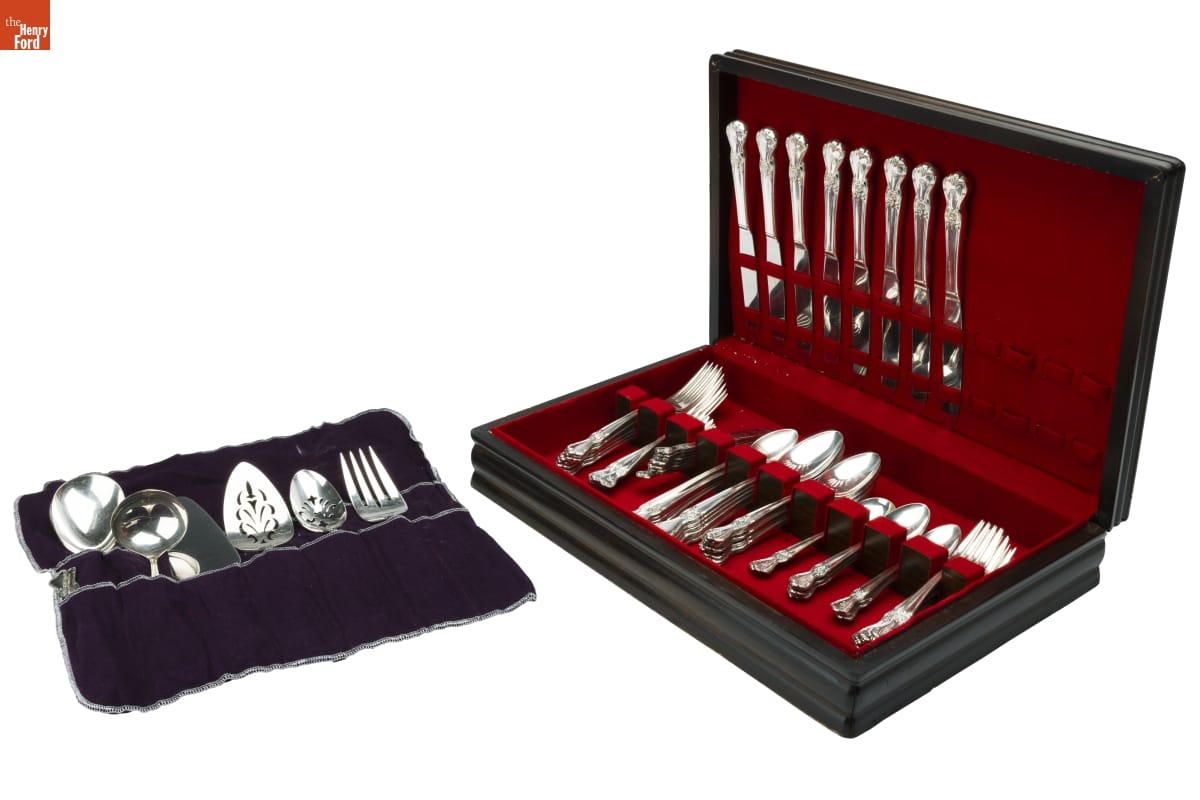
- 1950-1955
- Collections - Artifact
"Old Company Plate Signature" Flatware Set with Case, 1950-1955
- Taylor, Smith & Taylor Company "Lu-Ray Pastels" Starter Dish Set, 1953 -
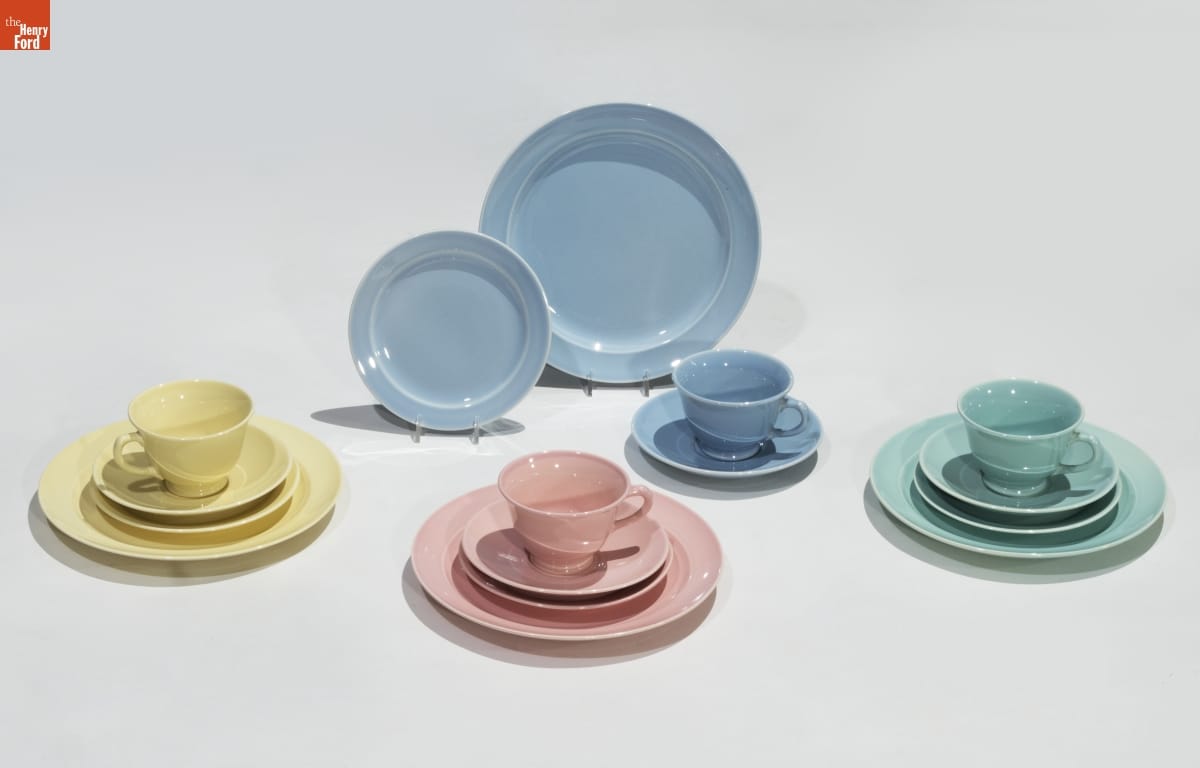
- 1953
- Collections - Artifact
Taylor, Smith & Taylor Company "Lu-Ray Pastels" Starter Dish Set, 1953