
Search
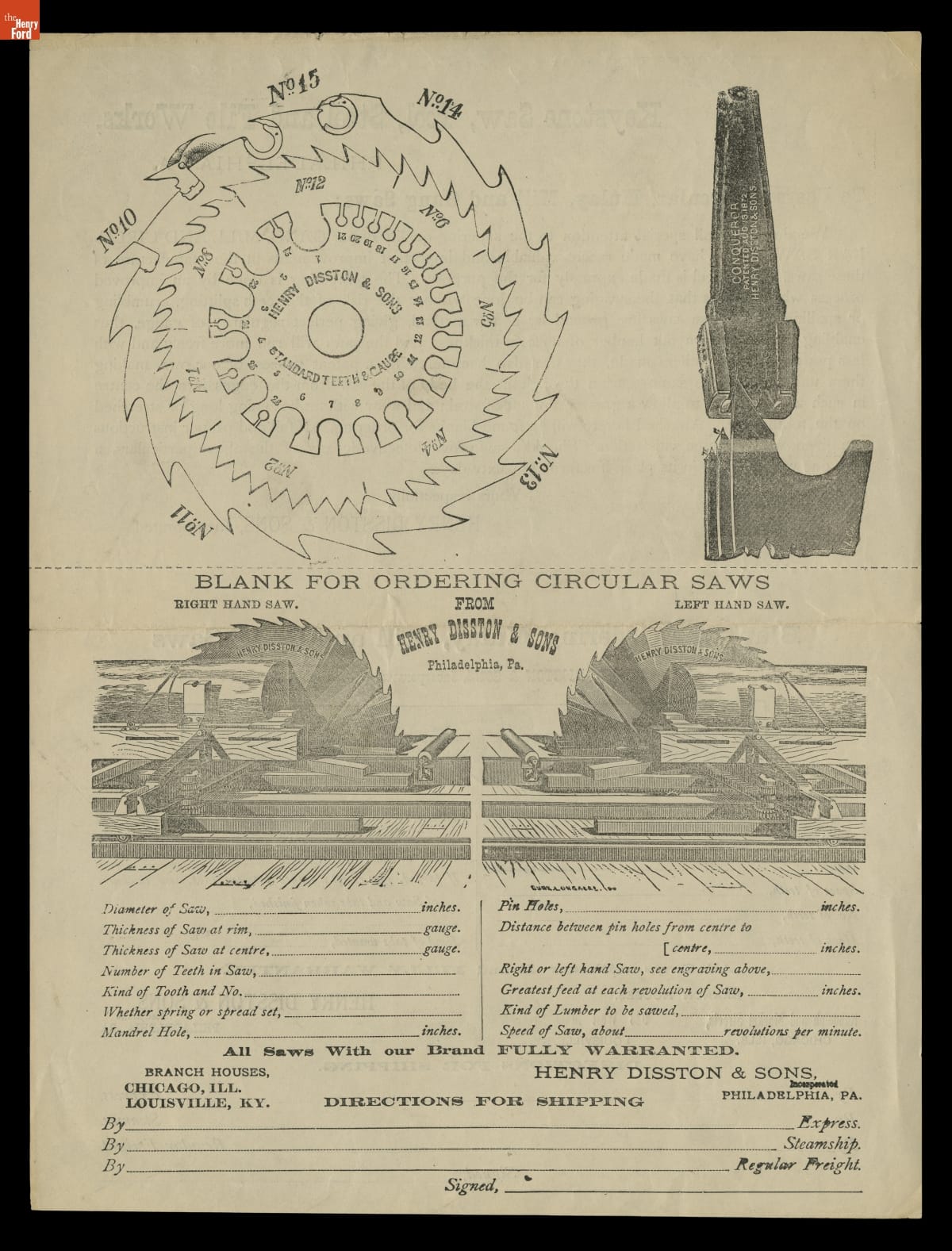
- Order Form for Circular, Mulay, Mill, and Gang Saws from Henry Disston & Sons, circa 1875 -
- circa 1875
- Collections - Artifact
Order Form for Circular, Mulay, Mill, and Gang Saws from Henry Disston & Sons, circa 1875
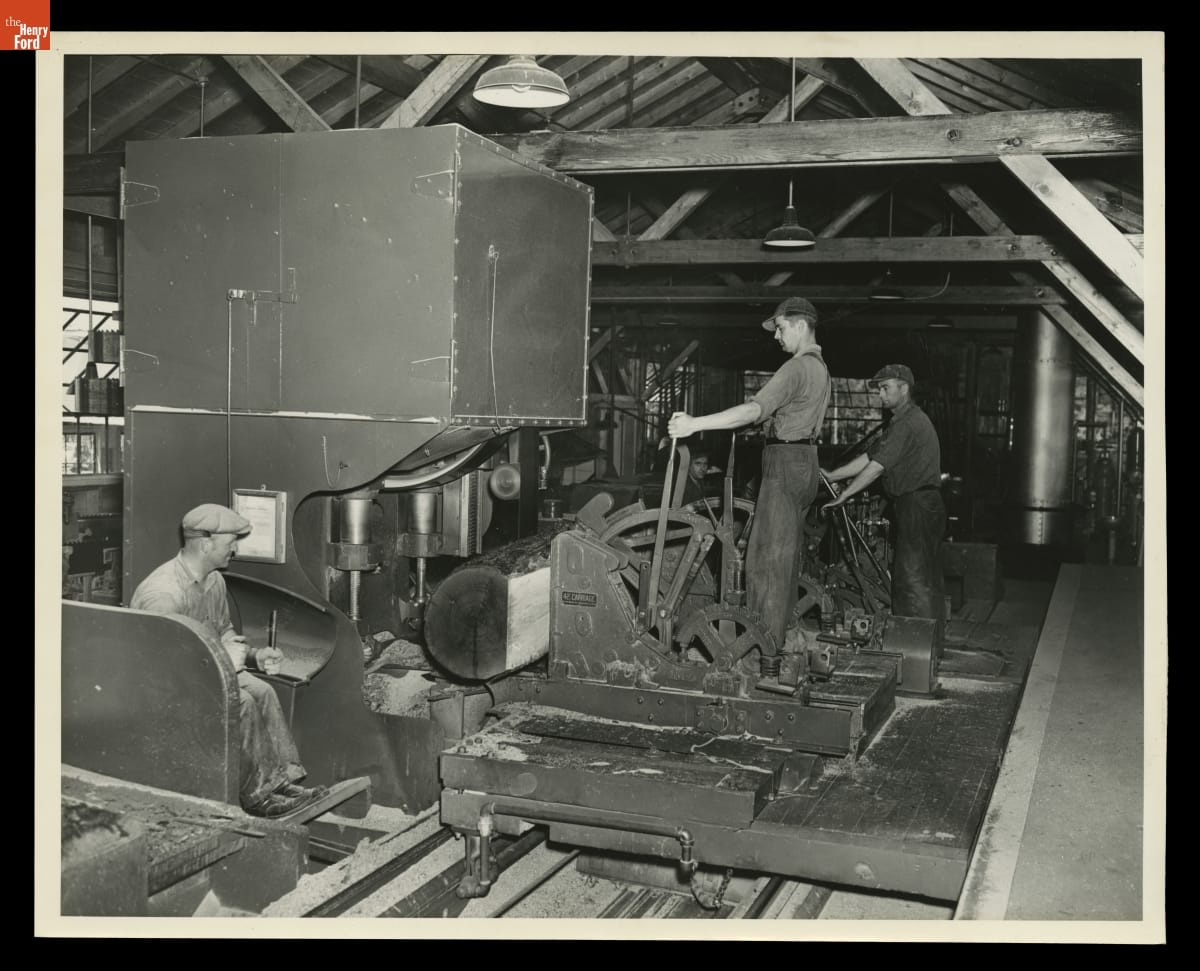
- Workers Operate a Log Carriage inside a Sawmill in Alberta, Michigan, 1937 - Ford Motor Company had several facilities in Michigan's Upper Peninsula. Ford built a sawmill and established a company town in Alberta, Michigan, in 1935. More a public-relations effort than a vital industry, Ford operated the Alberta mill until 1954. The company then donated the facility and 1,700 acres of surrounding forest land to Michigan Technological University.
- August 06, 1937
- Collections - Artifact
Workers Operate a Log Carriage inside a Sawmill in Alberta, Michigan, 1937
Ford Motor Company had several facilities in Michigan's Upper Peninsula. Ford built a sawmill and established a company town in Alberta, Michigan, in 1935. More a public-relations effort than a vital industry, Ford operated the Alberta mill until 1954. The company then donated the facility and 1,700 acres of surrounding forest land to Michigan Technological University.
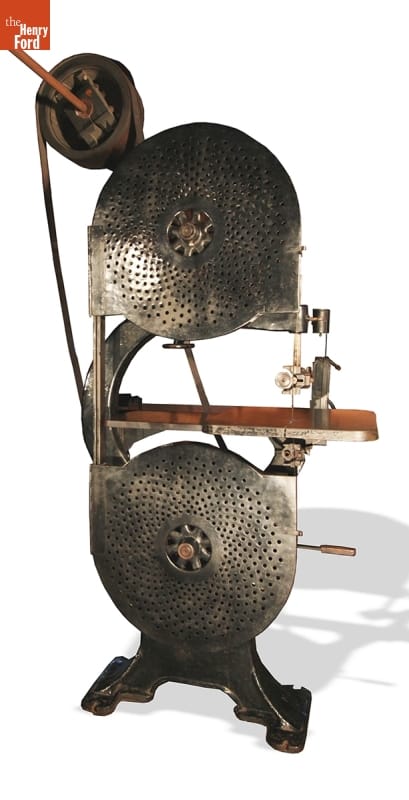
- Band Saw, Used by the Wright Brothers, circa 1899 - The Wright brothers' bicycle shop contained several large power tools primarily used for making and repairing bikes. Some were also used to build their early gliders and airplanes. The shop building did not have electricity, so the Putnam lathe, Crescent band saw and Barnes drill press were powered by overhead belts and shafts connected to a single-cylinder gas engine.
- circa 1899
- Collections - Artifact
Band Saw, Used by the Wright Brothers, circa 1899
The Wright brothers' bicycle shop contained several large power tools primarily used for making and repairing bikes. Some were also used to build their early gliders and airplanes. The shop building did not have electricity, so the Putnam lathe, Crescent band saw and Barnes drill press were powered by overhead belts and shafts connected to a single-cylinder gas engine.
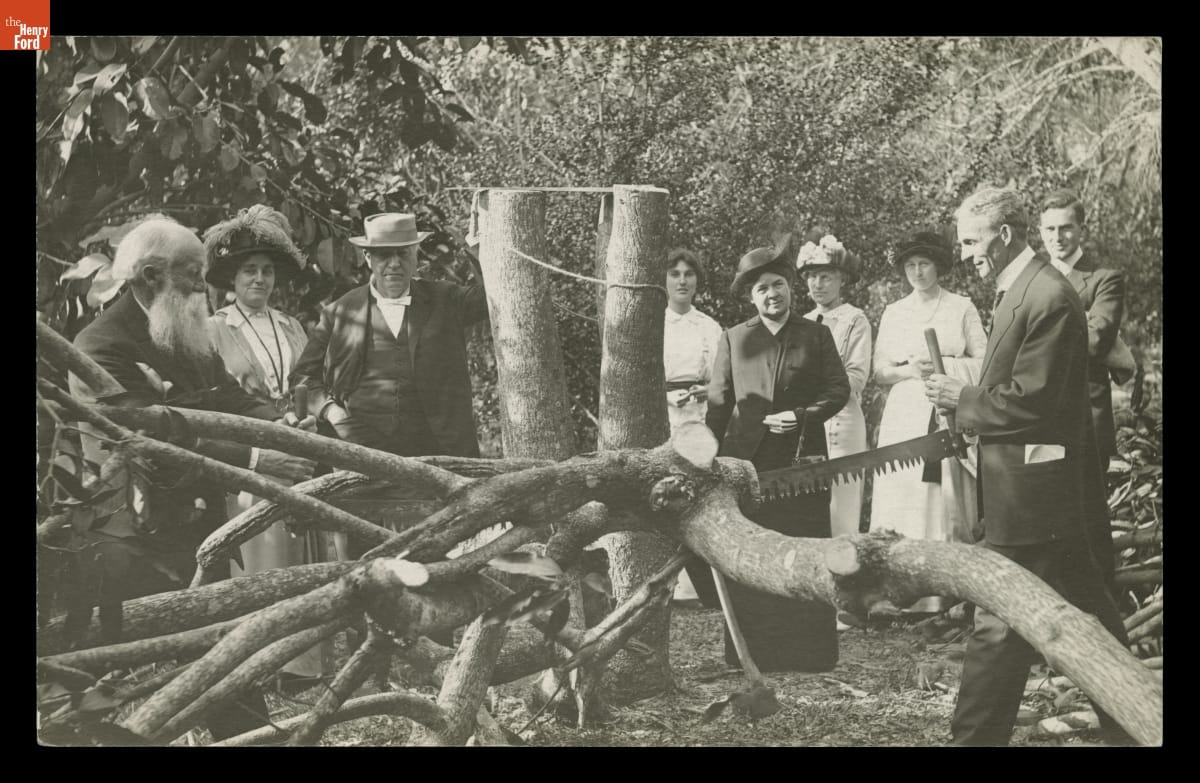
- John Burroughs and Henry Ford Sawing Down a Tree, Fort Myers, Florida, 1914 - Henry Ford read and admired the works of John Burroughs. In the early 1910s, Ford sought out the internationally known naturalist and writer. The two bonded over their love of birds and nature and became friends. Ford and Burroughs often visited each another and went on extended vacations with family and other acquaintances.
- February 1914-March 1914
- Collections - Artifact
John Burroughs and Henry Ford Sawing Down a Tree, Fort Myers, Florida, 1914
Henry Ford read and admired the works of John Burroughs. In the early 1910s, Ford sought out the internationally known naturalist and writer. The two bonded over their love of birds and nature and became friends. Ford and Burroughs often visited each another and went on extended vacations with family and other acquaintances.
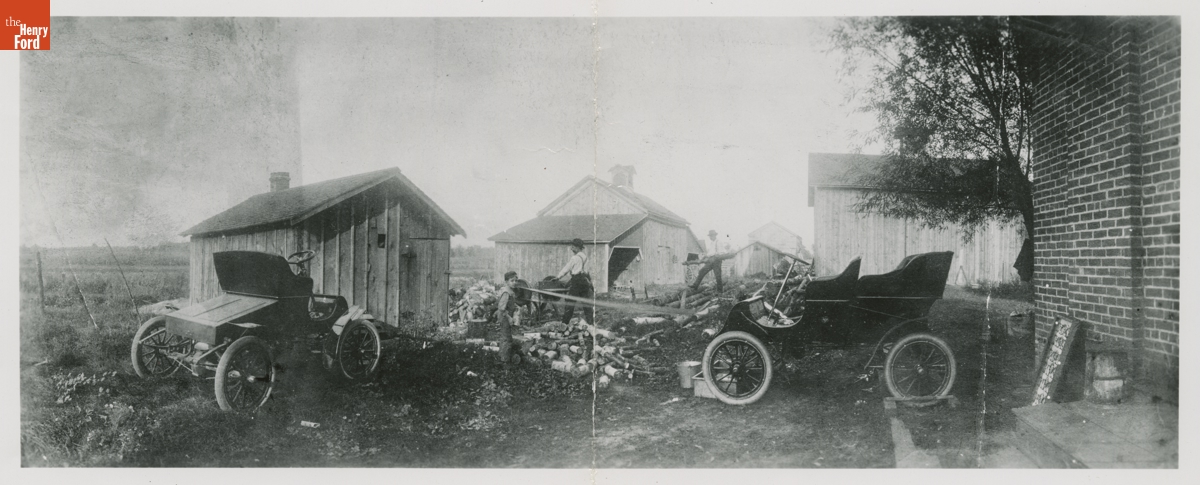
- 1903 Ford Model A Providing Power to Operate a Saw, Bryant Family Homestead - One of the appeals of early automobiles, particularly to rural customers, was their versatility as portable power sources. With the aid of a leather belt, the eight-horsepower engine in the original Ford Model A, for example, could run small machines like saws, water pumps, and electrical generators. Uses beyond transportation made cars seem more practical to budget-minded consumers.
- 1903
- Collections - Artifact
1903 Ford Model A Providing Power to Operate a Saw, Bryant Family Homestead
One of the appeals of early automobiles, particularly to rural customers, was their versatility as portable power sources. With the aid of a leather belt, the eight-horsepower engine in the original Ford Model A, for example, could run small machines like saws, water pumps, and electrical generators. Uses beyond transportation made cars seem more practical to budget-minded consumers.
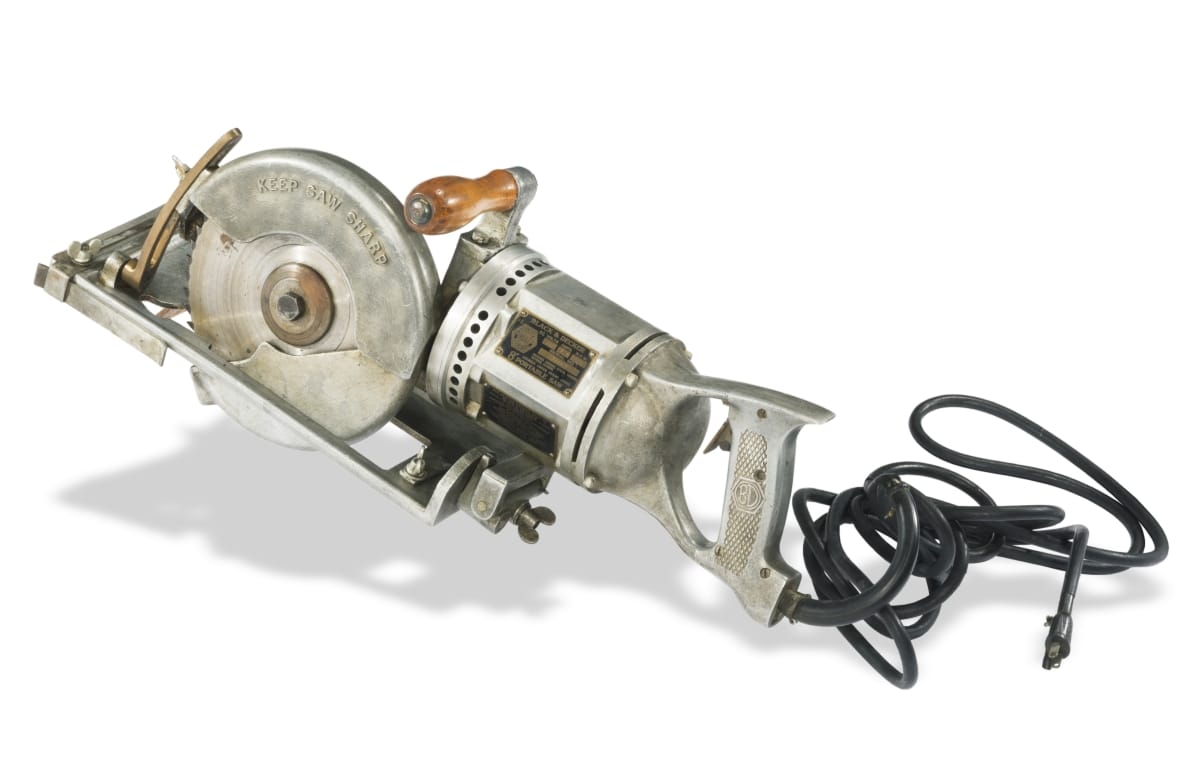
- Black & Decker Type AA Circular Saw, 1930-1931 - Alonzo G. Decker and S. Duncan Black, who operated a small manufacturing company in Baltimore, Maryland, began designing and producing electric tools in 1916. Their pistol-style grip and trigger switch, patented the following year, set the standard for power tool design. Black & Decker developed new products as the company expanded through the 1920s, introducing a portable circular saw in 1930.
- 1930-1931
- Collections - Artifact
Black & Decker Type AA Circular Saw, 1930-1931
Alonzo G. Decker and S. Duncan Black, who operated a small manufacturing company in Baltimore, Maryland, began designing and producing electric tools in 1916. Their pistol-style grip and trigger switch, patented the following year, set the standard for power tool design. Black & Decker developed new products as the company expanded through the 1920s, introducing a portable circular saw in 1930.
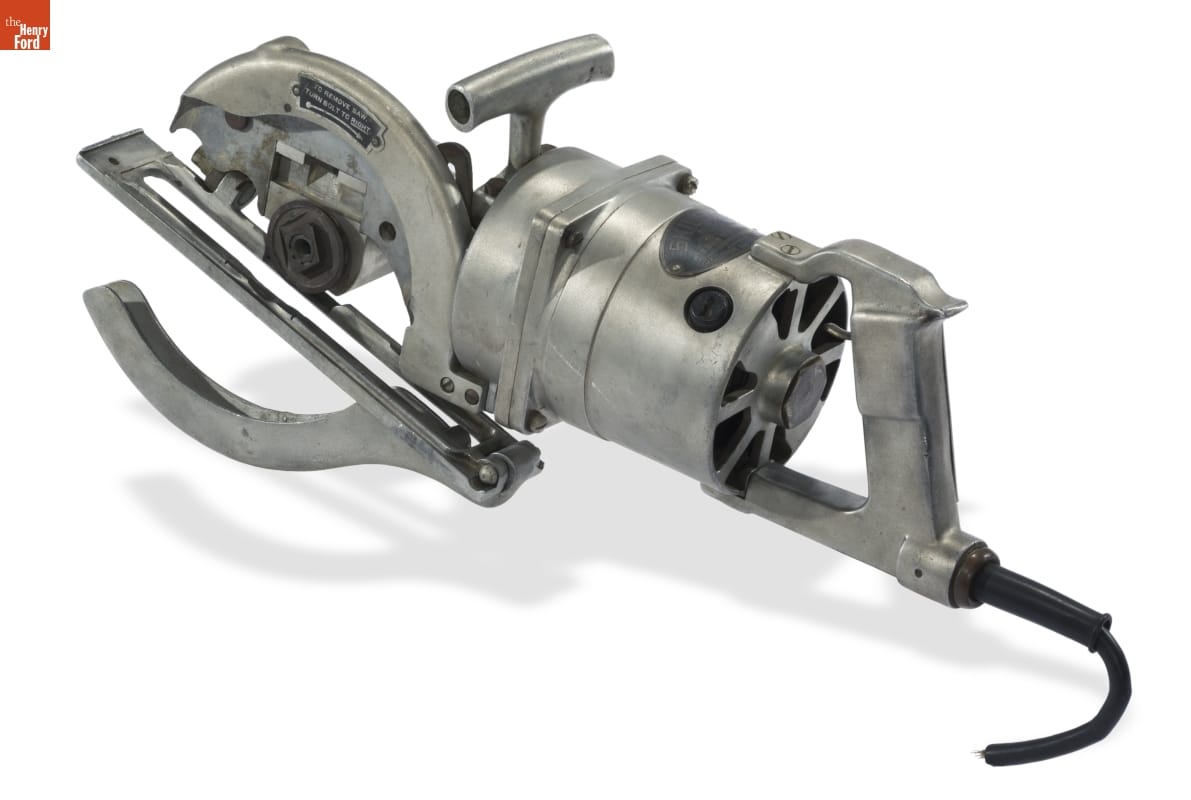
- Skilsaw Portable Model E Circular Saw, 1926 -
- 1926
- Collections - Artifact
Skilsaw Portable Model E Circular Saw, 1926
- Hallmark "Happy Woodcutter" Christmas Ornament, 1990 - Already known for greeting cards, Hallmark introduced a line of Christmas ornaments in 1973. The company's annual release of an increasing array of ornaments revolutionized Christmas decorating, appealing to customers' interest in marking memories and milestones as well as expressing one's personality and unique tastes.

- 1990
- Collections - Artifact
Hallmark "Happy Woodcutter" Christmas Ornament, 1990
Already known for greeting cards, Hallmark introduced a line of Christmas ornaments in 1973. The company's annual release of an increasing array of ornaments revolutionized Christmas decorating, appealing to customers' interest in marking memories and milestones as well as expressing one's personality and unique tastes.
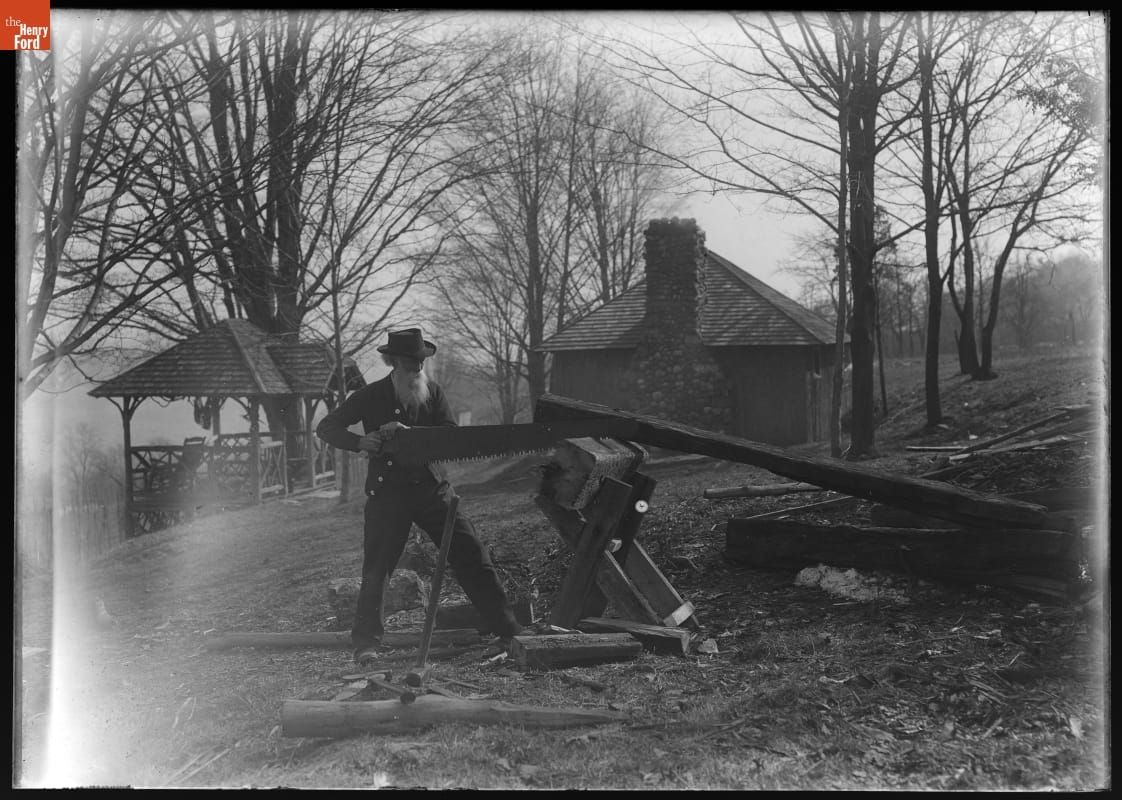
- John Burroughs Sawing Wood near His Study at Riverby, 1910-1920 - John Burroughs (1837-1921) was an internationally known naturalist and essayist who wrote about accessible and familiar landscapes. In 1873, Burroughs bought a plot of land overlooking the Hudson in the Catskills of upstate New York and named it Riverby. Here, he farmed and cultivated grapes and fruit trees. He also erected a family home and built secluded retreats where he penned some of his most famous works.
- 1910-1920
- Collections - Artifact
John Burroughs Sawing Wood near His Study at Riverby, 1910-1920
John Burroughs (1837-1921) was an internationally known naturalist and essayist who wrote about accessible and familiar landscapes. In 1873, Burroughs bought a plot of land overlooking the Hudson in the Catskills of upstate New York and named it Riverby. Here, he farmed and cultivated grapes and fruit trees. He also erected a family home and built secluded retreats where he penned some of his most famous works.
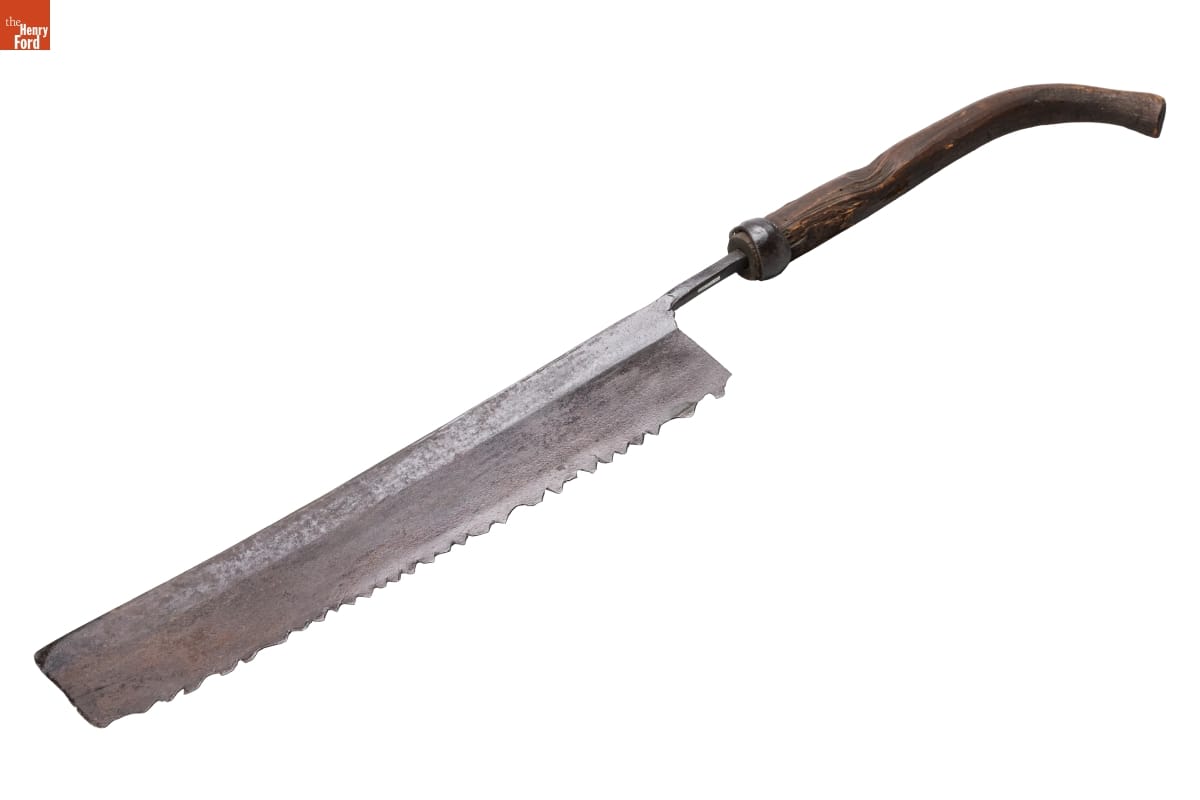
- Hand Saw -
- Collections - Artifact
Hand Saw