
Search
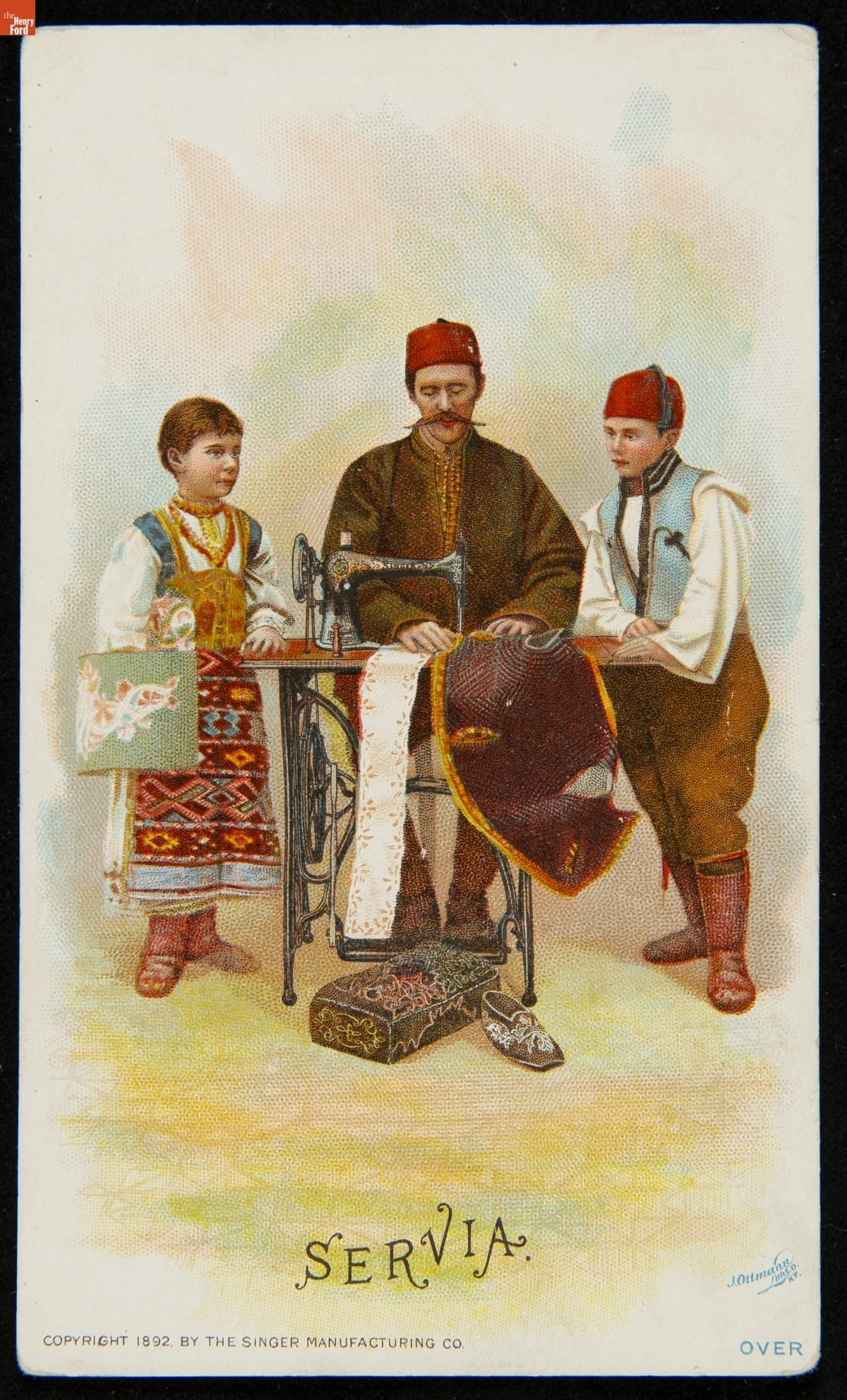
- Trade Card for Singer Sewing Machines, 1892 - As color printing gained momentum in the late 19th century, trade cards became a major means of advertising goods and services. Americans enjoyed and often saved the vibrant little advertisements found in product packages or distributed by local merchants. The Singer Sewing Machine Company had a series of trade cards, like this one, offering images of Singer machine users from around the world in their national dress.
- circa 1892
- Collections - Artifact
Trade Card for Singer Sewing Machines, 1892
As color printing gained momentum in the late 19th century, trade cards became a major means of advertising goods and services. Americans enjoyed and often saved the vibrant little advertisements found in product packages or distributed by local merchants. The Singer Sewing Machine Company had a series of trade cards, like this one, offering images of Singer machine users from around the world in their national dress.
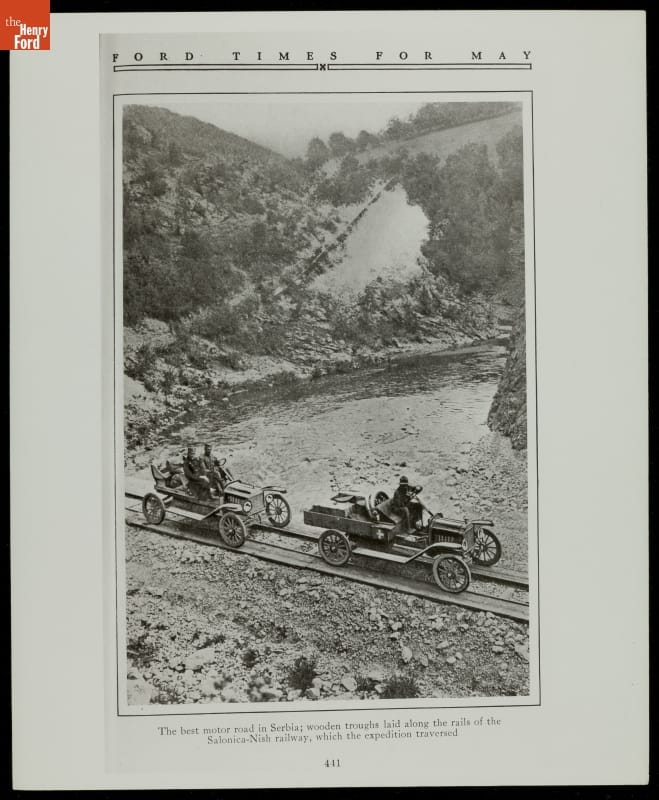
- Ford Model T Cars on Wooden Troughs Laid along Salonica-Nish Railroad Tracks, Serbia, 1917 - This photograph was taken during a World War I relief mission to Serbia, where poor road conditions complicated travel. For a stretch of 8 miles, a sinuous mountain road merged with the Salonica-Nish railway. These relief workers drive Ford Model Ts along the unusual combination roadway.
- 1917
- Collections - Artifact
Ford Model T Cars on Wooden Troughs Laid along Salonica-Nish Railroad Tracks, Serbia, 1917
This photograph was taken during a World War I relief mission to Serbia, where poor road conditions complicated travel. For a stretch of 8 miles, a sinuous mountain road merged with the Salonica-Nish railway. These relief workers drive Ford Model Ts along the unusual combination roadway.
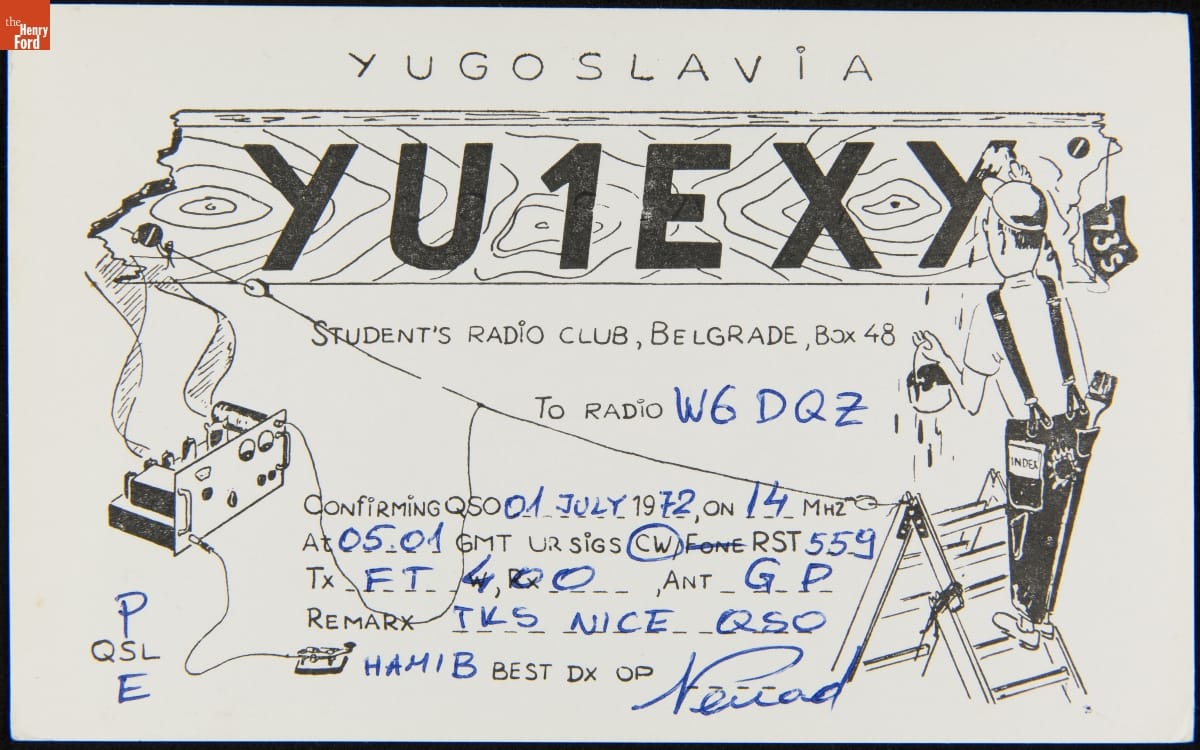
- QSL Card from YU1EXY (Belgrade, Yugoslavia) to W6DQZ (Hamid Durmisevich, Los Angeles, California), July 1, 1972 - It was customary for ham radio operators (hams) to exchange these "QSL cards" with one another through the mail after their first conversation. Long-time hams amassed collections of thousands of cards, some from far-flung places. There is a story embedded in each example: the ham's call sign dominates the design, with additional details about location, reception reports, and weather conditions.
- July 01, 1972
- Collections - Artifact
QSL Card from YU1EXY (Belgrade, Yugoslavia) to W6DQZ (Hamid Durmisevich, Los Angeles, California), July 1, 1972
It was customary for ham radio operators (hams) to exchange these "QSL cards" with one another through the mail after their first conversation. Long-time hams amassed collections of thousands of cards, some from far-flung places. There is a story embedded in each example: the ham's call sign dominates the design, with additional details about location, reception reports, and weather conditions.
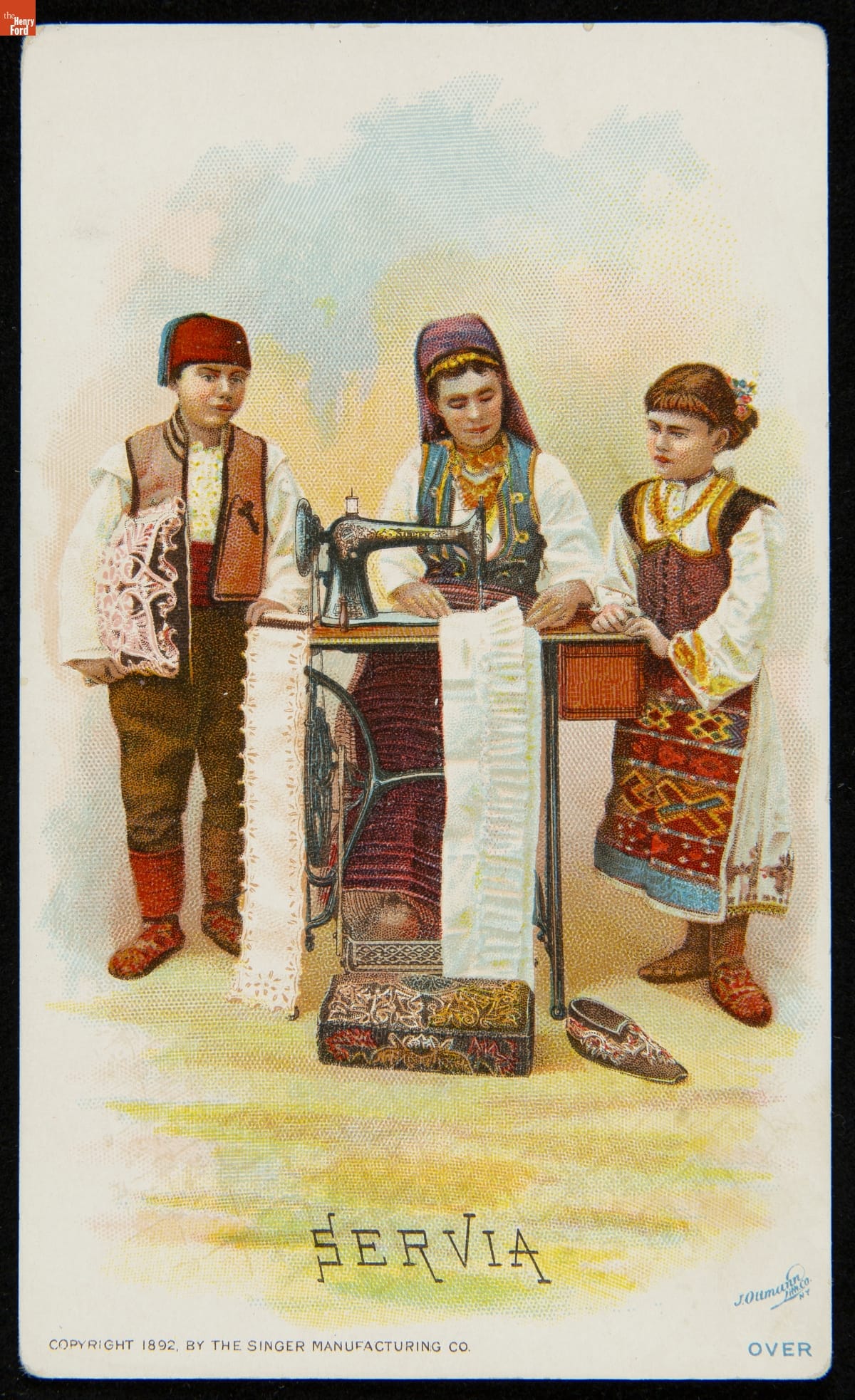
- Trade Card for Singer Sewing Machines, 1892 - As color printing gained momentum in the late 19th century, trade cards became a major means of advertising goods and services. Americans enjoyed and often saved the vibrant little advertisements found in product packages or distributed by local merchants. The Singer Sewing Machine Company had a series of trade cards, like this one, offering images of Singer machine users from around the world in their national dress.
- circa 1892
- Collections - Artifact
Trade Card for Singer Sewing Machines, 1892
As color printing gained momentum in the late 19th century, trade cards became a major means of advertising goods and services. Americans enjoyed and often saved the vibrant little advertisements found in product packages or distributed by local merchants. The Singer Sewing Machine Company had a series of trade cards, like this one, offering images of Singer machine users from around the world in their national dress.