
Search
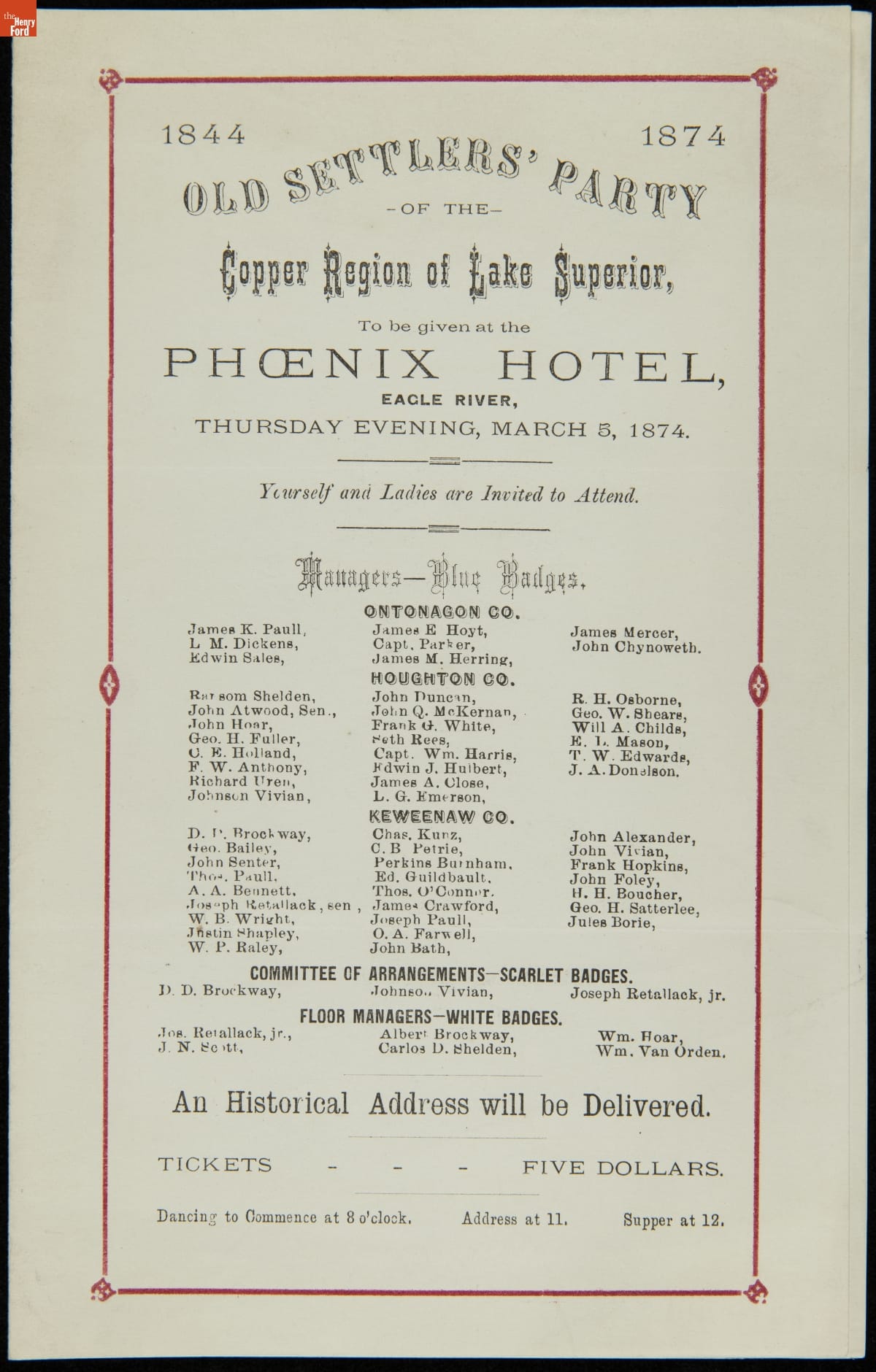
- Program, "Old Settlers' Party of the Copper Region of Lake Superior," Phoenix Hotel, Eagle River, Michigan, March 5, 1874 -
- March 05, 1874
- Collections - Artifact
Program, "Old Settlers' Party of the Copper Region of Lake Superior," Phoenix Hotel, Eagle River, Michigan, March 5, 1874
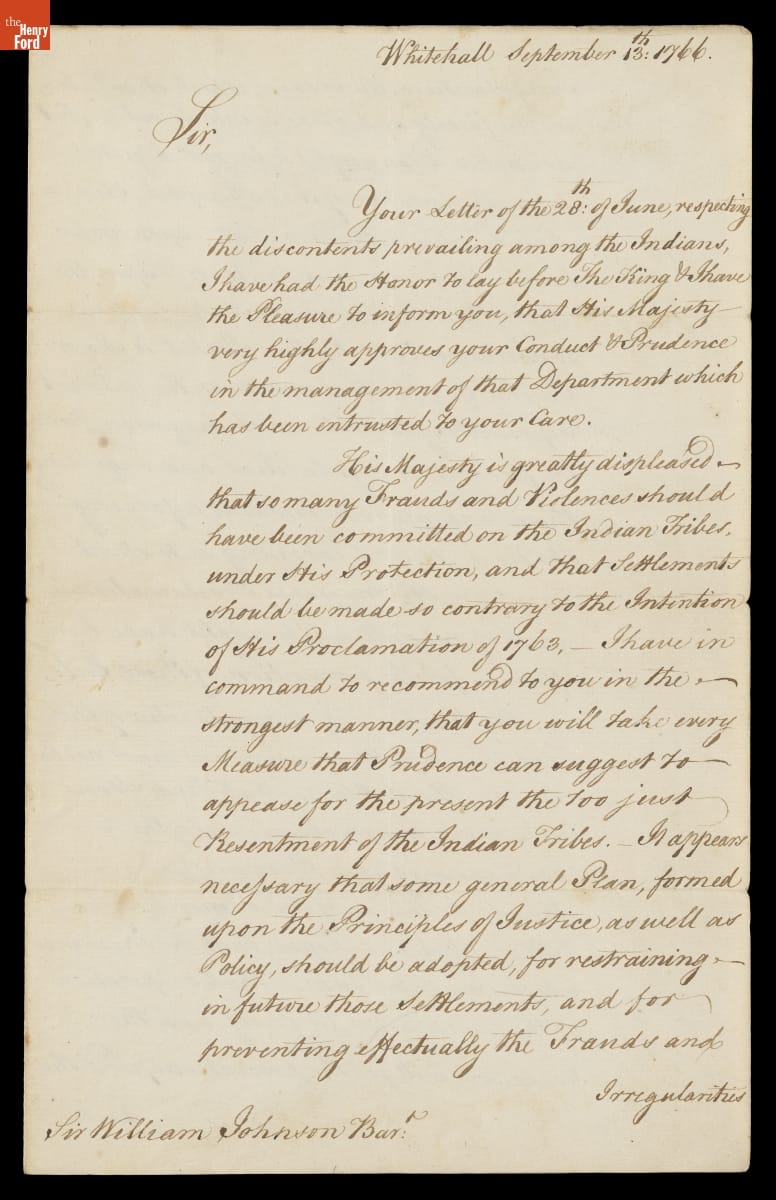
- Letter from William P. Fitzmaurice, Earl of Shelburne, to William Johnson, September 13, 1766 -
- September 13, 1766
- Collections - Artifact
Letter from William P. Fitzmaurice, Earl of Shelburne, to William Johnson, September 13, 1766
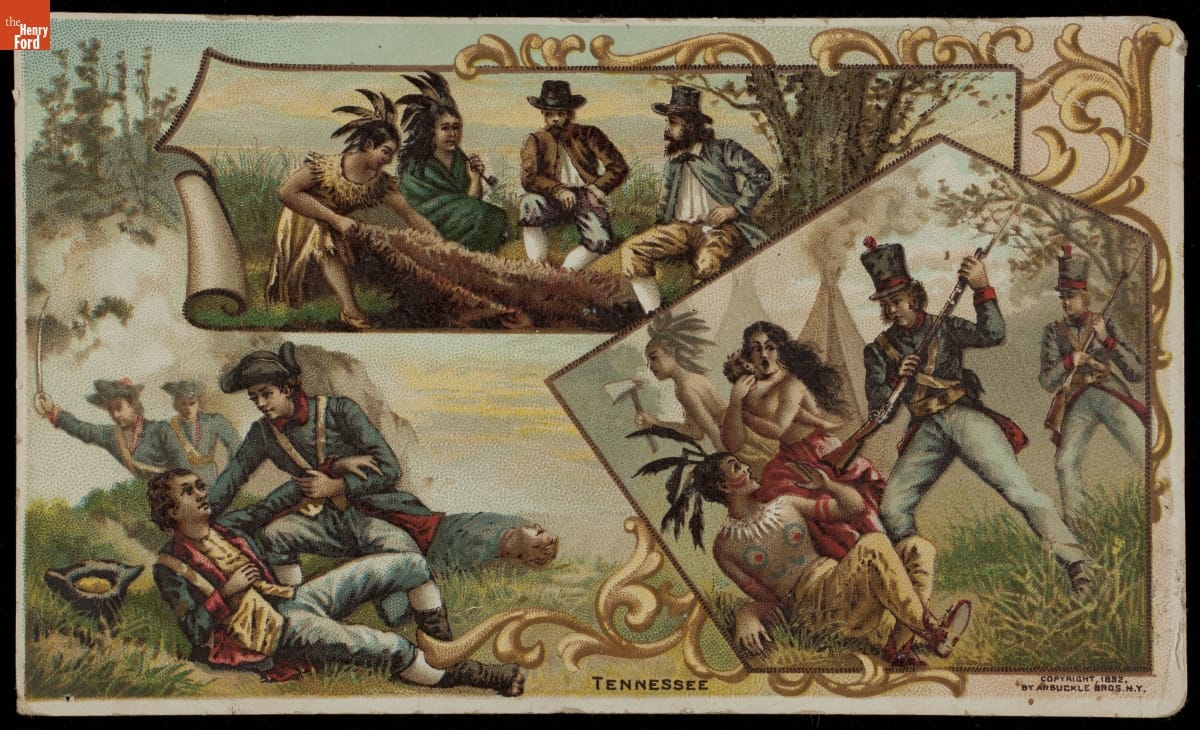
- Trade Card for Ariosa Coffee, Arbuckle Bros., "Tennessee," 1892 - Late-nineteenth-century manufacturers used trade cards to promote and sell their products. These colorful advertisements also reflected the prejudices of the time. Illustrators often depicted Indigenous people as "savages" hindering the progress of "civilized" European-Americans. This depiction supported the view of many white, middle-class Americans, especially near the end of the American Indian Wars in the West.
- 1892
- Collections - Artifact
Trade Card for Ariosa Coffee, Arbuckle Bros., "Tennessee," 1892
Late-nineteenth-century manufacturers used trade cards to promote and sell their products. These colorful advertisements also reflected the prejudices of the time. Illustrators often depicted Indigenous people as "savages" hindering the progress of "civilized" European-Americans. This depiction supported the view of many white, middle-class Americans, especially near the end of the American Indian Wars in the West.
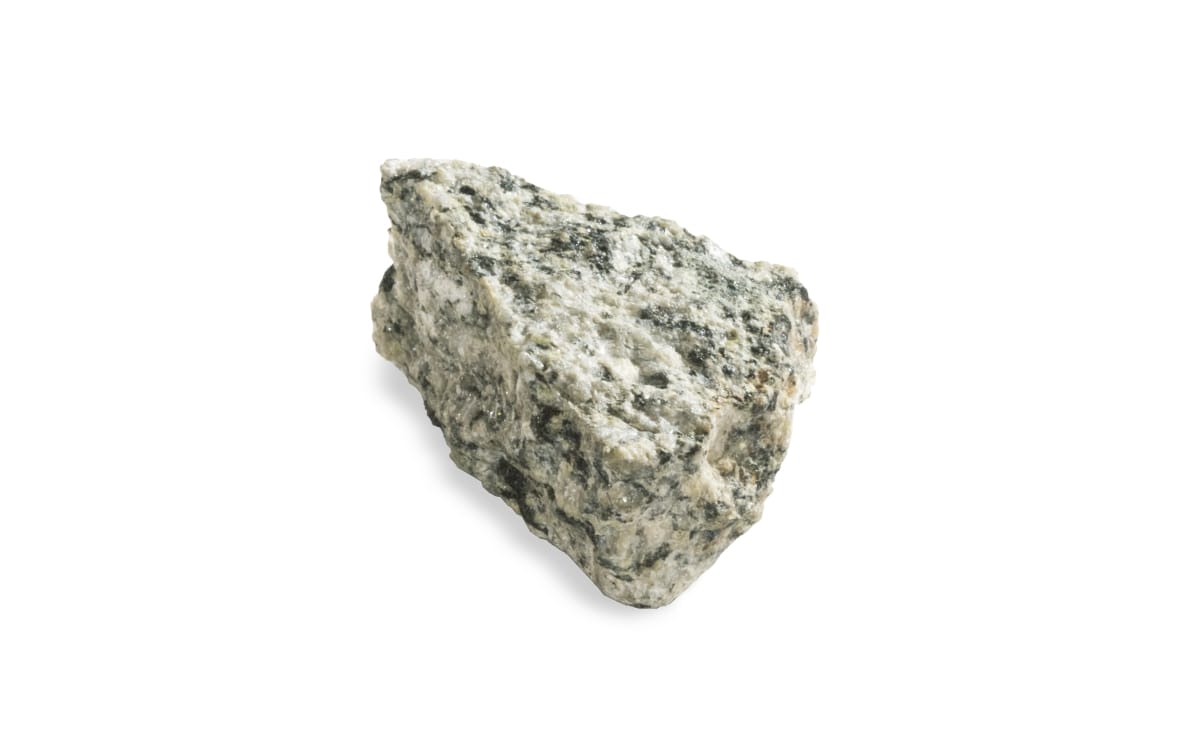
- Fragment of Plymouth Rock, 1620 - Legend has it that Plymouth Rock was the <em>Mayflower</em> Pilgrims' landing site in 1620, though references don't appear until 1715. In the 1770s, the rock broke into three pieces when moved into town. These were later reunited on the original site. This fragment came from a piece that had been in private hands and chipped away at over the years.
- 1620
- Collections - Artifact
Fragment of Plymouth Rock, 1620
Legend has it that Plymouth Rock was the Mayflower Pilgrims' landing site in 1620, though references don't appear until 1715. In the 1770s, the rock broke into three pieces when moved into town. These were later reunited on the original site. This fragment came from a piece that had been in private hands and chipped away at over the years.