
Search
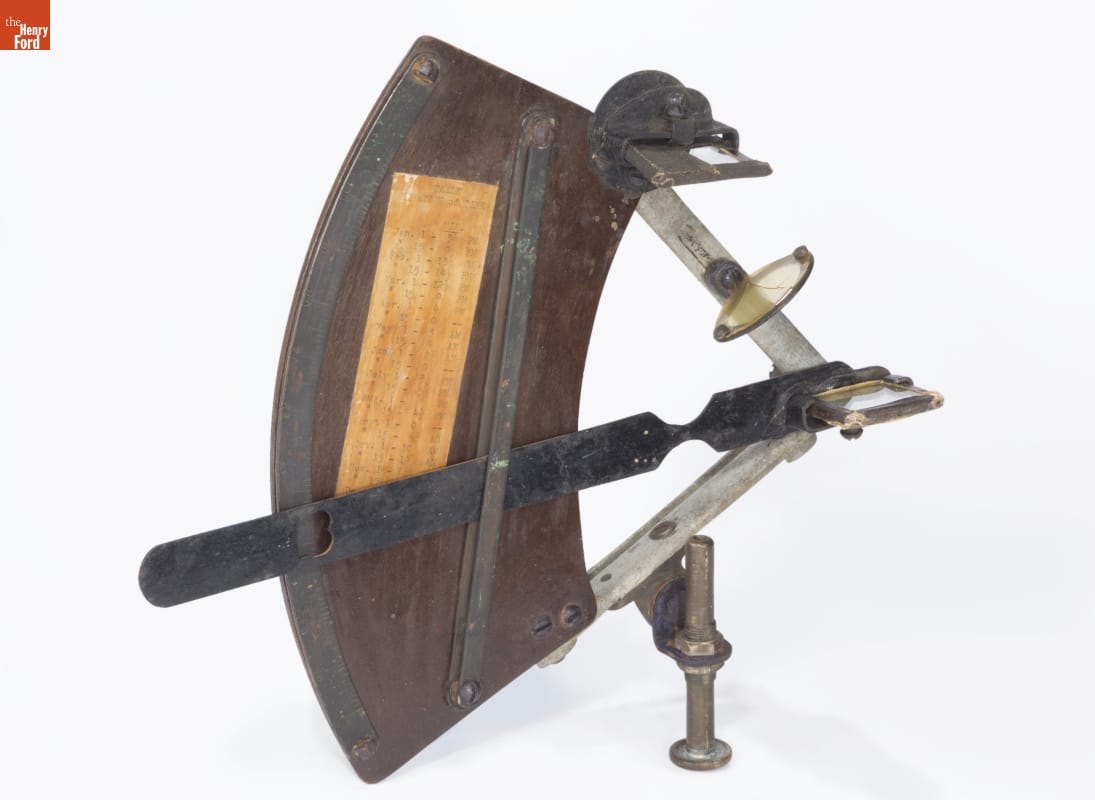
- Handmade Sextant. On Loan from Jeff Mahl, George Schuster's Great-Grandson. - George Schuster, an employee of the E.R. Thomas Motor Company, used this handmade sextant while driving a Thomas Flyer in an auto race from New York to Paris in 1908. Schuster won, overcoming unmapped territory, abysmal roads and multiple breakdowns. In 2010, Schuster was inducted into the Automotive Hall of Fame in recognition of his victory.
- 1908
- Collections - Artifact
Handmade Sextant. On Loan from Jeff Mahl, George Schuster's Great-Grandson.
George Schuster, an employee of the E.R. Thomas Motor Company, used this handmade sextant while driving a Thomas Flyer in an auto race from New York to Paris in 1908. Schuster won, overcoming unmapped territory, abysmal roads and multiple breakdowns. In 2010, Schuster was inducted into the Automotive Hall of Fame in recognition of his victory.
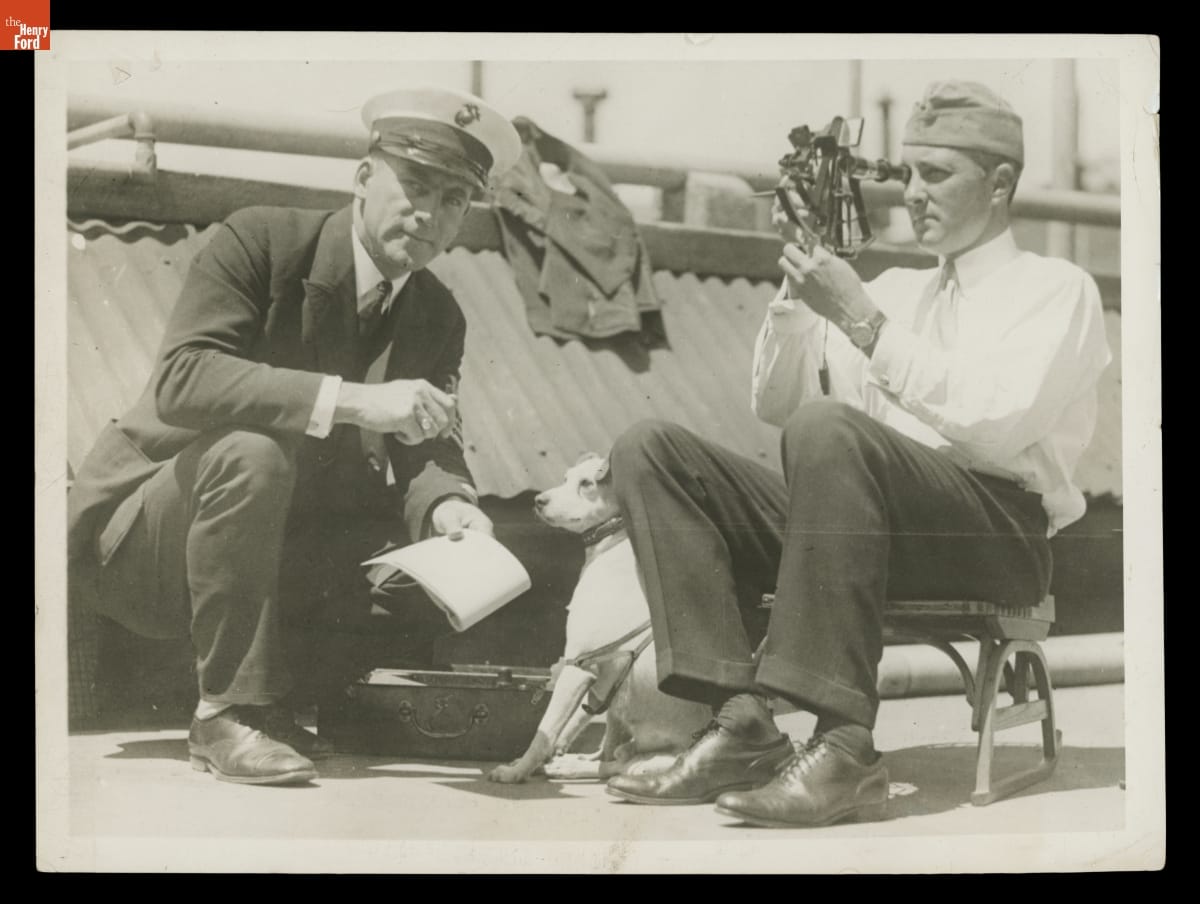
- Richard E. Byrd Holding a Sextant aboard the "Eleanor Bolling" in New Zealand before Traveling to Antarctica, 1928 - From August 1928 to June 1930, Richard Byrd led an expedition to the Antarctic with 83 men, four ships, and three airplanes. The team operated from a base camp they called Little America. On November 28-29, 1929, Byrd and three crewmates took their Ford Tri-Motor <em>Floyd Bennett</em> on the first flight over the South Pole.
- 1928
- Collections - Artifact
Richard E. Byrd Holding a Sextant aboard the "Eleanor Bolling" in New Zealand before Traveling to Antarctica, 1928
From August 1928 to June 1930, Richard Byrd led an expedition to the Antarctic with 83 men, four ships, and three airplanes. The team operated from a base camp they called Little America. On November 28-29, 1929, Byrd and three crewmates took their Ford Tri-Motor Floyd Bennett on the first flight over the South Pole.
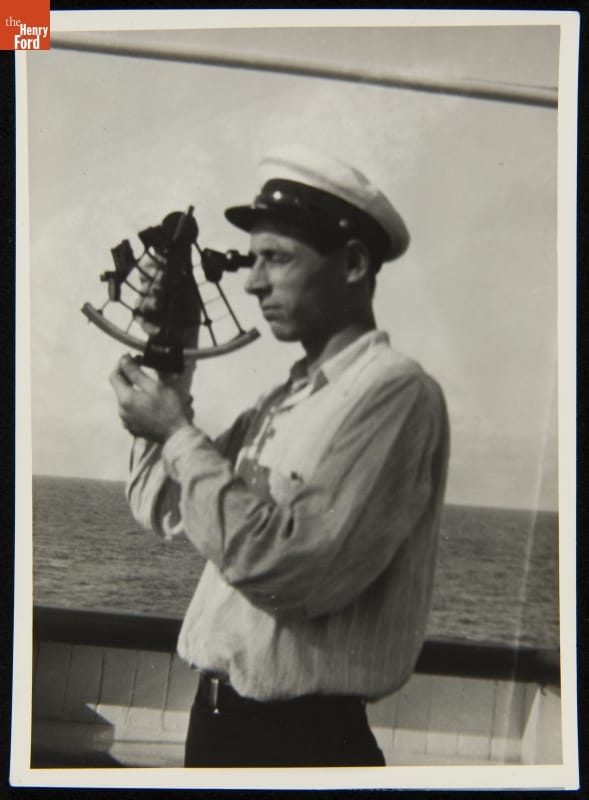
- Hamid Durmisevich Using a Sextant, 1930 - Hamid (Charlie) Durmisevich, call sign W6DQZ, connected to the world from his ham radio station in Los Angeles. Amateur radio operators use two-way radios to talk to global networks of other "hams" about technology, weather, emergency preparedness and daily life. This ham, who emigrated from Eastern Europe in 1920, was active in amateur radio communities from the 1930s to 1990s.
- 1930
- Collections - Artifact
Hamid Durmisevich Using a Sextant, 1930
Hamid (Charlie) Durmisevich, call sign W6DQZ, connected to the world from his ham radio station in Los Angeles. Amateur radio operators use two-way radios to talk to global networks of other "hams" about technology, weather, emergency preparedness and daily life. This ham, who emigrated from Eastern Europe in 1920, was active in amateur radio communities from the 1930s to 1990s.