
Search
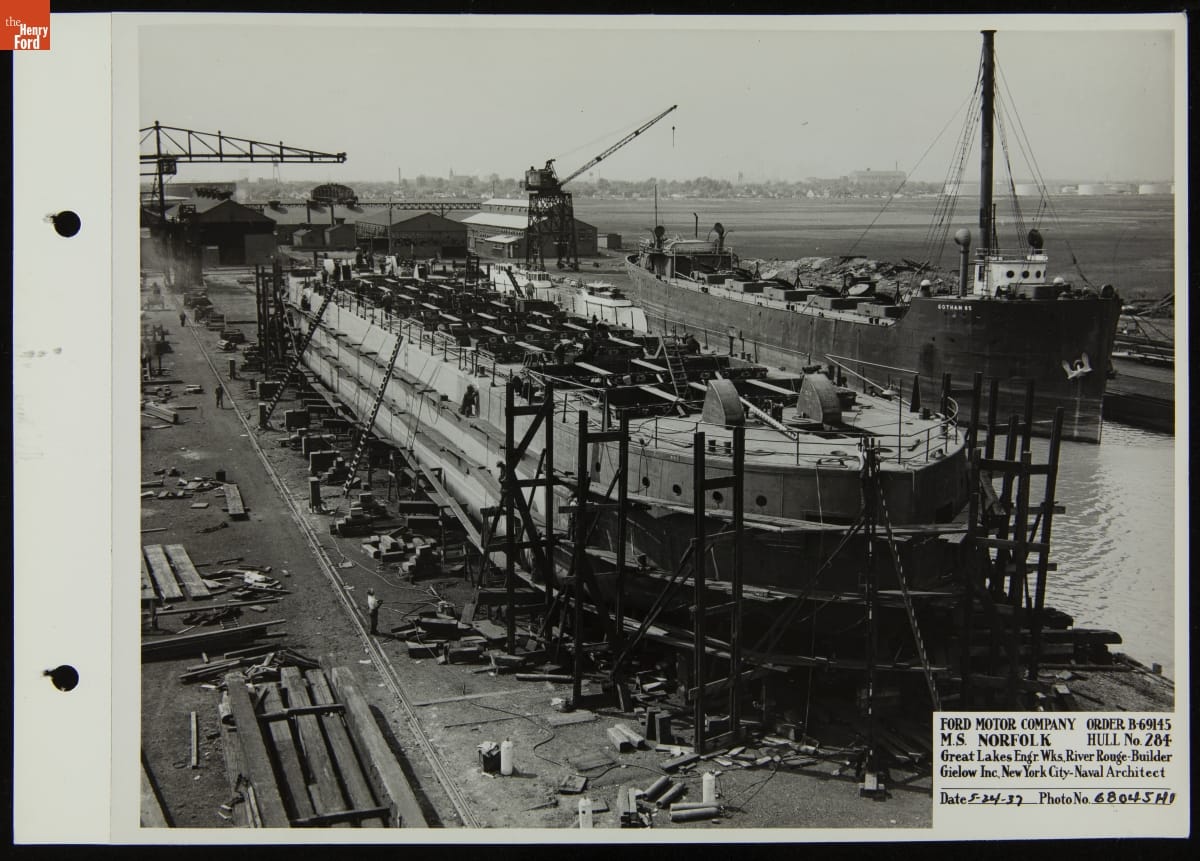
- Ford Freighter "Norfolk" under Construction at Great Lakes Engineering Works, May 24, 1937 - Ford Motor Company built four canal boats in the 1930s to transport finished auto parts between Ford's production plants on the East Coast and its River Rouge complex in Michigan. The freighters were designed to travel on the New York State Barge Canal. The <em>Norfolk</em>, named for the location of one of the Ford's East Coast plants, began service in 1937.
- April 30, 1937
- Collections - Artifact
Ford Freighter "Norfolk" under Construction at Great Lakes Engineering Works, May 24, 1937
Ford Motor Company built four canal boats in the 1930s to transport finished auto parts between Ford's production plants on the East Coast and its River Rouge complex in Michigan. The freighters were designed to travel on the New York State Barge Canal. The Norfolk, named for the location of one of the Ford's East Coast plants, began service in 1937.
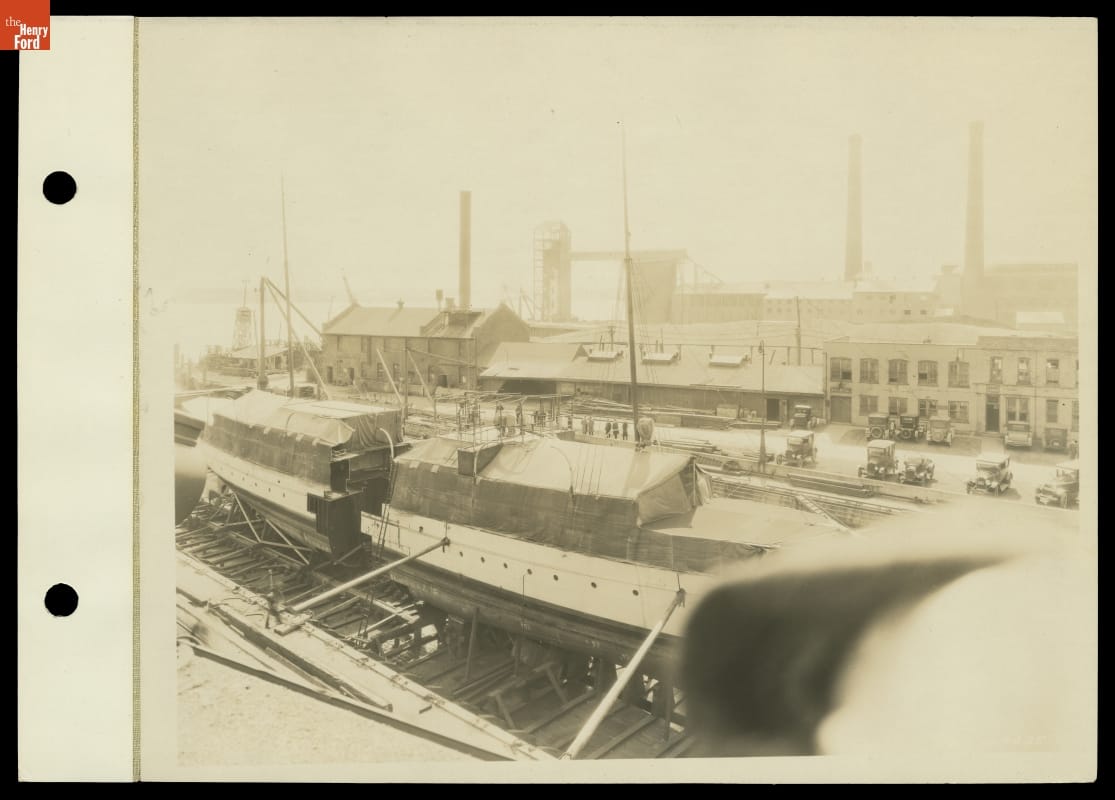
- Henry Ford's Yacht "Sialia" Undergoing Modification at Detroit Shipbuilding Company, 1925 - Henry Ford purchased a yacht in 1917. He retained the vessel's given name, <em>Sialia</em>, the scientific name for the bluebird. Intended as private transportation during trips to investigate possible industrial supply sources, the yacht also carried the Fords and their guests on family excursions. This photograph was taken during an operation to add diesel engines and lengthen <em>Sialia</em> by 21 feet.
- April 02, 1925
- Collections - Artifact
Henry Ford's Yacht "Sialia" Undergoing Modification at Detroit Shipbuilding Company, 1925
Henry Ford purchased a yacht in 1917. He retained the vessel's given name, Sialia, the scientific name for the bluebird. Intended as private transportation during trips to investigate possible industrial supply sources, the yacht also carried the Fords and their guests on family excursions. This photograph was taken during an operation to add diesel engines and lengthen Sialia by 21 feet.
- Assembly of Marine Compound Steam Engines, Detroit Shipbuilding Company, Wyandotte, Michigan, 1901 - From 1895 to 1924, the Detroit Publishing Company was one of the major image publishers in the world. The company's wide-ranging stock of original photographs documented life and landscapes from across the nation and around the globe. From the tens of thousands of negatives, the company created prints, postcards, lantern slides, panoramas, and other merchandise for sale to educators, businessmen, advertisers, homeowners and travelers.

- 1901
- Collections - Artifact
Assembly of Marine Compound Steam Engines, Detroit Shipbuilding Company, Wyandotte, Michigan, 1901
From 1895 to 1924, the Detroit Publishing Company was one of the major image publishers in the world. The company's wide-ranging stock of original photographs documented life and landscapes from across the nation and around the globe. From the tens of thousands of negatives, the company created prints, postcards, lantern slides, panoramas, and other merchandise for sale to educators, businessmen, advertisers, homeowners and travelers.
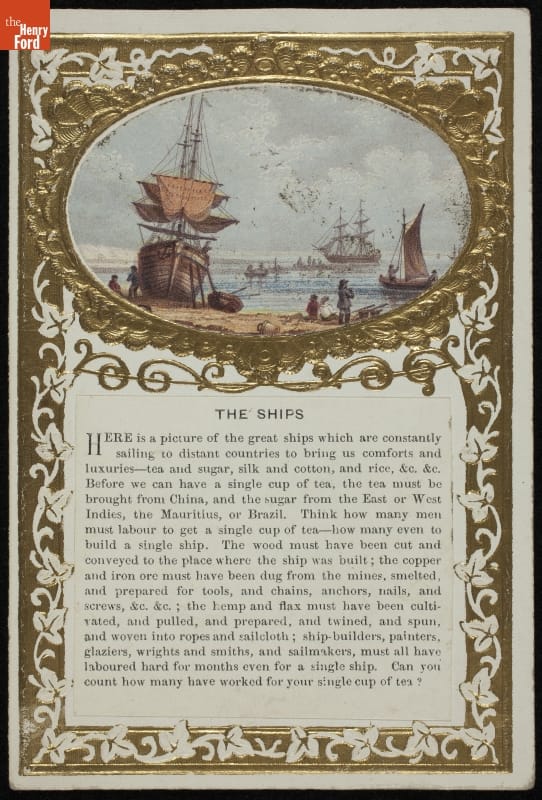
- Card, "The Ships," 1830-1870 -
- 1830-1870
- Collections - Artifact
Card, "The Ships," 1830-1870
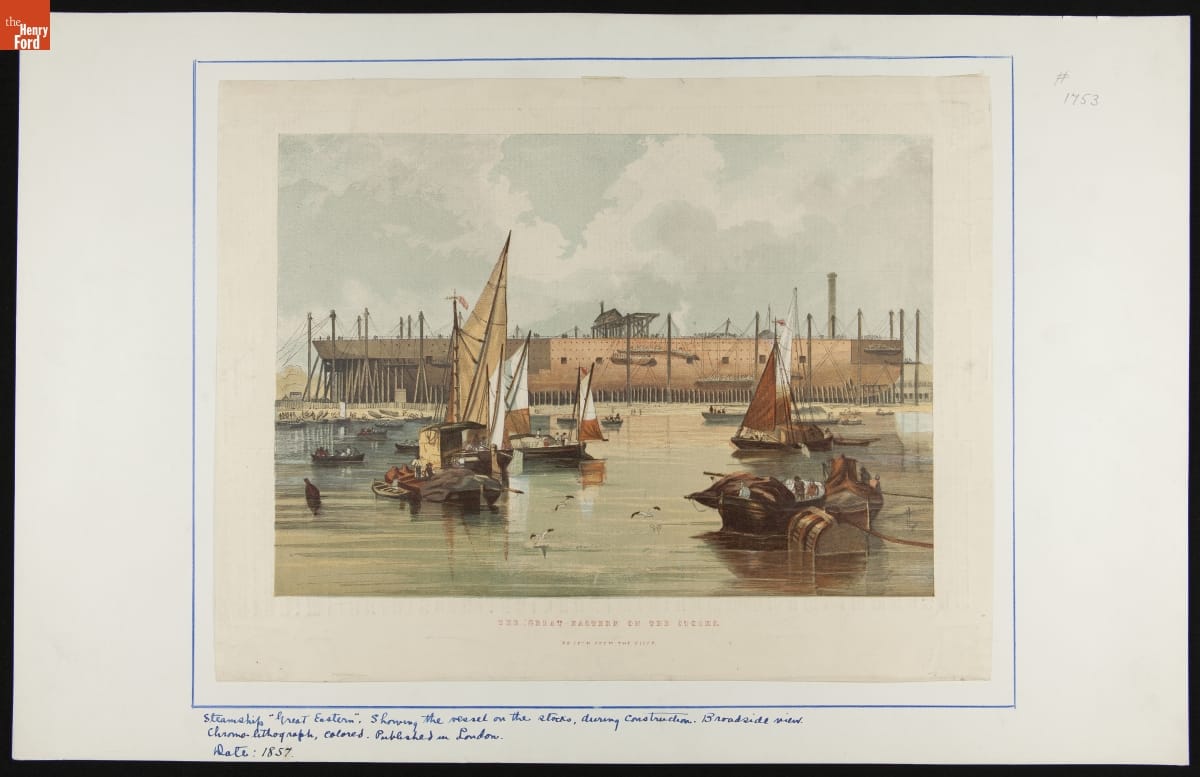
- Chromolithograph, "The Great Eastern on the Stocks as Seen From the River," 1857 - The SS <em>Great Eastern</em> is shown under construction in this print. It was the largest passenger ship ever built at the time of its launch in 1858. In 1866, the <em>Great Eastern</em> was converted to lay the second--and first successful--transatlantic cable. During its career, this ship laid multiple submarine communication cables totaling over 32,000 miles.
- 1857
- Collections - Artifact
Chromolithograph, "The Great Eastern on the Stocks as Seen From the River," 1857
The SS Great Eastern is shown under construction in this print. It was the largest passenger ship ever built at the time of its launch in 1858. In 1866, the Great Eastern was converted to lay the second--and first successful--transatlantic cable. During its career, this ship laid multiple submarine communication cables totaling over 32,000 miles.
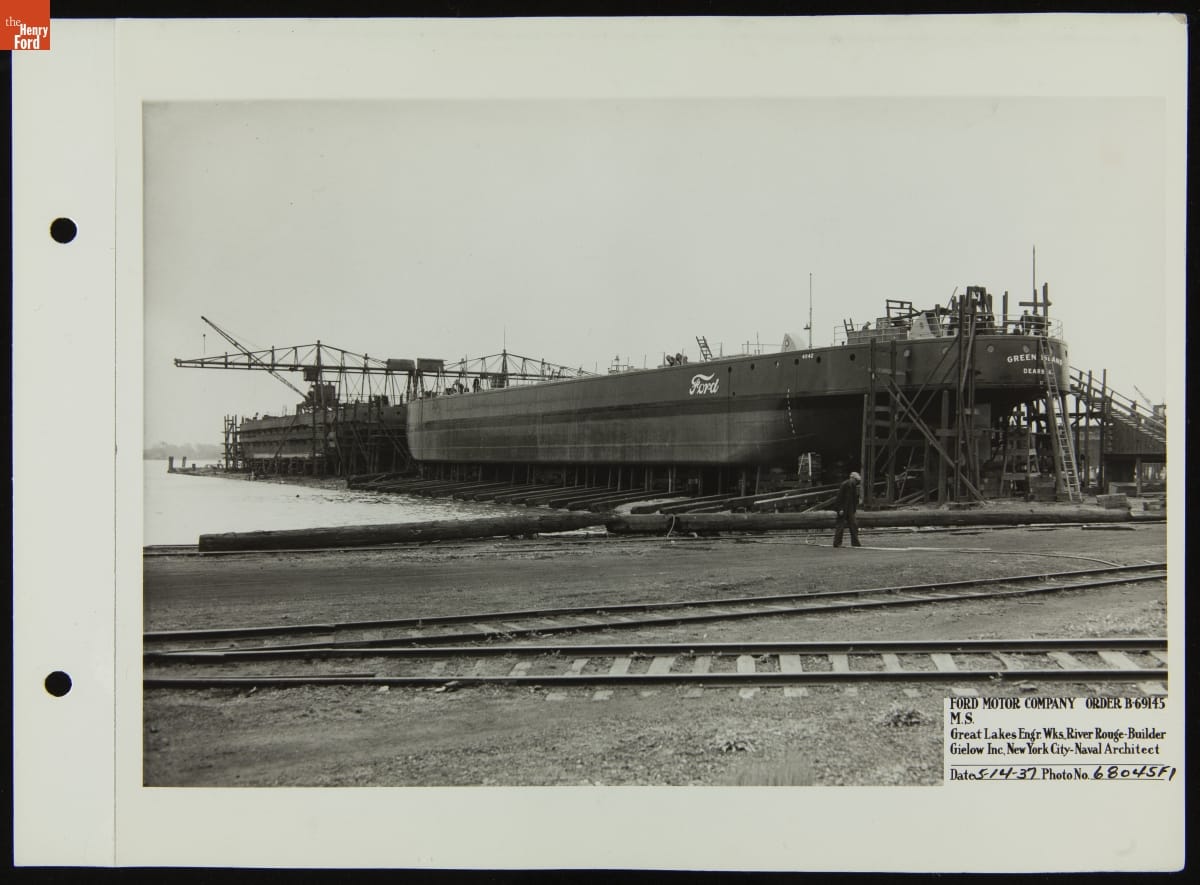
- Ford Freighter "Green Island" under Construction at Great Lakes Engineering Works, May 14, 1937 - Ford Motor Company built four canal boats in the 1930s to transport finished auto parts between Ford's production plants on the East Coast and its River Rouge complex in Michigan. The freighters were designed to travel on the New York State Barge Canal. The <em>Green Island</em>, named for the location of one of Ford's East Coast plants, began service in 1937.
- May 14, 1937
- Collections - Artifact
Ford Freighter "Green Island" under Construction at Great Lakes Engineering Works, May 14, 1937
Ford Motor Company built four canal boats in the 1930s to transport finished auto parts between Ford's production plants on the East Coast and its River Rouge complex in Michigan. The freighters were designed to travel on the New York State Barge Canal. The Green Island, named for the location of one of Ford's East Coast plants, began service in 1937.
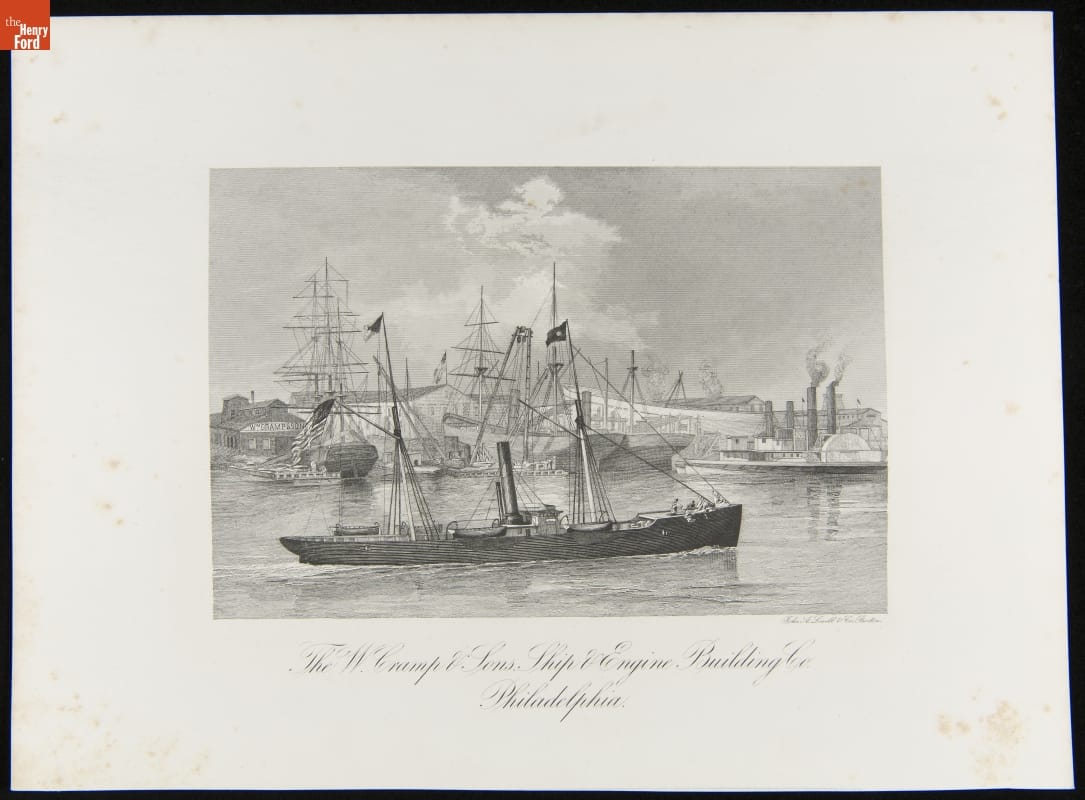
- Engraving, "W. Cramp & Sons. Ship & Engine Building Co.," 1876 -
- 1876
- Collections - Artifact
Engraving, "W. Cramp & Sons. Ship & Engine Building Co.," 1876
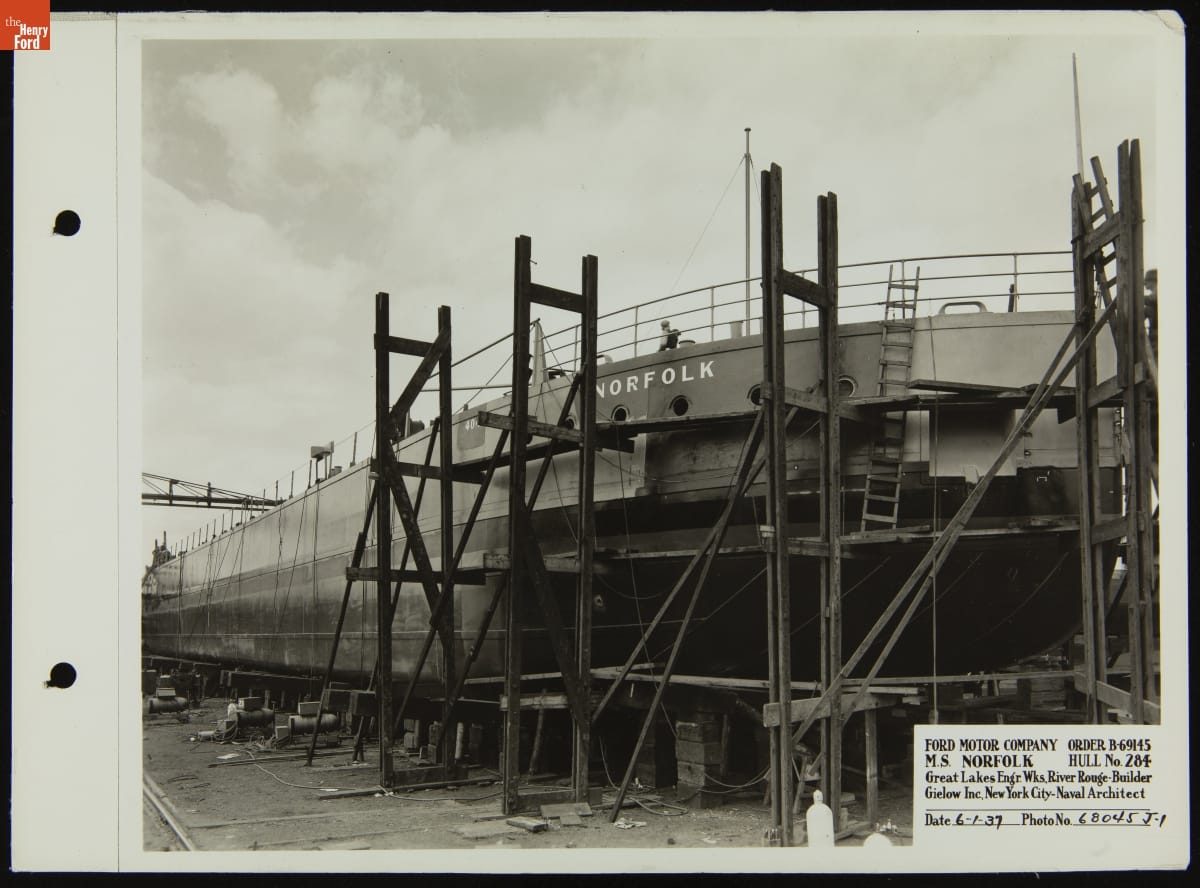
- Ford Freighter "Norfolk" under Construction at Great Lakes Engineering Works, June 1, 1937 - Ford Motor Company built four canal boats in the 1930s to transport finished auto parts between Ford's production plants on the East Coast and its River Rouge complex in Michigan. The freighters were designed to travel on the New York State Barge Canal. The <em>Norfolk</em>, named for the location of one of the Ford's East Coast plants, began service in 1937.
- June 01, 1937
- Collections - Artifact
Ford Freighter "Norfolk" under Construction at Great Lakes Engineering Works, June 1, 1937
Ford Motor Company built four canal boats in the 1930s to transport finished auto parts between Ford's production plants on the East Coast and its River Rouge complex in Michigan. The freighters were designed to travel on the New York State Barge Canal. The Norfolk, named for the location of one of the Ford's East Coast plants, began service in 1937.
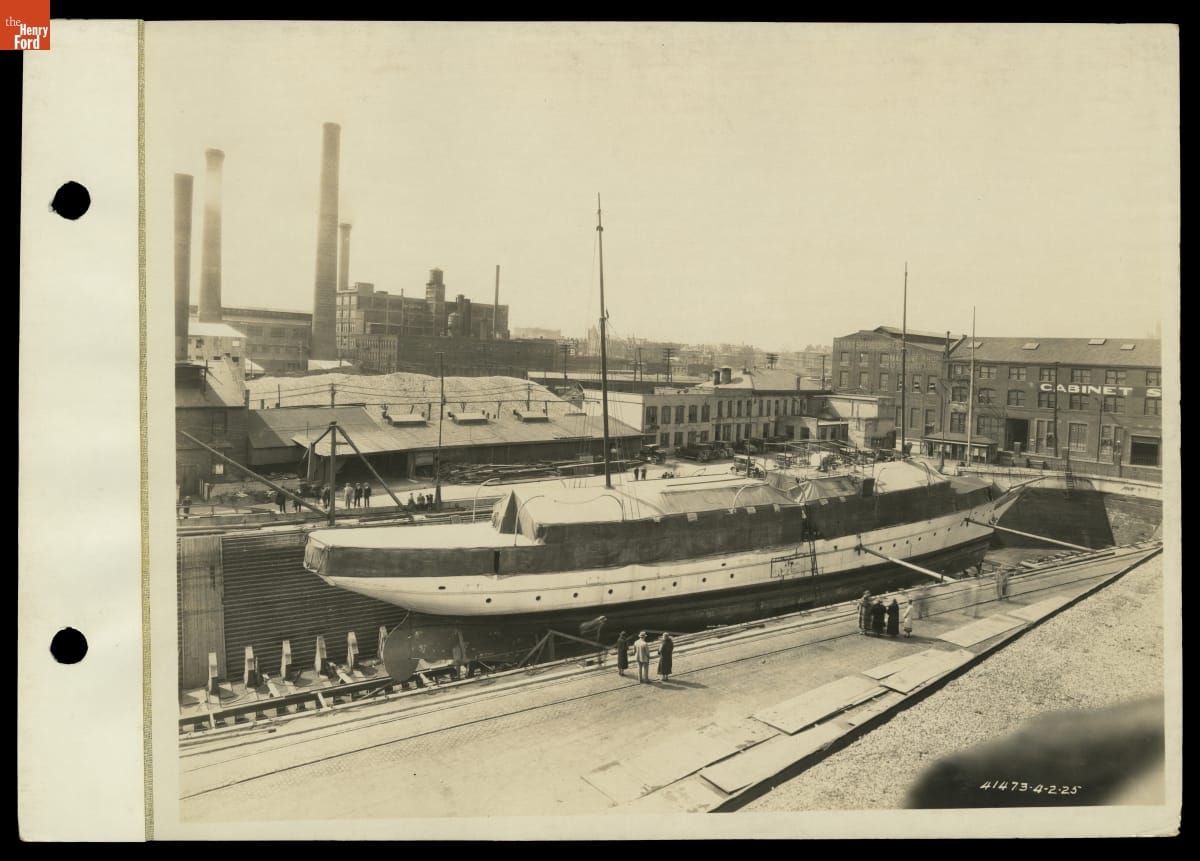
- Henry Ford's Yacht "Sialia" at Detroit Shipbuilding Company, 1925 - Henry Ford purchased a yacht in 1917. He retained the vessel's given name, <em>Sialia</em>, the scientific name for the bluebird. Intended as private transportation during trips to investigate possible industrial supply sources, the yacht also carried the Fords and their guests on family excursions. This photograph was taken during an operation to add diesel engines and lengthen <em>Sialia</em> by 21 feet.
- April 02, 1925
- Collections - Artifact
Henry Ford's Yacht "Sialia" at Detroit Shipbuilding Company, 1925
Henry Ford purchased a yacht in 1917. He retained the vessel's given name, Sialia, the scientific name for the bluebird. Intended as private transportation during trips to investigate possible industrial supply sources, the yacht also carried the Fords and their guests on family excursions. This photograph was taken during an operation to add diesel engines and lengthen Sialia by 21 feet.
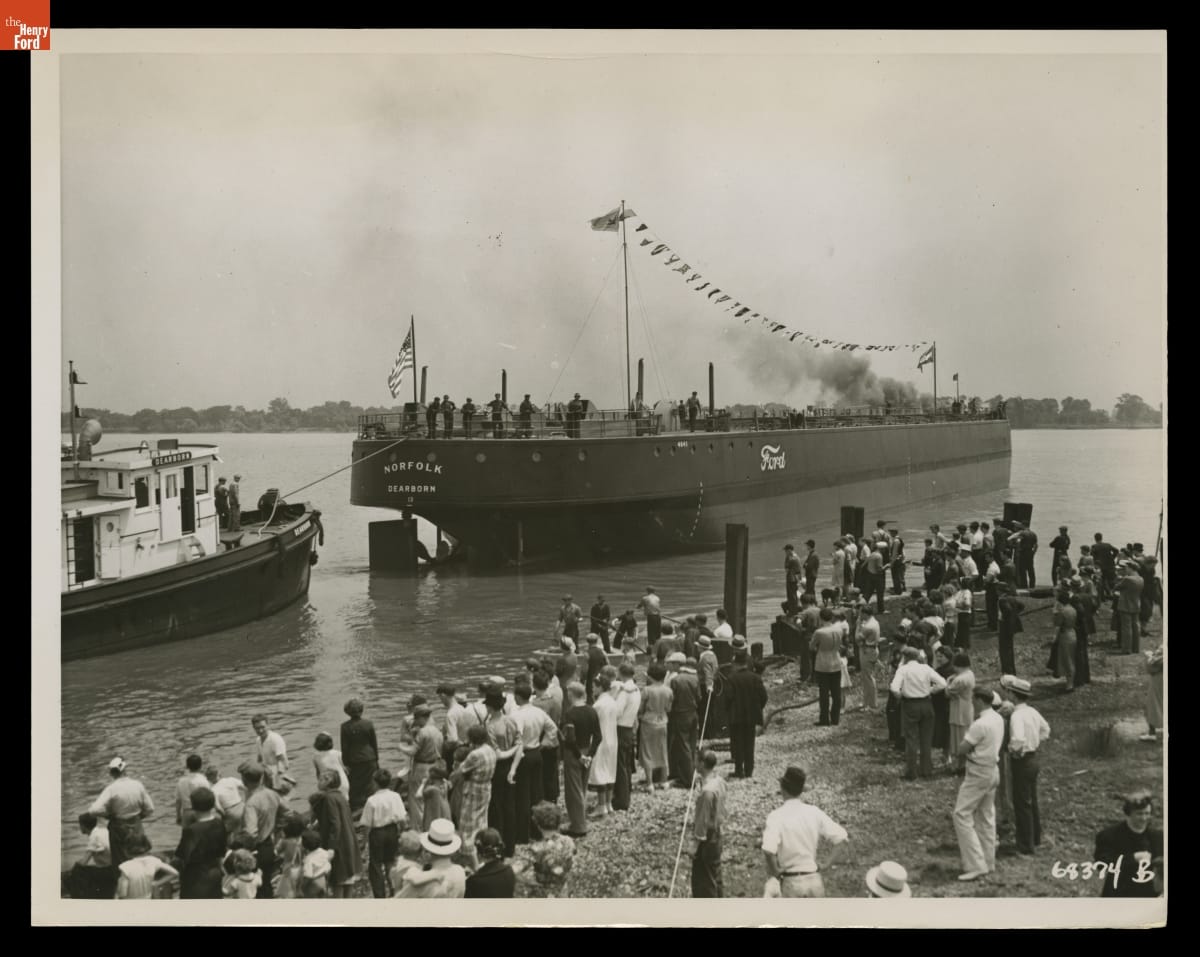
- Launching the Ford Motor Company Motorship Norfolk, June 1937 - Ford Motor Company built four canal boats in the 1930s to transport finished auto parts between Ford's production plants on the East Coast and its River Rouge complex in Michigan. The freighters were designed to travel on the New York State Barge Canal. The <em>Norfolk</em>, named for the location of one of the Ford's East Coast plants, began service in 1937.
- June 08, 1937
- Collections - Artifact
Launching the Ford Motor Company Motorship Norfolk, June 1937
Ford Motor Company built four canal boats in the 1930s to transport finished auto parts between Ford's production plants on the East Coast and its River Rouge complex in Michigan. The freighters were designed to travel on the New York State Barge Canal. The Norfolk, named for the location of one of the Ford's East Coast plants, began service in 1937.