
Search
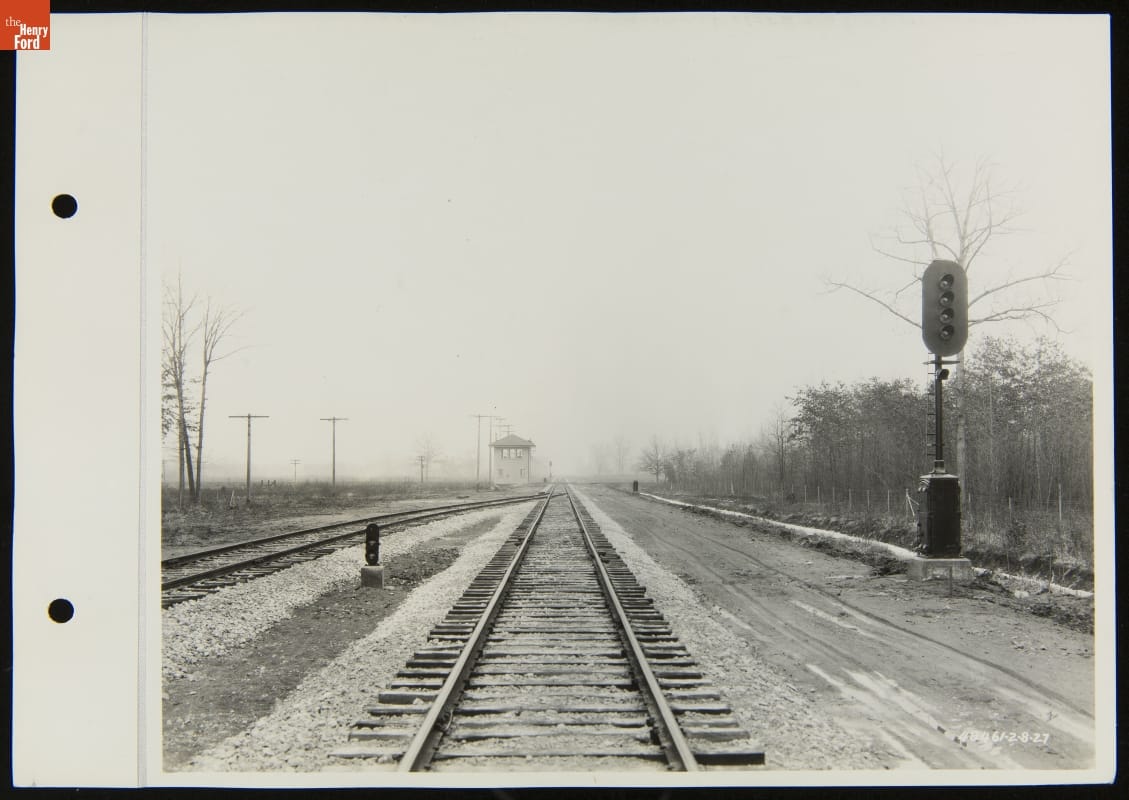
- Railroad Signal Light near the Diann Tower, Detroit, Toledo & Ironton Railroad, February 1927 - Traffic on many railroads is controlled by an automatic block signaling system. A railroad line is sectioned into blocks, and an electrical circuit in the track detects whether a train is in a given block. The circuit then operates differently colored signal lights, like these, that instruct an engineer how to proceed -- similar to an automobile traffic light.
- February 08, 1927
- Collections - Artifact
Railroad Signal Light near the Diann Tower, Detroit, Toledo & Ironton Railroad, February 1927
Traffic on many railroads is controlled by an automatic block signaling system. A railroad line is sectioned into blocks, and an electrical circuit in the track detects whether a train is in a given block. The circuit then operates differently colored signal lights, like these, that instruct an engineer how to proceed -- similar to an automobile traffic light.
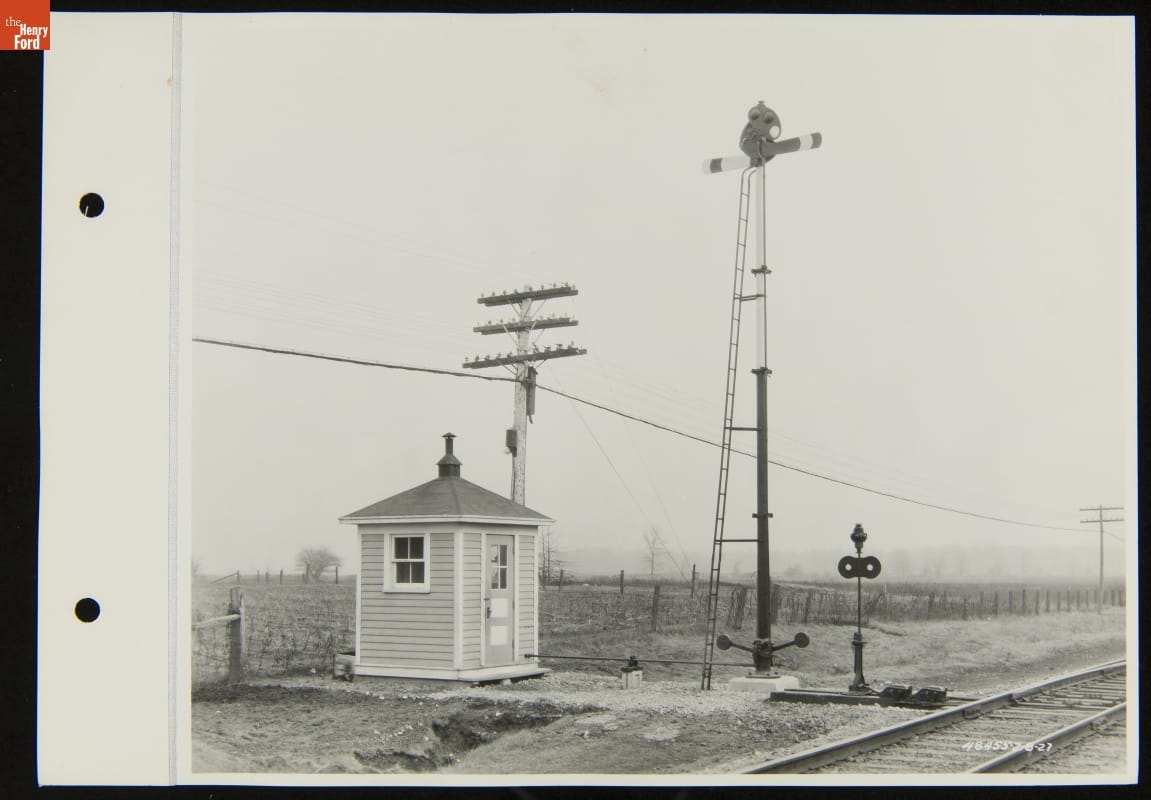
- Railroad Signal Lights, Detroit, Toledo & Ironton Railroad, February 1927 - The DT&I controlled train movements with an automatic block signaling system. The railroad line was sectioned into blocks. An electrical circuit in the track detected if a train was in a given block, or if the track was clear. The circuit then operated semaphore signals, like this one, that instructed an engineer how to proceed depending on the blade's position.
- February 08, 1927
- Collections - Artifact
Railroad Signal Lights, Detroit, Toledo & Ironton Railroad, February 1927
The DT&I controlled train movements with an automatic block signaling system. The railroad line was sectioned into blocks. An electrical circuit in the track detected if a train was in a given block, or if the track was clear. The circuit then operated semaphore signals, like this one, that instructed an engineer how to proceed depending on the blade's position.
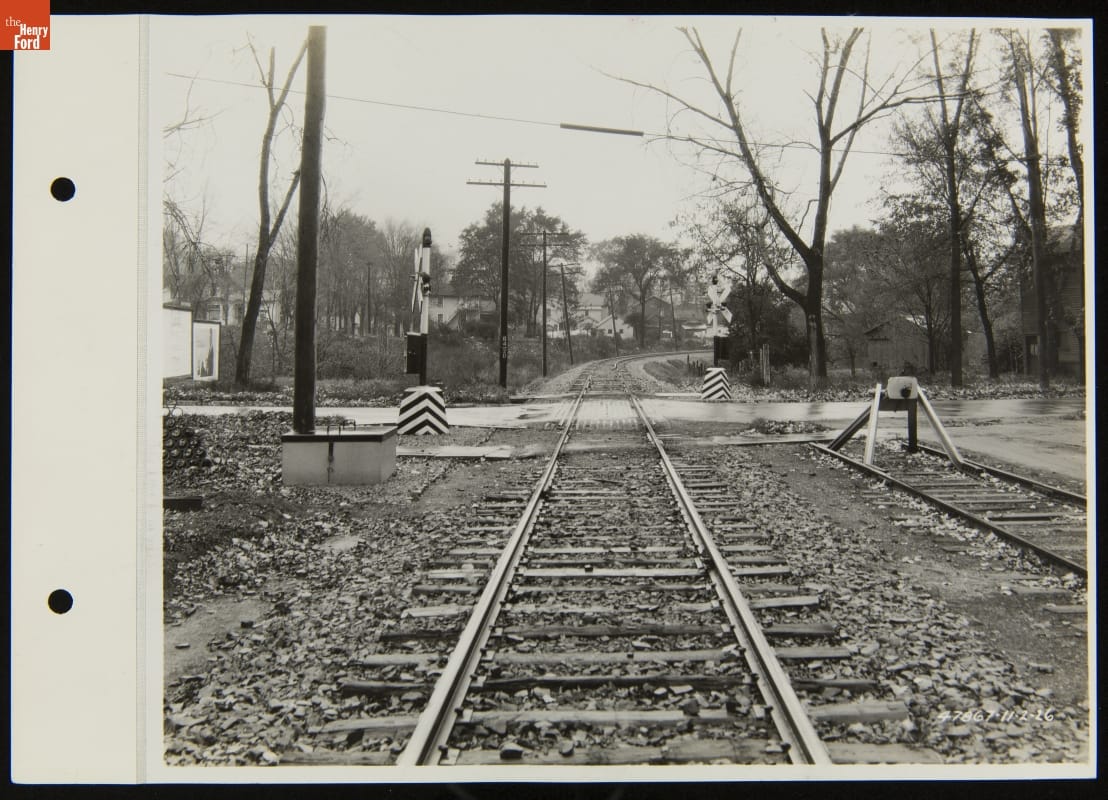
- Railroad Crossing Signal Lights, Detroit, Toledo & Ironton Railroad, November 1926 - Blind curves -- whether on the railroad, the road, or both -- added another element of danger to a railroad crossing. Crossings like this were some of the first to be protected with automated warning devices. The lights and bells on these signs were activated whenever an approaching train tripped an electrical relay wired to the track.
- November 02, 1926
- Collections - Artifact
Railroad Crossing Signal Lights, Detroit, Toledo & Ironton Railroad, November 1926
Blind curves -- whether on the railroad, the road, or both -- added another element of danger to a railroad crossing. Crossings like this were some of the first to be protected with automated warning devices. The lights and bells on these signs were activated whenever an approaching train tripped an electrical relay wired to the track.
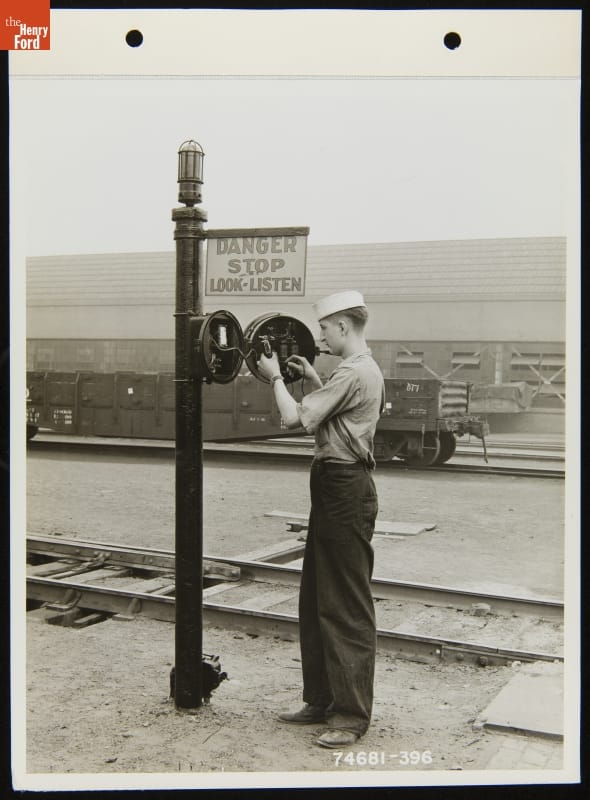
- Checking Railroad Signal Light at the Ford Rouge Plant Navy Service School, 1941-1945 - The United States Navy Service School opened in Dearborn, Michigan, in early 1941. The school was built on land leased to the Navy at Ford's Rouge Plant. Ford also made additional Rouge factory facilities and equipment available for Navy use. Thousands of young Navy recruits graduated as machinists, electricians, and radiomen or acquired other skilled training here during the war years.
- 1941-1945
- Collections - Artifact
Checking Railroad Signal Light at the Ford Rouge Plant Navy Service School, 1941-1945
The United States Navy Service School opened in Dearborn, Michigan, in early 1941. The school was built on land leased to the Navy at Ford's Rouge Plant. Ford also made additional Rouge factory facilities and equipment available for Navy use. Thousands of young Navy recruits graduated as machinists, electricians, and radiomen or acquired other skilled training here during the war years.
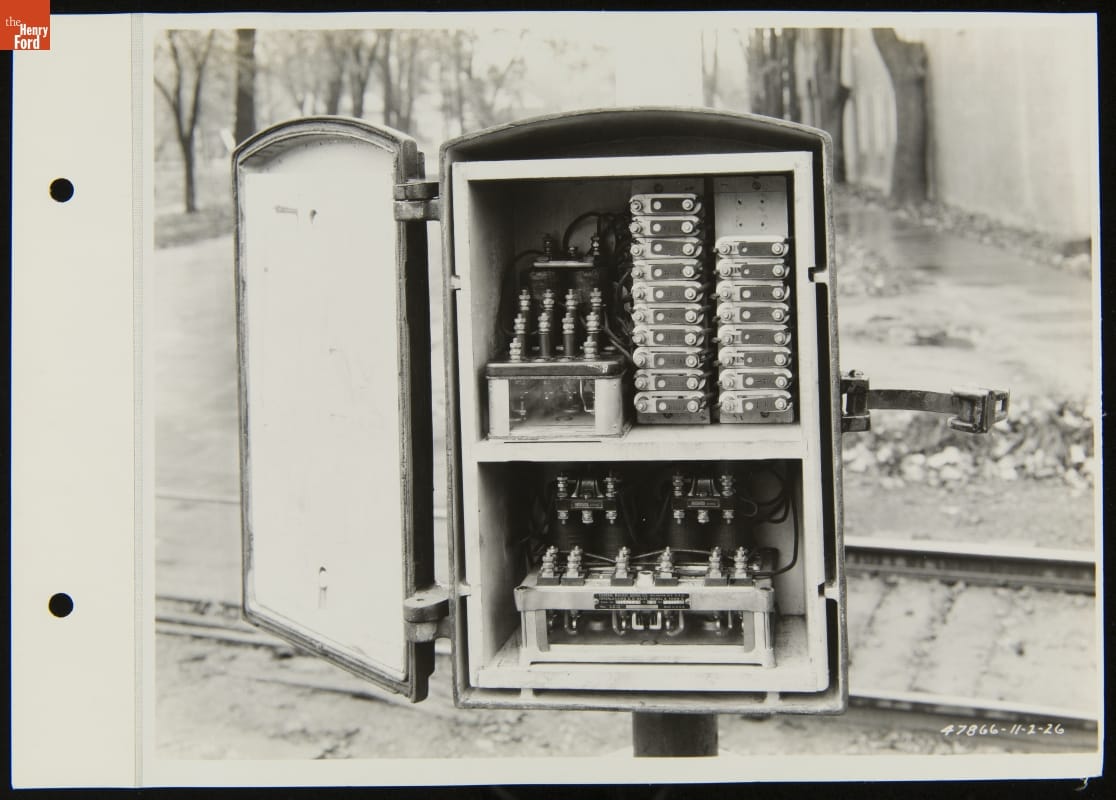
- Railroad Crossing Signal Light Control Box, Detroit, Toledo & Ironton Railroad, November 1926 - Automatic railroad crossing signals are controlled through an electrical relay in the railroad track. A low-voltage electric current is sent between the two rails via a series of relays like the ones in this photo. When a train approaches, the current runs through the train's metal wheels and axles instead of the relays. This "short circuit" activates the crossing signal.
- November 02, 1926
- Collections - Artifact
Railroad Crossing Signal Light Control Box, Detroit, Toledo & Ironton Railroad, November 1926
Automatic railroad crossing signals are controlled through an electrical relay in the railroad track. A low-voltage electric current is sent between the two rails via a series of relays like the ones in this photo. When a train approaches, the current runs through the train's metal wheels and axles instead of the relays. This "short circuit" activates the crossing signal.
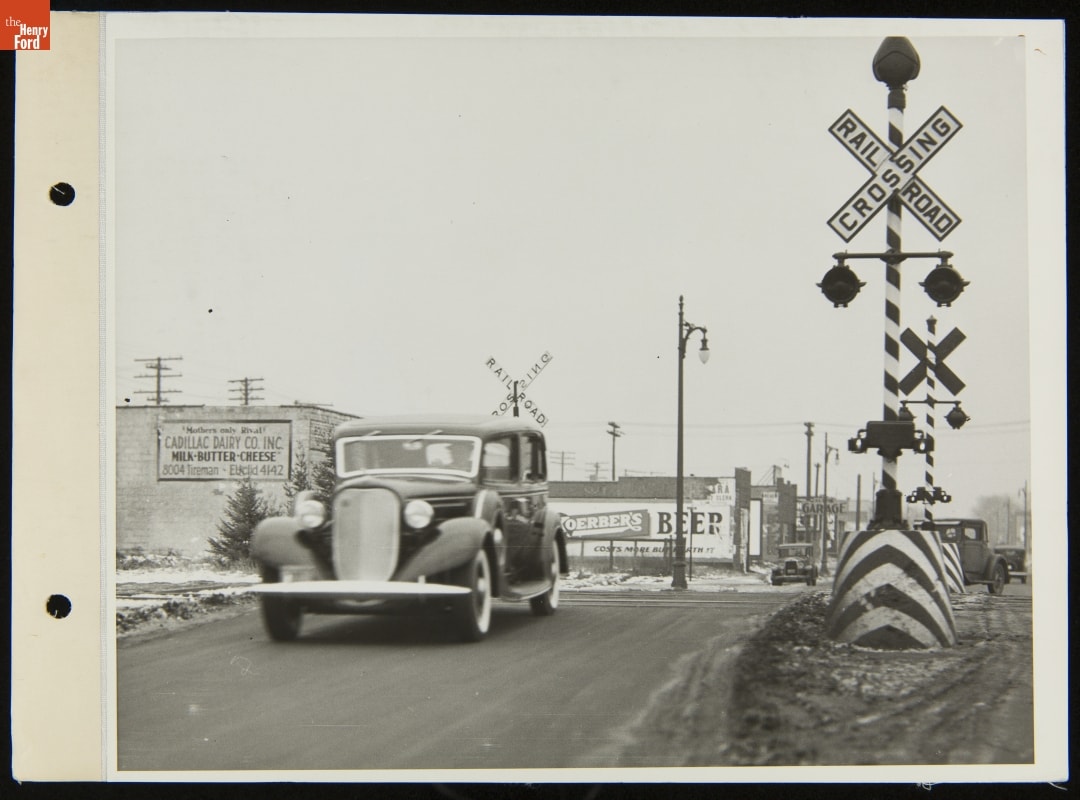
- Lincoln Automobile Driving Over Railroad Crossing, December 1934 - The first automated, flashing red light railroad crossing signal appeared around 1913. The flashing lights mimicked the motion of a lantern being swung back and forth -- long a signal for "stop" on American railroads. The X-shaped crossbuck sign, in wide use by 1900, was inspired by the skull and crossbones -- a universal symbol for danger.
- December 15, 1934
- Collections - Artifact
Lincoln Automobile Driving Over Railroad Crossing, December 1934
The first automated, flashing red light railroad crossing signal appeared around 1913. The flashing lights mimicked the motion of a lantern being swung back and forth -- long a signal for "stop" on American railroads. The X-shaped crossbuck sign, in wide use by 1900, was inspired by the skull and crossbones -- a universal symbol for danger.
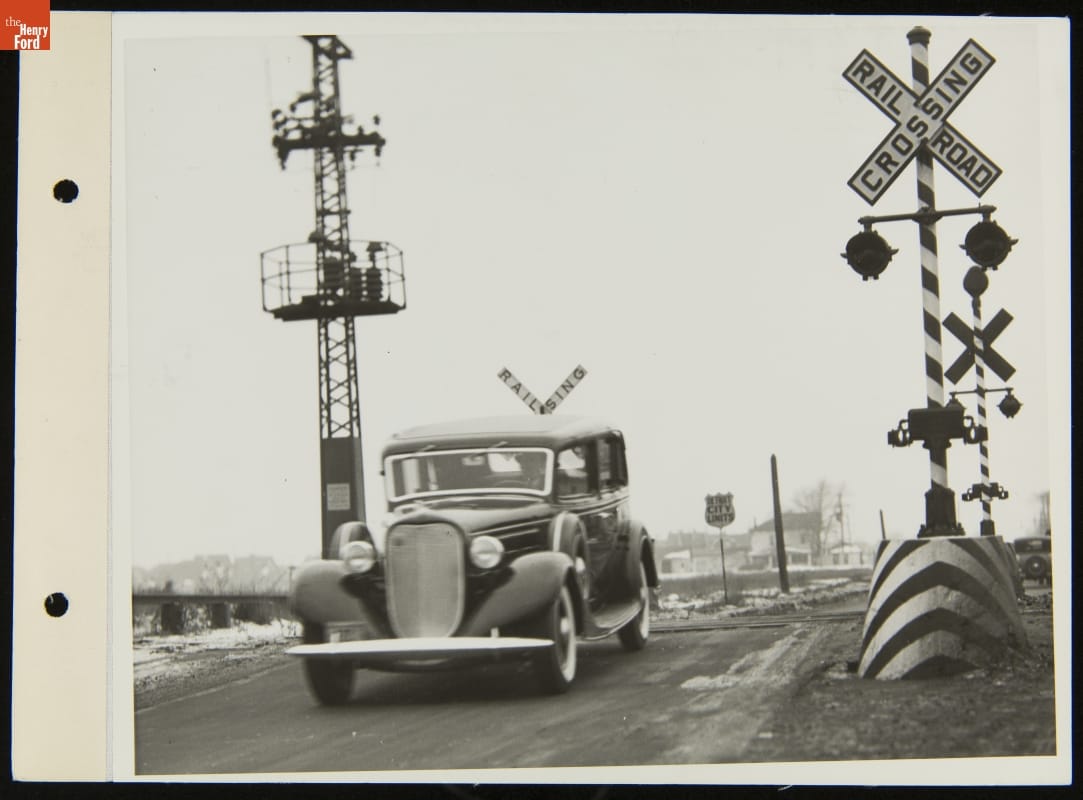
- Lincoln Automobile Driving Over Railroad Crossing, December 1934 - The first automated, flashing red light railroad crossing signal appeared around 1913. The flashing lights mimicked the motion of a lantern being swung back and forth -- long a signal for "stop" on American railroads. The X-shaped crossbuck sign, in wide use by 1900, was inspired by the skull and crossbones -- a universal symbol for danger.
- December 15, 1934
- Collections - Artifact
Lincoln Automobile Driving Over Railroad Crossing, December 1934
The first automated, flashing red light railroad crossing signal appeared around 1913. The flashing lights mimicked the motion of a lantern being swung back and forth -- long a signal for "stop" on American railroads. The X-shaped crossbuck sign, in wide use by 1900, was inspired by the skull and crossbones -- a universal symbol for danger.
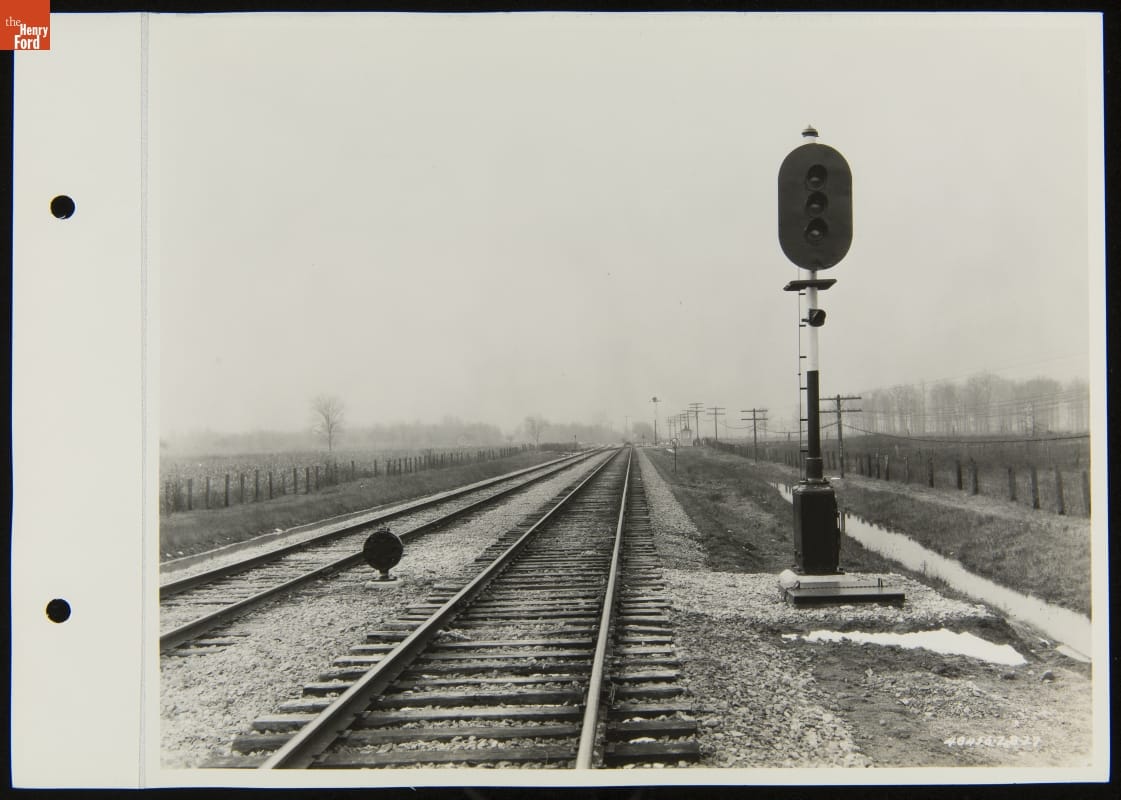
- Railroad Signal Lights, Detroit, Toledo & Ironton Railroad, February 1927 - Traffic on many railroads is controlled by an automatic block signaling system. A railroad line is sectioned into blocks, and an electrical circuit in the track detects whether a train is in a given block. The circuit then operates differently colored signal lights, like these, that instruct an engineer how to proceed -- similar to an automobile traffic light.
- February 08, 1927
- Collections - Artifact
Railroad Signal Lights, Detroit, Toledo & Ironton Railroad, February 1927
Traffic on many railroads is controlled by an automatic block signaling system. A railroad line is sectioned into blocks, and an electrical circuit in the track detects whether a train is in a given block. The circuit then operates differently colored signal lights, like these, that instruct an engineer how to proceed -- similar to an automobile traffic light.
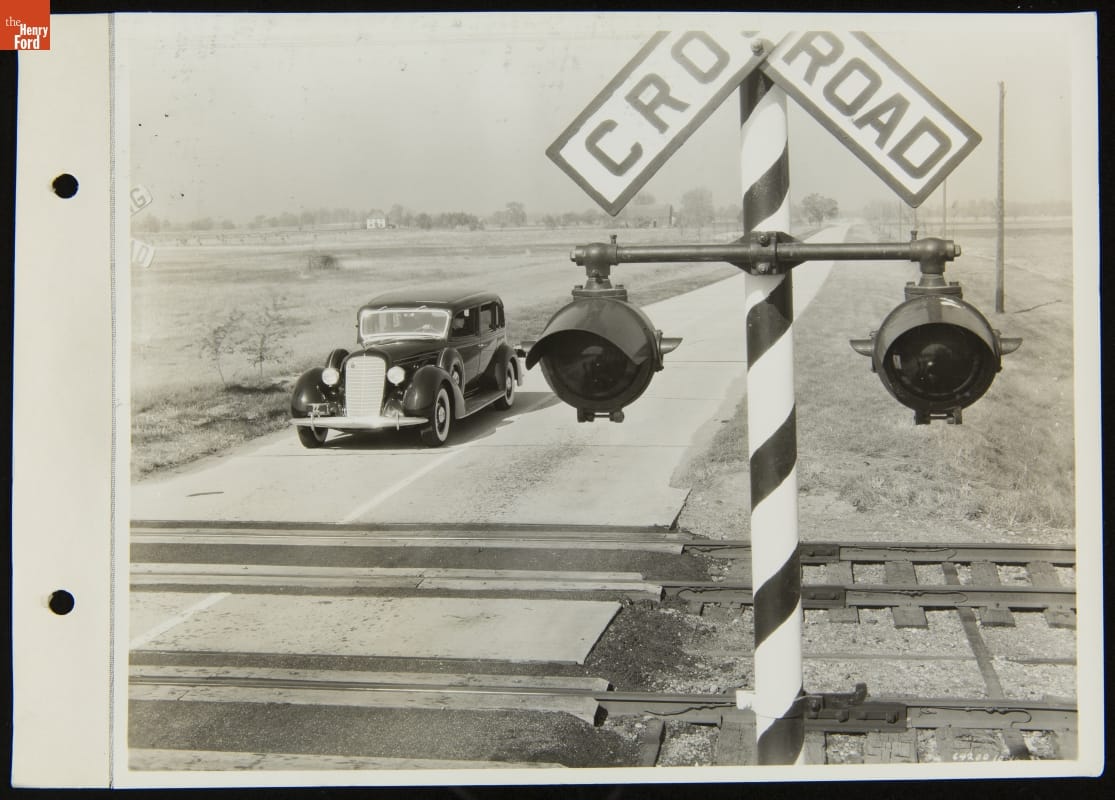
- Car Stopped by Signal Light at Railroad Crossing, October 1935 - The first automated, flashing red light railroad crossing signal appeared around 1913. The flashing lights mimicked the motion of a lantern being swung back and forth -- long a signal for "stop" on American railroads. The X-shaped crossbuck sign, in wide use by 1900, was inspired by the skull and crossbones -- a universal symbol for danger.
- October 16, 1935
- Collections - Artifact
Car Stopped by Signal Light at Railroad Crossing, October 1935
The first automated, flashing red light railroad crossing signal appeared around 1913. The flashing lights mimicked the motion of a lantern being swung back and forth -- long a signal for "stop" on American railroads. The X-shaped crossbuck sign, in wide use by 1900, was inspired by the skull and crossbones -- a universal symbol for danger.
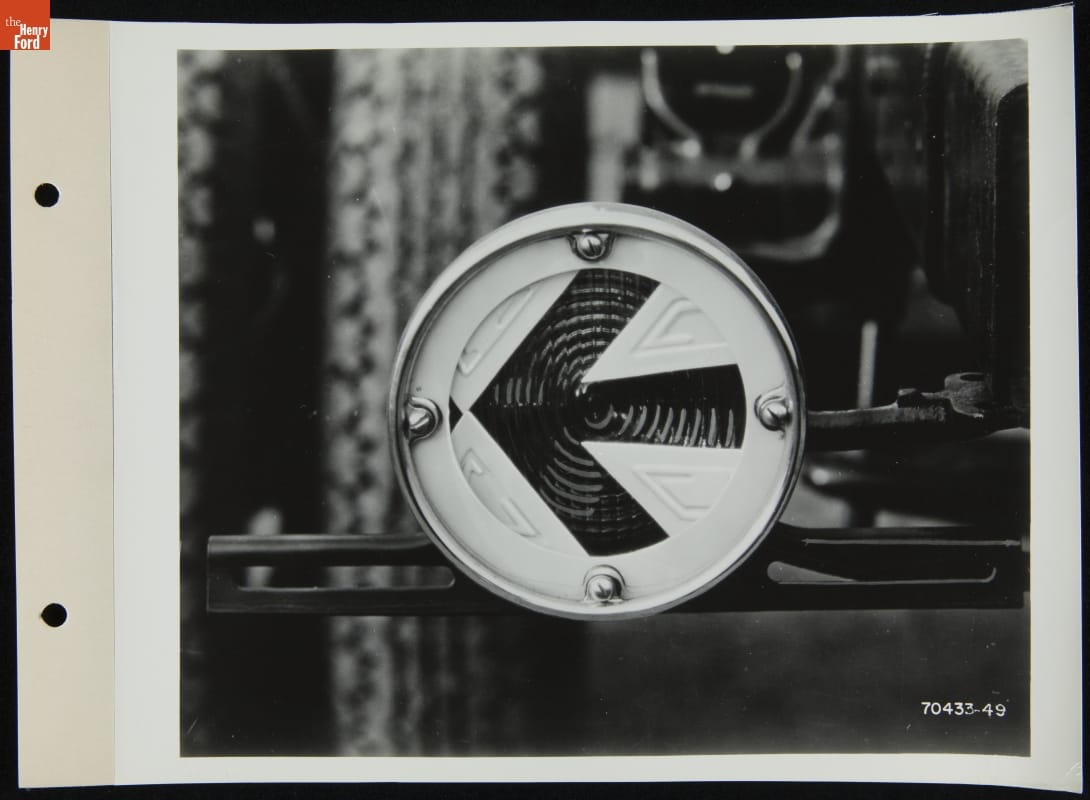
- Left Turn Signal from a Ford Truck, 1938 - Automobile turn signals were available before 1910, but only as aftermarket accessories. Buick was the first American automaker to make them standard equipment, including flashing rear signals on its 1939 models. Other manufacturers followed and, by the mid-1950s, turn signals were a regular feature on American cars. Signals were available on Ford trucks in 1938, but as an added-cost convenience option.
- July 01, 1938
- Collections - Artifact
Left Turn Signal from a Ford Truck, 1938
Automobile turn signals were available before 1910, but only as aftermarket accessories. Buick was the first American automaker to make them standard equipment, including flashing rear signals on its 1939 models. Other manufacturers followed and, by the mid-1950s, turn signals were a regular feature on American cars. Signals were available on Ford trucks in 1938, but as an added-cost convenience option.