
Search
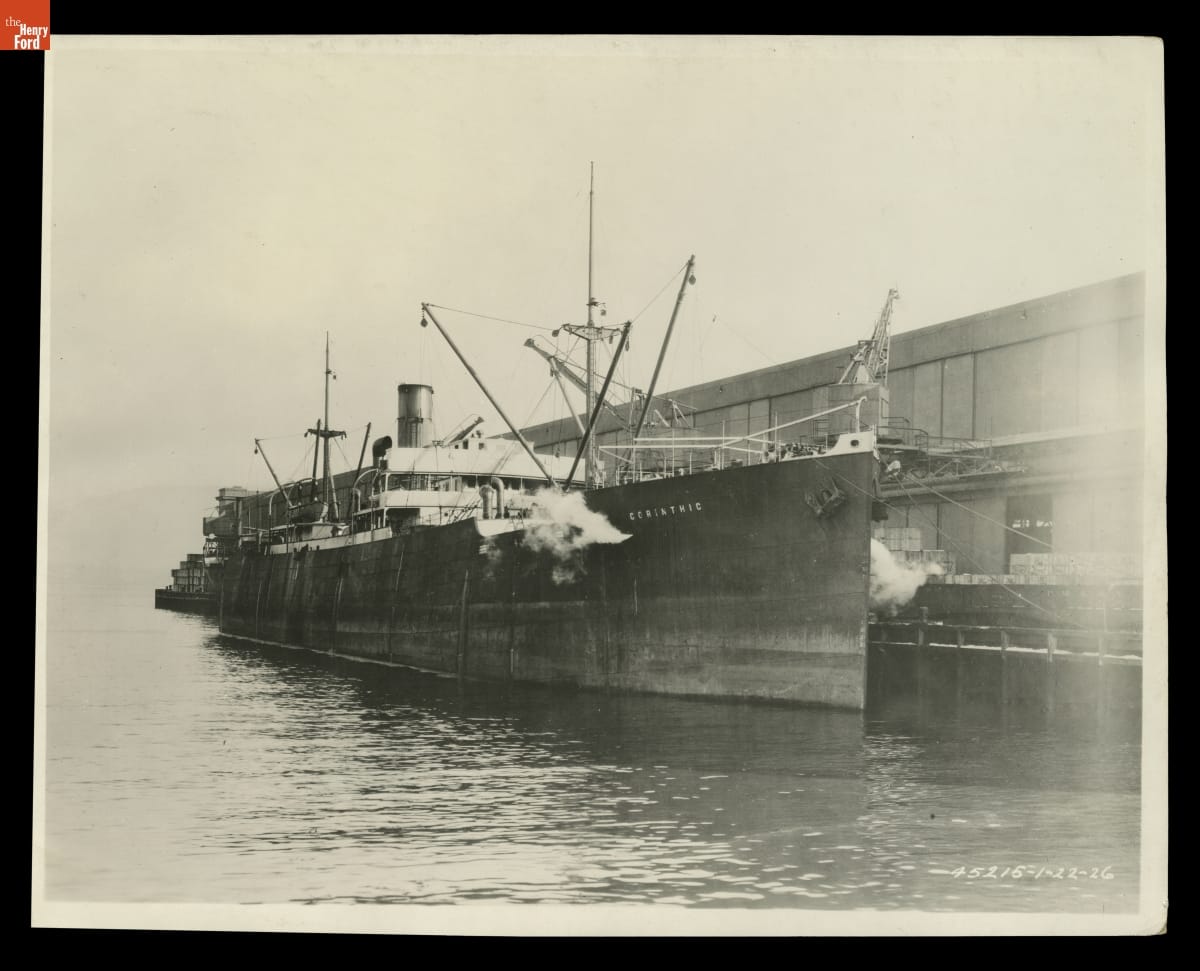
- Ford Motor Company Ship "Corinthic" Docked at the Ford Rouge Plant, January 1926 - The cargo ship <em>Corinthic</em> was launched in 1924 and operated out of Great Britain. The 390-foot-long vessel was powered by a three-cylinder triple-expansion steam engine, and it had a capacity of more than 4,800 tons. During World War II, <em>Corinthic</em> was sunk by torpedoes fired from a German submarine. Two of the ship's crewmembers were killed in the 1941 attack.
- January 22, 1926
- Collections - Artifact
Ford Motor Company Ship "Corinthic" Docked at the Ford Rouge Plant, January 1926
The cargo ship Corinthic was launched in 1924 and operated out of Great Britain. The 390-foot-long vessel was powered by a three-cylinder triple-expansion steam engine, and it had a capacity of more than 4,800 tons. During World War II, Corinthic was sunk by torpedoes fired from a German submarine. Two of the ship's crewmembers were killed in the 1941 attack.
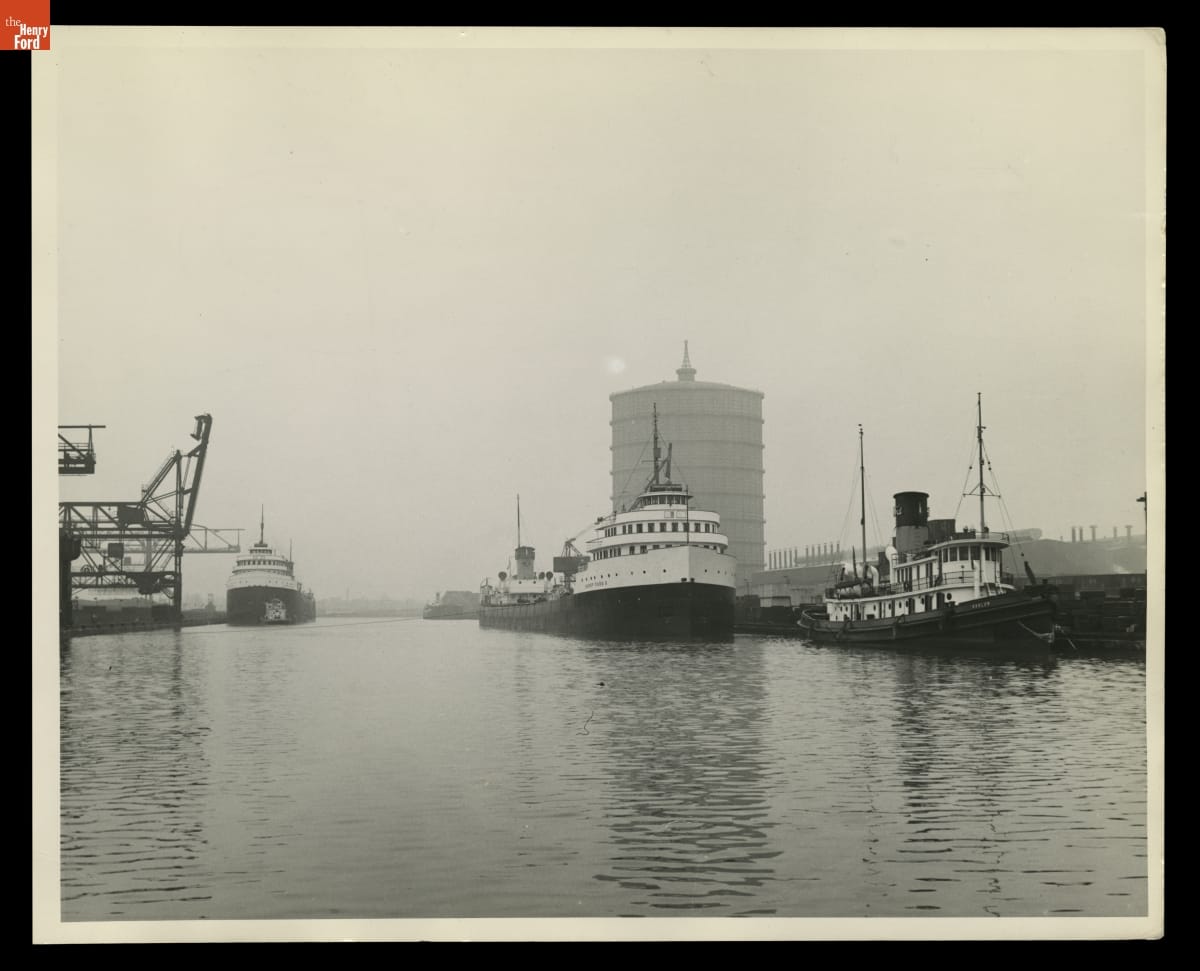
- Ford Motor Company Ships "Henry Ford II" and "Benson Ford" at Ford Rouge Plant, May 1943 - Henry Ford had two ore freighters built in 1924 and named them after his grandsons, Henry Ford II and Benson Ford. The ships traveled the Great Lakes, transporting raw materials to and from Ford's Rouge manufacturing complex. This photograph shows the <em>Benson Ford</em> and the <em>Henry Ford II</em> docked at the Rouge in 1943.
- May 31, 1943
- Collections - Artifact
Ford Motor Company Ships "Henry Ford II" and "Benson Ford" at Ford Rouge Plant, May 1943
Henry Ford had two ore freighters built in 1924 and named them after his grandsons, Henry Ford II and Benson Ford. The ships traveled the Great Lakes, transporting raw materials to and from Ford's Rouge manufacturing complex. This photograph shows the Benson Ford and the Henry Ford II docked at the Rouge in 1943.
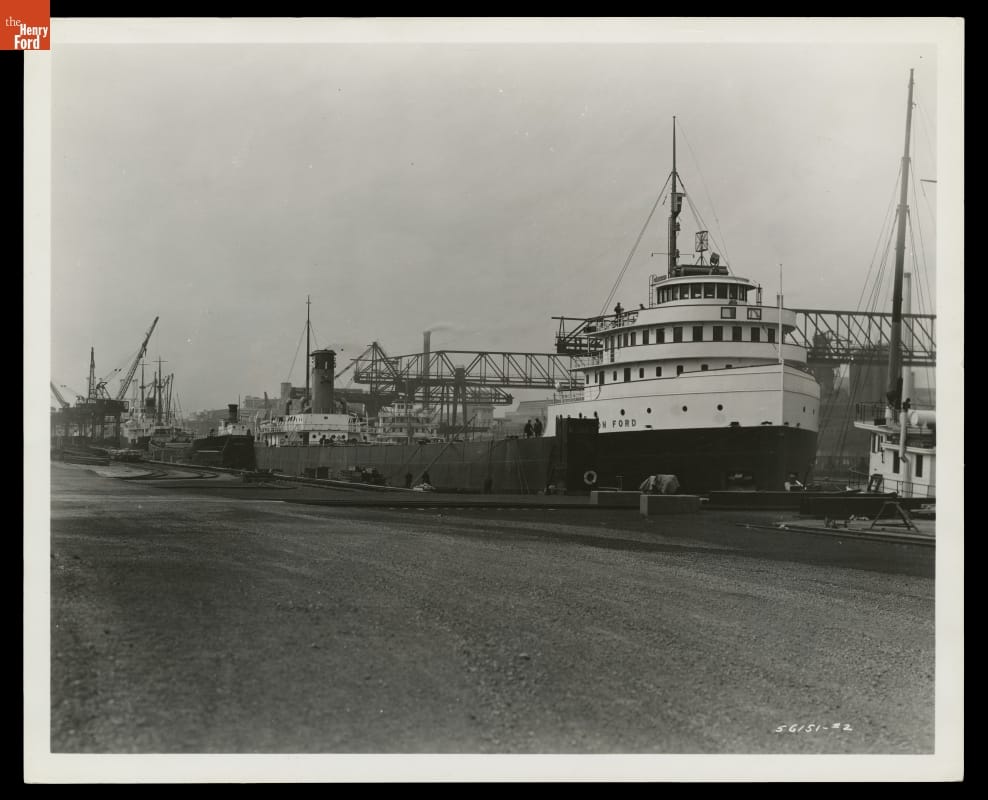
- Ford Motor Company Ship "Benson Ford" Docked at the Rouge Plant, Dearborn, Michigan, 1951 - Ford Motor Company's ore carrier <EM>Benson Ford</EM> is seen docked at Ford's Rouge plant in Dearborn, Michigan. Built in 1924, the <EM>Benson Ford</EM> carried iron ore from Duluth, Minnesota, to the Rouge, where the ore was processed into steel. The <EM>Benson Ford</EM> was decommissioned in 1981.
- April 28, 1931
- Collections - Artifact
Ford Motor Company Ship "Benson Ford" Docked at the Rouge Plant, Dearborn, Michigan, 1951
Ford Motor Company's ore carrier Benson Ford is seen docked at Ford's Rouge plant in Dearborn, Michigan. Built in 1924, the Benson Ford carried iron ore from Duluth, Minnesota, to the Rouge, where the ore was processed into steel. The Benson Ford was decommissioned in 1981.
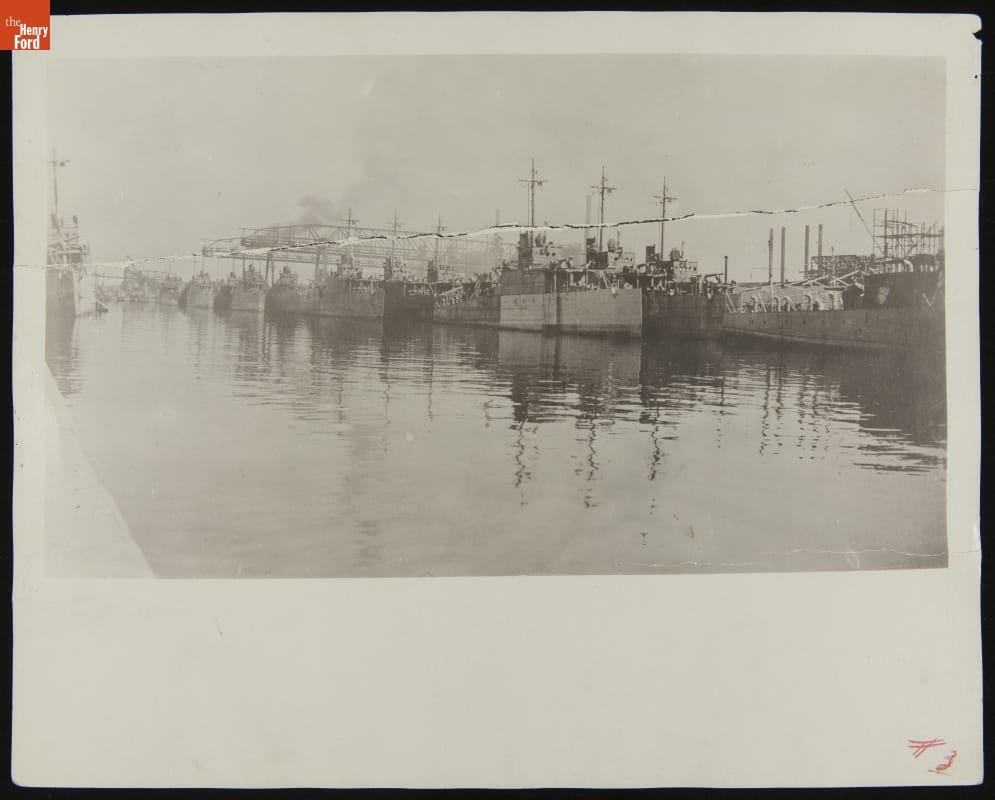
- Eagle Boats Docked at the Ford Rouge Plant, 1918 - During World War I, Ford Motor Company built 60 Eagle anti-submarine patrol boats for the U.S. Navy. Manufactured in Dearborn on the Rouge River, the boats reached the Atlantic via the Detroit River, Lakes Erie and Ontario, and the St. Lawrence River. Many of the Eagles then went to the Navy's base at New London, Connecticut, to await their assignments.
- circa 1918
- Collections - Artifact
Eagle Boats Docked at the Ford Rouge Plant, 1918
During World War I, Ford Motor Company built 60 Eagle anti-submarine patrol boats for the U.S. Navy. Manufactured in Dearborn on the Rouge River, the boats reached the Atlantic via the Detroit River, Lakes Erie and Ontario, and the St. Lawrence River. Many of the Eagles then went to the Navy's base at New London, Connecticut, to await their assignments.
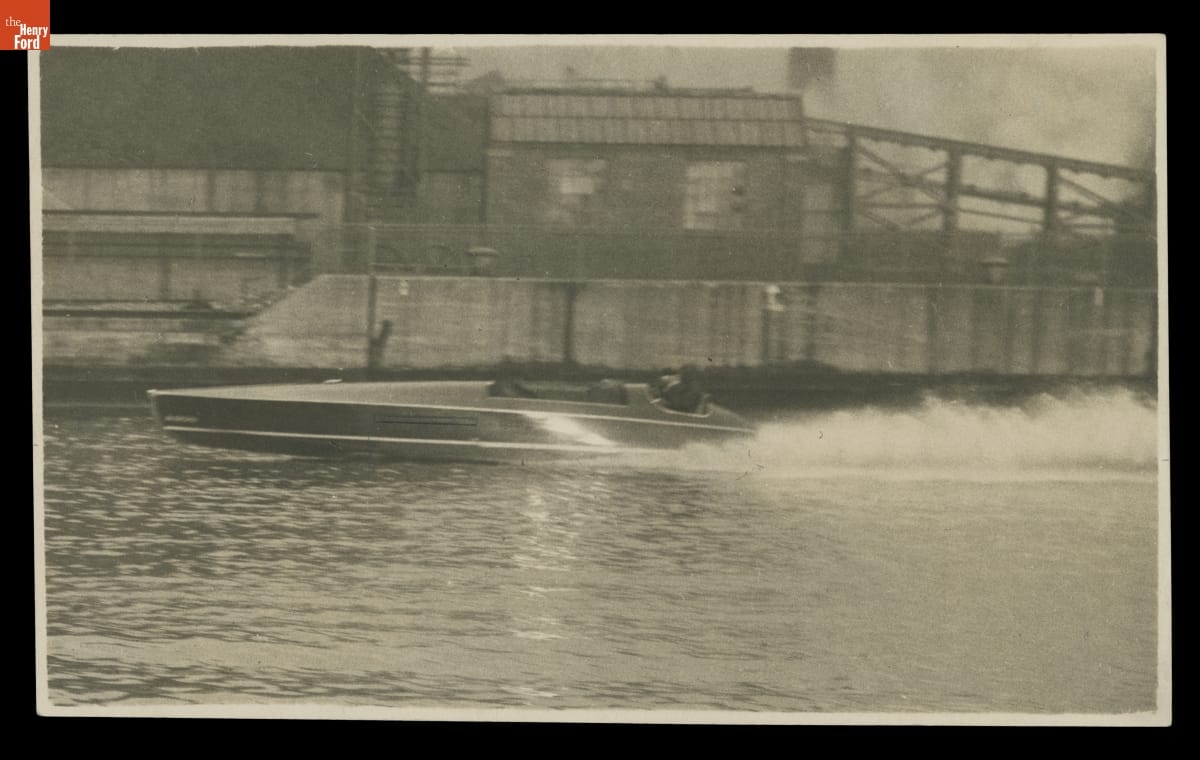
- Edsel Ford's Speedboat, "Nine Ninety Nine," in the Ford Rouge Plant Boat Slip, circa 1924 - Edsel Ford named his speedboat <em>Nine Ninety Nine</em> in tribute to the "999" race car built by his father in 1902. The younger Ford enjoyed spending time on the water, whether sailing for pleasure on a yacht or racing at top speed in a powerboat.
- circa 1924
- Collections - Artifact
Edsel Ford's Speedboat, "Nine Ninety Nine," in the Ford Rouge Plant Boat Slip, circa 1924
Edsel Ford named his speedboat Nine Ninety Nine in tribute to the "999" race car built by his father in 1902. The younger Ford enjoyed spending time on the water, whether sailing for pleasure on a yacht or racing at top speed in a powerboat.
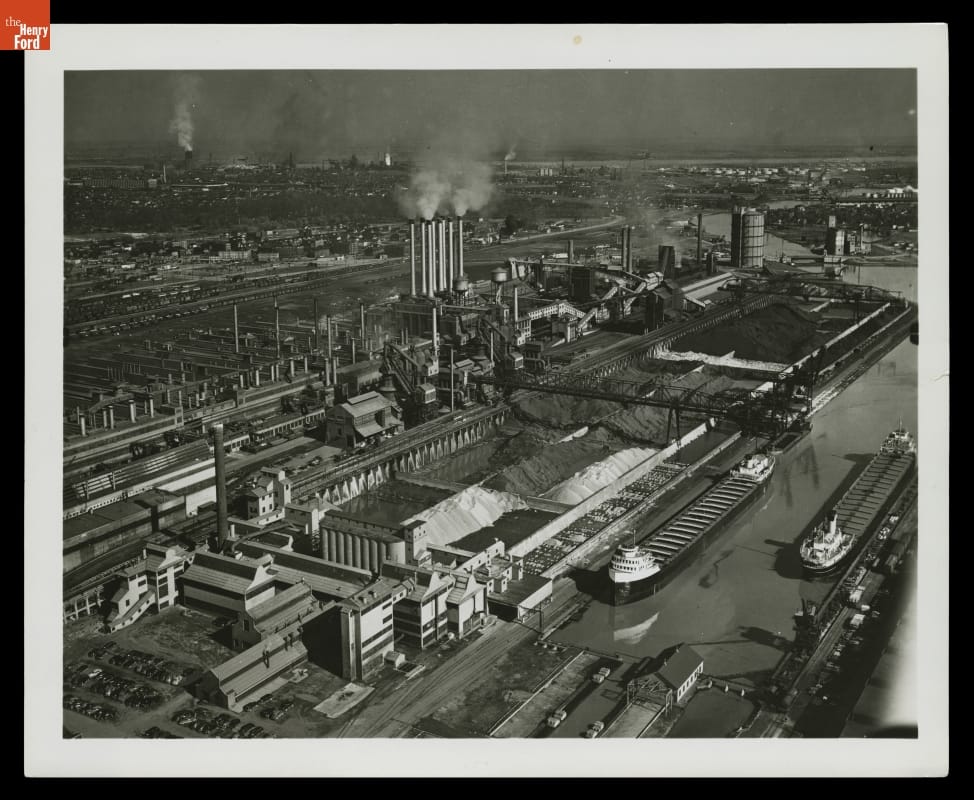
- Aerial View of Ford Rouge Plant Complex, 1948 - Ford Motor Company built the Rouge Plant with the ability to create automobiles from raw materials. In this photograph, the boat docks and huge coal, iron ore and limestone bins are visible. In 1948, about 850,000 tons of ore and 2,500,000 tons of coal arrived by boat and filled these bins to be used towards building Ford cars.
- January 12, 1948
- Collections - Artifact
Aerial View of Ford Rouge Plant Complex, 1948
Ford Motor Company built the Rouge Plant with the ability to create automobiles from raw materials. In this photograph, the boat docks and huge coal, iron ore and limestone bins are visible. In 1948, about 850,000 tons of ore and 2,500,000 tons of coal arrived by boat and filled these bins to be used towards building Ford cars.
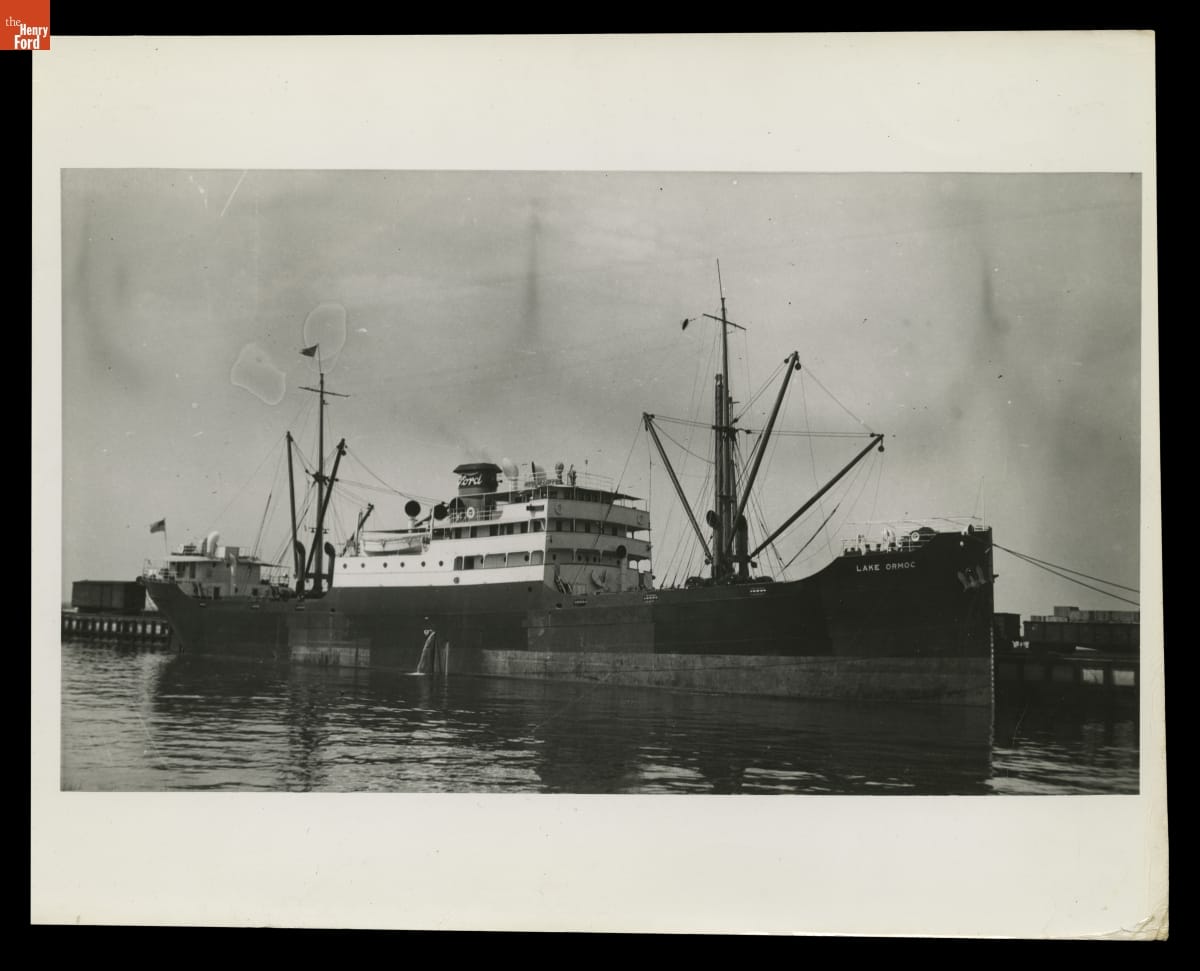
- Ford Motor Company Ship "Lake Ormoc" Docked at Ford Rouge Plant, July 1938 - Henry Ford purchased 199 surplus World War I merchant ships from the United States government in 1925. Most of these ships were scrapped. But a few, like the <em>Lake Ormoc</em>, were refitted into ocean-going freighters. In 1928, Ford sent the <em>Lake Ormoc</em> to help establish his rubber plantation in Brazil. The vessel would later transport car and tractor parts to Ford plants along the American seaboard.
- July 21, 1938
- Collections - Artifact
Ford Motor Company Ship "Lake Ormoc" Docked at Ford Rouge Plant, July 1938
Henry Ford purchased 199 surplus World War I merchant ships from the United States government in 1925. Most of these ships were scrapped. But a few, like the Lake Ormoc, were refitted into ocean-going freighters. In 1928, Ford sent the Lake Ormoc to help establish his rubber plantation in Brazil. The vessel would later transport car and tractor parts to Ford plants along the American seaboard.
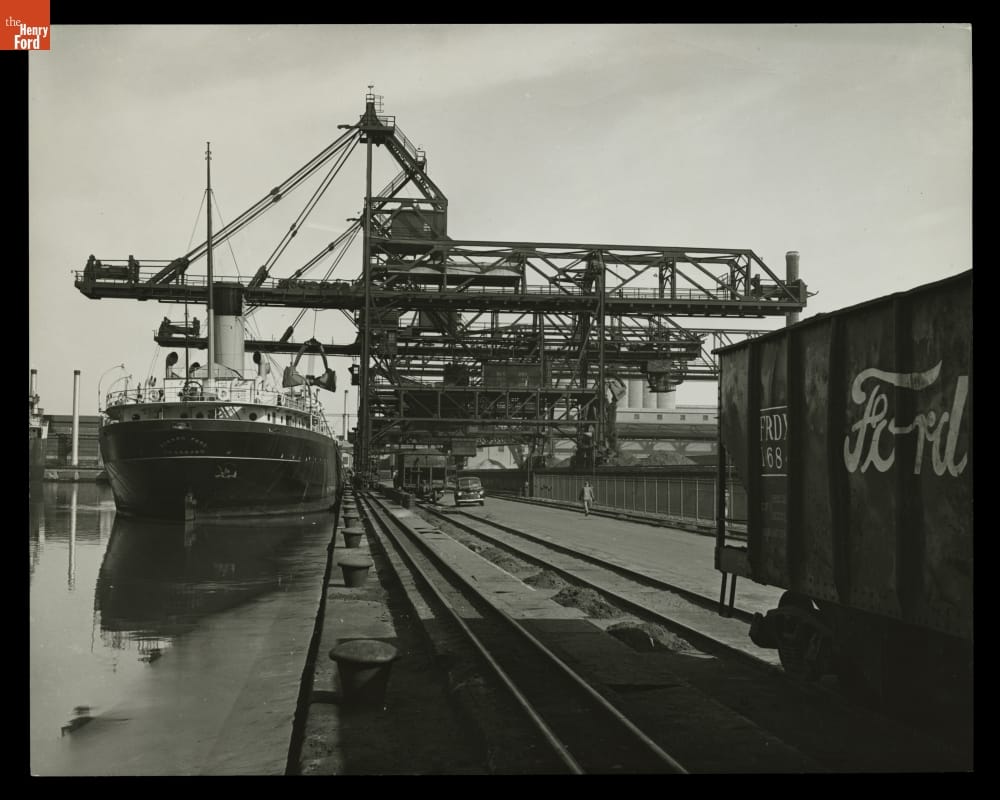
- Ford Motor Company Ore Carrier MS Benson Ford at the Rouge Plant, circa 1948 - Ford Motor Company's ore carrier <EM>Benson Ford</EM> is seen docked at Ford's Rouge plant in Dearborn, Michigan. Built in 1924, the <EM>Benson Ford</EM> carried iron ore from Duluth, Minnesota, to the Rouge, where the ore was processed into steel. The <EM>Benson Ford</EM> was decommissioned in 1981.
- circa 1948
- Collections - Artifact
Ford Motor Company Ore Carrier MS Benson Ford at the Rouge Plant, circa 1948
Ford Motor Company's ore carrier Benson Ford is seen docked at Ford's Rouge plant in Dearborn, Michigan. Built in 1924, the Benson Ford carried iron ore from Duluth, Minnesota, to the Rouge, where the ore was processed into steel. The Benson Ford was decommissioned in 1981.
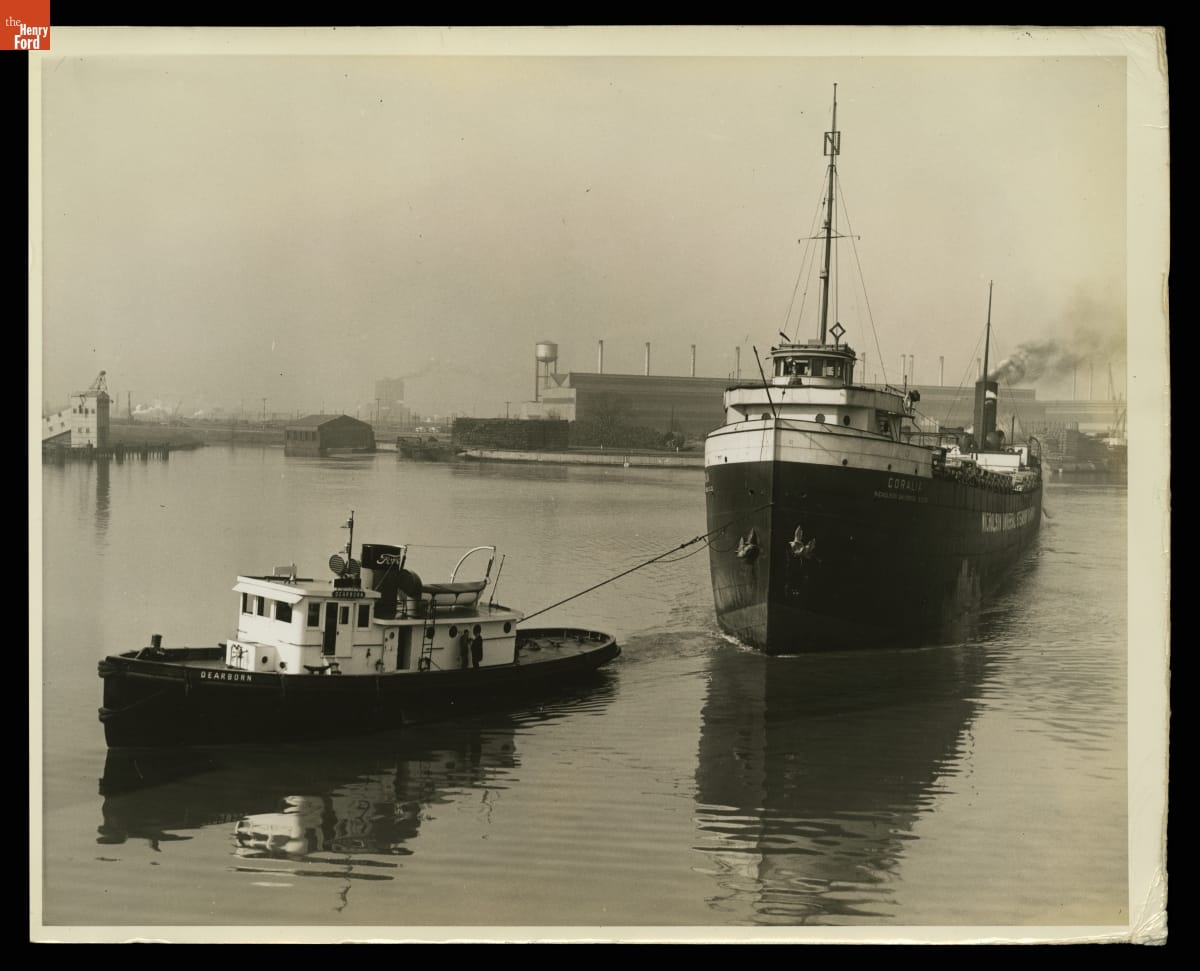
- SS Coralia Transporting Automobiles from Ford Motor Company Rouge Plant, Dearborn, Michigan, March 1937 - The <em>Coralia</em>, originally launched in 1896 as a Great Lakes bulk freighter, was converted into an auto carrier in the late 1920s. This photograph shows the <em>Coralia</em> towed by the Ford Motor Company's tugboat <em>Dearborn</em>. The <em>Dearborn</em> worked mainly in the Ford Rouge plant's harbor, shuttling barges between the harbor and the Rouge River proper.
- March 03, 1937
- Collections - Artifact
SS Coralia Transporting Automobiles from Ford Motor Company Rouge Plant, Dearborn, Michigan, March 1937
The Coralia, originally launched in 1896 as a Great Lakes bulk freighter, was converted into an auto carrier in the late 1920s. This photograph shows the Coralia towed by the Ford Motor Company's tugboat Dearborn. The Dearborn worked mainly in the Ford Rouge plant's harbor, shuttling barges between the harbor and the Rouge River proper.
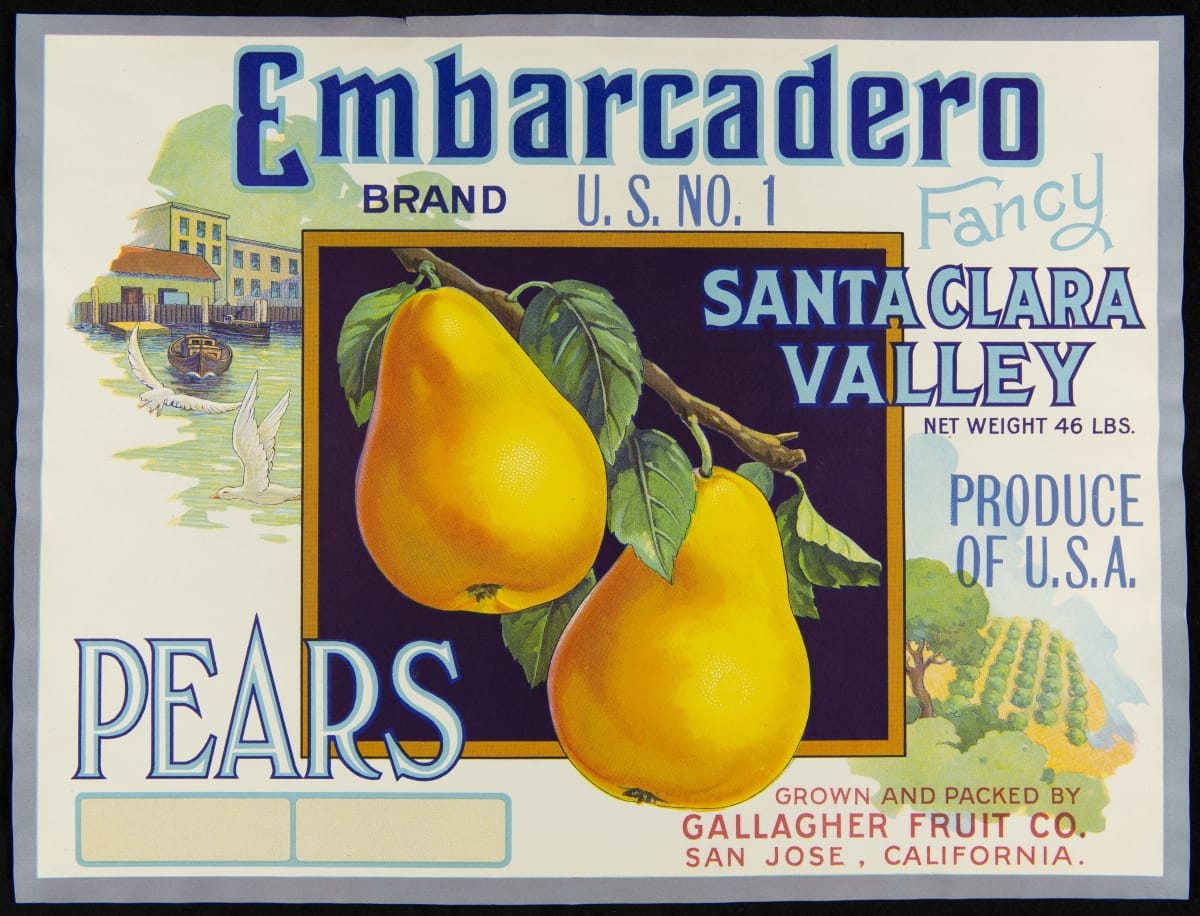
- Crate Label, "Embarcadero Brand Pears," 1931 - In 1869, the transcontinental railroad opened eastern markets to the West Coast produce industry for the first time. As produce companies shipped crates of fruits and vegetables across the country, they needed a way to distinguish their goods from their competitors'. Colorful, eye-catching labels, like this one for Embarcadero Brand Pears, were created to attract grocers purchasing goods from wholesale markets.
- 1931
- Collections - Artifact
Crate Label, "Embarcadero Brand Pears," 1931
In 1869, the transcontinental railroad opened eastern markets to the West Coast produce industry for the first time. As produce companies shipped crates of fruits and vegetables across the country, they needed a way to distinguish their goods from their competitors'. Colorful, eye-catching labels, like this one for Embarcadero Brand Pears, were created to attract grocers purchasing goods from wholesale markets.