
Search
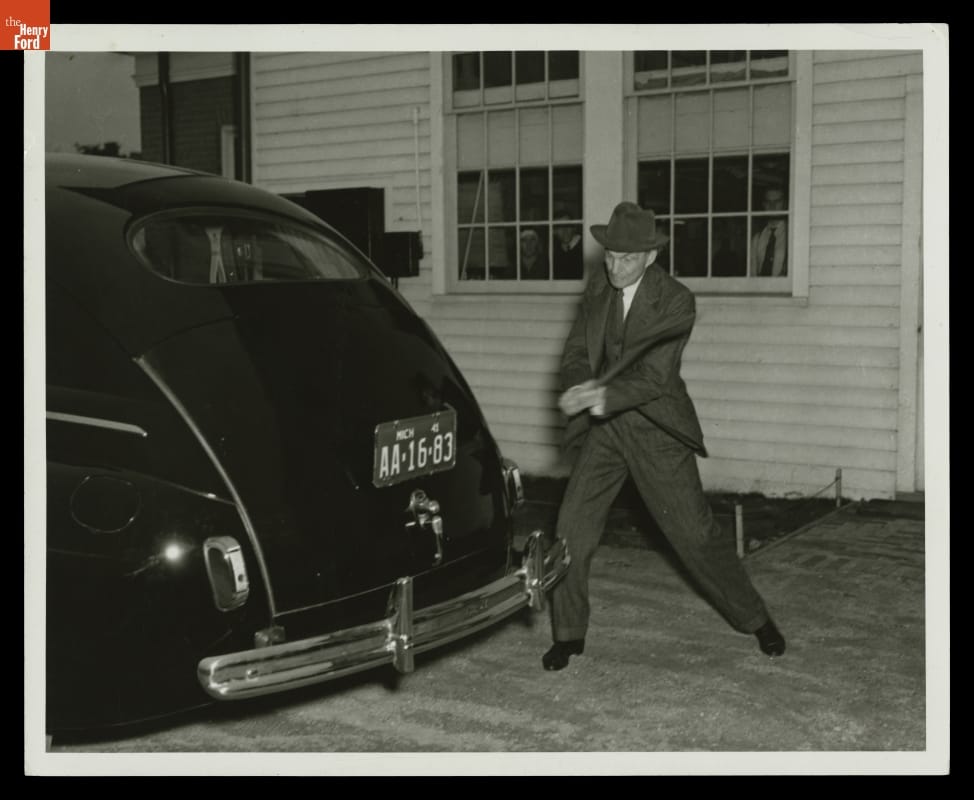
- Henry Ford Hitting Soybean Plastic Trunk with an Axe, 1940 - Henry Ford hoped that plastic made from soybeans might be developed into a strong, safe substitute for traditional metals. He established a laboratory where scientists molded ground soybean meal into small plastic car parts. Here, Ford swings an ax at a plastic trunk lid -- mounted to his personal car -- to demonstrate the material's strength.
- November 02, 1940
- Collections - Artifact
Henry Ford Hitting Soybean Plastic Trunk with an Axe, 1940
Henry Ford hoped that plastic made from soybeans might be developed into a strong, safe substitute for traditional metals. He established a laboratory where scientists molded ground soybean meal into small plastic car parts. Here, Ford swings an ax at a plastic trunk lid -- mounted to his personal car -- to demonstrate the material's strength.
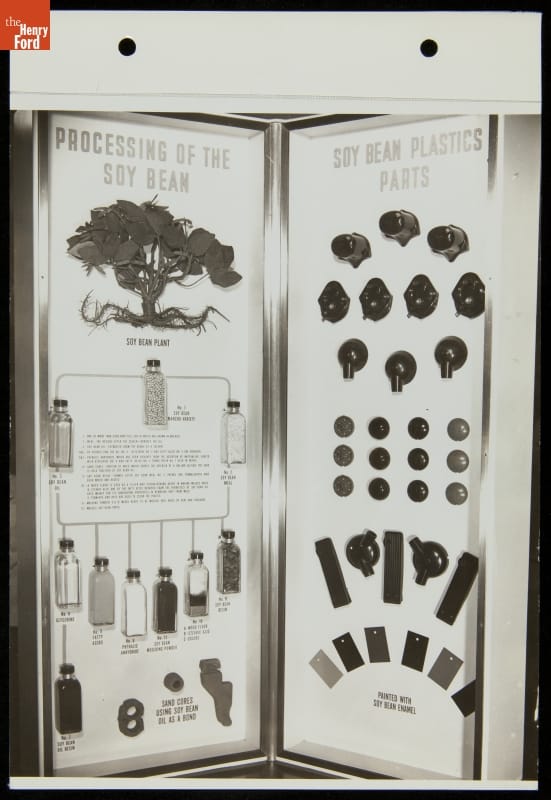
- Soy Bean Display, "Ford Cycle of Production," Ford Exposition, New York World's Fair, 1940 - Ford Motor Company poured resources into the 1939-40 New York World's Fair, spending more than $5 million to construct and maintain its elaborate and well-attended exposition space. Ford's massive exhibition building attracted fairgoers with industrial demonstrations and informative displays. The huge, revolving "Ford Cycle of Production" - which explained how raw materials became Ford automobile parts - particularly impressed visitors.
- January 08, 1940
- Collections - Artifact
Soy Bean Display, "Ford Cycle of Production," Ford Exposition, New York World's Fair, 1940
Ford Motor Company poured resources into the 1939-40 New York World's Fair, spending more than $5 million to construct and maintain its elaborate and well-attended exposition space. Ford's massive exhibition building attracted fairgoers with industrial demonstrations and informative displays. The huge, revolving "Ford Cycle of Production" - which explained how raw materials became Ford automobile parts - particularly impressed visitors.
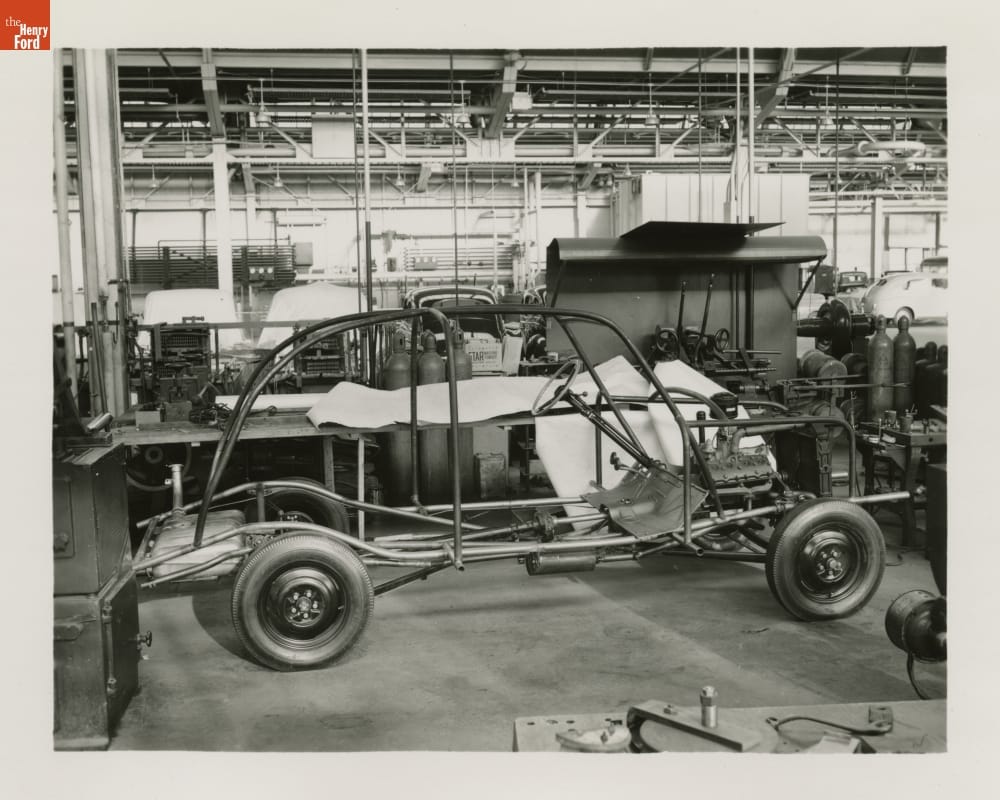
- Tubular Steel Frame and Chassis for Ford Motor Company's Soybean Car, 1941 - In the 1930s, chemists doing research at Ford's Greenfield Village laboratory discovered that soy-based plastics could be molded into thick, hard sheets. The scientists created prototypes of automobile body parts, like trunk lids. Soon, they envisioned a car with a complete soy-plastic body. Henry Ford unveiled this experimental vehicle in 1941. The "Soybean Car" was abandoned with the U.S. entry into World War II.
- February 24, 1941
- Collections - Artifact
Tubular Steel Frame and Chassis for Ford Motor Company's Soybean Car, 1941
In the 1930s, chemists doing research at Ford's Greenfield Village laboratory discovered that soy-based plastics could be molded into thick, hard sheets. The scientists created prototypes of automobile body parts, like trunk lids. Soon, they envisioned a car with a complete soy-plastic body. Henry Ford unveiled this experimental vehicle in 1941. The "Soybean Car" was abandoned with the U.S. entry into World War II.
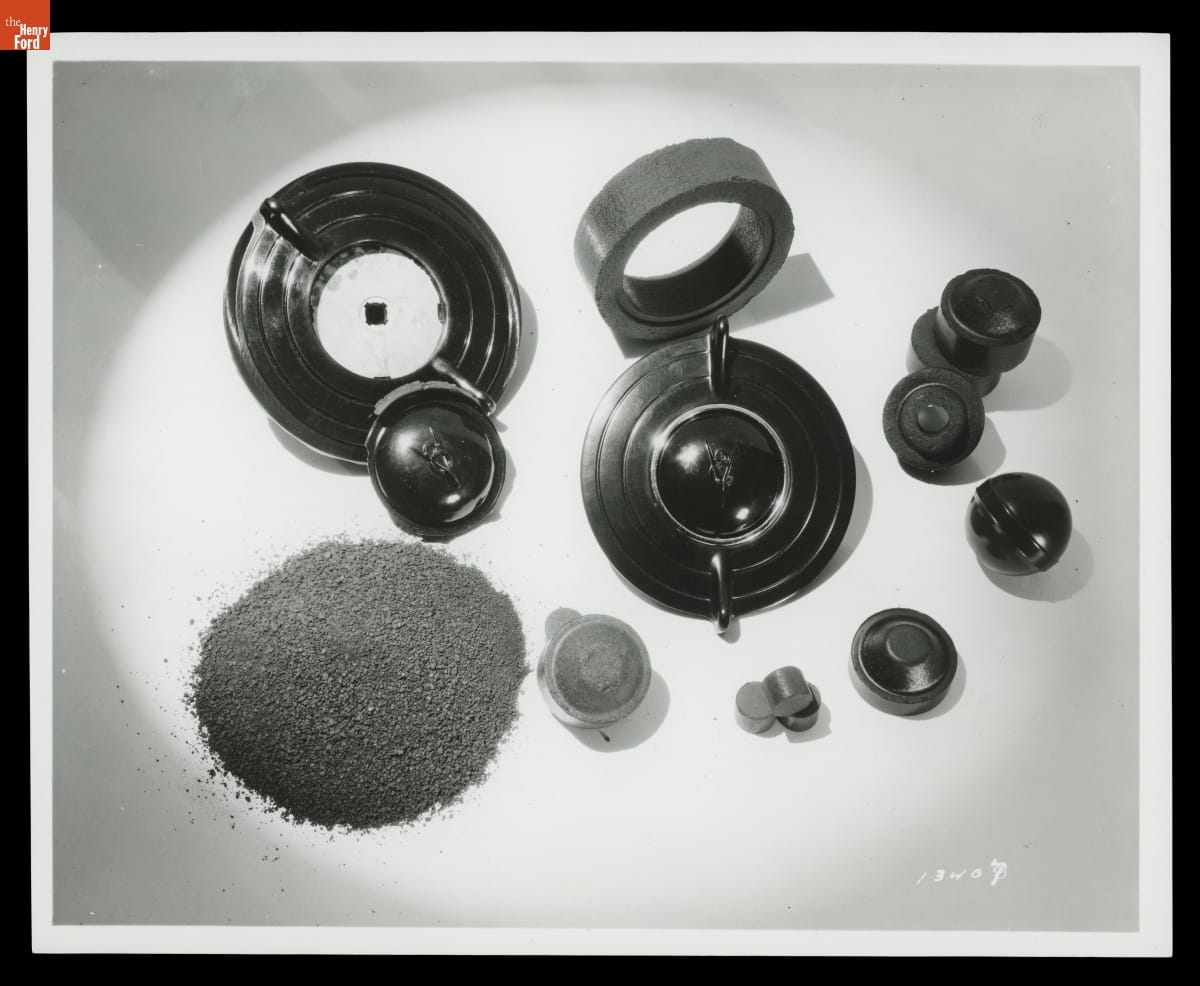
- Plastic Automobile Parts Made from Soybeans, 1935 -
- 1935
- Collections - Artifact
Plastic Automobile Parts Made from Soybeans, 1935
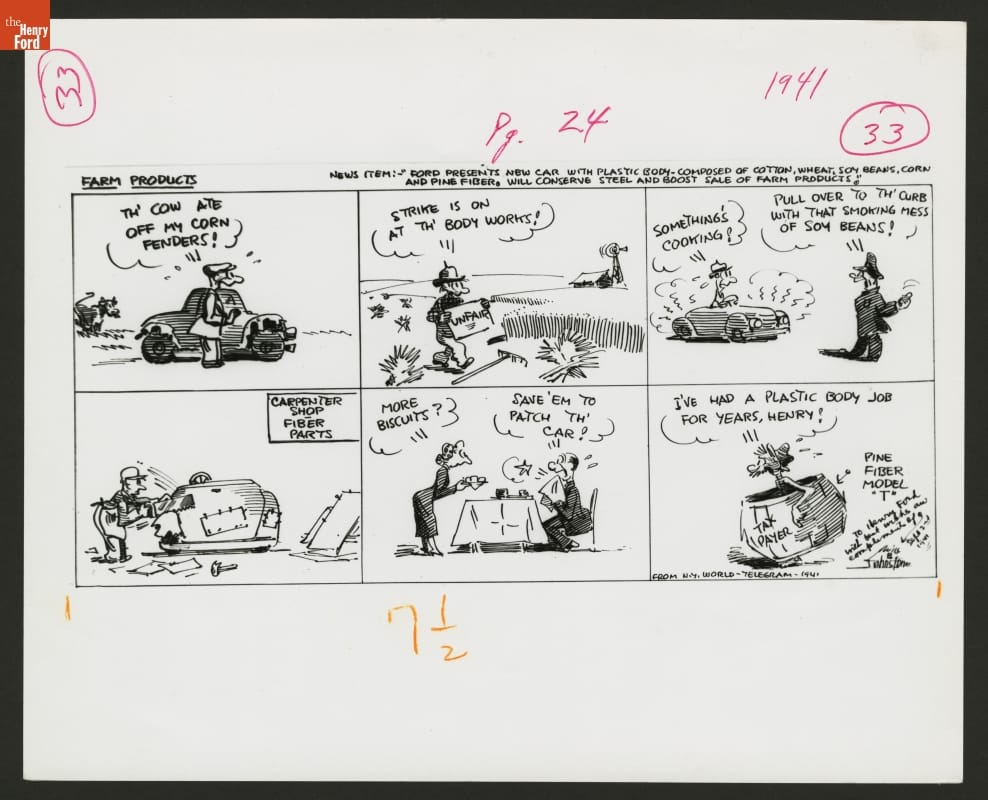
- Cartoons Poking Fun at the Ford Soybean Car, 1941 - In the 1930s, chemists doing research at Ford's Greenfield Village laboratory discovered that soy-based plastics could be molded into thick, hard sheets. The scientists created prototypes of automobile body parts, like trunk lids. Soon, they envisioned a car with a complete soy-plastic body. Henry Ford unveiled this experimental vehicle in 1941. The "Soybean Car" was abandoned with the U.S. entry into World War II.
- 1941
- Collections - Artifact
Cartoons Poking Fun at the Ford Soybean Car, 1941
In the 1930s, chemists doing research at Ford's Greenfield Village laboratory discovered that soy-based plastics could be molded into thick, hard sheets. The scientists created prototypes of automobile body parts, like trunk lids. Soon, they envisioned a car with a complete soy-plastic body. Henry Ford unveiled this experimental vehicle in 1941. The "Soybean Car" was abandoned with the U.S. entry into World War II.
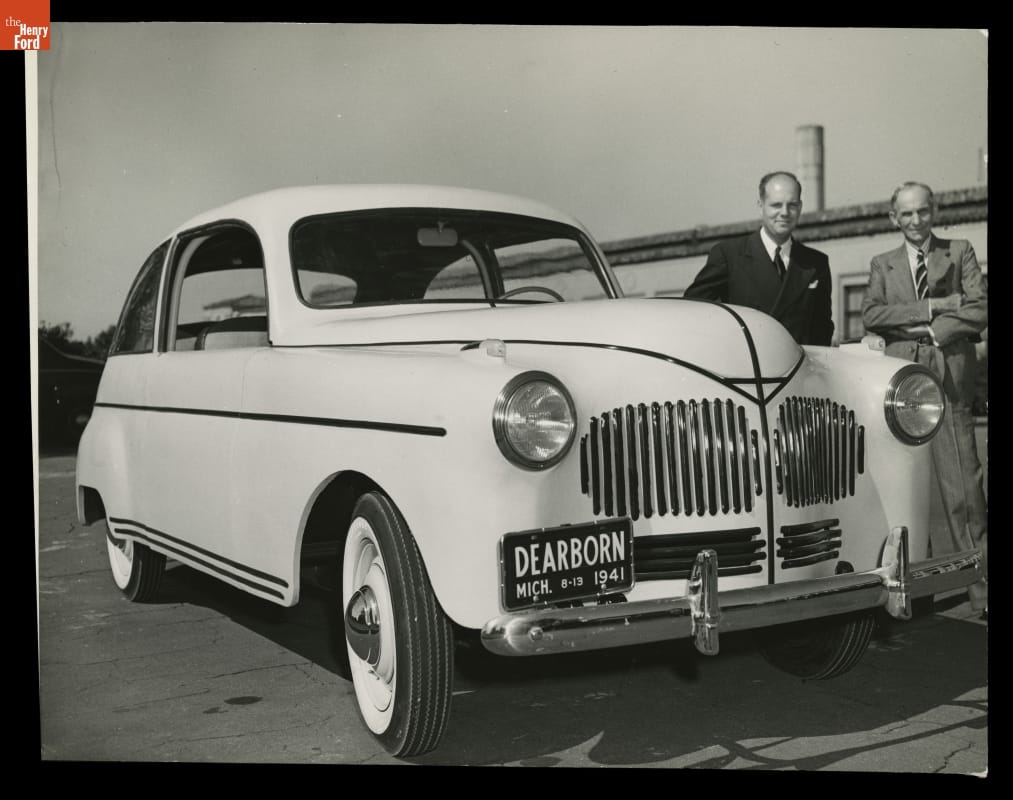
- Robert Boyer and Henry Ford Unveiling the Soybean Car, 1941 - Robert Boyer, a chemist, oversaw a series of experiments at Greenfield Village's Soybean Laboratory. The undertaking resulted in this plastic-bodied car. Henry Ford had a strong interest in plastic automobile parts. Always partial to projects combining industry with agriculture, Ford hoped plastic made from soybeans might be developed into a safe, strong substitute for traditional metals.
- August 13, 1941
- Collections - Artifact
Robert Boyer and Henry Ford Unveiling the Soybean Car, 1941
Robert Boyer, a chemist, oversaw a series of experiments at Greenfield Village's Soybean Laboratory. The undertaking resulted in this plastic-bodied car. Henry Ford had a strong interest in plastic automobile parts. Always partial to projects combining industry with agriculture, Ford hoped plastic made from soybeans might be developed into a safe, strong substitute for traditional metals.
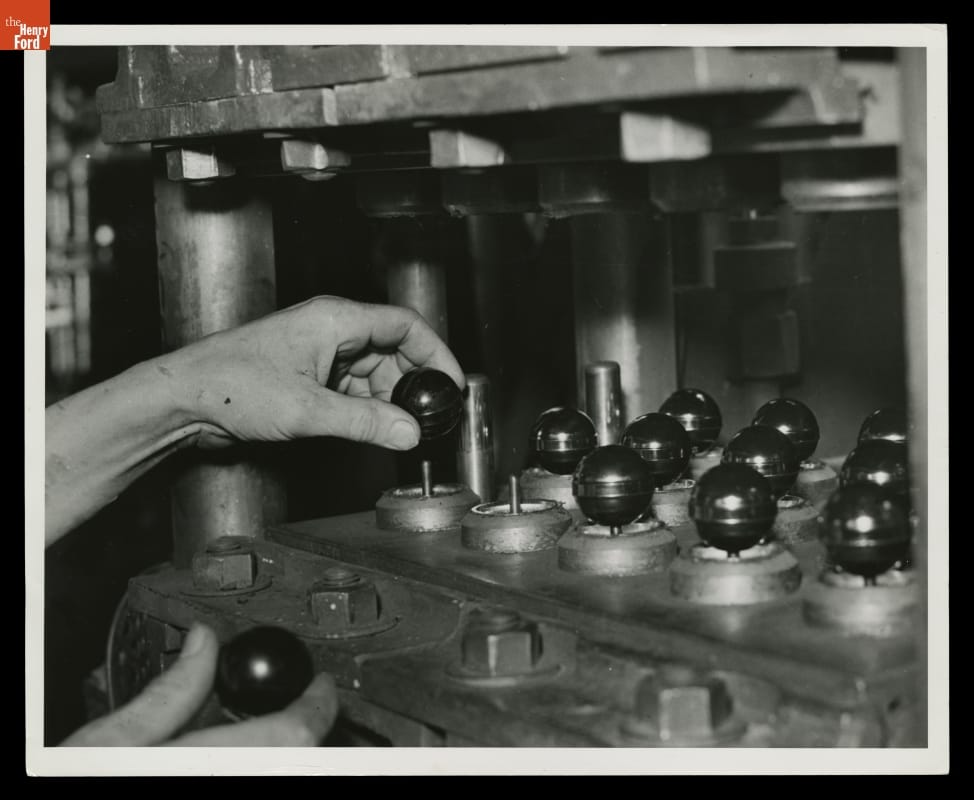
- Molded Soybean Gearshift Knobs in Ford Assembly Process, 1940 - Starting in 1931, Henry Ford invested much money and research into soybeans. He viewed the crop as a bridge between agriculture and industry. Based on this work, soy-based materials were incorporated into Ford Motor Company vehicles. Soybean oil was used in body enamels, for example, while soy meal was used in the plastic for gear shift knobs and horn buttons.
- August 23, 1935
- Collections - Artifact
Molded Soybean Gearshift Knobs in Ford Assembly Process, 1940
Starting in 1931, Henry Ford invested much money and research into soybeans. He viewed the crop as a bridge between agriculture and industry. Based on this work, soy-based materials were incorporated into Ford Motor Company vehicles. Soybean oil was used in body enamels, for example, while soy meal was used in the plastic for gear shift knobs and horn buttons.
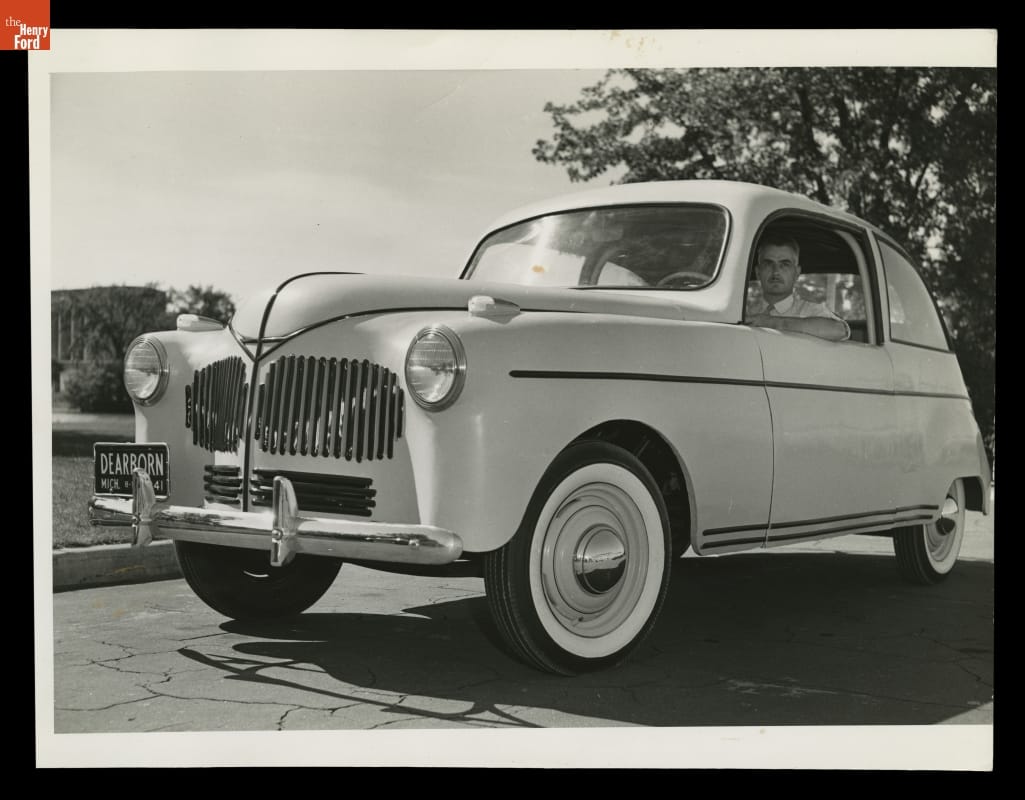
- Ford Designer Lowell E. Overly in the Soybean Car, 1941 - Lowell Overly made molds for the soy-plastic instrument knobs used in Ford automobiles in the 1930s. Given Overly's experience, Henry Ford appointed him to work with chemist Robert Boyer and Ford's design department on an experimental "soybean car" with a complete soy-plastic body. One functional prototype was built in 1941, but World War II ended further work on the concept.
- August 13, 1941
- Collections - Artifact
Ford Designer Lowell E. Overly in the Soybean Car, 1941
Lowell Overly made molds for the soy-plastic instrument knobs used in Ford automobiles in the 1930s. Given Overly's experience, Henry Ford appointed him to work with chemist Robert Boyer and Ford's design department on an experimental "soybean car" with a complete soy-plastic body. One functional prototype was built in 1941, but World War II ended further work on the concept.
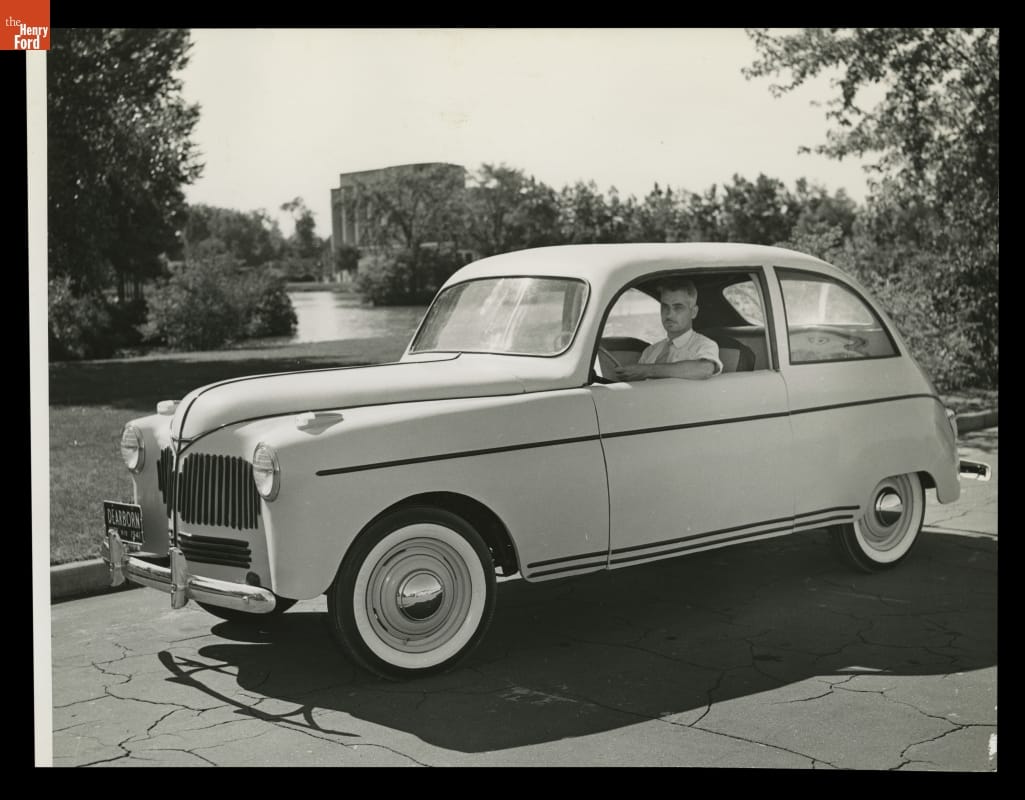
- Lowell E. Overly in the Ford Soybean Car, 1941 - Lowell Overly made molds for the soy-plastic instrument knobs used in Ford automobiles in the 1930s. Given Overly's experience, Henry Ford appointed him to work with chemist Robert Boyer and Ford's design department on an experimental "soybean car" with a complete soy-plastic body. One functional prototype was built in 1941, but World War II ended further work on the concept.
- August 13, 1941
- Collections - Artifact
Lowell E. Overly in the Ford Soybean Car, 1941
Lowell Overly made molds for the soy-plastic instrument knobs used in Ford automobiles in the 1930s. Given Overly's experience, Henry Ford appointed him to work with chemist Robert Boyer and Ford's design department on an experimental "soybean car" with a complete soy-plastic body. One functional prototype was built in 1941, but World War II ended further work on the concept.
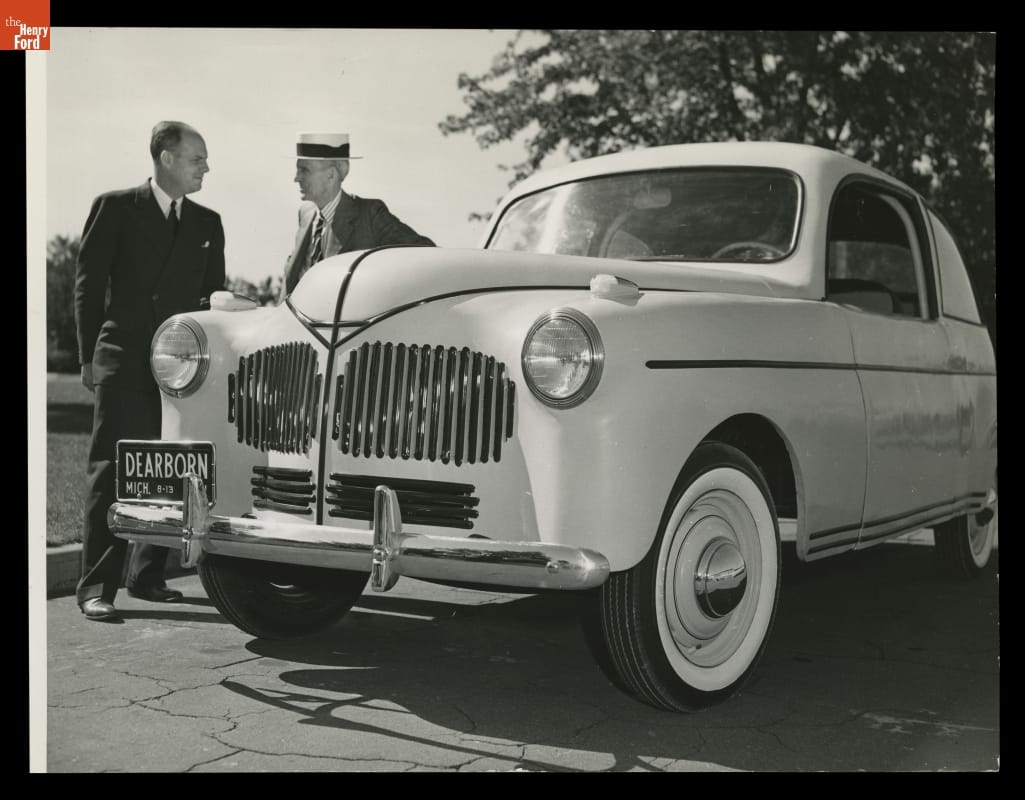
- Henry Ford and Robert Boyer with the Soybean Car, 1941 - Robert Boyer, a chemist, oversaw a series of experiments at Greenfield Village's Soybean Laboratory. The undertaking resulted in this plastic-bodied car. Henry Ford had a strong interest in plastic automobile parts. Always partial to projects combining industry with agriculture, Ford hoped plastic made from soybeans might be developed into a safe, strong substitute for traditional metals.
- August 13, 1941
- Collections - Artifact
Henry Ford and Robert Boyer with the Soybean Car, 1941
Robert Boyer, a chemist, oversaw a series of experiments at Greenfield Village's Soybean Laboratory. The undertaking resulted in this plastic-bodied car. Henry Ford had a strong interest in plastic automobile parts. Always partial to projects combining industry with agriculture, Ford hoped plastic made from soybeans might be developed into a safe, strong substitute for traditional metals.