
Search
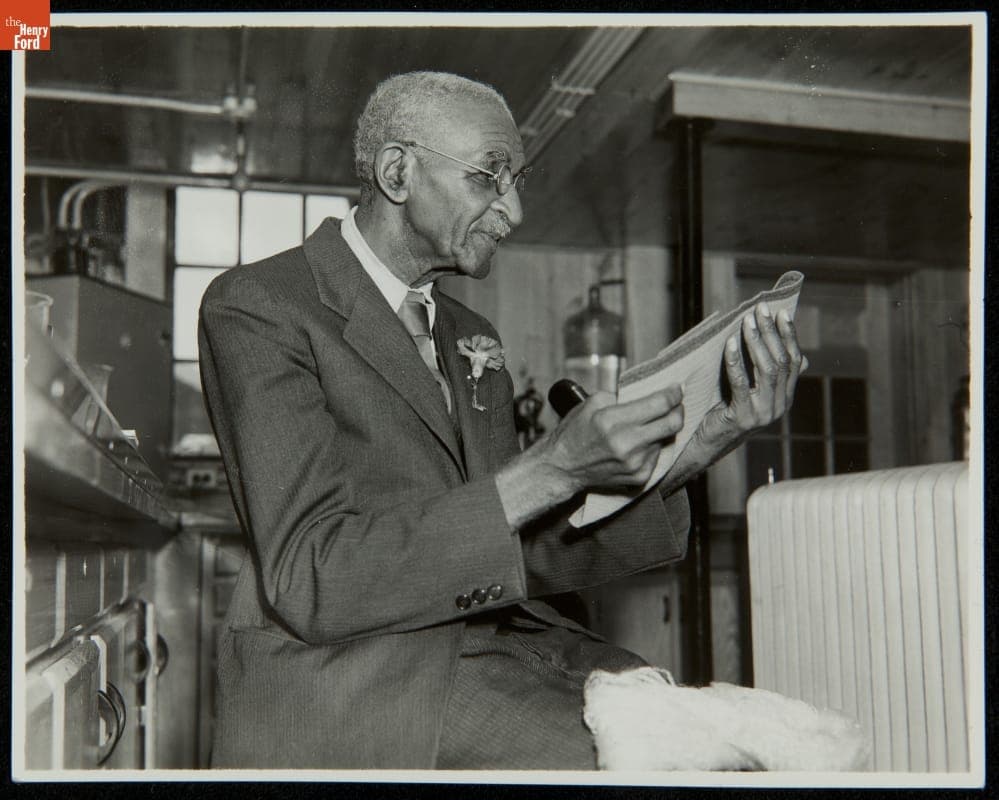
- George Washington Carver Holding Fabric Made from Soybean Fiber, Soybean Lab, Greenfield Village, 1939 - A mutual interest in industrial products made from plants brought Henry Ford and the scientist George Washington Carver together as colleagues and friends. Ford developed plastics and fibers from soybeans. Here, on a 1939 visit to Dearborn, George Washington Carver is seated in the Soybean Laboratory in Greenfield Village, holding a piece of fabric made of soybean fiber.
- 1939
- Collections - Artifact
George Washington Carver Holding Fabric Made from Soybean Fiber, Soybean Lab, Greenfield Village, 1939
A mutual interest in industrial products made from plants brought Henry Ford and the scientist George Washington Carver together as colleagues and friends. Ford developed plastics and fibers from soybeans. Here, on a 1939 visit to Dearborn, George Washington Carver is seated in the Soybean Laboratory in Greenfield Village, holding a piece of fabric made of soybean fiber.
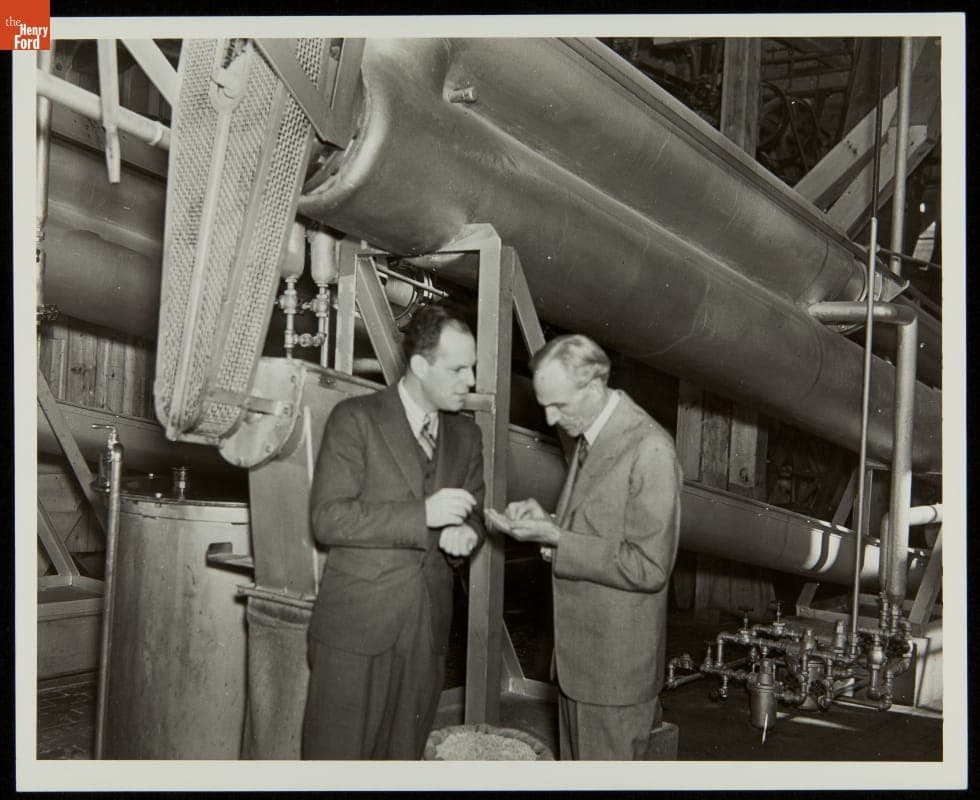
- Robert Boyer and Henry Ford in the Soybean Laboratory, Greenfield Village, 1936 - Chemist Robert Boyer, pictured here with Henry Ford, oversaw a series of experiments at Greenfield Village's Soybean Laboratory. The undertaking resulted in a plastic-bodied car. Henry Ford had a strong interest in plastic automobile parts. Always partial to projects combining industry with agriculture, Ford hoped plastic made from soybeans might be developed into a safe, strong substitute for traditional metals.
- 1936
- Collections - Artifact
Robert Boyer and Henry Ford in the Soybean Laboratory, Greenfield Village, 1936
Chemist Robert Boyer, pictured here with Henry Ford, oversaw a series of experiments at Greenfield Village's Soybean Laboratory. The undertaking resulted in a plastic-bodied car. Henry Ford had a strong interest in plastic automobile parts. Always partial to projects combining industry with agriculture, Ford hoped plastic made from soybeans might be developed into a safe, strong substitute for traditional metals.
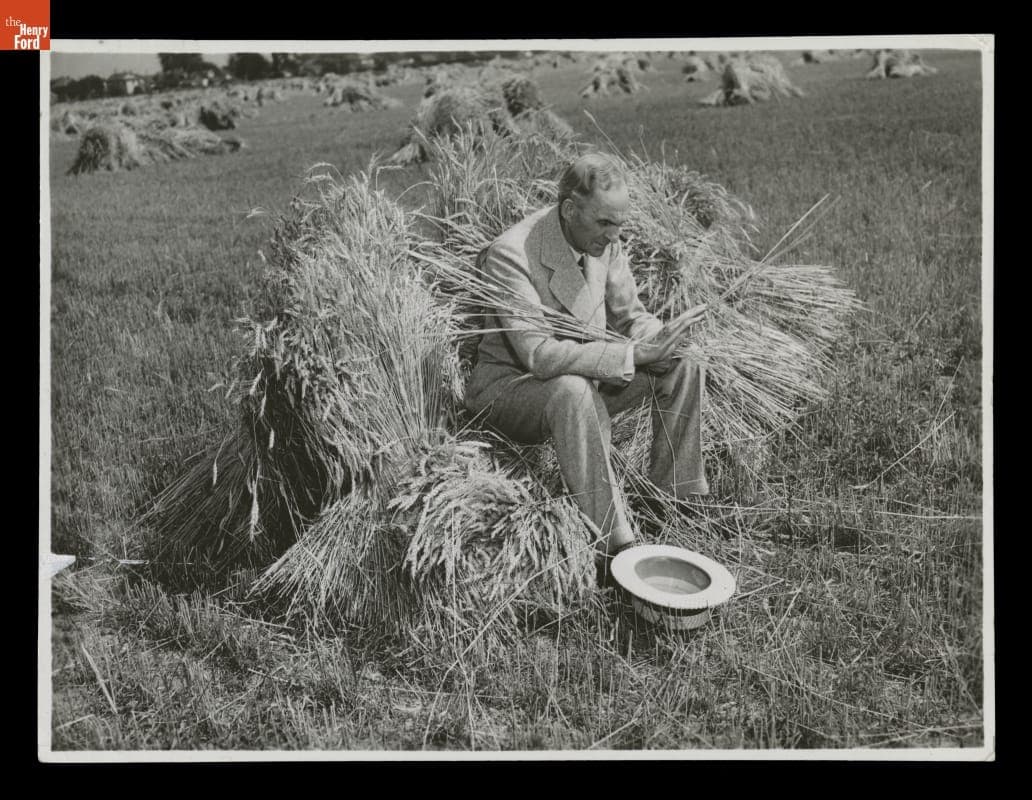
- Henry Ford Wearing Soybean Suit on His 78th Birthday, July 30, 1941 - In the 1930s, Henry Ford's ambition to combine agriculture with industry resulted in large-scale soybean experimentation. Ford planted thousands of acres to the legume, which chemists used to create useful products including paints and plastics. He even commissioned a suit made with soybean protein fibers, which he modeled for this photograph taken on July 30, 1941 -- Ford's 78th birthday.
- July 30, 1941
- Collections - Artifact
Henry Ford Wearing Soybean Suit on His 78th Birthday, July 30, 1941
In the 1930s, Henry Ford's ambition to combine agriculture with industry resulted in large-scale soybean experimentation. Ford planted thousands of acres to the legume, which chemists used to create useful products including paints and plastics. He even commissioned a suit made with soybean protein fibers, which he modeled for this photograph taken on July 30, 1941 -- Ford's 78th birthday.
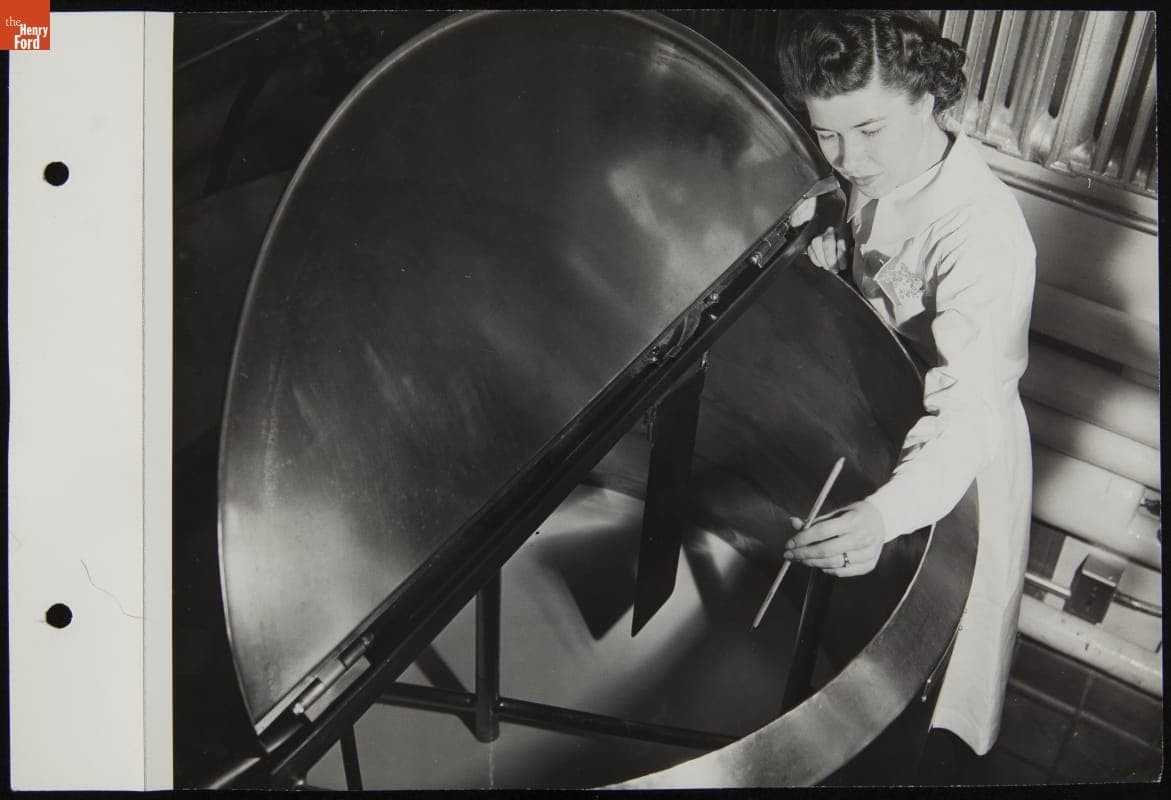
- Mrs. Hardy Checking Soybean Milk in Ford Lab, March 1944 -
- March 03, 1944
- Collections - Artifact
Mrs. Hardy Checking Soybean Milk in Ford Lab, March 1944
- Henry Ford Hitting Soybean Plastic Trunk with an Axe, 1940 - Henry Ford hoped that plastic made from soybeans might be developed into a strong, safe substitute for traditional metals. He established a laboratory where scientists molded ground soybean meal into small plastic car parts. Here, Ford swings an ax at a plastic trunk lid -- mounted to his personal car -- to demonstrate the material's strength.
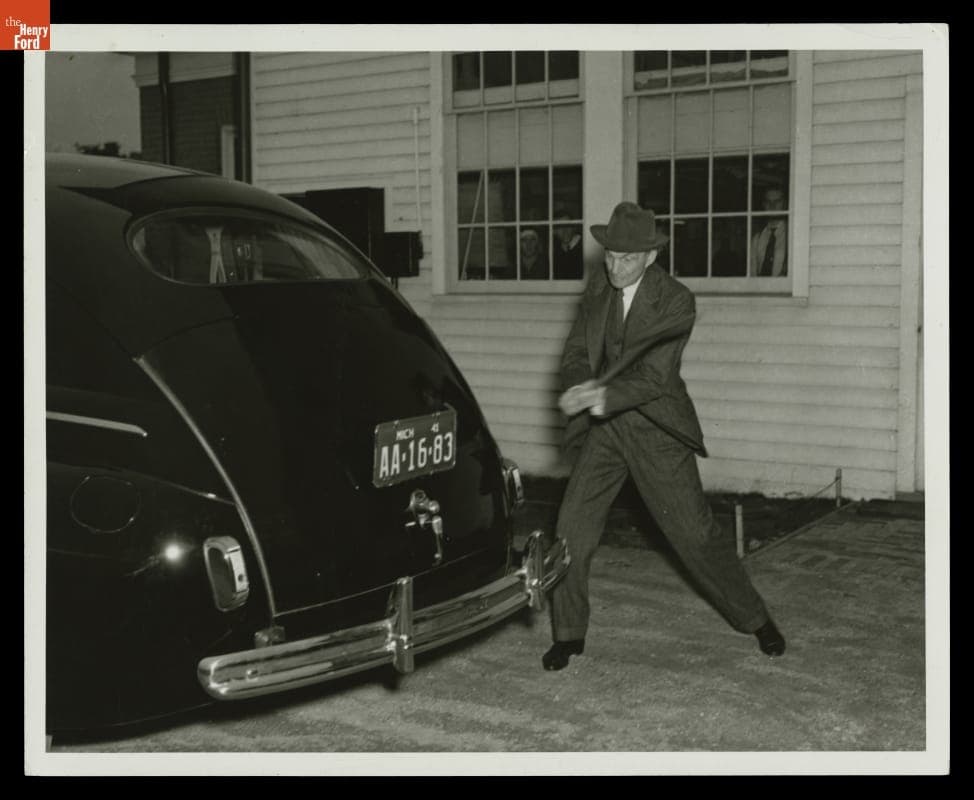
- November 02, 1940
- Collections - Artifact
Henry Ford Hitting Soybean Plastic Trunk with an Axe, 1940
Henry Ford hoped that plastic made from soybeans might be developed into a strong, safe substitute for traditional metals. He established a laboratory where scientists molded ground soybean meal into small plastic car parts. Here, Ford swings an ax at a plastic trunk lid -- mounted to his personal car -- to demonstrate the material's strength.
- Soy Bean Display, "Ford Cycle of Production," Ford Exposition, New York World's Fair, 1940 - Ford Motor Company poured resources into the 1939-40 New York World's Fair, spending more than $5 million to construct and maintain its elaborate and well-attended exposition space. Ford's massive exhibition building attracted fairgoers with industrial demonstrations and informative displays. The huge, revolving "Ford Cycle of Production" - which explained how raw materials became Ford automobile parts - particularly impressed visitors.
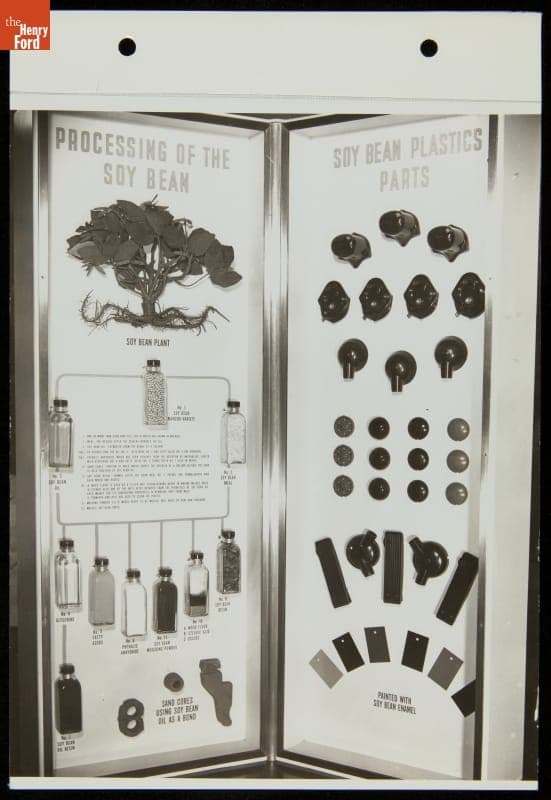
- January 08, 1940
- Collections - Artifact
Soy Bean Display, "Ford Cycle of Production," Ford Exposition, New York World's Fair, 1940
Ford Motor Company poured resources into the 1939-40 New York World's Fair, spending more than $5 million to construct and maintain its elaborate and well-attended exposition space. Ford's massive exhibition building attracted fairgoers with industrial demonstrations and informative displays. The huge, revolving "Ford Cycle of Production" - which explained how raw materials became Ford automobile parts - particularly impressed visitors.
- Soybean Laboratory in Greenfield Village, 1930 - Henry Ford believed that industry and agriculture should complement one another. In the 1930s, he pursued soybeans as a crop that might unite the two. Ford built a soybean laboratory in Greenfield Village. Experiments there led to the use of some soy-based oils and plastics in Ford Motor Company vehicles.
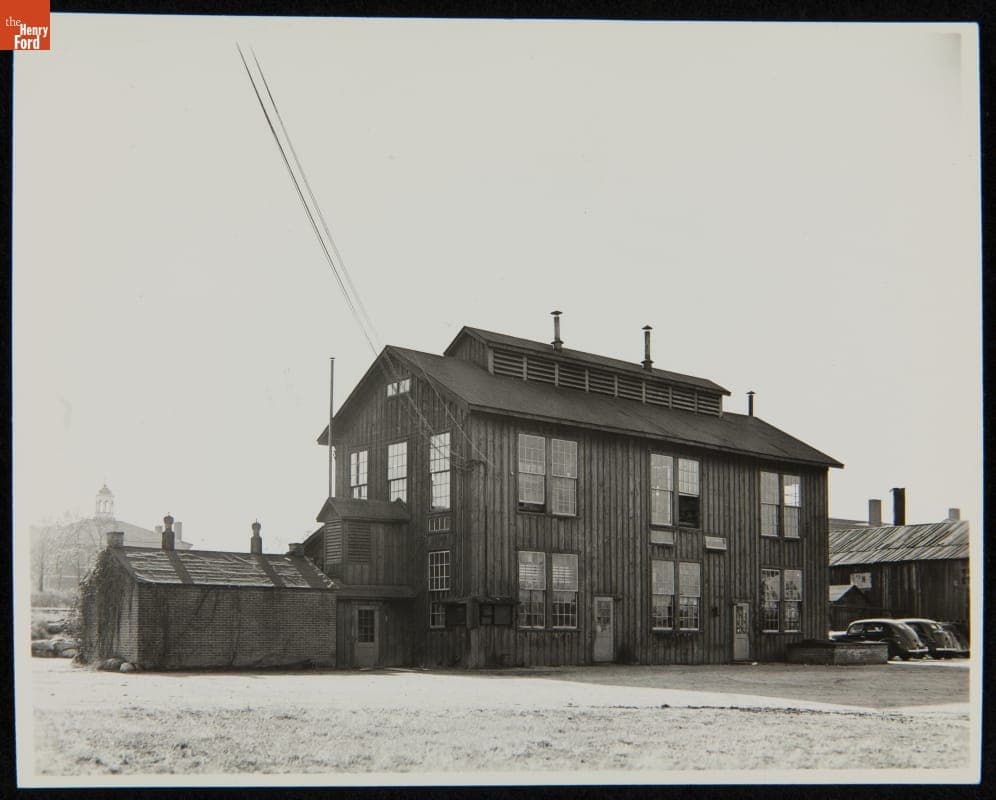
- 1930
- Collections - Artifact
Soybean Laboratory in Greenfield Village, 1930
Henry Ford believed that industry and agriculture should complement one another. In the 1930s, he pursued soybeans as a crop that might unite the two. Ford built a soybean laboratory in Greenfield Village. Experiments there led to the use of some soy-based oils and plastics in Ford Motor Company vehicles.
- Greenhouse and Pipeline of the Soybean Laboratory in Greenfield Village, 1930 - Henry Ford believed that industry and agriculture should complement one another. In the 1930s, he pursued soybeans as a crop that might unite the two. Ford built a soybean laboratory in Greenfield Village. Experiments there led to the use of some soy-based oils and plastics in Ford Motor Company vehicles.
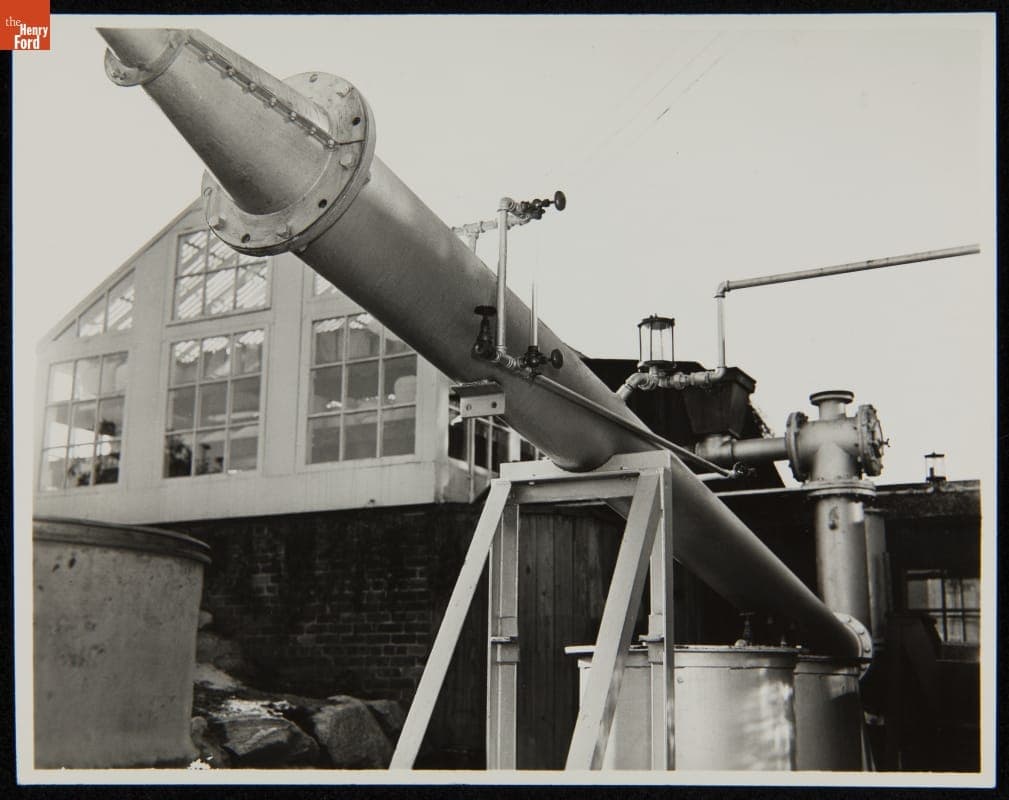
- 1930
- Collections - Artifact
Greenhouse and Pipeline of the Soybean Laboratory in Greenfield Village, 1930
Henry Ford believed that industry and agriculture should complement one another. In the 1930s, he pursued soybeans as a crop that might unite the two. Ford built a soybean laboratory in Greenfield Village. Experiments there led to the use of some soy-based oils and plastics in Ford Motor Company vehicles.
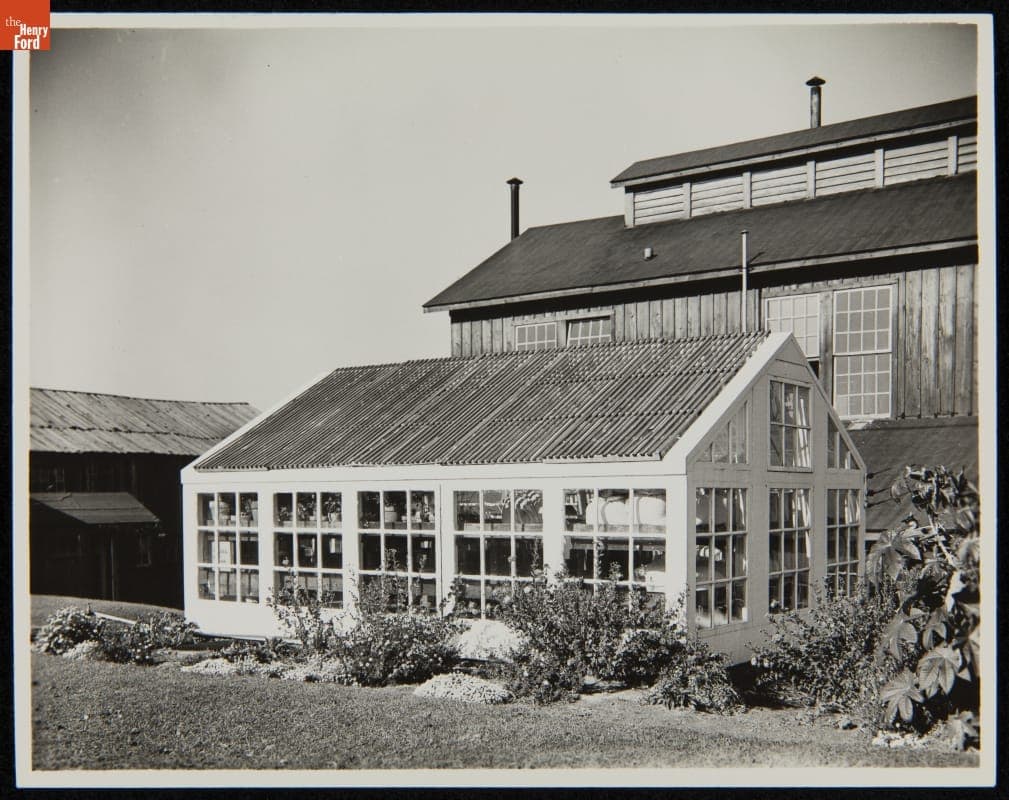
- Greenhouse at the Soybean Laboratory in Greenfield Village, 1930 - Henry Ford believed that industry and agriculture should complement one another. In the 1930s, he pursued soybeans as a crop that might unite the two. Ford built a soybean laboratory in Greenfield Village. Experiments there led to the use of some soy-based oils and plastics in Ford Motor Company vehicles.
- 1930
- Collections - Artifact
Greenhouse at the Soybean Laboratory in Greenfield Village, 1930
Henry Ford believed that industry and agriculture should complement one another. In the 1930s, he pursued soybeans as a crop that might unite the two. Ford built a soybean laboratory in Greenfield Village. Experiments there led to the use of some soy-based oils and plastics in Ford Motor Company vehicles.
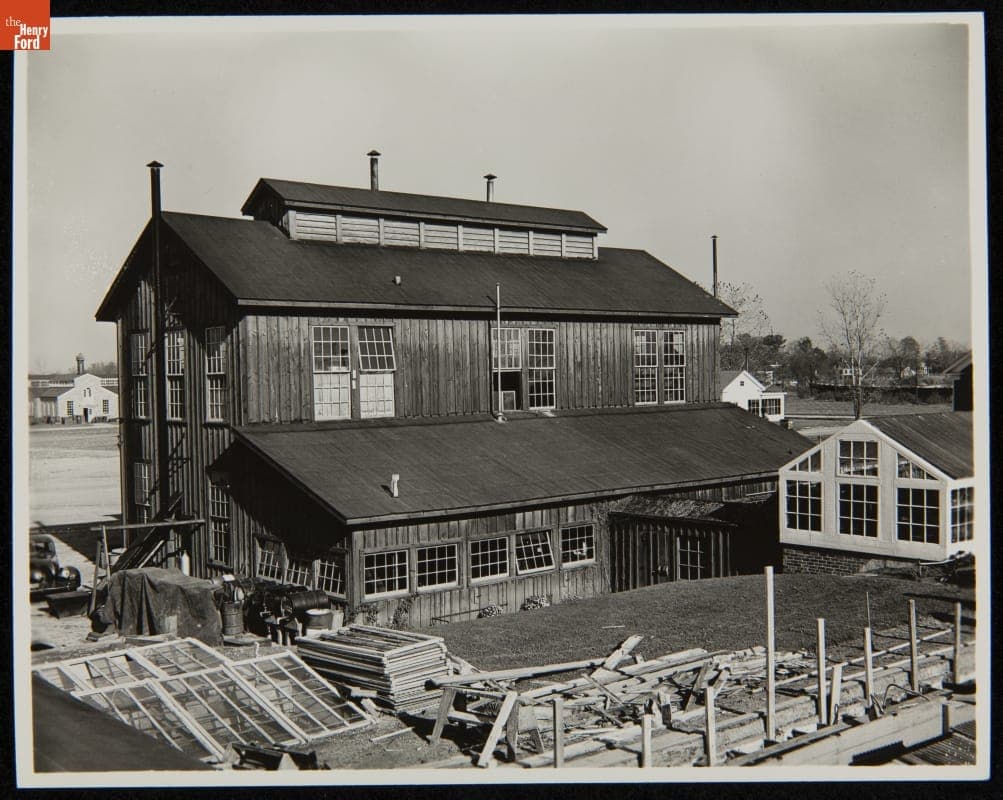
- Rear View of the Soybean Laboratory in Greenfield Village, 1930 - Henry Ford believed that industry and agriculture should complement one another. In the 1930s, he pursued soybeans as a crop that might unite the two. Ford built a soybean laboratory in Greenfield Village. Experiments there led to the use of some soy-based oils and plastics in Ford Motor Company vehicles.
- 1930
- Collections - Artifact
Rear View of the Soybean Laboratory in Greenfield Village, 1930
Henry Ford believed that industry and agriculture should complement one another. In the 1930s, he pursued soybeans as a crop that might unite the two. Ford built a soybean laboratory in Greenfield Village. Experiments there led to the use of some soy-based oils and plastics in Ford Motor Company vehicles.