
Search
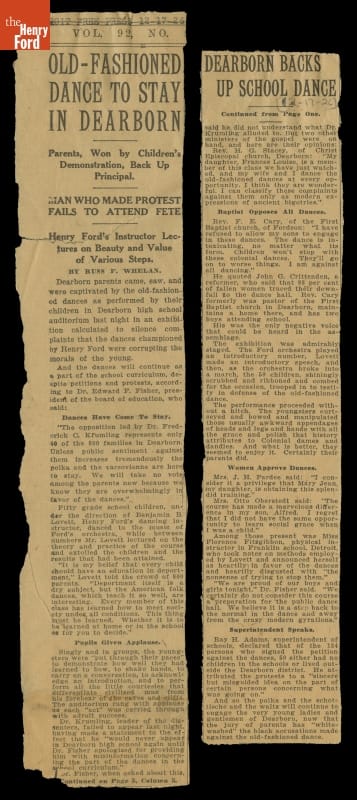
- Newspaper Article, "Old-Fashioned Dance to Stay in Dearborn...Dearborn Backs Up School Dance," 1926 - As Henry Ford extended his traditional American dance classes to local Dearborn schoolchildren, some parents grew alarmed--they weren't sure they approved of boys and girls dancing together. A dance demonstration by the children soon set most of the parents' minds at ease. They quickly realized the benefit of having their children learn these old-time dances--and the good manners that went along with them.
- December 17, 1926
- Collections - Artifact
Newspaper Article, "Old-Fashioned Dance to Stay in Dearborn...Dearborn Backs Up School Dance," 1926
As Henry Ford extended his traditional American dance classes to local Dearborn schoolchildren, some parents grew alarmed--they weren't sure they approved of boys and girls dancing together. A dance demonstration by the children soon set most of the parents' minds at ease. They quickly realized the benefit of having their children learn these old-time dances--and the good manners that went along with them.
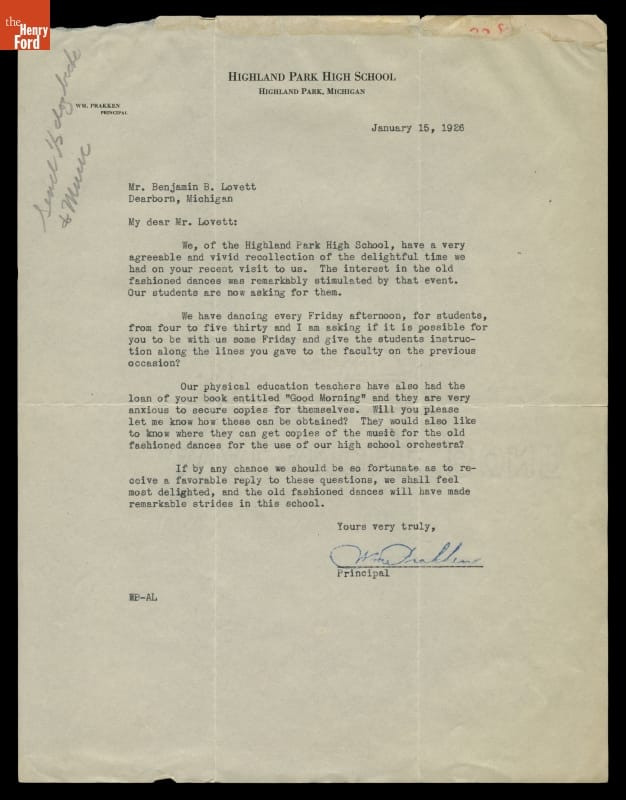
- Letter from Highland Park High School Principal to Benjamin Lovett, January 16, 1926 - Like the collections of antique vehicles, farm equipment and cooking implements Ford began to amass with vigor during the 1920s--music was part of Ford's larger vision for preserving the American past. By this time, much of America had left traditional music behind. But Ford never forgot it. And, through Benjamin Lovett's instruction, Ford wanted to share it with new generations.
- January 16, 1926
- Collections - Artifact
Letter from Highland Park High School Principal to Benjamin Lovett, January 16, 1926
Like the collections of antique vehicles, farm equipment and cooking implements Ford began to amass with vigor during the 1920s--music was part of Ford's larger vision for preserving the American past. By this time, much of America had left traditional music behind. But Ford never forgot it. And, through Benjamin Lovett's instruction, Ford wanted to share it with new generations.
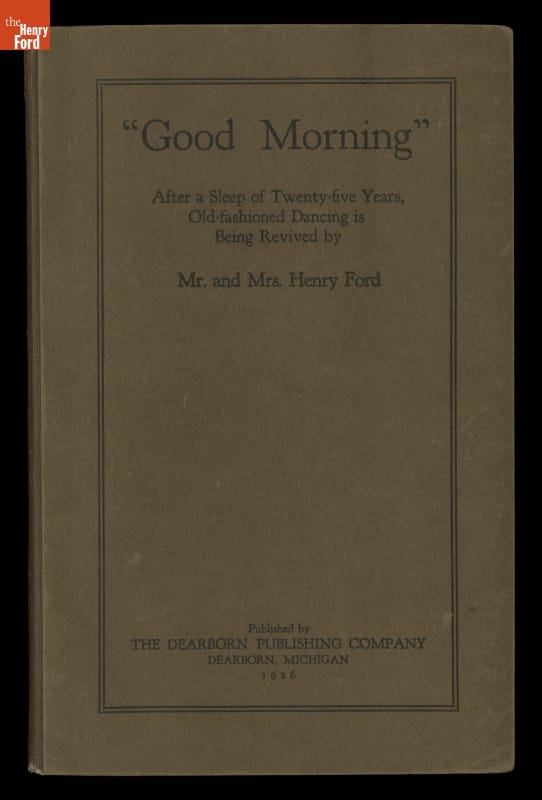
- "Good Morning, After a Sleep of Twenty-Five Years Old-Fashioned Dancing is Being Revived by Mr. and Mrs. Henry Ford" 1926 - Henry Ford's "Good Morning" book provided illustrated instructions on the proper steps and deportment for old-fashioned dancing--it was part of Ford's crusade to revive the dances of his youth. Written by Ford's dancing master Benjamin Lovett, much research--based on old dance manuals and interviews with "old-timers"--went into it. First printed in 1926, the book sold widely for many years.
- 1926
- Collections - Artifact
"Good Morning, After a Sleep of Twenty-Five Years Old-Fashioned Dancing is Being Revived by Mr. and Mrs. Henry Ford" 1926
Henry Ford's "Good Morning" book provided illustrated instructions on the proper steps and deportment for old-fashioned dancing--it was part of Ford's crusade to revive the dances of his youth. Written by Ford's dancing master Benjamin Lovett, much research--based on old dance manuals and interviews with "old-timers"--went into it. First printed in 1926, the book sold widely for many years.
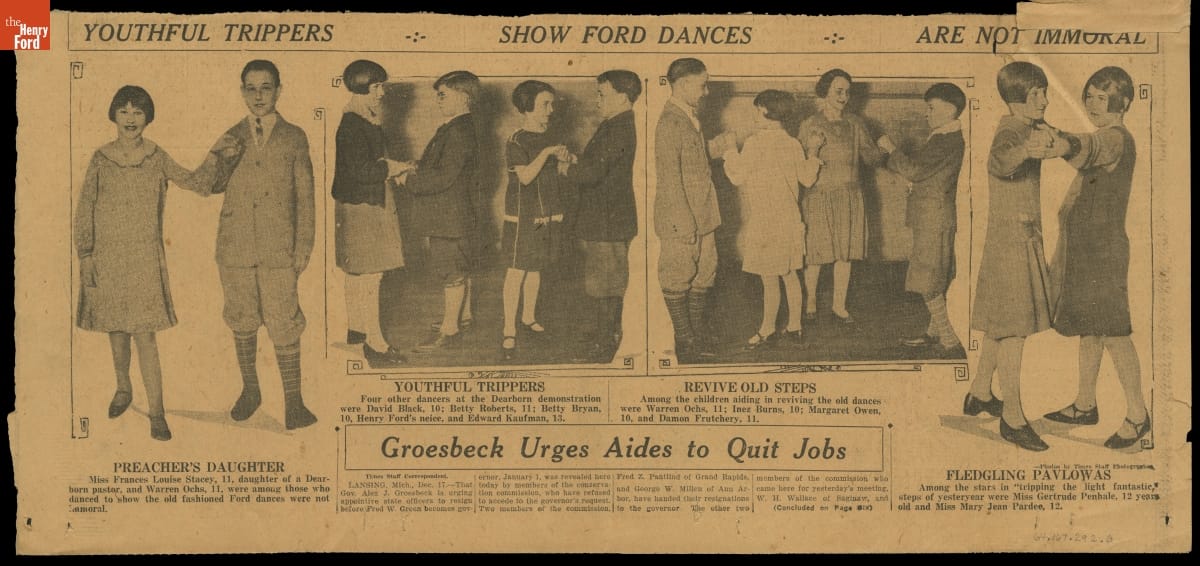
- Newspaper Article, "OK Given Ford Old Dances...Youthful Trippers Show Ford Dances Are Not Immoral," 1926 - As Henry Ford extended his traditional American dance classes to local Dearborn schoolchildren, some parents grew alarmed--they weren't sure they approved of boys and girls dancing together. A dance demonstration by the children soon set most of the parents' minds at ease. They quickly realized the benefit of having their children learn these old-time dances--and the good manners that went along with them.
- December 17, 1926
- Collections - Artifact
Newspaper Article, "OK Given Ford Old Dances...Youthful Trippers Show Ford Dances Are Not Immoral," 1926
As Henry Ford extended his traditional American dance classes to local Dearborn schoolchildren, some parents grew alarmed--they weren't sure they approved of boys and girls dancing together. A dance demonstration by the children soon set most of the parents' minds at ease. They quickly realized the benefit of having their children learn these old-time dances--and the good manners that went along with them.
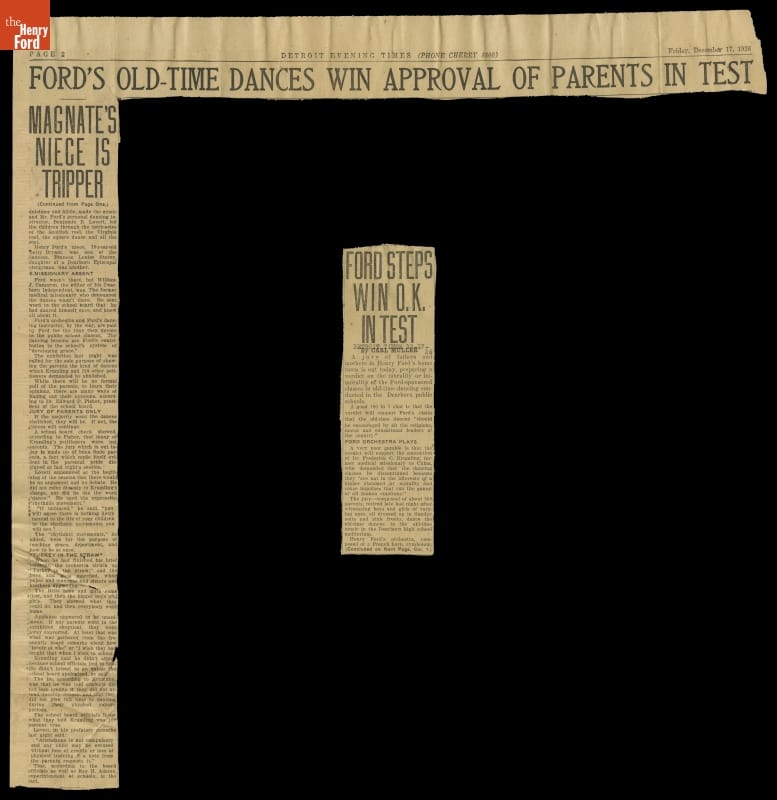
- Newspaper Article, "Ford Steps Win O.K. in Test...Ford's Old-Time Dances Win Approval of Parents...," 1926 - As Henry Ford extended his traditional American dance classes to local Dearborn schoolchildren, some parents grew alarmed--they weren't sure they approved of boys and girls dancing together. A dance demonstration by the children soon set most of the parents' minds at ease. They quickly realized the benefit of having their children learn these old-time dances--and the good manners that went along with them.
- December 17, 1926
- Collections - Artifact
Newspaper Article, "Ford Steps Win O.K. in Test...Ford's Old-Time Dances Win Approval of Parents...," 1926
As Henry Ford extended his traditional American dance classes to local Dearborn schoolchildren, some parents grew alarmed--they weren't sure they approved of boys and girls dancing together. A dance demonstration by the children soon set most of the parents' minds at ease. They quickly realized the benefit of having their children learn these old-time dances--and the good manners that went along with them.
- Hallmark "Santa's Ho-Ho-Hoedown" Christmas Ornament, 1990 - Already known for greeting cards, Hallmark introduced a line of Christmas ornaments in 1973. The company's annual release of an increasing array of ornaments revolutionized Christmas decorating, appealing to customers' interest in marking memories and milestones as well as expressing one's personality and unique tastes.

- 1990
- Collections - Artifact
Hallmark "Santa's Ho-Ho-Hoedown" Christmas Ornament, 1990
Already known for greeting cards, Hallmark introduced a line of Christmas ornaments in 1973. The company's annual release of an increasing array of ornaments revolutionized Christmas decorating, appealing to customers' interest in marking memories and milestones as well as expressing one's personality and unique tastes.
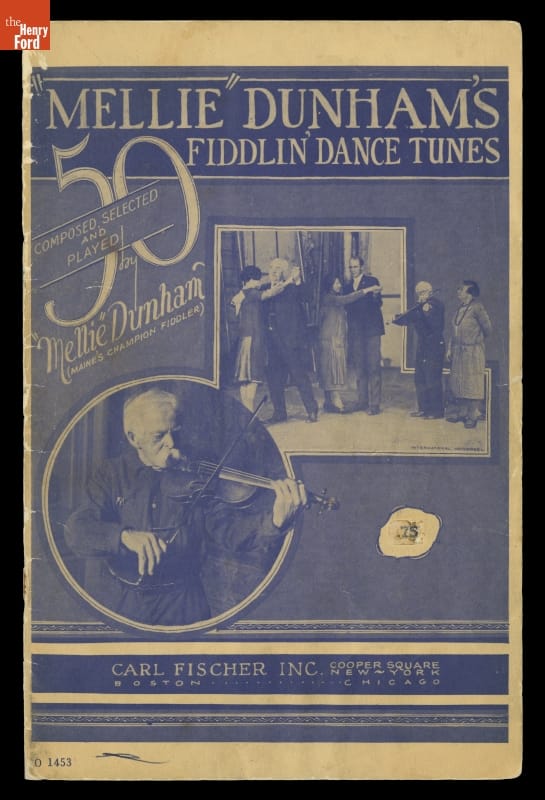
- Book, "Mellie Dunham's 50 Fiddlin' Dance Tunes," 1926 - Fiddler Mellie Dunham's fame as a Henry Ford favorite garnered him enormous publicity--and he took full advantage of it. After playing for Ford, Dunham took a train to New York, where he signed a $500-a-week contract with the Keith-Albee vaudeville circuit. He played throughout the United States and Canada for seventeen months. Dunham also published this 1926 book of "Fiddlin' Dance Tunes."
- 1926
- Collections - Artifact
Book, "Mellie Dunham's 50 Fiddlin' Dance Tunes," 1926
Fiddler Mellie Dunham's fame as a Henry Ford favorite garnered him enormous publicity--and he took full advantage of it. After playing for Ford, Dunham took a train to New York, where he signed a $500-a-week contract with the Keith-Albee vaudeville circuit. He played throughout the United States and Canada for seventeen months. Dunham also published this 1926 book of "Fiddlin' Dance Tunes."