
Search
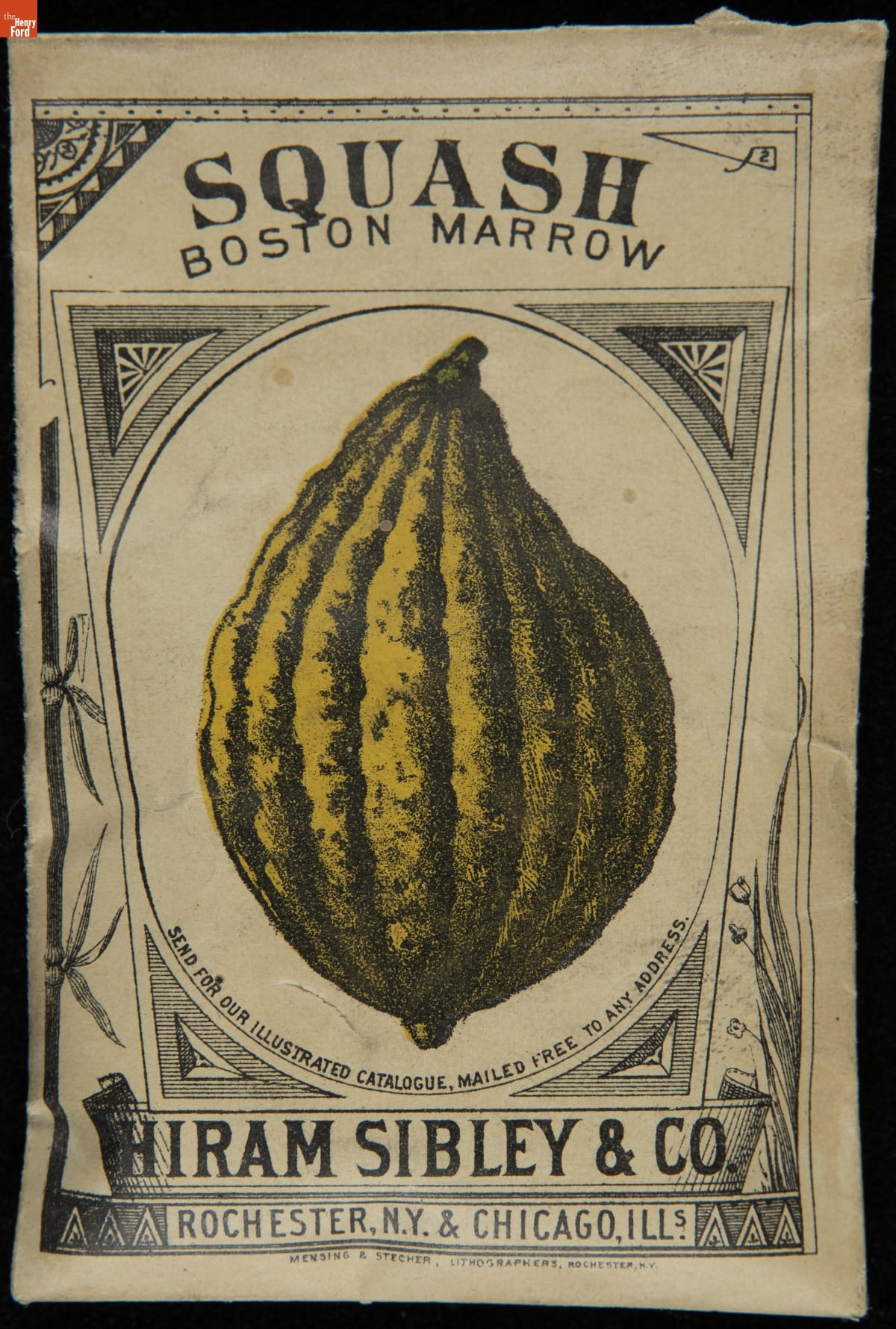
- Hiram Sibley & Co. "Squash Boston Marrow" Seed Packet, Used in the C.W. Barnes Store, 1882-1888 - Distributing seeds required sealing them into little packets or "papers" constructed like envelopes. Seed companies advertised their businesses on these packets, illustrated the vegetable with hand-colored images, and specified growing directions, sometimes in multiple languages. Hiram Sibley and Co. packaged collections of vegetable seeds in specially designed boxes and shipped them to general stores for sale to home gardeners.
- 1882-1888
- Collections - Artifact
Hiram Sibley & Co. "Squash Boston Marrow" Seed Packet, Used in the C.W. Barnes Store, 1882-1888
Distributing seeds required sealing them into little packets or "papers" constructed like envelopes. Seed companies advertised their businesses on these packets, illustrated the vegetable with hand-colored images, and specified growing directions, sometimes in multiple languages. Hiram Sibley and Co. packaged collections of vegetable seeds in specially designed boxes and shipped them to general stores for sale to home gardeners.
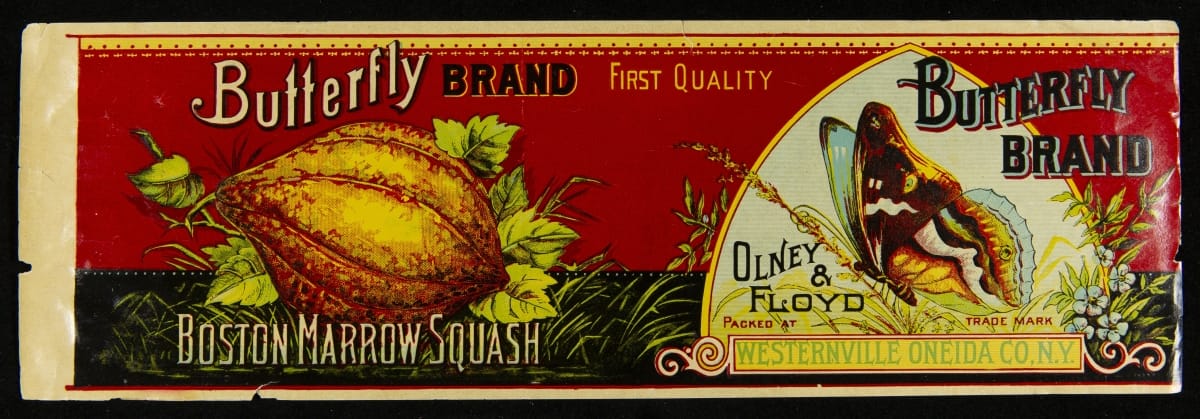
- Can Label, "Butterfly Brand Boston Marrow Squash," 1890-1920 - Throughout the late-19th to early-20th centuries, lithographers created labels to help sell products. Manufacturers of foodstuffs utilized the same design for several different products -- a strategy which helped customers distinguish one brand over another. Olney and Floyd's Butterfly Brand products were easy to identify with their colorful, eye-catching labels and signature butterfly.
- 1890-1920
- Collections - Artifact
Can Label, "Butterfly Brand Boston Marrow Squash," 1890-1920
Throughout the late-19th to early-20th centuries, lithographers created labels to help sell products. Manufacturers of foodstuffs utilized the same design for several different products -- a strategy which helped customers distinguish one brand over another. Olney and Floyd's Butterfly Brand products were easy to identify with their colorful, eye-catching labels and signature butterfly.
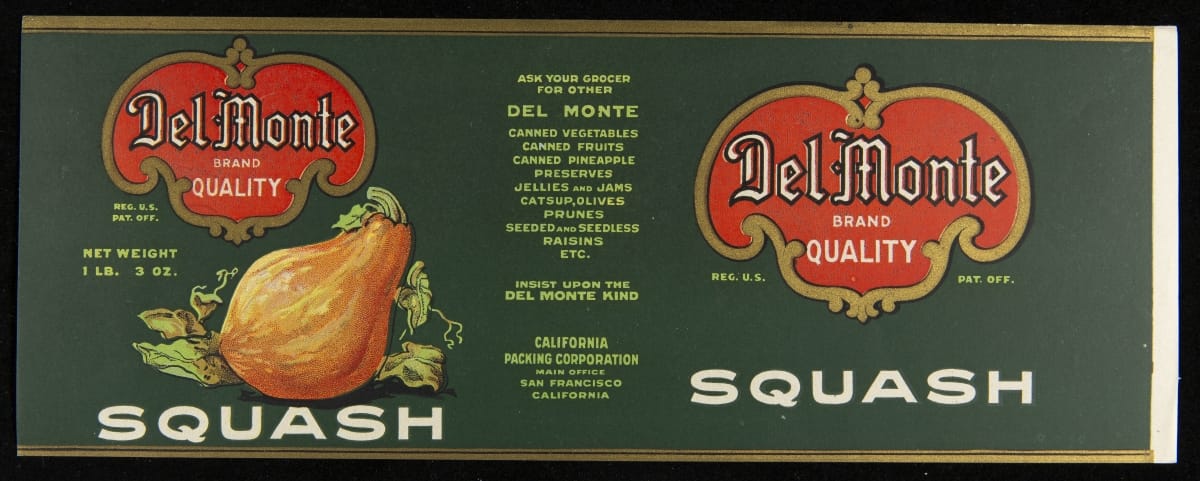
- Can Label, "Del Monte Brand Squash," circa 1920 - Manufacturers of similar products sought ways to make their companies' goods stand out on store shelves. Some companies established a uniform label design for their multi-product offerings -- a strategy which helped customers distinguish one brand over another. Del Monte Brand products were identified by the company's characteristic green label and its signature "shield" logo. These design features are still found on Del Monte products today.
- circa 1920
- Collections - Artifact
Can Label, "Del Monte Brand Squash," circa 1920
Manufacturers of similar products sought ways to make their companies' goods stand out on store shelves. Some companies established a uniform label design for their multi-product offerings -- a strategy which helped customers distinguish one brand over another. Del Monte Brand products were identified by the company's characteristic green label and its signature "shield" logo. These design features are still found on Del Monte products today.
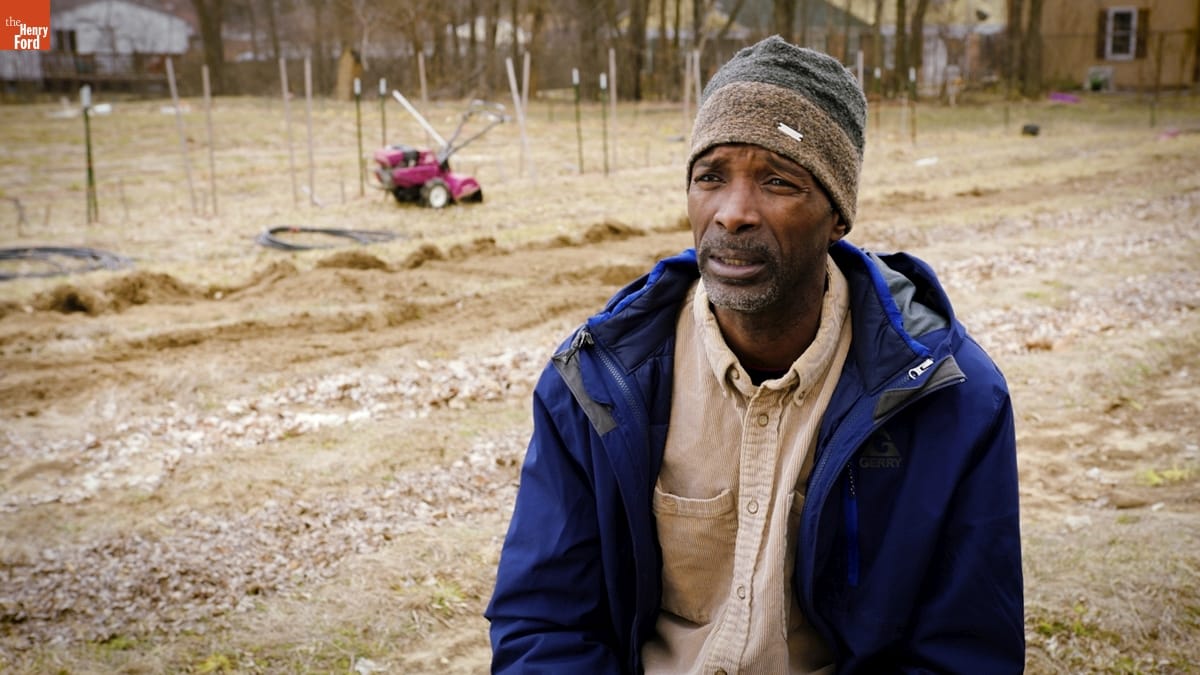
- "Gaining Awareness of a Healthy Lifestyle" Clip from Pre-Interview with Melvin Parson, April 5, 2019 - Melvin Parson, founder of We The People Growers Association, was the Spring 2019 Entrepreneur-In-Residence at The Henry Ford, funded by the William Davidson Foundation Initiative for Entrepreneurship. During his interview, Parson explains his journey and mission towards securing equality and social justice through urban farming, comparing it to taking a seat at the table as a full member of society.
- April 05, 2019
- Collections - Artifact
"Gaining Awareness of a Healthy Lifestyle" Clip from Pre-Interview with Melvin Parson, April 5, 2019
Melvin Parson, founder of We The People Growers Association, was the Spring 2019 Entrepreneur-In-Residence at The Henry Ford, funded by the William Davidson Foundation Initiative for Entrepreneurship. During his interview, Parson explains his journey and mission towards securing equality and social justice through urban farming, comparing it to taking a seat at the table as a full member of society.
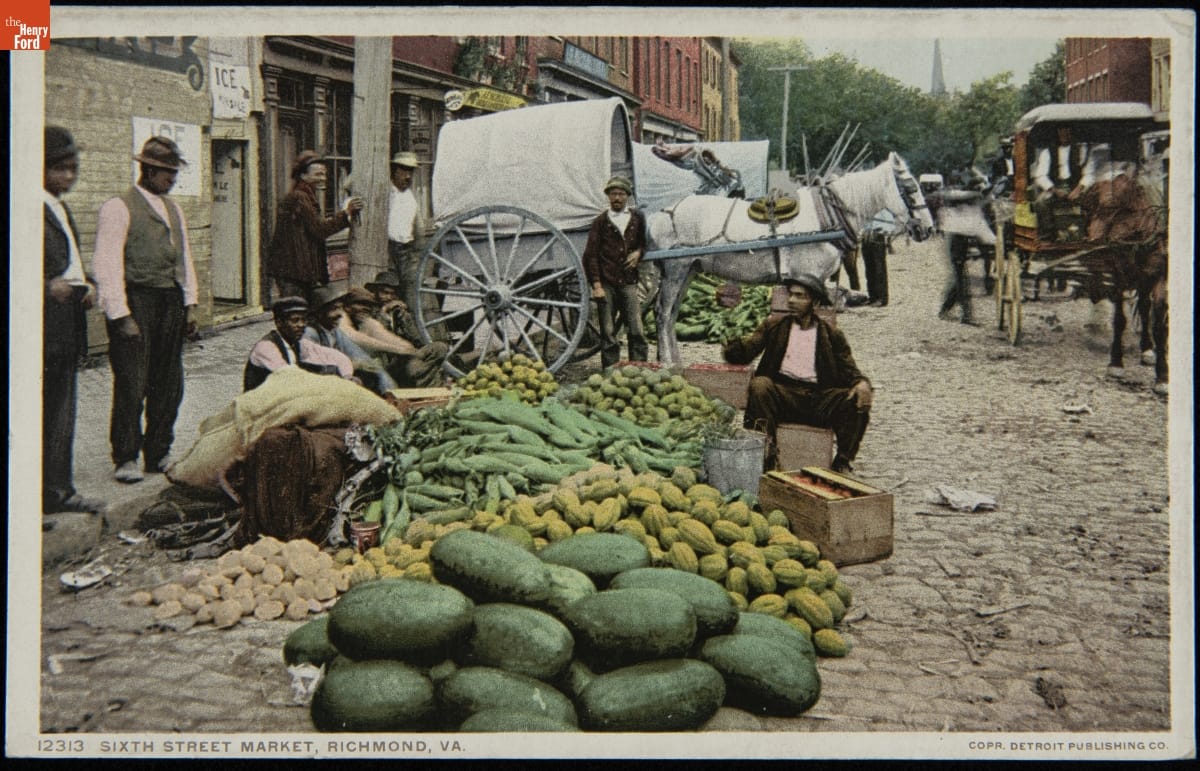
- Sixth Street Market, Richmond, Va., 1908-1909 - Farm families living on limited acreage near cities often hawked their vegetables and melons at local markets built to satisfy the public demand for food. These farmer entrepreneurs sold melons, squash, and sweetcorn near the Sixth Street Market in Richmond, Virginia. They used horse-drawn wagons or carts to transport their goods even as others adopted the automobile for transportation.
- 1908-1909
- Collections - Artifact
Sixth Street Market, Richmond, Va., 1908-1909
Farm families living on limited acreage near cities often hawked their vegetables and melons at local markets built to satisfy the public demand for food. These farmer entrepreneurs sold melons, squash, and sweetcorn near the Sixth Street Market in Richmond, Virginia. They used horse-drawn wagons or carts to transport their goods even as others adopted the automobile for transportation.
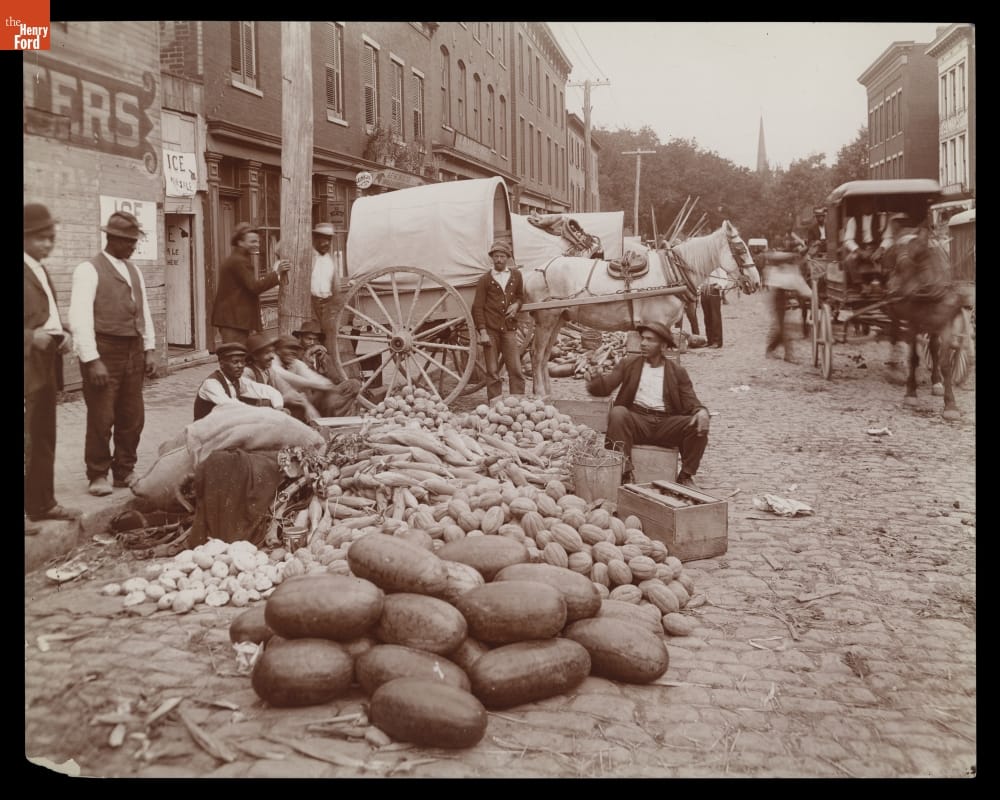
- Sixth Street Market (Typical Vegetable Men), Richmond, Virginia, 1908 - Farm families living on limited acreage near cities often hawked their vegetables and melons at local markets built to satisfy the public demand for food. These farmer entrepreneurs sold melons, squash, and sweetcorn near the Sixth Street Market in Richmond, Virginia. They used horse-drawn wagons or carts to transport their goods even as others adopted the automobile for transportation.
- 1908
- Collections - Artifact
Sixth Street Market (Typical Vegetable Men), Richmond, Virginia, 1908
Farm families living on limited acreage near cities often hawked their vegetables and melons at local markets built to satisfy the public demand for food. These farmer entrepreneurs sold melons, squash, and sweetcorn near the Sixth Street Market in Richmond, Virginia. They used horse-drawn wagons or carts to transport their goods even as others adopted the automobile for transportation.
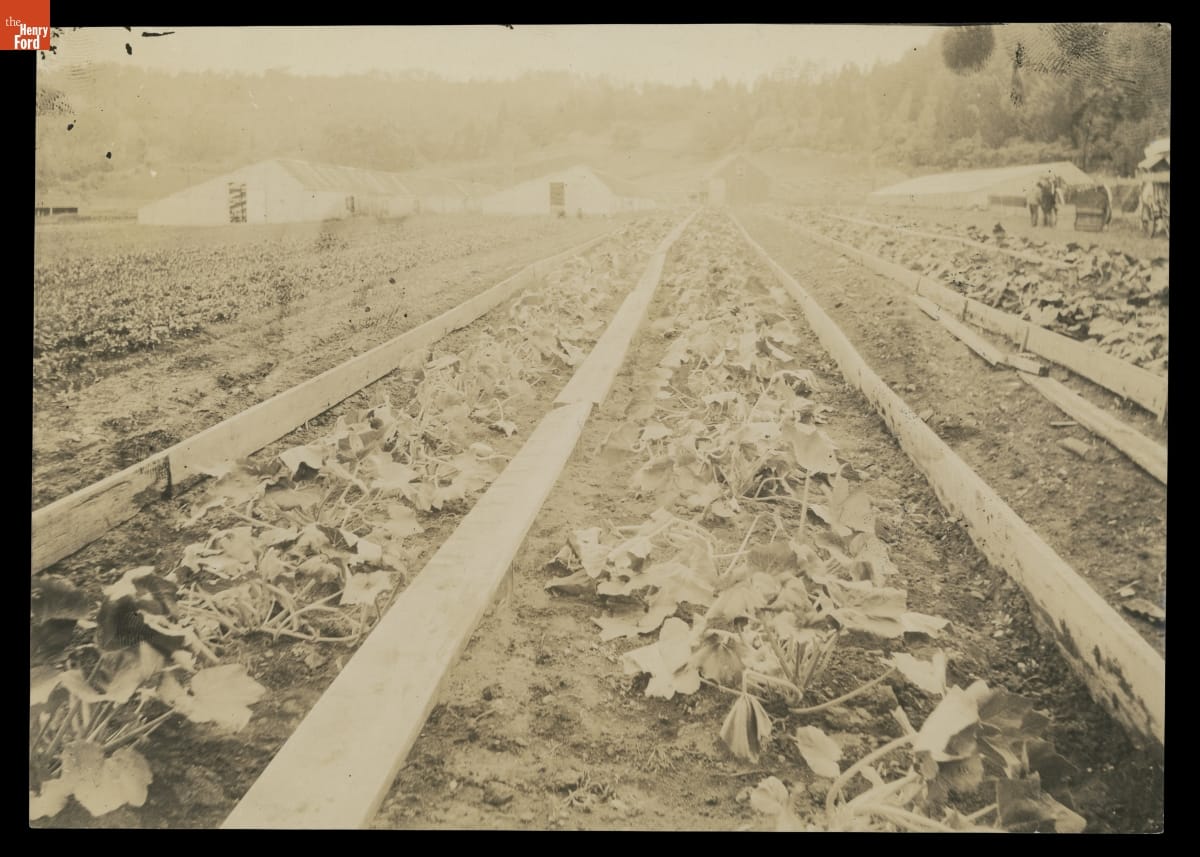
- "Starting Squashes," circa 1923 -
- circa 1923
- Collections - Artifact
"Starting Squashes," circa 1923
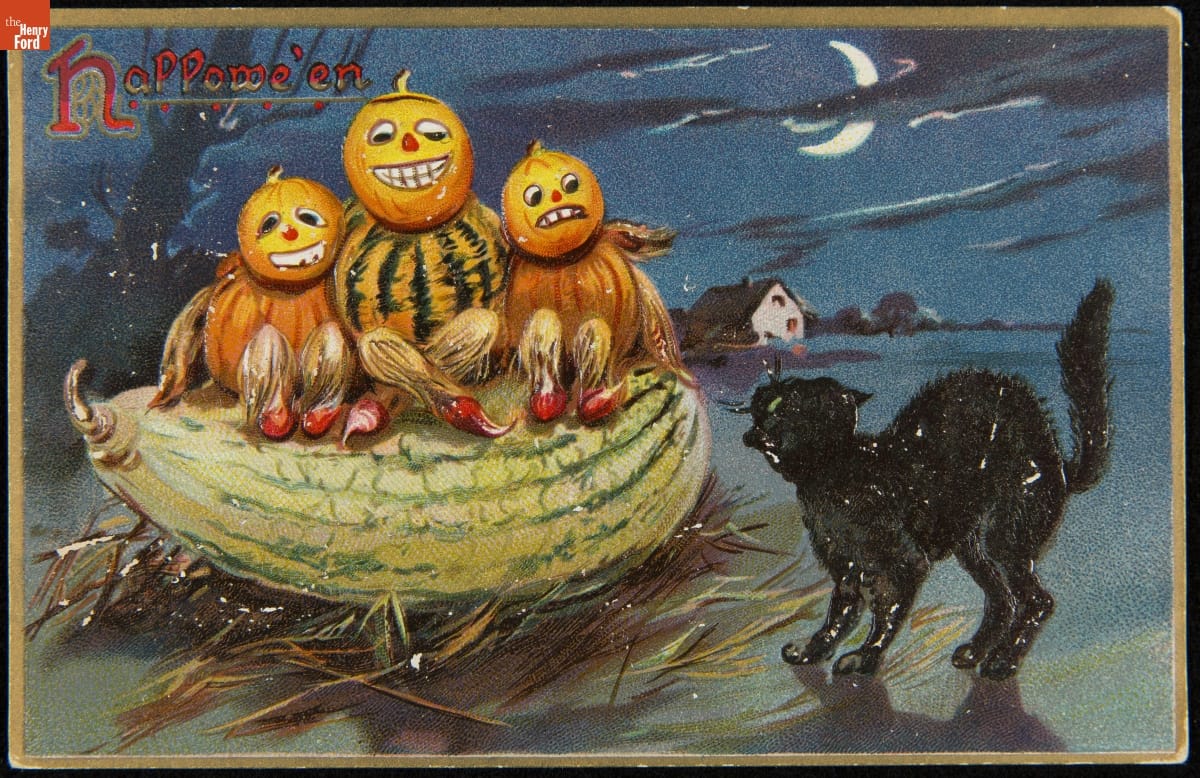
- Halloween Postcard Showing Pumpkin Figures Seated on a Squash and Looking at a Black Cat, Postmarked 1908 - By 1900, articles in magazines and newspapers had helped spread and popularize Halloween customs and images like jack o-lanterns, black cats, witches, or bobbing for apples to a national audience. Some people marked the holiday by mailing a Halloween-themed postcard greeting to family or friends. During the first two decades of the 20th century, sending postcards was an easy--and popular--way to communicate.
- circa 1908
- Collections - Artifact
Halloween Postcard Showing Pumpkin Figures Seated on a Squash and Looking at a Black Cat, Postmarked 1908
By 1900, articles in magazines and newspapers had helped spread and popularize Halloween customs and images like jack o-lanterns, black cats, witches, or bobbing for apples to a national audience. Some people marked the holiday by mailing a Halloween-themed postcard greeting to family or friends. During the first two decades of the 20th century, sending postcards was an easy--and popular--way to communicate.
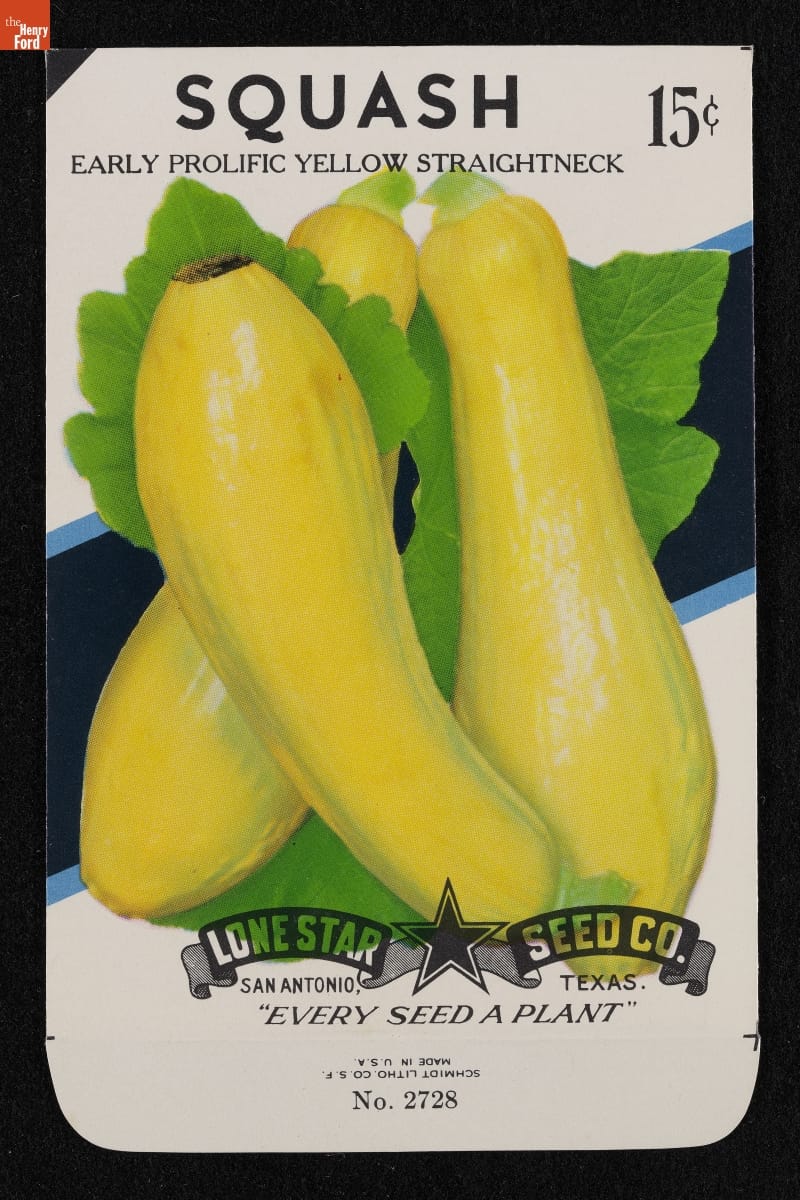
- Lone Star Seed Co. "Squash: Early Prolific Yellow Straightneck" Seed Packet, 1972 - The Lone Star Seed Company was founded by brothers Paul and Roland Roberts in San Antonio, Texas, in the early 1920s. The company sold flower and vegetable seeds throughout Texas, Louisiana, Oklahoma, and New Mexico -- many from racks in feed, grocery, hardware, and department stores. The packets often contained information printed in English and Spanish, reflecting the company's market area.
- 1972
- Collections - Artifact
Lone Star Seed Co. "Squash: Early Prolific Yellow Straightneck" Seed Packet, 1972
The Lone Star Seed Company was founded by brothers Paul and Roland Roberts in San Antonio, Texas, in the early 1920s. The company sold flower and vegetable seeds throughout Texas, Louisiana, Oklahoma, and New Mexico -- many from racks in feed, grocery, hardware, and department stores. The packets often contained information printed in English and Spanish, reflecting the company's market area.