
Search
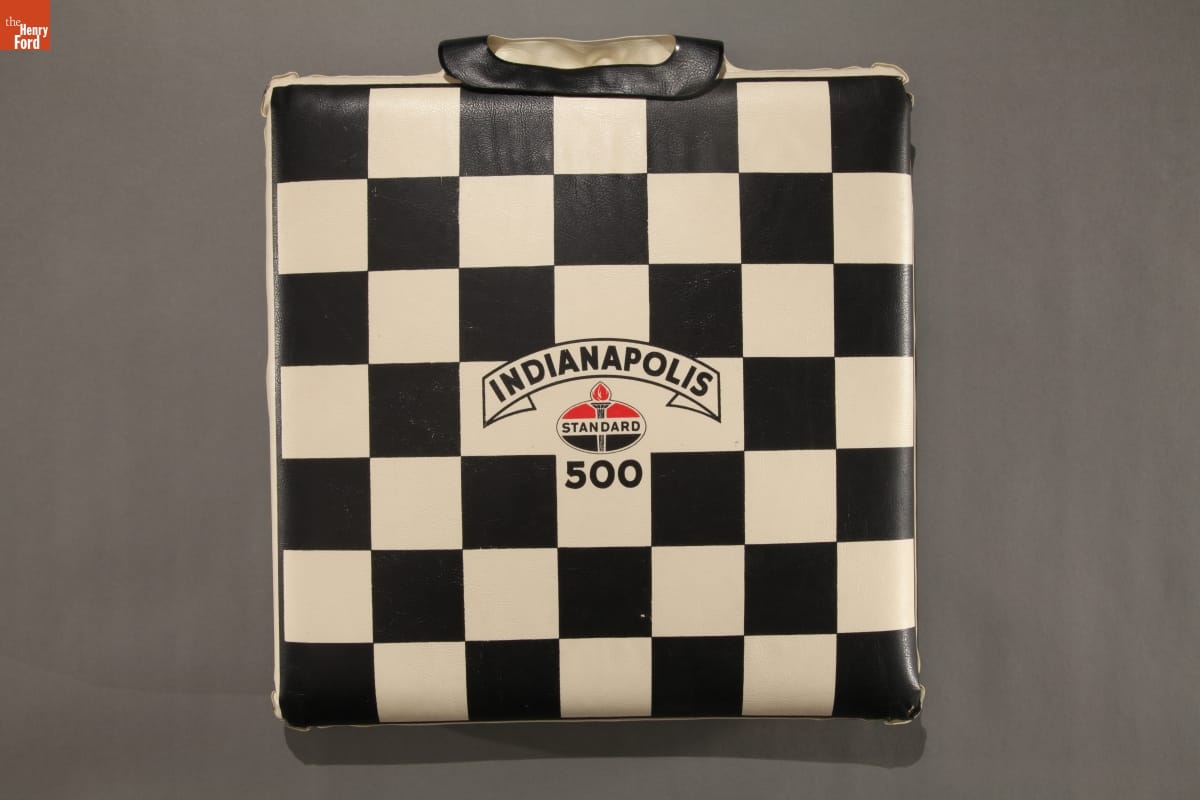
- Indianapolis 500 Seat Cushion, 1950-1970 - Souvenirs can provide a lifelong remembrance of places and events. Each May, Indianapolis 500 race fans have eagerly purchased souvenirs to use and take home. Checkered flag cushions, like this one from the mid twentieth century, provided a comfortable seat for fans when they were not on their feet cheering on their favorite driver.
- 1950-1970
- Collections - Artifact
Indianapolis 500 Seat Cushion, 1950-1970
Souvenirs can provide a lifelong remembrance of places and events. Each May, Indianapolis 500 race fans have eagerly purchased souvenirs to use and take home. Checkered flag cushions, like this one from the mid twentieth century, provided a comfortable seat for fans when they were not on their feet cheering on their favorite driver.
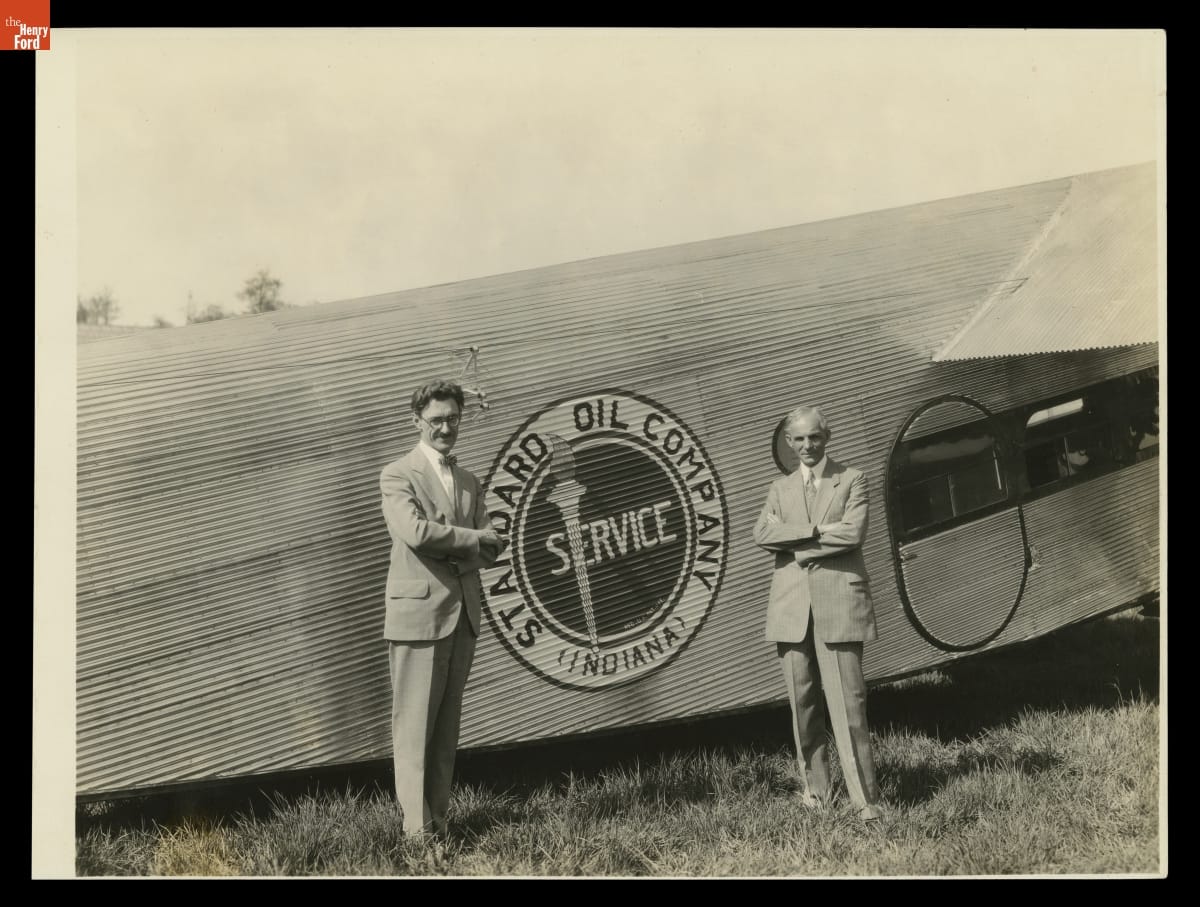
- William B. Stout and Henry Ford with a Ford Tri-Motor Airplane, circa 1927 - William B. Stout and Henry Ford pose beside a Ford Tri-Motor in this circa 1927 photo. Ford purchased the Stout Metal Aircraft Company in 1925, and Stout's tri-motor 3-AT airplane influenced the design of the successful Ford Tri-Motor aircraft produced from 1926 to 1933.
- circa 1927
- Collections - Artifact
William B. Stout and Henry Ford with a Ford Tri-Motor Airplane, circa 1927
William B. Stout and Henry Ford pose beside a Ford Tri-Motor in this circa 1927 photo. Ford purchased the Stout Metal Aircraft Company in 1925, and Stout's tri-motor 3-AT airplane influenced the design of the successful Ford Tri-Motor aircraft produced from 1926 to 1933.
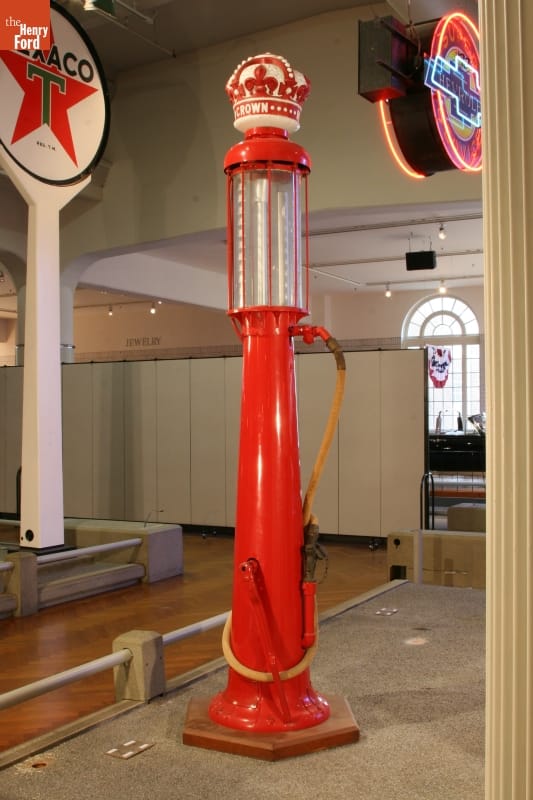
- Standard Crown Visible Delivery Gasoline Pump, circa 1920 - Before visible gasoline pumps, drivers relied on the accuracy of the pump and the honesty of station owners. Visible pumps, like this circa 1920 example, used a graduated glass cylinder to show customers the quality and quantity of gas being purchased. Glass globes, like the Standard Oil red crown, usually topped the pumps and advertised a company's brand and name.
- circa 1920
- Collections - Artifact
Standard Crown Visible Delivery Gasoline Pump, circa 1920
Before visible gasoline pumps, drivers relied on the accuracy of the pump and the honesty of station owners. Visible pumps, like this circa 1920 example, used a graduated glass cylinder to show customers the quality and quantity of gas being purchased. Glass globes, like the Standard Oil red crown, usually topped the pumps and advertised a company's brand and name.
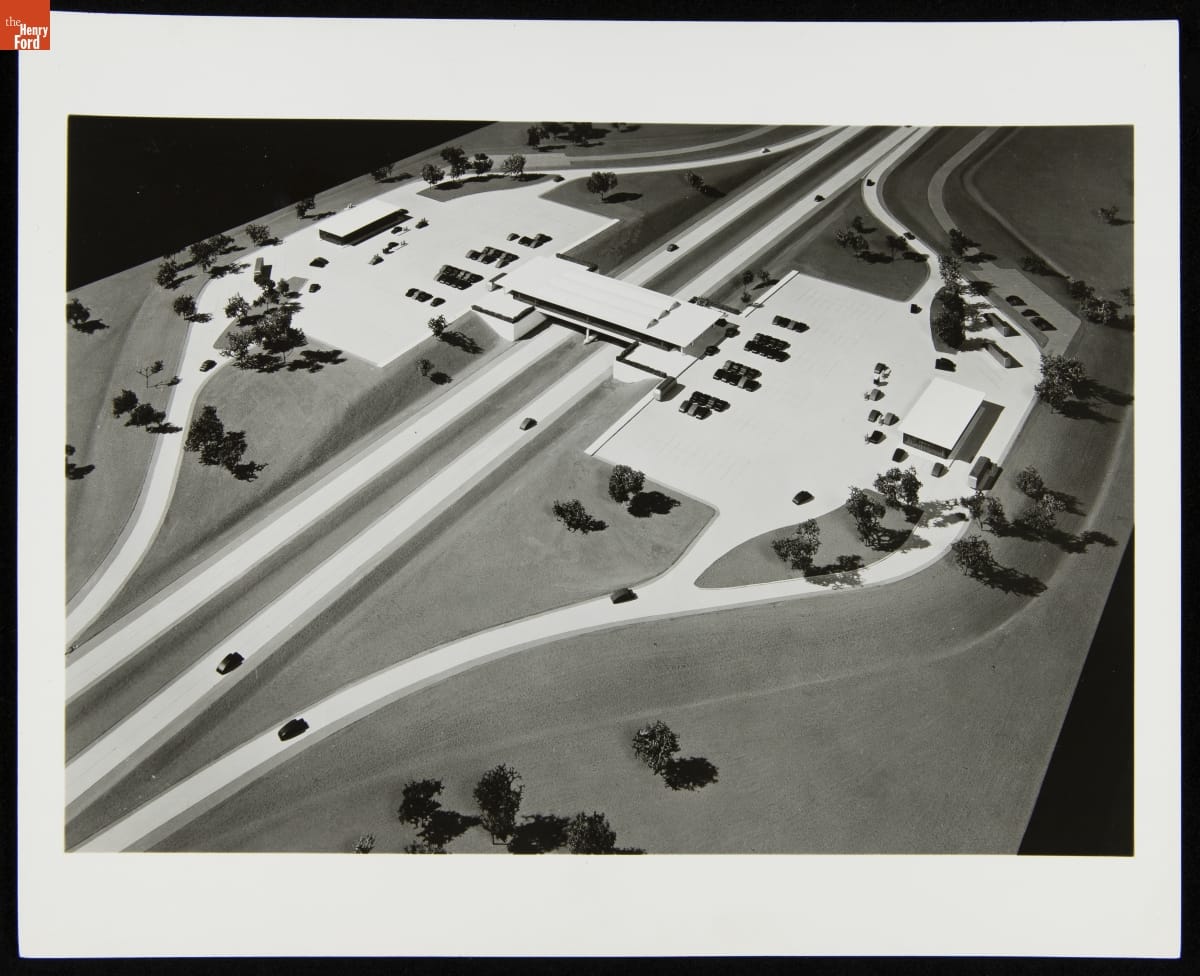
- "Top-of-the-Tollway" Dining at the Fred Harvey Restaurant Spanning the Illinois Tollway, circa 1959 - Fred Harvey is credited with creating America's first restaurant chain. Starting in the 1870s, he established Harvey House restaurants along the Santa Fe Railway. As railroad passenger travel declined in the 20th century, Harvey's company began serving motorists. In the 1950s, it operated "oasis" rest areas on the Illinois Tollway where drivers could stop for food and fuel.
- circa 1959
- Collections - Artifact
"Top-of-the-Tollway" Dining at the Fred Harvey Restaurant Spanning the Illinois Tollway, circa 1959
Fred Harvey is credited with creating America's first restaurant chain. Starting in the 1870s, he established Harvey House restaurants along the Santa Fe Railway. As railroad passenger travel declined in the 20th century, Harvey's company began serving motorists. In the 1950s, it operated "oasis" rest areas on the Illinois Tollway where drivers could stop for food and fuel.