
Search
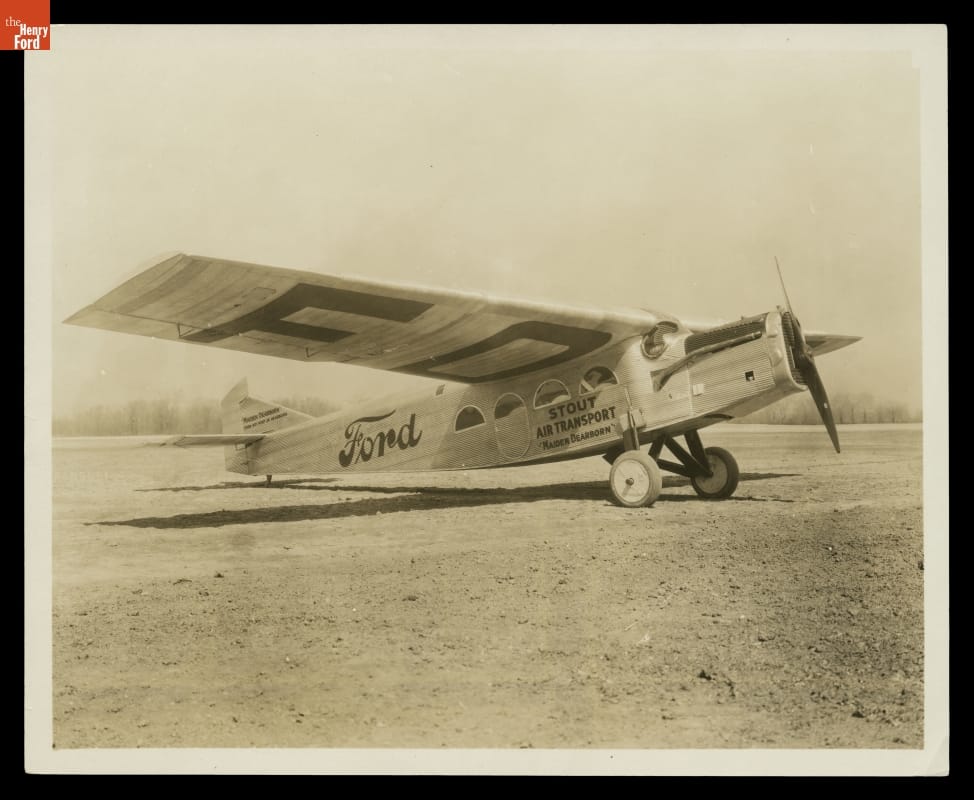
- Stout Air Transport 2AT-2 Airplane, "Maiden Dearborn" at Ford Airport, 1925 - The Stout 2AT airplane, designed by William B. Stout, first flew in February 1924. It had a cruising speed of 100 miles per hour, a range of 500 miles, and a capacity of six passengers or 1,500 pounds of freight. The plane in this photo was the first built at Stout's factory in Dearborn -- which explains its pun name, <EM>Maiden Dearborn</EM>.
- April 06, 1925
- Collections - Artifact
Stout Air Transport 2AT-2 Airplane, "Maiden Dearborn" at Ford Airport, 1925
The Stout 2AT airplane, designed by William B. Stout, first flew in February 1924. It had a cruising speed of 100 miles per hour, a range of 500 miles, and a capacity of six passengers or 1,500 pounds of freight. The plane in this photo was the first built at Stout's factory in Dearborn -- which explains its pun name, Maiden Dearborn.
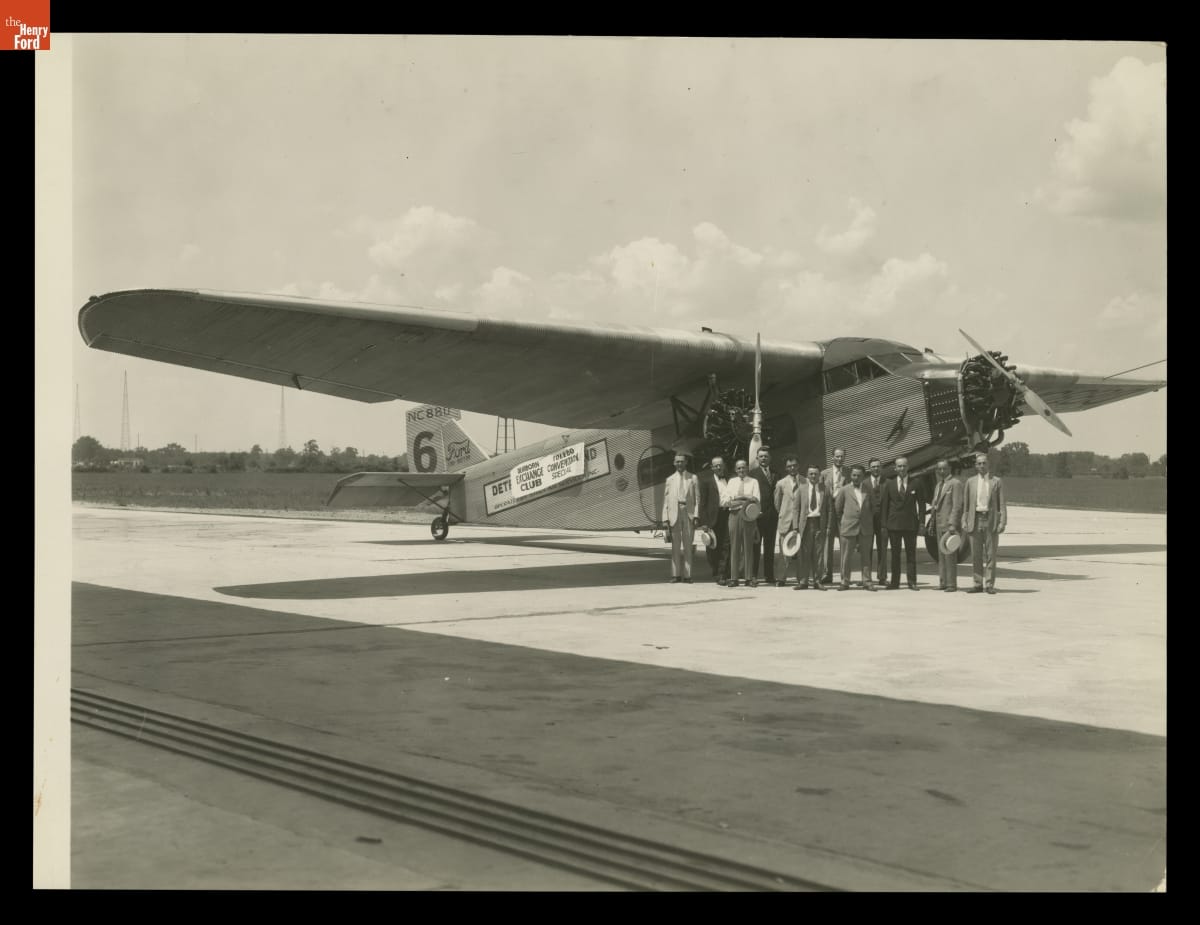
- Dearborn Exchange Club with Ford Tri-Motor 4-AT-8, July 1928 - Model 4-AT airliners were designed and built by the Stout Metal Airplane Company, a division of Ford Motor Company. The all-metal, multi-engine planes earned a reputation for being rugged and dependable. From the late 1920s into the 1930s, they were the backbone of the scheduled airline industry. The 4-ATs eased public concerns about the safety of air travel and revolutionized commercial aviation.
- July 16, 1928
- Collections - Artifact
Dearborn Exchange Club with Ford Tri-Motor 4-AT-8, July 1928
Model 4-AT airliners were designed and built by the Stout Metal Airplane Company, a division of Ford Motor Company. The all-metal, multi-engine planes earned a reputation for being rugged and dependable. From the late 1920s into the 1930s, they were the backbone of the scheduled airline industry. The 4-ATs eased public concerns about the safety of air travel and revolutionized commercial aviation.
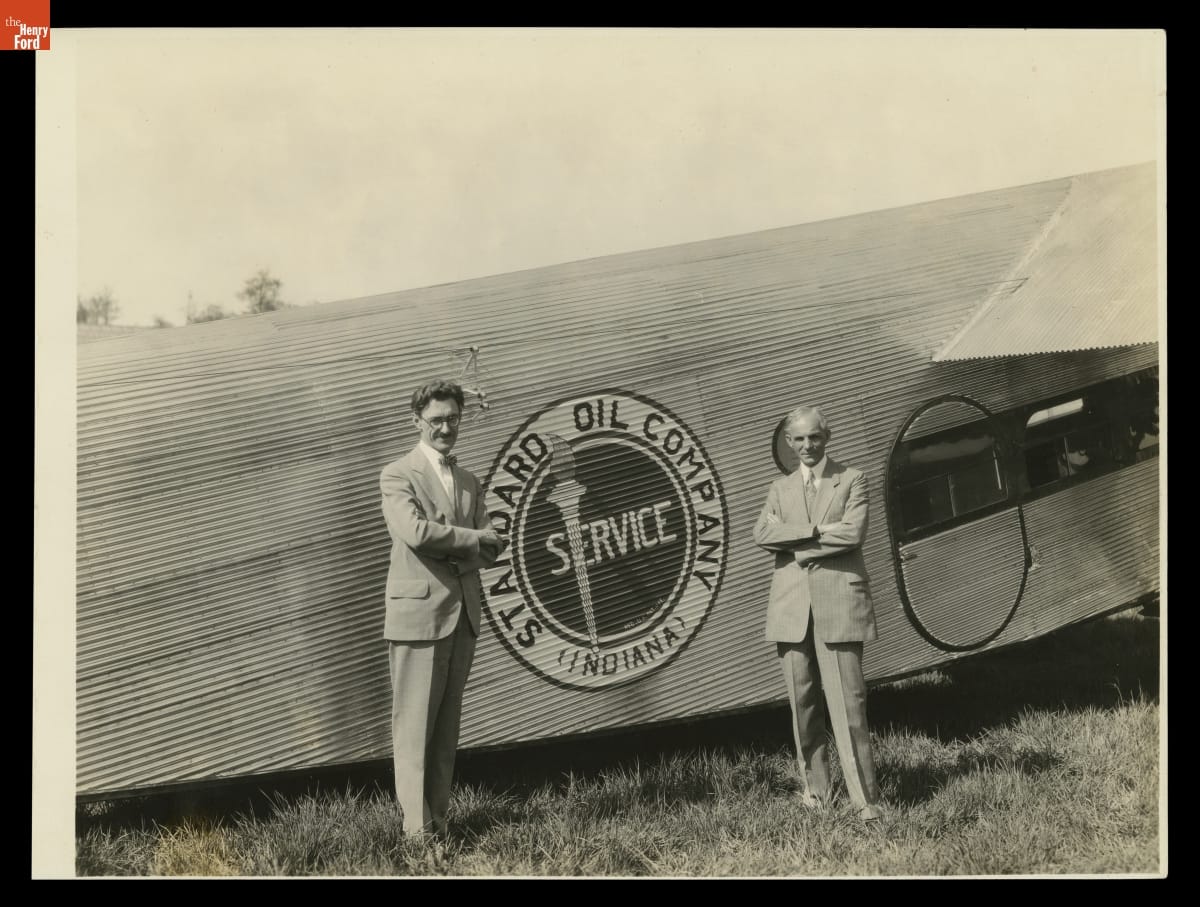
- William B. Stout and Henry Ford with a Ford Tri-Motor Airplane, circa 1927 - William B. Stout and Henry Ford pose beside a Ford Tri-Motor in this circa 1927 photo. Ford purchased the Stout Metal Aircraft Company in 1925, and Stout's tri-motor 3-AT airplane influenced the design of the successful Ford Tri-Motor aircraft produced from 1926 to 1933.
- circa 1927
- Collections - Artifact
William B. Stout and Henry Ford with a Ford Tri-Motor Airplane, circa 1927
William B. Stout and Henry Ford pose beside a Ford Tri-Motor in this circa 1927 photo. Ford purchased the Stout Metal Aircraft Company in 1925, and Stout's tri-motor 3-AT airplane influenced the design of the successful Ford Tri-Motor aircraft produced from 1926 to 1933.
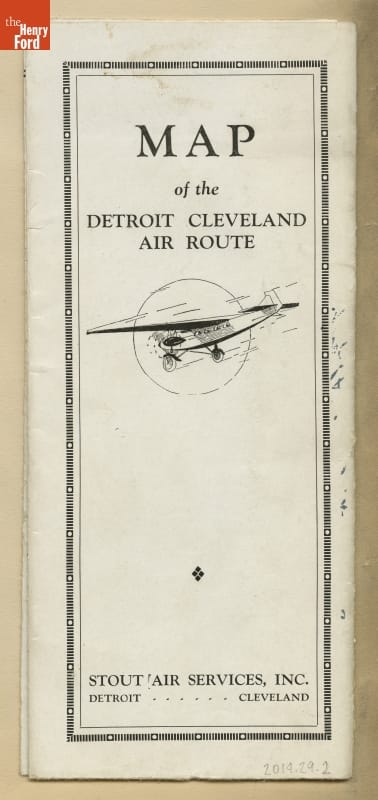
- Map of the Stout Air Services' Detroit-to-Cleveland Air Route, circa 1928 - Stout Air Services offered scheduled passenger flights between Detroit and Cleveland in the late 1920s. The travel time was 100 minutes. Instead of flying directly across Lake Erie, pilots took the overland route seen on this map. This routing allowed pilots to navigate by visible landmarks and gave them places to land in the event of an emergency.
- circa 1928
- Collections - Artifact
Map of the Stout Air Services' Detroit-to-Cleveland Air Route, circa 1928
Stout Air Services offered scheduled passenger flights between Detroit and Cleveland in the late 1920s. The travel time was 100 minutes. Instead of flying directly across Lake Erie, pilots took the overland route seen on this map. This routing allowed pilots to navigate by visible landmarks and gave them places to land in the event of an emergency.
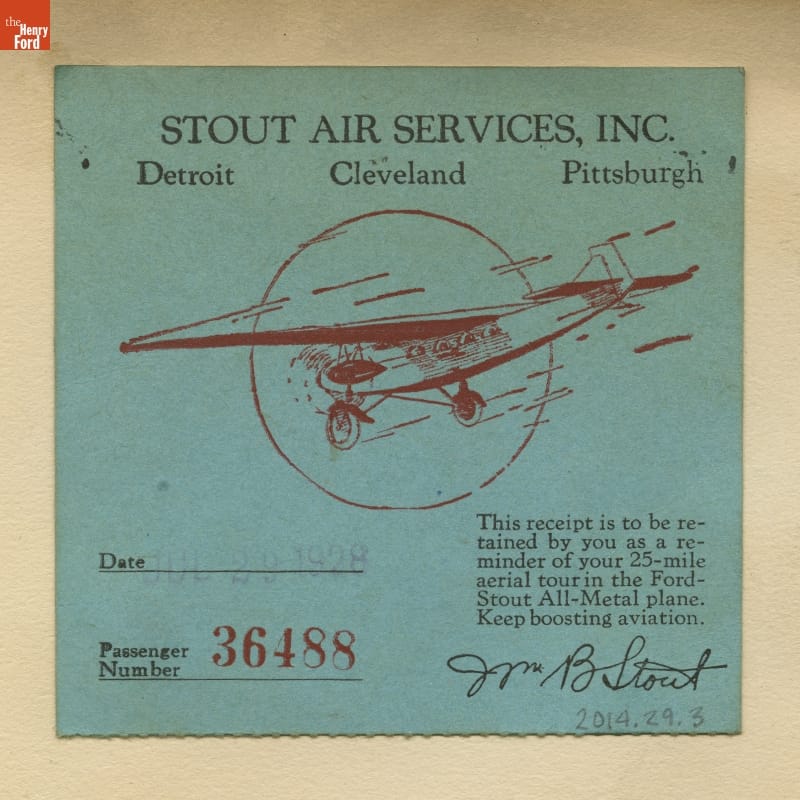
- Souvenir Receipt from a 25-Mile Aerial Tour in the Ford-Stout All-Metal Plane, circa 1928 - Early airlines encouraged interest in airplane travel by offering short aerial tours at relatively low prices. Perhaps the passenger who took this 25-mile tour, via Stout Air Services, in July 1928 later became a full-fare passenger on one of the company's regular flights between Detroit, Cleveland and Pittsburgh.
- circa 1928
- Collections - Artifact
Souvenir Receipt from a 25-Mile Aerial Tour in the Ford-Stout All-Metal Plane, circa 1928
Early airlines encouraged interest in airplane travel by offering short aerial tours at relatively low prices. Perhaps the passenger who took this 25-mile tour, via Stout Air Services, in July 1928 later became a full-fare passenger on one of the company's regular flights between Detroit, Cleveland and Pittsburgh.
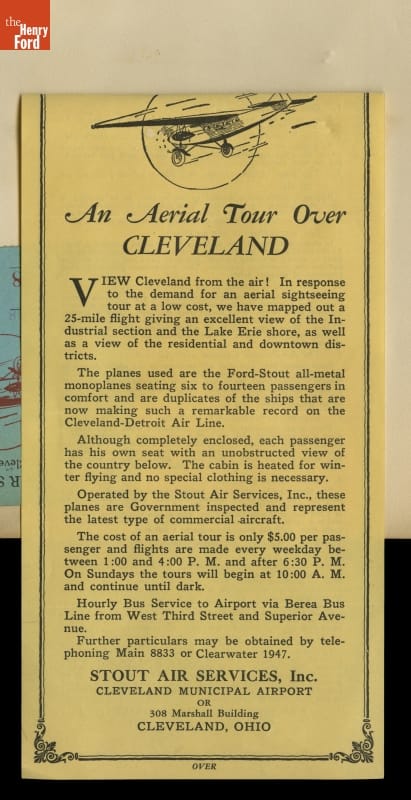
- Air Travel Brochure, "How to Get the Maximum Enjoyment Out of Your Flight," circa 1928 - Flying was a new experience for Americans in the late 1920s. Stout Air Services offered relatively inexpensive tour flights to attract new passengers. This brochure calmed the nerves of first-time flyers. Passengers were assured that "the pilot always banks when turning," "the air supports the plane like the ocean supports a ship," and "dizziness is unknown in airplanes."
- circa 1928
- Collections - Artifact
Air Travel Brochure, "How to Get the Maximum Enjoyment Out of Your Flight," circa 1928
Flying was a new experience for Americans in the late 1920s. Stout Air Services offered relatively inexpensive tour flights to attract new passengers. This brochure calmed the nerves of first-time flyers. Passengers were assured that "the pilot always banks when turning," "the air supports the plane like the ocean supports a ship," and "dizziness is unknown in airplanes."
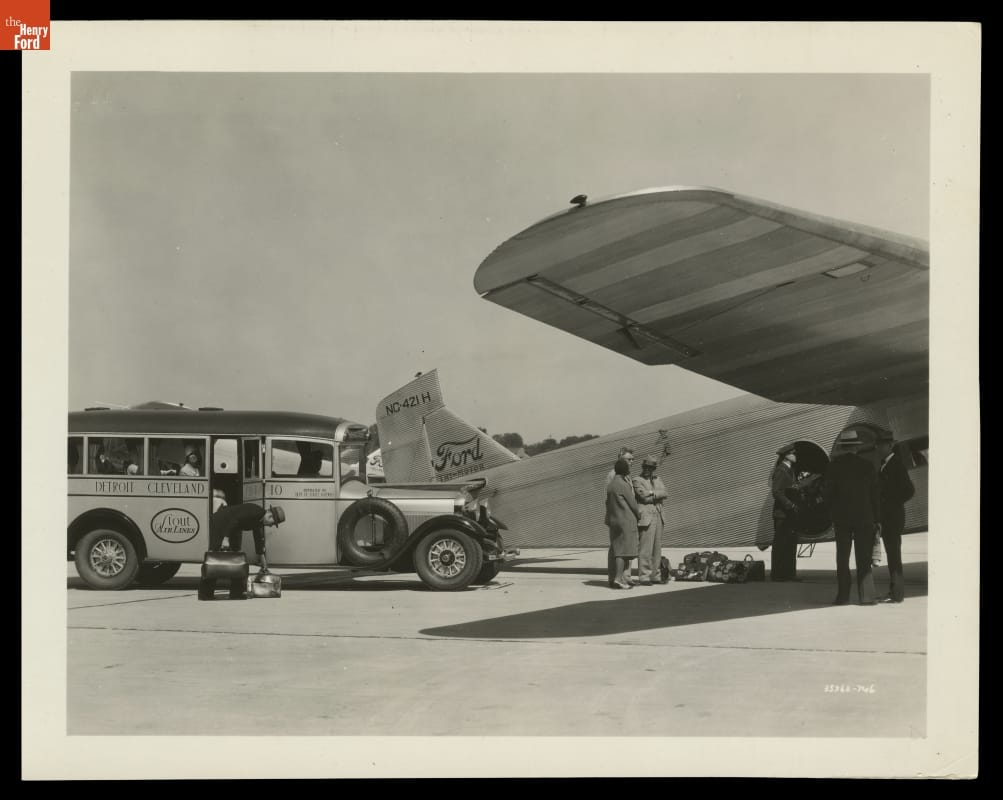
- Loading Passenger Luggage into Ford Tri-Motor 5-AT-81, Ford Airport, Dearborn, Michigan, 1930 - Stout Air Lines advertised direct airplane service between Detroit and Cleveland, but this wasn't strictly true. Stout's "Detroit" terminal was, in fact, Ford Airport in Dearborn, ten miles west of the city. Passengers gathered at a station in Detroit and were shuttled by bus to the Dearborn airport where they boarded the actual plane.
- September 16, 1930
- Collections - Artifact
Loading Passenger Luggage into Ford Tri-Motor 5-AT-81, Ford Airport, Dearborn, Michigan, 1930
Stout Air Lines advertised direct airplane service between Detroit and Cleveland, but this wasn't strictly true. Stout's "Detroit" terminal was, in fact, Ford Airport in Dearborn, ten miles west of the city. Passengers gathered at a station in Detroit and were shuttled by bus to the Dearborn airport where they boarded the actual plane.
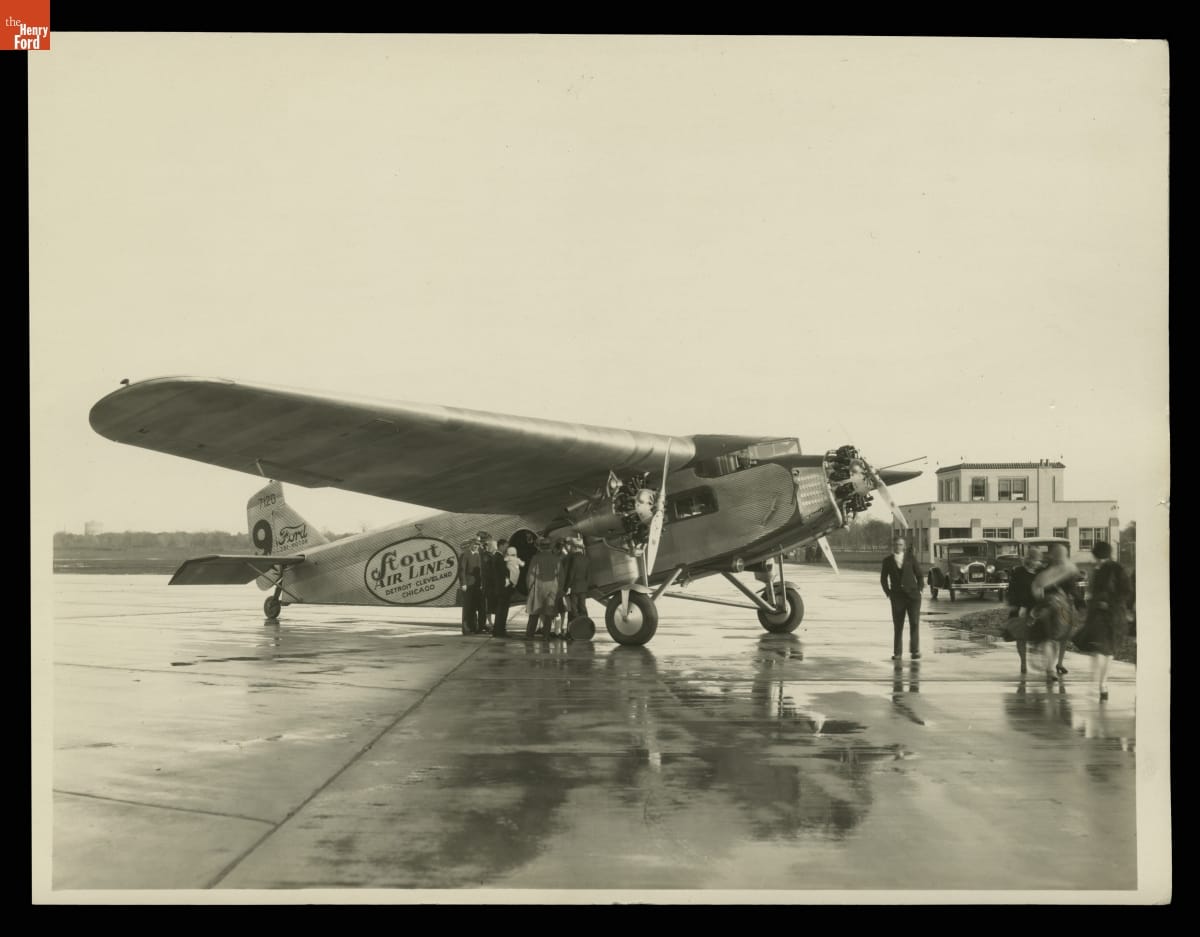
- Stout Air Lines Ford Tri-Motor 4-AT-34 Airplane at Ford Airport, October 1928 - Model 4-AT airliners were designed and built by engineers of the Stout Metal Airplane Company, purchased from William Stout by Ford Motor Company. These rugged planes earned a reputation for being safe and dependable. Many commercial airlines -- including Stout's newly formed Stout Air Lines -- purchased 4-ATs for passenger travel. Here, one of his airliners takes on well-dressed passengers in Dearborn, Michigan.
- October 20, 1928
- Collections - Artifact
Stout Air Lines Ford Tri-Motor 4-AT-34 Airplane at Ford Airport, October 1928
Model 4-AT airliners were designed and built by engineers of the Stout Metal Airplane Company, purchased from William Stout by Ford Motor Company. These rugged planes earned a reputation for being safe and dependable. Many commercial airlines -- including Stout's newly formed Stout Air Lines -- purchased 4-ATs for passenger travel. Here, one of his airliners takes on well-dressed passengers in Dearborn, Michigan.
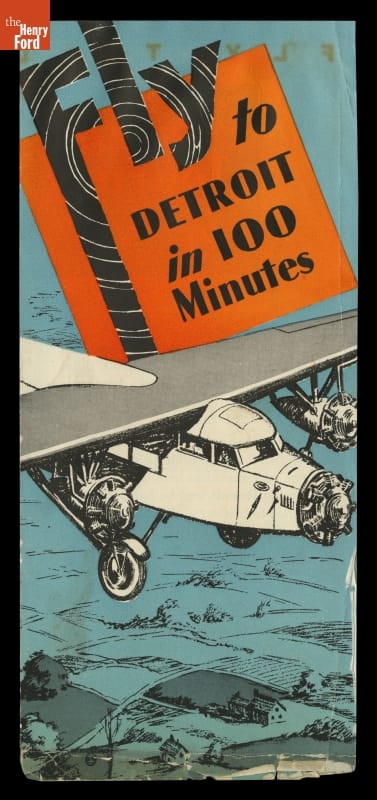
- Air Travel Brochure, "Fly to Detroit in 100 Minutes," circa 1928 - Air travel cost more than train or bus transportation, but it was faster. One could fly from Cleveland to Detroit in just 100 minutes -- have your breakfast in Cleveland, spend the business day in Detroit, and be back in Cleveland for dinner, as this brochure colorfully explained it. The same trip took 3 hours and 50 minutes by railroad.
- circa 1928
- Collections - Artifact
Air Travel Brochure, "Fly to Detroit in 100 Minutes," circa 1928
Air travel cost more than train or bus transportation, but it was faster. One could fly from Cleveland to Detroit in just 100 minutes -- have your breakfast in Cleveland, spend the business day in Detroit, and be back in Cleveland for dinner, as this brochure colorfully explained it. The same trip took 3 hours and 50 minutes by railroad.
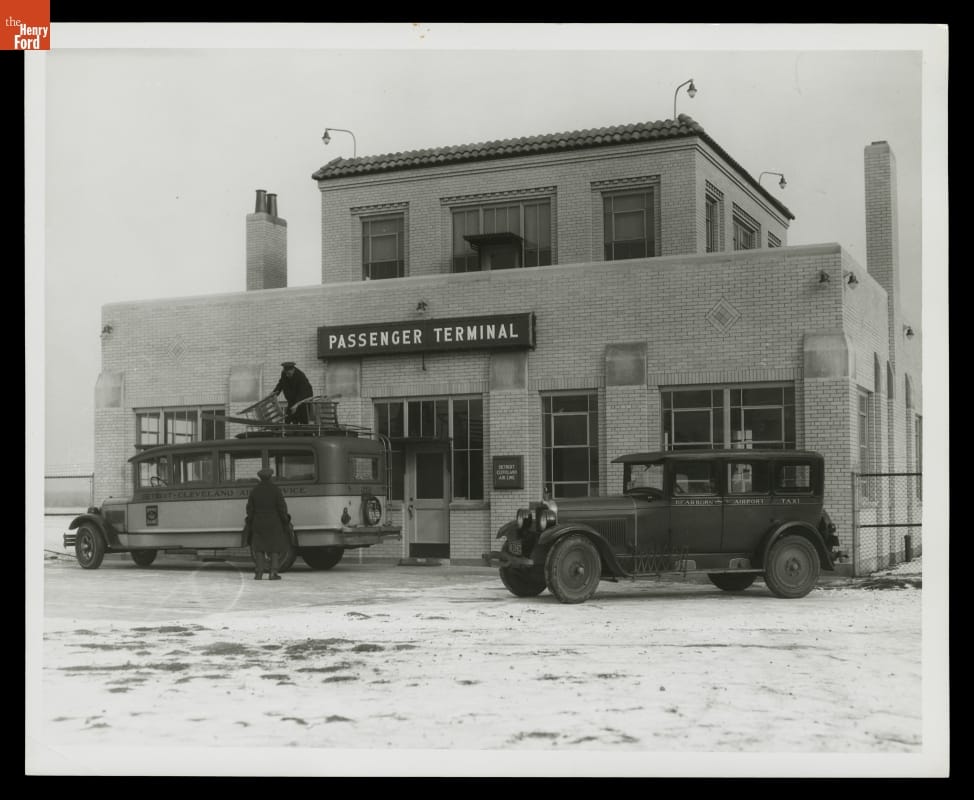
- Airport Passenger Transportation Service at Ford Airport, February, 1928 - The terminal building at Ford Airport featured a well-equipped lounge and ticket office for passengers flying Stout Air Service, a commercial airline established by William Stout after selling his airplane company to Ford in 1925. This Model T bus, left, was part of the very first airport limousine service, which carried customers between Ford Airport and downtown Detroit, Michigan.
- February 03, 1928
- Collections - Artifact
Airport Passenger Transportation Service at Ford Airport, February, 1928
The terminal building at Ford Airport featured a well-equipped lounge and ticket office for passengers flying Stout Air Service, a commercial airline established by William Stout after selling his airplane company to Ford in 1925. This Model T bus, left, was part of the very first airport limousine service, which carried customers between Ford Airport and downtown Detroit, Michigan.