
Search
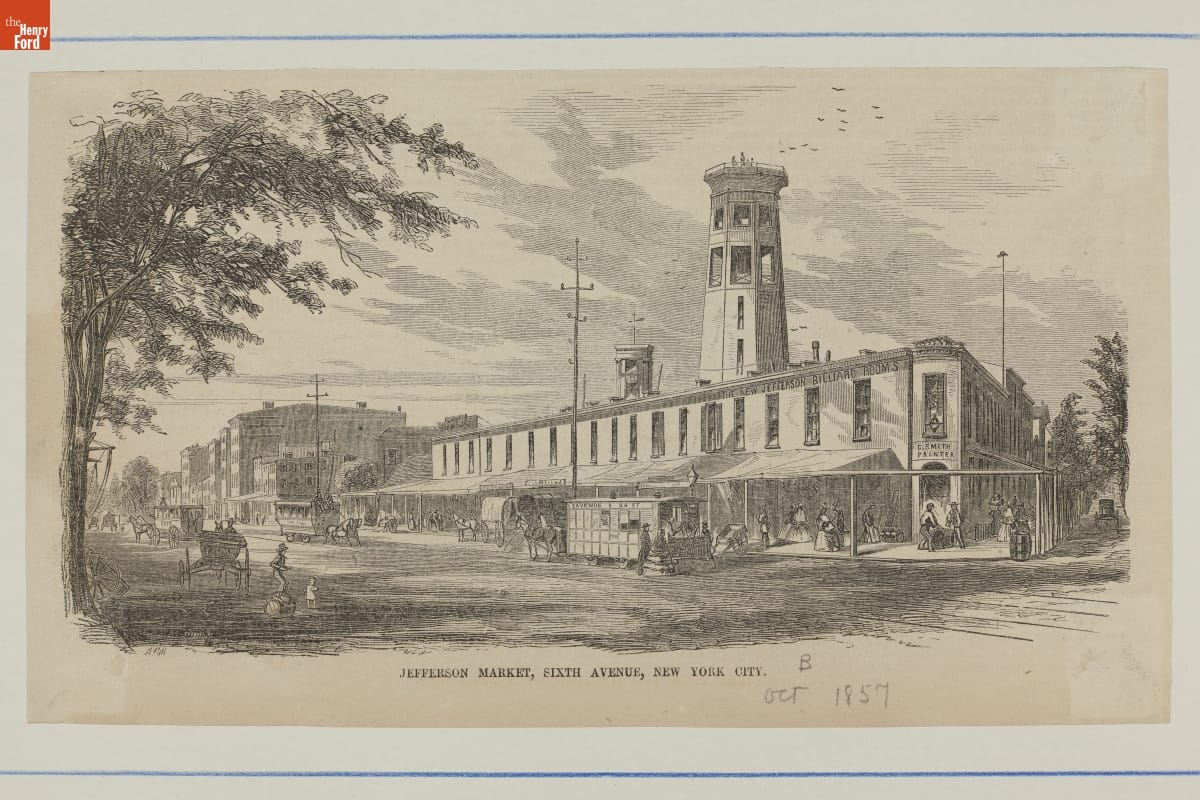
- "Jefferson Market, Sixth Avenue, New York City," 1857 - In the mid-1800s, horse-drawn streetcars provided a convenient and affordable way to get around a growing city. These streetcars traveled the main urban thoroughfares and took passengers to their workplaces, local shops and businesses, parks and other destinations. In this 1857 print, riders get on and off a streetcar at New York's Jefferson Market, while another streetcar approaches from down the street.
- 1857
- Collections - Artifact
"Jefferson Market, Sixth Avenue, New York City," 1857
In the mid-1800s, horse-drawn streetcars provided a convenient and affordable way to get around a growing city. These streetcars traveled the main urban thoroughfares and took passengers to their workplaces, local shops and businesses, parks and other destinations. In this 1857 print, riders get on and off a streetcar at New York's Jefferson Market, while another streetcar approaches from down the street.
- Old Market House, Mobile, Alabama, -
- circa 1906
- Collections - Artifact
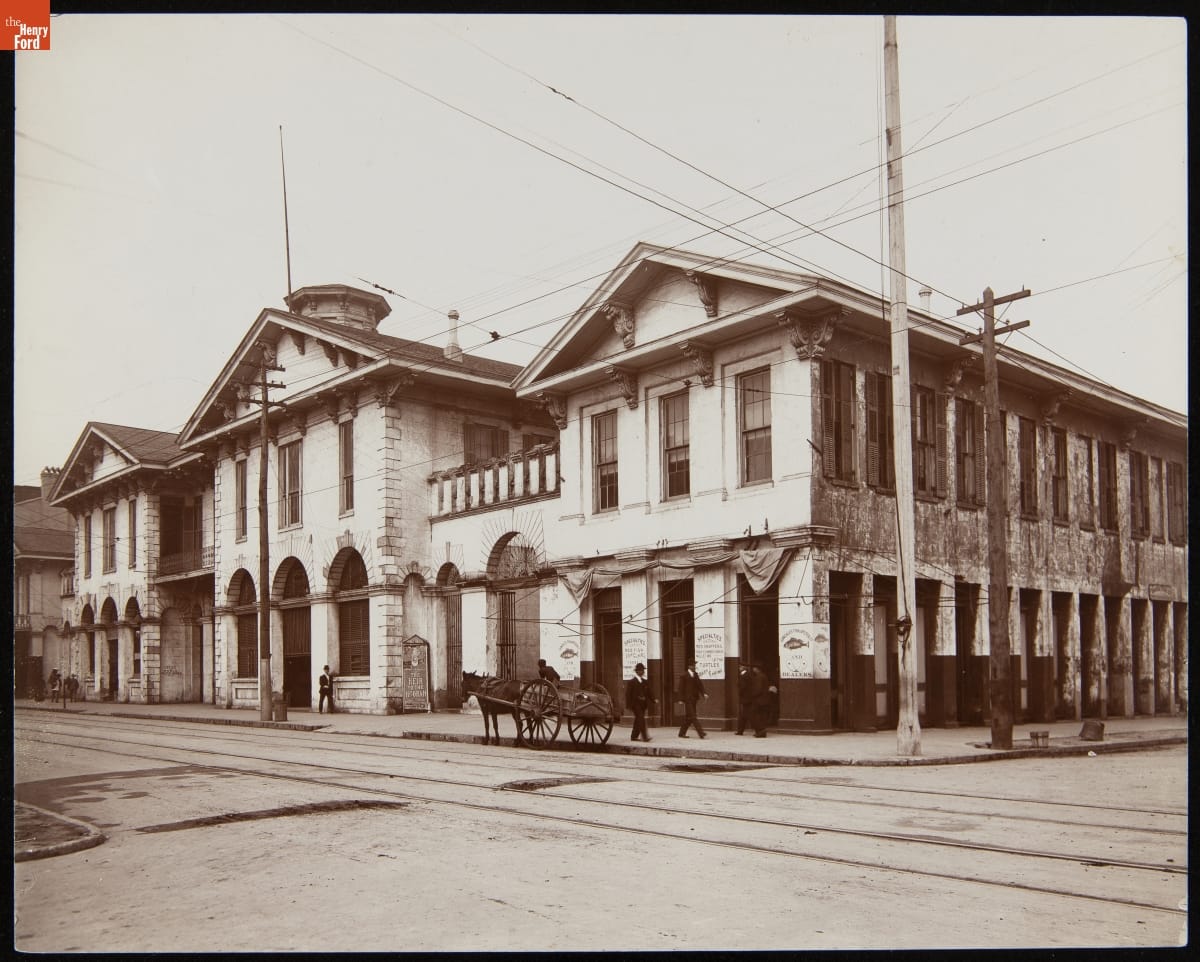
Old Market House, Mobile, Alabama,
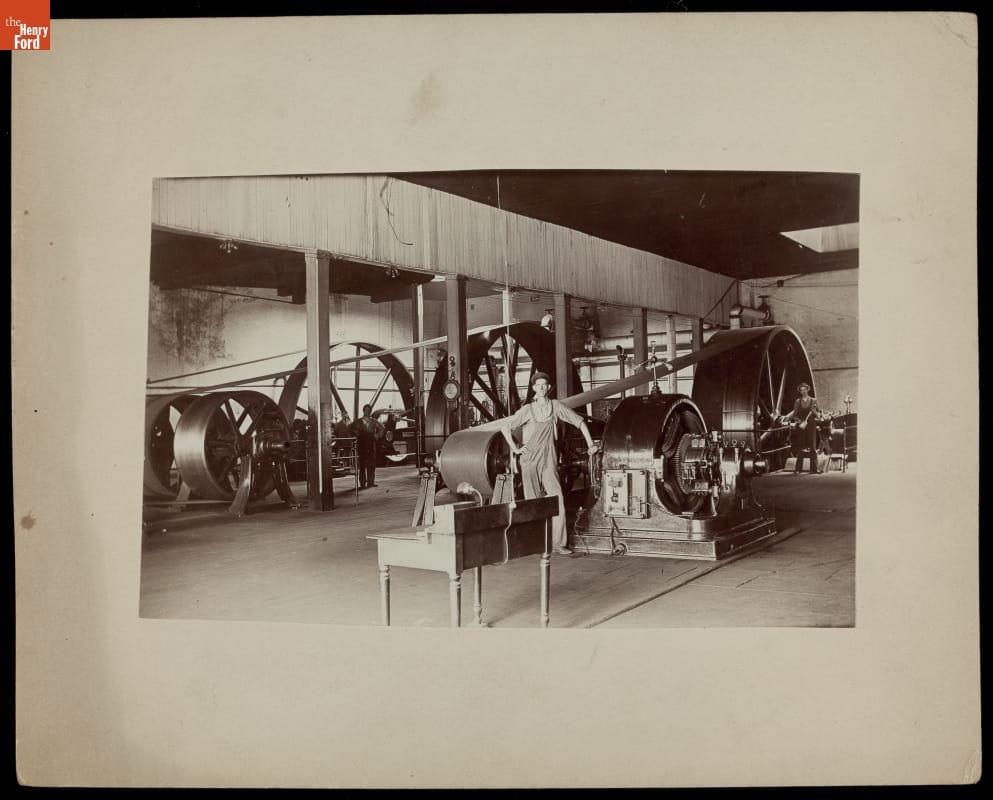
- Interior of Power House, Indianapolis Street Railway, 1899 - Established in 1864, the Indianapolis Street Railway began converting from mule power to electricity in 1890. Its first powerhouse, located at a mule barn, was supplemented by a new facility at West Washington and Brush streets in 1894. The new plant's boilers initially burned natural gas and oil, but they were converted to burn coal in 1898.
- 1899
- Collections - Artifact
Interior of Power House, Indianapolis Street Railway, 1899
Established in 1864, the Indianapolis Street Railway began converting from mule power to electricity in 1890. Its first powerhouse, located at a mule barn, was supplemented by a new facility at West Washington and Brush streets in 1894. The new plant's boilers initially burned natural gas and oil, but they were converted to burn coal in 1898.
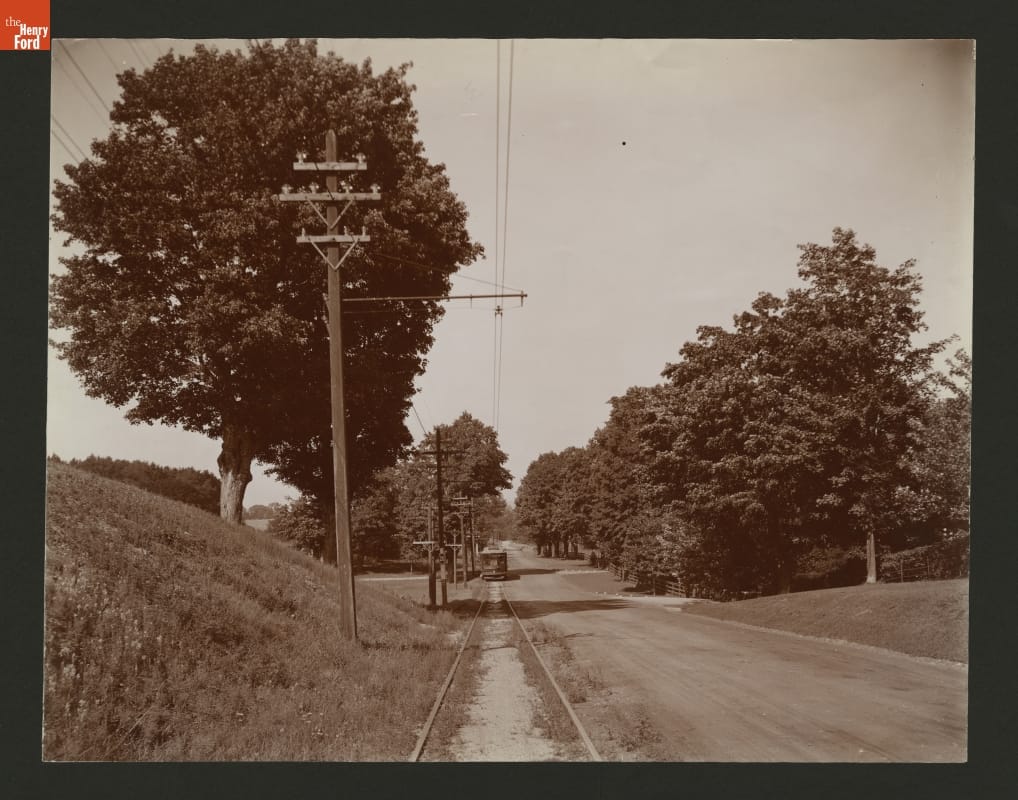
- Electric Street Railroad Car on Holmes Road, Pittsfield, Massachusetts, circa 1910 - Interurban railways were electric trains with features of both streetcars and passenger trains. They were lifelines between small towns and cities starting in the 1880s. This interurban ran through Western Massachusetts in the 1910s.
- circa 1910
- Collections - Artifact
Electric Street Railroad Car on Holmes Road, Pittsfield, Massachusetts, circa 1910
Interurban railways were electric trains with features of both streetcars and passenger trains. They were lifelines between small towns and cities starting in the 1880s. This interurban ran through Western Massachusetts in the 1910s.
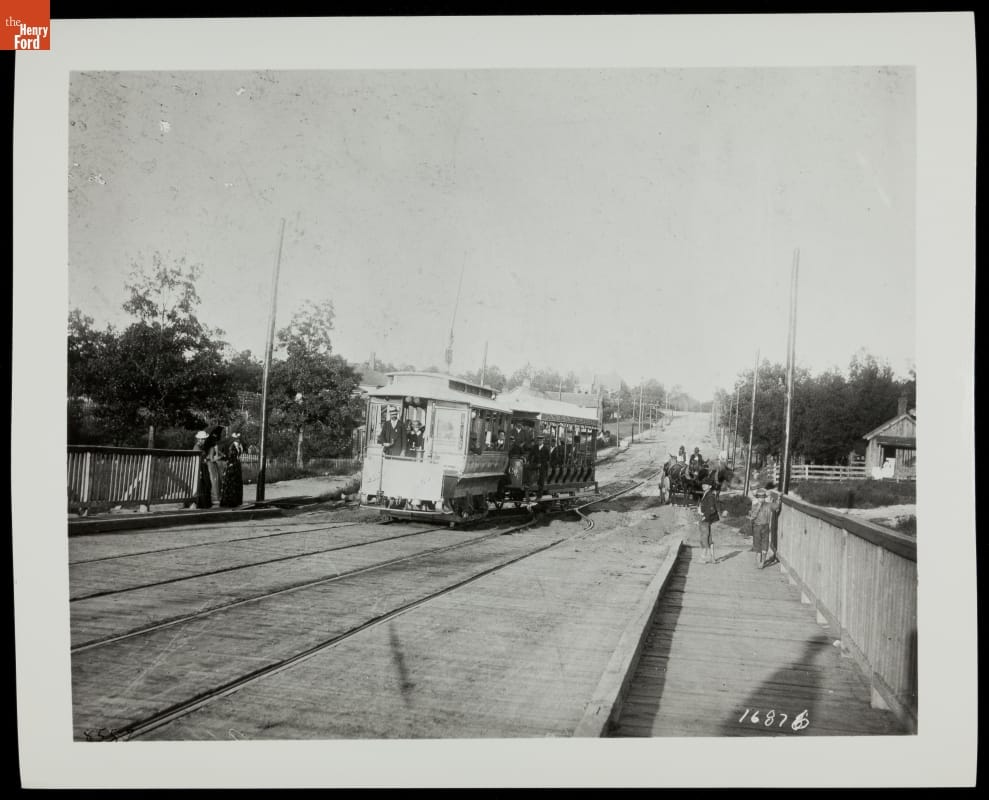
- Street Car on Atlanta & Edgewood Street Railway, Atlanta, Georgia, circa 1890 - The Atlanta and Edgewood Street Railway Company introduced Atlanta's first electric streetcars in 1889. With oak interiors and plate glass windows, they were far fancier than the city's horse-drawn cars. Unlike existing lines that provided a cheap, practical way to get around, Edgewood Avenue service offered comfortable transportation for residents of Inman Park, a planned neighborhood east of downtown.
- circa 1890
- Collections - Artifact
Street Car on Atlanta & Edgewood Street Railway, Atlanta, Georgia, circa 1890
The Atlanta and Edgewood Street Railway Company introduced Atlanta's first electric streetcars in 1889. With oak interiors and plate glass windows, they were far fancier than the city's horse-drawn cars. Unlike existing lines that provided a cheap, practical way to get around, Edgewood Avenue service offered comfortable transportation for residents of Inman Park, a planned neighborhood east of downtown.
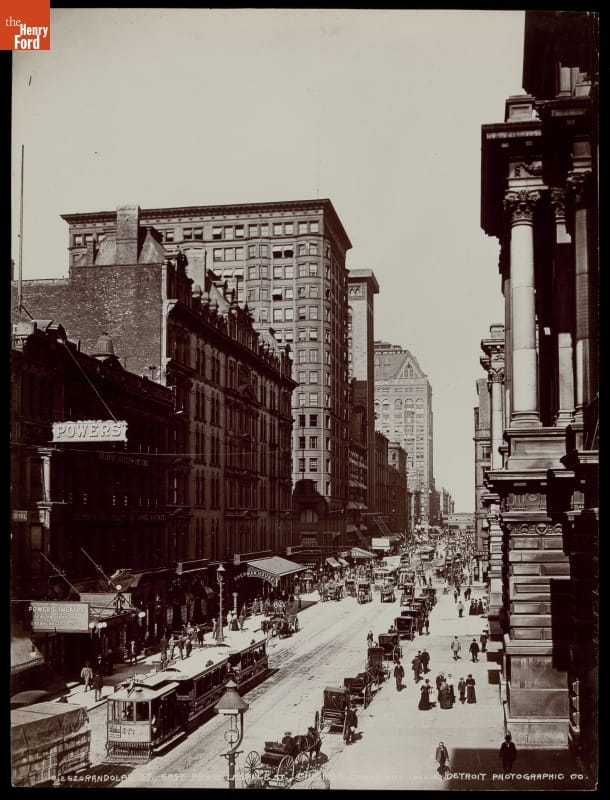
- Randolph Street, East from LaSalle Street, Chicago, Illinois, circa 1900 - From 1895 to 1924, the Detroit Publishing Company was one of the major image publishers in the world. The company had a wide-ranging stock of original photographs, including many scenes from across North America. Here, Chicago's Randolph Street bustles with streetcars, pedestrians, and an array of horse-drawn vehicles.
- circa 1900
- Collections - Artifact
Randolph Street, East from LaSalle Street, Chicago, Illinois, circa 1900
From 1895 to 1924, the Detroit Publishing Company was one of the major image publishers in the world. The company had a wide-ranging stock of original photographs, including many scenes from across North America. Here, Chicago's Randolph Street bustles with streetcars, pedestrians, and an array of horse-drawn vehicles.
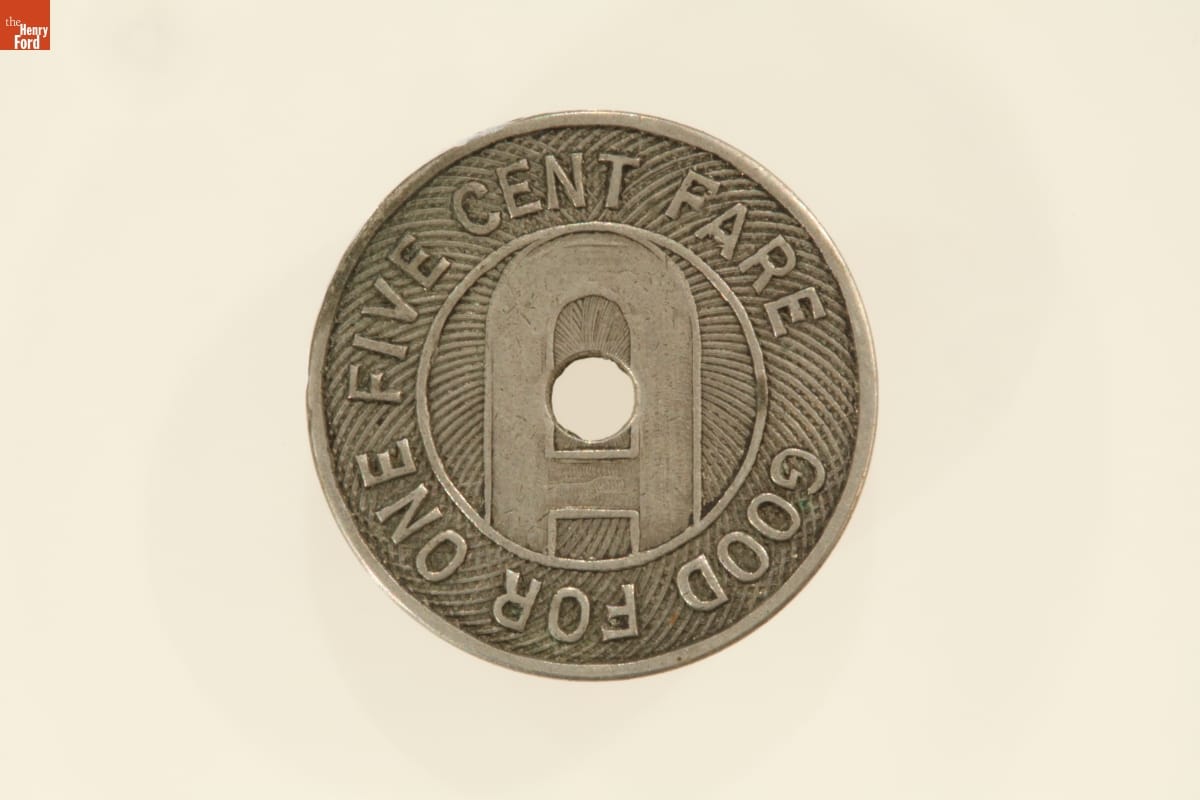
- Detroit Department of Street Railways Token, circa 1925 - Streetcars were a convenient, practical and affordable way to get around cities. A passenger used this 5-cent token to ride streetcars operated by the Detroit Department of Street Railways (DSR). The DSR, formed in 1922 when the city bought the privately owned Detroit United Railways, added bus service in the late 1920s.
- circa 1925
- Collections - Artifact
Detroit Department of Street Railways Token, circa 1925
Streetcars were a convenient, practical and affordable way to get around cities. A passenger used this 5-cent token to ride streetcars operated by the Detroit Department of Street Railways (DSR). The DSR, formed in 1922 when the city bought the privately owned Detroit United Railways, added bus service in the late 1920s.
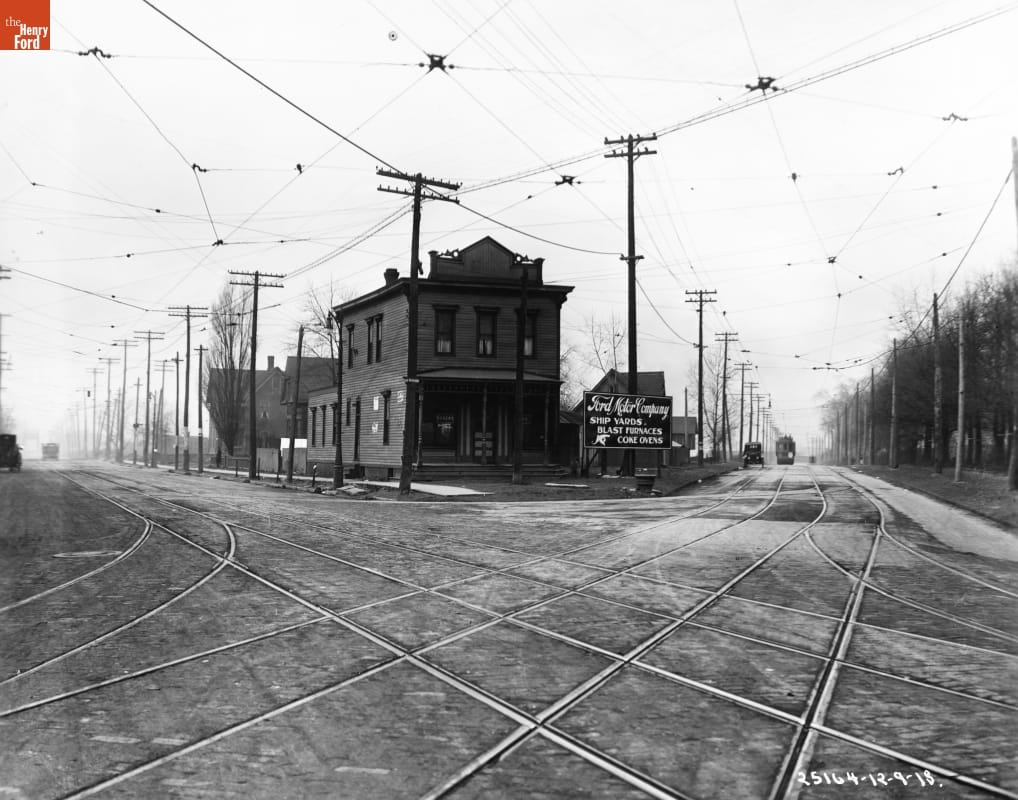
- Intersection of Electric Railroad Lines at Fort and Dearborn Streets, Detroit, Michigan, 1918 - Streetcar tracks laid on roads and electric trolley wires running overhead formed key infrastructure for the urban public transportation network in the late 19th and early 20th centuries. This photoprint shows the intersection of Fort Street and Dearborn Street in Detroit, Michigan, in 1918. The streetcar lines helped people, including Ford Motor Company workers, travel easily without a car.
- December 19, 1918
- Collections - Artifact
Intersection of Electric Railroad Lines at Fort and Dearborn Streets, Detroit, Michigan, 1918
Streetcar tracks laid on roads and electric trolley wires running overhead formed key infrastructure for the urban public transportation network in the late 19th and early 20th centuries. This photoprint shows the intersection of Fort Street and Dearborn Street in Detroit, Michigan, in 1918. The streetcar lines helped people, including Ford Motor Company workers, travel easily without a car.
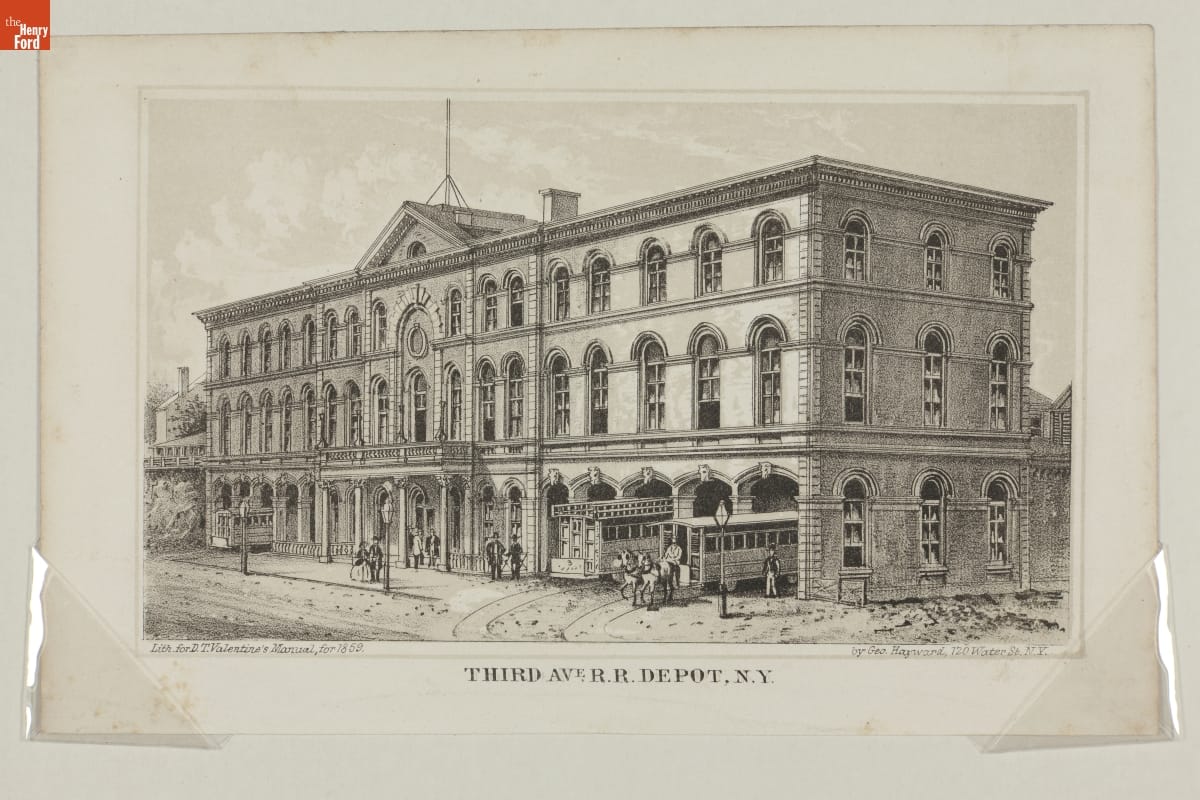
- "Third Ave. R.R. Depot, N.Y.," 1859 - In the mid-1800s, horse-drawn streetcars provided a convenient and affordable way to get around a growing city. These streetcars traveled the main urban thoroughfares and took passengers to their workplaces, local shops and businesses, parks and other destinations. This 1859 print shows several streetcars moving in and out of the Third Avenue Railroad Depot in New York City.
- 1859
- Collections - Artifact
"Third Ave. R.R. Depot, N.Y.," 1859
In the mid-1800s, horse-drawn streetcars provided a convenient and affordable way to get around a growing city. These streetcars traveled the main urban thoroughfares and took passengers to their workplaces, local shops and businesses, parks and other destinations. This 1859 print shows several streetcars moving in and out of the Third Avenue Railroad Depot in New York City.
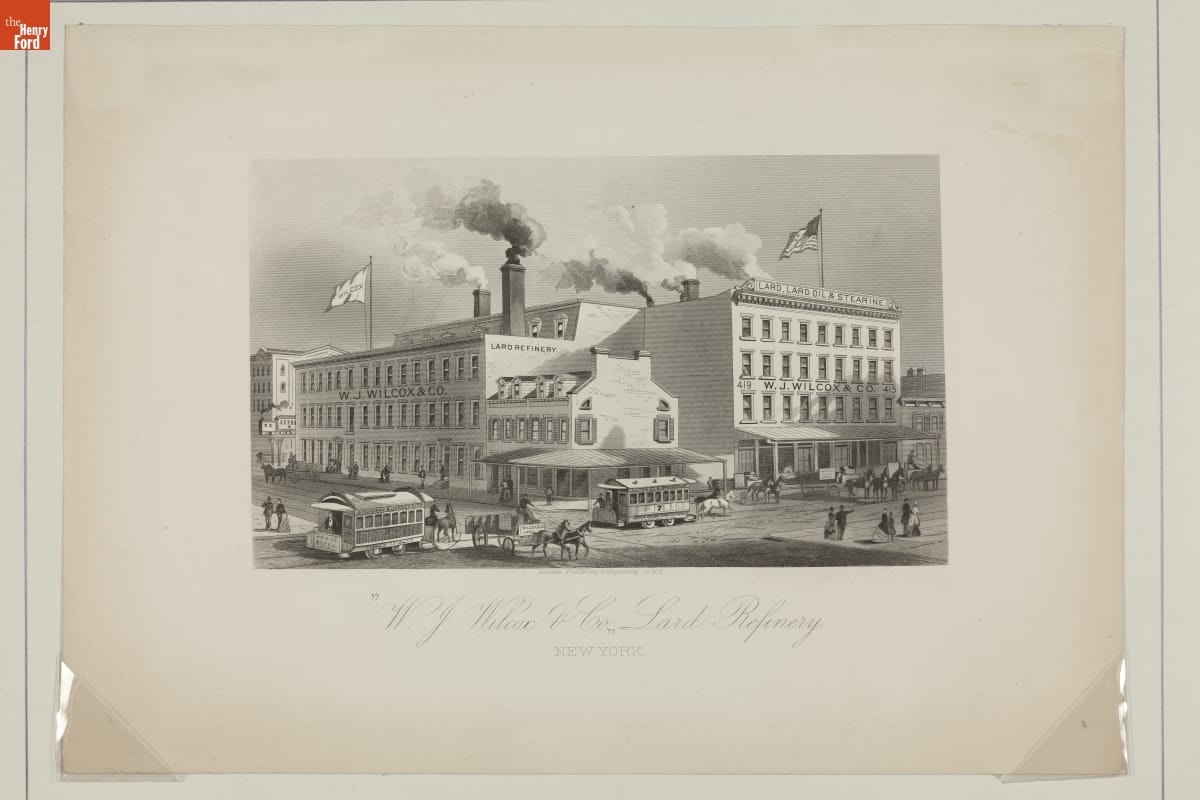
- "W.J. Wilcox & Co., Lard Refinery. New York," circa 1876 - W. J. Wilcox and Company's refined lard (hog fat) and sent its products throughout the world. The company was one of the largest lard refiner and exporter in the late 1800s. The massive factory building and the bustling New York City street scene -- with a variety of transportation options -- depicted in this print conveys the company's commercial importance.
- circa 1876
- Collections - Artifact
"W.J. Wilcox & Co., Lard Refinery. New York," circa 1876
W. J. Wilcox and Company's refined lard (hog fat) and sent its products throughout the world. The company was one of the largest lard refiner and exporter in the late 1800s. The massive factory building and the bustling New York City street scene -- with a variety of transportation options -- depicted in this print conveys the company's commercial importance.