
Search
- Letter to John Burroughs from Morrison DeWitt, a Student Thanking Him for a Nature Walk, May 16, 1901 - In May 1901, John Burroughs traveled to the State Normal School in New Paltz, New York, to share his love of nature with the students. On a hike he discussed the local landscape and made observations about the natural world -- the group even found a quail's nest with eggs. Students later wrote thank you notes and invited Burroughs back for a future visit.
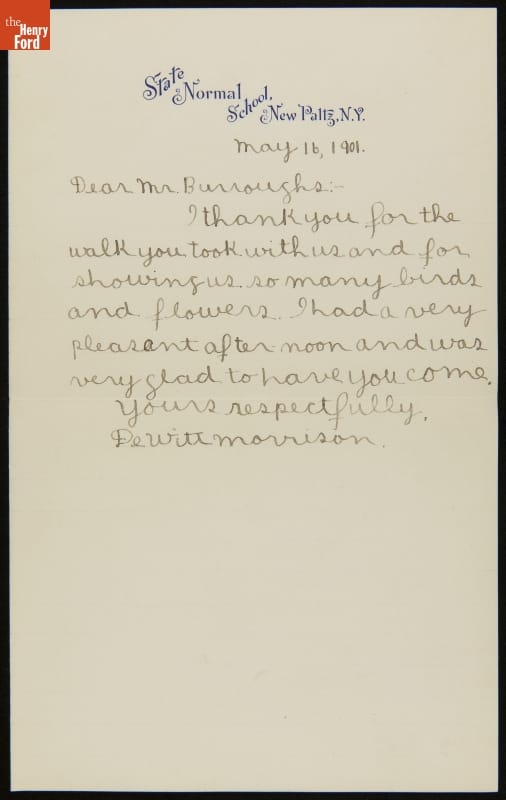
- May 16, 1901
- Collections - Artifact
Letter to John Burroughs from Morrison DeWitt, a Student Thanking Him for a Nature Walk, May 16, 1901
In May 1901, John Burroughs traveled to the State Normal School in New Paltz, New York, to share his love of nature with the students. On a hike he discussed the local landscape and made observations about the natural world -- the group even found a quail's nest with eggs. Students later wrote thank you notes and invited Burroughs back for a future visit.
- Reproduction of the 1856 Essay by John Burroughs, "Work and Wait" - Naturalist John Burroughs penned this composition during his college preparatory studies at Cooperstown Seminary. This was an early foray into essay writing in which Burroughs would excel. The photostatic reproduction of this essay, pictured above, was used by Clara Barrus, Burroughs' literary executor and official biographer, for her book <EM>The Life and Letters of John Burroughs</EM>, published in 1925.

- 1856
- Collections - Artifact
Reproduction of the 1856 Essay by John Burroughs, "Work and Wait"
Naturalist John Burroughs penned this composition during his college preparatory studies at Cooperstown Seminary. This was an early foray into essay writing in which Burroughs would excel. The photostatic reproduction of this essay, pictured above, was used by Clara Barrus, Burroughs' literary executor and official biographer, for her book The Life and Letters of John Burroughs, published in 1925.
- Letter to John Burroughs from Alida Shoommaker, a Student Thanking Him for a Nature Walk, May 16, 1901 - In May 1901, John Burroughs traveled to the State Normal School in New Paltz, New York, to share his love of nature with the students. On a hike he discussed the local landscape and made observations about the natural world -- the group even found a quail's nest with eggs. Students later wrote thank you notes and invited Burroughs back for a future visit.
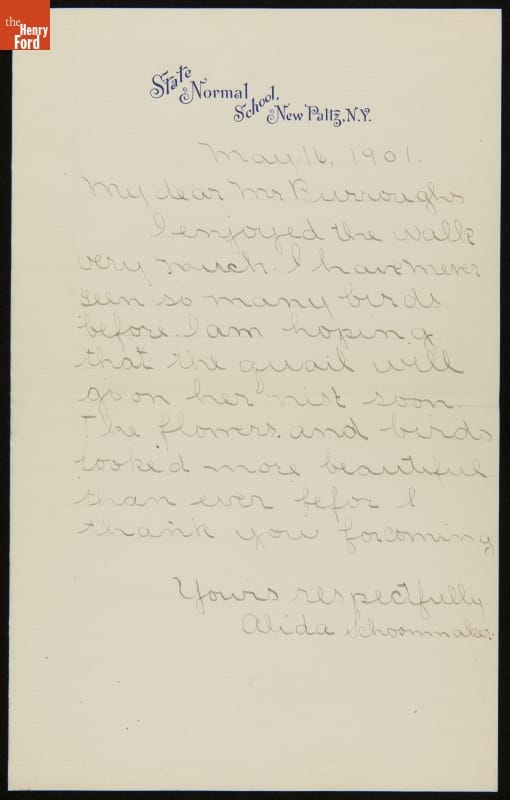
- May 16, 1901
- Collections - Artifact
Letter to John Burroughs from Alida Shoommaker, a Student Thanking Him for a Nature Walk, May 16, 1901
In May 1901, John Burroughs traveled to the State Normal School in New Paltz, New York, to share his love of nature with the students. On a hike he discussed the local landscape and made observations about the natural world -- the group even found a quail's nest with eggs. Students later wrote thank you notes and invited Burroughs back for a future visit.
- View of George Washington Carver Taken for Use as Reference for Irving Bacon's Painting of Carver, August 1942 - Henry Ford commissioned his personal artist, Irving Bacon, to paint a portrait of Ford's friend, the agricultural scientist George Washington Carver. Carver sat for the painting during his visit to Dearborn in 1942. This photograph, used as a reference for Bacon to complete the portrait, shows Carver outside the Carver Cabin in Greenfield Village.
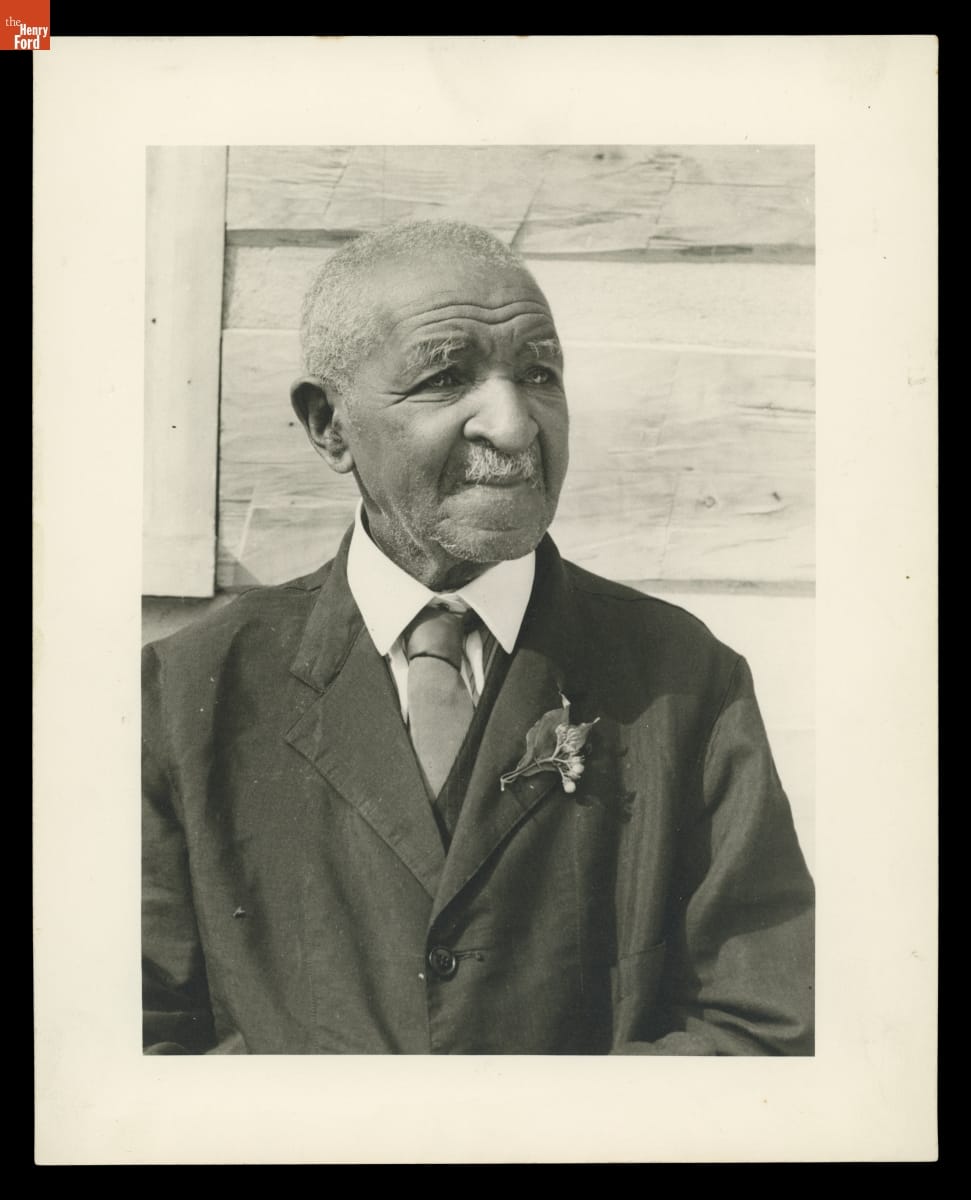
- August 01, 1942
- Collections - Artifact
View of George Washington Carver Taken for Use as Reference for Irving Bacon's Painting of Carver, August 1942
Henry Ford commissioned his personal artist, Irving Bacon, to paint a portrait of Ford's friend, the agricultural scientist George Washington Carver. Carver sat for the painting during his visit to Dearborn in 1942. This photograph, used as a reference for Bacon to complete the portrait, shows Carver outside the Carver Cabin in Greenfield Village.
- Letter to John Burroughs from Stanley Tracy, a Student Thanking Him for a Nature Walk, May 16, 1901 - In May 1901, John Burroughs traveled to the State Normal School in New Paltz, New York, to share his love of nature with the students. On a hike he discussed the local landscape and made observations about the natural world -- the group even found a quail's nest with eggs. Students later wrote thank you notes and invited Burroughs back for a future visit.
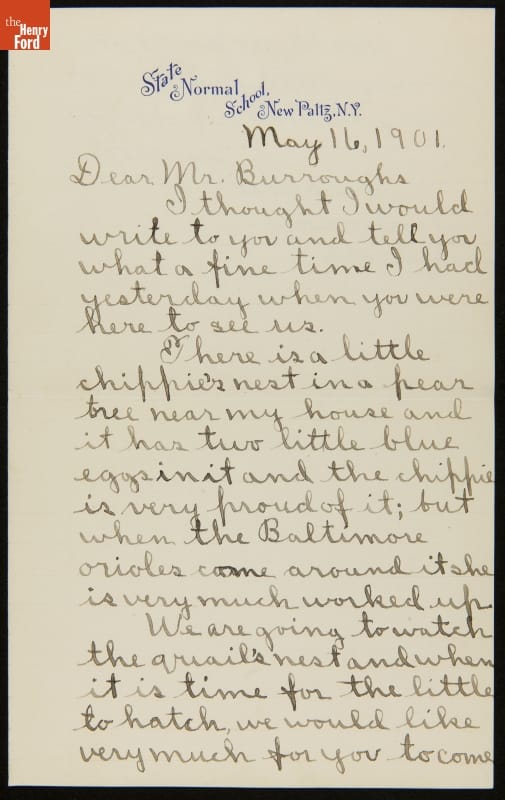
- May 16, 1901
- Collections - Artifact
Letter to John Burroughs from Stanley Tracy, a Student Thanking Him for a Nature Walk, May 16, 1901
In May 1901, John Burroughs traveled to the State Normal School in New Paltz, New York, to share his love of nature with the students. On a hike he discussed the local landscape and made observations about the natural world -- the group even found a quail's nest with eggs. Students later wrote thank you notes and invited Burroughs back for a future visit.
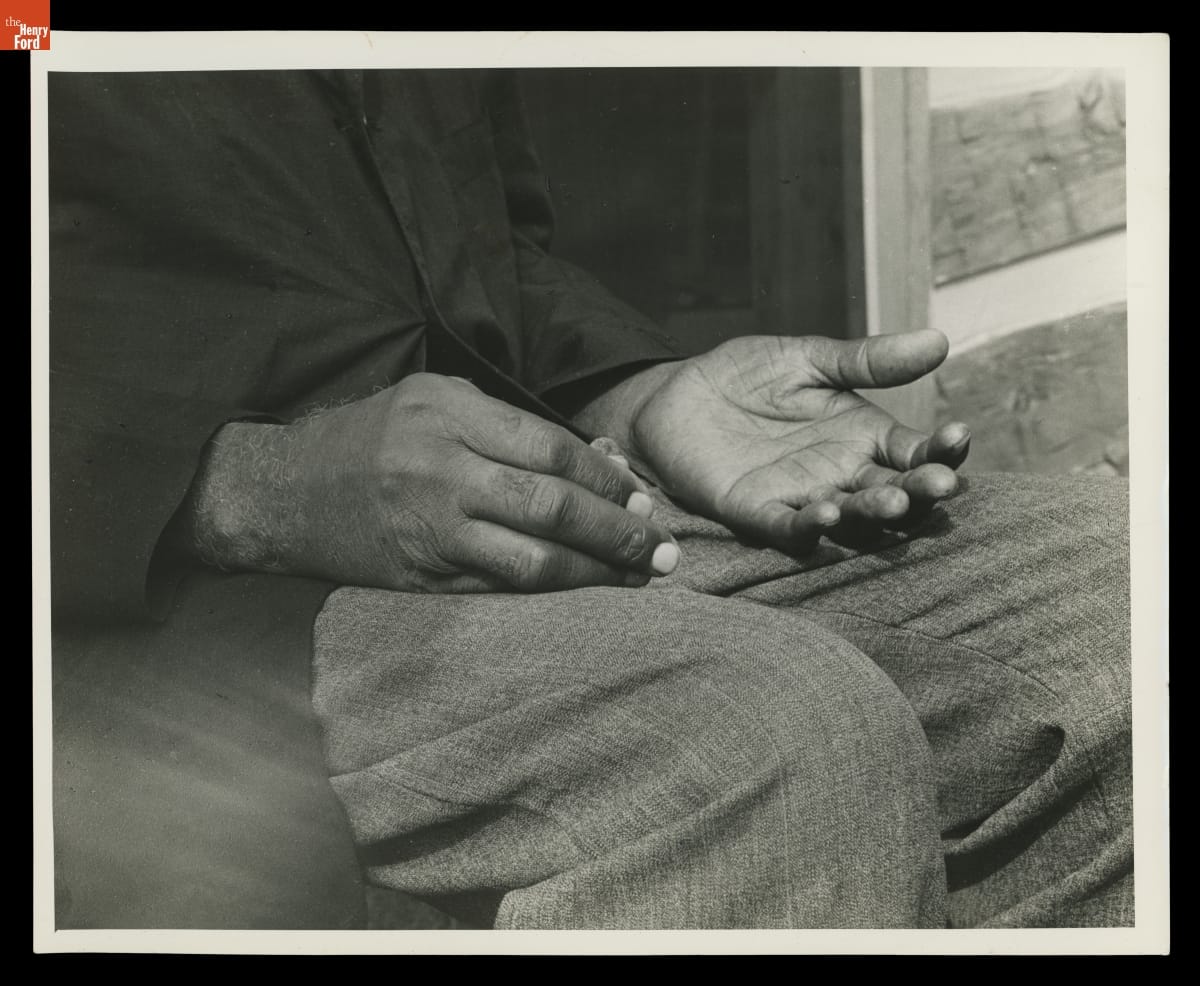
- View of George Washington Carver's Hands Taken for Use as Reference for Irving Bacon's Painting of Carver, August 1942 - Henry Ford commissioned his personal artist, Irving Bacon, to paint a portrait of Ford's friend, the agricultural scientist George Washington Carver. Carver sat for the painting during his visit to Dearborn in 1942. This photograph, used as a reference for Bacon to complete the portrait, shows Carver's hands. In Bacon's finished painting, Carver holds a milkweed pod and a peanut.
- August 01, 1942
- Collections - Artifact
View of George Washington Carver's Hands Taken for Use as Reference for Irving Bacon's Painting of Carver, August 1942
Henry Ford commissioned his personal artist, Irving Bacon, to paint a portrait of Ford's friend, the agricultural scientist George Washington Carver. Carver sat for the painting during his visit to Dearborn in 1942. This photograph, used as a reference for Bacon to complete the portrait, shows Carver's hands. In Bacon's finished painting, Carver holds a milkweed pod and a peanut.
- Scale Model, Aeron Chair Study, 2007-2008 -

- 2007-2008
- Collections - Artifact
Scale Model, Aeron Chair Study, 2007-2008
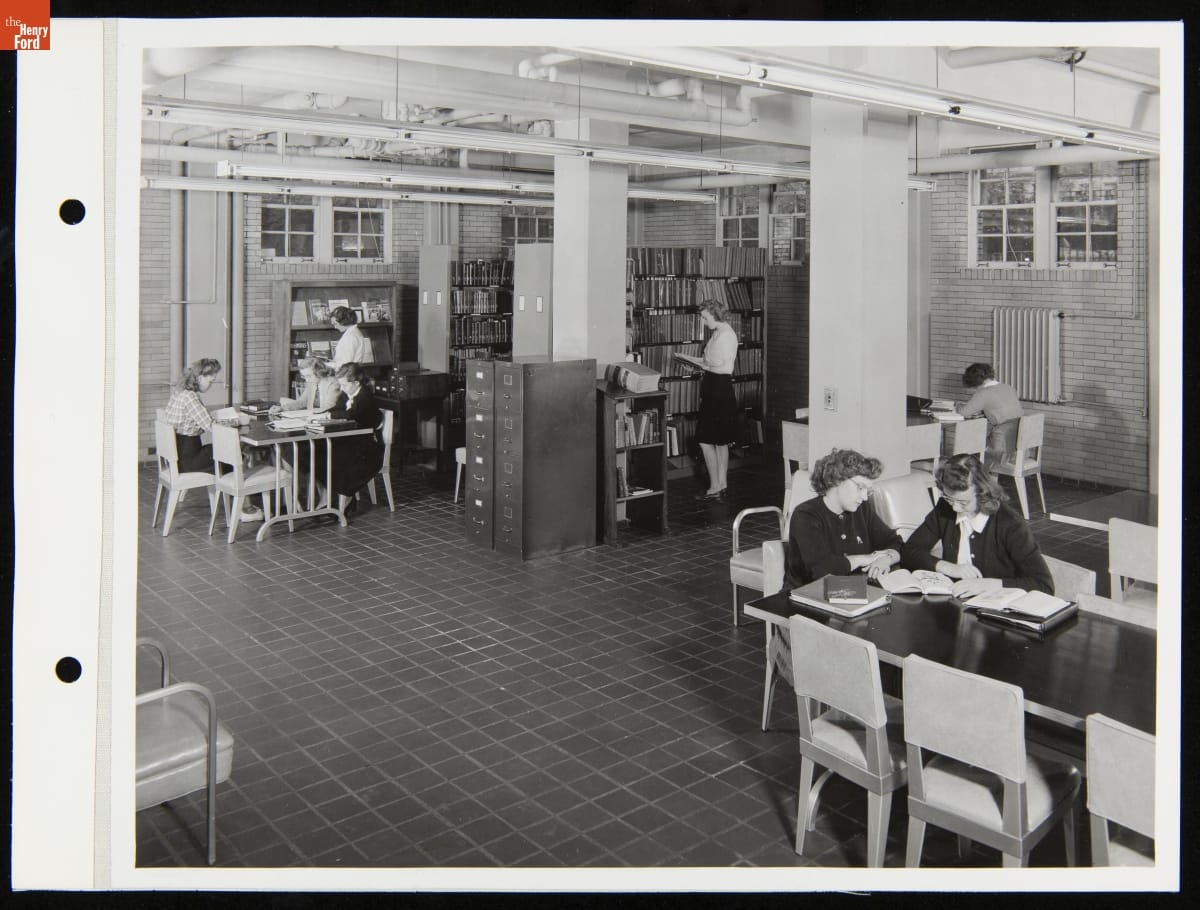
- Henry Ford Hospital Nursing Students Studying in the Clara Ford Nurses Home, November 4, 1947 - In June 1925, Henry Ford Hospital opened a School of Nursing. The two-story Education Building featured classrooms, lecture halls and a gymnasium. The six-story Clara Ford Nurses Home had living quarters for 300 students. The school's first class included 93 young women enrolled in the three-year, tuition-free program.
- November 04, 1947
- Collections - Artifact
Henry Ford Hospital Nursing Students Studying in the Clara Ford Nurses Home, November 4, 1947
In June 1925, Henry Ford Hospital opened a School of Nursing. The two-story Education Building featured classrooms, lecture halls and a gymnasium. The six-story Clara Ford Nurses Home had living quarters for 300 students. The school's first class included 93 young women enrolled in the three-year, tuition-free program.
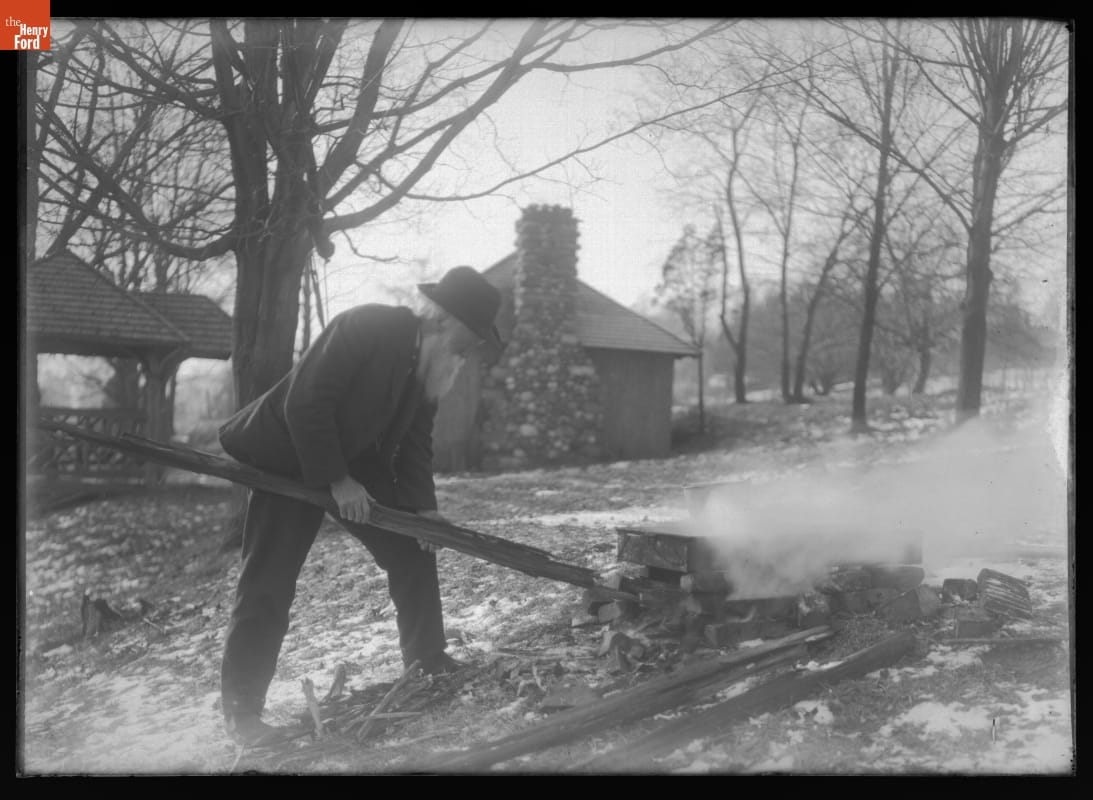
- John Burroughs outside His Bark Study at Riverby, 1910-1920 - John Burroughs (1837-1921) was an internationally known naturalist and essayist who wrote about accessible and familiar landscapes. In 1873, Burroughs bought a plot of land overlooking the Hudson in the Catskills of upstate New York and named it Riverby. Here, he farmed and cultivated grapes and fruit trees. He also erected a family home and built secluded retreats where he penned some of his most famous works.
- 1910-1920
- Collections - Artifact
John Burroughs outside His Bark Study at Riverby, 1910-1920
John Burroughs (1837-1921) was an internationally known naturalist and essayist who wrote about accessible and familiar landscapes. In 1873, Burroughs bought a plot of land overlooking the Hudson in the Catskills of upstate New York and named it Riverby. Here, he farmed and cultivated grapes and fruit trees. He also erected a family home and built secluded retreats where he penned some of his most famous works.
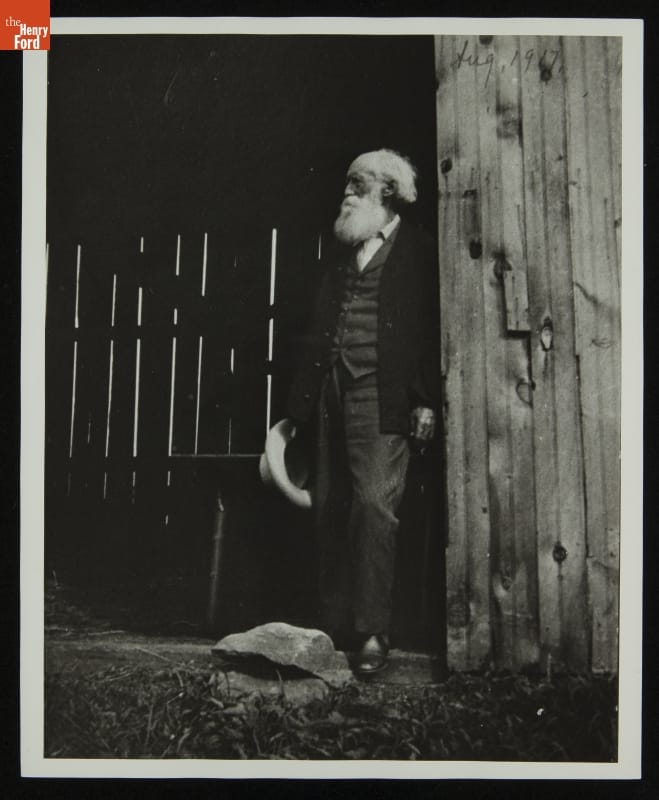
- John Burroughs at His Hay-Barn Study near Woodchuck Lodge, 1917 - John Burroughs (1837-1921) was an internationally known naturalist and writer whose nature essays were well-received in both literary and scientific circles. From his home in the Catskills of upstate New York, Burroughs wrote mostly about what could be found in accessible and familiar landscapes. He wanted his readers to appreciate the natural world that surrounded them.
- August 01, 1917
- Collections - Artifact
John Burroughs at His Hay-Barn Study near Woodchuck Lodge, 1917
John Burroughs (1837-1921) was an internationally known naturalist and writer whose nature essays were well-received in both literary and scientific circles. From his home in the Catskills of upstate New York, Burroughs wrote mostly about what could be found in accessible and familiar landscapes. He wanted his readers to appreciate the natural world that surrounded them.