
Search
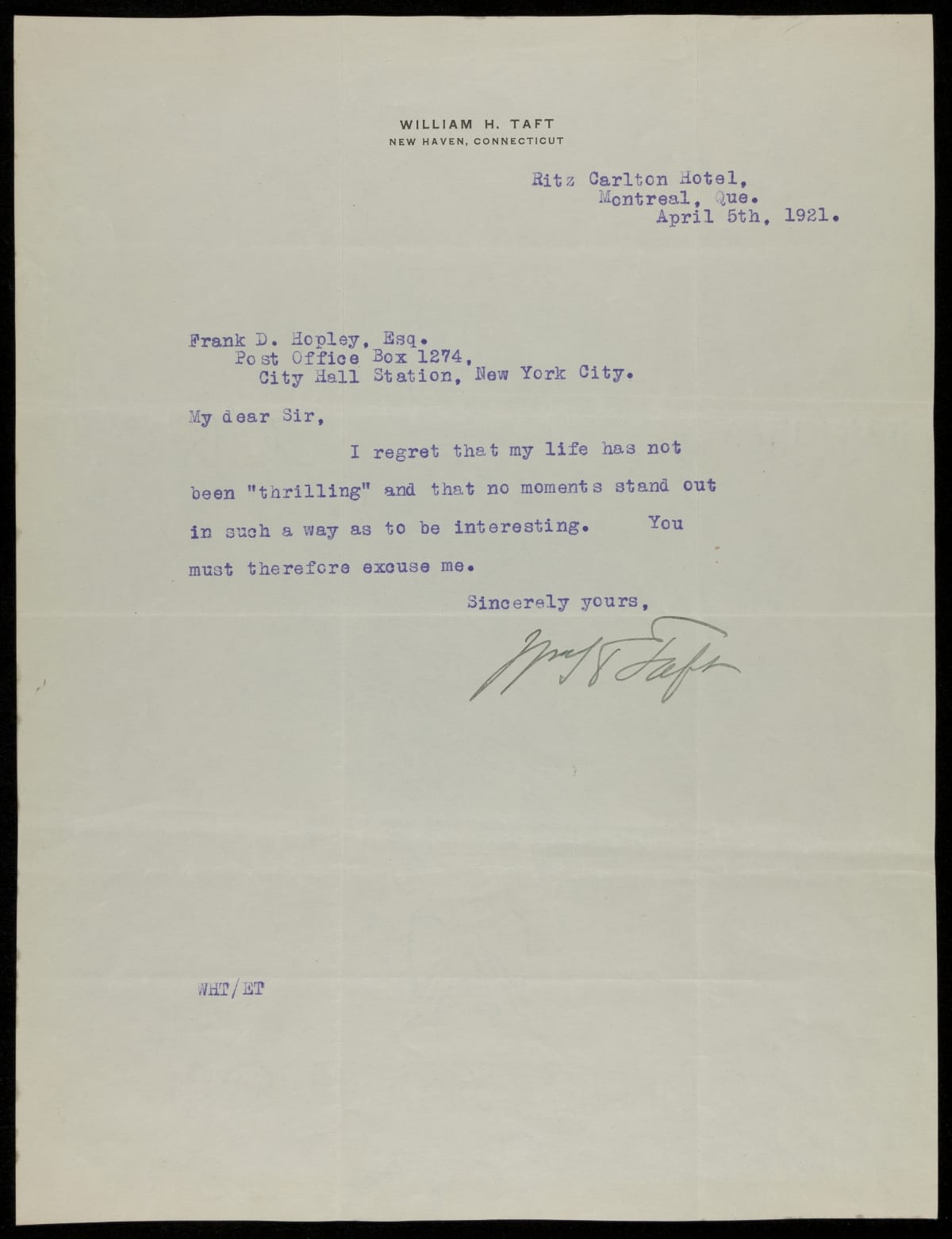
- Letter from William Howard Taft to Frank D. Hopley, April 5, 1921, "The Most Thrilling Moment of My Life" - Frank Dorrance Hopley (1872-1933) wrote a number of boy's books and authored stories and articles for national magazines and newspapers. In 1921, Hopley had an idea for an article--he would ask famous individuals to share their life's most thrilling moment. Former President William Taft responded that he would be unable to help as his life had not been "thrilling."
- April 05, 1921
- Collections - Artifact
Letter from William Howard Taft to Frank D. Hopley, April 5, 1921, "The Most Thrilling Moment of My Life"
Frank Dorrance Hopley (1872-1933) wrote a number of boy's books and authored stories and articles for national magazines and newspapers. In 1921, Hopley had an idea for an article--he would ask famous individuals to share their life's most thrilling moment. Former President William Taft responded that he would be unable to help as his life had not been "thrilling."
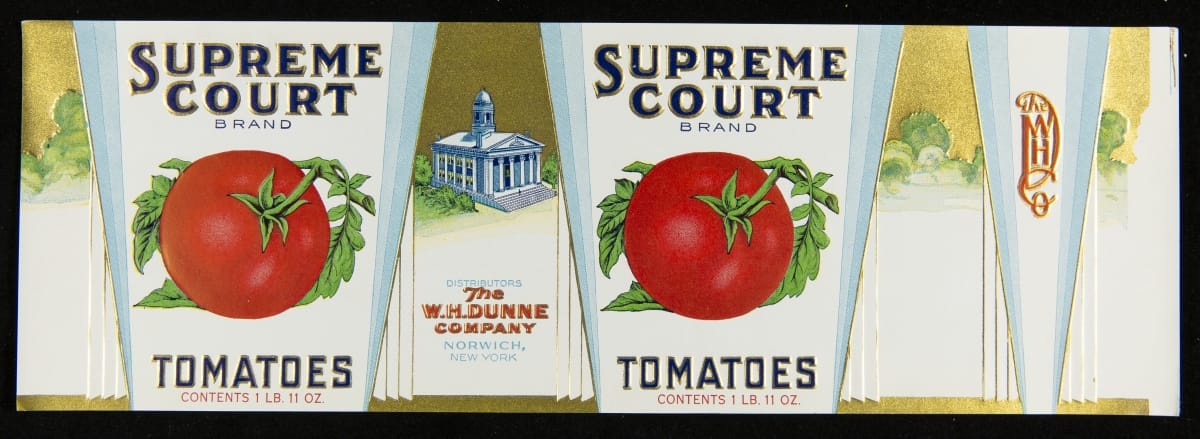
- Can Label, "Supreme Court Brand Tomatoes," 1910-1920 - Manufacturers of similar products sought ways to make their company's goods stand out on store shelves. Attractive labels, like this design for Supreme Court Brand Tomatoes, helped catch the attention of potential customers -- hopefully encouraging them to purchase the company's product rather than that of a competitor.
- 1910-1920
- Collections - Artifact
Can Label, "Supreme Court Brand Tomatoes," 1910-1920
Manufacturers of similar products sought ways to make their company's goods stand out on store shelves. Attractive labels, like this design for Supreme Court Brand Tomatoes, helped catch the attention of potential customers -- hopefully encouraging them to purchase the company's product rather than that of a competitor.
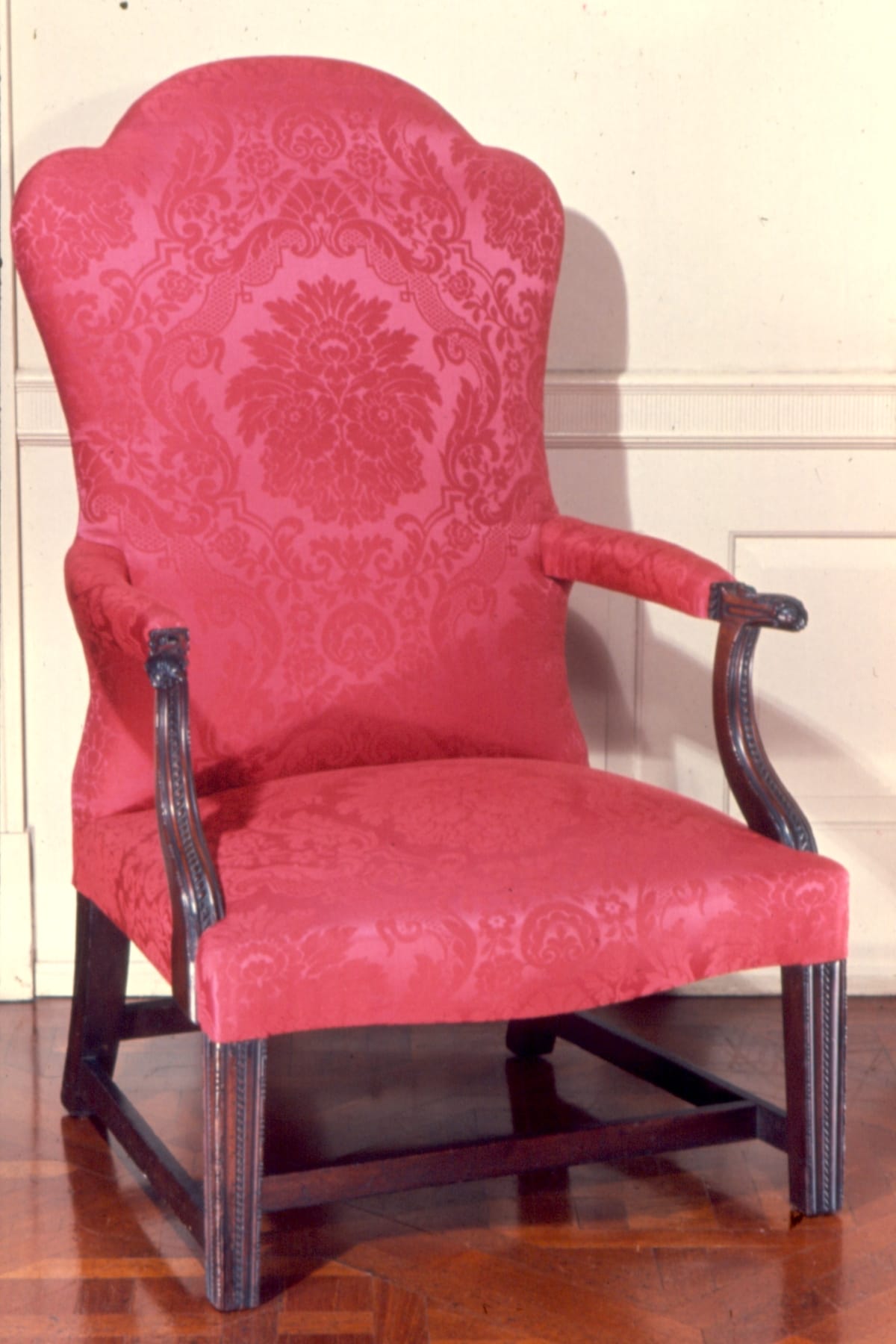
- Speaker's Chair Used in the United States House of Representatives in Philadelphia, 1790-1795 - This chair was made in the early 1790s for either the Speaker of the U.S. House of Representatives or the President of the U.S. Senate, both bodies then located in Philadelphia. We believe that it was later used by the U.S. Supreme Court, along with three similar chairs, now at the Independence National Historical Park, Philadelphia.
- 1790-1795
- Collections - Artifact
Speaker's Chair Used in the United States House of Representatives in Philadelphia, 1790-1795
This chair was made in the early 1790s for either the Speaker of the U.S. House of Representatives or the President of the U.S. Senate, both bodies then located in Philadelphia. We believe that it was later used by the U.S. Supreme Court, along with three similar chairs, now at the Independence National Historical Park, Philadelphia.
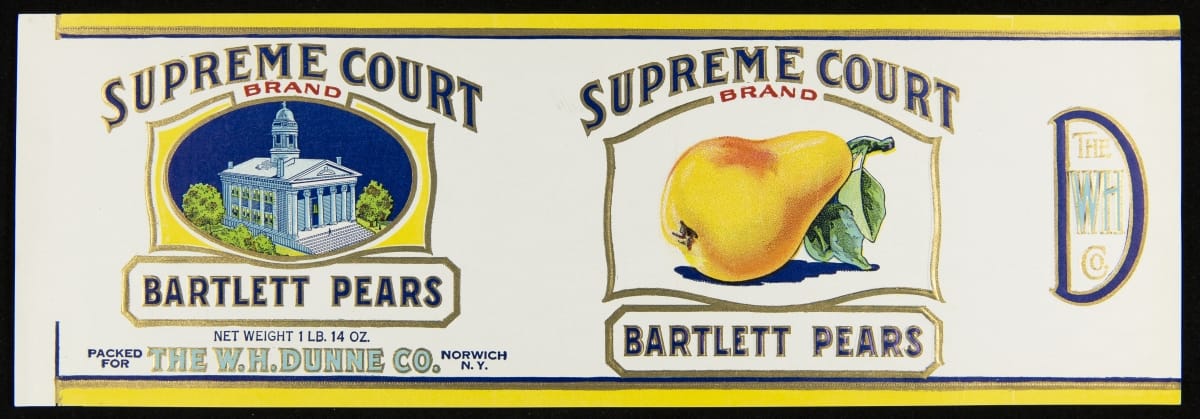
- Can Label, "Supreme Court Brand Bartlett Pears," circa 1920 - Manufacturers of similar products sought ways to make their company's goods stand out on store shelves. Attractive labels, like this design for Supreme Court Brand Bartlett Pears, helped catch the attention of potential customers -- hopefully encouraging them to purchase the company's product rather than that of a competitor.
- circa 1920
- Collections - Artifact
Can Label, "Supreme Court Brand Bartlett Pears," circa 1920
Manufacturers of similar products sought ways to make their company's goods stand out on store shelves. Attractive labels, like this design for Supreme Court Brand Bartlett Pears, helped catch the attention of potential customers -- hopefully encouraging them to purchase the company's product rather than that of a competitor.
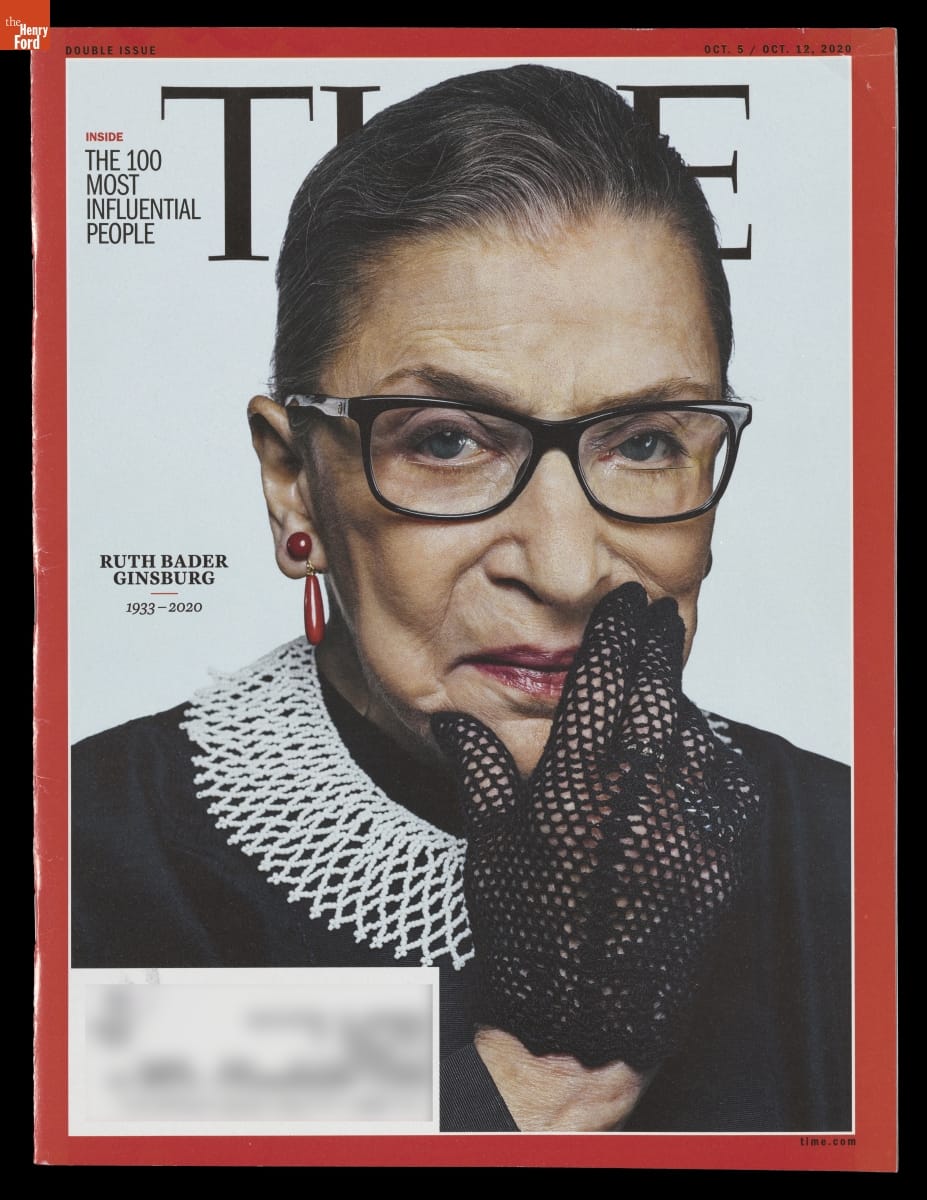
- "Time," October 5-12, 2020 - This <em>Time</em> magazine cover honors Ruth Bader Ginsburg, who served on the Supreme Court from 1993 until her death in 2020 at age 87. She was known for advocating for women's rights, uniting the liberal justices, and wearing bejeweled collars over her judicial robes. This cover portrait features her famous "dissent collar," often worn when she disagreed with the Court's decision.
- October 01, 2020
- Collections - Artifact
"Time," October 5-12, 2020
This Time magazine cover honors Ruth Bader Ginsburg, who served on the Supreme Court from 1993 until her death in 2020 at age 87. She was known for advocating for women's rights, uniting the liberal justices, and wearing bejeweled collars over her judicial robes. This cover portrait features her famous "dissent collar," often worn when she disagreed with the Court's decision.
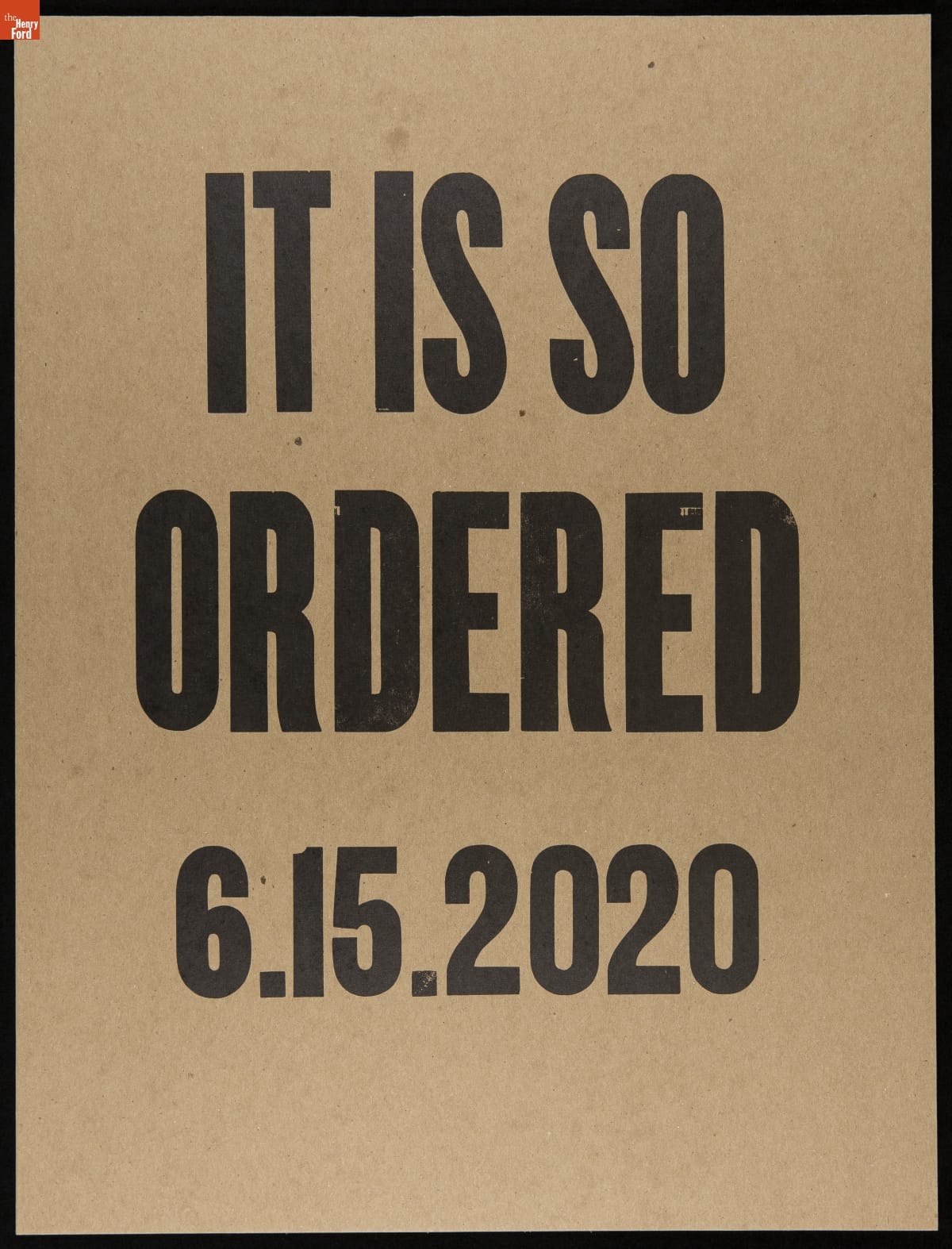
- Protest Poster, "It Is So Ordered, 6.15.2020," 2020 - In June 2020, Detroit-based non-profit letterpress organization Signal-Return responded to the civil unrest that followed the death of George Floyd by producing free protest posters for the community. These posters were made in solidarity with the principles behind the Black Lives Matter movement and distributed with the intent that they be carried in local protests or displayed in visible places.
- June 15, 2020
- Collections - Artifact
Protest Poster, "It Is So Ordered, 6.15.2020," 2020
In June 2020, Detroit-based non-profit letterpress organization Signal-Return responded to the civil unrest that followed the death of George Floyd by producing free protest posters for the community. These posters were made in solidarity with the principles behind the Black Lives Matter movement and distributed with the intent that they be carried in local protests or displayed in visible places.
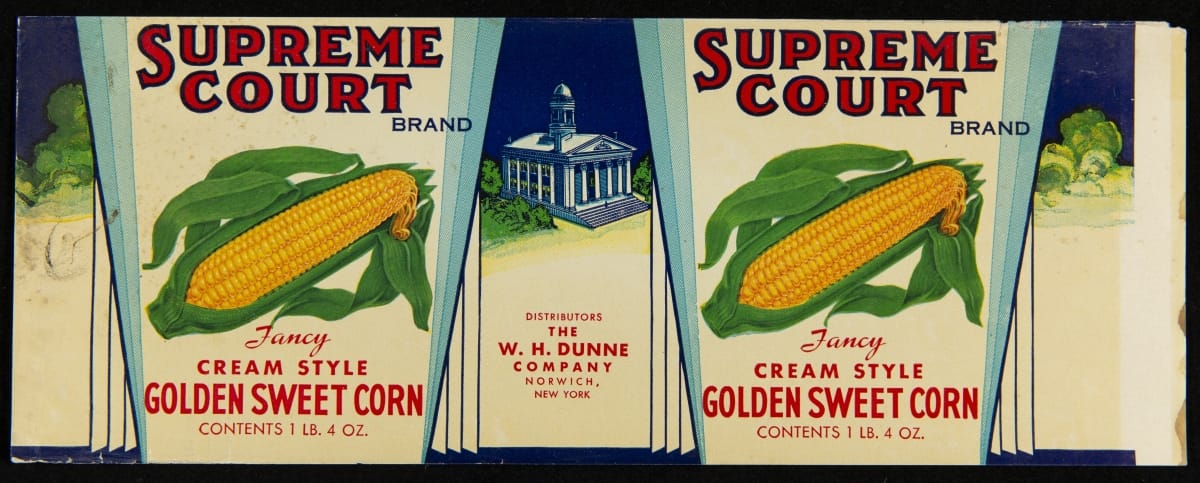
- Can Label, "Supreme Court Brand Cream Style Golden Sweet Corn," 1899-1928 - Manufacturers of similar products sought ways to make their company's goods stand out on store shelves. Attractive labels, like this design for Supreme Court Brand Cream Style Golden Sweet Corn, helped catch the attention of potential customers -- hopefully encouraging them to purchase the company's product rather than that of a competitor.
- 1899-1928
- Collections - Artifact
Can Label, "Supreme Court Brand Cream Style Golden Sweet Corn," 1899-1928
Manufacturers of similar products sought ways to make their company's goods stand out on store shelves. Attractive labels, like this design for Supreme Court Brand Cream Style Golden Sweet Corn, helped catch the attention of potential customers -- hopefully encouraging them to purchase the company's product rather than that of a competitor.
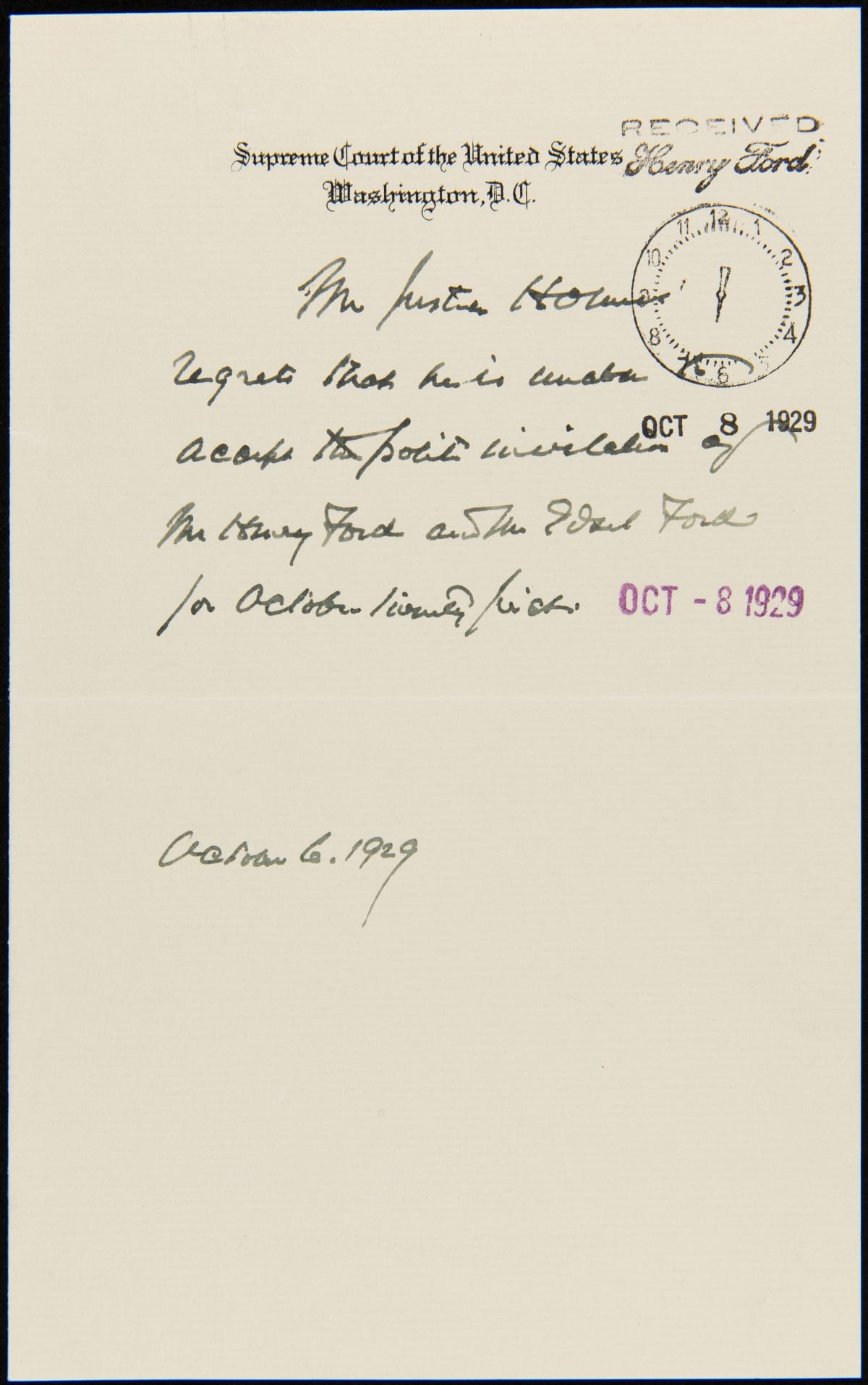
- Letter from Justice Oliver Wendell Holmes to Henry Ford and Edsel Ford regarding Invitation to Light's Golden Jubilee, October 6, 1929 - On October 21, 1929, Henry Ford hosted an event, Light's Golden Jubilee, which celebrated the 50th anniversary of Thomas Edison's invention of the incandescent lamp. The event also served as the official dedication of The Edison Institute, Ford's museum complex named in honor of his friend. U. S. Supreme Court Justice Oliver Wendell Holmes Jr. was invited, but he had to send his regrets.
- October 21, 1929
- Collections - Artifact
Letter from Justice Oliver Wendell Holmes to Henry Ford and Edsel Ford regarding Invitation to Light's Golden Jubilee, October 6, 1929
On October 21, 1929, Henry Ford hosted an event, Light's Golden Jubilee, which celebrated the 50th anniversary of Thomas Edison's invention of the incandescent lamp. The event also served as the official dedication of The Edison Institute, Ford's museum complex named in honor of his friend. U. S. Supreme Court Justice Oliver Wendell Holmes Jr. was invited, but he had to send his regrets.
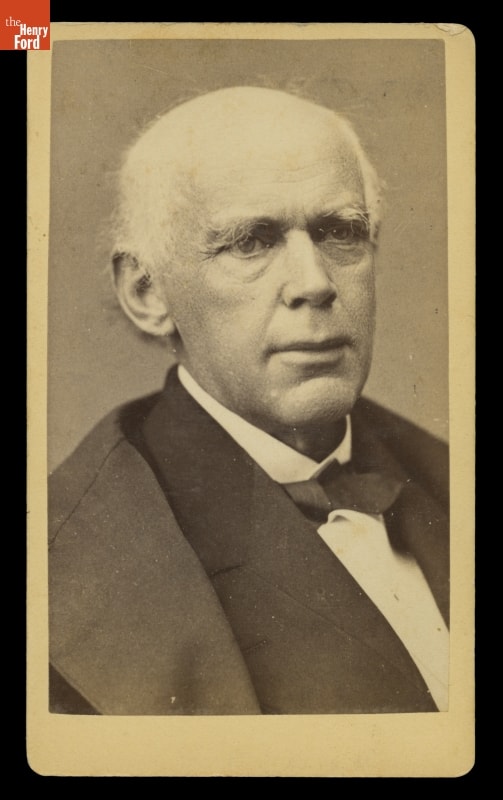
- Portrait of Chief Justice Salmon Portland Chase, circa 1870 - Cartes-de-visite, small, professionally made photographs on cardboard stock, remained popular in the United States from the Civil War in the 1860s through the 1880s. Many were given to friends and loved ones, but enterprising photographers also produced images of famous individuals to sell to the collecting-crazed public. Celebrities, military officers and politicians, such as Chief Justice Salmon Chase, were popular subjects.
- circa 1870
- Collections - Artifact
Portrait of Chief Justice Salmon Portland Chase, circa 1870
Cartes-de-visite, small, professionally made photographs on cardboard stock, remained popular in the United States from the Civil War in the 1860s through the 1880s. Many were given to friends and loved ones, but enterprising photographers also produced images of famous individuals to sell to the collecting-crazed public. Celebrities, military officers and politicians, such as Chief Justice Salmon Chase, were popular subjects.
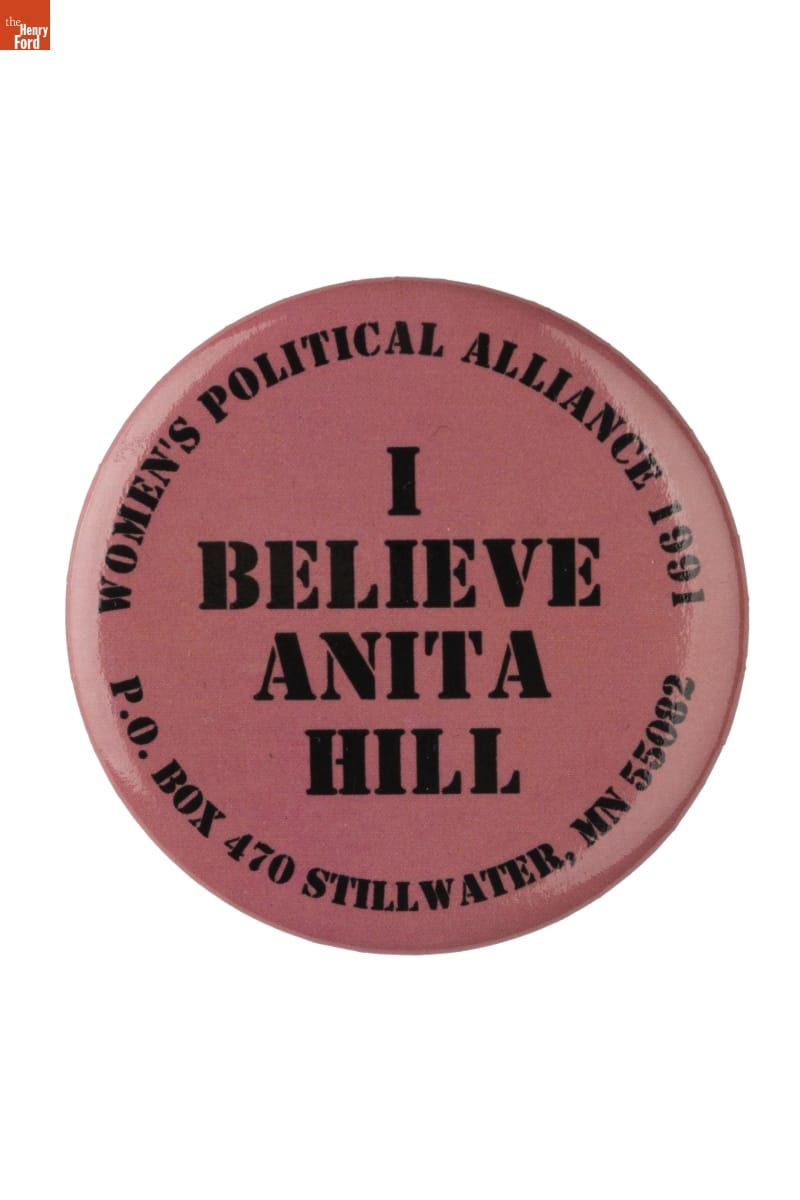
- "I Believe in Anita Hill" Button, 1991 - During Clarence Thomas's 1991 confirmation hearings for his nomination to the Supreme Court, Anita Hill raised allegations that he had sexually harassed her while she worked for him. Over the course of the proceedings, Hill was accused of lying and her sanity was questioned. Hill's televised testimony sparked conversations – both public and private – about the nature of sexual harassment.
- 1991
- Collections - Artifact
"I Believe in Anita Hill" Button, 1991
During Clarence Thomas's 1991 confirmation hearings for his nomination to the Supreme Court, Anita Hill raised allegations that he had sexually harassed her while she worked for him. Over the course of the proceedings, Hill was accused of lying and her sanity was questioned. Hill's televised testimony sparked conversations – both public and private – about the nature of sexual harassment.