
Search
- Richard E. Byrd Using a Sextant, circa 1927 - During his polar expeditions, Richard E. Byrd relied on navigational instruments not much changed in 200 years. Byrd's sextant measured the angle between an astronomical object -- the Sun or a star -- and the horizon. Based on the time of day it was measured, this angle was used to determine Byrd's position on a navigational chart.
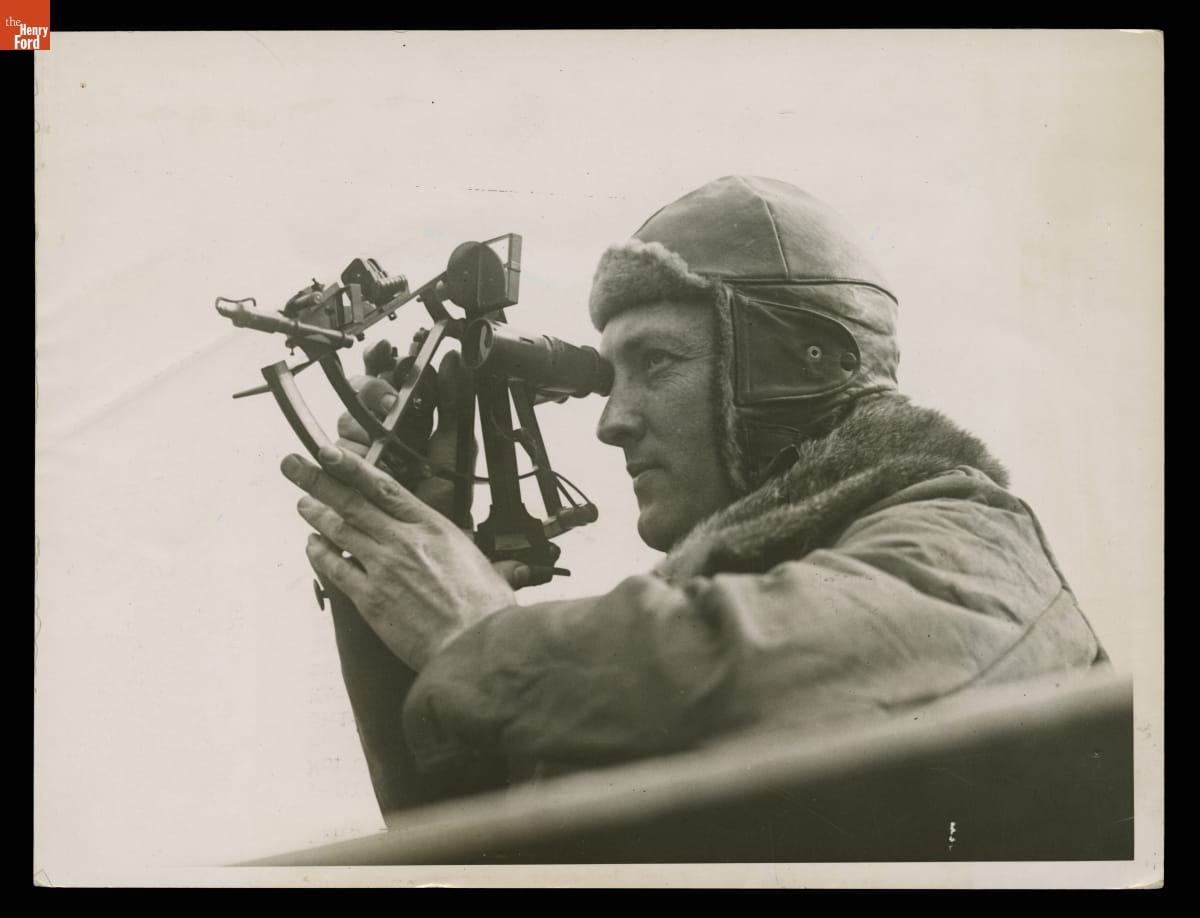
- circa 1927
- Collections - Artifact
Richard E. Byrd Using a Sextant, circa 1927
During his polar expeditions, Richard E. Byrd relied on navigational instruments not much changed in 200 years. Byrd's sextant measured the angle between an astronomical object -- the Sun or a star -- and the horizon. Based on the time of day it was measured, this angle was used to determine Byrd's position on a navigational chart.
- Plaster Bust of Benjamin Banneker - Benjamin Banneker (1731-1806) was born to a free Black mother and a formerly enslaved father. Despite having little to no formal education, he wrote several almanacs based on his own astronomical calculations, constructed a striking clock based on his own design, and corresponded with Thomas Jefferson about abolition. Banneker also worked as a surveyor, assisting in setting the boundaries for the District of Columbia.
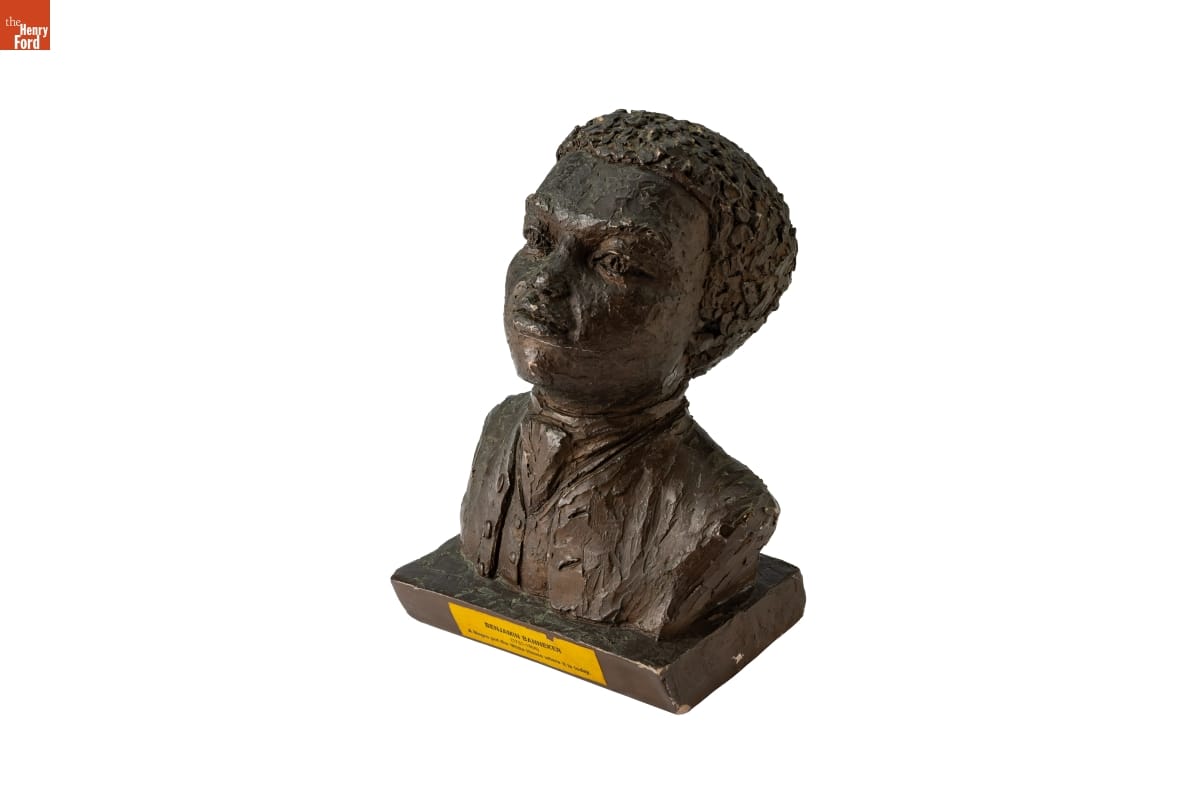
- Collections - Artifact
Plaster Bust of Benjamin Banneker
Benjamin Banneker (1731-1806) was born to a free Black mother and a formerly enslaved father. Despite having little to no formal education, he wrote several almanacs based on his own astronomical calculations, constructed a striking clock based on his own design, and corresponded with Thomas Jefferson about abolition. Banneker also worked as a surveyor, assisting in setting the boundaries for the District of Columbia.