
Search
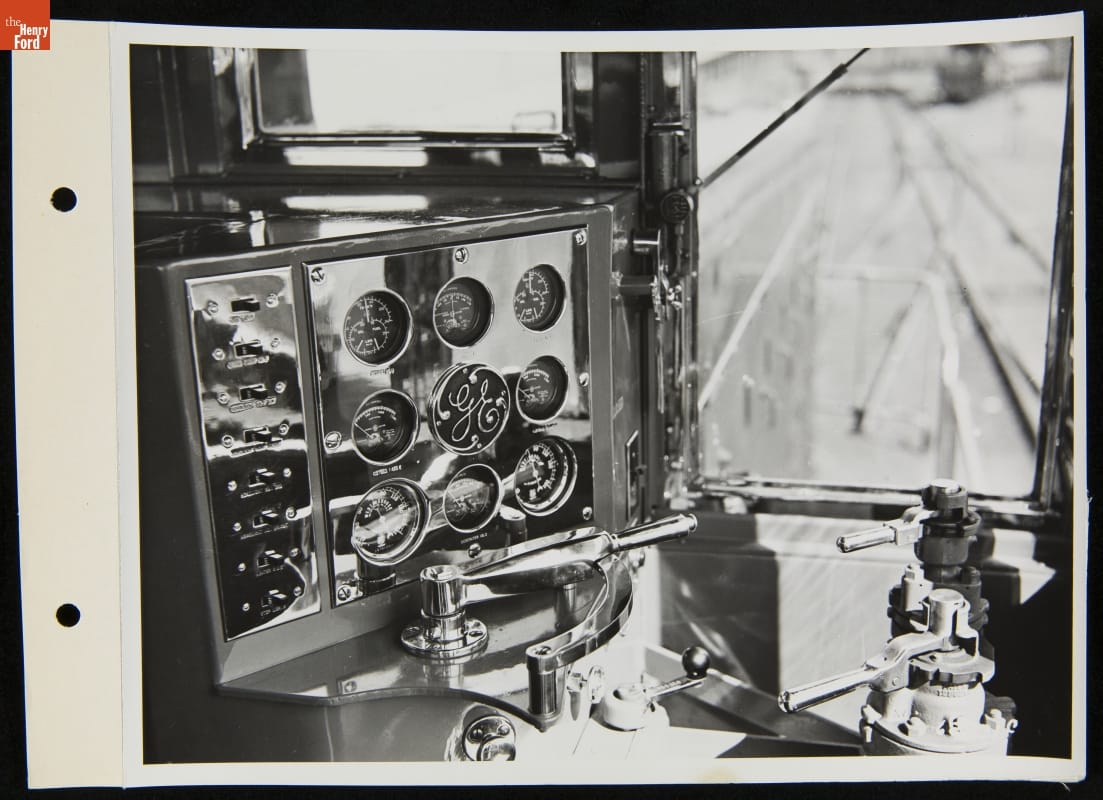
- Diesel Locomotive in North Yard, Ford Rouge Plant, September 1937 - Some 100 miles of railroad track covered the grounds of Ford Motor Company's Rouge plant. The automaker maintained its own fleet of locomotives to move incoming railcars loaded with raw materials, and outgoing railcars filled with finished parts and automobiles, around the complex. Additionally, specialized tank cars ferried molten iron from the factory's blast furnaces to its foundry.
- September 20, 1937
- Collections - Artifact
Diesel Locomotive in North Yard, Ford Rouge Plant, September 1937
Some 100 miles of railroad track covered the grounds of Ford Motor Company's Rouge plant. The automaker maintained its own fleet of locomotives to move incoming railcars loaded with raw materials, and outgoing railcars filled with finished parts and automobiles, around the complex. Additionally, specialized tank cars ferried molten iron from the factory's blast furnaces to its foundry.
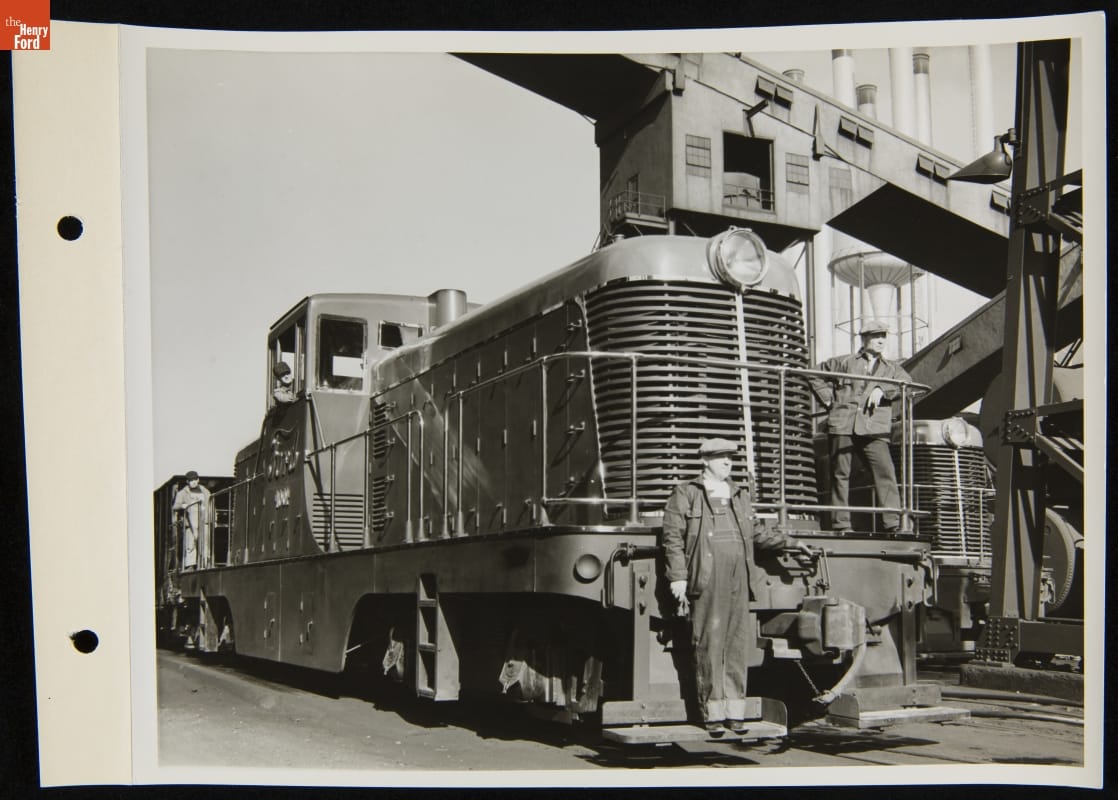
- Diesel Locomotives at the Ford Rouge Plant, November 1937 - Some 100 miles of railroad track covered the grounds of Ford Motor Company's Rouge plant. The automaker maintained its own fleet of locomotives to move incoming railcars loaded with raw materials, and outgoing railcars filled with finished parts and automobiles, around the complex. Additionally, specialized tank cars ferried molten iron from the factory's blast furnaces to its foundry.
- November 10, 1937
- Collections - Artifact
Diesel Locomotives at the Ford Rouge Plant, November 1937
Some 100 miles of railroad track covered the grounds of Ford Motor Company's Rouge plant. The automaker maintained its own fleet of locomotives to move incoming railcars loaded with raw materials, and outgoing railcars filled with finished parts and automobiles, around the complex. Additionally, specialized tank cars ferried molten iron from the factory's blast furnaces to its foundry.
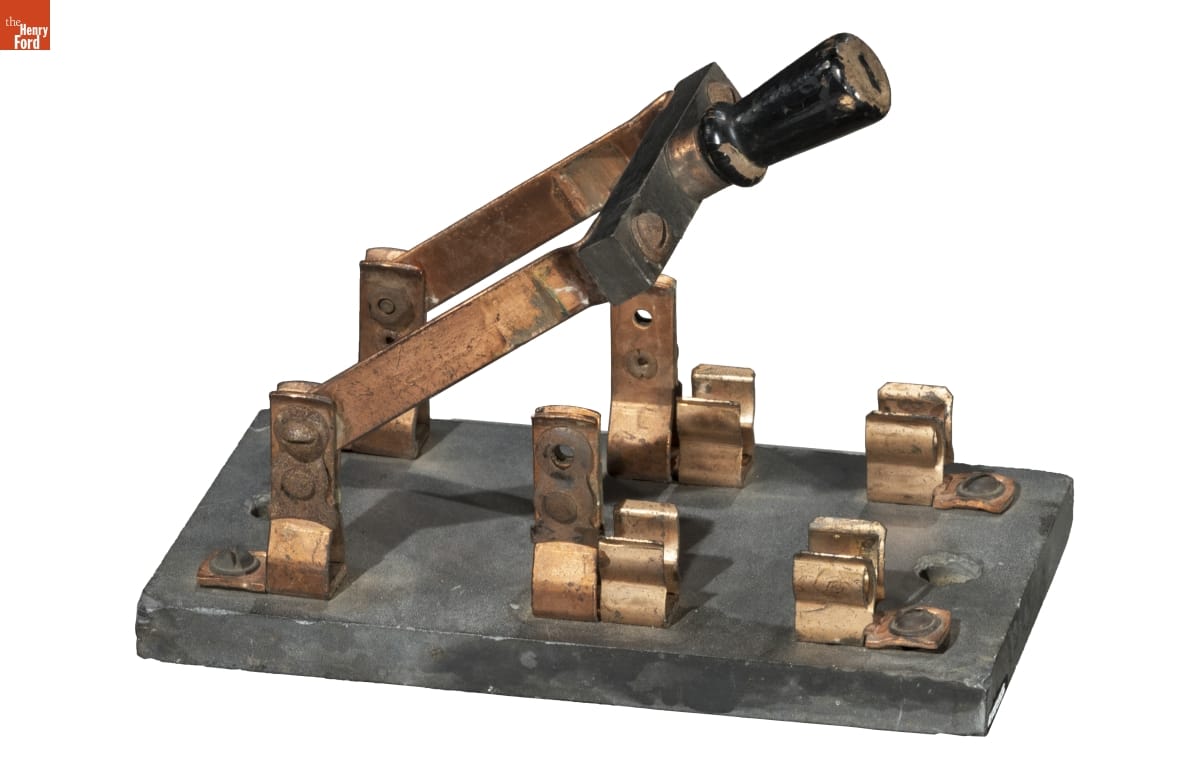
- Mutual Electric & Machine Co. Electric Switch, Used on Sugar Island, Detroit River, Michigan, circa 1910 - Switches open or close an electrical circuit to turn things off or on. Knife switches, such as this one, were commonly used on power and lighting switchboards or connected to a motor or generator. This switch was used on Sugar Island in the Detroit River in the early 1900s. The island's powerhouse provided electricity for a dancehall, amusement rides and other amenities.
- circa 1910
- Collections - Artifact
Mutual Electric & Machine Co. Electric Switch, Used on Sugar Island, Detroit River, Michigan, circa 1910
Switches open or close an electrical circuit to turn things off or on. Knife switches, such as this one, were commonly used on power and lighting switchboards or connected to a motor or generator. This switch was used on Sugar Island in the Detroit River in the early 1900s. The island's powerhouse provided electricity for a dancehall, amusement rides and other amenities.
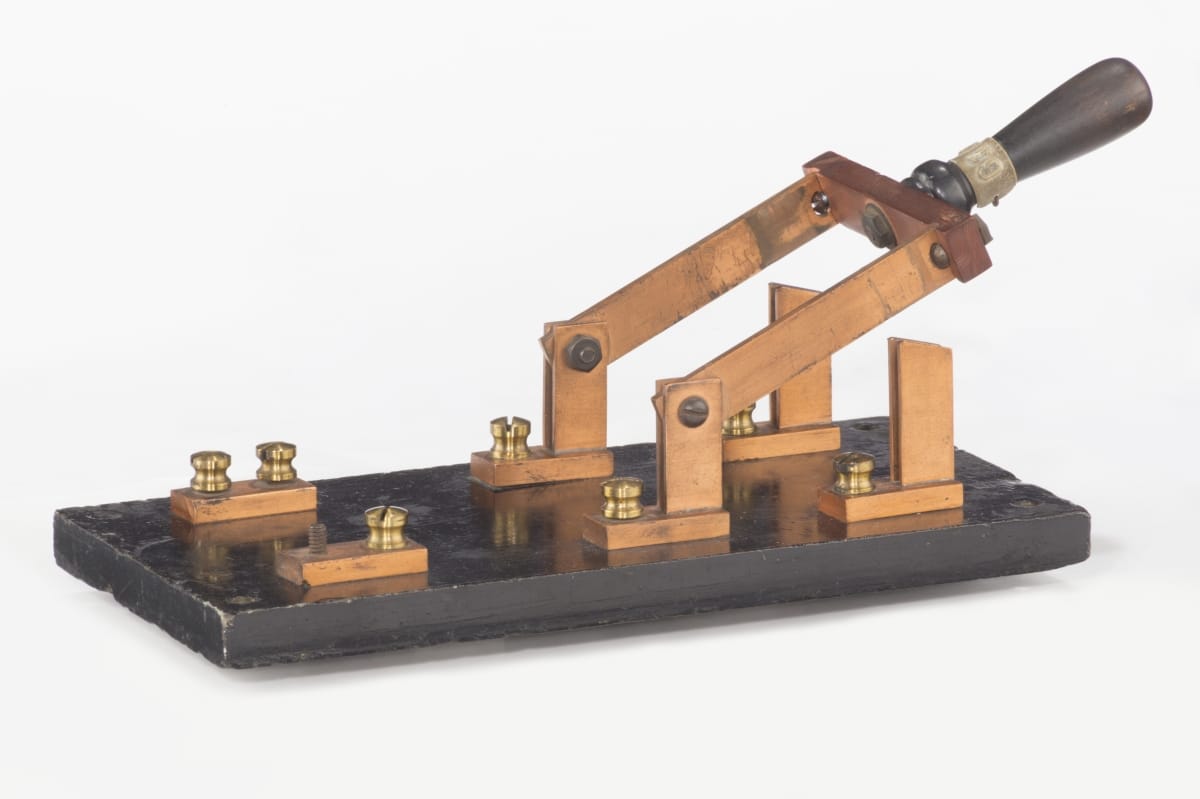
- Bergmann & Company Switch, 1884 - Switches open or close an electrical circuit to turn things off or on. In the late 1800s and early 1900s, knife switches were commonly found in engine or generating rooms, connected to factory motors, or mounted on a building's power and lighting switchboard. Operators pushed the hinged, metal blades into the switch's jaws to send electricity to where it was needed.
- 1884
- Collections - Artifact
Bergmann & Company Switch, 1884
Switches open or close an electrical circuit to turn things off or on. In the late 1800s and early 1900s, knife switches were commonly found in engine or generating rooms, connected to factory motors, or mounted on a building's power and lighting switchboard. Operators pushed the hinged, metal blades into the switch's jaws to send electricity to where it was needed.
- Trumbull Electric Manufacturing Company Electric Knife Switch, 1900-1920 - Switches open or close an electrical circuit to turn things off or on. In the late 1800s and early 1900s, knife switches were commonly found in engine or generating rooms, connected to factory motors, or mounted on a building's power and lighting switchboard. Operators pushed the hinged, metal blades into the switch's jaws to send electricity to where it was needed.
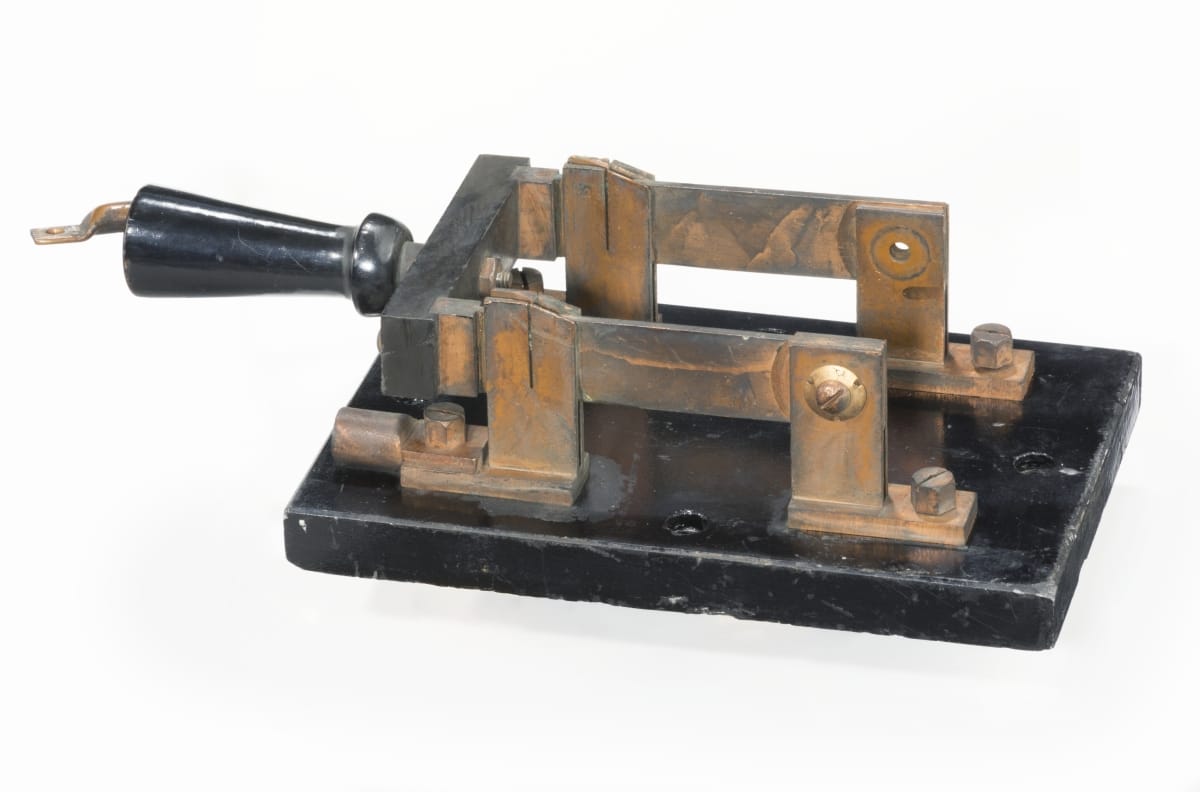
- 1900-1920
- Collections - Artifact
Trumbull Electric Manufacturing Company Electric Knife Switch, 1900-1920
Switches open or close an electrical circuit to turn things off or on. In the late 1800s and early 1900s, knife switches were commonly found in engine or generating rooms, connected to factory motors, or mounted on a building's power and lighting switchboard. Operators pushed the hinged, metal blades into the switch's jaws to send electricity to where it was needed.
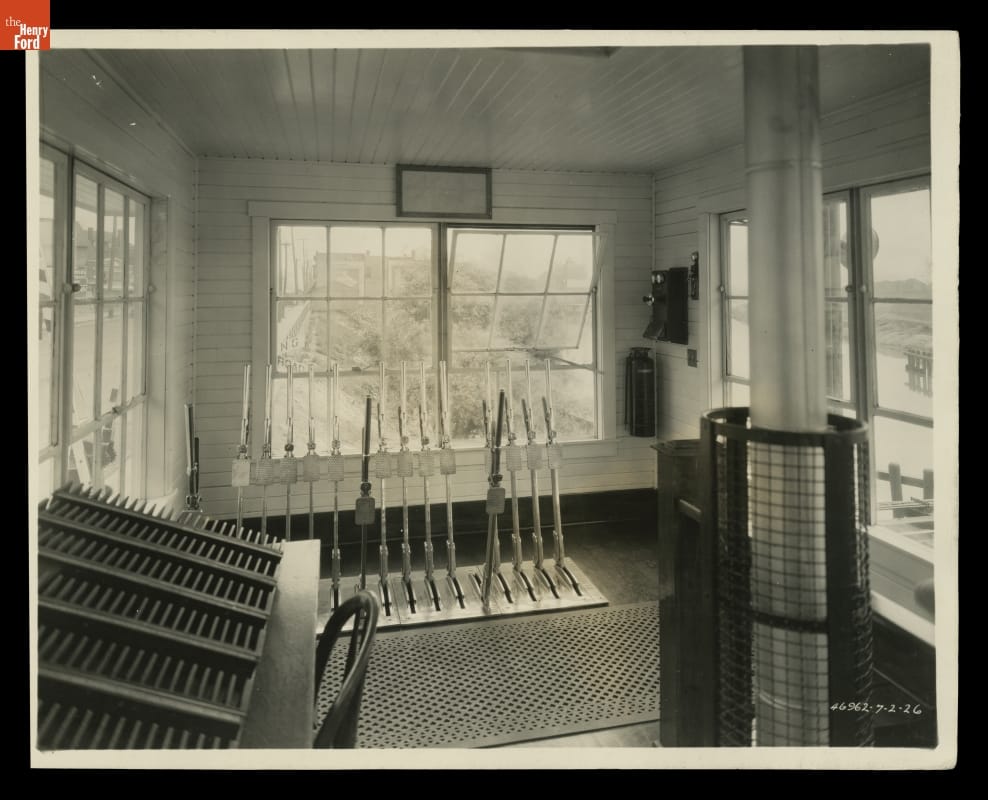
- Interior of Interlocking Tower on the D.T. & I. Railroad, Detroit, Michigan, July 1926 - The operator stationed in this Detroit, Toledo & Ironton Railroad building would have kept busy. This interlocking tower protected the crossing of a DT&I branch with the Detroit United Railway's streetcar line on Jefferson Avenue. The tower operator likely was responsible for activating the railroad crossing gates as well.
- July 02, 1926
- Collections - Artifact
Interior of Interlocking Tower on the D.T. & I. Railroad, Detroit, Michigan, July 1926
The operator stationed in this Detroit, Toledo & Ironton Railroad building would have kept busy. This interlocking tower protected the crossing of a DT&I branch with the Detroit United Railway's streetcar line on Jefferson Avenue. The tower operator likely was responsible for activating the railroad crossing gates as well.
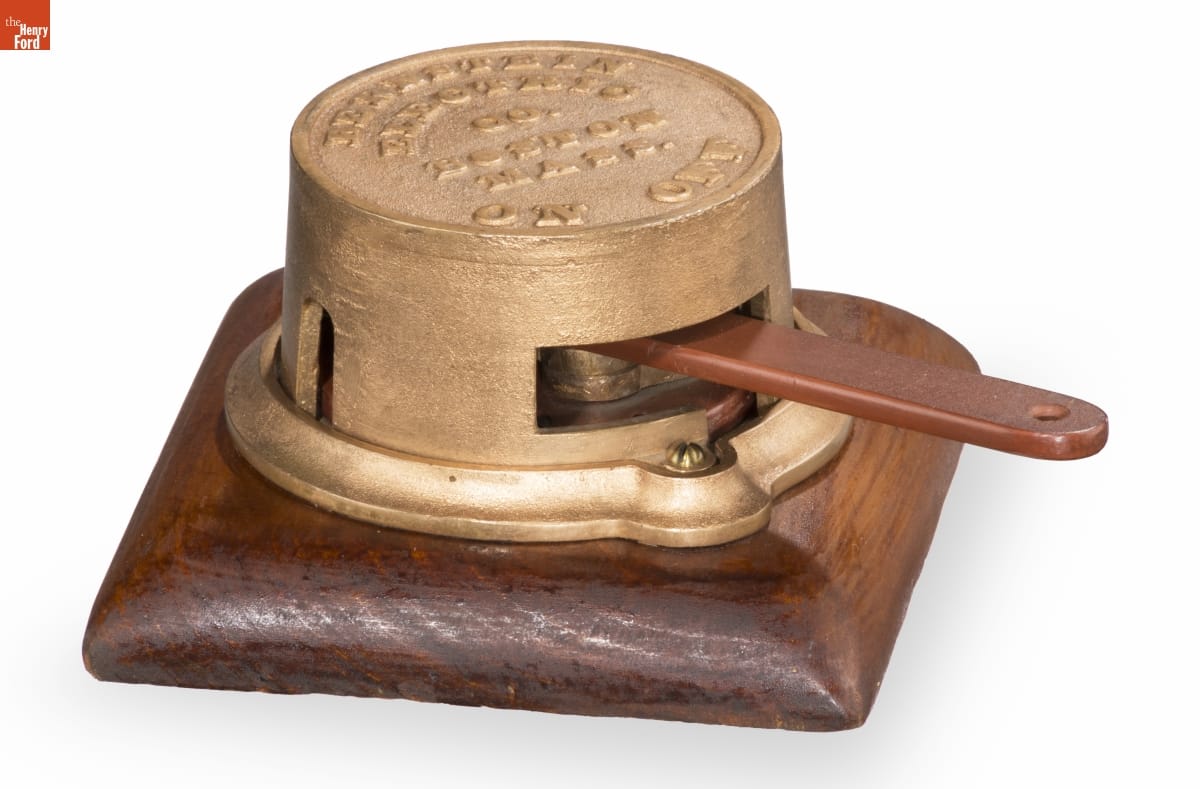
- Bernstein Electric Company Switch, circa 1886 -
- circa 1886
- Collections - Artifact
Bernstein Electric Company Switch, circa 1886
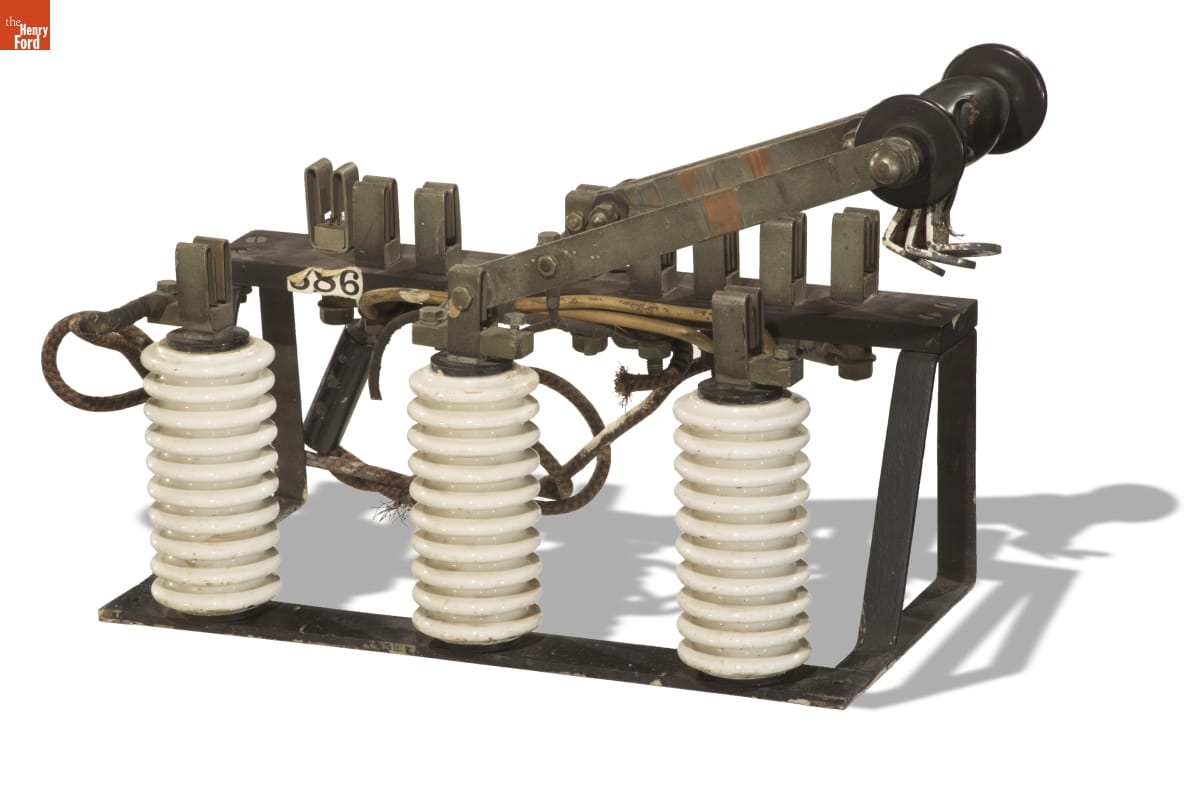
- Send-Receive Switch, 1917 -
- 1917
- Collections - Artifact
Send-Receive Switch, 1917
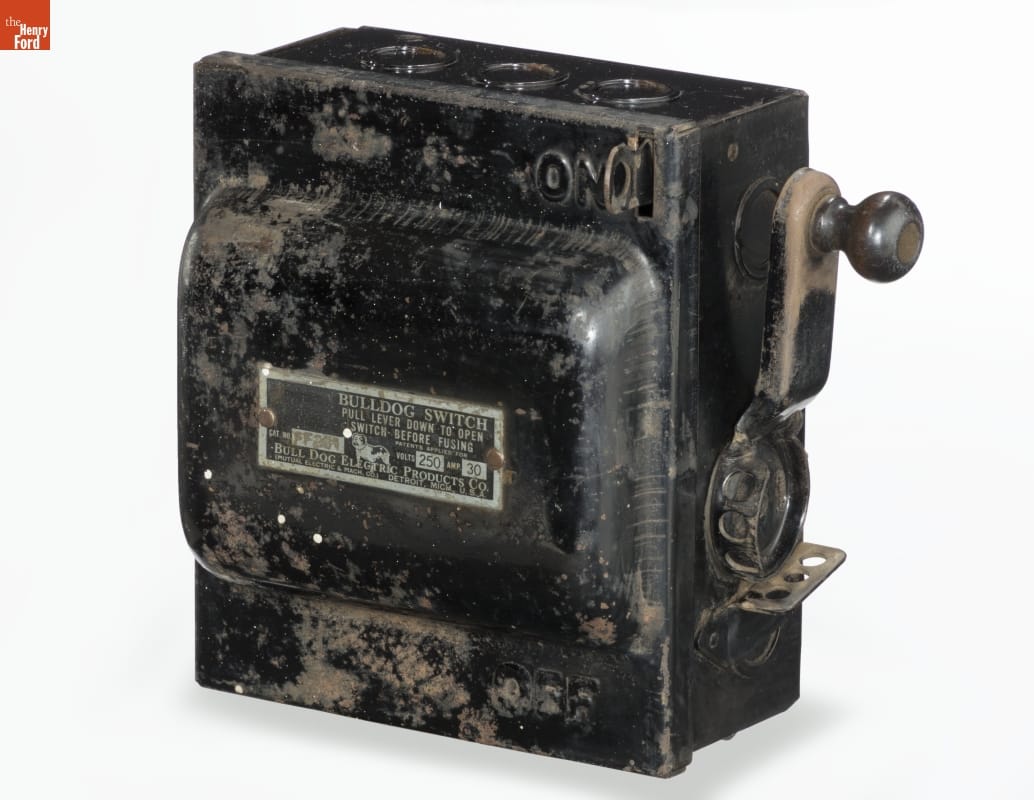
- Bull Dog Electric Products Co. Switch, circa 1927 - Switches open or close an electrical circuit to turn things off or on. Safety switches, such as this one, were developed to prevent dangerous arcing and limit a worker's exposure to current-carrying parts--and potential injury. Safety switches enclose exposed parts and require an operator to turn off the current before opening the switch boxes.
- circa 1927
- Collections - Artifact
Bull Dog Electric Products Co. Switch, circa 1927
Switches open or close an electrical circuit to turn things off or on. Safety switches, such as this one, were developed to prevent dangerous arcing and limit a worker's exposure to current-carrying parts--and potential injury. Safety switches enclose exposed parts and require an operator to turn off the current before opening the switch boxes.
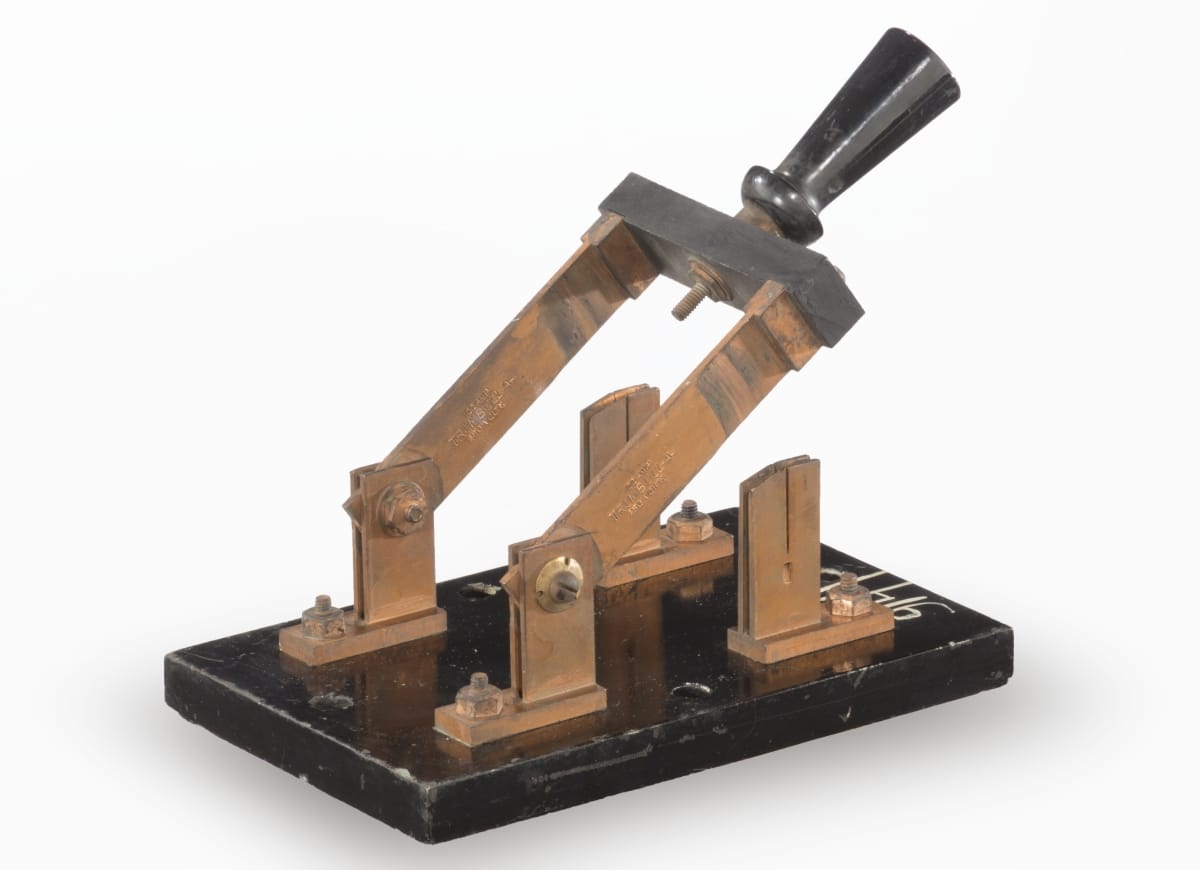
- Trumbull Electric Manufacturing Company Electric Knife Switch, 1900-1920 - Switches open or close an electrical circuit to turn things off or on. In the late 1800s and early 1900s, knife switches were commonly found in engine or generating rooms, connected to factory motors, or mounted on a building's power and lighting switchboard. Operators pushed the hinged, metal blades into the switch's jaws to send electricity to where it was needed.
- 1900-1920
- Collections - Artifact
Trumbull Electric Manufacturing Company Electric Knife Switch, 1900-1920
Switches open or close an electrical circuit to turn things off or on. In the late 1800s and early 1900s, knife switches were commonly found in engine or generating rooms, connected to factory motors, or mounted on a building's power and lighting switchboard. Operators pushed the hinged, metal blades into the switch's jaws to send electricity to where it was needed.