
Search
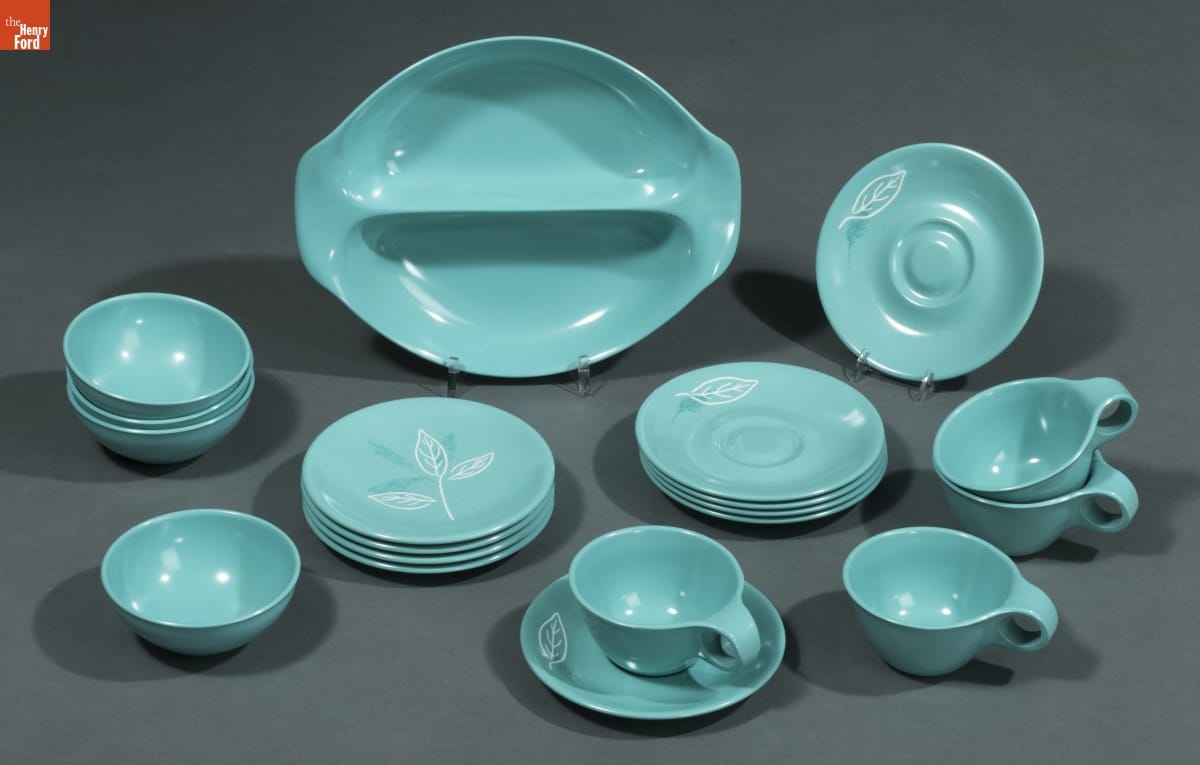
- Set of Melamine Tableware, 1950-1960 - During the early 1950s, plastic dinnerware in the form of melamine was introduced to the American market. By 1956, twenty-five percent of Americans owned at least a pair of these plates. Industrial designers Russel and Mary Wright were famous for producing aesthetically pleasing ceramic dinnerware as early as the 1930s. This set, in fashionable turquoise, was the Wrights' first design in plastic.
- 1950-1960
- Collections - Artifact
Set of Melamine Tableware, 1950-1960
During the early 1950s, plastic dinnerware in the form of melamine was introduced to the American market. By 1956, twenty-five percent of Americans owned at least a pair of these plates. Industrial designers Russel and Mary Wright were famous for producing aesthetically pleasing ceramic dinnerware as early as the 1930s. This set, in fashionable turquoise, was the Wrights' first design in plastic.
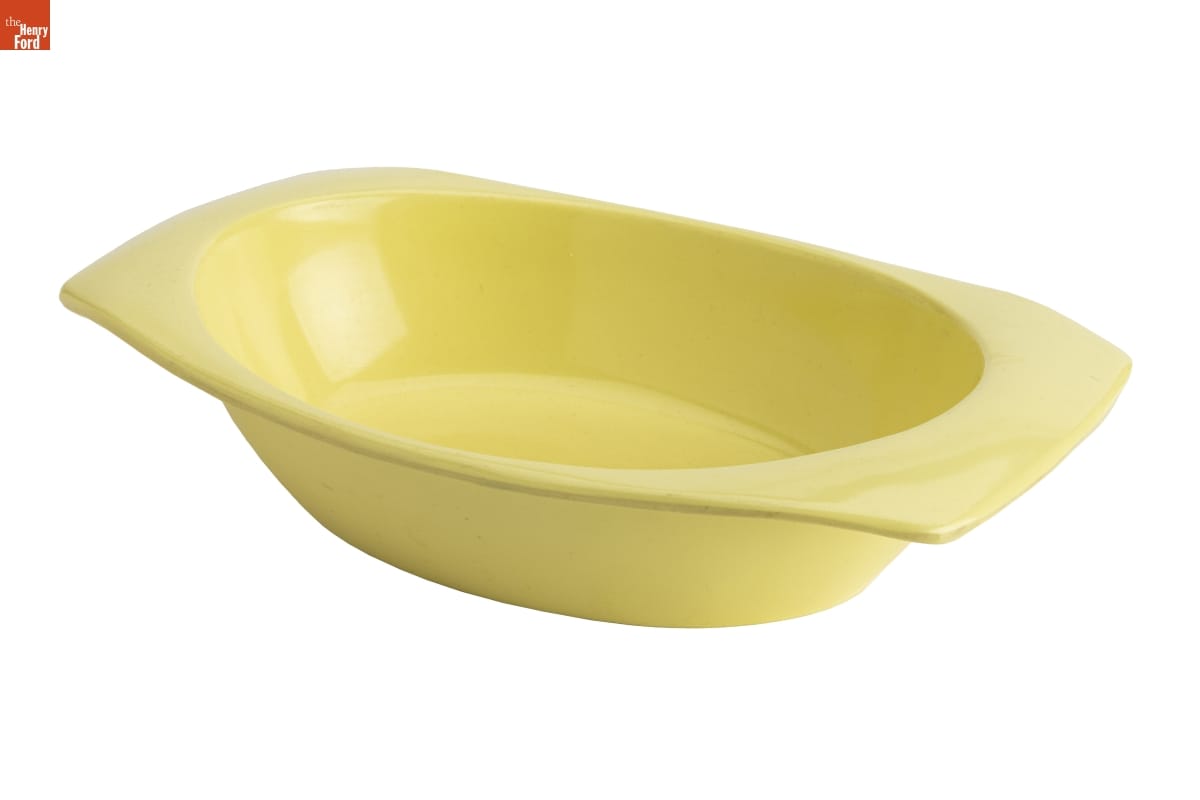
- Prolon Bowl, 1950-1960 - After World War II, the Pro-Phy-Lac-Tic Brush Company expanded its product line from toothbrushes to items made from plastic resins. In 1955, building on the popularity of Melmac dinnerware (made with shatterproof, lightweight melamine), the company introduced its Prolon brand of dinnerware. This colorful line of dinnerware was designed by Irving Harper of the industrial design firm George Nelson Associates.
- 1950-1960
- Collections - Artifact
Prolon Bowl, 1950-1960
After World War II, the Pro-Phy-Lac-Tic Brush Company expanded its product line from toothbrushes to items made from plastic resins. In 1955, building on the popularity of Melmac dinnerware (made with shatterproof, lightweight melamine), the company introduced its Prolon brand of dinnerware. This colorful line of dinnerware was designed by Irving Harper of the industrial design firm George Nelson Associates.
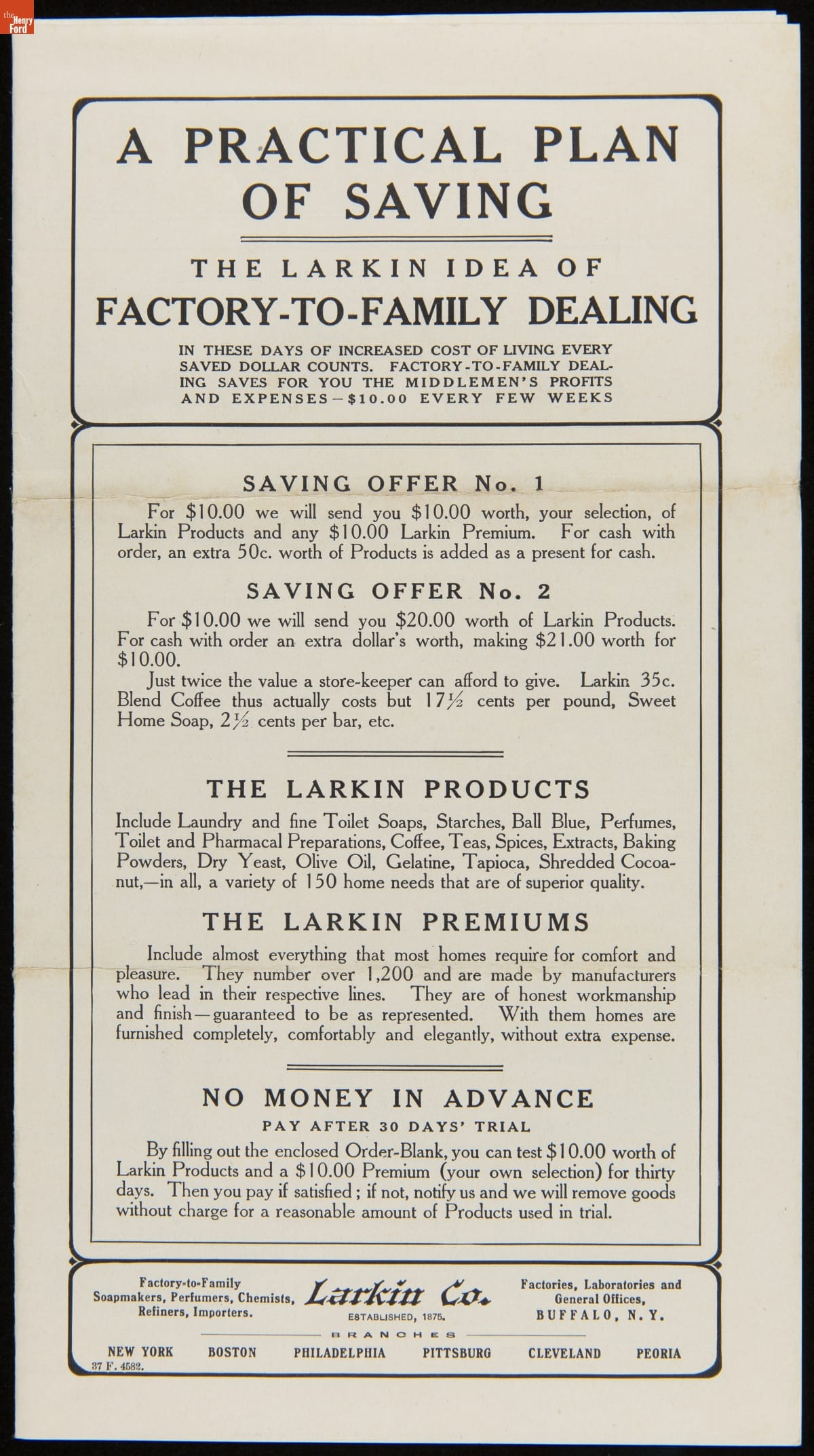
- Larkin Company Trade Catalog, "A Practical Plan of Saving: The Larkin Idea of Factory-To-Family Dealing," circa 1906 - John D. Larkin established a soap manufacturing company in 1875. He hired his brother-in-law, Elbert Hubbard, as a salesman. Hubbard developed "The Larkin Idea," a plan that sold goods directly to consumers through mail-order catalogs and offered incentivizing giveaways. It was a success. By the early 1900s, Larkin's catalogs contained pages of products and even more pages of premiums from which customers could choose.
- circa 1906
- Collections - Artifact
Larkin Company Trade Catalog, "A Practical Plan of Saving: The Larkin Idea of Factory-To-Family Dealing," circa 1906
John D. Larkin established a soap manufacturing company in 1875. He hired his brother-in-law, Elbert Hubbard, as a salesman. Hubbard developed "The Larkin Idea," a plan that sold goods directly to consumers through mail-order catalogs and offered incentivizing giveaways. It was a success. By the early 1900s, Larkin's catalogs contained pages of products and even more pages of premiums from which customers could choose.
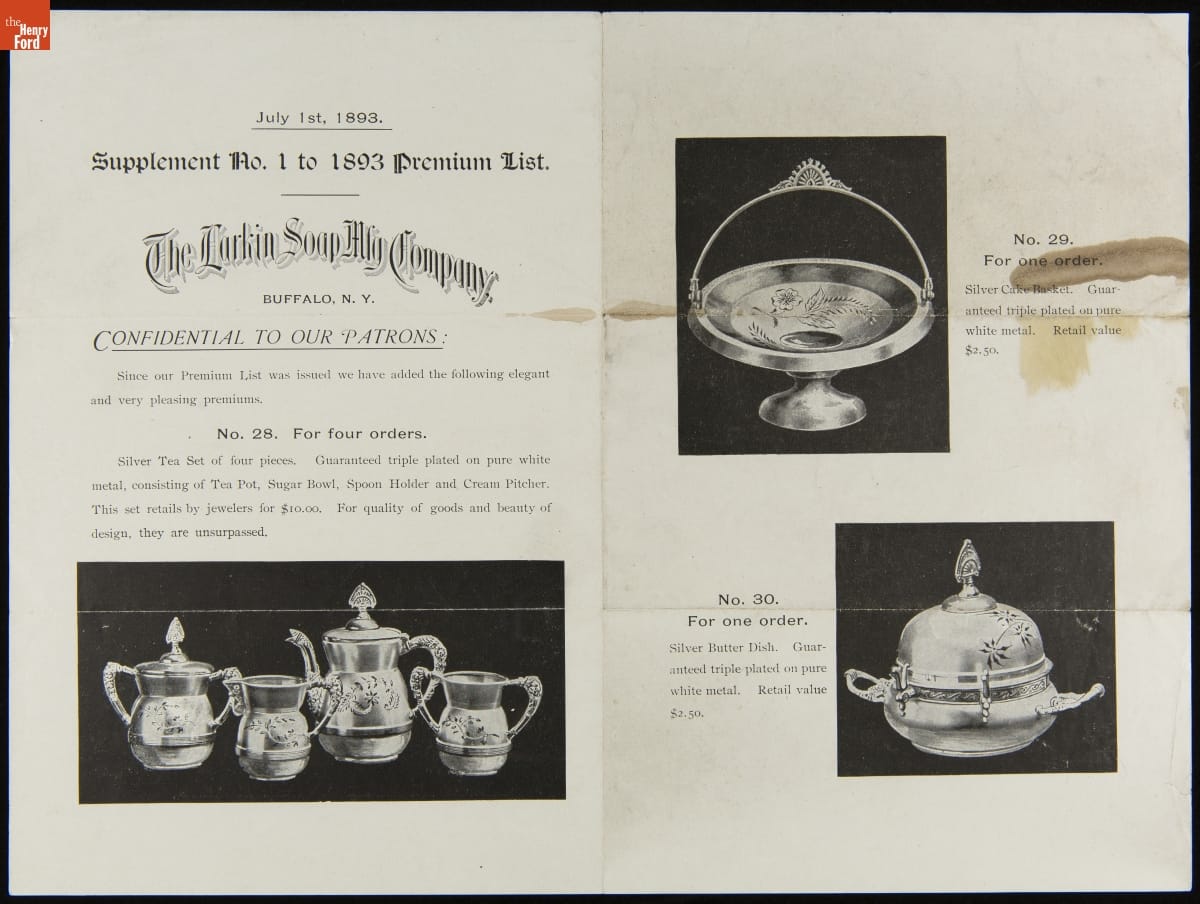
- Larkin Company, "Supplement No. 1 to 1893 Premium List," July 1, 1893 - John D. Larkin established a soap manufacturing company in 1875. He hired his brother-in-law, Elbert Hubbard, as a salesman. Hubbard developed "The Larkin Idea," a plan that sold goods directly to consumers through mail-order catalogs and offered incentivizing giveaways. It was a success. By the early 1900s, Larkin's catalogs contained pages of products and even more pages of premiums from which customers could choose.
- July 01, 1893
- Collections - Artifact
Larkin Company, "Supplement No. 1 to 1893 Premium List," July 1, 1893
John D. Larkin established a soap manufacturing company in 1875. He hired his brother-in-law, Elbert Hubbard, as a salesman. Hubbard developed "The Larkin Idea," a plan that sold goods directly to consumers through mail-order catalogs and offered incentivizing giveaways. It was a success. By the early 1900s, Larkin's catalogs contained pages of products and even more pages of premiums from which customers could choose.
- Everlast Aluminum Advertisement, "Yours from Everlast, the Finest--Bar None!," 1947 - In 1932, Louis Schnitzer and Nathan Gelfman formed Everlast Metal Products Corporation, producing high-quality, hand-forged aluminum giftware. In an era of growing uniformity via factory production, the "made by hand" aspect of these products held an aesthetic appeal for consumers. This advertisement for Everlast aluminum hostess accessories features a portable bar, ice preserver, and coaster set.
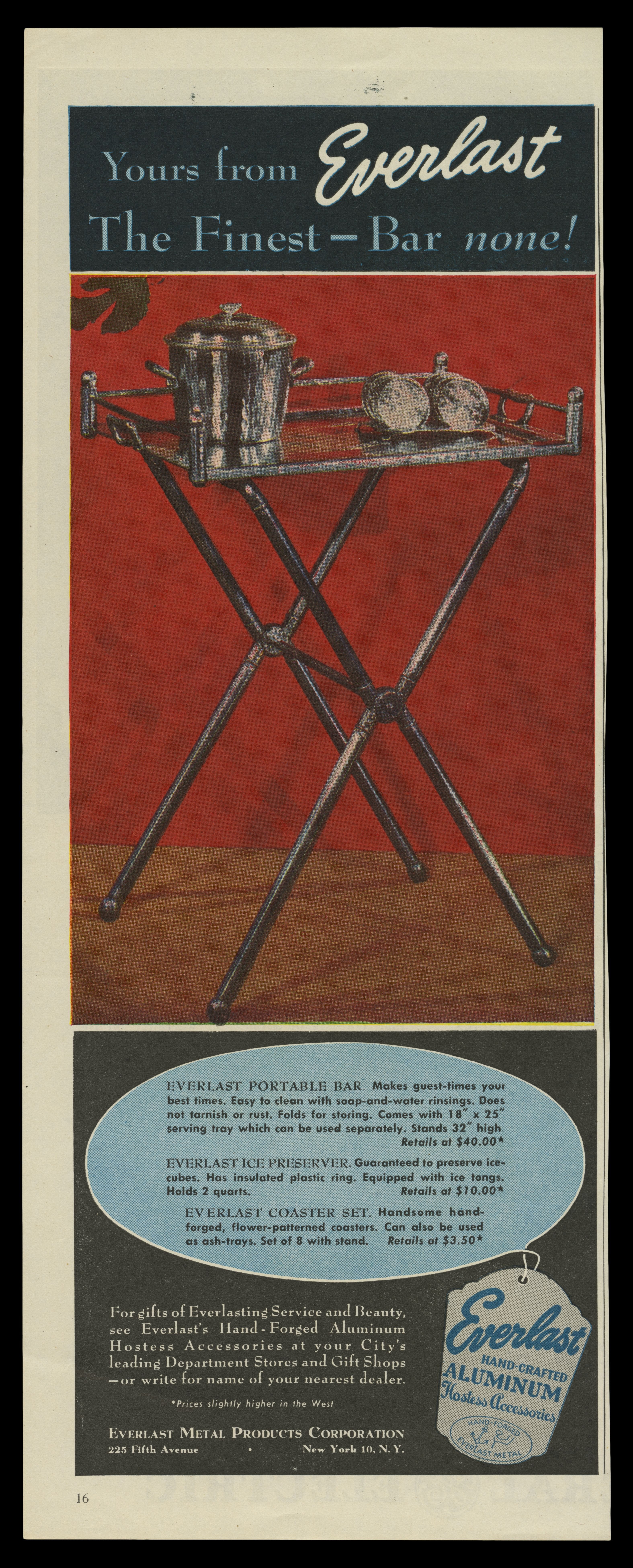
- 1947
- Collections - Artifact
Everlast Aluminum Advertisement, "Yours from Everlast, the Finest--Bar None!," 1947
In 1932, Louis Schnitzer and Nathan Gelfman formed Everlast Metal Products Corporation, producing high-quality, hand-forged aluminum giftware. In an era of growing uniformity via factory production, the "made by hand" aspect of these products held an aesthetic appeal for consumers. This advertisement for Everlast aluminum hostess accessories features a portable bar, ice preserver, and coaster set.
- Howard Johnson's Plates, 1951-1954 - In the 1920s, Howard Deering Johnson began selling ice cream from food stands around Boston, Massachusetts. Johnson later expanded his business to full-service restaurants. He franchised these orange-roofed establishments across America, locating them along highways to cater to the traveling public. This plate celebrates America's growth with idyllic scenes on the rim, including one of a Howard Johnson's restaurant.
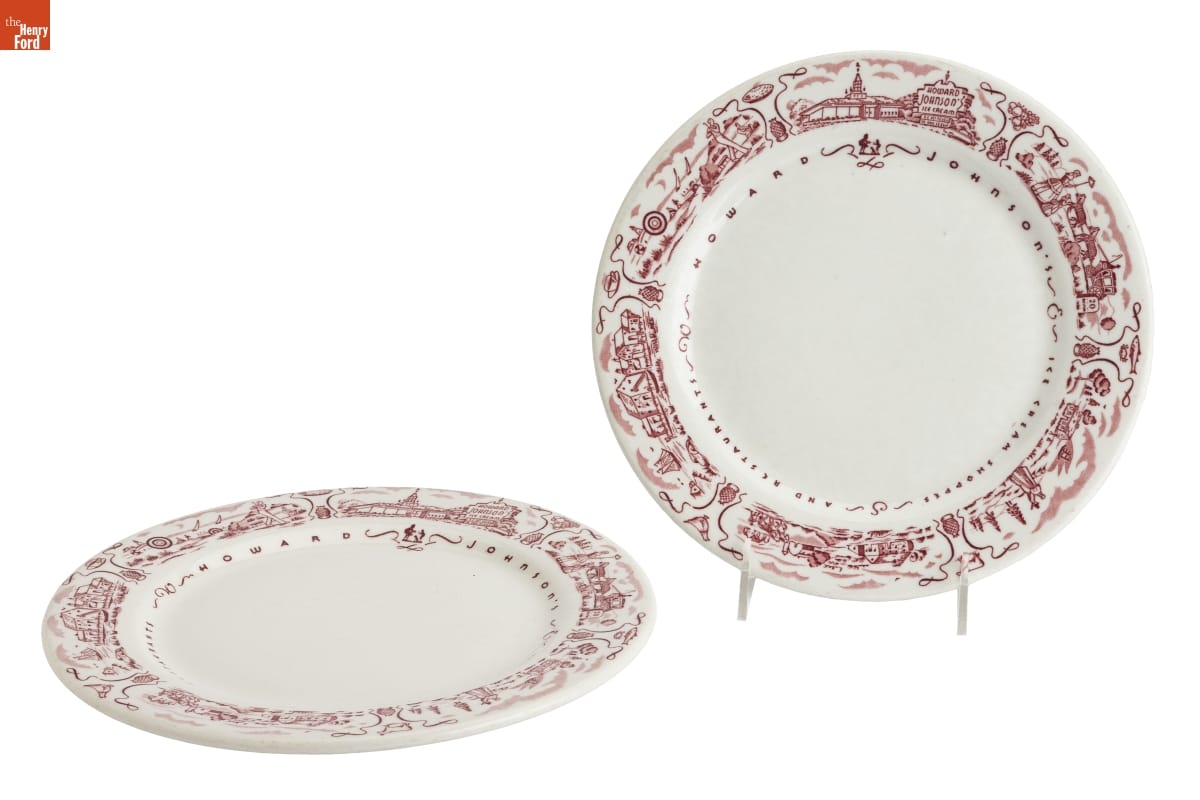
- 1951-1954
- Collections - Artifact
Howard Johnson's Plates, 1951-1954
In the 1920s, Howard Deering Johnson began selling ice cream from food stands around Boston, Massachusetts. Johnson later expanded his business to full-service restaurants. He franchised these orange-roofed establishments across America, locating them along highways to cater to the traveling public. This plate celebrates America's growth with idyllic scenes on the rim, including one of a Howard Johnson's restaurant.
- Advertising Layout Drawing of a Man and Boy Dining in a Restaurant with Heinz Products, October 6, 1909 - The H.J. Heinz Company published pamphlets, brochures, and booklets that detailed the company's history and manufacturing process. Sometimes, hand-drawn images accompanied text related to a specific topic. This advertising layout drawing of a man and a boy dining with Heinz products on the table was drawn for publication purposes and would have accompanied text promoting Heinz products.
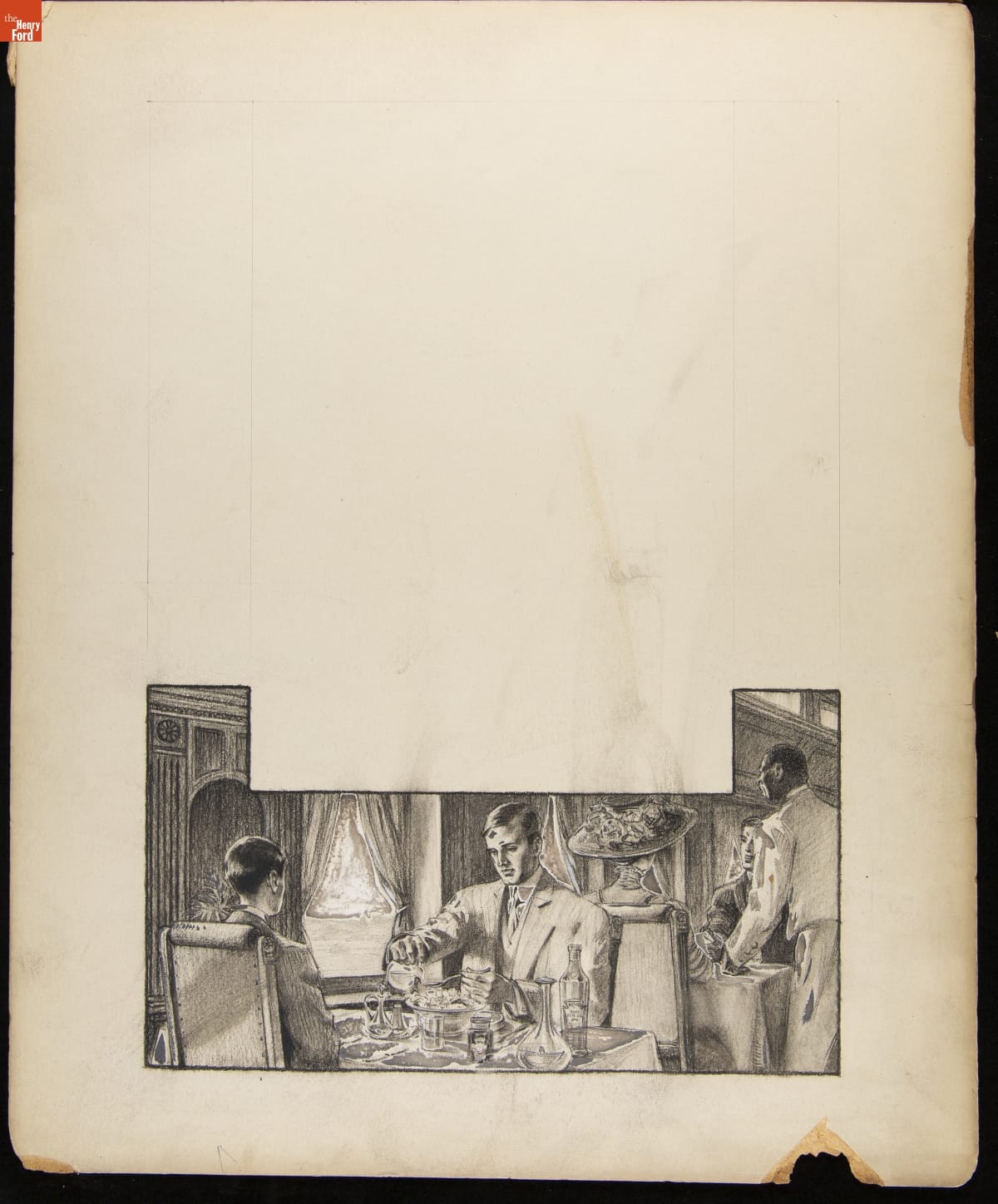
- October 06, 1909
- Collections - Artifact
Advertising Layout Drawing of a Man and Boy Dining in a Restaurant with Heinz Products, October 6, 1909
The H.J. Heinz Company published pamphlets, brochures, and booklets that detailed the company's history and manufacturing process. Sometimes, hand-drawn images accompanied text related to a specific topic. This advertising layout drawing of a man and a boy dining with Heinz products on the table was drawn for publication purposes and would have accompanied text promoting Heinz products.
- Advertising Layout for Heinz "57" Varieties, circa 1925 - The H.J. Heinz Company marketed its products everywhere from stores to various publications and even on streetcars. This advertising layout represents one of the steps in the marketing process in which the drawing or illustration, size, color, and arrangement are taken into consideration before the final advertisement is created.
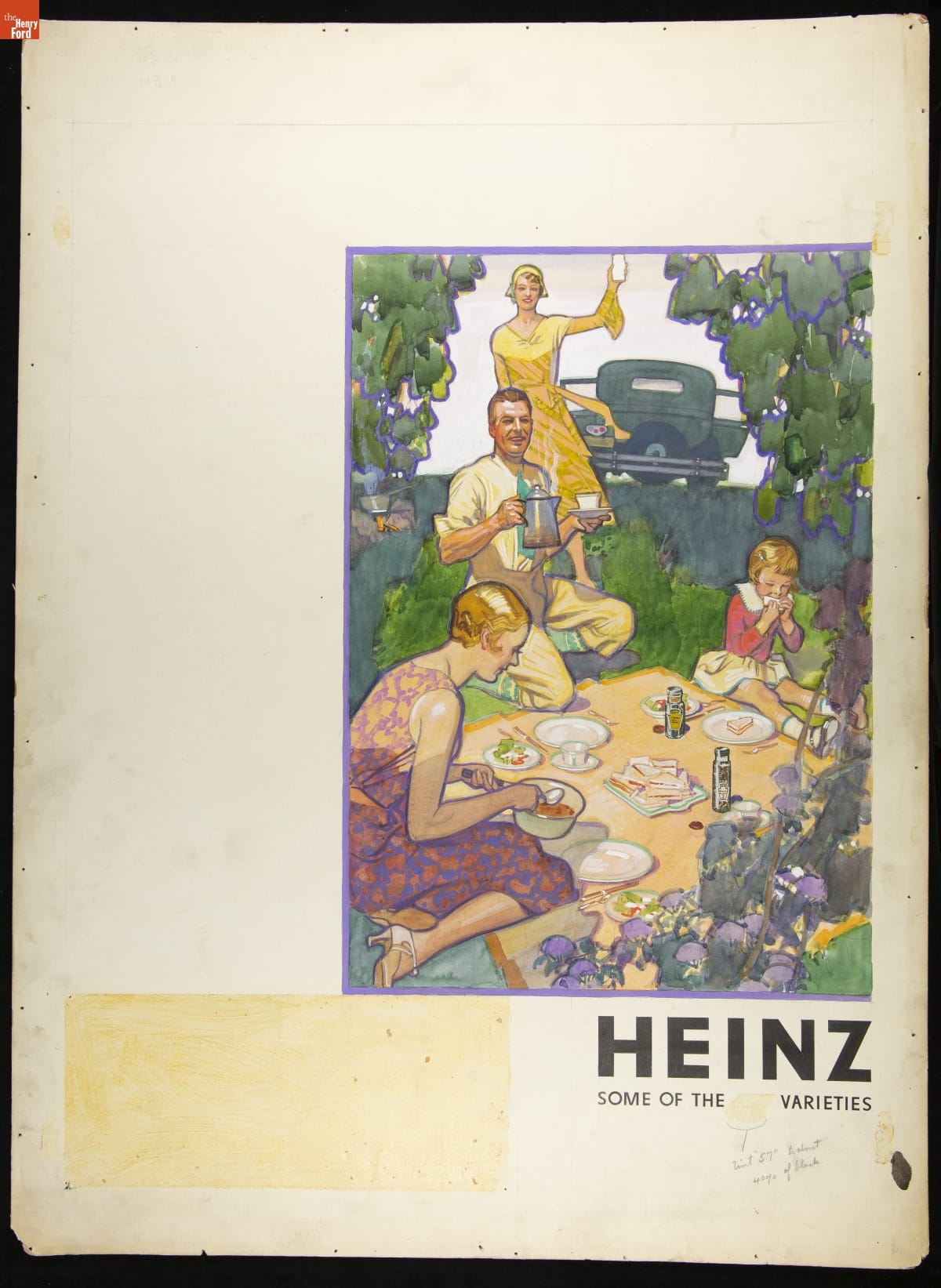
- circa 1925
- Collections - Artifact
Advertising Layout for Heinz "57" Varieties, circa 1925
The H.J. Heinz Company marketed its products everywhere from stores to various publications and even on streetcars. This advertising layout represents one of the steps in the marketing process in which the drawing or illustration, size, color, and arrangement are taken into consideration before the final advertisement is created.
- Kentucky Fried Chicken Spork, 1978-1990 -
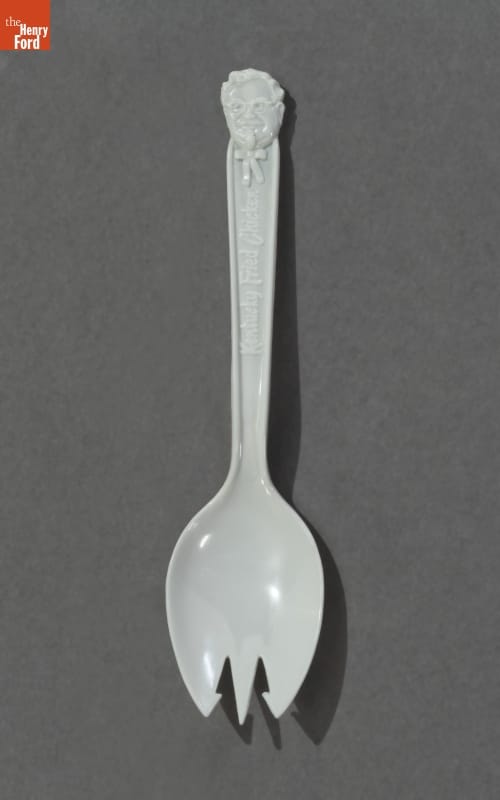
- 1978-1990
- Collections - Artifact
Kentucky Fried Chicken Spork, 1978-1990
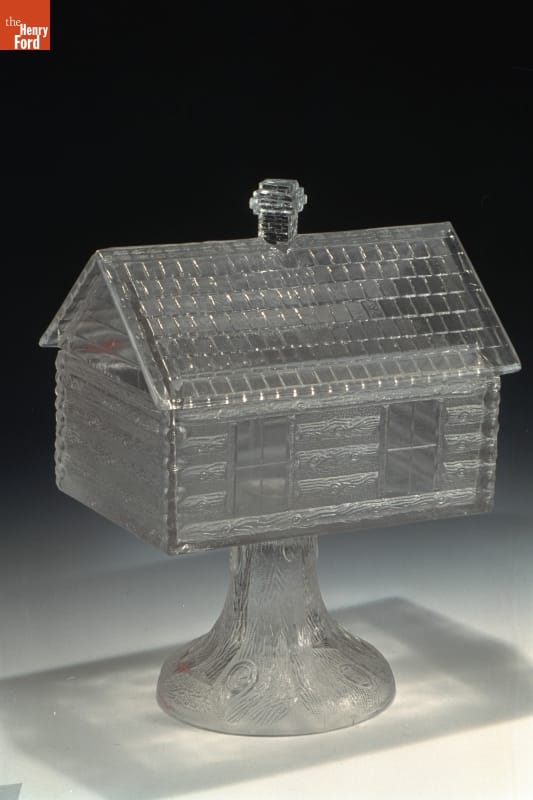
- Covered Compote, 1875-1890 - Compotes are all-purpose serving dishes. These usually footed bowls -- with or without lids or covers -- held special desserts, fruits, candies or sauces, jellies and other foods. Blown or pressed glass compotes provided a culinary presentation method suitable to 19th-century middle-class households.
- 1875-1890
- Collections - Artifact
Covered Compote, 1875-1890
Compotes are all-purpose serving dishes. These usually footed bowls -- with or without lids or covers -- held special desserts, fruits, candies or sauces, jellies and other foods. Blown or pressed glass compotes provided a culinary presentation method suitable to 19th-century middle-class households.