
Search
- Man Wearing a Frock Coat, 1864-1866 -
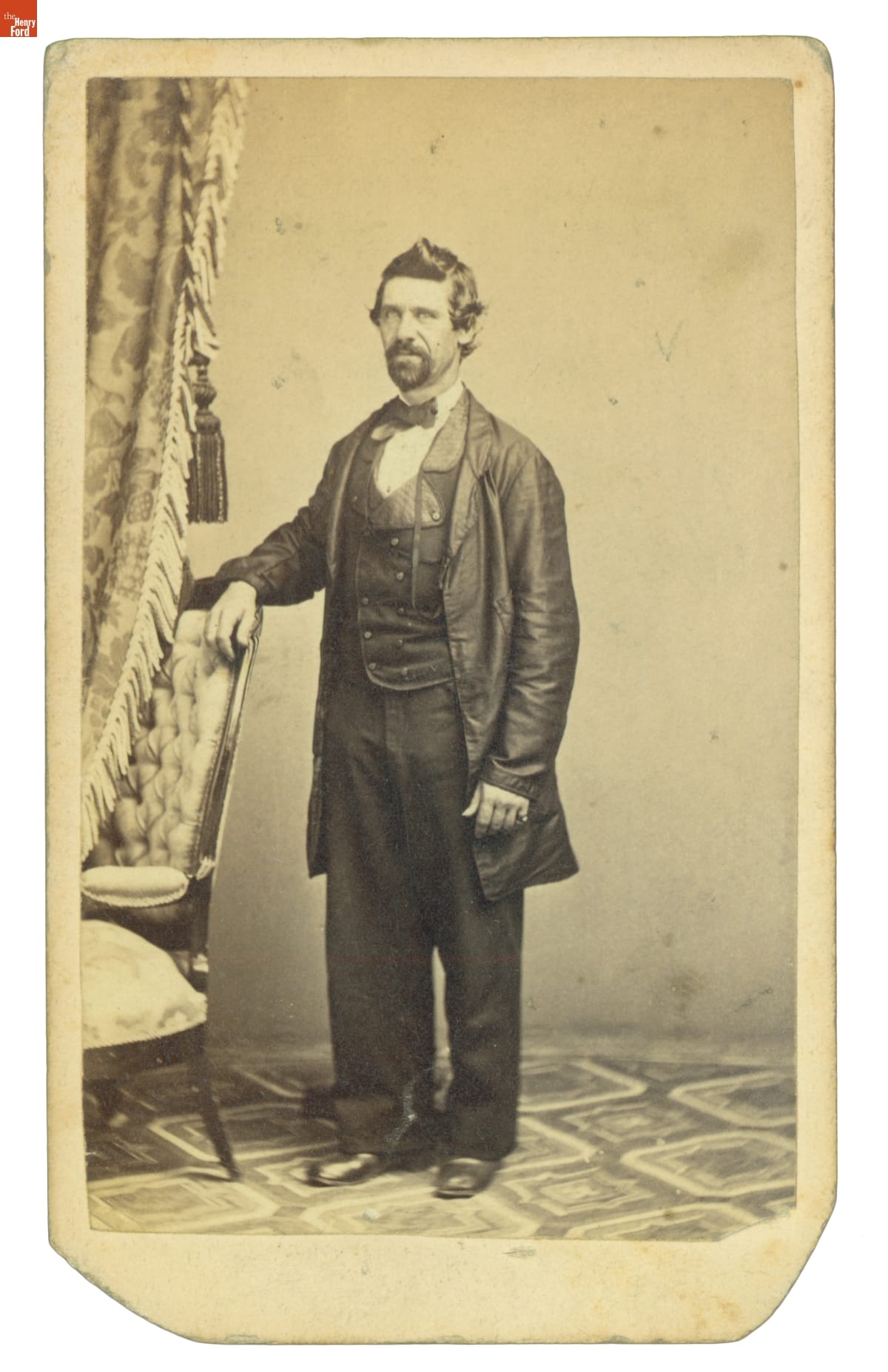
- 1864-1866
- Collections - Artifact
Man Wearing a Frock Coat, 1864-1866
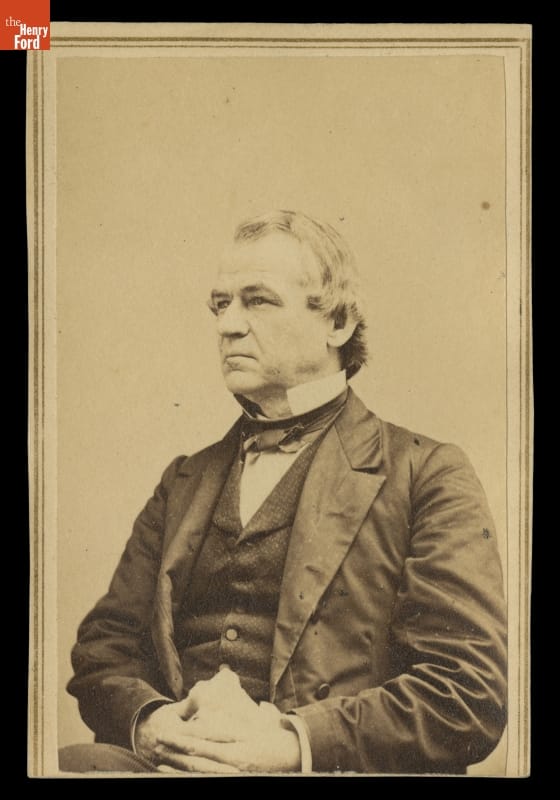
- Portrait of Andrew Johnson, 1864-1865 - Cartes-de-visite, small, professionally made photographs on cardboard stock, remained popular in the United States from the Civil War in the 1860s through the 1880s. Many were given to friends and loved ones, but enterprising photographers also produced images of famous individuals to sell to the collecting-crazed public. Celebrities, military officers and politicians, such as Andrew Johnson, were popular subjects.
- 1864-1865
- Collections - Artifact
Portrait of Andrew Johnson, 1864-1865
Cartes-de-visite, small, professionally made photographs on cardboard stock, remained popular in the United States from the Civil War in the 1860s through the 1880s. Many were given to friends and loved ones, but enterprising photographers also produced images of famous individuals to sell to the collecting-crazed public. Celebrities, military officers and politicians, such as Andrew Johnson, were popular subjects.
- Letter from W. R. Talbot to George Appleton, December 8, 1876 -
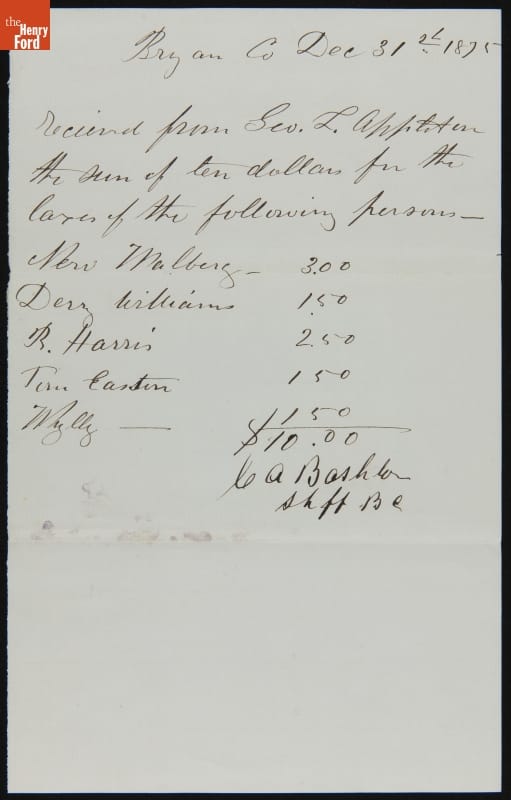
- December 08, 1876
- Collections - Artifact
Letter from W. R. Talbot to George Appleton, December 8, 1876
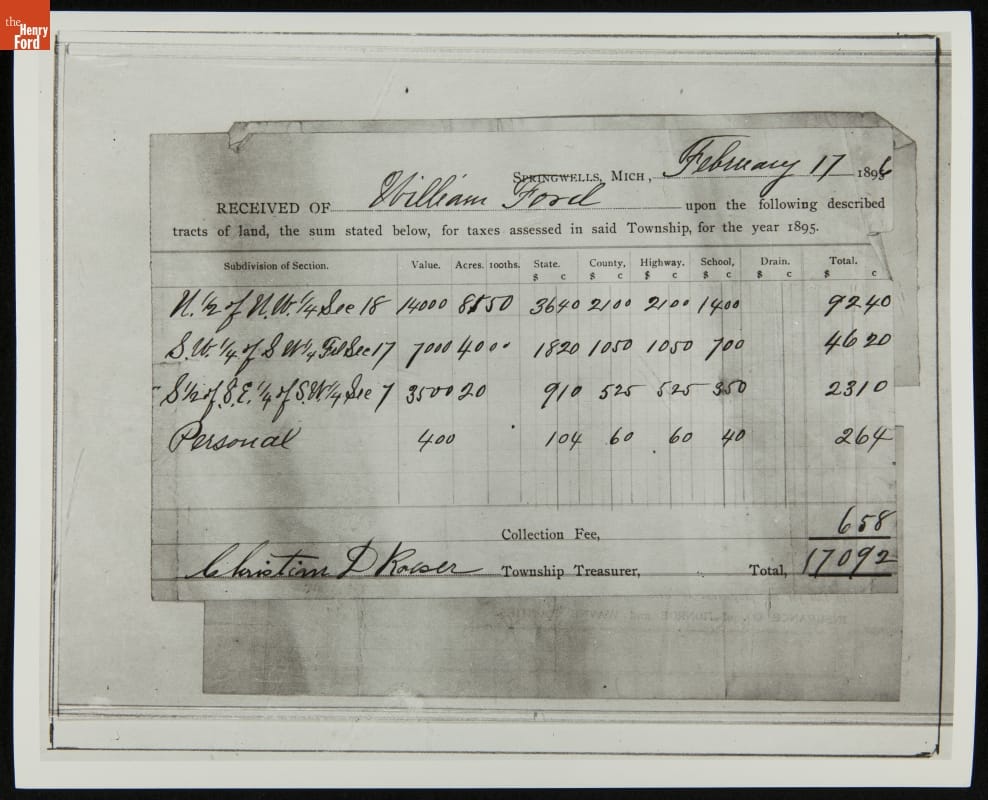
- Receipt for Property Taxes Paid by William Ford (Henry Ford's Father) on February 17, 1896 - When William Ford, Henry Ford's father, emigrated from Ireland in 1847 at the age of twenty he had little wealth. William settled near family in southeast Michigan and eventually purchased a tract of land. By the late 19th century, William was a prosperous farmer. In 1896, the date of this receipt, he owned over two hundred acres of farmland in Wayne County.
- February 17, 1895
- Collections - Artifact
Receipt for Property Taxes Paid by William Ford (Henry Ford's Father) on February 17, 1896
When William Ford, Henry Ford's father, emigrated from Ireland in 1847 at the age of twenty he had little wealth. William settled near family in southeast Michigan and eventually purchased a tract of land. By the late 19th century, William was a prosperous farmer. In 1896, the date of this receipt, he owned over two hundred acres of farmland in Wayne County.
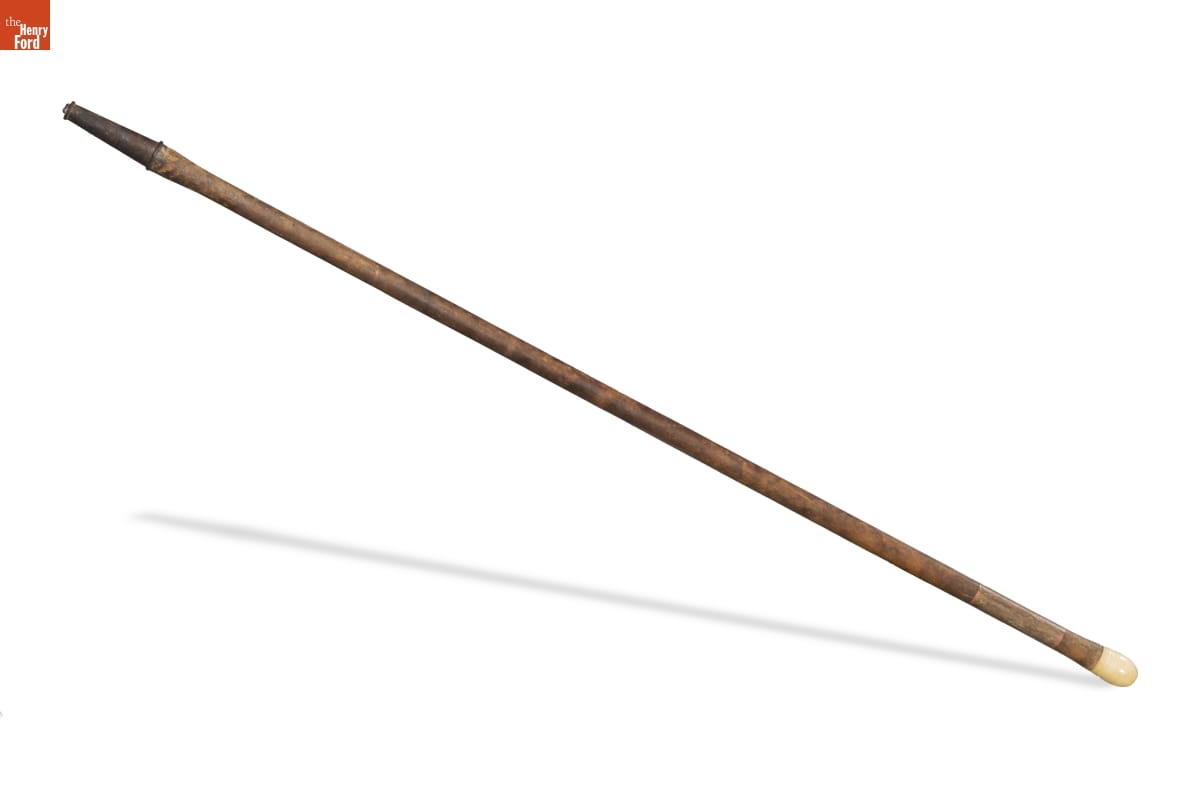
- Tithing Cane -
- Collections - Artifact
Tithing Cane
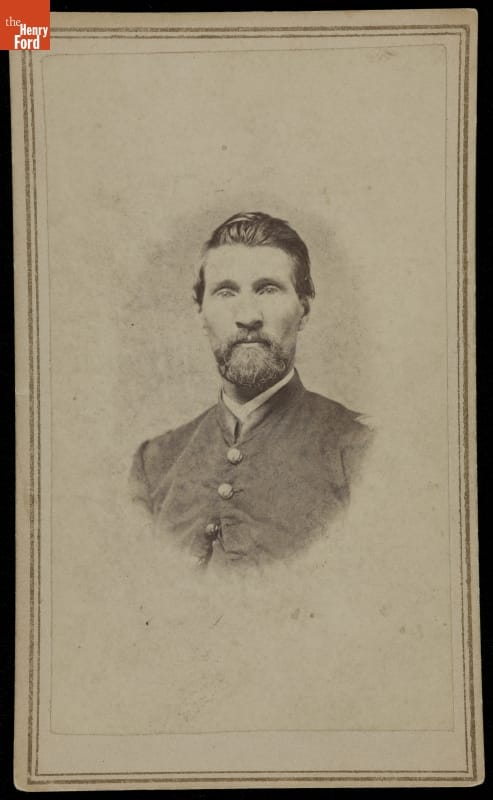
- Union Army Soldier, 1865 - This carte-de-visite portrait of an unidentified Union Army soldier was photographed at A.A. Barnes' Picture Palace in Indianapolis, Indiana, 1865. Carte-de-visite was a small photographic print on cardboard stock made by professional photographers. Popular in the United States from the Civil War in the 1860s through the 1880s, people exchanged and collected CdVs to help them remember family and celebrities.
- May 15, 1865
- Collections - Artifact
Union Army Soldier, 1865
This carte-de-visite portrait of an unidentified Union Army soldier was photographed at A.A. Barnes' Picture Palace in Indianapolis, Indiana, 1865. Carte-de-visite was a small photographic print on cardboard stock made by professional photographers. Popular in the United States from the Civil War in the 1860s through the 1880s, people exchanged and collected CdVs to help them remember family and celebrities.
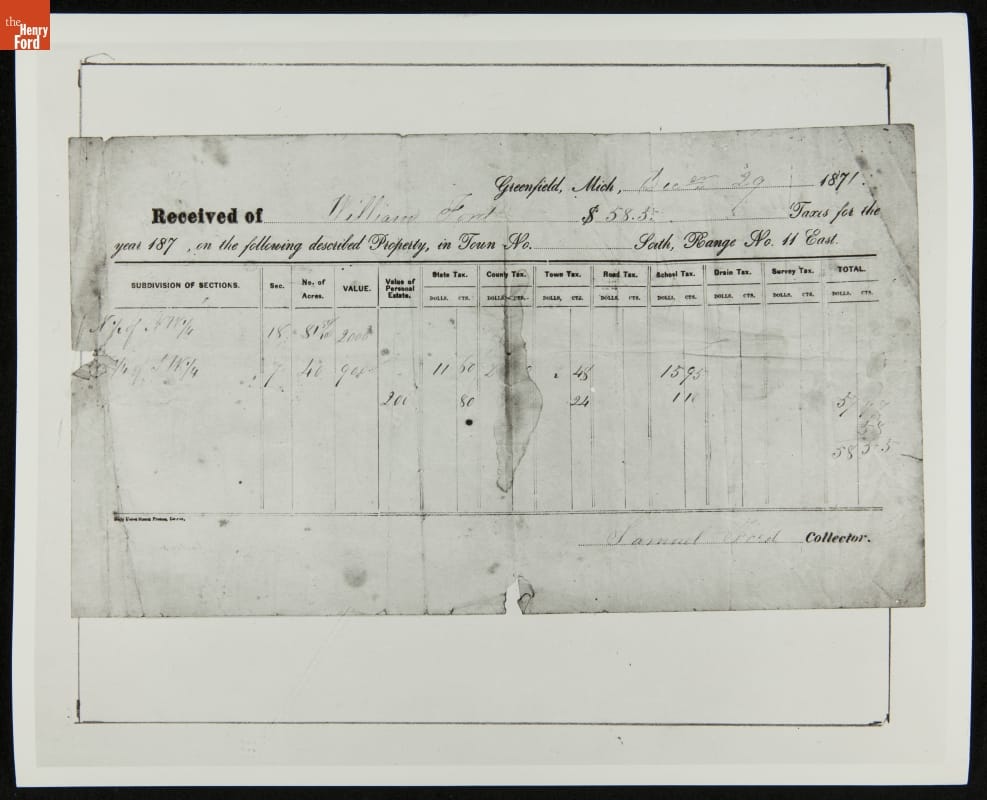
- Receipt for Property Taxes Paid by William Ford (Henry Ford's Father) in 1871 - When William Ford, Henry Ford's father, emigrated from Ireland in 1847 at the age of twenty he had little wealth. William settled near family in southeast Michigan and eventually purchased a tract of land. By the late 19th century, William was a prosperous farmer. In 1871, the date of this receipt, he owned over two hundred acres of farmland in Wayne County.
- 1871
- Collections - Artifact
Receipt for Property Taxes Paid by William Ford (Henry Ford's Father) in 1871
When William Ford, Henry Ford's father, emigrated from Ireland in 1847 at the age of twenty he had little wealth. William settled near family in southeast Michigan and eventually purchased a tract of land. By the late 19th century, William was a prosperous farmer. In 1871, the date of this receipt, he owned over two hundred acres of farmland in Wayne County.
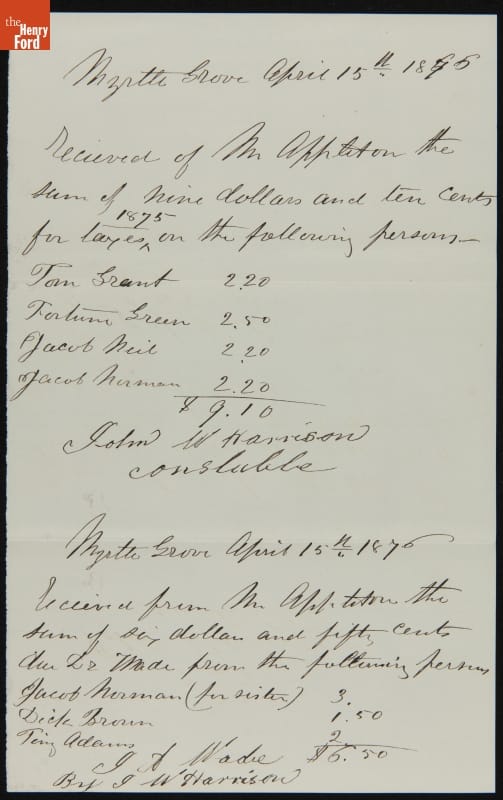
- Receipt of Taxes Paid by George L. Appleton April 15, 1876 -
- April 15, 1876
- Collections - Artifact
Receipt of Taxes Paid by George L. Appleton April 15, 1876
- Receipt of Taxes Paid by George L. Appleton December 31, 1876 -
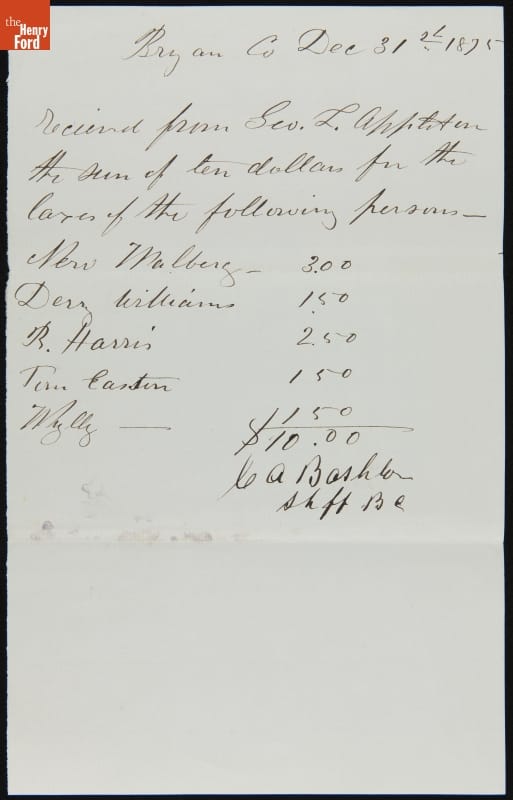
- December 31, 1875
- Collections - Artifact
Receipt of Taxes Paid by George L. Appleton December 31, 1876
- Financial Account of George Appleton's Work for William Talbot, 1877 -
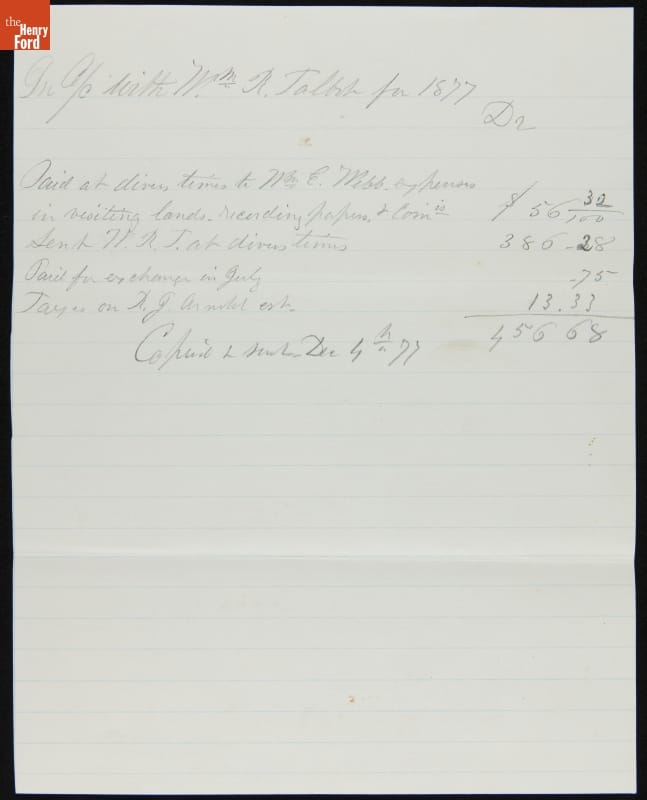
- 1877
- Collections - Artifact
Financial Account of George Appleton's Work for William Talbot, 1877