
Search
- Drawing, Outside Ends of South Parlor Bay, Noah Webster House, New Haven, Connecticut, September 28, 1936 -
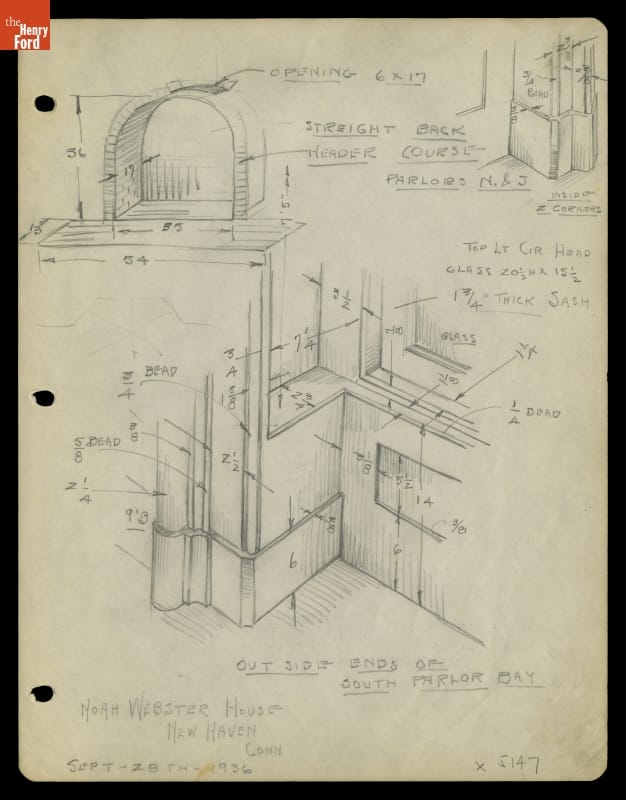
- September 28, 1936
- Collections - Artifact
Drawing, Outside Ends of South Parlor Bay, Noah Webster House, New Haven, Connecticut, September 28, 1936
- Drawing, "Forward Brake Shoe & Lining Assembly," Ford GP, March 16, 1944 - The Ford Motor Company created over a million parts drawings from 1903 to 1957. Many of these drawings specify engineering requirements for the components of Ford-made vehicles--including automobiles, trucks, tractors, military vehicles and Tri-motor airplanes. Others document assembly components, stages of casting and forging, or experimental designs. Beginning in the 1940s, Ford transferred the drawings to microfilm.
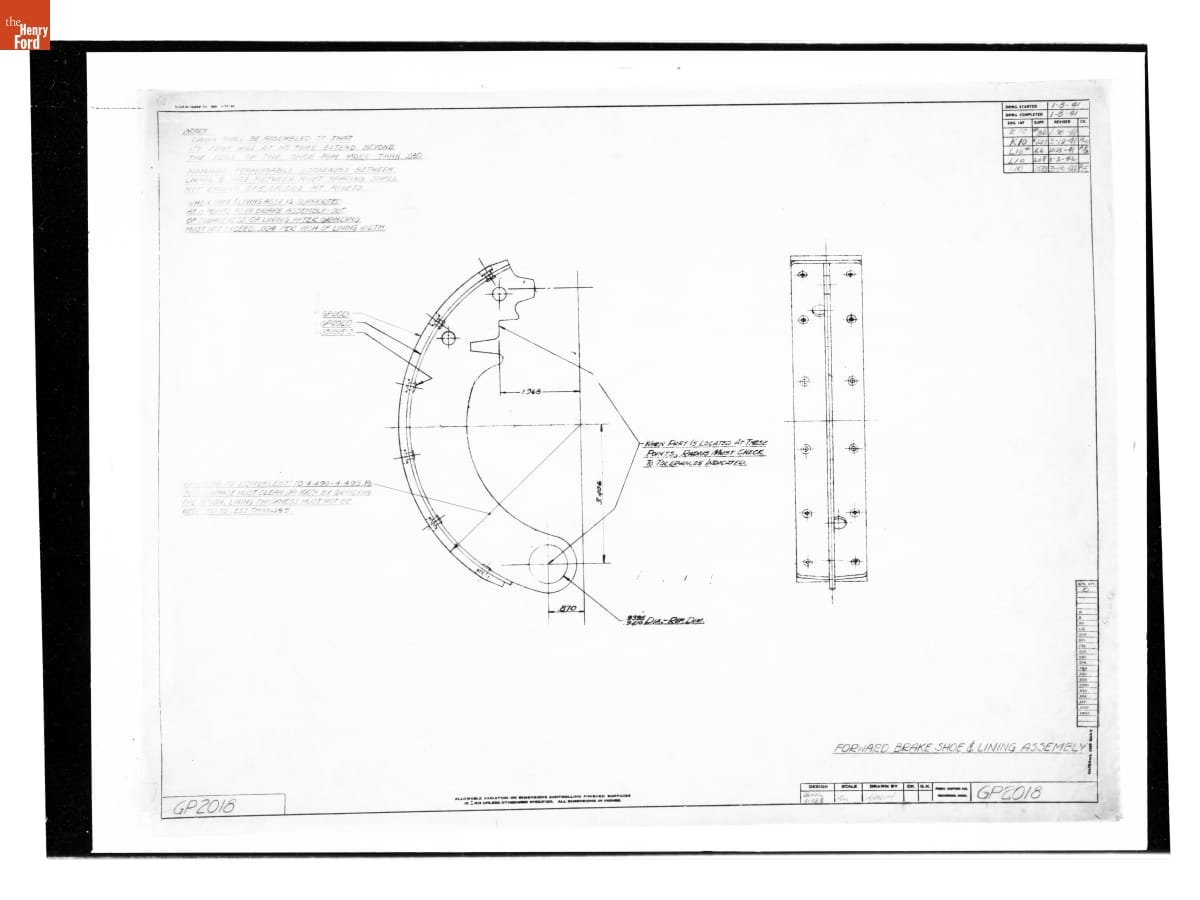
- March 16, 1944
- Collections - Artifact
Drawing, "Forward Brake Shoe & Lining Assembly," Ford GP, March 16, 1944
The Ford Motor Company created over a million parts drawings from 1903 to 1957. Many of these drawings specify engineering requirements for the components of Ford-made vehicles--including automobiles, trucks, tractors, military vehicles and Tri-motor airplanes. Others document assembly components, stages of casting and forging, or experimental designs. Beginning in the 1940s, Ford transferred the drawings to microfilm.
- Drawing, "Cam - Brake Anchor Pin," Ford GP, January 28, 1943 - The Ford Motor Company created over a million parts drawings from 1903 to 1957. Many of these drawings specify engineering requirements for the components of Ford-made vehicles--including automobiles, trucks, tractors, military vehicles and Tri-motor airplanes. Others document assembly components, stages of casting and forging, or experimental designs. Beginning in the 1940s, Ford transferred the drawings to microfilm.
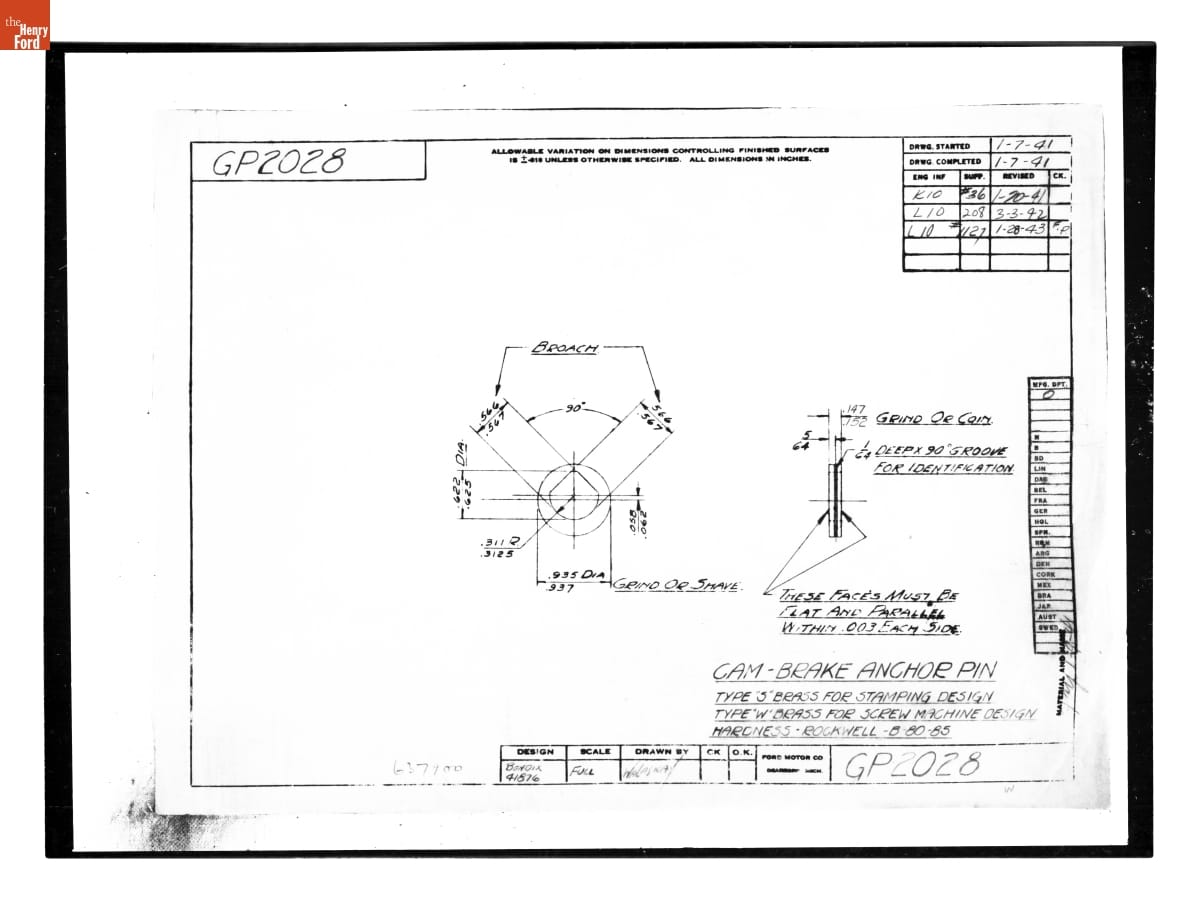
- January 28, 1943
- Collections - Artifact
Drawing, "Cam - Brake Anchor Pin," Ford GP, January 28, 1943
The Ford Motor Company created over a million parts drawings from 1903 to 1957. Many of these drawings specify engineering requirements for the components of Ford-made vehicles--including automobiles, trucks, tractors, military vehicles and Tri-motor airplanes. Others document assembly components, stages of casting and forging, or experimental designs. Beginning in the 1940s, Ford transferred the drawings to microfilm.
- Drawing, "Baffle Plate - Brake Master Cylinder (Upper)," Ford GP, August 20, 1942 - The Ford Motor Company created over a million parts drawings from 1903 to 1957. Many of these drawings specify engineering requirements for the components of Ford-made vehicles--including automobiles, trucks, tractors, military vehicles and Tri-motor airplanes. Others document assembly components, stages of casting and forging, or experimental designs. Beginning in the 1940s, Ford transferred the drawings to microfilm.
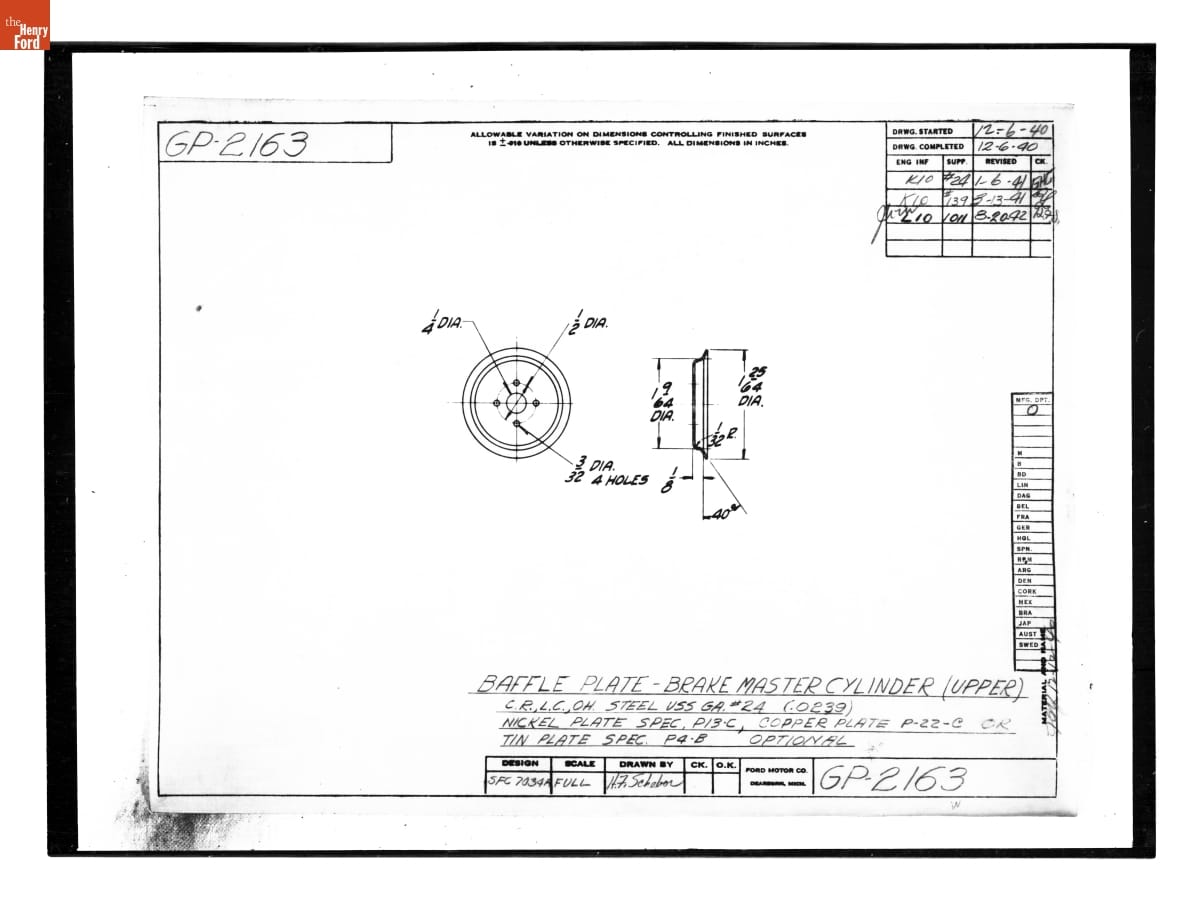
- August 20, 1942
- Collections - Artifact
Drawing, "Baffle Plate - Brake Master Cylinder (Upper)," Ford GP, August 20, 1942
The Ford Motor Company created over a million parts drawings from 1903 to 1957. Many of these drawings specify engineering requirements for the components of Ford-made vehicles--including automobiles, trucks, tractors, military vehicles and Tri-motor airplanes. Others document assembly components, stages of casting and forging, or experimental designs. Beginning in the 1940s, Ford transferred the drawings to microfilm.
- Drawing, Wright Cycle Shop, Dayton, Ohio, 1936 - In October 1936, Henry Ford purchased the bicycle shop used by Wilbur and Orville Wright in Dayton, Ohio. Over the next 18 months, Ford relocated and reassembled the building at his Greenfield Village museum complex in Dearborn, Michigan. Before the move, architect Edward Cutler made detailed drawings of the shop to ensure the project's accuracy.
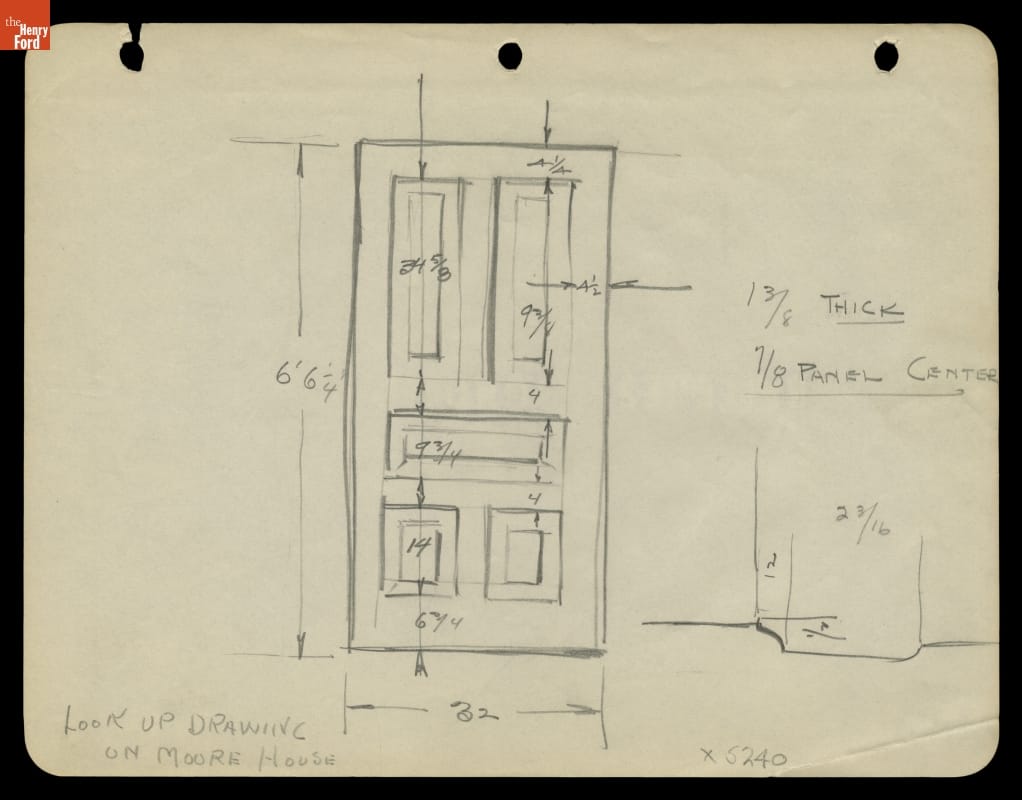
- 1936
- Collections - Artifact
Drawing, Wright Cycle Shop, Dayton, Ohio, 1936
In October 1936, Henry Ford purchased the bicycle shop used by Wilbur and Orville Wright in Dayton, Ohio. Over the next 18 months, Ford relocated and reassembled the building at his Greenfield Village museum complex in Dearborn, Michigan. Before the move, architect Edward Cutler made detailed drawings of the shop to ensure the project's accuracy.
- Drawing, "Dash Pillar - L.H.," Ford Model T, August 29, 1924 - The Ford Motor Company created over a million parts drawings from 1903 to 1957. Many of these drawings specify engineering requirements for the components of Ford-made vehicles--including automobiles, trucks, tractors, military vehicles and Tri-motor airplanes. Others document assembly components, stages of casting and forging, or experimental designs. Beginning in the 1940s, Ford transferred the drawings to microfilm.
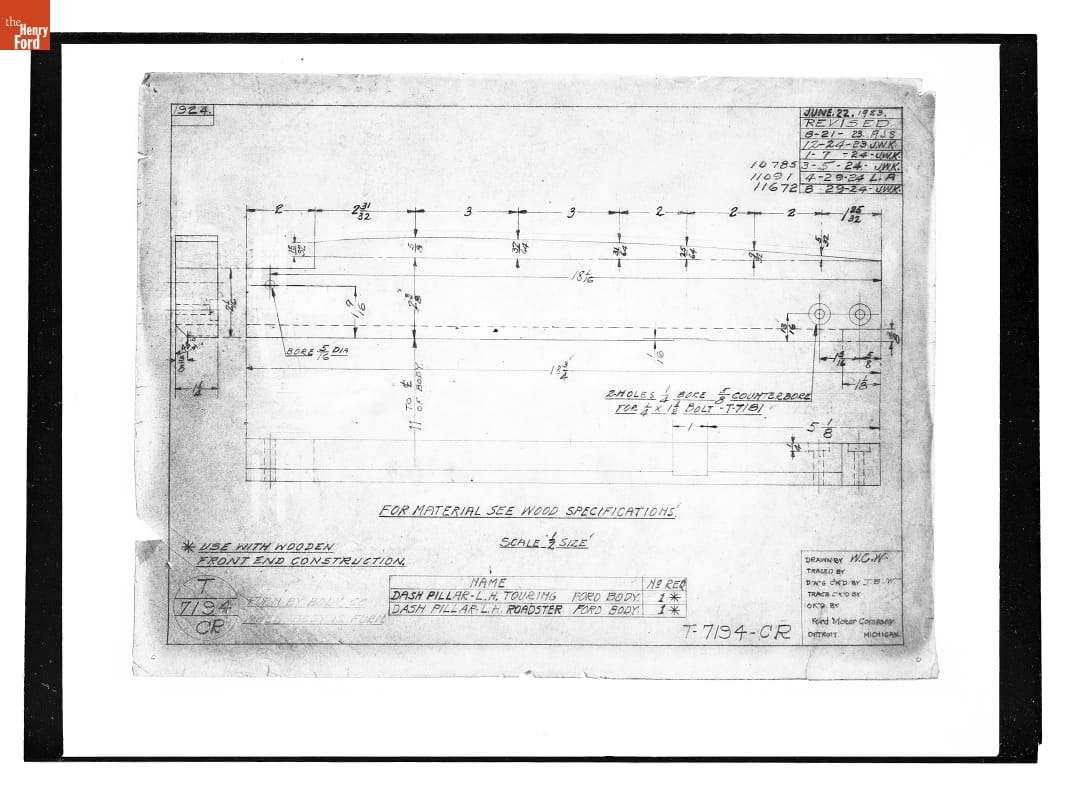
- August 29, 1924
- Collections - Artifact
Drawing, "Dash Pillar - L.H.," Ford Model T, August 29, 1924
The Ford Motor Company created over a million parts drawings from 1903 to 1957. Many of these drawings specify engineering requirements for the components of Ford-made vehicles--including automobiles, trucks, tractors, military vehicles and Tri-motor airplanes. Others document assembly components, stages of casting and forging, or experimental designs. Beginning in the 1940s, Ford transferred the drawings to microfilm.
- Drawing, "Insulator - Engine Mount - Outer," Ford GAA Engine for M4A3 Medium Tank (M4 Sherman), July 9, 1942 - The Ford Motor Company created over a million parts drawings from 1903 to 1957. Many of these drawings specify engineering requirements for the components of Ford-made vehicles--including automobiles, trucks, tractors, military vehicles and Tri-motor airplanes. Others document assembly components, stages of casting and forging, or experimental designs. Beginning in the 1940s, Ford transferred the drawings to microfilm.
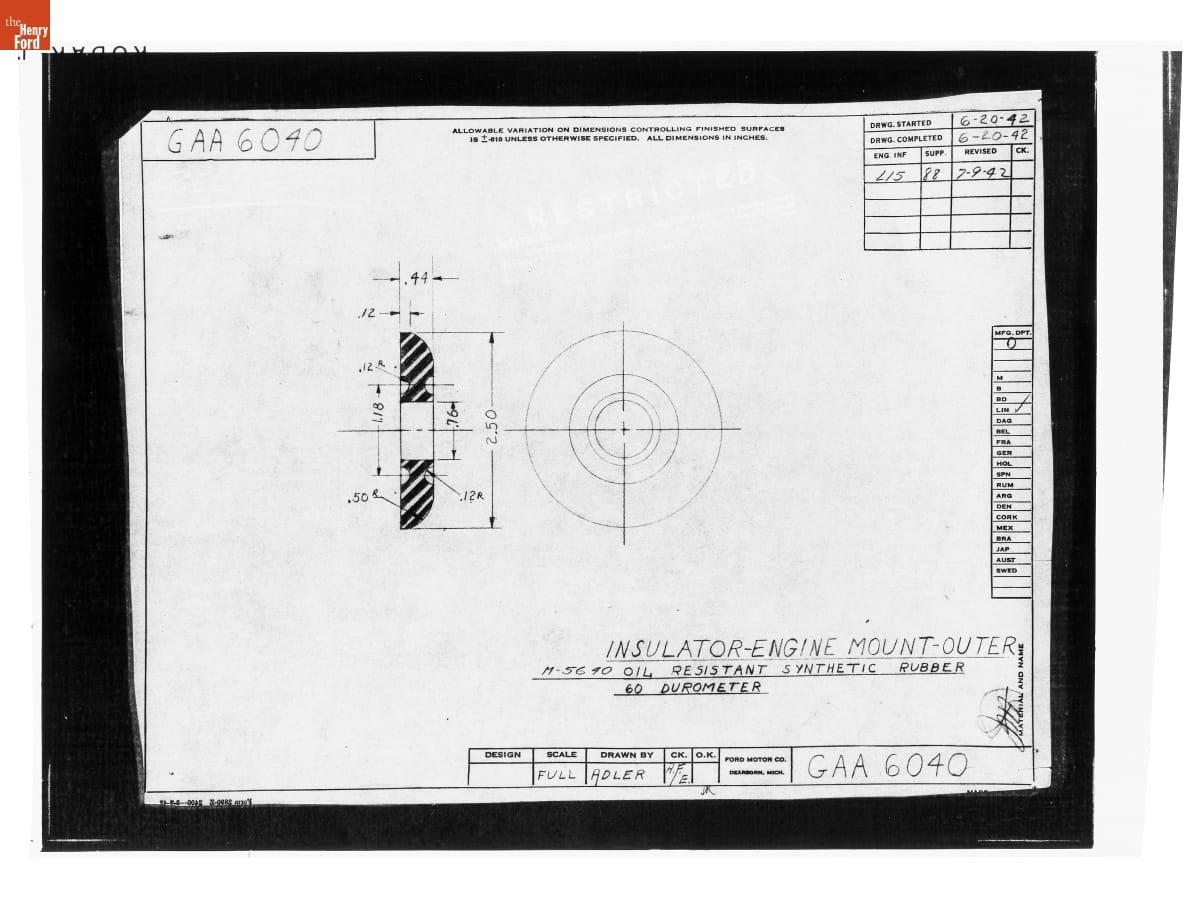
- July 09, 1942
- Collections - Artifact
Drawing, "Insulator - Engine Mount - Outer," Ford GAA Engine for M4A3 Medium Tank (M4 Sherman), July 9, 1942
The Ford Motor Company created over a million parts drawings from 1903 to 1957. Many of these drawings specify engineering requirements for the components of Ford-made vehicles--including automobiles, trucks, tractors, military vehicles and Tri-motor airplanes. Others document assembly components, stages of casting and forging, or experimental designs. Beginning in the 1940s, Ford transferred the drawings to microfilm.
- Drawing, "Housing - Camshaft - L.H.," Ford GAA Engine for M4A3 Medium Tank (M4 Sherman), May 16, 1952 - The Ford Motor Company created over a million parts drawings from 1903 to 1957. Many of these drawings specify engineering requirements for the components of Ford-made vehicles--including automobiles, trucks, tractors, military vehicles and Tri-motor airplanes. Others document assembly components, stages of casting and forging, or experimental designs. Beginning in the 1940s, Ford transferred the drawings to microfilm.
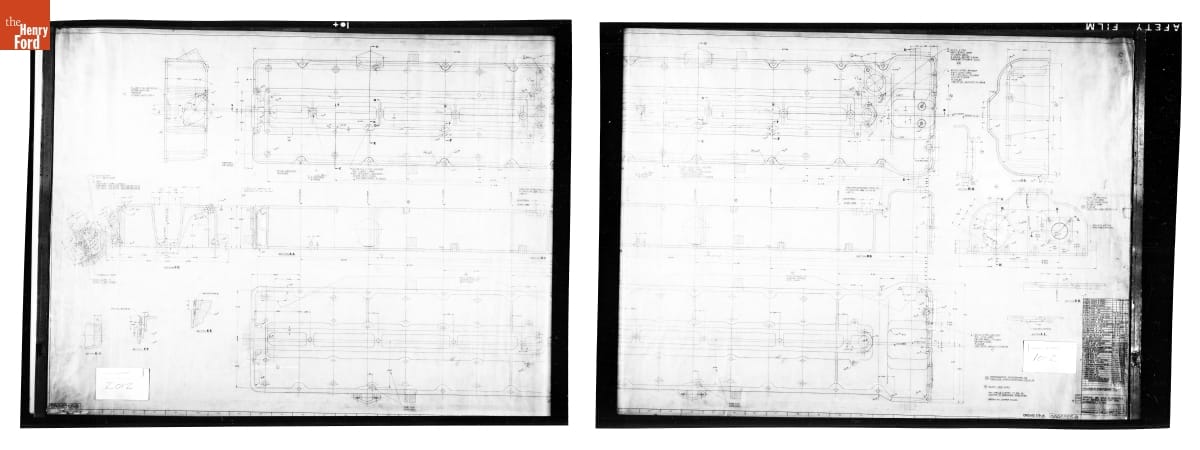
- May 16, 1952
- Collections - Artifact
Drawing, "Housing - Camshaft - L.H.," Ford GAA Engine for M4A3 Medium Tank (M4 Sherman), May 16, 1952
The Ford Motor Company created over a million parts drawings from 1903 to 1957. Many of these drawings specify engineering requirements for the components of Ford-made vehicles--including automobiles, trucks, tractors, military vehicles and Tri-motor airplanes. Others document assembly components, stages of casting and forging, or experimental designs. Beginning in the 1940s, Ford transferred the drawings to microfilm.
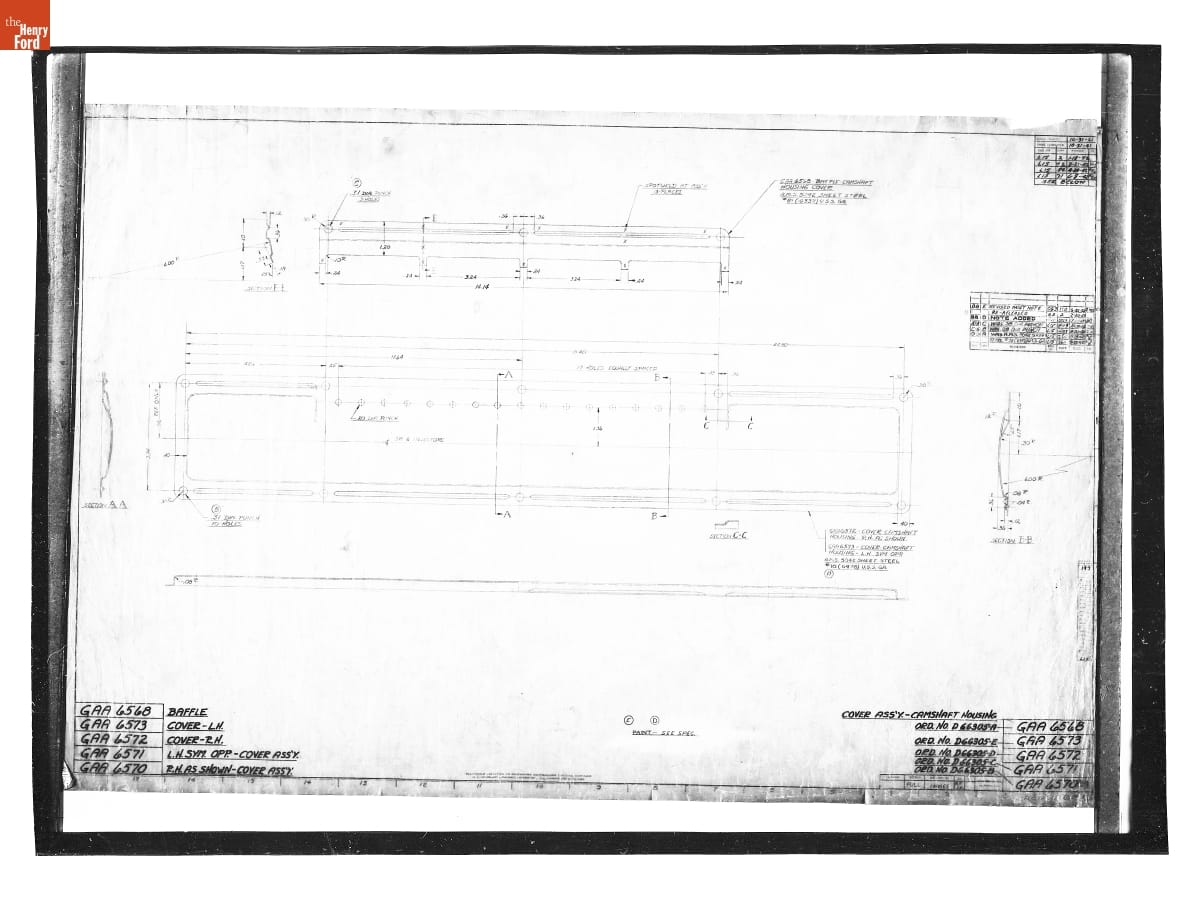
- Drawing, "Cover Ass'y. - Camshaft Housing," Ford GAA Engine for M4A3 Medium Tank (M4 Sherman), May 21, 1952 - The Ford Motor Company created over a million parts drawings from 1903 to 1957. Many of these drawings specify engineering requirements for the components of Ford-made vehicles--including automobiles, trucks, tractors, military vehicles and Tri-motor airplanes. Others document assembly components, stages of casting and forging, or experimental designs. Beginning in the 1940s, Ford transferred the drawings to microfilm.
- May 21, 1952
- Collections - Artifact
Drawing, "Cover Ass'y. - Camshaft Housing," Ford GAA Engine for M4A3 Medium Tank (M4 Sherman), May 21, 1952
The Ford Motor Company created over a million parts drawings from 1903 to 1957. Many of these drawings specify engineering requirements for the components of Ford-made vehicles--including automobiles, trucks, tractors, military vehicles and Tri-motor airplanes. Others document assembly components, stages of casting and forging, or experimental designs. Beginning in the 1940s, Ford transferred the drawings to microfilm.
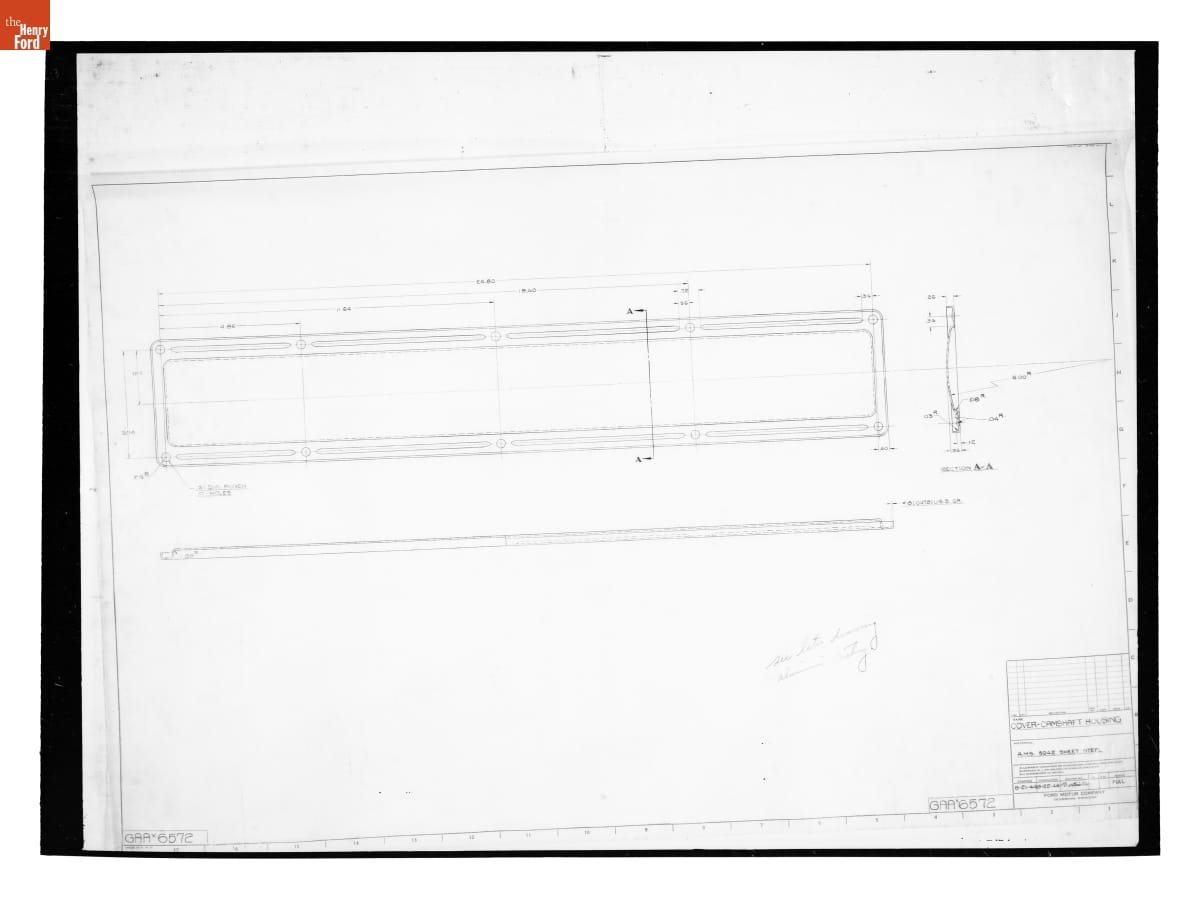
- Drawing, "Cover - Camshaft Housing," Ford GAA Engine for M4A3 Medium Tank (M4 Sherman), August 22, 1944 - The Ford Motor Company created over a million parts drawings from 1903 to 1957. Many of these drawings specify engineering requirements for the components of Ford-made vehicles--including automobiles, trucks, tractors, military vehicles and Tri-motor airplanes. Others document assembly components, stages of casting and forging, or experimental designs. Beginning in the 1940s, Ford transferred the drawings to microfilm.
- August 22, 1944
- Collections - Artifact
Drawing, "Cover - Camshaft Housing," Ford GAA Engine for M4A3 Medium Tank (M4 Sherman), August 22, 1944
The Ford Motor Company created over a million parts drawings from 1903 to 1957. Many of these drawings specify engineering requirements for the components of Ford-made vehicles--including automobiles, trucks, tractors, military vehicles and Tri-motor airplanes. Others document assembly components, stages of casting and forging, or experimental designs. Beginning in the 1940s, Ford transferred the drawings to microfilm.