
Search
- Cross Section of Carbon Button Telephone Transmitter, 1878 -
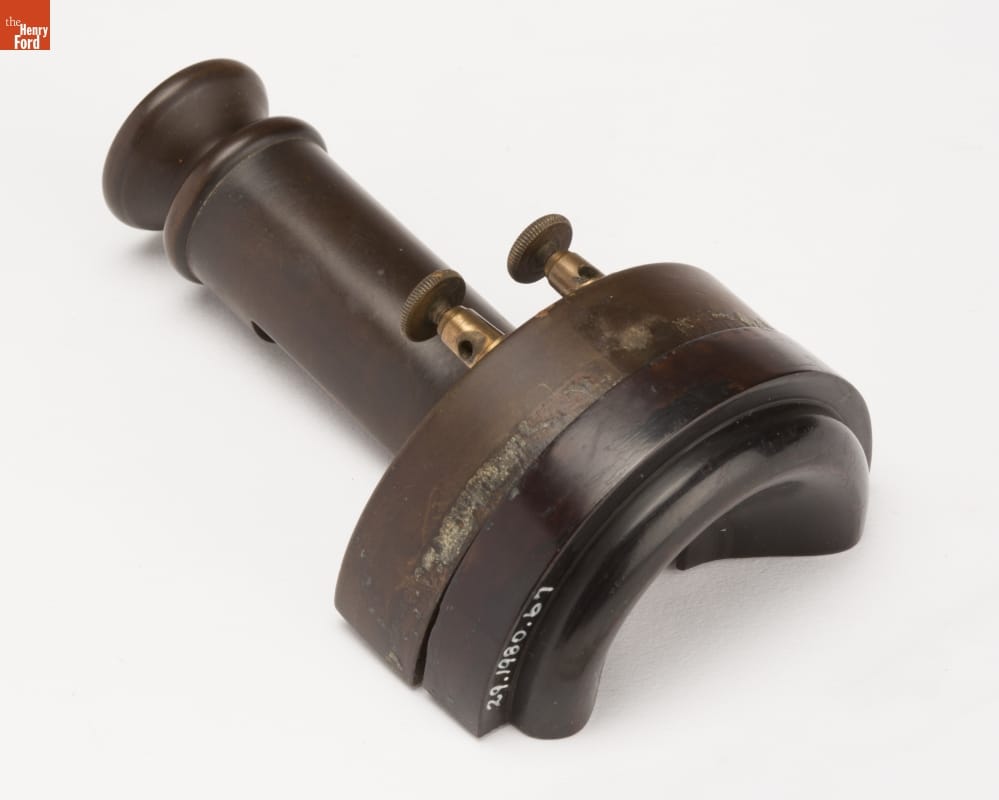
- 1878
- Collections - Artifact
Cross Section of Carbon Button Telephone Transmitter, 1878
- Telephone Transmitter Component, 1880-1920 -
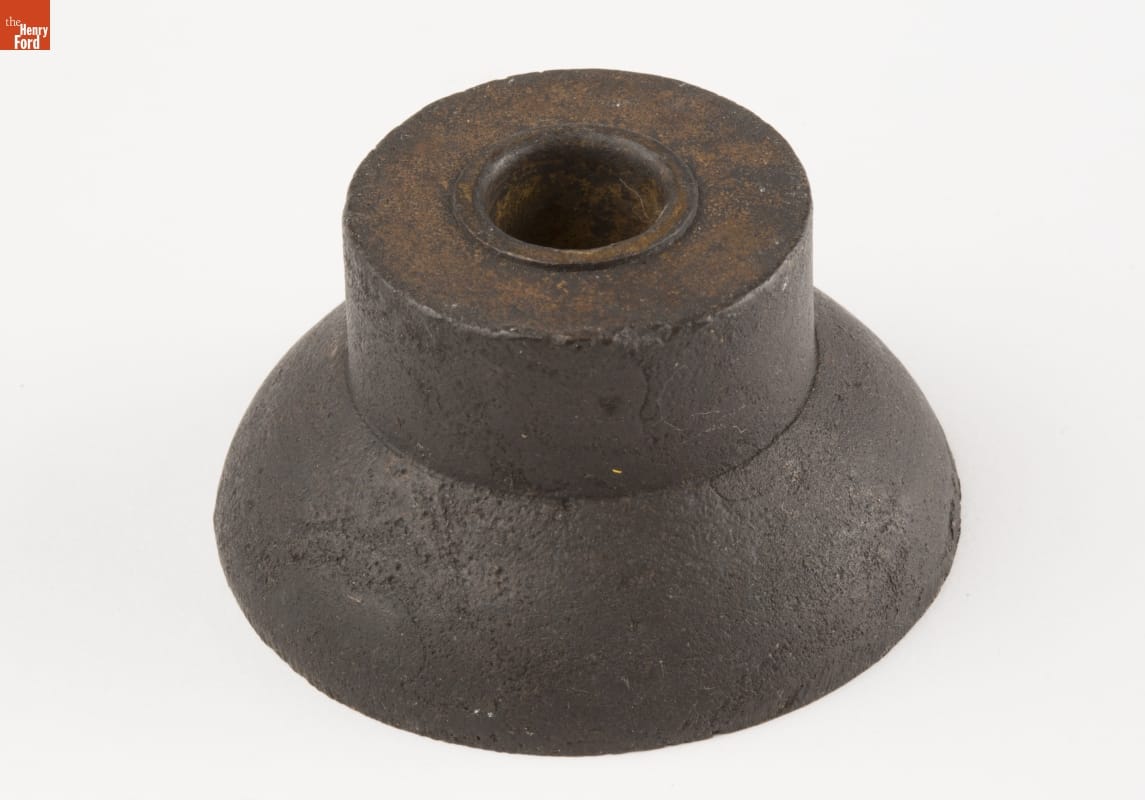
- 1880-1920
- Collections - Artifact
Telephone Transmitter Component, 1880-1920
- Insulated Line Pulley, 1880-1920 -
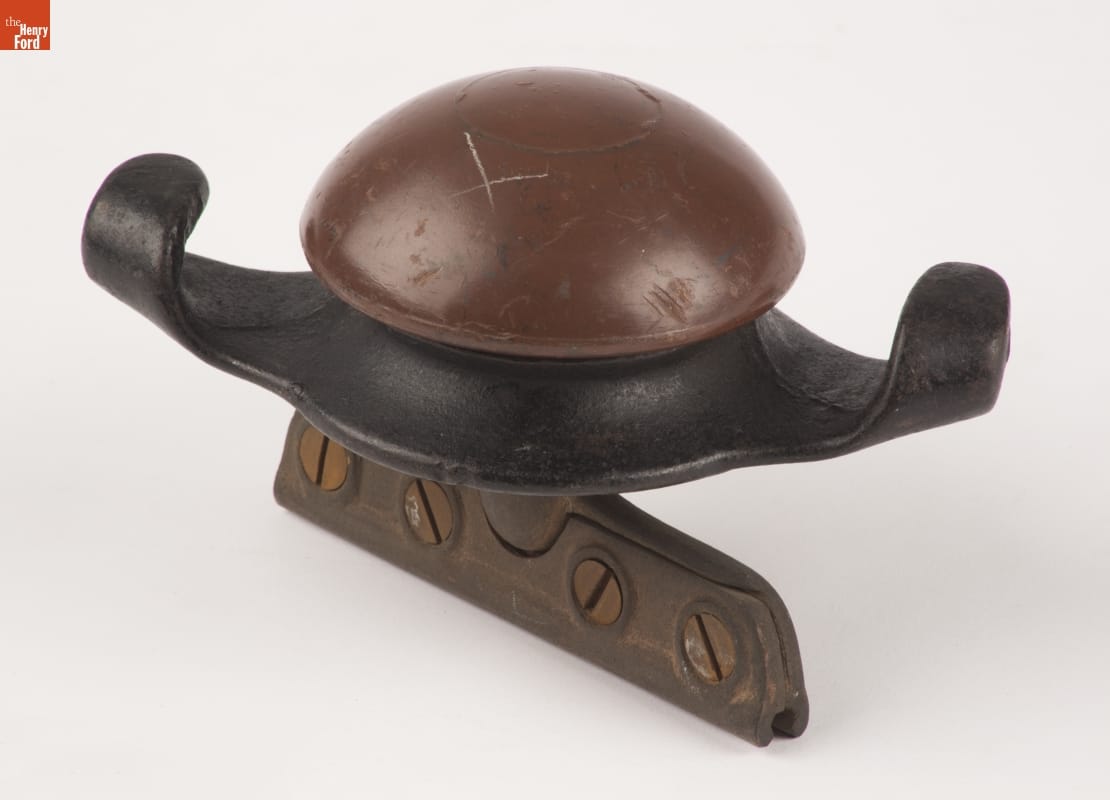
- 1880-1920
- Collections - Artifact
Insulated Line Pulley, 1880-1920
- Ceramic Insulator, 1880-1920 - Insulators--made of poor electrical conductors such as glass, ceramic, plastic, or composite materials--help make electric power and communication transmission lines safe. They isolate wires from utility poles, transmission towers, and buildings--structures that are made of conductive materials that could cause signal degradation, power loss, fire, or pose a shock hazard if the lines touched them.
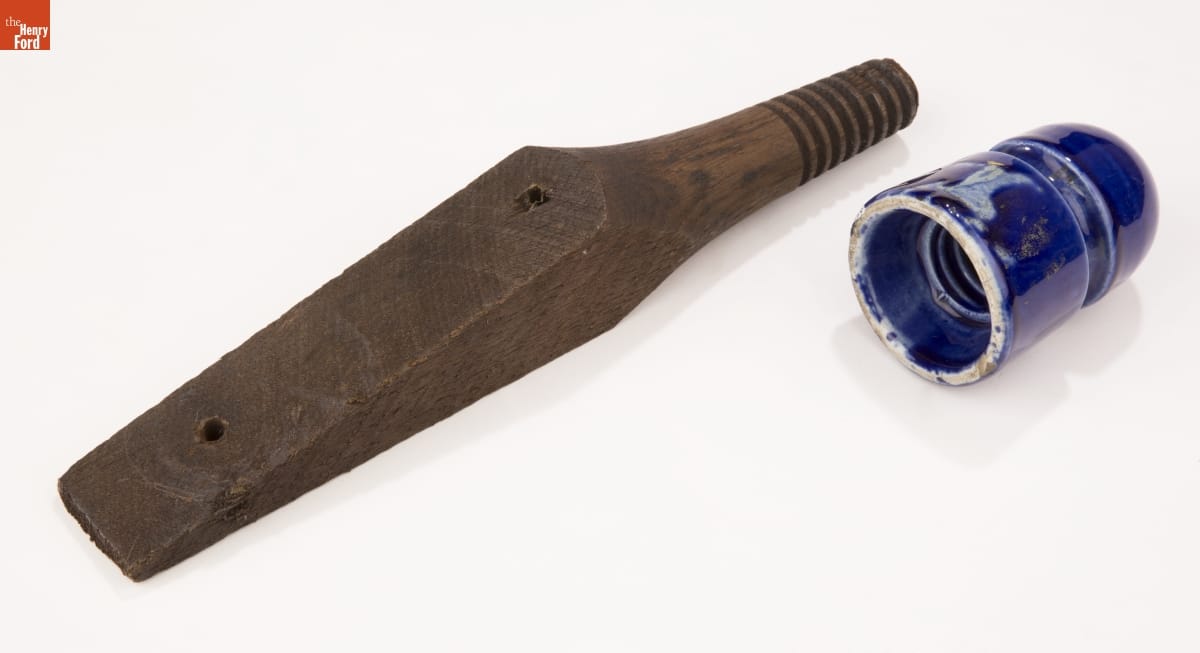
- 1880-1920
- Collections - Artifact
Ceramic Insulator, 1880-1920
Insulators--made of poor electrical conductors such as glass, ceramic, plastic, or composite materials--help make electric power and communication transmission lines safe. They isolate wires from utility poles, transmission towers, and buildings--structures that are made of conductive materials that could cause signal degradation, power loss, fire, or pose a shock hazard if the lines touched them.
- Insulator, 1895-1940 - Insulators--made of poor electrical conductors such as glass, ceramic, plastic, or composite materials--help make electric power and communication transmission lines safe. They isolate wires from utility poles, transmission towers, and buildings--structures that are made of conductive materials that could cause signal degradation, power loss, fire, or pose a shock hazard if the lines touched them.
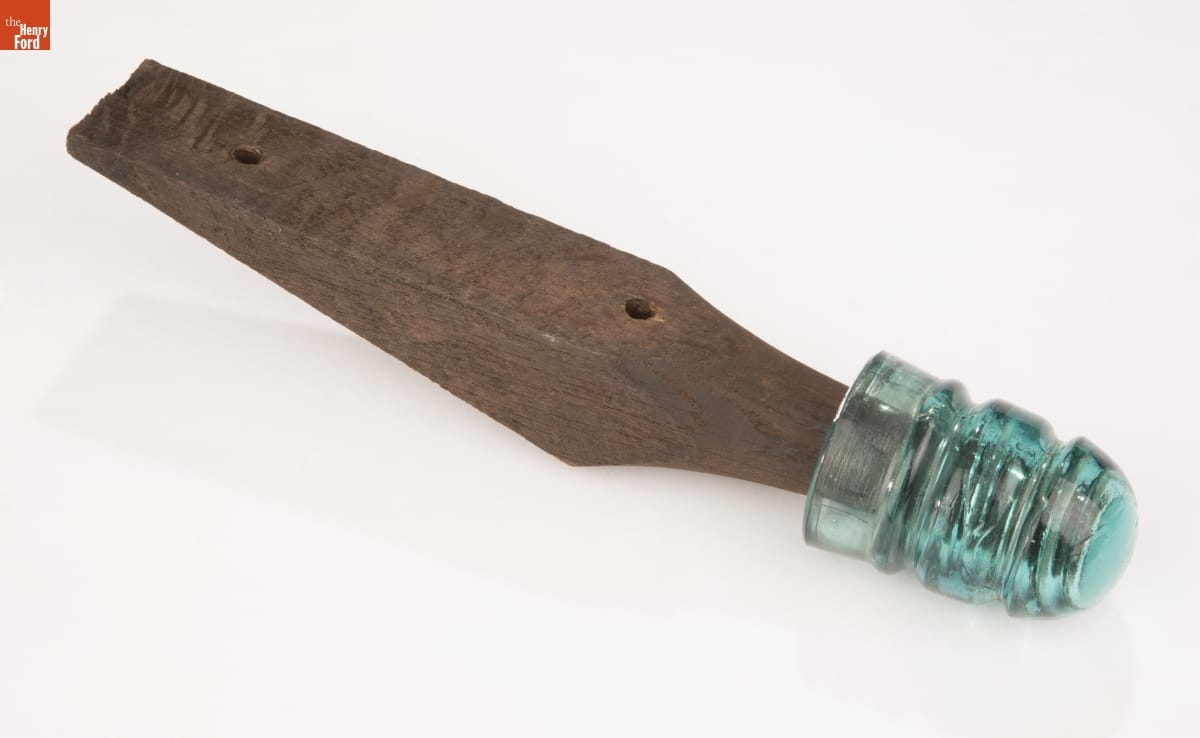
- 1895-1940
- Collections - Artifact
Insulator, 1895-1940
Insulators--made of poor electrical conductors such as glass, ceramic, plastic, or composite materials--help make electric power and communication transmission lines safe. They isolate wires from utility poles, transmission towers, and buildings--structures that are made of conductive materials that could cause signal degradation, power loss, fire, or pose a shock hazard if the lines touched them.
- Telephone Transmitter, 1870-1900 -
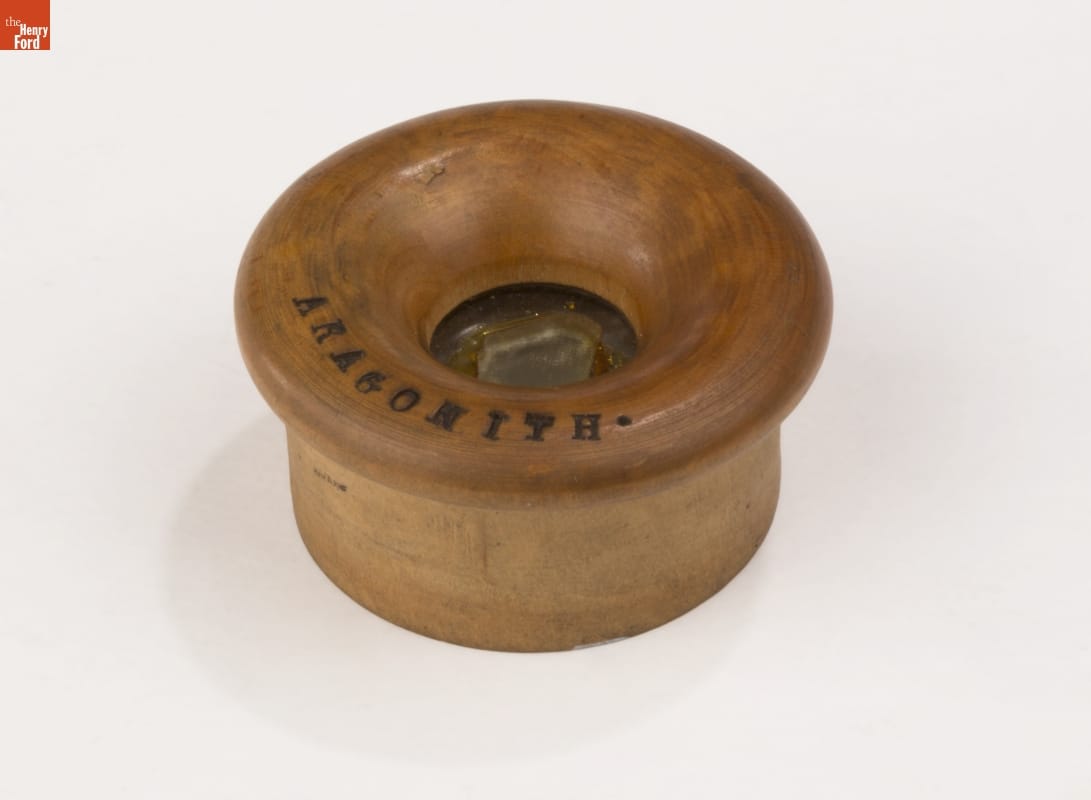
- 1870-1900
- Collections - Artifact
Telephone Transmitter, 1870-1900
- Transoceanic Voice Cables, circa 1956 - The opening of the TAT-1 (Transatlantic No. 1) cable in 1956 made it possible to place long-distance telephone calls across the Atlantic Ocean. Until this cable was installed, voice transmission over long distances occurred through an unreliable and expensive radio relay system. The TAT-1 responded to an increased demand for instant communication, establishing the first accessible international telephone service.
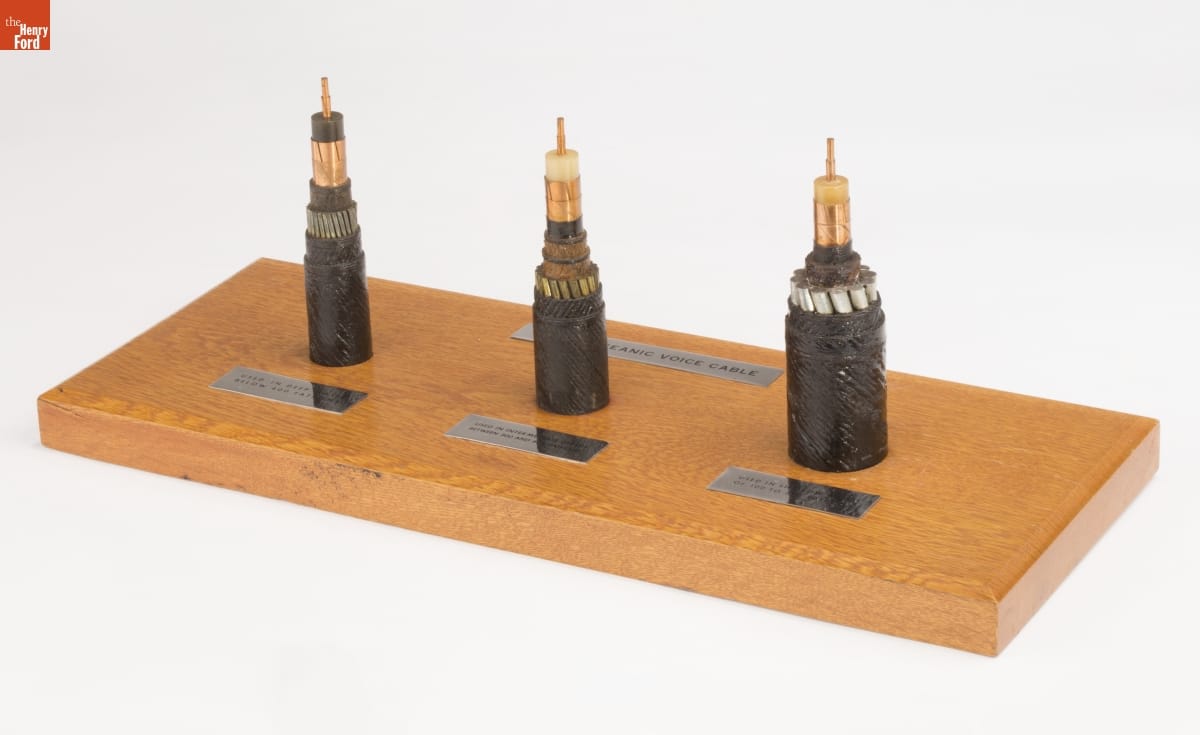
- circa 1956
- Collections - Artifact
Transoceanic Voice Cables, circa 1956
The opening of the TAT-1 (Transatlantic No. 1) cable in 1956 made it possible to place long-distance telephone calls across the Atlantic Ocean. Until this cable was installed, voice transmission over long distances occurred through an unreliable and expensive radio relay system. The TAT-1 responded to an increased demand for instant communication, establishing the first accessible international telephone service.
- Princess Telephone, Model 701B, 1959-1963 - The Princess telephone was designed by Henry Dreyfuss in 1959. It's a great example of the transition of the telephone from a strictly utilitarian device to a fashionable home accessory for middle class America. Compact and featuring a backlit dial, it was originally marketed to women as a bedroom phone; the slogan was, "It's little...It's lovely...It lights." It stayed in production from 1959-1994.
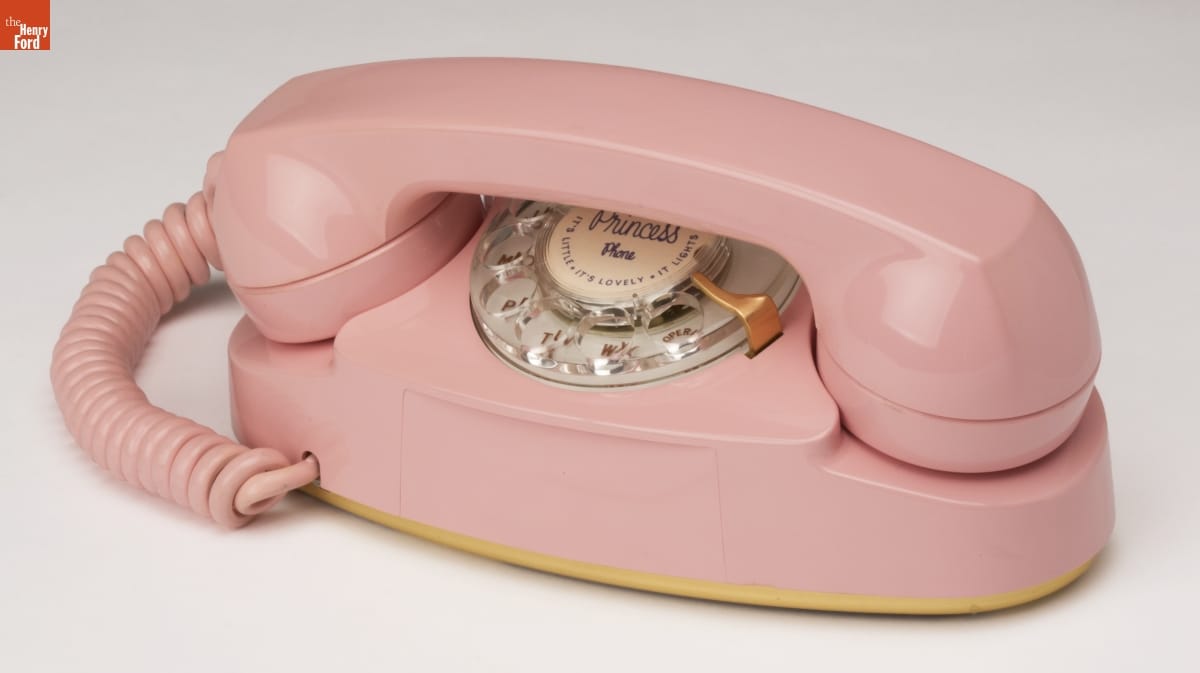
- 1959-1963
- Collections - Artifact
Princess Telephone, Model 701B, 1959-1963
The Princess telephone was designed by Henry Dreyfuss in 1959. It's a great example of the transition of the telephone from a strictly utilitarian device to a fashionable home accessory for middle class America. Compact and featuring a backlit dial, it was originally marketed to women as a bedroom phone; the slogan was, "It's little...It's lovely...It lights." It stayed in production from 1959-1994.
- American Electric Company Switchboard, 1880-1920 -
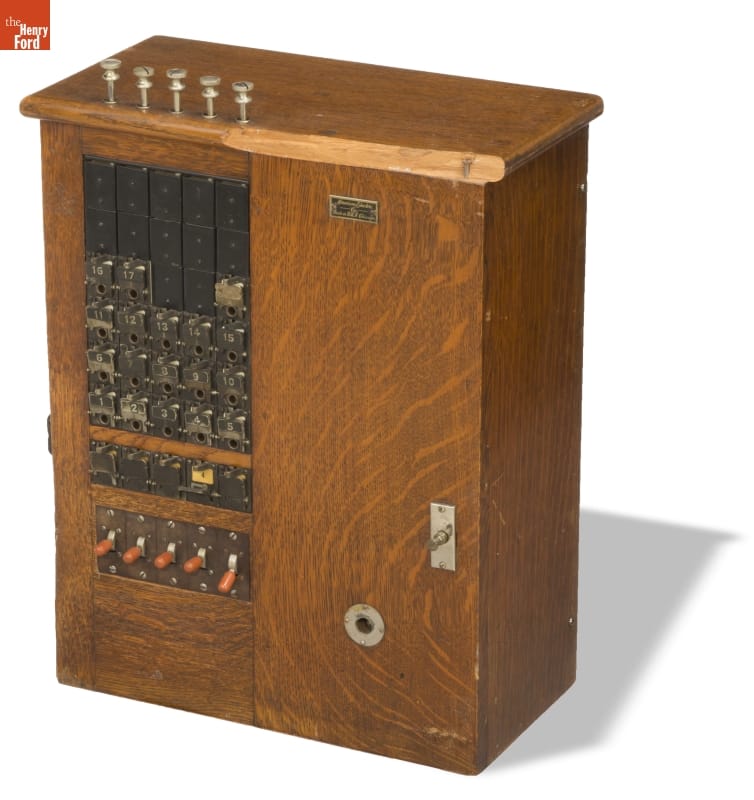
- 1880-1920
- Collections - Artifact
American Electric Company Switchboard, 1880-1920
- Hemingray No. 10 Insulator, 1915-1950 - Insulators--made of poor electrical conductors such as glass, ceramic, plastic, or composite materials--help make electric power and communication transmission lines safe. They isolate wires from utility poles, transmission towers, and buildings--structures that are made of conductive materials that could cause signal degradation, power loss, fire, or pose a shock hazard if the lines touched them.
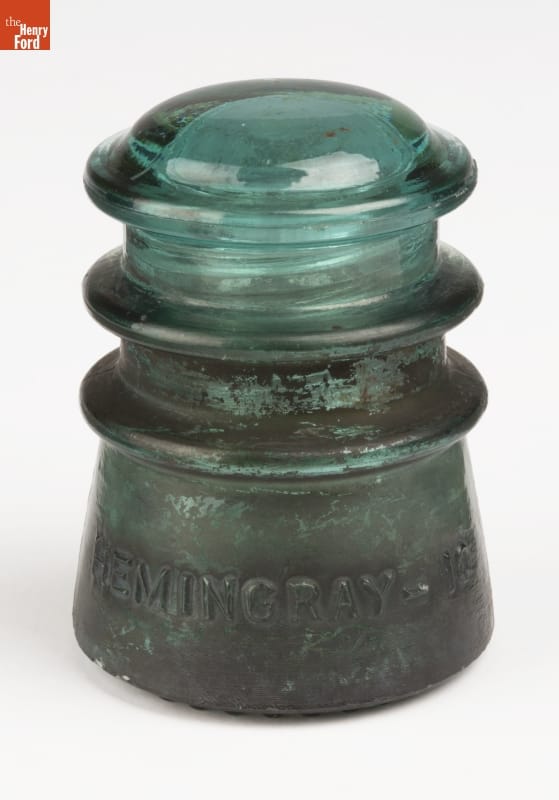
- 1915-1950
- Collections - Artifact
Hemingray No. 10 Insulator, 1915-1950
Insulators--made of poor electrical conductors such as glass, ceramic, plastic, or composite materials--help make electric power and communication transmission lines safe. They isolate wires from utility poles, transmission towers, and buildings--structures that are made of conductive materials that could cause signal degradation, power loss, fire, or pose a shock hazard if the lines touched them.