
Search
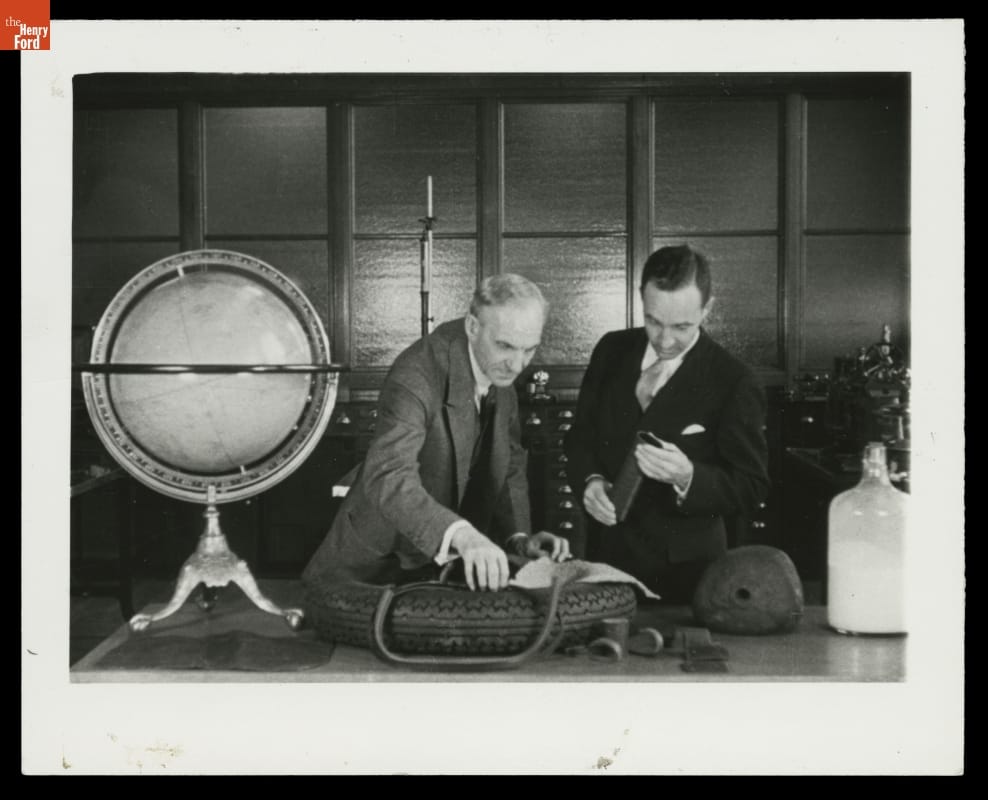
- Henry Ford and Edsel Ford Examining Tire in Laboratory, circa 1935 - Henry Ford and Edsel Ford were photographed inspecting a tire circa 1935. Ford Motor Company began construction of its own tire plant, at the Rouge factory complex, in 1937. Two years later, the plant was turning out as many as 16,000 tires each day. Nearly eight million "Ford" branded tires were made before World War II ended production in 1942.
- circa 1935
- Collections - Artifact
Henry Ford and Edsel Ford Examining Tire in Laboratory, circa 1935
Henry Ford and Edsel Ford were photographed inspecting a tire circa 1935. Ford Motor Company began construction of its own tire plant, at the Rouge factory complex, in 1937. Two years later, the plant was turning out as many as 16,000 tires each day. Nearly eight million "Ford" branded tires were made before World War II ended production in 1942.
- Advertising Poster, "The G & J American Girl," circa 1905 -
- circa 1905
- Collections - Artifact
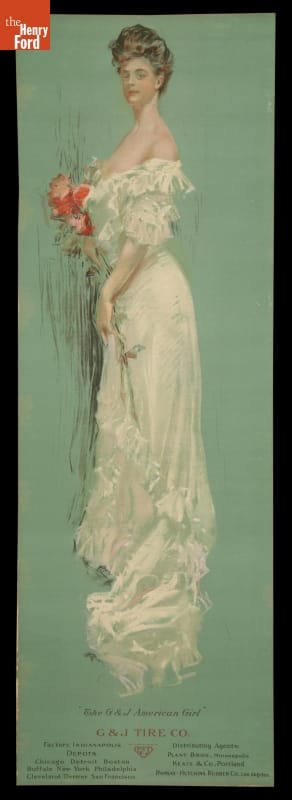
Advertising Poster, "The G & J American Girl," circa 1905
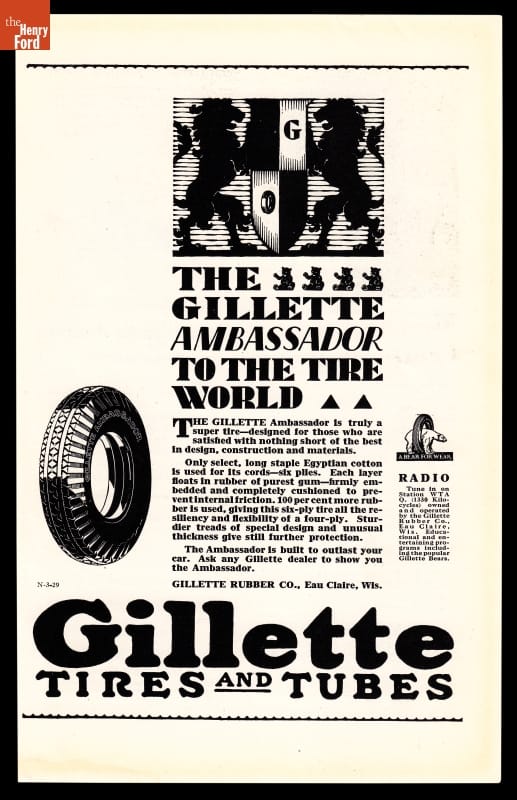
- Gillette Tires Advertisement, "The Gillette Ambassador to the Tire World," July 1929 - Raymond B. Gillette formed the Gillette Safety Tire Company in Eau Claire, Wisconsin, in 1916. U.S. Rubber Company took control of Gillette in 1940 and the Eau Claire plant was expanded and modernized, in part to meet military needs during World War II. After a series of subsequent mergers, the Eau Claire plant was closed in 1992.
- July 01, 1929
- Collections - Artifact
Gillette Tires Advertisement, "The Gillette Ambassador to the Tire World," July 1929
Raymond B. Gillette formed the Gillette Safety Tire Company in Eau Claire, Wisconsin, in 1916. U.S. Rubber Company took control of Gillette in 1940 and the Eau Claire plant was expanded and modernized, in part to meet military needs during World War II. After a series of subsequent mergers, the Eau Claire plant was closed in 1992.
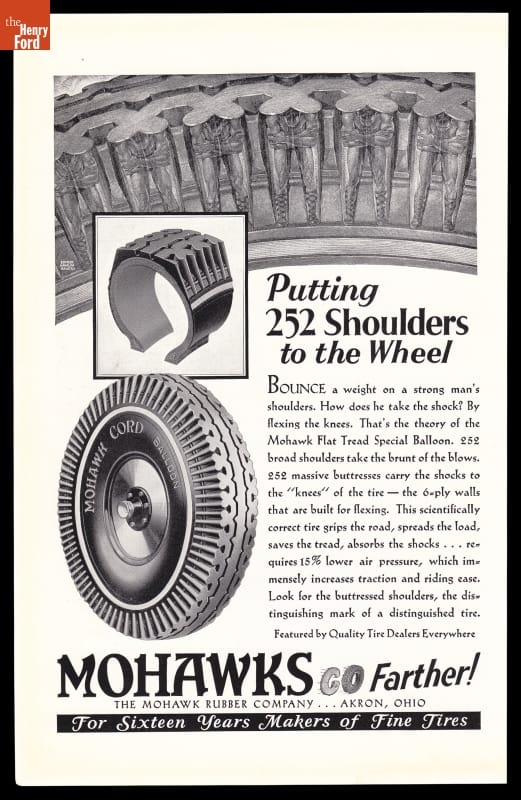
- Mohawk Tires Advertisement, "Mohawks Go Farther!," July 1929 - Mohawk Rubber Company was established in Akron, Ohio, in 1913. Mohawk built its early reputation on quality and value, claiming that its tires were made from the best materials and offered worth beyond their purchase price. The Mohawk brand was acquired by Japan's Yokohama Rubber Company in 1989.
- July 01, 1929
- Collections - Artifact
Mohawk Tires Advertisement, "Mohawks Go Farther!," July 1929
Mohawk Rubber Company was established in Akron, Ohio, in 1913. Mohawk built its early reputation on quality and value, claiming that its tires were made from the best materials and offered worth beyond their purchase price. The Mohawk brand was acquired by Japan's Yokohama Rubber Company in 1989.
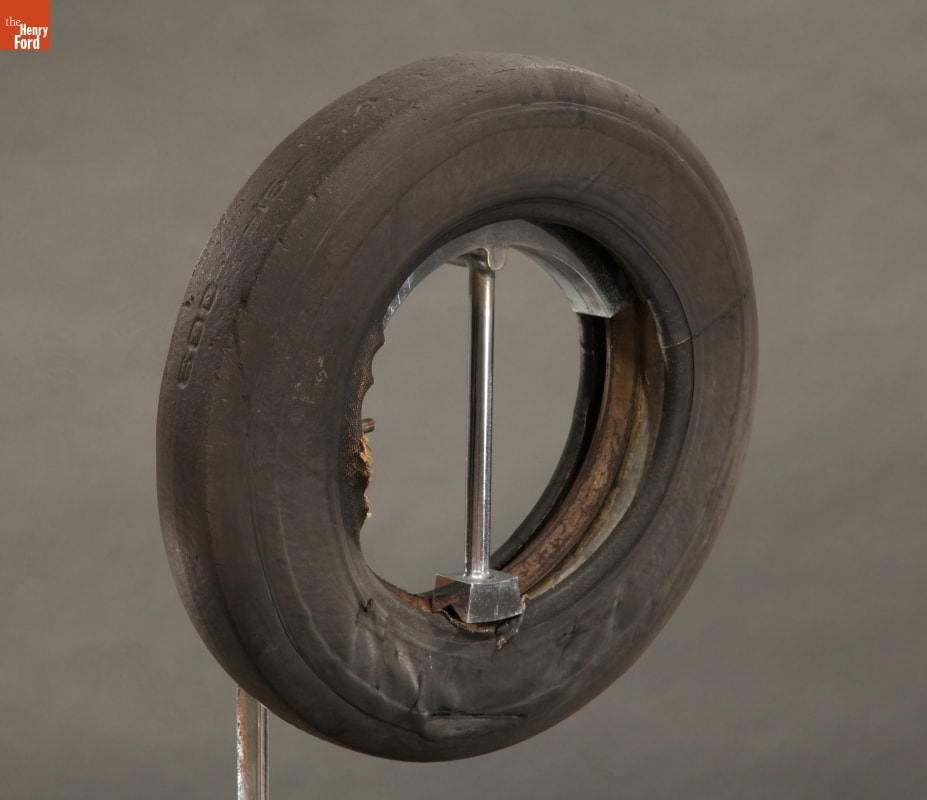
- Automobile Tire, 1937 - Rubber tires were mixed with sulfur to harden the rubber -- a chemical process called vulcanization. Bladders were placed inside the tires and filled with pressurized, high-temperature water. The pressure and heat cured the tires, making them more resistant to cracking. Tread patterns were also molded into the tires as a part of the same process.
- 1937
- Collections - Artifact
Automobile Tire, 1937
Rubber tires were mixed with sulfur to harden the rubber -- a chemical process called vulcanization. Bladders were placed inside the tires and filled with pressurized, high-temperature water. The pressure and heat cured the tires, making them more resistant to cracking. Tread patterns were also molded into the tires as a part of the same process.
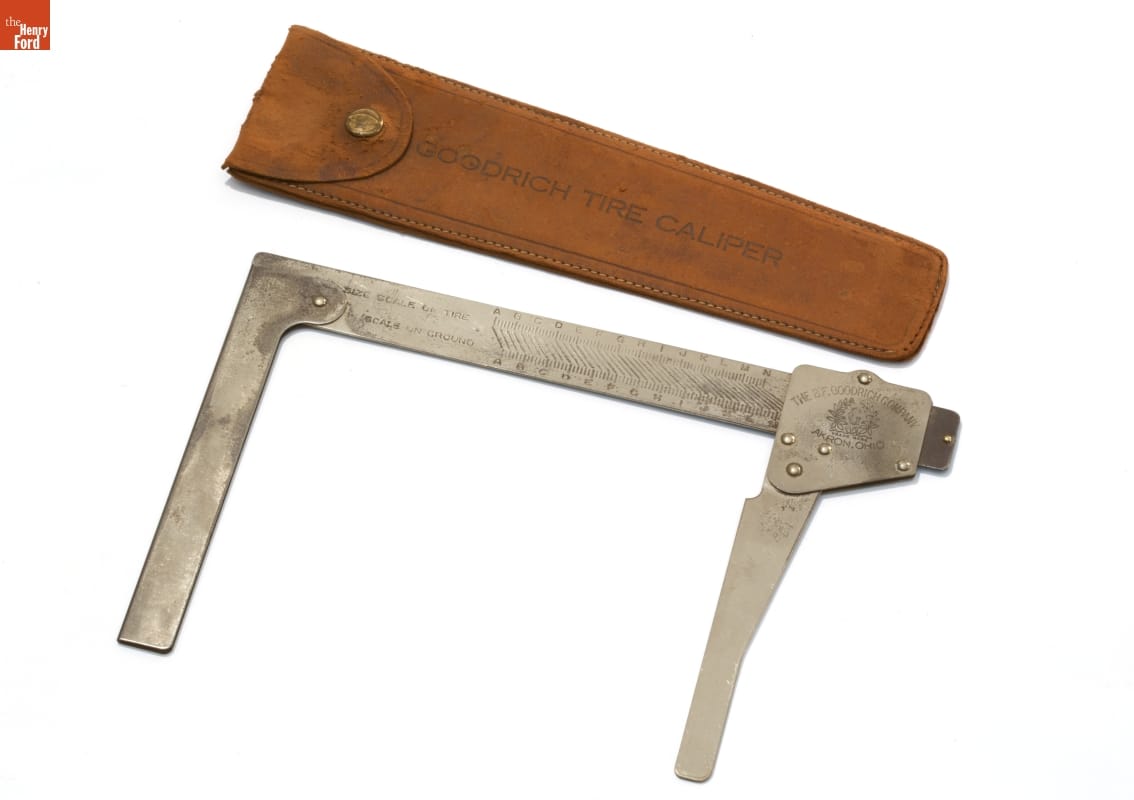
- Tire Caliper, 1916-1920 - This tire caliper was used to gauge whether an automobile tire was properly inflated. By measuring and comparing the width of the tire at the bottom (where it bulged from the weight of the car) and at the top (where it didn't), the user could determine if the tire required more air or less air.
- 1916-1920
- Collections - Artifact
Tire Caliper, 1916-1920
This tire caliper was used to gauge whether an automobile tire was properly inflated. By measuring and comparing the width of the tire at the bottom (where it bulged from the weight of the car) and at the top (where it didn't), the user could determine if the tire required more air or less air.
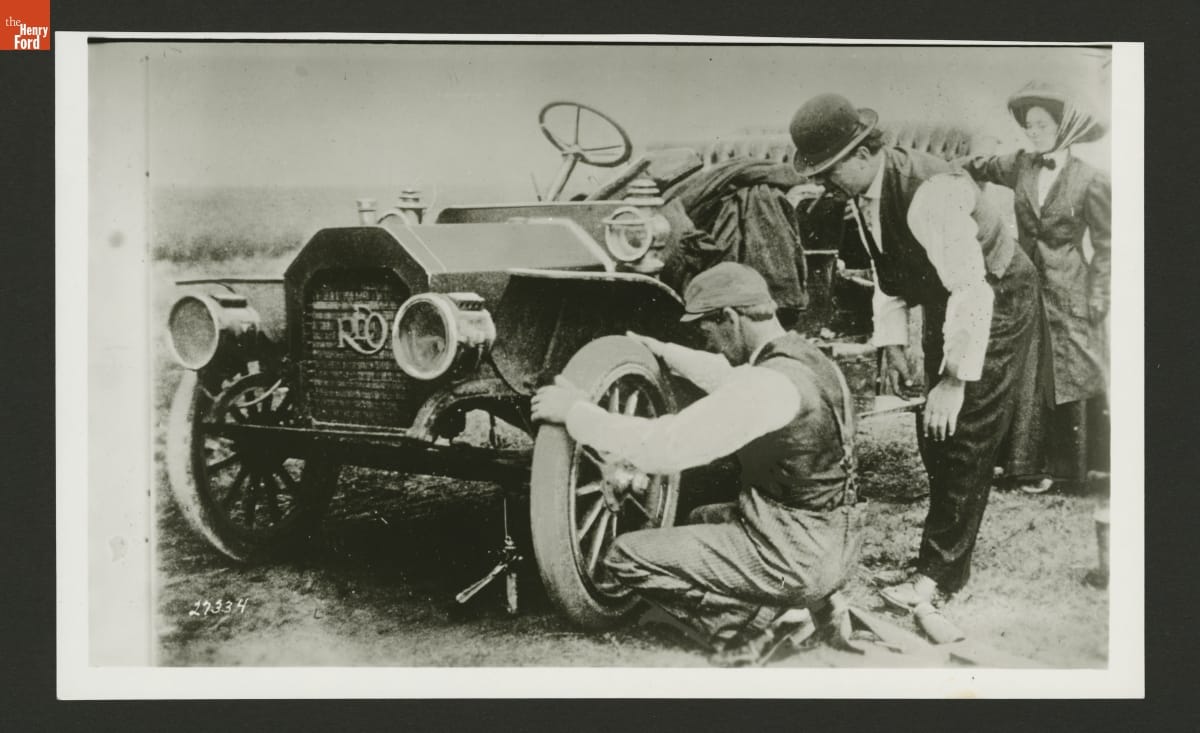
- Fixing the Tire on an REO Automobile, 1900-1909 - Numerous tire blowouts plagued motorists on the poor roads of the early 20th century. The man in this photograph is either removing a tire for repair or replacing an already repaired tire. The REO Motor Car Company was a Lansing, Michigan-based company that began producing cars in 1905.
- 1912
- Collections - Artifact
Fixing the Tire on an REO Automobile, 1900-1909
Numerous tire blowouts plagued motorists on the poor roads of the early 20th century. The man in this photograph is either removing a tire for repair or replacing an already repaired tire. The REO Motor Car Company was a Lansing, Michigan-based company that began producing cars in 1905.
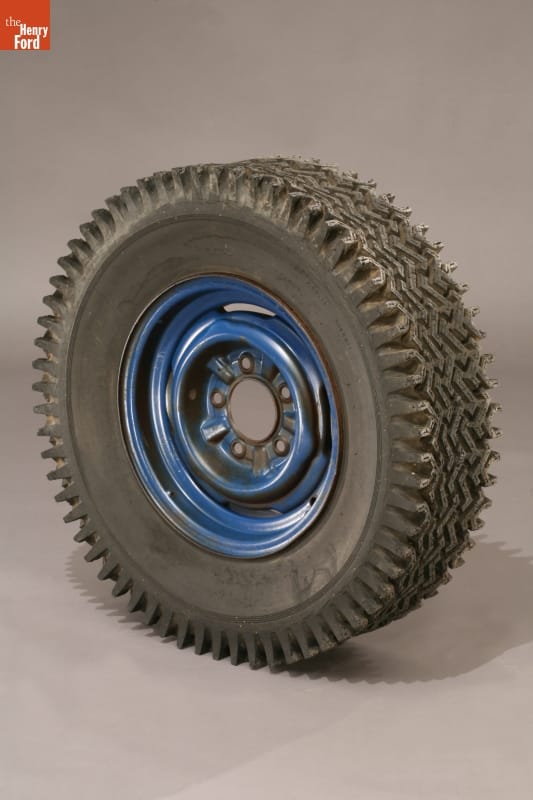
- Prototype Racing Tire, circa 1960 - Bobby Unser made his reputation in the Pikes Peak International Hill Climb. The course had a dirt surface when Unser raced it, so he searched for ways to improve tire traction. Unser tried grinding up various substances and mixing the results into rubber to produce a tire with more grip. The most effective material turned out to be ground walnut shells.
- circa 1960
- Collections - Artifact
Prototype Racing Tire, circa 1960
Bobby Unser made his reputation in the Pikes Peak International Hill Climb. The course had a dirt surface when Unser raced it, so he searched for ways to improve tire traction. Unser tried grinding up various substances and mixing the results into rubber to produce a tire with more grip. The most effective material turned out to be ground walnut shells.
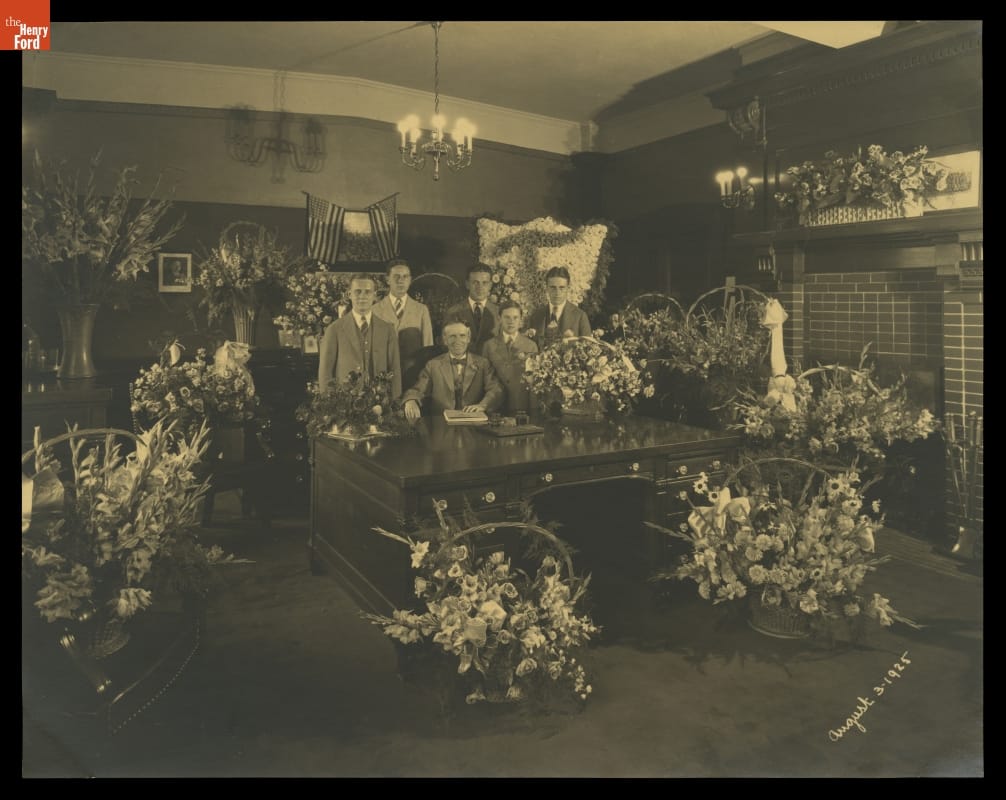
- Harvey S. Firestone and His Sons on the 25th Anniversary of Firestone Tire and Rubber Company, August 3, 1925 -
- August 03, 1925
- Collections - Artifact
Harvey S. Firestone and His Sons on the 25th Anniversary of Firestone Tire and Rubber Company, August 3, 1925
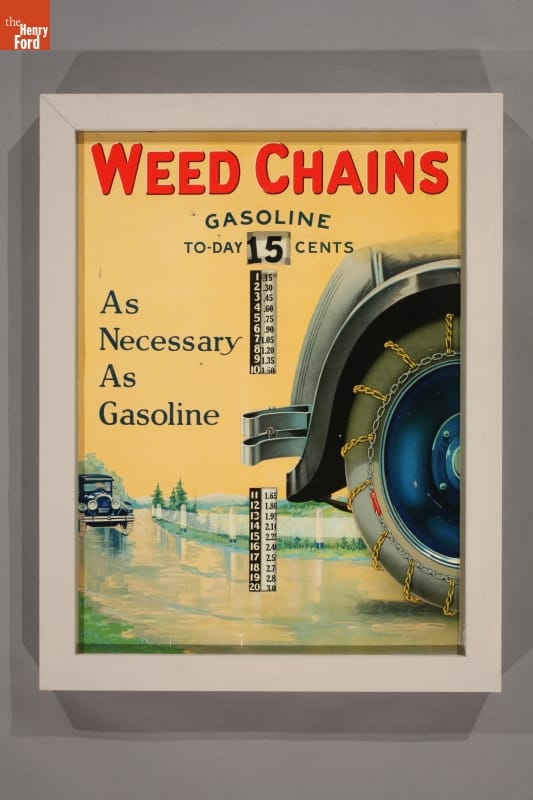
- Weed Tire Chains Sign, circa 1925 - This circa 1925 sign has a dual purpose -- to alert potential customers to the price of gas, and to advertise the necessity of "Weed Tire Chains." In 1904, Harry D. Weed was issued a patent for his "Grip-Tread for Pneumatic Tires," a non-skid tire chain used to increase traction on roads slick with mud, snow, or ice.
- circa 1925
- Collections - Artifact
Weed Tire Chains Sign, circa 1925
This circa 1925 sign has a dual purpose -- to alert potential customers to the price of gas, and to advertise the necessity of "Weed Tire Chains." In 1904, Harry D. Weed was issued a patent for his "Grip-Tread for Pneumatic Tires," a non-skid tire chain used to increase traction on roads slick with mud, snow, or ice.