
Search
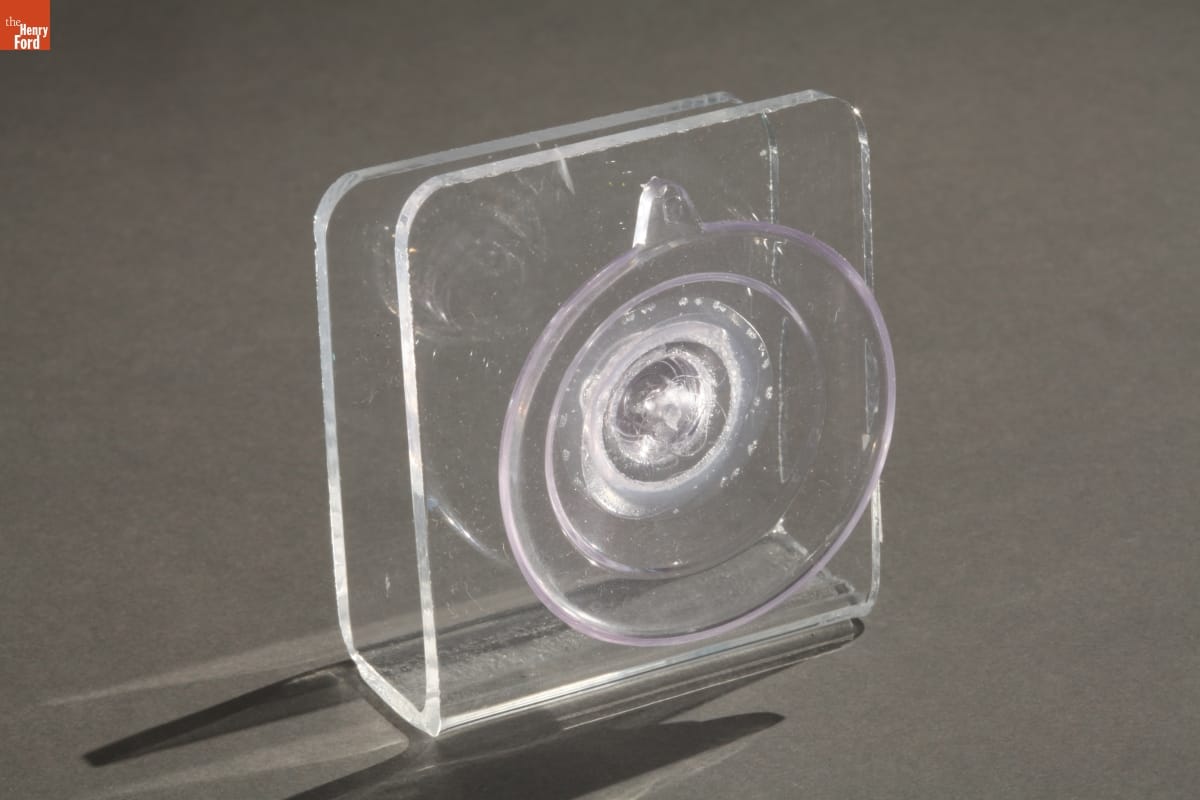
- Electronic Toll Pass Holder, 2010 - In the 1990s, many American toll roads introduced electronic collection devices. Often mounted to the interior of an automobile windshield in a container like this, the devices transmitted a signal to the toll plaza. Tolls were deducted from participating drivers' prepaid accounts as they cruised through the gates.
- 2010
- Collections - Artifact
Electronic Toll Pass Holder, 2010
In the 1990s, many American toll roads introduced electronic collection devices. Often mounted to the interior of an automobile windshield in a container like this, the devices transmitted a signal to the toll plaza. Tolls were deducted from participating drivers' prepaid accounts as they cruised through the gates.
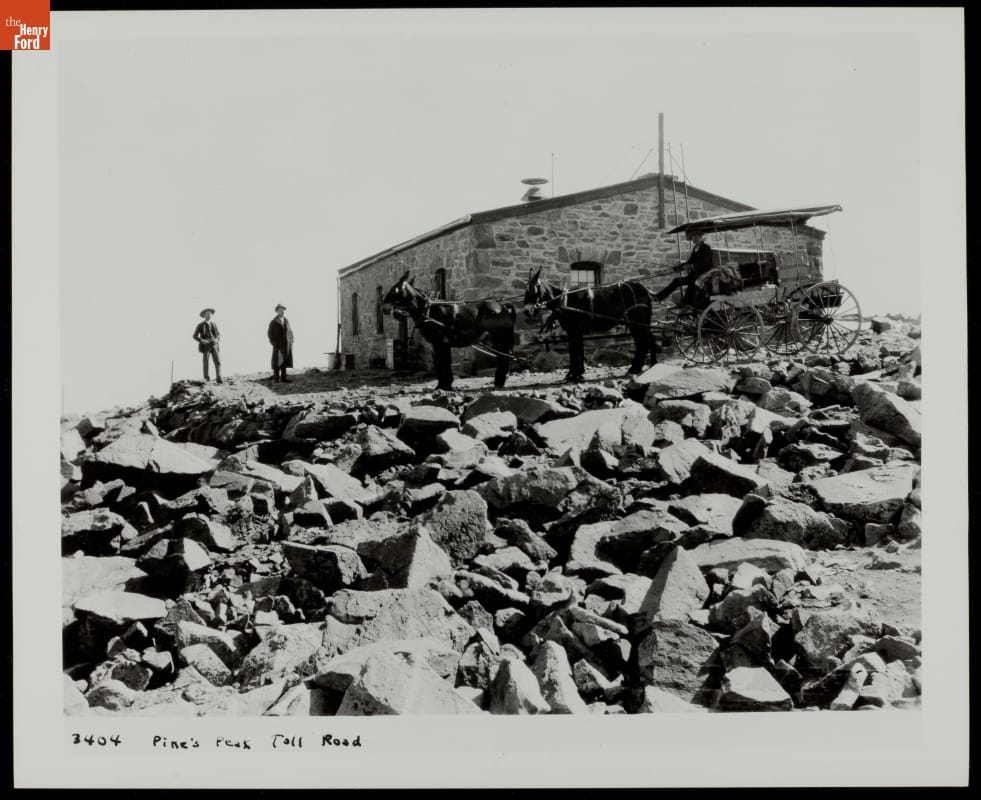
- Pike's Peak Toll Road, Colorado, circa 1890 - Pikes Peak -- near Colorado Springs in the Colorado Rocky Mountains -- drew many tourists in the late nineteenth century. By 1890, the Cascade and Pikes Peak Toll Road Company had opened a rough passage up the mountain. During their long ascent, paying sightseers in mule-drawn carriages passed this closed U.S. Army Signal Corps weather observatory station.
- circa 1890
- Collections - Artifact
Pike's Peak Toll Road, Colorado, circa 1890
Pikes Peak -- near Colorado Springs in the Colorado Rocky Mountains -- drew many tourists in the late nineteenth century. By 1890, the Cascade and Pikes Peak Toll Road Company had opened a rough passage up the mountain. During their long ascent, paying sightseers in mule-drawn carriages passed this closed U.S. Army Signal Corps weather observatory station.
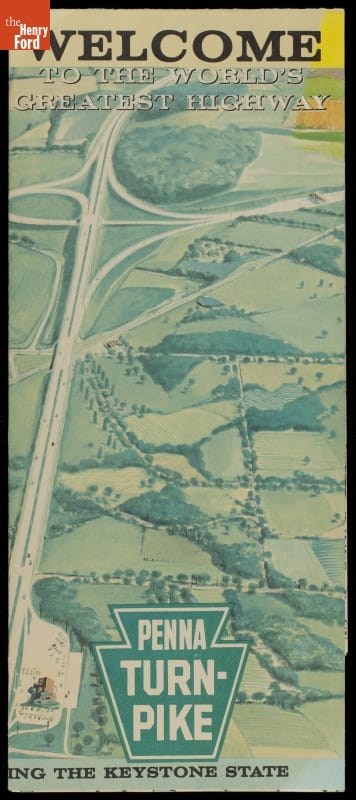
- "Welcome to the World's Greatest Highway: Penna Turnpike," 1957 - The Pennsylvania Turnpike Commission touted the turnpike as "The World's Greatest Highway" in this early 1957 brochure. The Commission highlighted the convenience, safety, and comfort of using their turnpike versus other American highways. The brochure contains the standard helpful tools such as maps, mileage tables, driving rules and regulations, and a fare schedule.
- 1957
- Collections - Artifact
"Welcome to the World's Greatest Highway: Penna Turnpike," 1957
The Pennsylvania Turnpike Commission touted the turnpike as "The World's Greatest Highway" in this early 1957 brochure. The Commission highlighted the convenience, safety, and comfort of using their turnpike versus other American highways. The brochure contains the standard helpful tools such as maps, mileage tables, driving rules and regulations, and a fare schedule.
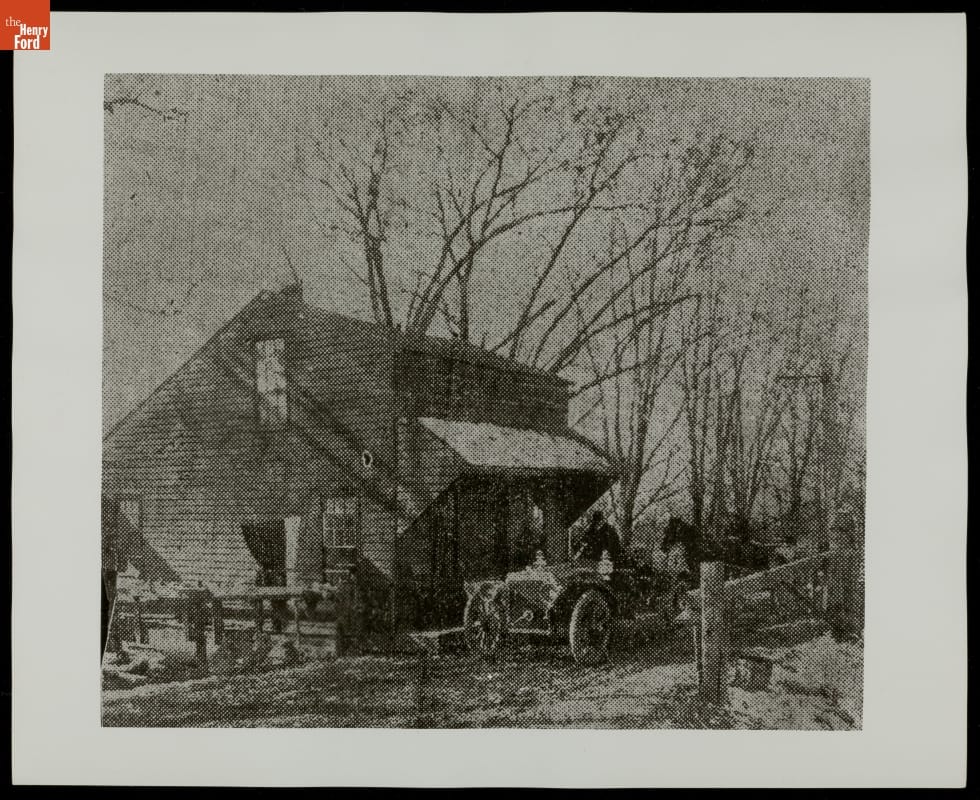
- Toll Gate on Mill Road and Grand River Avenue, Detroit, Michigan, 1900-1915 - Continuing a practice dating to the late 1700s, some entrepreneurs charged tolls for privately maintained roads. Here, a horse-drawn vehicle lines up behind an automobile at a toll gate in early 20th-century Detroit. Few of these improvised toll roads turned a profit.
- 1900-1915
- Collections - Artifact
Toll Gate on Mill Road and Grand River Avenue, Detroit, Michigan, 1900-1915
Continuing a practice dating to the late 1700s, some entrepreneurs charged tolls for privately maintained roads. Here, a horse-drawn vehicle lines up behind an automobile at a toll gate in early 20th-century Detroit. Few of these improvised toll roads turned a profit.
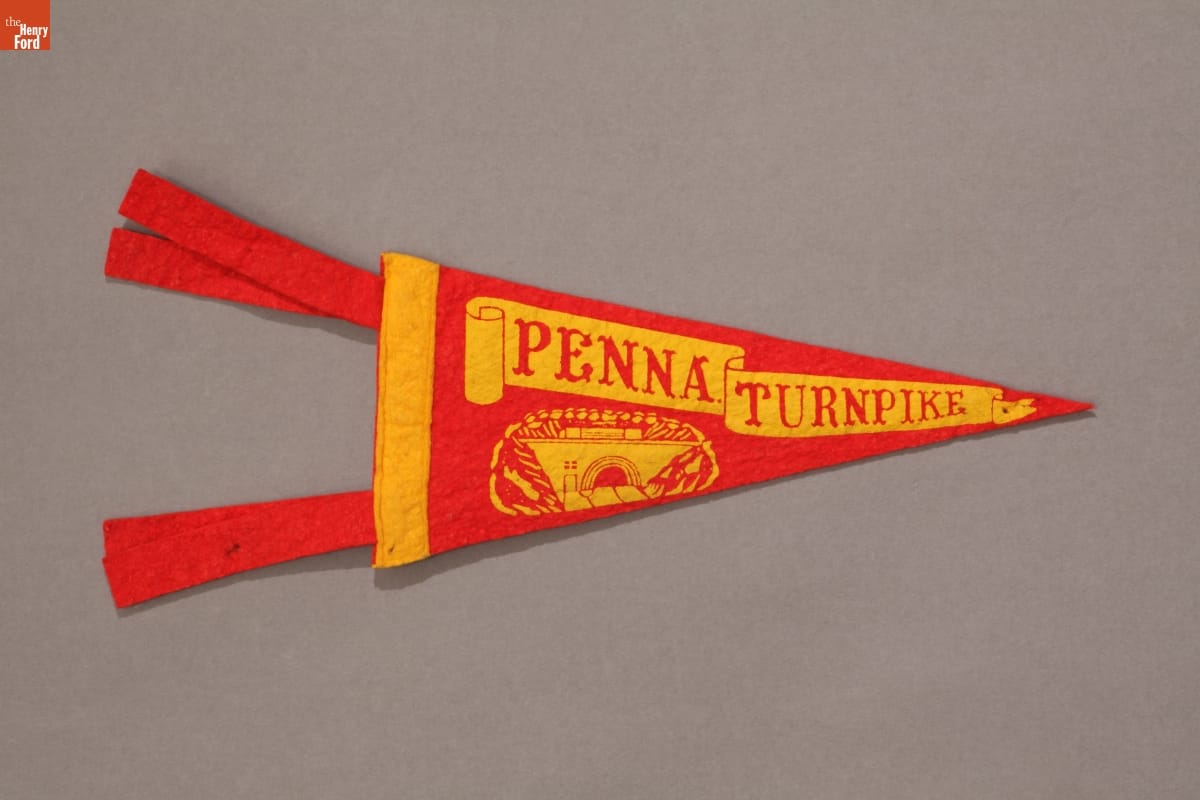
- Pennsylvania Turnpike Pennant, 1945-1960 - Though some people expressed doubt, thousands enthusiastically paid tolls on the Pennsylvania Turnpike when it opened in 1940, simply for the privilege of driving fast and effortlessly. The Turnpike was an engineering triumph, involving multiple lanes of continuous concrete pavement that bypassed 939 local roads and cut through seven mountains. This pennant provided a souvenir of the travel experience.
- 1945-1960
- Collections - Artifact
Pennsylvania Turnpike Pennant, 1945-1960
Though some people expressed doubt, thousands enthusiastically paid tolls on the Pennsylvania Turnpike when it opened in 1940, simply for the privilege of driving fast and effortlessly. The Turnpike was an engineering triumph, involving multiple lanes of continuous concrete pavement that bypassed 939 local roads and cut through seven mountains. This pennant provided a souvenir of the travel experience.
- I-PASS Electronic Toll Pass Transponder, circa 2006 - This electronic collection device reduced collection time on Illinois toll roads. Drivers mounted the device on the interior of an automobile windshield. The device sent out an electronic signal to the toll plaza and the toll was deducted from the driver's prepaid account as they cruised through the gates. Devices like this were introduced in the 1990s.

- circa 2006
- Collections - Artifact
I-PASS Electronic Toll Pass Transponder, circa 2006
This electronic collection device reduced collection time on Illinois toll roads. Drivers mounted the device on the interior of an automobile windshield. The device sent out an electronic signal to the toll plaza and the toll was deducted from the driver's prepaid account as they cruised through the gates. Devices like this were introduced in the 1990s.
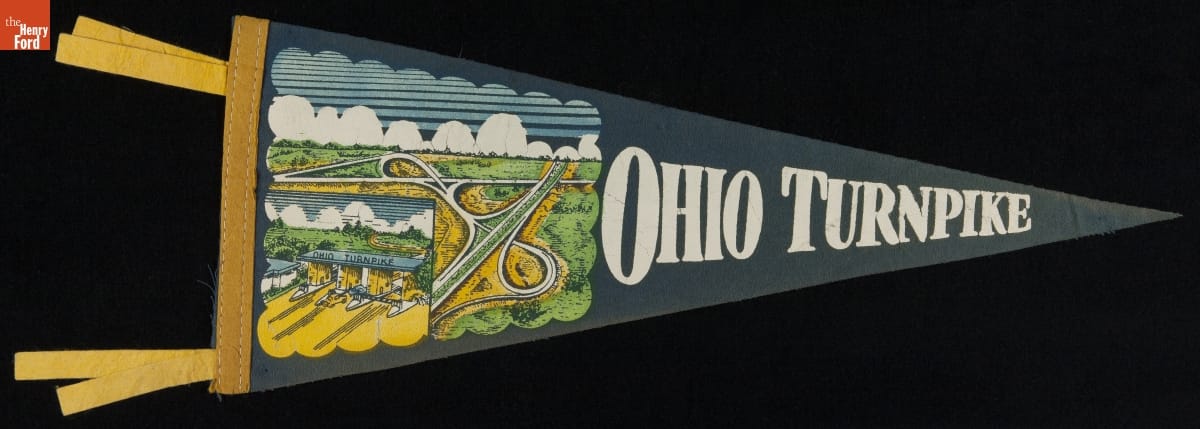
- Pennant, "Ohio Turnpike," circa 1960 - After World War II, highways were flooded with family vacationers out to enjoy their new cars and all that America had to offer. Turnpikes and thruways -- limited access toll roads for high-speed traffic -- made their trips easier. Vacationers who used the Ohio Turnpike could remember their experience on America's modern highways with this souvenir pennant.
- circa 1960
- Collections - Artifact
Pennant, "Ohio Turnpike," circa 1960
After World War II, highways were flooded with family vacationers out to enjoy their new cars and all that America had to offer. Turnpikes and thruways -- limited access toll roads for high-speed traffic -- made their trips easier. Vacationers who used the Ohio Turnpike could remember their experience on America's modern highways with this souvenir pennant.
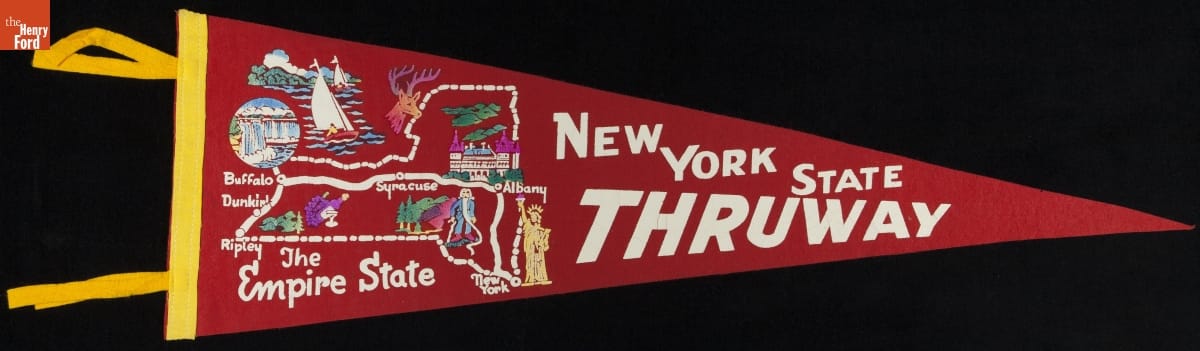
- Pennant, "New York State Thruway," circa 1960 - After World War II, highways were flooded with family vacationers out to enjoy their new cars and all that America had to offer. Turnpikes and thruways -- limited access toll roads for high-speed traffic -- made their trips easier. This souvenir felt pennant depicts the New York State Thruway and various attractions accessible from its exits.
- circa 1960
- Collections - Artifact
Pennant, "New York State Thruway," circa 1960
After World War II, highways were flooded with family vacationers out to enjoy their new cars and all that America had to offer. Turnpikes and thruways -- limited access toll roads for high-speed traffic -- made their trips easier. This souvenir felt pennant depicts the New York State Thruway and various attractions accessible from its exits.
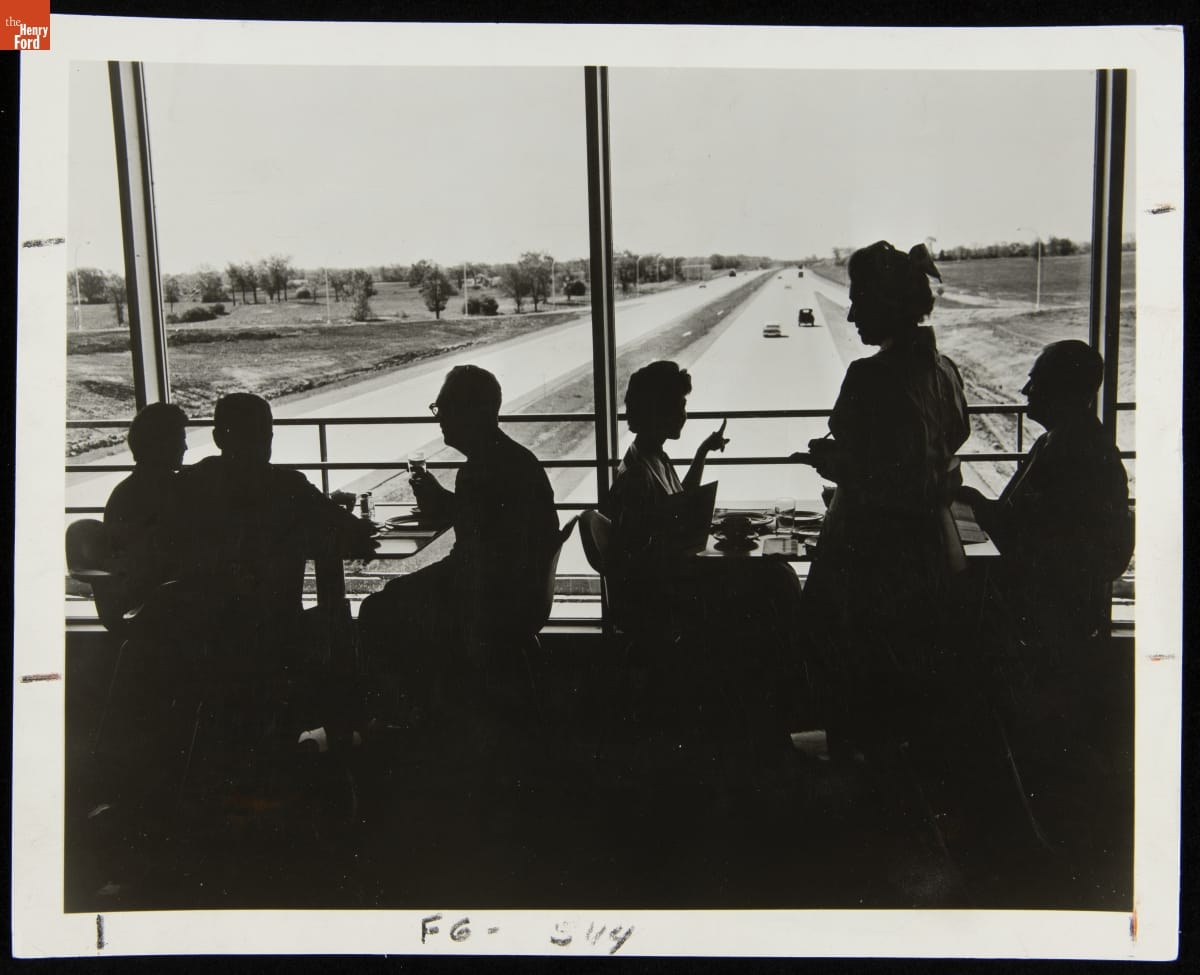
- People Dining at a Restaurant Overlooking a Northern Illinois Toll Road, 1959 - The Illinois Tollway provided roadside services to drivers at seven oases that opened starting in 1959. Each oasis offered food, gasoline and convenience items. Six were built on bridges spanning the tollway -- equally convenient for travelers in either direction. All seven oases were renovated in 2003-2005. By the early 2020s, three were demolished to permit tollway expansion.
- 1959
- Collections - Artifact
People Dining at a Restaurant Overlooking a Northern Illinois Toll Road, 1959
The Illinois Tollway provided roadside services to drivers at seven oases that opened starting in 1959. Each oasis offered food, gasoline and convenience items. Six were built on bridges spanning the tollway -- equally convenient for travelers in either direction. All seven oases were renovated in 2003-2005. By the early 2020s, three were demolished to permit tollway expansion.
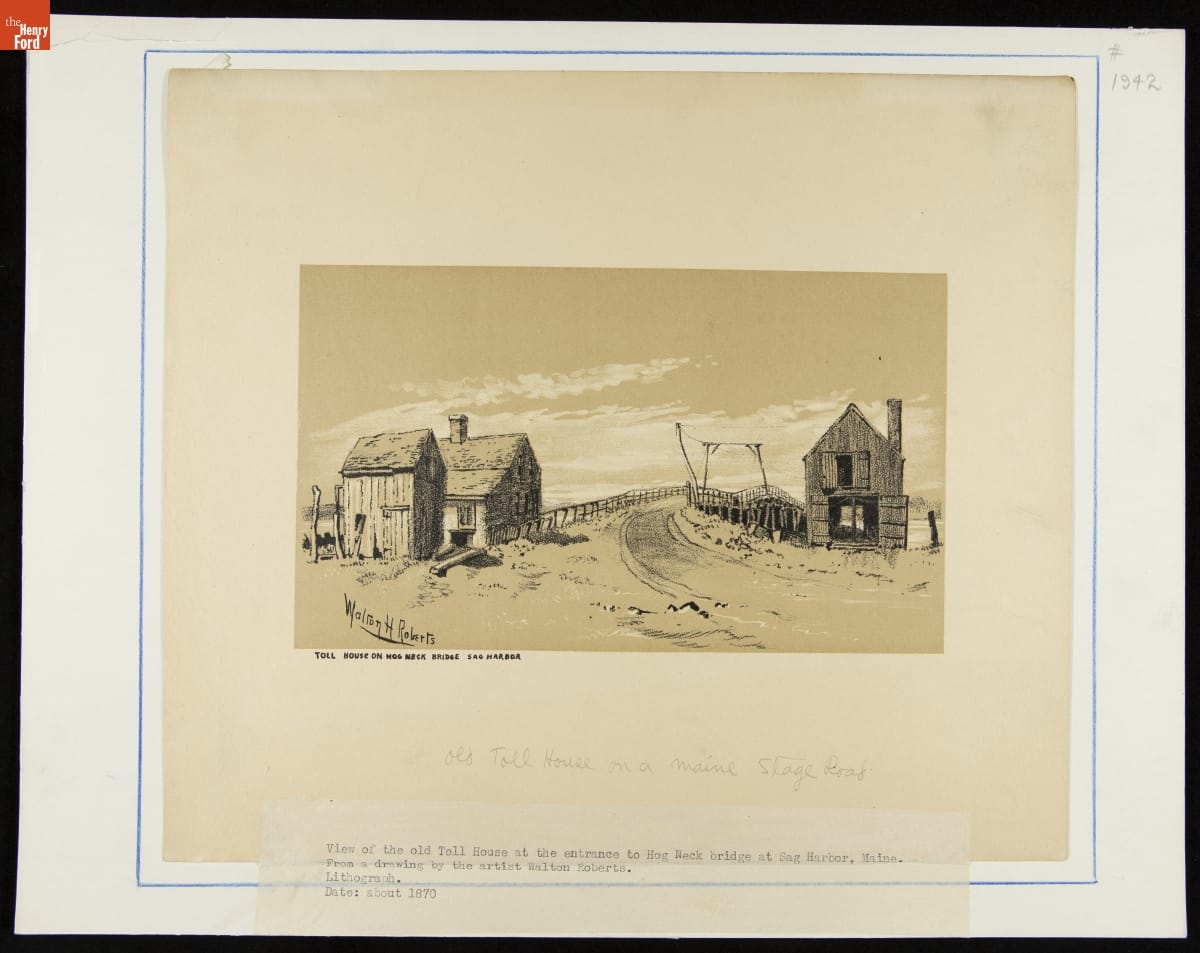
- View of the Old Toll House at the Entrance to Hog Neck Bridge at Sag Harbor, New York, circa 1870 - Many early American roads and bridges operated as private businesses. Travelers paid tolls to use them. Tolls repaid construction costs, funded maintenance, and hopefully produced a profit for owners. The bridge illustrated here was part of a toll road from Bridgehampton to Sag Harbor on New York's Long Island. Toll collection on the route began in 1837.
- circa 1870
- Collections - Artifact
View of the Old Toll House at the Entrance to Hog Neck Bridge at Sag Harbor, New York, circa 1870
Many early American roads and bridges operated as private businesses. Travelers paid tolls to use them. Tolls repaid construction costs, funded maintenance, and hopefully produced a profit for owners. The bridge illustrated here was part of a toll road from Bridgehampton to Sag Harbor on New York's Long Island. Toll collection on the route began in 1837.