
Search
- Hallmark "City Lights" Christmas Ornament, 1984 - Already known for greeting cards, Hallmark introduced a line of Christmas ornaments in 1973. The company's annual release of an increasing array of ornaments revolutionized Christmas decorating, appealing to customers' interest in marking memories and milestones as well as expressing one's personality and unique tastes.

- 1984
- Collections - Artifact
Hallmark "City Lights" Christmas Ornament, 1984
Already known for greeting cards, Hallmark introduced a line of Christmas ornaments in 1973. The company's annual release of an increasing array of ornaments revolutionized Christmas decorating, appealing to customers' interest in marking memories and milestones as well as expressing one's personality and unique tastes.
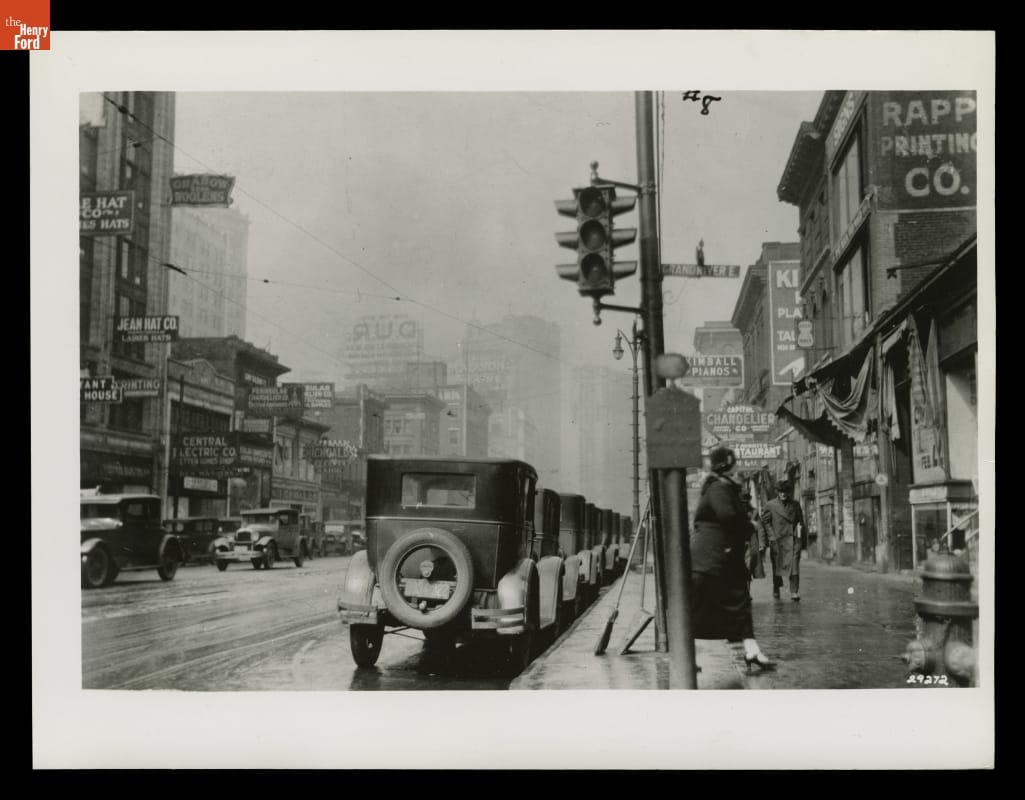
- Traffic Light on Grand River Avenue East, Downtown Detroit, Michigan, circa 1922 - Regulating traffic flow and keeping pedestrian safe along a busy commercial Detroit street involved the use of traffic lights, as seen attached to the pole in the center of the photograph.
- circa 1922
- Collections - Artifact
Traffic Light on Grand River Avenue East, Downtown Detroit, Michigan, circa 1922
Regulating traffic flow and keeping pedestrian safe along a busy commercial Detroit street involved the use of traffic lights, as seen attached to the pole in the center of the photograph.
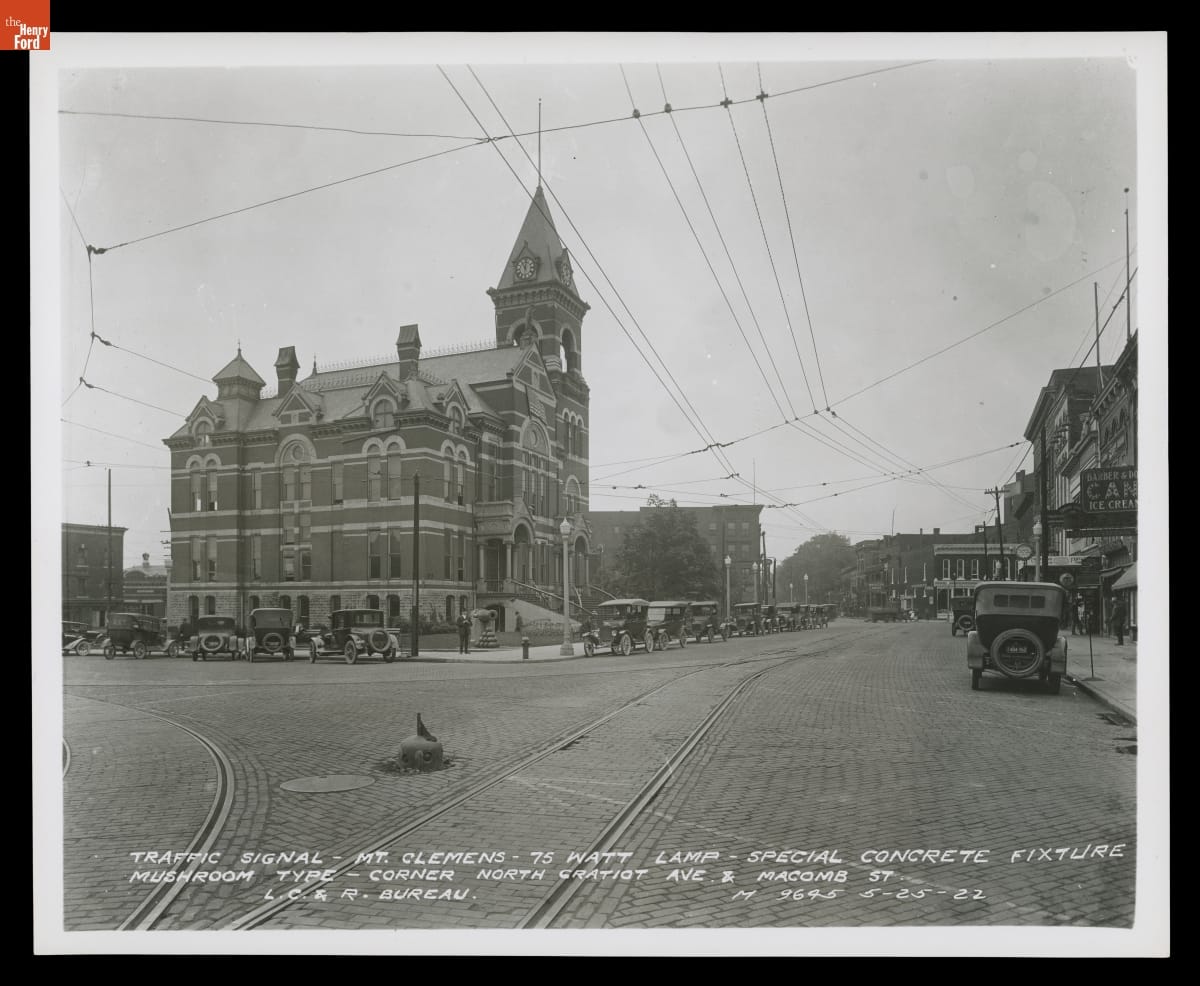
- Mount Clemens, Michigan Street with "Mushroom" Type Traffic Signal, May 1922 - As automobile traffic increased, cities installed multi-colored signal lights to control it. Traffic signals could be placed on poles, hung from overhead wires, or in some cases mounted onto the street itself. This "mushroom" traffic signal, named for its resemblance to the fungus, directed traffic in Mount Clemens, Michigan. Though durable, mushroom signals weren't particularly visible from a distance.
- May 25, 1922
- Collections - Artifact
Mount Clemens, Michigan Street with "Mushroom" Type Traffic Signal, May 1922
As automobile traffic increased, cities installed multi-colored signal lights to control it. Traffic signals could be placed on poles, hung from overhead wires, or in some cases mounted onto the street itself. This "mushroom" traffic signal, named for its resemblance to the fungus, directed traffic in Mount Clemens, Michigan. Though durable, mushroom signals weren't particularly visible from a distance.
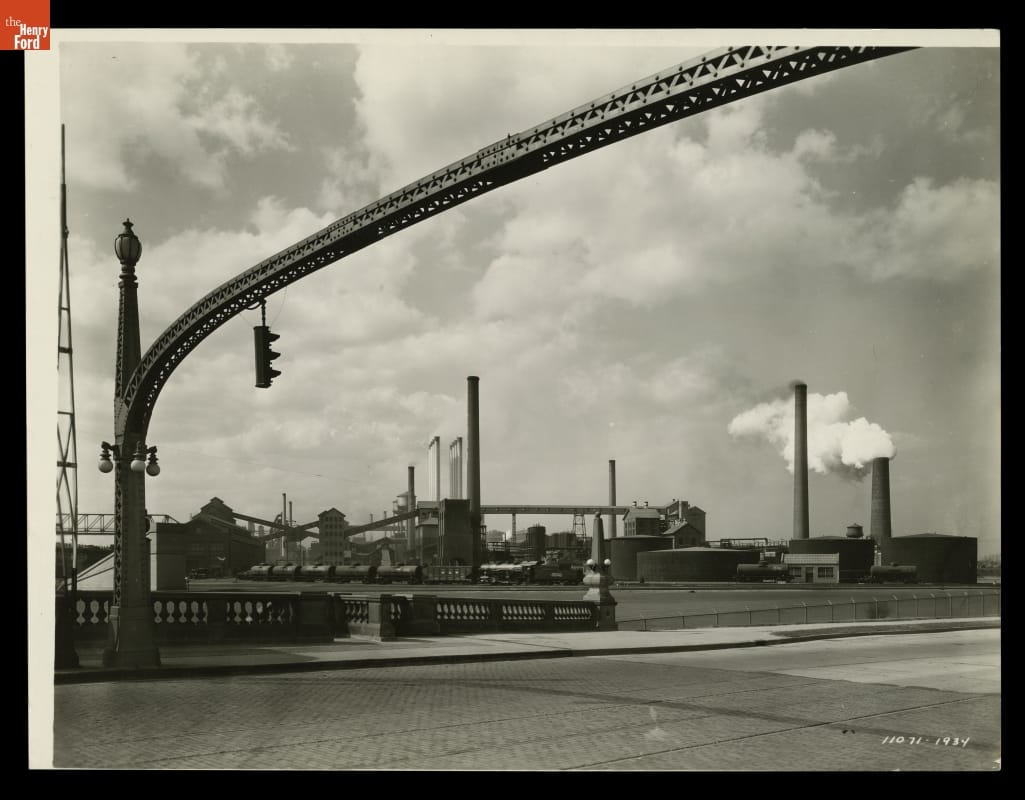
- Ford Motor Company Rouge Plant, View from Dix Bridge, 1934 - The Ford building at the 1933-1934 Chicago World's Fair was lined with murals depicting the River Rouge Plant -- a symbol of industrial efficiency that exemplified the fair's Century of Progress theme. One mural included this majestic view of the plant, which was the largest and most efficient manufacturing complex of its time.
- 1934
- Collections - Artifact
Ford Motor Company Rouge Plant, View from Dix Bridge, 1934
The Ford building at the 1933-1934 Chicago World's Fair was lined with murals depicting the River Rouge Plant -- a symbol of industrial efficiency that exemplified the fair's Century of Progress theme. One mural included this majestic view of the plant, which was the largest and most efficient manufacturing complex of its time.
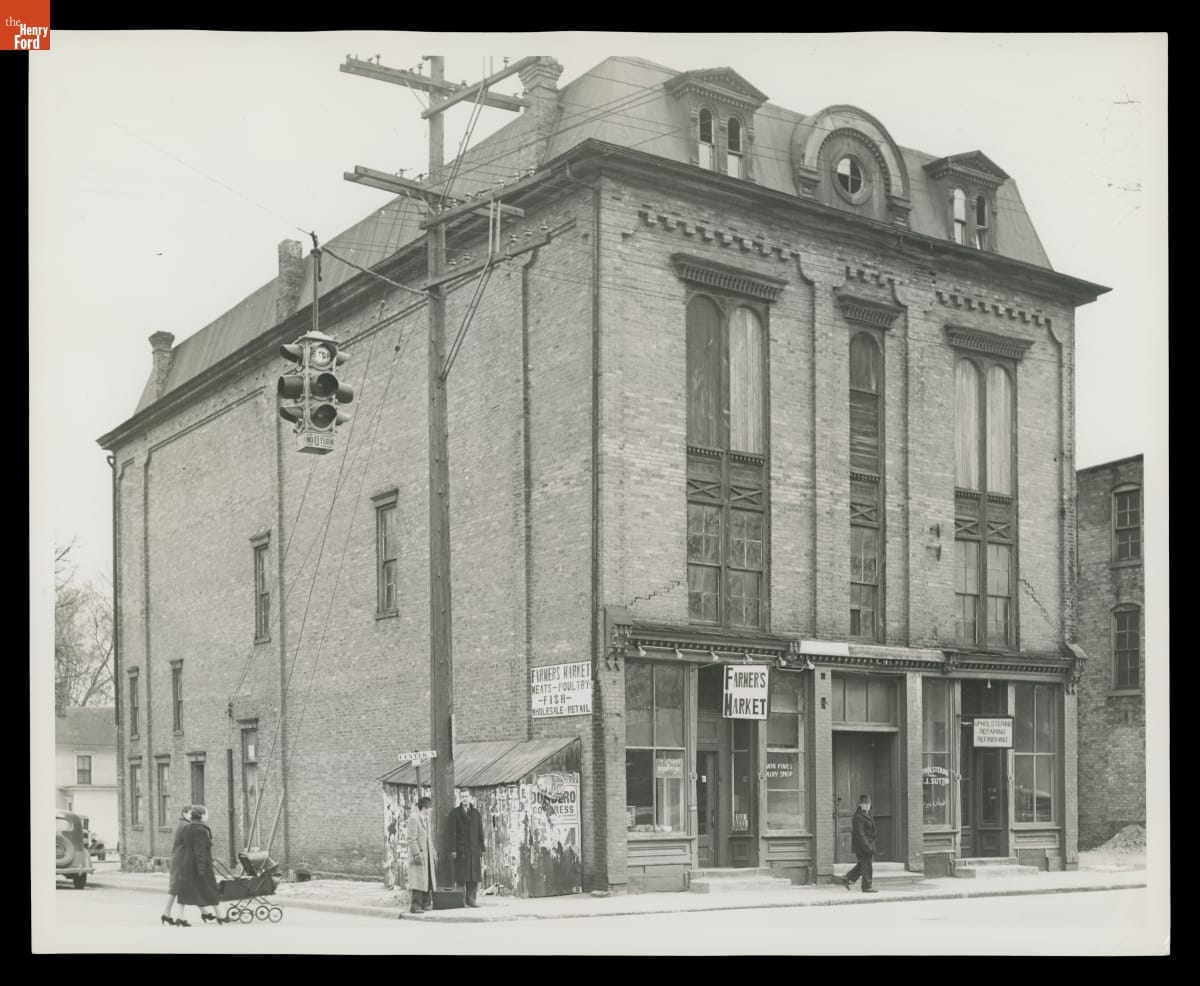
- Farmer's Market in a Former Theater, Northville, Michigan, January 1941 -
- January 21, 1941
- Collections - Artifact
Farmer's Market in a Former Theater, Northville, Michigan, January 1941
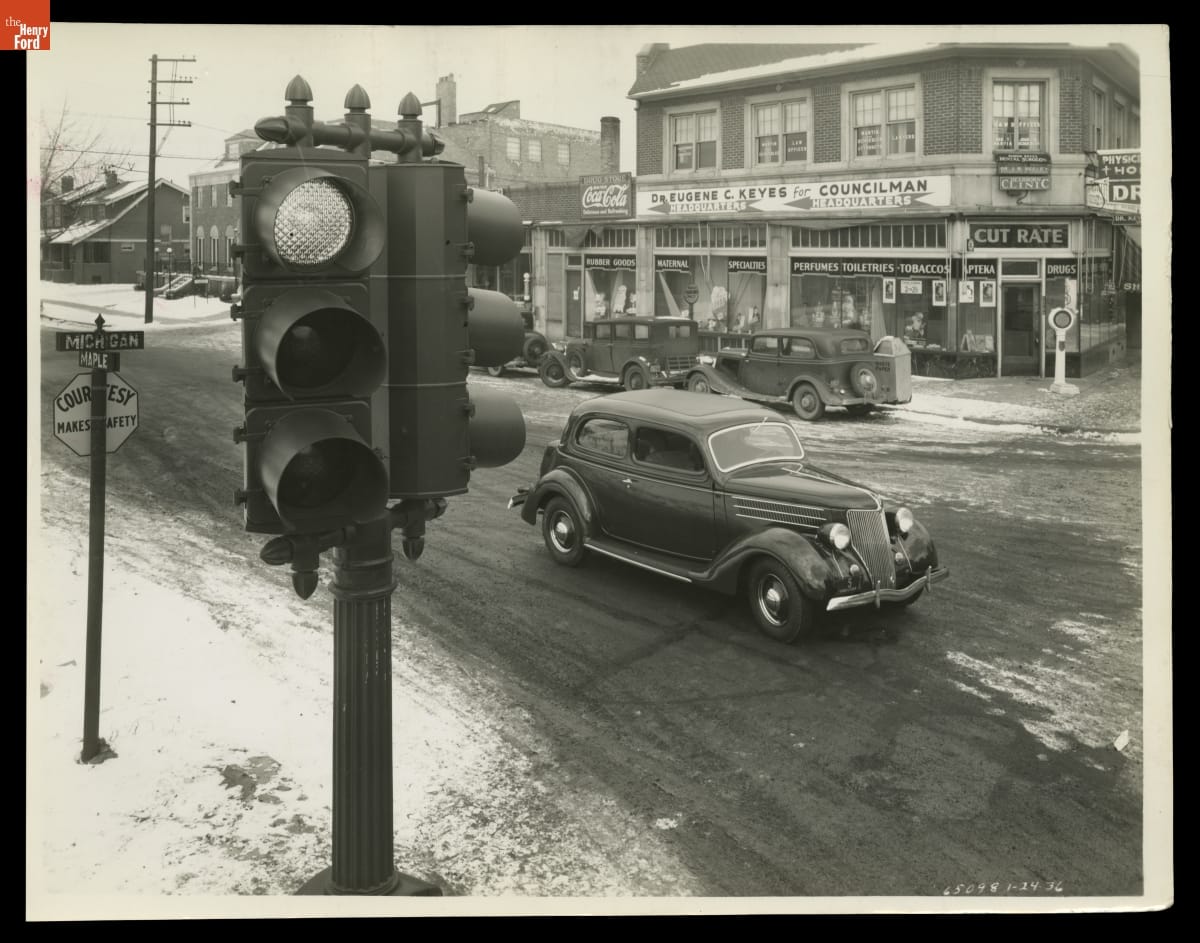
- Ford Tudor V-8 Stopped at a Traffic Signal, Dearborn, Michigan, 1936 - By the mid-1930s, the three-color traffic signal had become standard. The signals also operated automatically, freeing traffic officers for other duties. This photograph, taken in 1936, shows an automatic traffic light controlling traffic flow at a commercial intersection.
- January 24, 1936
- Collections - Artifact
Ford Tudor V-8 Stopped at a Traffic Signal, Dearborn, Michigan, 1936
By the mid-1930s, the three-color traffic signal had become standard. The signals also operated automatically, freeing traffic officers for other duties. This photograph, taken in 1936, shows an automatic traffic light controlling traffic flow at a commercial intersection.
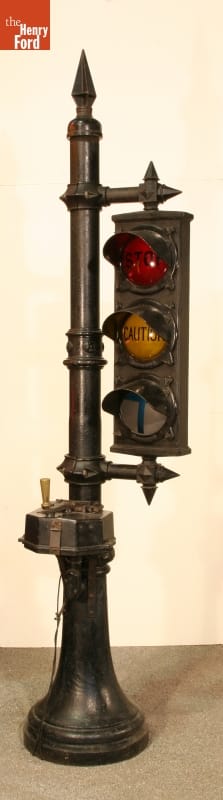
- Hand-Operated Traffic Signal, circa 1930 - Traffic officers manually operated early traffic signals. A control lever on this 1930 model activated the different lights. Beginning in the 1930s, most traffic lights were operated automatically, freeing officers for other duties.
- circa 1930
- Collections - Artifact
Hand-Operated Traffic Signal, circa 1930
Traffic officers manually operated early traffic signals. A control lever on this 1930 model activated the different lights. Beginning in the 1930s, most traffic lights were operated automatically, freeing officers for other duties.
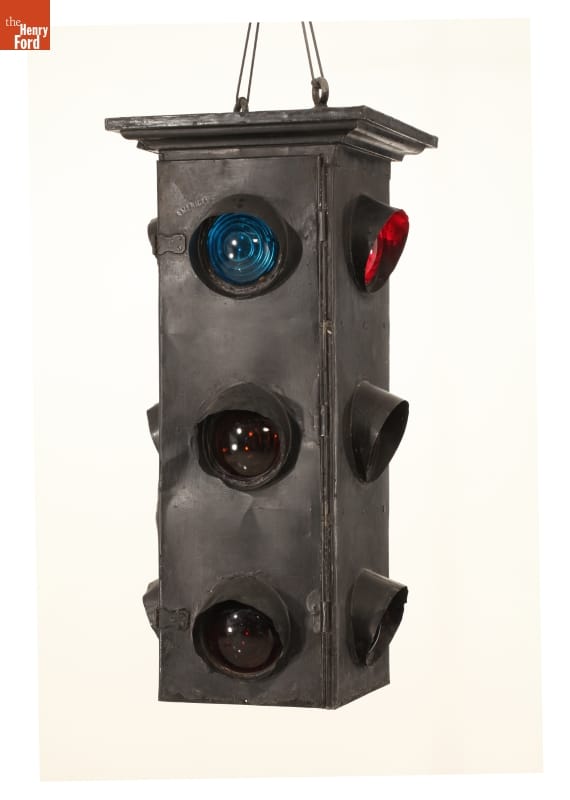
- First Tri-Color, Four-Directional Traffic Signal, 1920 - Detroit traffic officer William Potts created this three-color, four-way traffic signal in 1920. Previous illuminated signals used only red and green lights. The addition of an amber "caution" light made driving safer and the three-color signal became the standard by the mid-1930s. This first traffic light was installed at Woodward Avenue and Fort Street in Detroit, Michigan.
- 1920
- Collections - Artifact
First Tri-Color, Four-Directional Traffic Signal, 1920
Detroit traffic officer William Potts created this three-color, four-way traffic signal in 1920. Previous illuminated signals used only red and green lights. The addition of an amber "caution" light made driving safer and the three-color signal became the standard by the mid-1930s. This first traffic light was installed at Woodward Avenue and Fort Street in Detroit, Michigan.