
First Tri-Color, Four-Directional Traffic Signal, 1920
THF151126 / First Tri-Color, Four-Directional Traffic Signal, 1920
01
Artifact Overview
Detroit traffic officer William Potts created this three-color, four-way traffic signal in 1920. Previous illuminated signals used only red and green lights. The addition of an amber "caution" light made driving safer and the three-color signal became the standard by the mid-1930s. This first traffic light was installed at Woodward Avenue and Fort Street in Detroit, Michigan.
Artifact Details
Artifact
Traffic signal
Date Made
1920
Creators
Place of Creation
Creator Notes
Designed by William L. Potts of the Detroit Police Department in Detroit, Michigan.
Location
at Henry Ford Museum in Driving America
Object ID
38.537.1
Credit
From the Collections of The Henry Ford. Gift of City of Detroit Police Department.
Material
Metal
Glass (Material)
Color
Red
Yellow (Color)
Green
Dimensions
Height: 24 in
Width: 10 in
Length: 10 in
Keywords |
|---|
02
Related Content
 Set
SetSafety
- 31 Artifacts
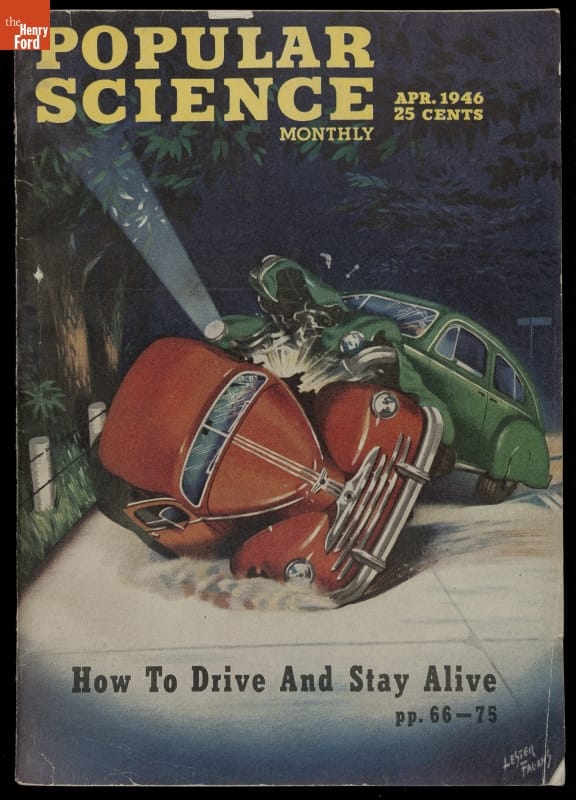
Popular Science provided information about scientific and technological advancements. In the early 1900s articles about the automobile -- and its driver -- became commonplace in the monthly's pages. Editors included a series of articles on automobile safety in this April 1946 issue. In one article, readers could test their knowledge of safe driving.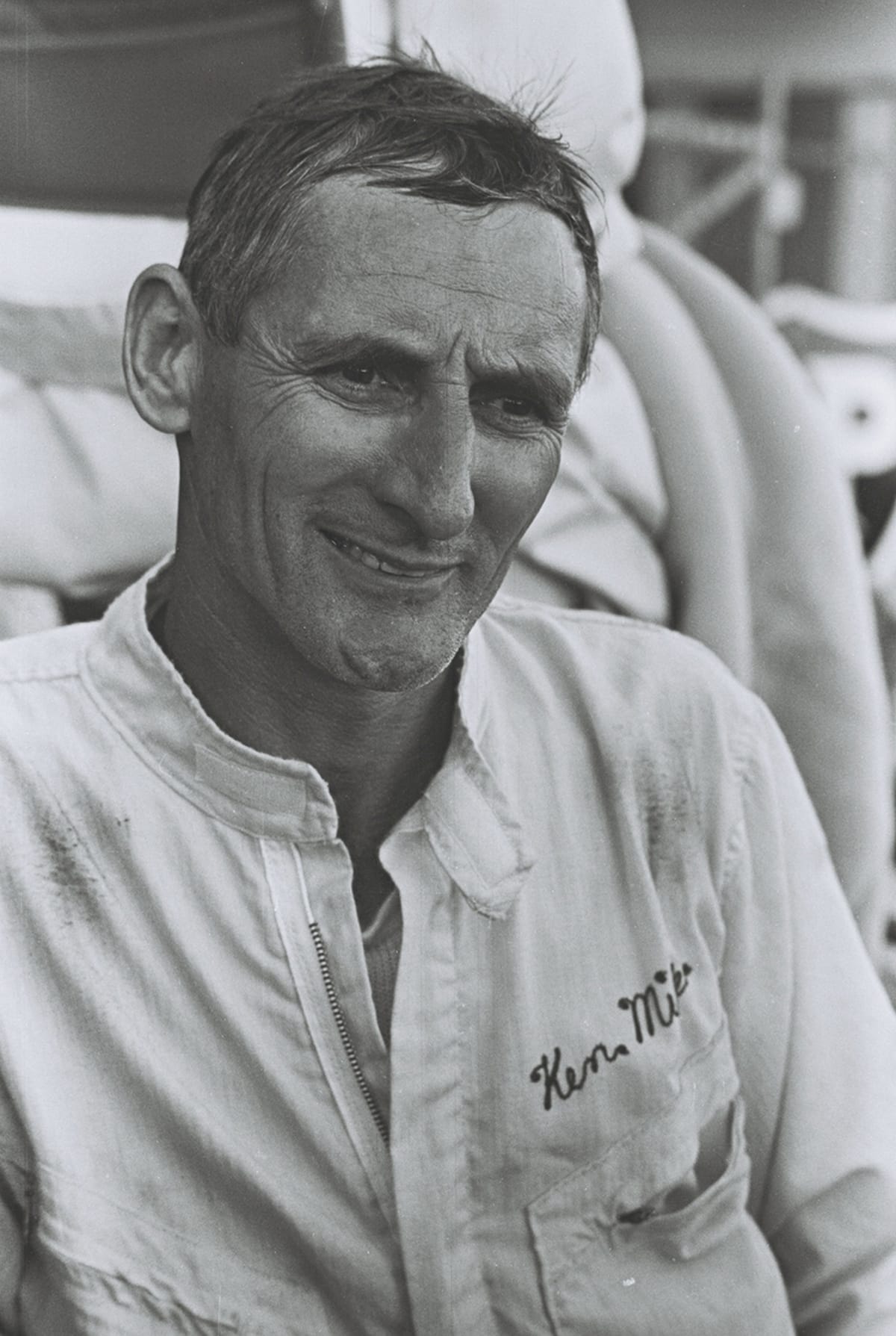 Set
SetThe Most Popular Digital Collections Artifacts of 2022
- 47 Artifacts
British-born Ken Miles was a gifted race car engineer and driver. Through his work for Carroll Shelby, Miles got involved in Ford's GT racing program. Miles won the 24 Hours of Daytona and the 12 Hours of Sebring in 1966, and he placed second at Le Mans. Miles died in a crash while testing Ford's J-Car later that year.