
Search
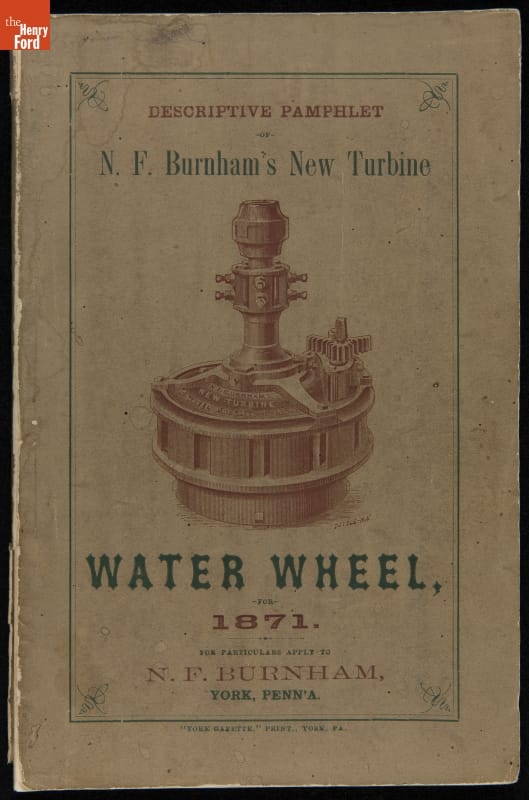
- "Descriptive Pamphlet of N. F. Burnham's New Turbine Water Wheel for 1871" -
- 1871
- Collections - Artifact
"Descriptive Pamphlet of N. F. Burnham's New Turbine Water Wheel for 1871"
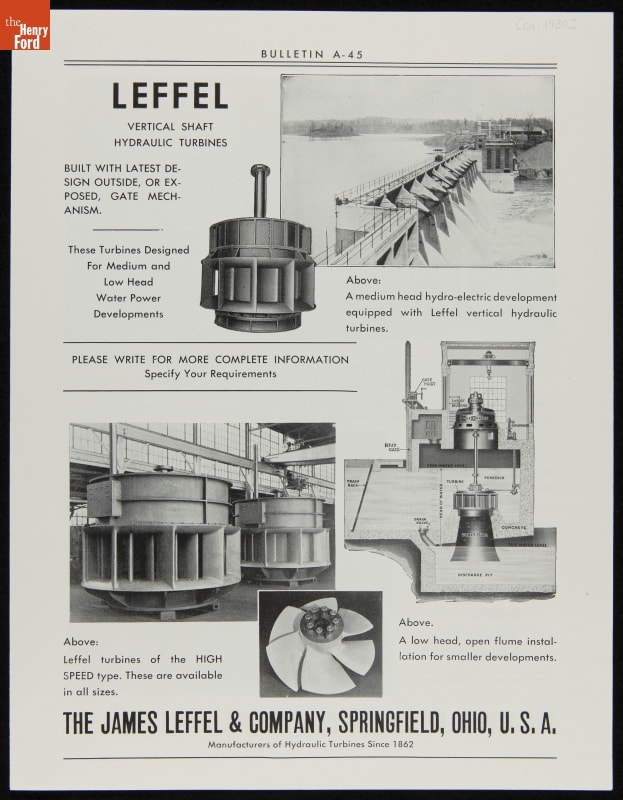
- "Leffel Vertical Shaft Hydraulic Turbines. Bulletin A-45," circa 1930 -
- circa 1930
- Collections - Artifact
"Leffel Vertical Shaft Hydraulic Turbines. Bulletin A-45," circa 1930
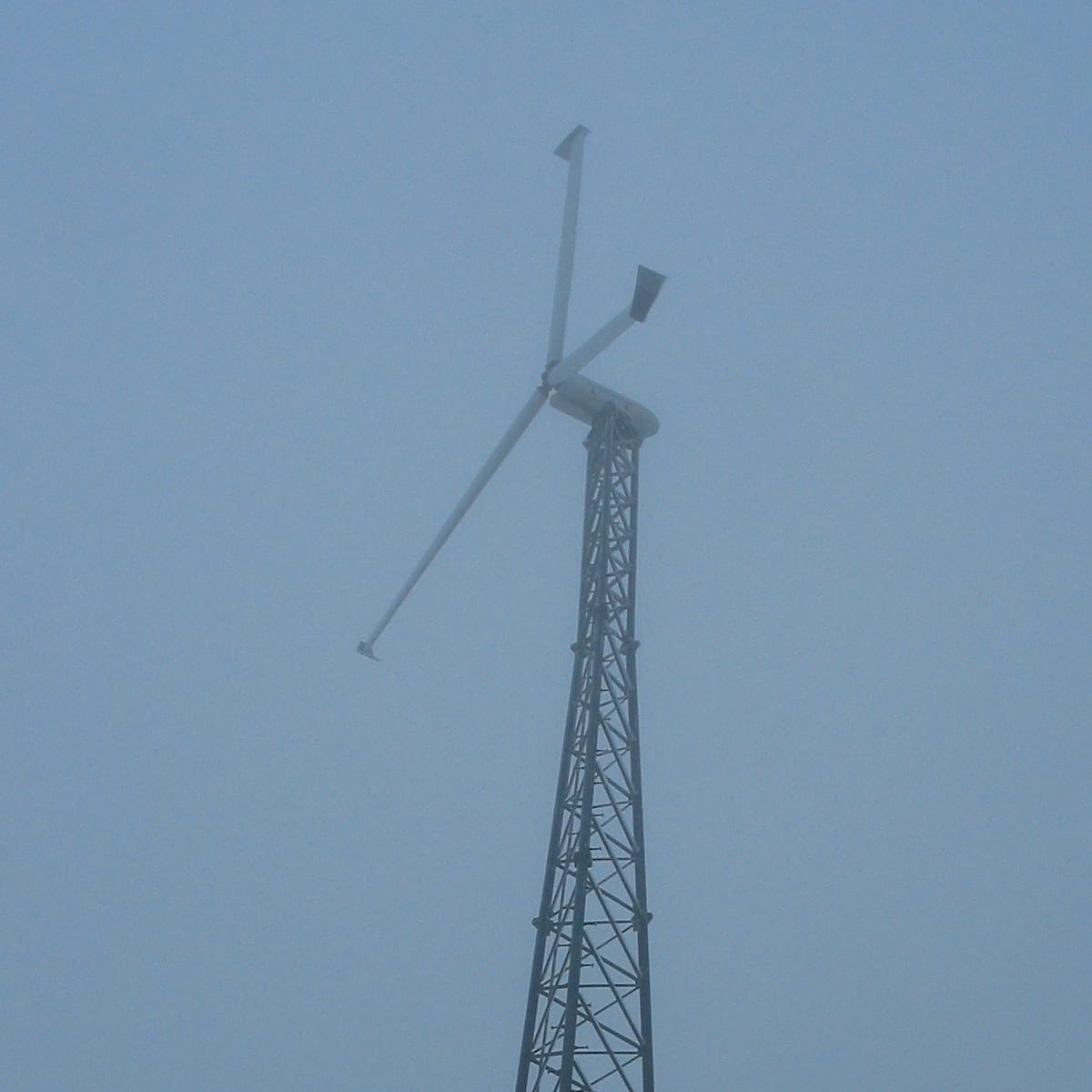
- Enertech Wind Turbine, 1984 - In the 1980s Enertech grew to be a leading producer of wind turbines--in an industry fast becoming dominated by European companies. This particular unit was one of 8 installed in Princeton, Massachusetts. The Princeton wind farm, which began operation in September 1984, grew from the community's eagerness to explore alternatives to buying power generated by the Seabrook, New Hampshire, nuclear facility.
- 1984
- Collections - Artifact
Enertech Wind Turbine, 1984
In the 1980s Enertech grew to be a leading producer of wind turbines--in an industry fast becoming dominated by European companies. This particular unit was one of 8 installed in Princeton, Massachusetts. The Princeton wind farm, which began operation in September 1984, grew from the community's eagerness to explore alternatives to buying power generated by the Seabrook, New Hampshire, nuclear facility.
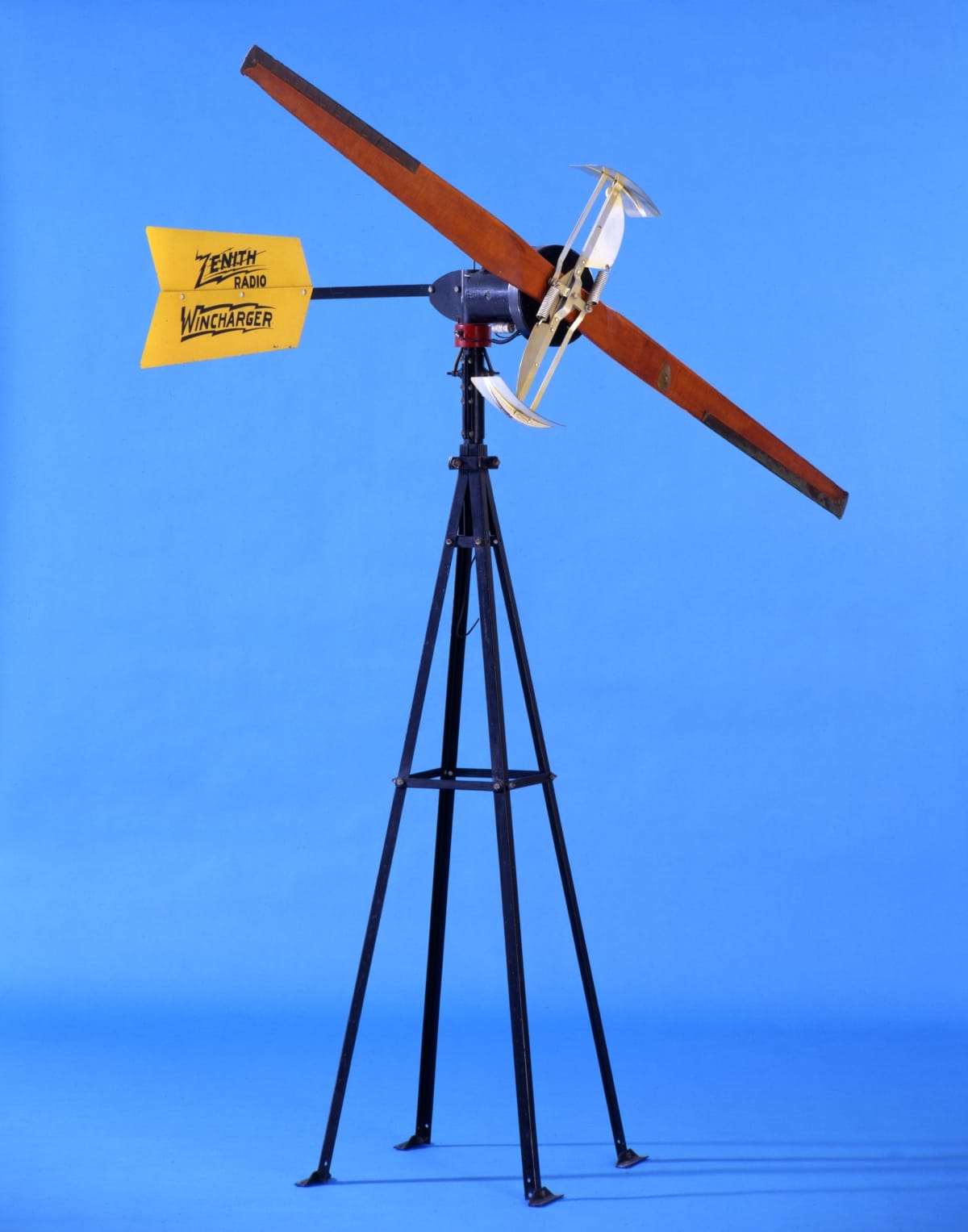
- Zenith Radio Wincharger, 1935-1937 - Radio connected Americans to the larger world in many ways. However, most rural Americans were not on the limited power grid of the 1930s so could not use radios. Portable wind generators, like this Wincharger, were developed to power radios, continuing a long tradition of local power production on farms--by horse, steam and wind power.
- 1935-1937
- Collections - Artifact
Zenith Radio Wincharger, 1935-1937
Radio connected Americans to the larger world in many ways. However, most rural Americans were not on the limited power grid of the 1930s so could not use radios. Portable wind generators, like this Wincharger, were developed to power radios, continuing a long tradition of local power production on farms--by horse, steam and wind power.
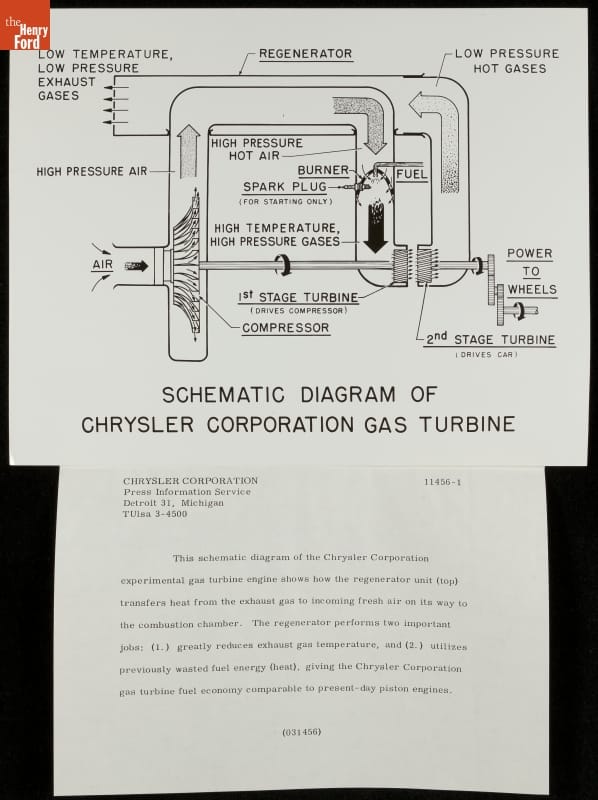
- Schematic Diagram of Chrysler Corporation Gas Turbine, 1950-1959 - In 1963, Chrysler lent 50 cars with gas turbine engines to potential customers. The engine's regenerator, shown in this diagram, was designed to increase fuel economy. Chrysler claimed its gas turbine engine would get comparable miles-per-gallon to a piston engine, but users complained about poor fuel economy. Rising gasoline prices ultimately killed the turbine dream.
- March 14, 1956
- Collections - Artifact
Schematic Diagram of Chrysler Corporation Gas Turbine, 1950-1959
In 1963, Chrysler lent 50 cars with gas turbine engines to potential customers. The engine's regenerator, shown in this diagram, was designed to increase fuel economy. Chrysler claimed its gas turbine engine would get comparable miles-per-gallon to a piston engine, but users complained about poor fuel economy. Rising gasoline prices ultimately killed the turbine dream.
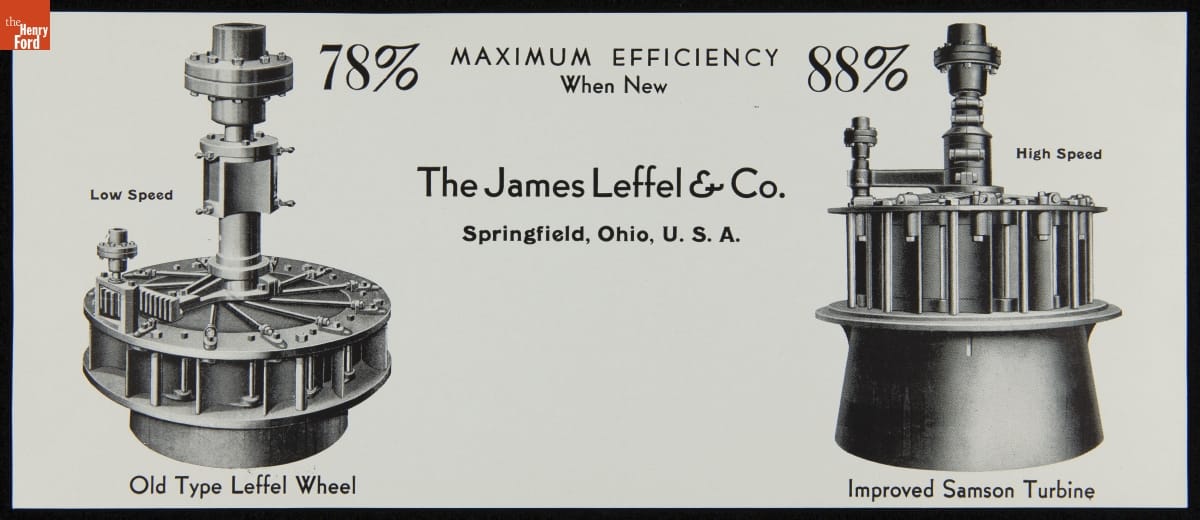
- Advertising Card for Leffel Wheels and Turbines, James Leffel & Company, circa 1894 - In the last third of the nineteenth century, an unprecedented variety of consumer goods and services flooded the American market. Advertisers bombarded potential customers with trade cards. Americans enjoyed and saved the often illustrated little advertisements found in product packages or distributed by local merchants. Many survive as historical records of commercialism in the United States.
- circa 1894
- Collections - Artifact
Advertising Card for Leffel Wheels and Turbines, James Leffel & Company, circa 1894
In the last third of the nineteenth century, an unprecedented variety of consumer goods and services flooded the American market. Advertisers bombarded potential customers with trade cards. Americans enjoyed and saved the often illustrated little advertisements found in product packages or distributed by local merchants. Many survive as historical records of commercialism in the United States.
- "Leffel Turbine Water Wheels. Bulletin 54," 1916 -
- 1916
- Collections - Artifact
"Leffel Turbine Water Wheels. Bulletin 54," 1916
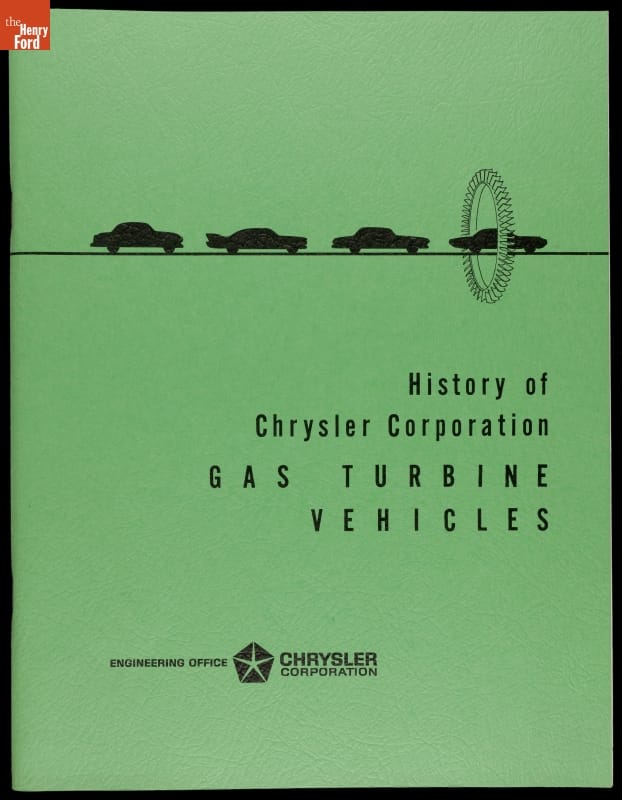
- "History of Chrysler Corporation Gas Turbine Vehicles," 1966 - This publication documents Chrysler Corporation's efforts to develop a practical gas-turbine-powered vehicle. Many companies experimented with gas turbine cars after World War II, but only Chrysler put them into the public's hands. In 1963, Chrysler lent 50 prototype turbine-powered cars to potential customers to get real-world feedback, but the idea never made it into regular production.
- August 01, 1966
- Collections - Artifact
"History of Chrysler Corporation Gas Turbine Vehicles," 1966
This publication documents Chrysler Corporation's efforts to develop a practical gas-turbine-powered vehicle. Many companies experimented with gas turbine cars after World War II, but only Chrysler put them into the public's hands. In 1963, Chrysler lent 50 prototype turbine-powered cars to potential customers to get real-world feedback, but the idea never made it into regular production.
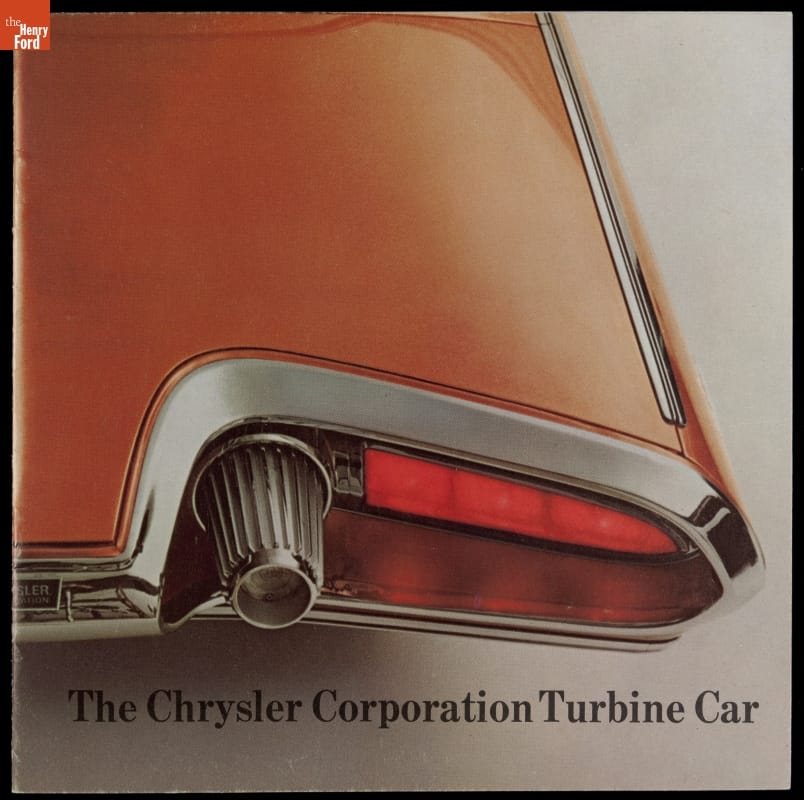
- "The Chrysler Corporation Turbine Car," 1963 - Chrysler's experiments with gas turbine automobiles hit a peak in 1963 when the company lent 50 operating prototypes to the public to gain real-world feedback. With no reciprocating parts, the turbine engine was far smoother than a piston engine. It could run on anything from kerosene to perfume. But the car's fuel mileage -- around 11 miles per gallon -- was underwhelming.
- 1963
- Collections - Artifact
"The Chrysler Corporation Turbine Car," 1963
Chrysler's experiments with gas turbine automobiles hit a peak in 1963 when the company lent 50 operating prototypes to the public to gain real-world feedback. With no reciprocating parts, the turbine engine was far smoother than a piston engine. It could run on anything from kerosene to perfume. But the car's fuel mileage -- around 11 miles per gallon -- was underwhelming.
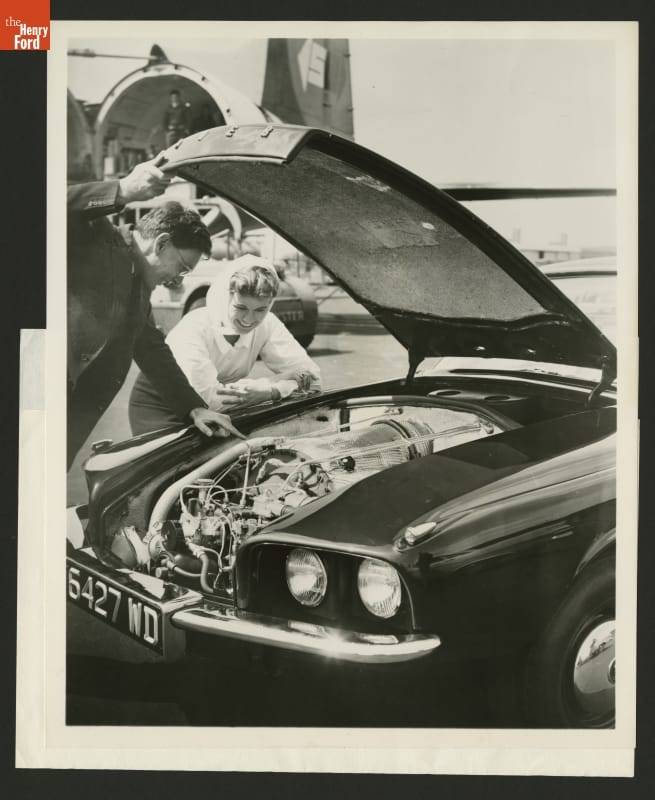
- C. Spencer King in New York City Showing the Rover Gas Turbine Prototype Car T.4, 1962 - The Rover Company, Ltd., a British-based car company, experimented with passenger-car gas turbine engines after World War II. This 1962 publicity photo shows Spencer King, Rover's chief designer, pointing out the engine's features in this Rover T4. The car had been shipped to America for display at the New York International Auto Show. The car never went into production.
- 1962
- Collections - Artifact
C. Spencer King in New York City Showing the Rover Gas Turbine Prototype Car T.4, 1962
The Rover Company, Ltd., a British-based car company, experimented with passenger-car gas turbine engines after World War II. This 1962 publicity photo shows Spencer King, Rover's chief designer, pointing out the engine's features in this Rover T4. The car had been shipped to America for display at the New York International Auto Show. The car never went into production.