
Search
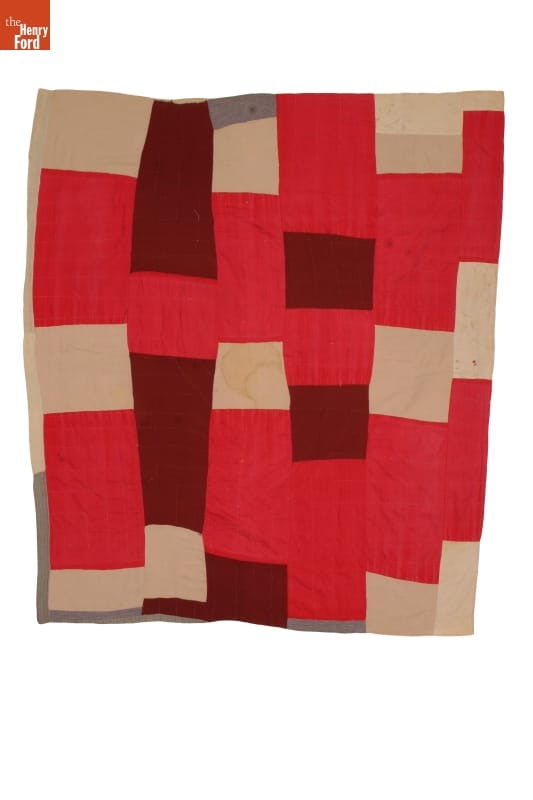
- Strip Quilt by Susana Allen Hunter, 1950-1955 -
- 1950-1955
- Collections - Artifact
Strip Quilt by Susana Allen Hunter, 1950-1955
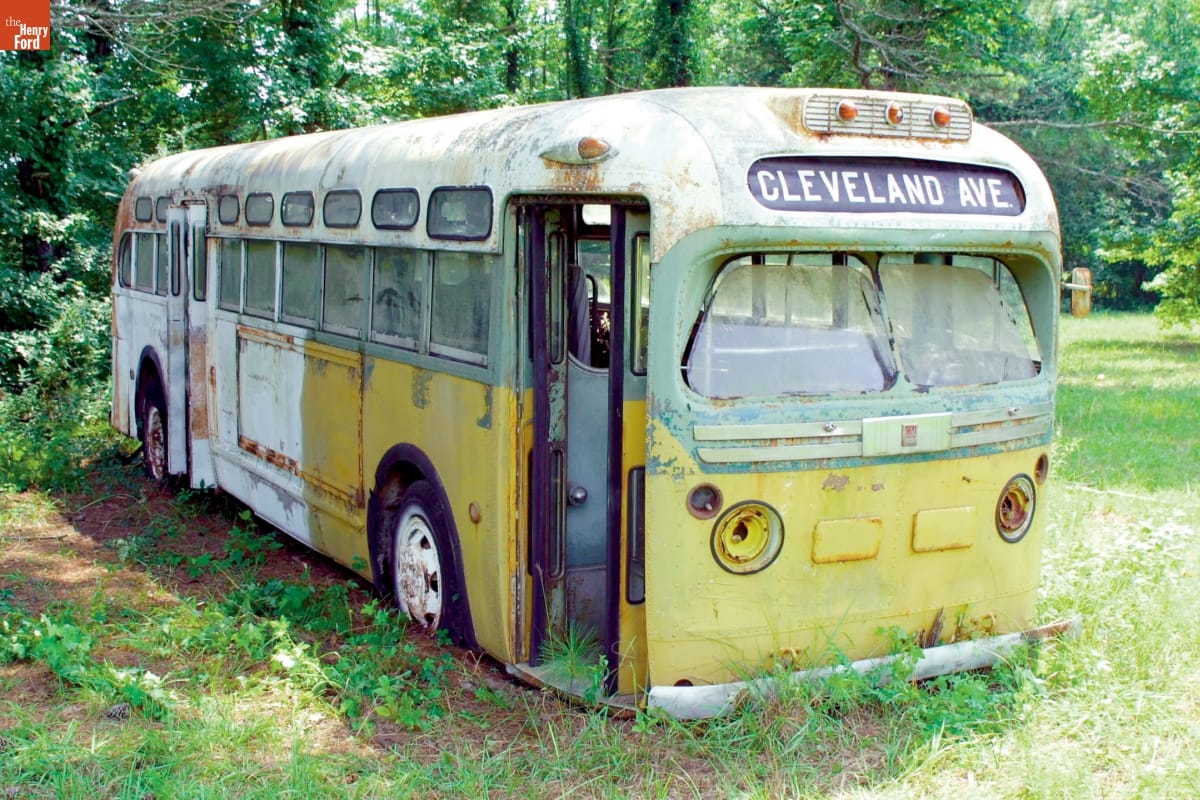
- Rosa Parks Bus in Montgomery, Alabama, 2000-2001, before Acquisition by The Henry Ford - This bus, the site of Rosa Parks's stand against segregation laws, sat as a rusted storage shed before The Henry Ford acquired it and began a full restoration. Parks's act of defiance on December 1, 1955, sparked the Montgomery Bus Boycott, which helped to ignite the Civil Rights Movement. Today, the restored bus survives as a reminder of her courageous activism.
- 2000-2001
- Collections - Artifact
Rosa Parks Bus in Montgomery, Alabama, 2000-2001, before Acquisition by The Henry Ford
This bus, the site of Rosa Parks's stand against segregation laws, sat as a rusted storage shed before The Henry Ford acquired it and began a full restoration. Parks's act of defiance on December 1, 1955, sparked the Montgomery Bus Boycott, which helped to ignite the Civil Rights Movement. Today, the restored bus survives as a reminder of her courageous activism.
- Rosa Parks Bus in Montgomery, Alabama, 2000-2001, before Acquisition by The Henry Ford - This bus, the site of Rosa Parks's stand against segregation laws, sat as a rusted storage shed before The Henry Ford acquired it and began a full restoration. Parks's act of defiance on December 1, 1955, sparked the Montgomery Bus Boycott, which helped to ignite the Civil Rights Movement. Today, the restored bus survives as a reminder of her courageous activism.
- 2000-2001
- Collections - Artifact
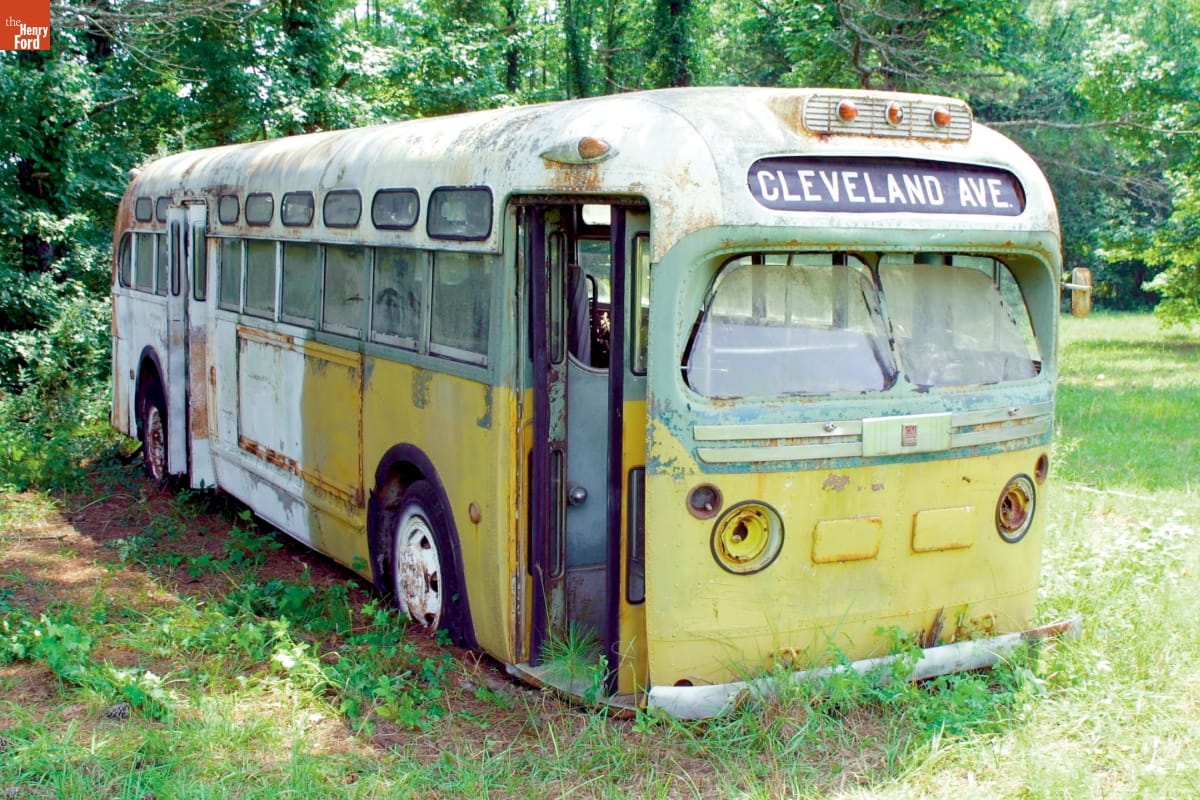
Rosa Parks Bus in Montgomery, Alabama, 2000-2001, before Acquisition by The Henry Ford
This bus, the site of Rosa Parks's stand against segregation laws, sat as a rusted storage shed before The Henry Ford acquired it and began a full restoration. Parks's act of defiance on December 1, 1955, sparked the Montgomery Bus Boycott, which helped to ignite the Civil Rights Movement. Today, the restored bus survives as a reminder of her courageous activism.
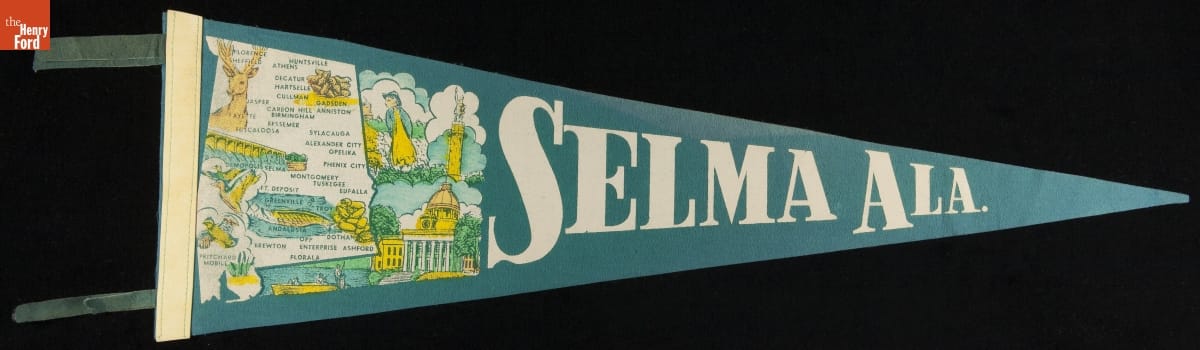
- Pennant, "Selma, Ala.," 1940-1965 - Tourists purchase simple, inexpensive souvenirs as proof of their travels. These mementos transport vacationers back to the places they visited and the things they did. In the mid-20th century, felt pennants were trendy. This pennant from Selma, Alabama, identifies other cities and towns to visit, as well as providing images of crops and wildlife found within the state's border.
- 1940-1965
- Collections - Artifact
Pennant, "Selma, Ala.," 1940-1965
Tourists purchase simple, inexpensive souvenirs as proof of their travels. These mementos transport vacationers back to the places they visited and the things they did. In the mid-20th century, felt pennants were trendy. This pennant from Selma, Alabama, identifies other cities and towns to visit, as well as providing images of crops and wildlife found within the state's border.
- Washboard Used by Susana Allen Hunter and Family -
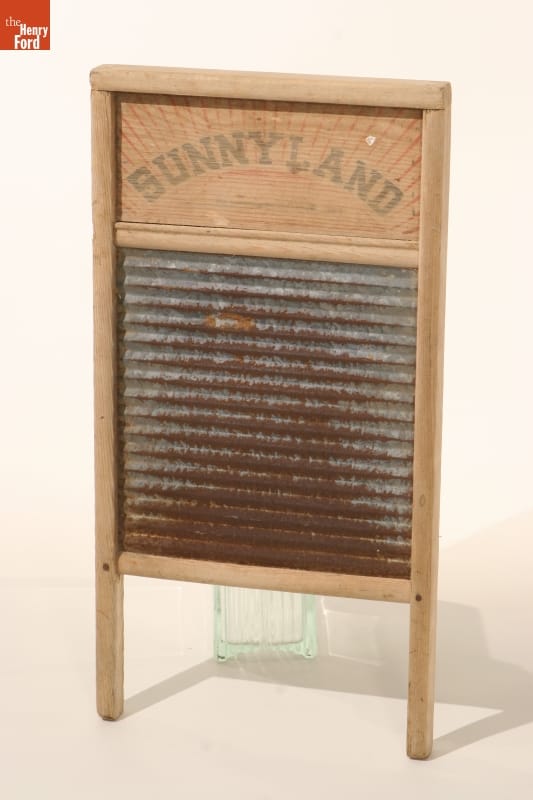
- 1940-1970
- Collections - Artifact
Washboard Used by Susana Allen Hunter and Family
- Side Chair Made by Susana Allen Hunter, 1930-1945 -
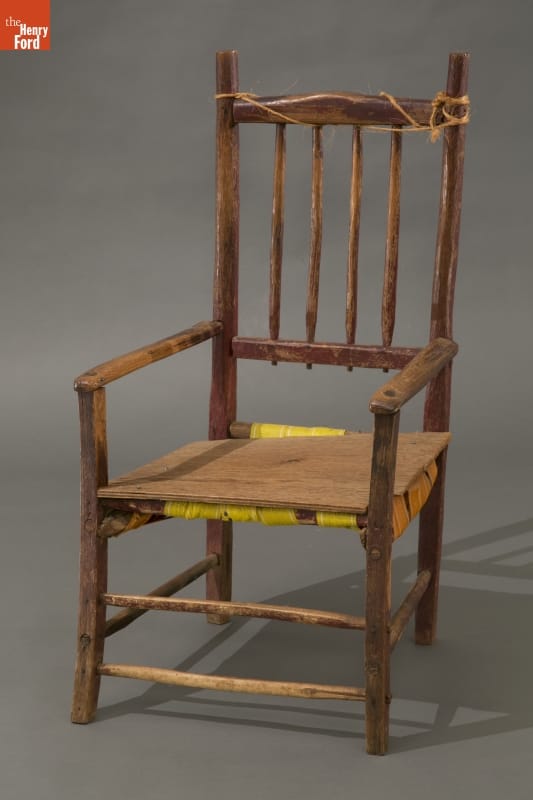
- 1930-1945
- Collections - Artifact
Side Chair Made by Susana Allen Hunter, 1930-1945
- Phonograph, circa 1935, Used by the Hunter Family -
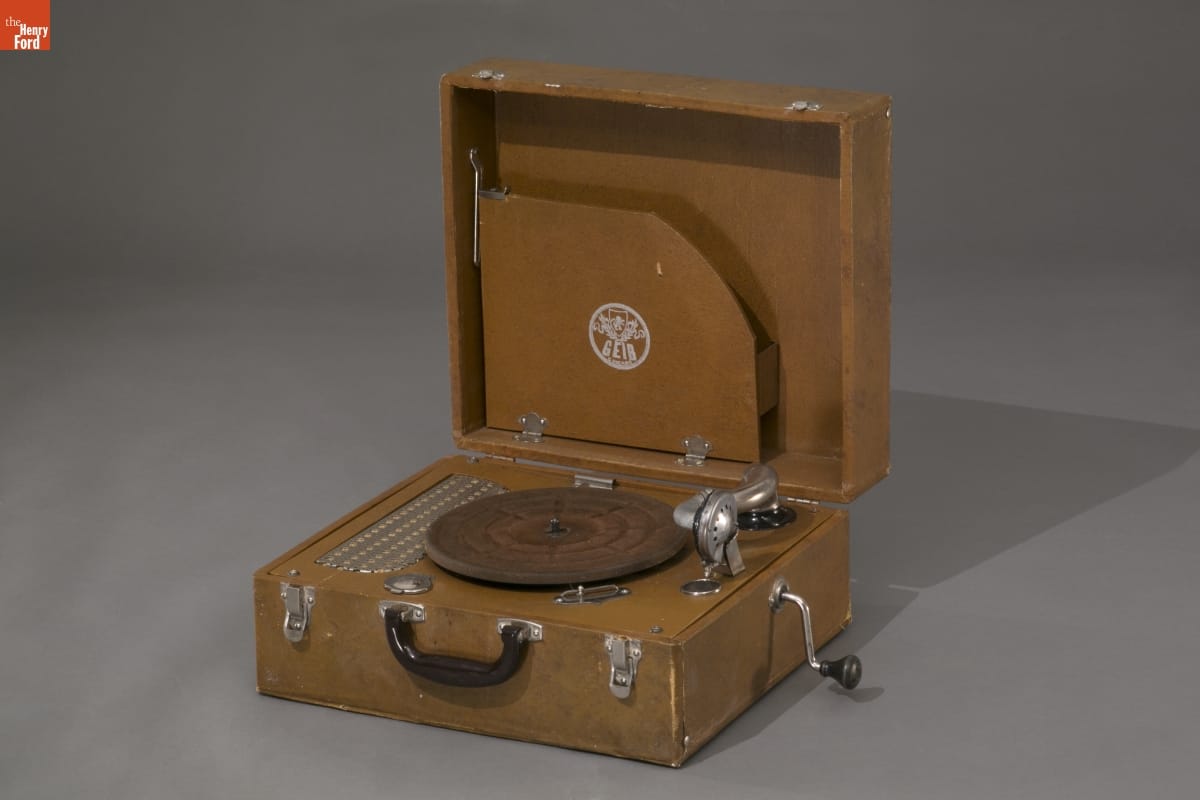
- circa 1935
- Collections - Artifact
Phonograph, circa 1935, Used by the Hunter Family
- Letter from George Washington Carver to Clara Ford, March 30, 1942 - George Washington Carver and Henry Ford became friends in the late 1930s, drawn together by a mutual interest in plants and industry. Carver's warm letters to both Henry and Clara Ford speak to the genuine depth of the friendship. In this letter to Clara, which was presumably accompanied a bottle of peanut oil, Carver offered advice on how to use the oil for natural health.
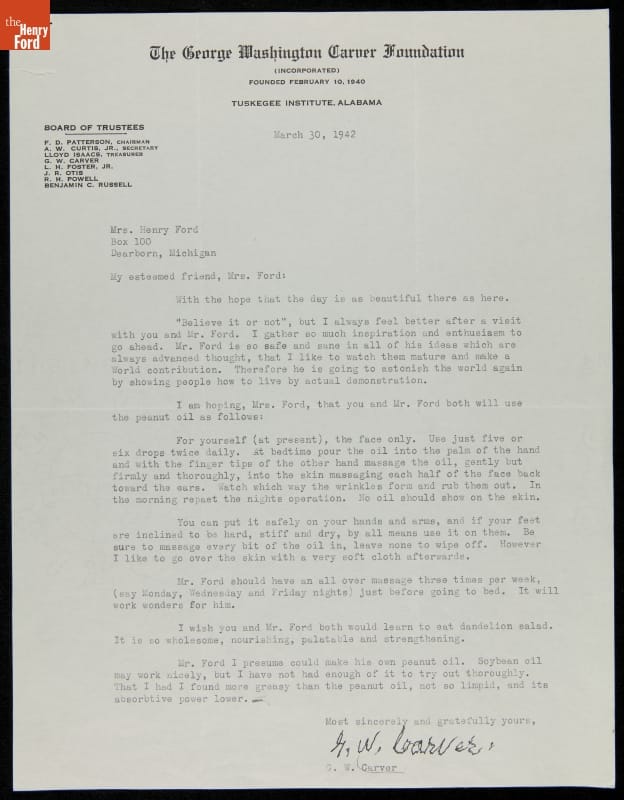
- March 30, 1942
- Collections - Artifact
Letter from George Washington Carver to Clara Ford, March 30, 1942
George Washington Carver and Henry Ford became friends in the late 1930s, drawn together by a mutual interest in plants and industry. Carver's warm letters to both Henry and Clara Ford speak to the genuine depth of the friendship. In this letter to Clara, which was presumably accompanied a bottle of peanut oil, Carver offered advice on how to use the oil for natural health.
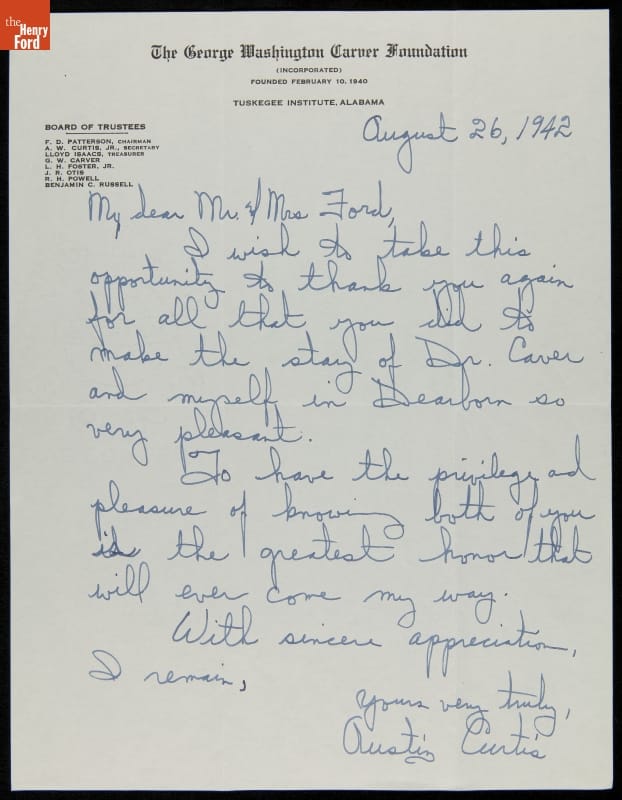
- Letter from Austin Curtis, Jr. to Henry and Clara Ford, August 26, 1942 - Chemist Austin Curtis, Jr., came to the Tuskegee Institute in Alabama in 1935 to assist the increasingly frail George Washington Carver and carry on his work. Curtis accompanied Carver on his many trips, including one to Greenfield Village in the summer of 1942. In this letter he thanks Henry and Clara Ford for their hospitality on the recent visit.
- August 26, 1942
- Collections - Artifact
Letter from Austin Curtis, Jr. to Henry and Clara Ford, August 26, 1942
Chemist Austin Curtis, Jr., came to the Tuskegee Institute in Alabama in 1935 to assist the increasingly frail George Washington Carver and carry on his work. Curtis accompanied Carver on his many trips, including one to Greenfield Village in the summer of 1942. In this letter he thanks Henry and Clara Ford for their hospitality on the recent visit.
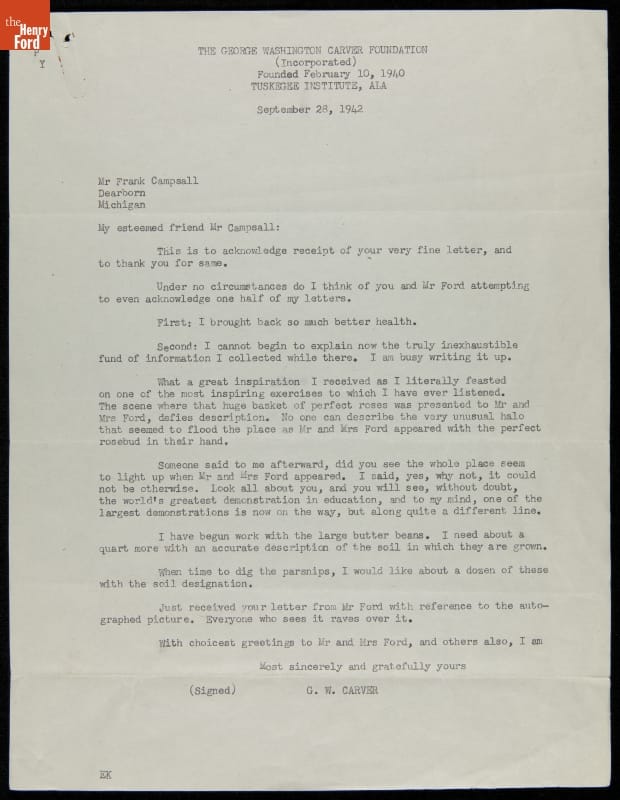
- Letter from George Washington Carver to Frank Campsall, September 28, 1942 - George Washington Carver and Henry Ford became friends in the late 1930s, drawn together by a mutual interest in developing new industrial products from the fruits of the soil. Carver's warm letters to Ford, Clara Ford, and Ford's secretary Frank Campsall speak to the genuine depth of the friendship. Carver often gives Ford advice on research avenues to pursue and suggests recipes for natural health.
- September 28, 1942
- Collections - Artifact
Letter from George Washington Carver to Frank Campsall, September 28, 1942
George Washington Carver and Henry Ford became friends in the late 1930s, drawn together by a mutual interest in developing new industrial products from the fruits of the soil. Carver's warm letters to Ford, Clara Ford, and Ford's secretary Frank Campsall speak to the genuine depth of the friendship. Carver often gives Ford advice on research avenues to pursue and suggests recipes for natural health.