
Search
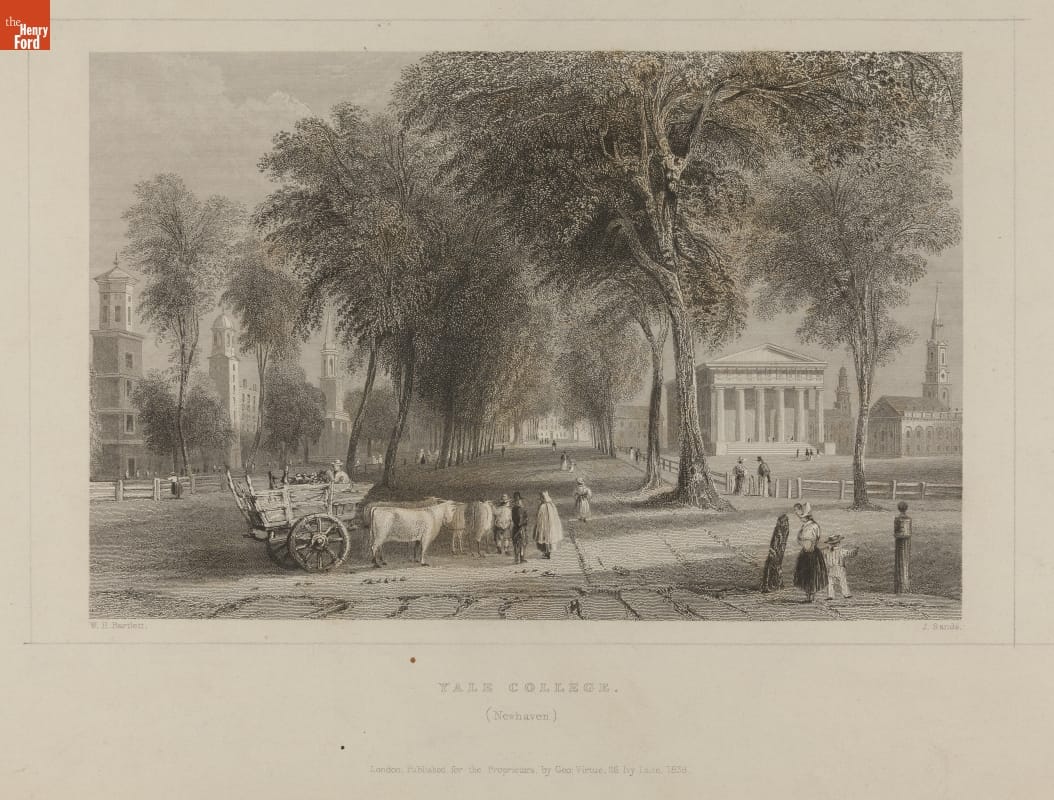
- Engraving, "Yale College, New Haven," 1838 - This 1838 engraving of New Haven, Connecticut, features a two-wheeled New England ox cart in the foreground. The picturesque print also features people strolling through town, with Yale College buildings in the background.
- 1838
- Collections - Artifact
Engraving, "Yale College, New Haven," 1838
This 1838 engraving of New Haven, Connecticut, features a two-wheeled New England ox cart in the foreground. The picturesque print also features people strolling through town, with Yale College buildings in the background.
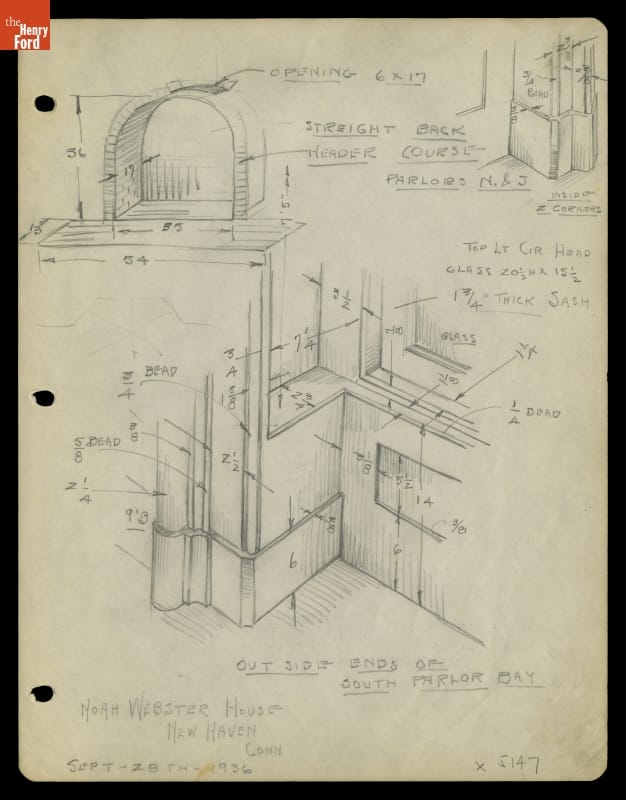
- Drawing, Outside Ends of South Parlor Bay, Noah Webster House, New Haven, Connecticut, September 28, 1936 -
- September 28, 1936
- Collections - Artifact
Drawing, Outside Ends of South Parlor Bay, Noah Webster House, New Haven, Connecticut, September 28, 1936
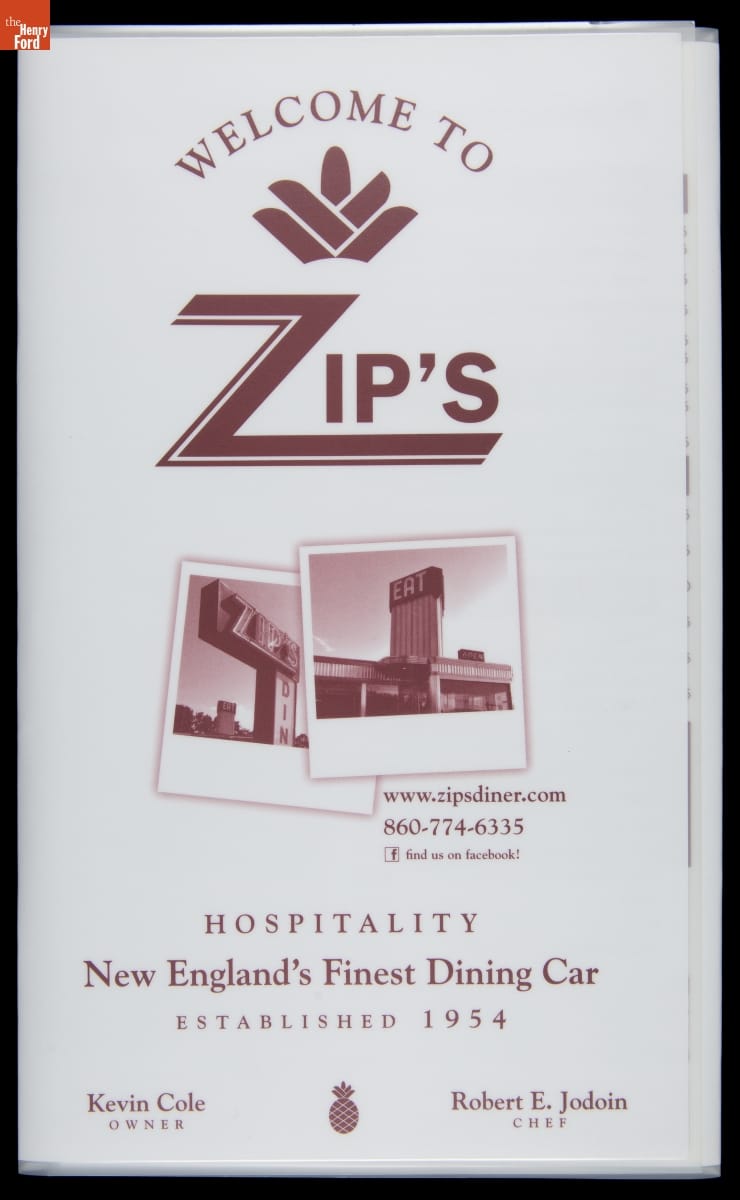
- Zip's Diner Menu, November 2011 -
- November 01, 2011
- Collections - Artifact
Zip's Diner Menu, November 2011
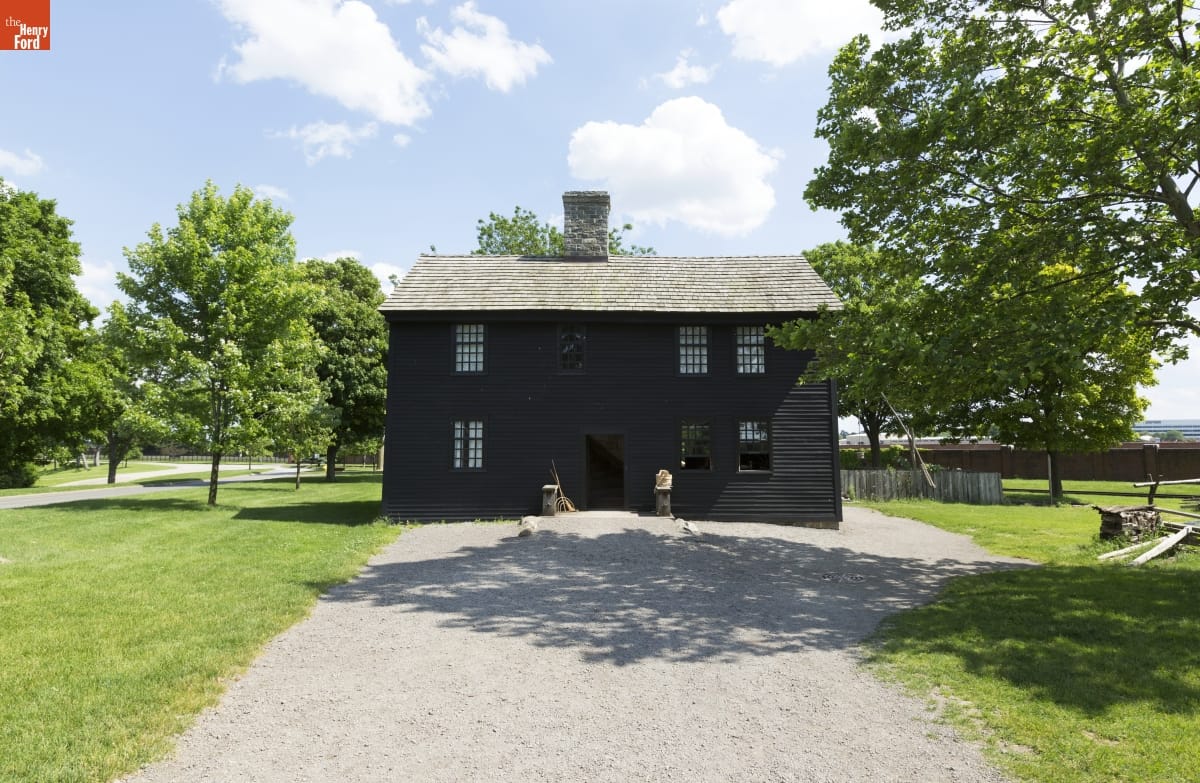
- Daggett Farmhouse - Like other farm families living in northeastern Connecticut in the 1760s, the Daggetts made and grew many of the things they needed. Along with farming, Samuel Daggett was a house builder and furniture maker. The "saltbox" form of this house -- with short roof in front and long in back -- was a typical New England house type of this era.
- circa 1755
- Collections - Artifact
Daggett Farmhouse
Like other farm families living in northeastern Connecticut in the 1760s, the Daggetts made and grew many of the things they needed. Along with farming, Samuel Daggett was a house builder and furniture maker. The "saltbox" form of this house -- with short roof in front and long in back -- was a typical New England house type of this era.
- Postcard, "Chief's Auto, Waterbury Fire Dept.," 1912 - Fire departments, eager to eliminate the costs and complications of horses, were quick to adopt motor vehicles. In addition to motorized pumpers and trucks, many departments purchased automobiles for use by fire chiefs. With a car, a fire chief and staff could travel swiftly to the scene of a fire.
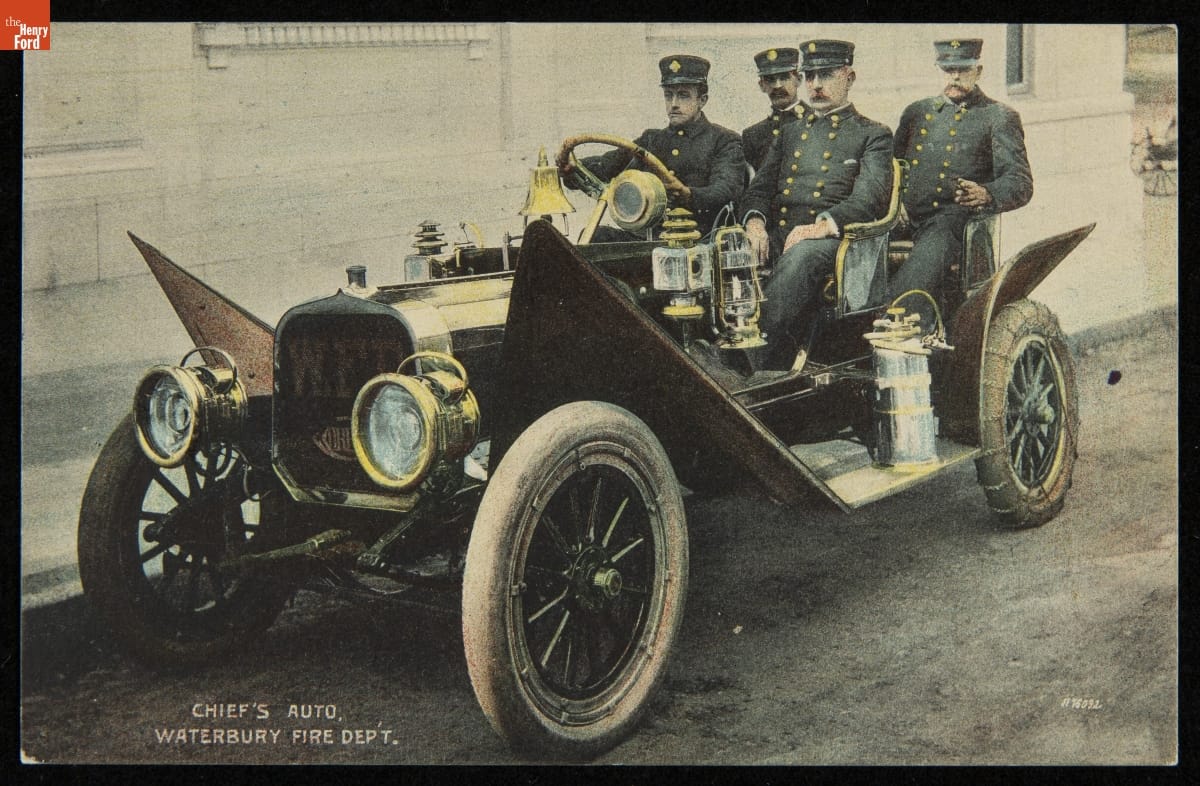
- February 28, 1912
- Collections - Artifact
Postcard, "Chief's Auto, Waterbury Fire Dept.," 1912
Fire departments, eager to eliminate the costs and complications of horses, were quick to adopt motor vehicles. In addition to motorized pumpers and trucks, many departments purchased automobiles for use by fire chiefs. With a car, a fire chief and staff could travel swiftly to the scene of a fire.
- Benny, the "Job Boss," outside the Sugar House at the Kelley Home, Andover, Connecticut, 1959 -
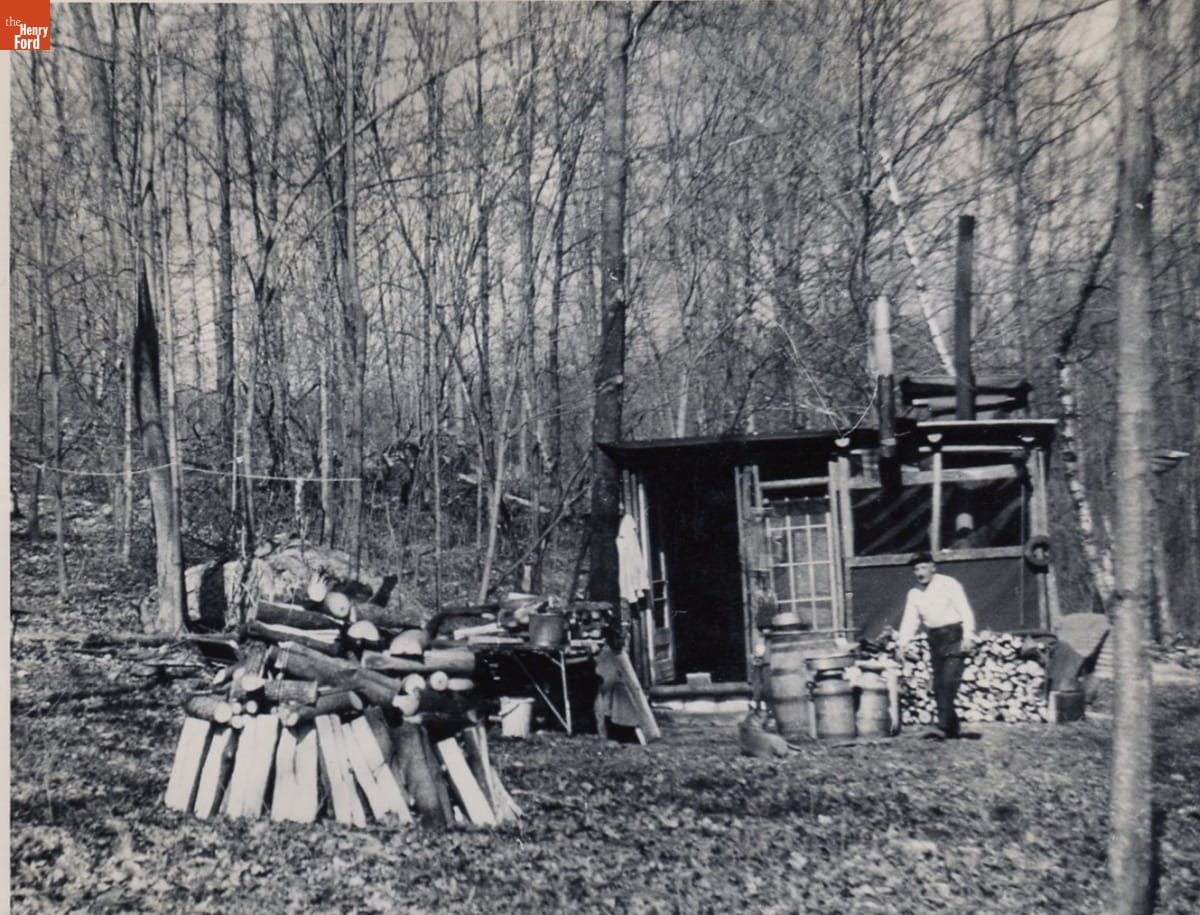
- 1959
- Collections - Artifact
Benny, the "Job Boss," outside the Sugar House at the Kelley Home, Andover, Connecticut, 1959
- Vanderbilt Dormitory, Wall Street, Sheffield Scientific School, Yale Univ., 1909 -
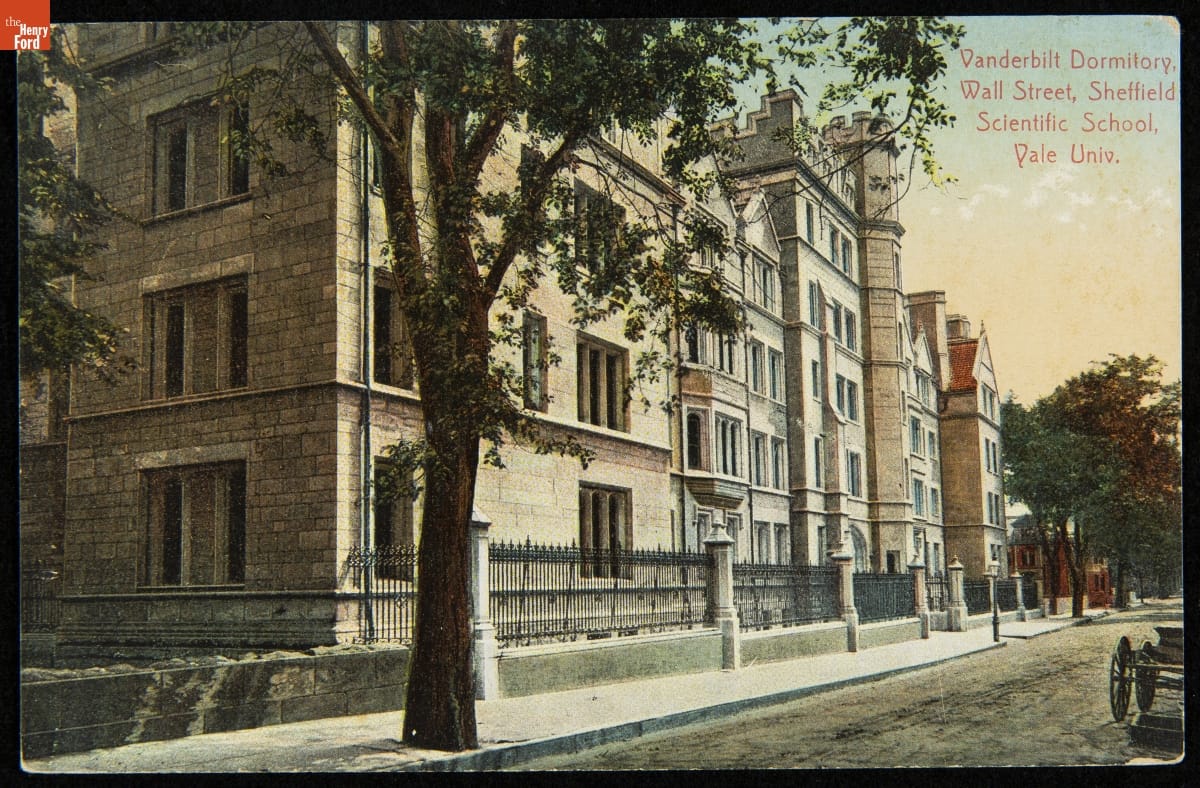
- 1909
- Collections - Artifact
Vanderbilt Dormitory, Wall Street, Sheffield Scientific School, Yale Univ., 1909
- Unimate Robotic Arm Diagram, circa 1960 - George Devol revolutionized manufacturing with his invention of the Unimate -- the world's first industrial robot. These rugged programmable units were designed to perform repetitive, arduous and hazardous tasks. The first Unimate was installed in a General Motors plant in 1961. This document, part of a larger collection, chronicles the Unimate's conception, construction and operation.
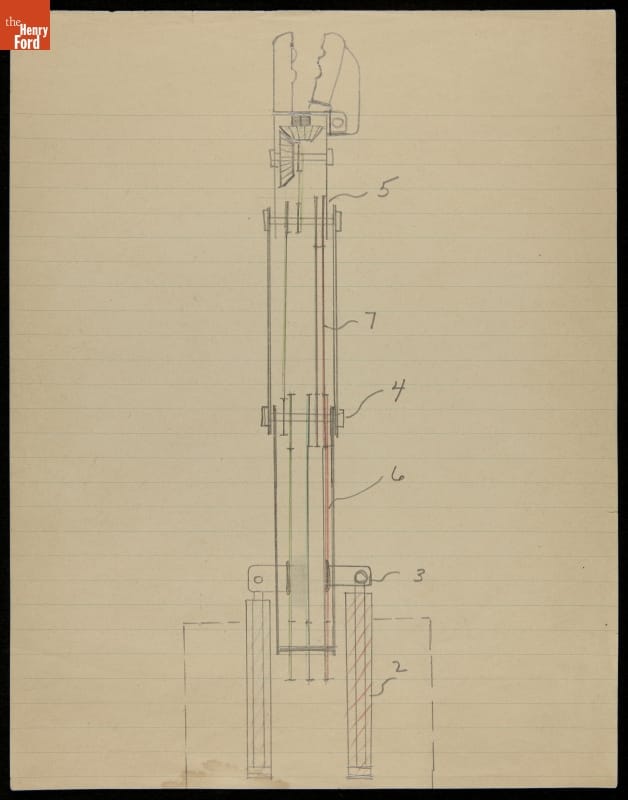
- circa 1960
- Collections - Artifact
Unimate Robotic Arm Diagram, circa 1960
George Devol revolutionized manufacturing with his invention of the Unimate -- the world's first industrial robot. These rugged programmable units were designed to perform repetitive, arduous and hazardous tasks. The first Unimate was installed in a General Motors plant in 1961. This document, part of a larger collection, chronicles the Unimate's conception, construction and operation.
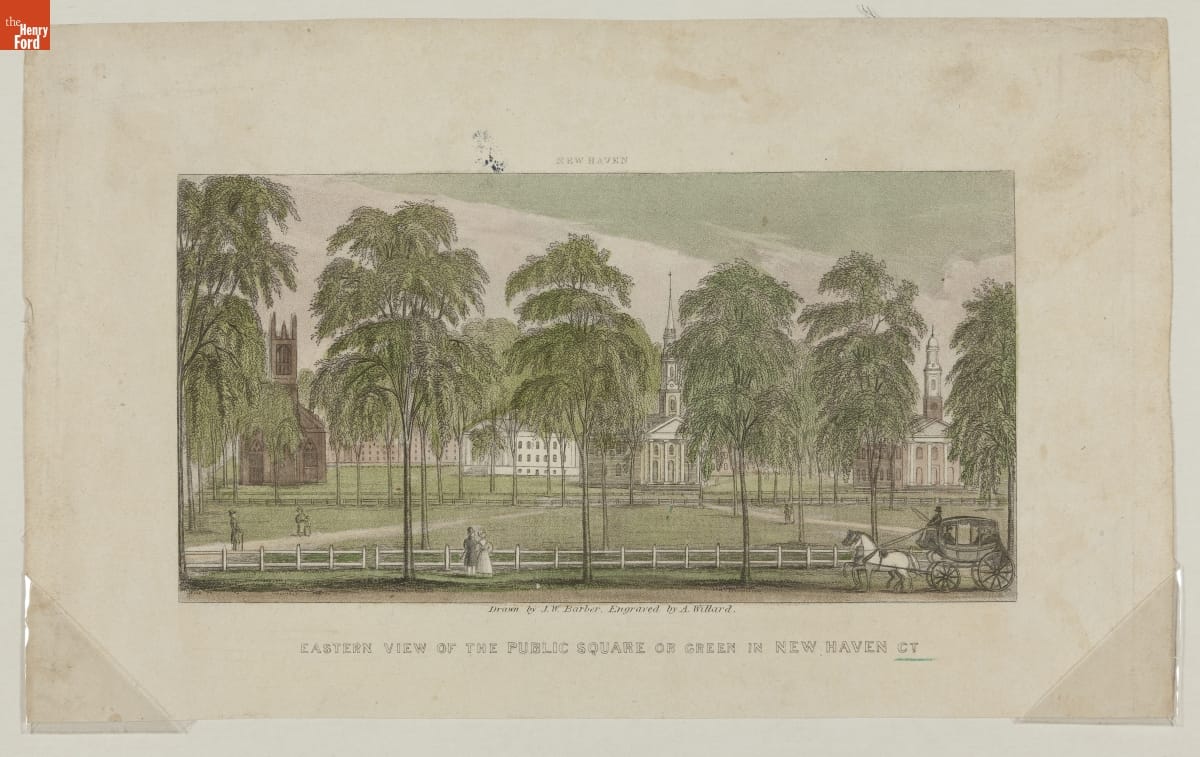
- Steel Engraving, "Eastern View of the Public Square or Green in New Haven CT," circa 1840 - Prolific illustrator John Warner Barber sketched this charming scene of the eastern view of the public square of New Haven, Connecticut. The circa 1840 color engraving depicts a pastoral scene of buildings, people strolling, and a stagecoach.
- circa 1840
- Collections - Artifact
Steel Engraving, "Eastern View of the Public Square or Green in New Haven CT," circa 1840
Prolific illustrator John Warner Barber sketched this charming scene of the eastern view of the public square of New Haven, Connecticut. The circa 1840 color engraving depicts a pastoral scene of buildings, people strolling, and a stagecoach.
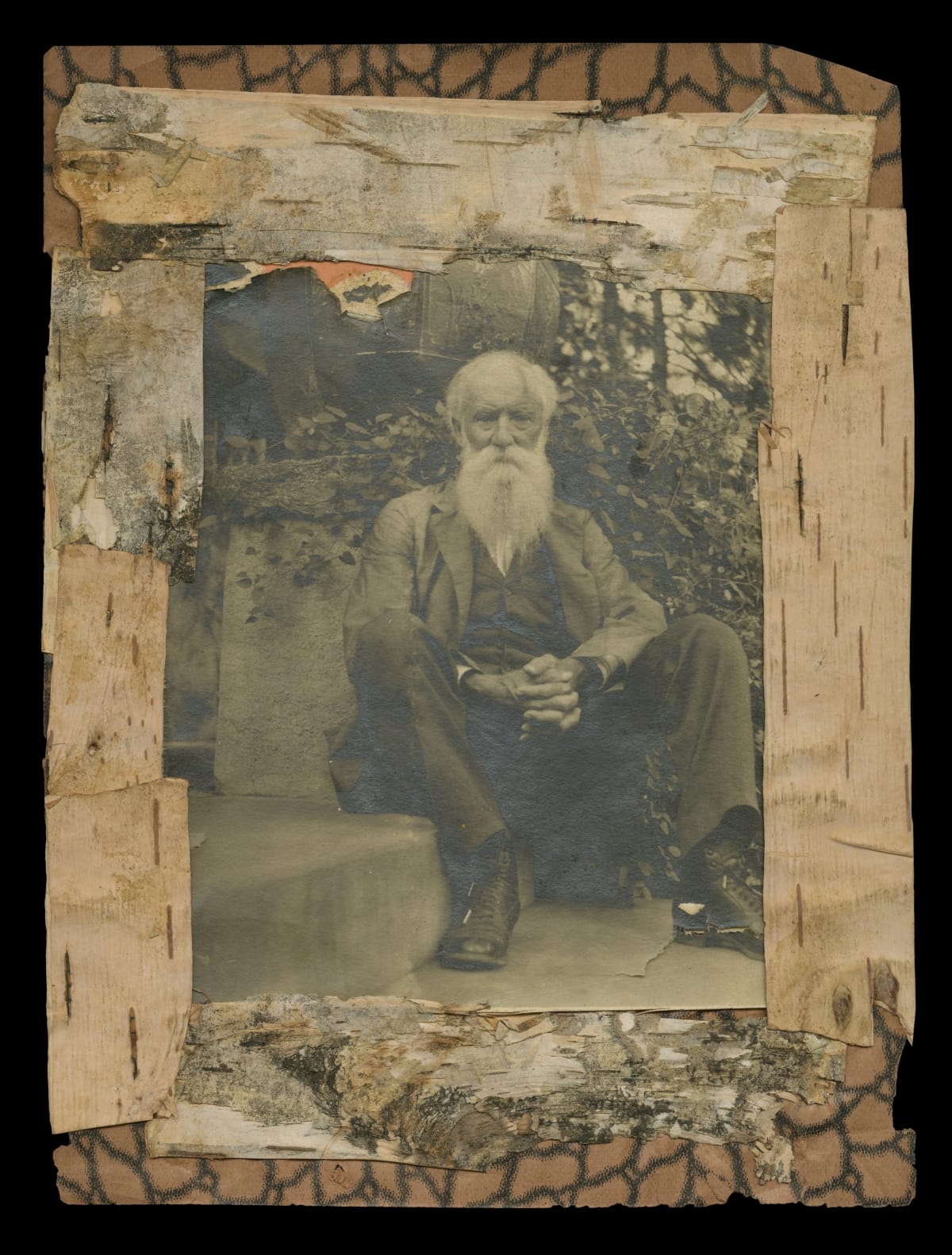
- John Burroughs on the Steps at Wyndygoul, Cos Cob, Connecticut, August 1905 - John Burroughs (1837-1921) was an internationally known naturalist and writer who became incensed by the glowing reviews of writings like Ernest Thompson Seton's <EM>Wild Animals I Have Known</EM>, which he believed blurred the line between fact and fiction. Seton, feeling his reputation was at stake, invited Burroughs to his country estate, Wyndygoul, for an in-person conversation. Seton took this photograph.
- August 01, 1905
- Collections - Artifact
John Burroughs on the Steps at Wyndygoul, Cos Cob, Connecticut, August 1905
John Burroughs (1837-1921) was an internationally known naturalist and writer who became incensed by the glowing reviews of writings like Ernest Thompson Seton's Wild Animals I Have Known, which he believed blurred the line between fact and fiction. Seton, feeling his reputation was at stake, invited Burroughs to his country estate, Wyndygoul, for an in-person conversation. Seton took this photograph.