
Search
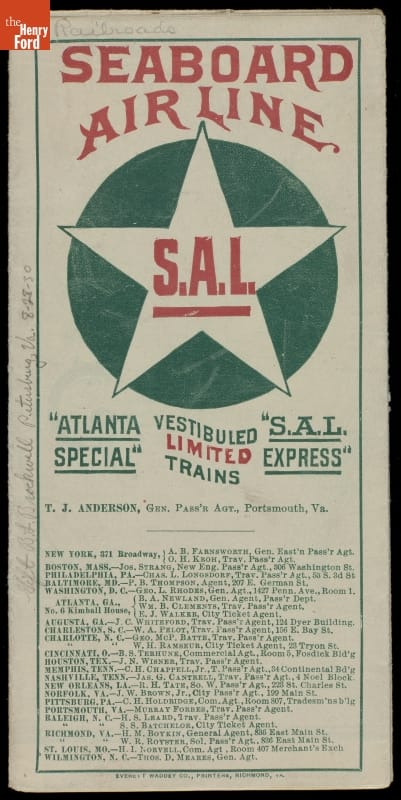
- Seaboard Air Line Railway Schedule, 1897 - The Seaboard Air Line Railway was formed in 1900 through the consolidation of several southern lines. At its peak, SAL covered 4,500 miles with tracks that stretched from Virginia to Alabama and Florida. "Air Line" was clever marketing, suggesting that SAL's routes were more direct than its competitors'. The company merged with the parallel Atlantic Coast Line Railroad in 1967.
- July 01, 1897
- Collections - Artifact
Seaboard Air Line Railway Schedule, 1897
The Seaboard Air Line Railway was formed in 1900 through the consolidation of several southern lines. At its peak, SAL covered 4,500 miles with tracks that stretched from Virginia to Alabama and Florida. "Air Line" was clever marketing, suggesting that SAL's routes were more direct than its competitors'. The company merged with the parallel Atlantic Coast Line Railroad in 1967.
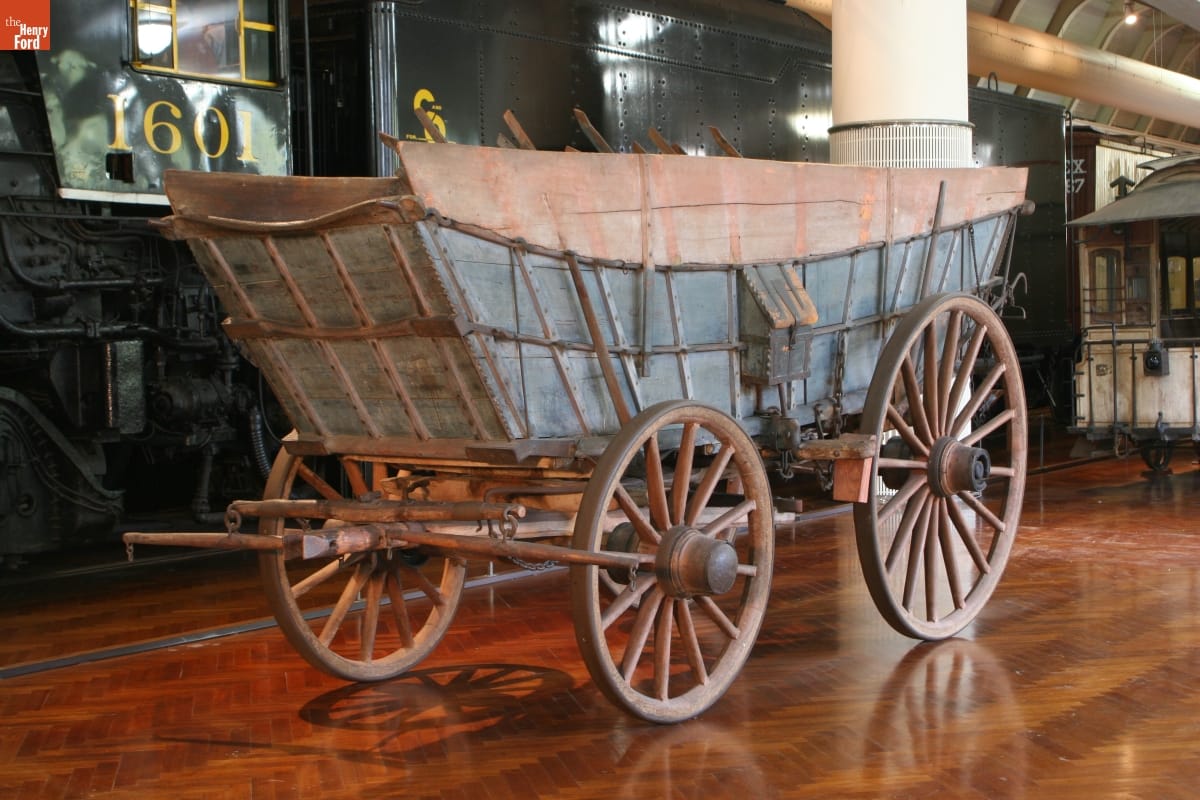
- Conestoga Wagon, circa 1840 - Conestoga wagons first appeared in Pennsylvania's Conestoga River valley about 1750. Designed for freight, the Conestoga's curved body tended to keep the load in the center, rather than shifting it toward the rear. The Conestoga's popularity peaked in the first half of the 19th century -- before railroads replaced it for hauling agricultural products and manufactured goods.
- circa 1840
- Collections - Artifact
Conestoga Wagon, circa 1840
Conestoga wagons first appeared in Pennsylvania's Conestoga River valley about 1750. Designed for freight, the Conestoga's curved body tended to keep the load in the center, rather than shifting it toward the rear. The Conestoga's popularity peaked in the first half of the 19th century -- before railroads replaced it for hauling agricultural products and manufactured goods.
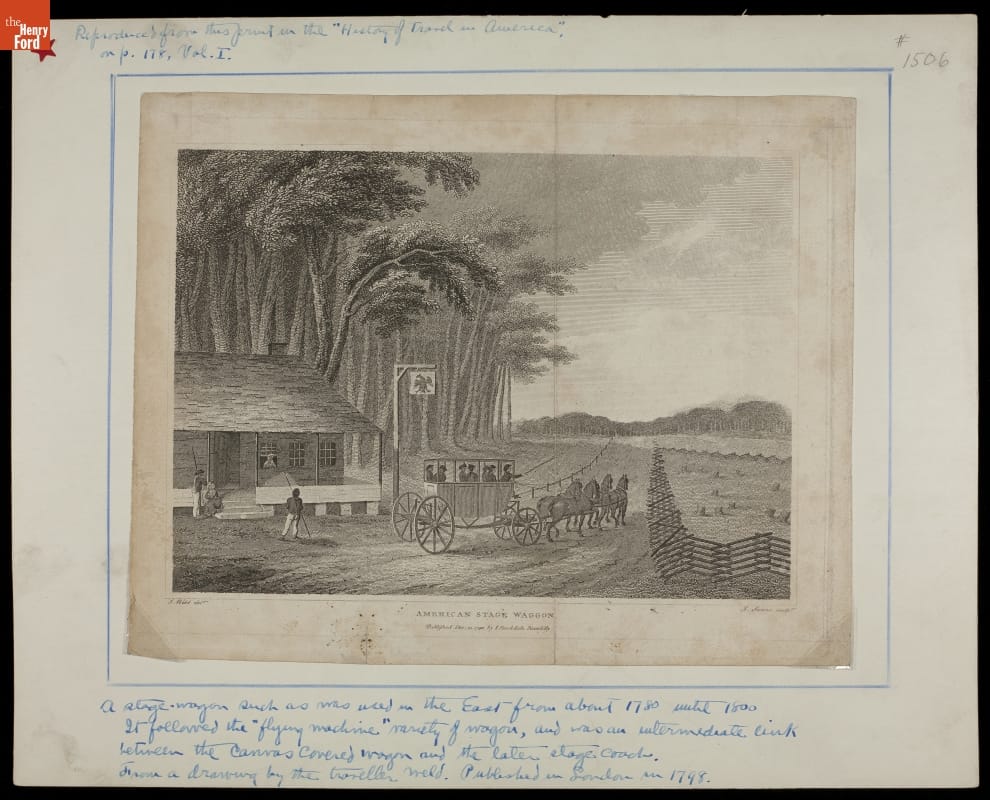
- Engraving, "American Stage Wagon," Published December 21, 1798 - Stage wagons were light and open, though not as comfortable as later Concord stagecoaches. They could go about five miles per hour, barring bad weather or road obstructions. The gaily painted signboards of roadside taverns beckoned weary travelers, promising rest, meals, and a chance to catch up on news. Stage wagon drivers used the stop to care for their horses.
- December 21, 1798
- Collections - Artifact
Engraving, "American Stage Wagon," Published December 21, 1798
Stage wagons were light and open, though not as comfortable as later Concord stagecoaches. They could go about five miles per hour, barring bad weather or road obstructions. The gaily painted signboards of roadside taverns beckoned weary travelers, promising rest, meals, and a chance to catch up on news. Stage wagon drivers used the stop to care for their horses.
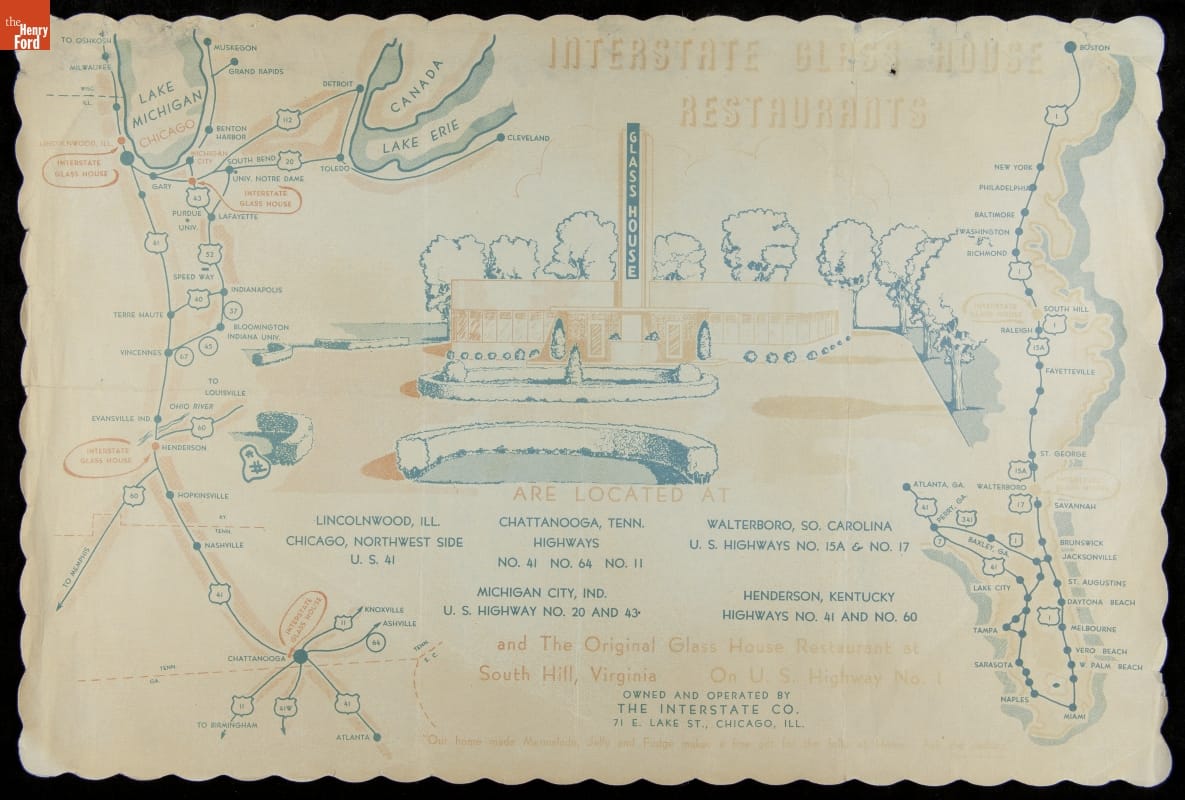
- Placemat, Interstate Glass House Restaurant, circa 1950 -
- circa 1950
- Collections - Artifact
Placemat, Interstate Glass House Restaurant, circa 1950
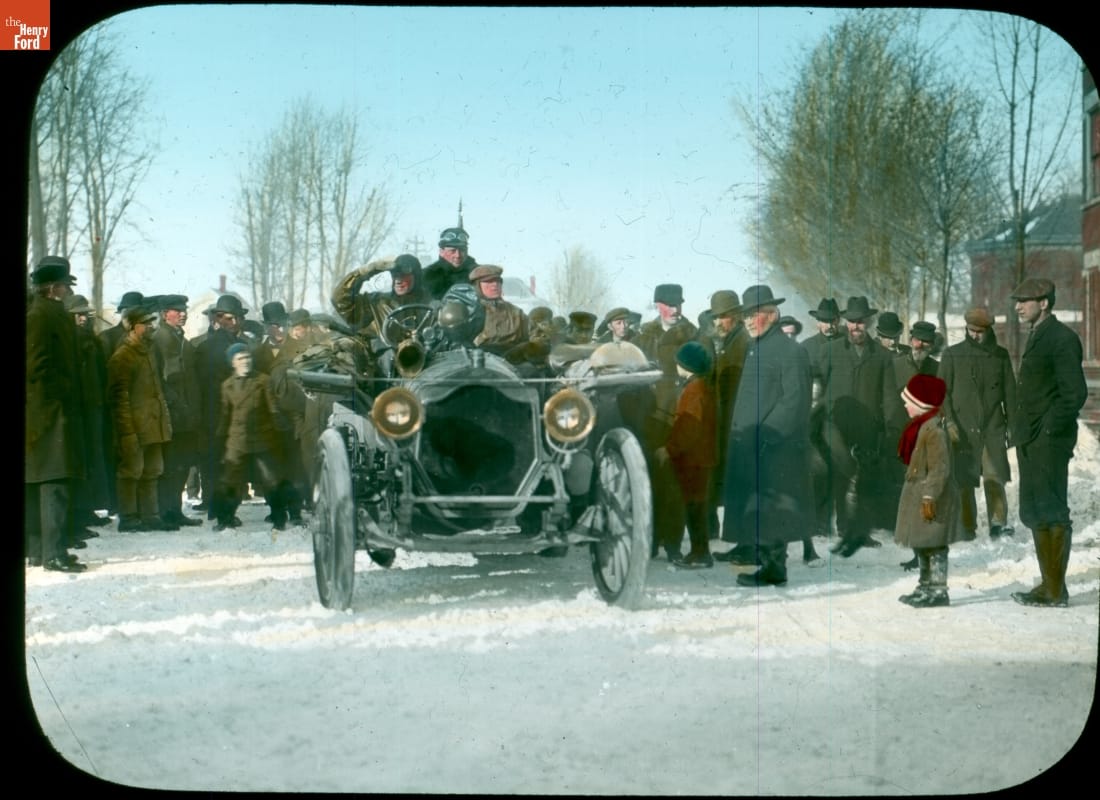
- Thomas Flyer Draws a Crowd in the Snow during the New York to Paris Race, Eastern United States, 1908 - In 1908, six automobiles raced around the globe from New York City to Paris, France. The contest took 169 days, covered 22,000 miles and spanned three continents. The cars and their racing teams had to endure cold, snow, mud, poor roads and other hardships. This image shows the American team in their Thomas Flyer on a passable snow-covered road.
- 1908
- Collections - Artifact
Thomas Flyer Draws a Crowd in the Snow during the New York to Paris Race, Eastern United States, 1908
In 1908, six automobiles raced around the globe from New York City to Paris, France. The contest took 169 days, covered 22,000 miles and spanned three continents. The cars and their racing teams had to endure cold, snow, mud, poor roads and other hardships. This image shows the American team in their Thomas Flyer on a passable snow-covered road.