
Search
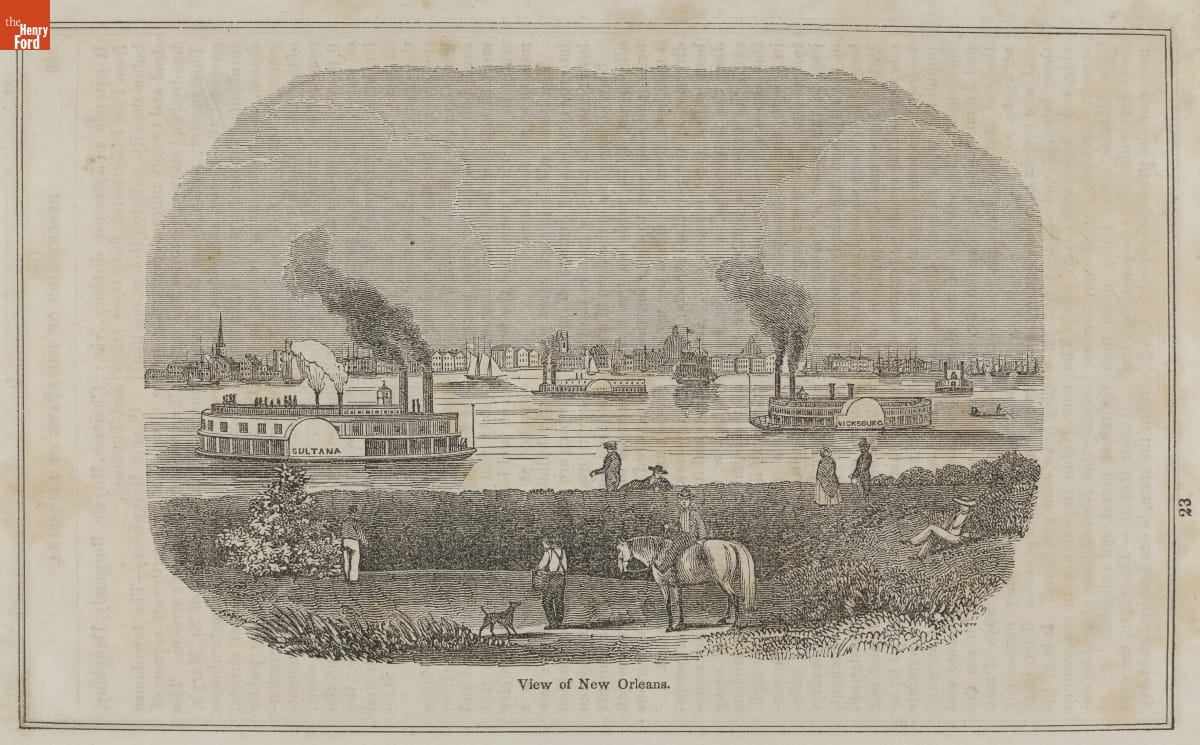
- Wood Engraving, "View of New Orleans," circa 1850 -
- circa 1850
- Collections - Artifact
Wood Engraving, "View of New Orleans," circa 1850
- Record Album, "Negro Prison Songs," 1958 - Folklorist Alan Lomax, believing all people and cultures deserved equal respect, spent his career documenting remote musical traditions. This record's powerful songs, collected 1947-8 at the Mississippi State Penitentiary, attest to the parallels between the Deep South's oppressive prison system--requiring arduous physical labor under constant threat of physical punishment--and the experiences of enslaved work groups on 19th-century plantations.

- 1947
- Collections - Artifact
Record Album, "Negro Prison Songs," 1958
Folklorist Alan Lomax, believing all people and cultures deserved equal respect, spent his career documenting remote musical traditions. This record's powerful songs, collected 1947-8 at the Mississippi State Penitentiary, attest to the parallels between the Deep South's oppressive prison system--requiring arduous physical labor under constant threat of physical punishment--and the experiences of enslaved work groups on 19th-century plantations.
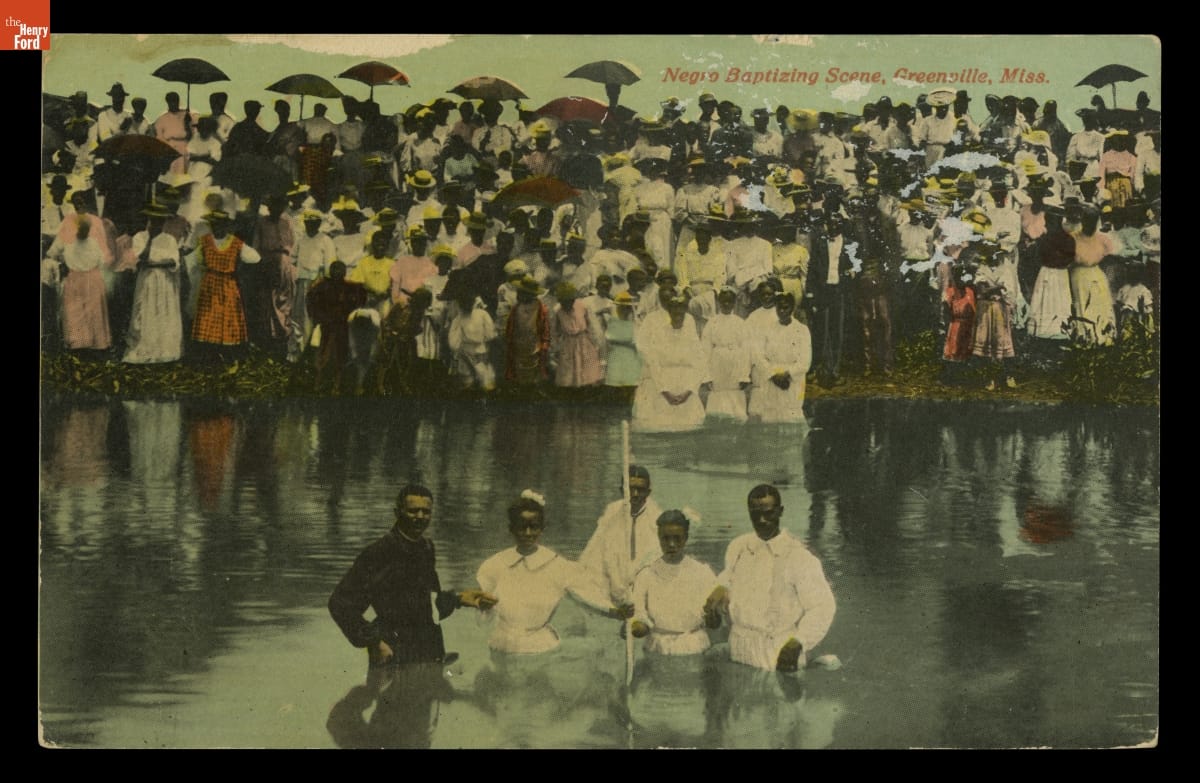
- "Negro Baptizing Scene, Greenville, Miss.," Postcard, circa 1915 -
- circa 1915
- Collections - Artifact
"Negro Baptizing Scene, Greenville, Miss.," Postcard, circa 1915
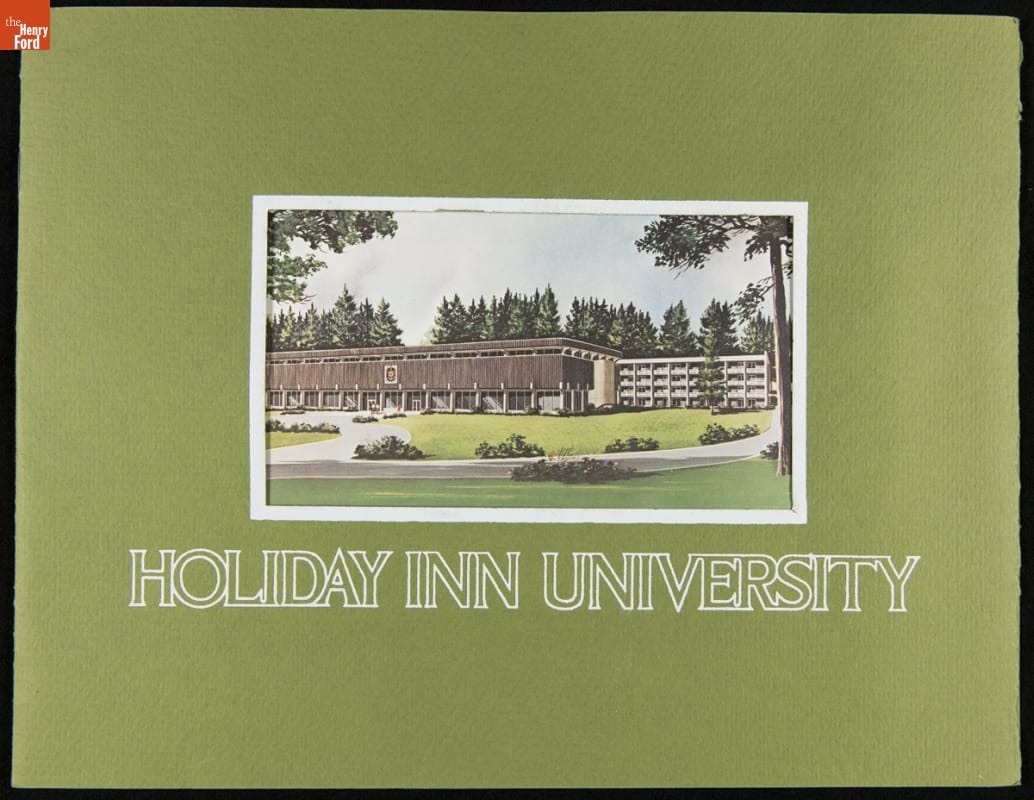
- Holiday Inn University, 1971 - Consistent, quality service and amenities made the first Holiday Inns successful in the 1950s. As the motel chain expanded, a rigorous training program helped maintain high standards. All property managers, called "Innkeepers," attended mandatory training courses near Holiday Inns' headquarters in Memphis, Tennessee. The company built Holiday Inn University, a complete campus for manager training, in 1971.
- 1971
- Collections - Artifact
Holiday Inn University, 1971
Consistent, quality service and amenities made the first Holiday Inns successful in the 1950s. As the motel chain expanded, a rigorous training program helped maintain high standards. All property managers, called "Innkeepers," attended mandatory training courses near Holiday Inns' headquarters in Memphis, Tennessee. The company built Holiday Inn University, a complete campus for manager training, in 1971.
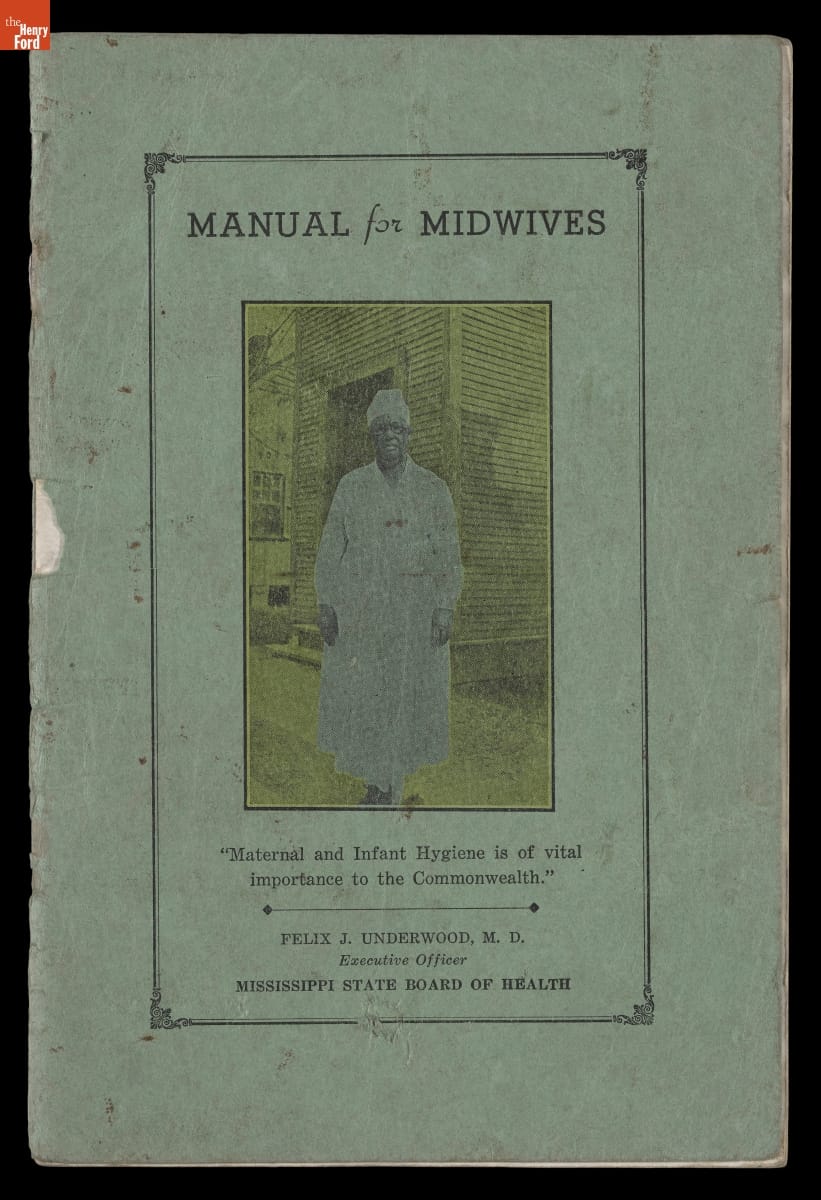
- "Manual for Midwives," circa 1935 - At the turn of 20th century, Southern midwives--many of whom were Black women with little formal education--faced discrimination from the medical establishment. In 1920s and 1930s, public health officials established training programs to "modernize" midwifery at the cost of traditional practices. The state of Mississippi made this manual to teach midwives nursing skills that standardized care for expectant mothers
- circa 1935
- Collections - Artifact
"Manual for Midwives," circa 1935
At the turn of 20th century, Southern midwives--many of whom were Black women with little formal education--faced discrimination from the medical establishment. In 1920s and 1930s, public health officials established training programs to "modernize" midwifery at the cost of traditional practices. The state of Mississippi made this manual to teach midwives nursing skills that standardized care for expectant mothers
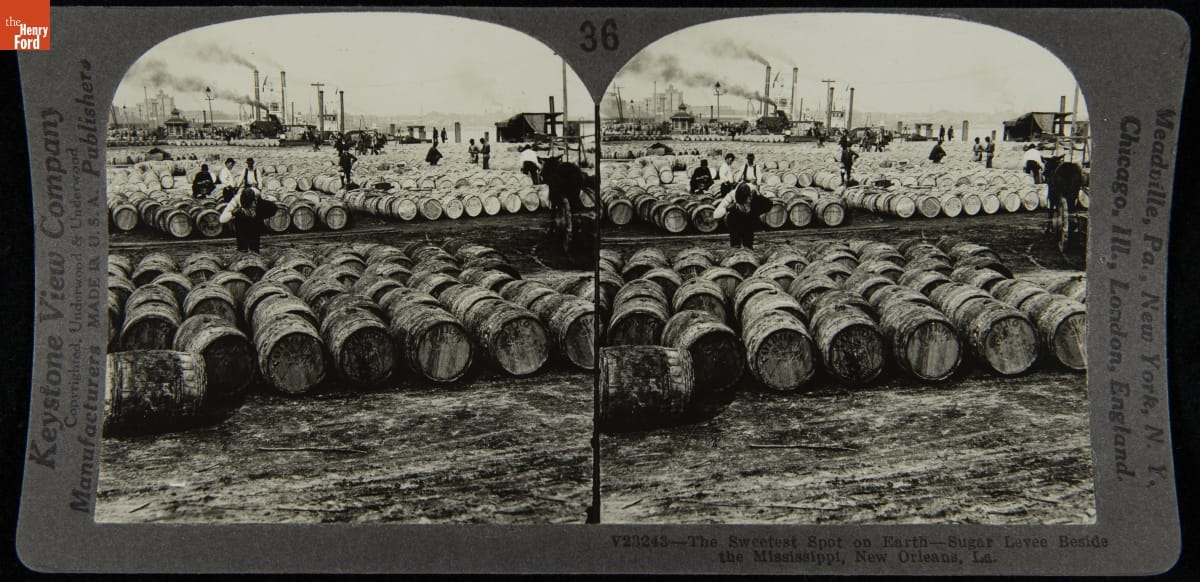
- The Sweetest Spot on Earth, Sugar Levee Beside the Mississippi, New Orleans, La. -
- Collections - Artifact
The Sweetest Spot on Earth, Sugar Levee Beside the Mississippi, New Orleans, La.
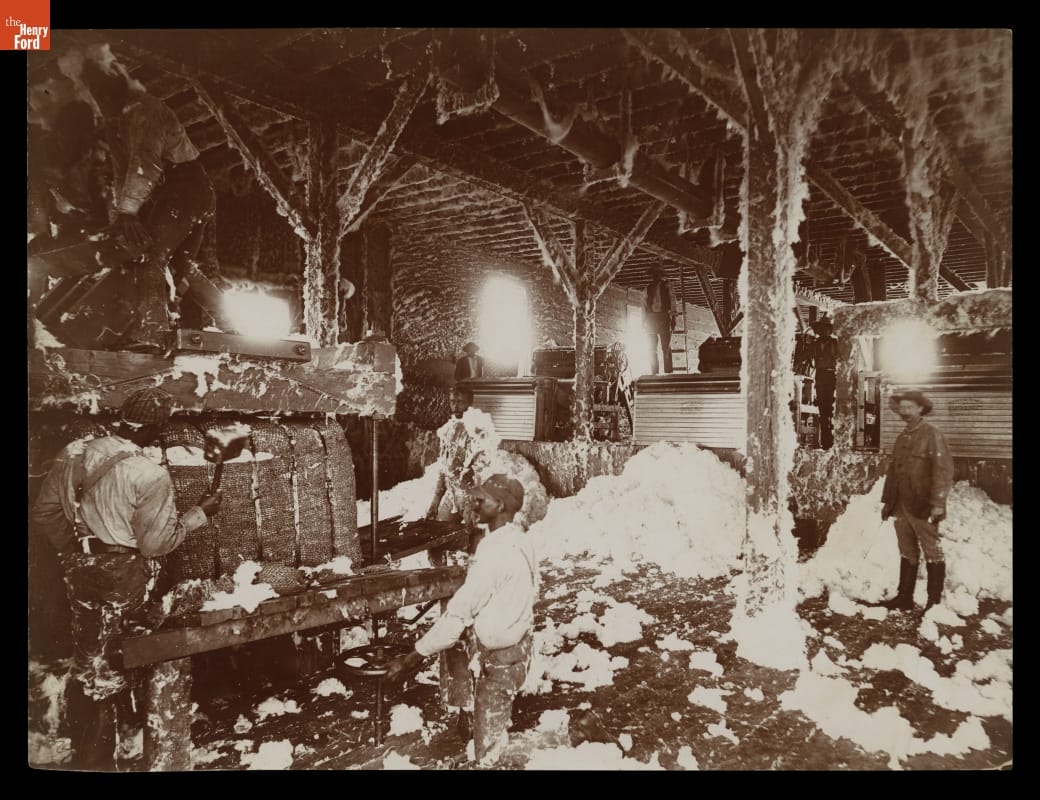
- Cotton Gin at Dahomy, Mississippi, 1899 - Mechanical cotton gins separated billions of pounds of fiber from seed in the late 19th century to meet textile-factory demand. William Henry Jackson of the Detroit Publishing Company captured a typical scene inside a Mississippi cotton gin in 1899. It shows three gin stands with engineers standing close by, and other men compressing fiber into a 500-pound cotton bale.
- 1899
- Collections - Artifact
Cotton Gin at Dahomy, Mississippi, 1899
Mechanical cotton gins separated billions of pounds of fiber from seed in the late 19th century to meet textile-factory demand. William Henry Jackson of the Detroit Publishing Company captured a typical scene inside a Mississippi cotton gin in 1899. It shows three gin stands with engineers standing close by, and other men compressing fiber into a 500-pound cotton bale.
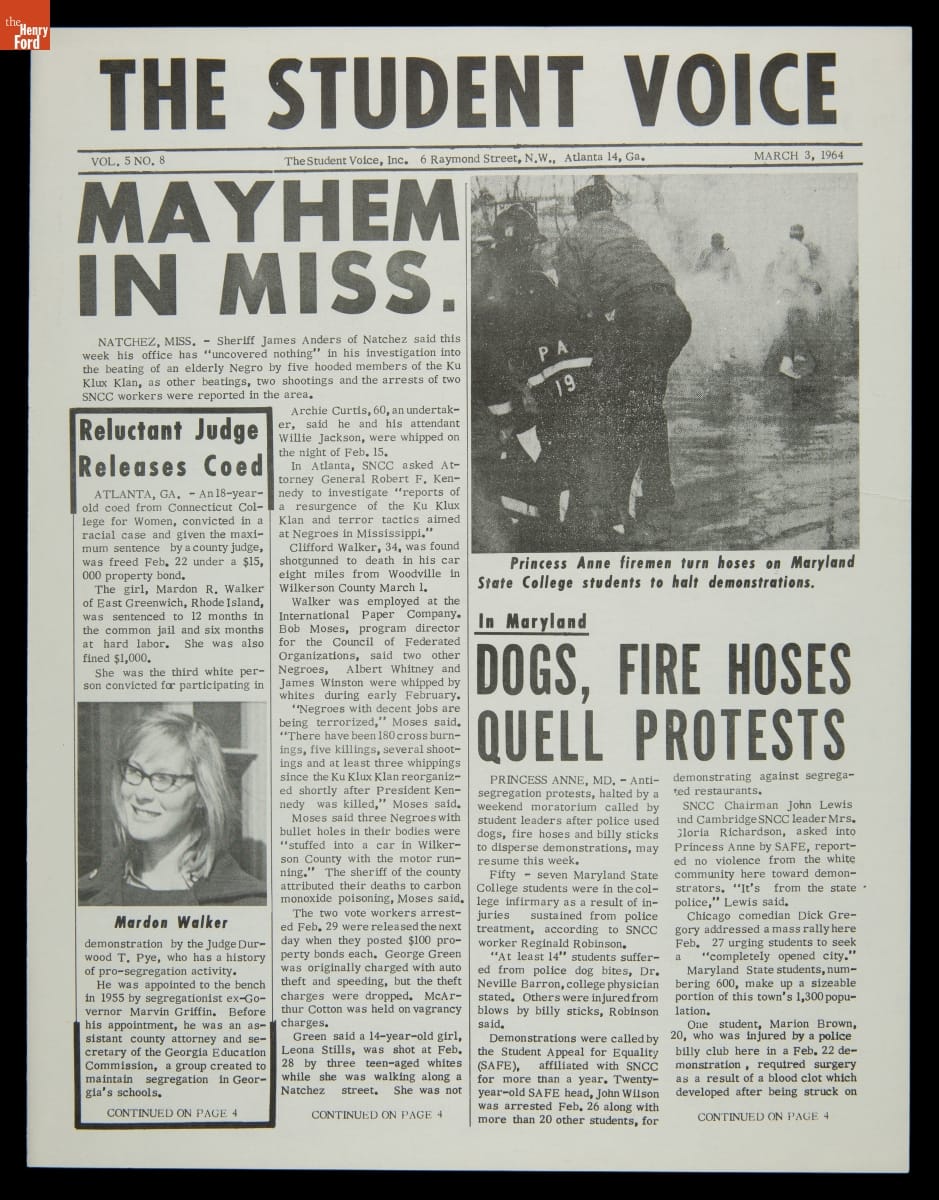
- "The Student Voice," Vol. 5, No. 8, March 3, 1964 -
- March 03, 1964
- Collections - Artifact
"The Student Voice," Vol. 5, No. 8, March 3, 1964
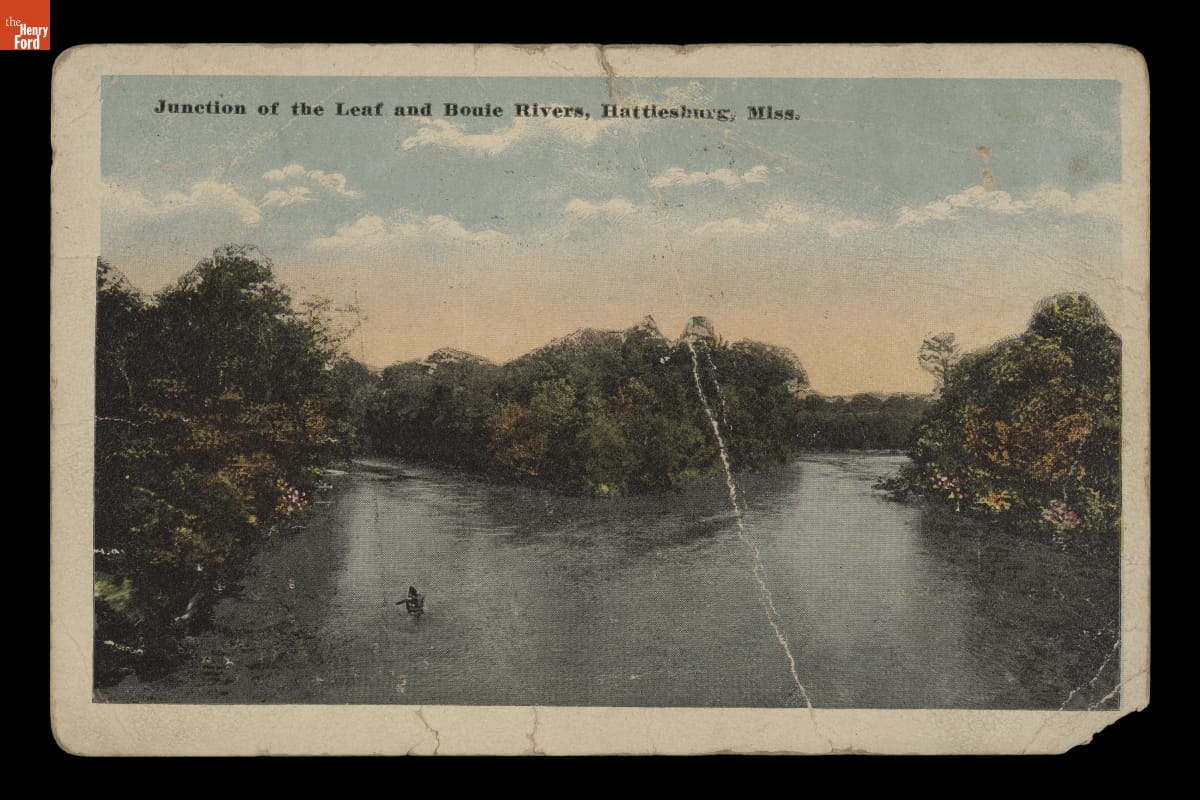
- "Junction of Leaf and Bouie River, Hattiesburg, Miss.," Sent to Andrew Purnell, 1916 - Andrew Purnell Jr. (1898-1975) was born in Selma, Alabama. He served in France during World War I and returned home in 1919. He married and later moved to Mobile, where he worked as a railroad freight handler. Purnell exchanged postcards with family and friends, corresponding with those who were close to him. He received this postcard before he served in the U.S. Army.
- 1916
- Collections - Artifact
"Junction of Leaf and Bouie River, Hattiesburg, Miss.," Sent to Andrew Purnell, 1916
Andrew Purnell Jr. (1898-1975) was born in Selma, Alabama. He served in France during World War I and returned home in 1919. He married and later moved to Mobile, where he worked as a railroad freight handler. Purnell exchanged postcards with family and friends, corresponding with those who were close to him. He received this postcard before he served in the U.S. Army.
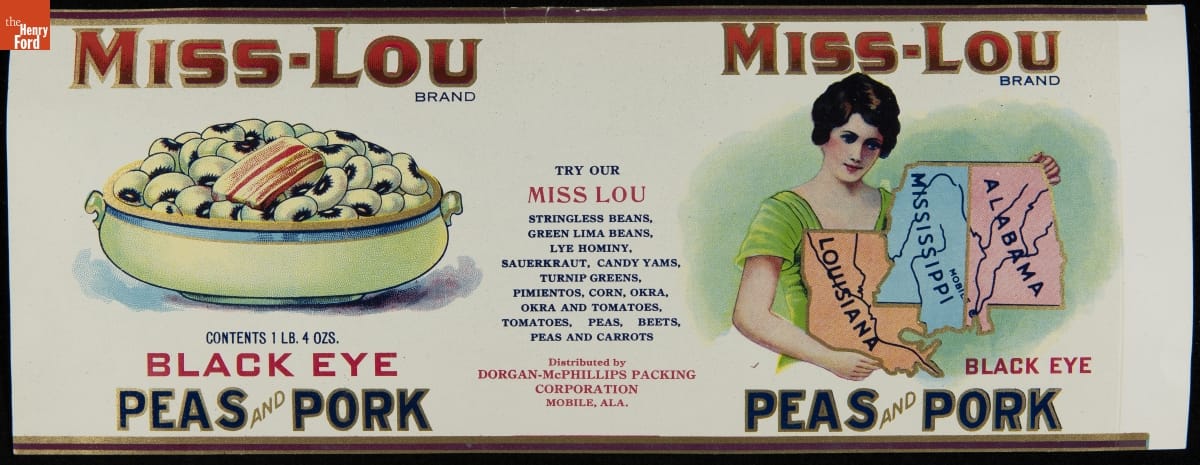
- Can Label for Miss-Lou Brand Black Eye Peas and Pork, 1930-1939 -
- 1930-1939
- Collections - Artifact
Can Label for Miss-Lou Brand Black Eye Peas and Pork, 1930-1939