
Search
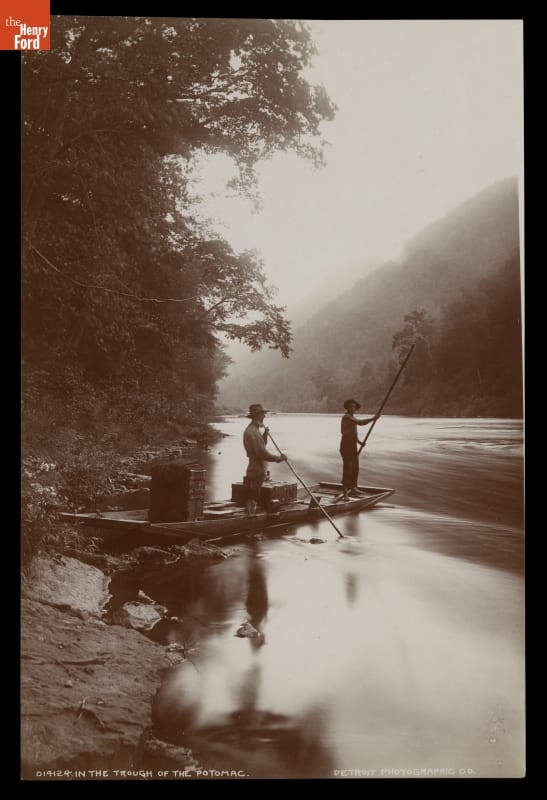
- Boating in the Trough of the Potomac, Maryland, 1890 - From 1895 to 1924, the Detroit Publishing Company was one of the major image publishers in the world. The company's wide-ranging stock of original photographs documented life and landscapes from across the nation and around the globe. From the tens of thousands of negatives, the company created prints, postcards, lantern slides, panoramas, and other merchandise for sale to educators, businessmen, advertisers, homeowners and travelers.
- 1890
- Collections - Artifact
Boating in the Trough of the Potomac, Maryland, 1890
From 1895 to 1924, the Detroit Publishing Company was one of the major image publishers in the world. The company's wide-ranging stock of original photographs documented life and landscapes from across the nation and around the globe. From the tens of thousands of negatives, the company created prints, postcards, lantern slides, panoramas, and other merchandise for sale to educators, businessmen, advertisers, homeowners and travelers.
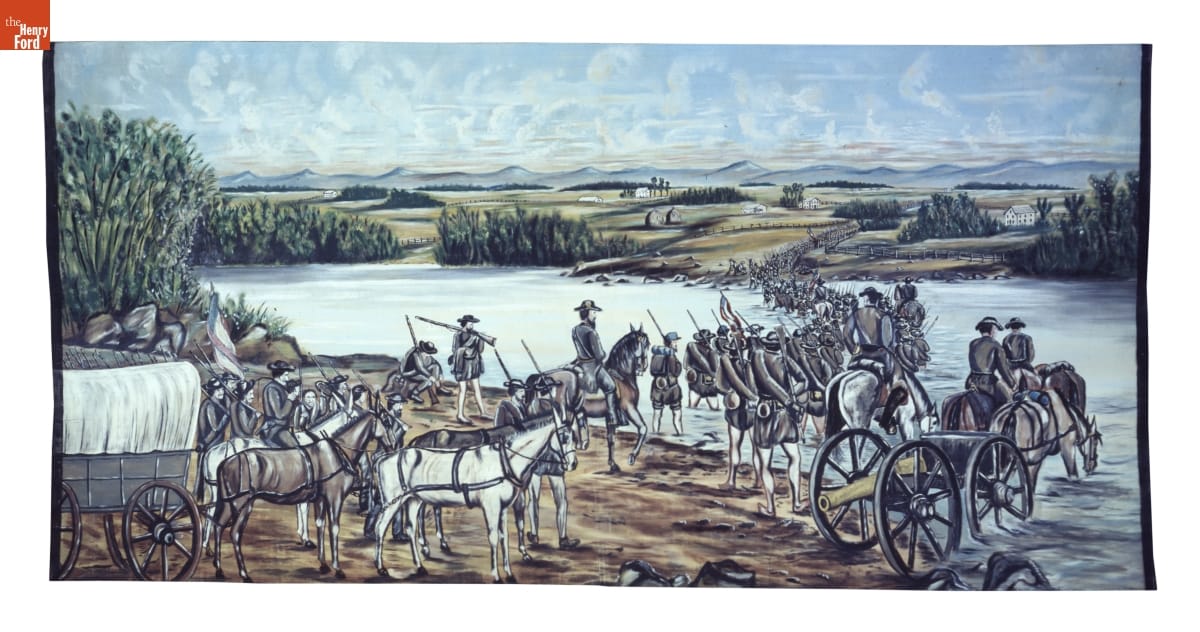
- "Battle Scenes of the Rebellion" Jackson's Forces Crossing the Potomac at White's Ford, Civil War Panorama - In the 1880s, Thomas Clarkson Gordon, a self-taught artist and Civil War veteran, created a panorama depicting scenes from the Civil War. Gordon stitched together 15 paintings -- each 7 by 14 feet -- into a canvas roll more than 100 feet long. He toured his multi-paneled panorama throughout eastern Indiana, retelling the history of the conflict through his vivid illustrations.
- October 10, 1862
- Collections - Artifact
"Battle Scenes of the Rebellion" Jackson's Forces Crossing the Potomac at White's Ford, Civil War Panorama
In the 1880s, Thomas Clarkson Gordon, a self-taught artist and Civil War veteran, created a panorama depicting scenes from the Civil War. Gordon stitched together 15 paintings -- each 7 by 14 feet -- into a canvas roll more than 100 feet long. He toured his multi-paneled panorama throughout eastern Indiana, retelling the history of the conflict through his vivid illustrations.
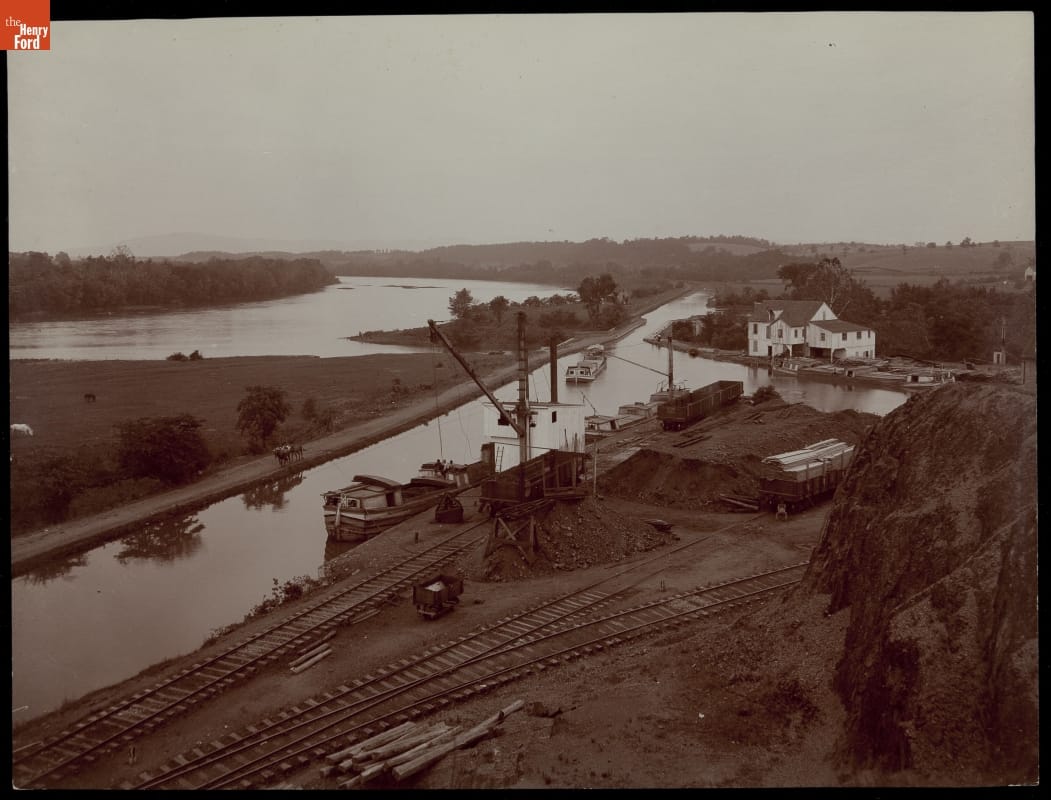
- Potomac River at Williamsport, Maryland, 1900-1906 - President George Washington was devoted to improving the Potomac, the only river bisecting the Appalachian mountain barrier and an important trade route. Americans have continued work on the waterway, constructing canals to allow for the passage of rafts and boats. This Detroit Publishing Company photograph shows the river, a lateral canal, and tracks connecting waterway to railway.
- 1900-1906
- Collections - Artifact
Potomac River at Williamsport, Maryland, 1900-1906
President George Washington was devoted to improving the Potomac, the only river bisecting the Appalachian mountain barrier and an important trade route. Americans have continued work on the waterway, constructing canals to allow for the passage of rafts and boats. This Detroit Publishing Company photograph shows the river, a lateral canal, and tracks connecting waterway to railway.
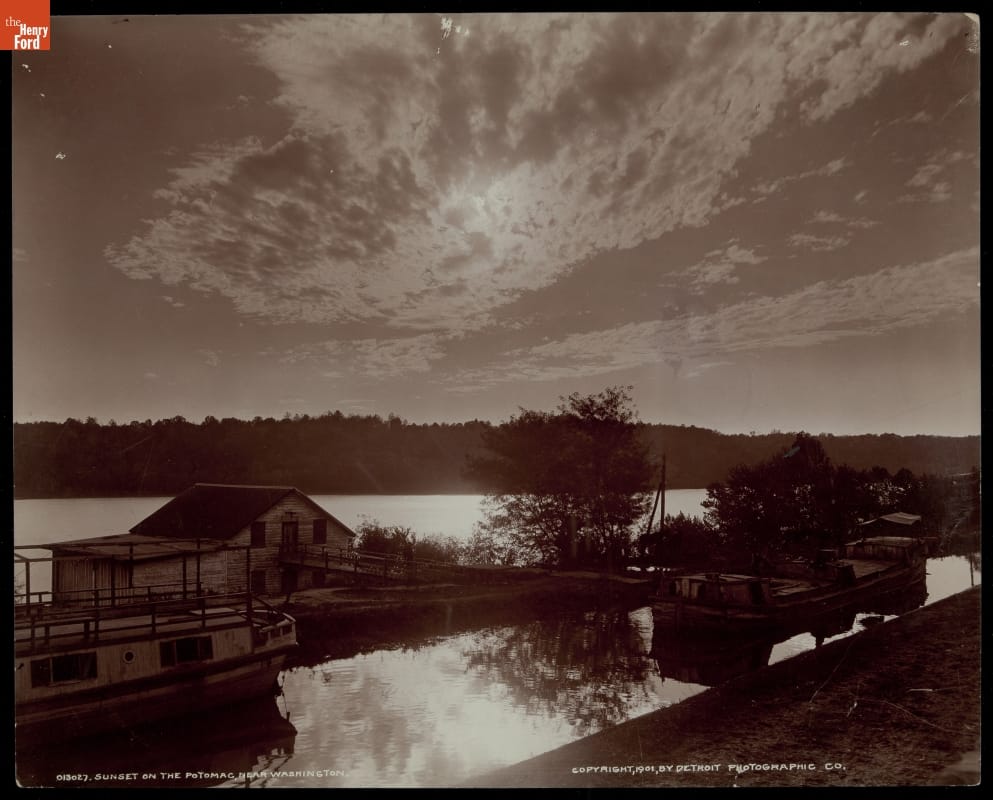
- Sunset on the Potomac River, near Washington D.C., circa 1901 - From 1895 to 1924, the Detroit Publishing Company was one of the major image publishers in the world. The company had a wide-ranging stock of original photographs, including many scenes from across North America. Here, boats use a canal paralleling the Potomac River.
- circa 1901
- Collections - Artifact
Sunset on the Potomac River, near Washington D.C., circa 1901
From 1895 to 1924, the Detroit Publishing Company was one of the major image publishers in the world. The company had a wide-ranging stock of original photographs, including many scenes from across North America. Here, boats use a canal paralleling the Potomac River.
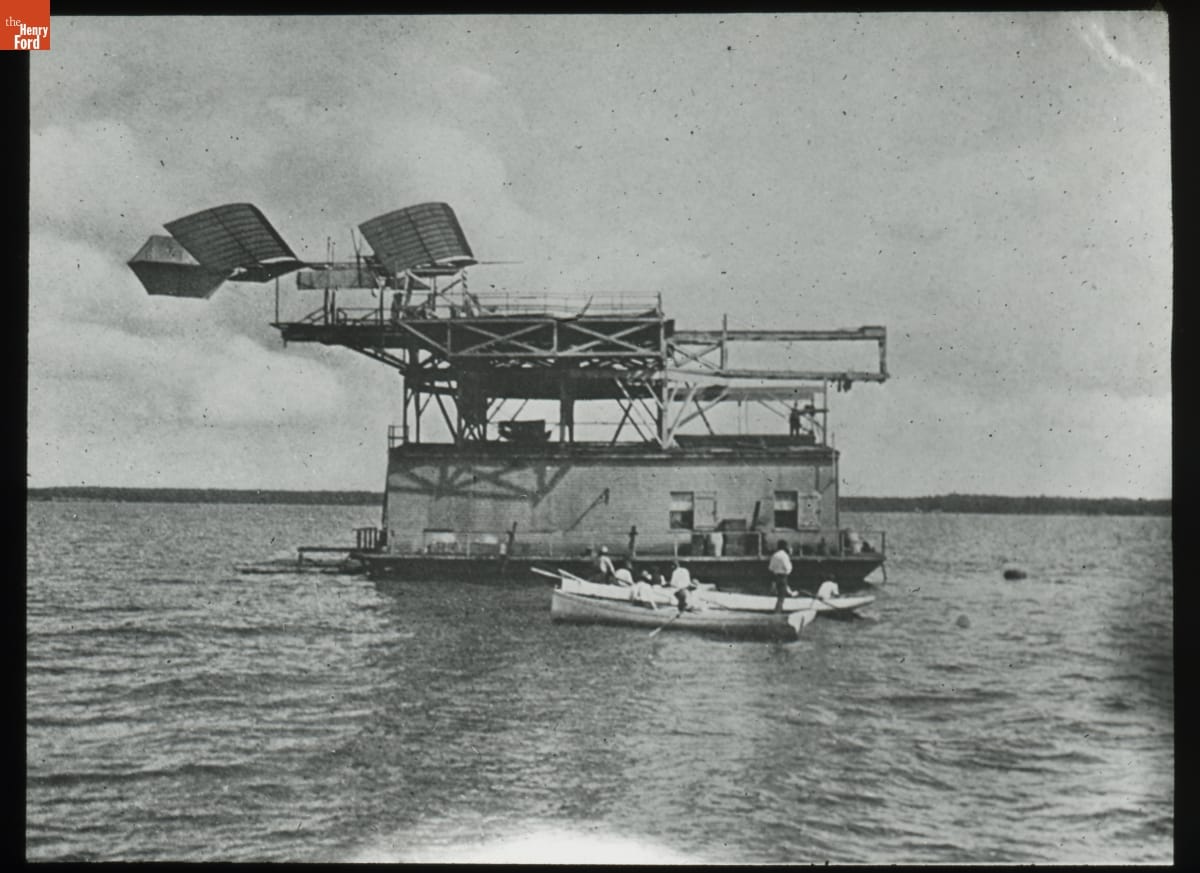
- "Langley Aerodrome," 1896 - Samuel Pierpont Langley, Secretary of the Smithsonian Institution, experimented successfully with unpiloted, steam-powered Aerodromes like the one seen here. He launched his aircraft from a houseboat on the Potomac River. Langley later designed a piloted, gasoline-powered version he called the Great Aerodrome, but two attempts to fly it in 1903 ended quickly with crashes into the river.
- 1896
- Collections - Artifact
"Langley Aerodrome," 1896
Samuel Pierpont Langley, Secretary of the Smithsonian Institution, experimented successfully with unpiloted, steam-powered Aerodromes like the one seen here. He launched his aircraft from a houseboat on the Potomac River. Langley later designed a piloted, gasoline-powered version he called the Great Aerodrome, but two attempts to fly it in 1903 ended quickly with crashes into the river.
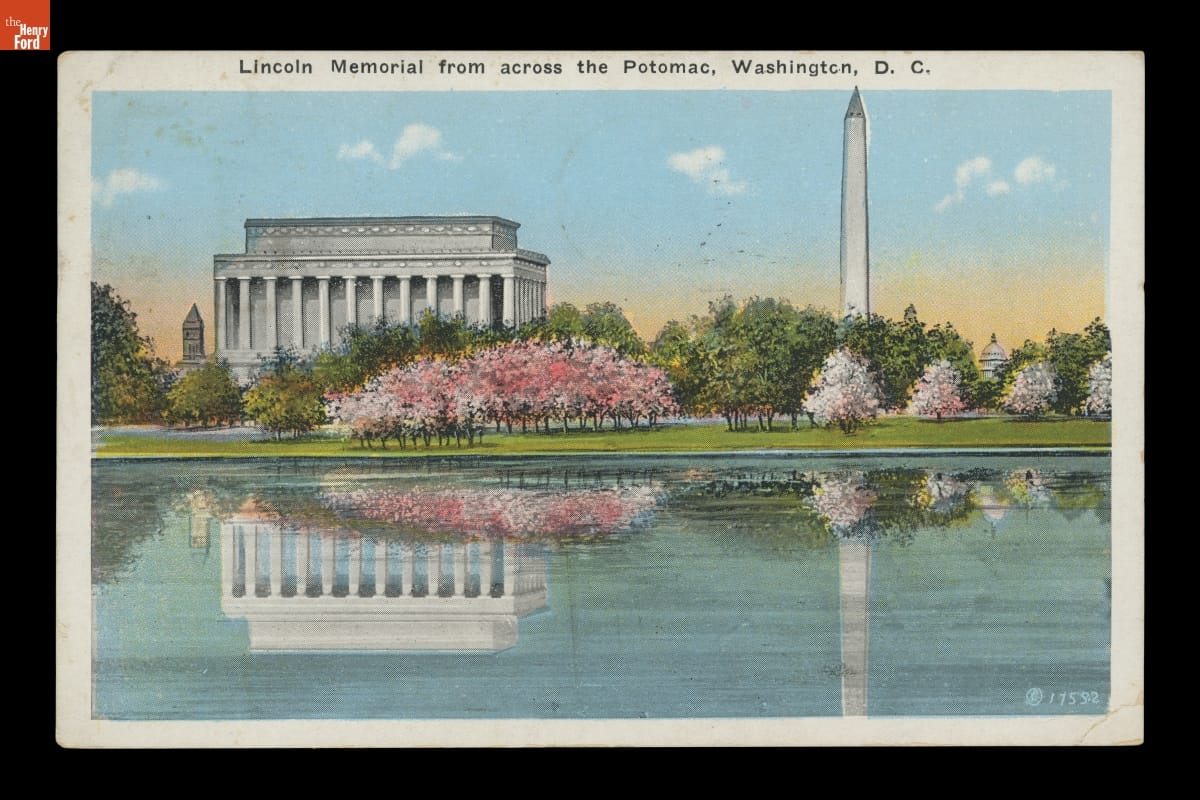
- "Lincoln Memorial from Across the Potomac, Washington, D.C." -
- Collections - Artifact
"Lincoln Memorial from Across the Potomac, Washington, D.C."
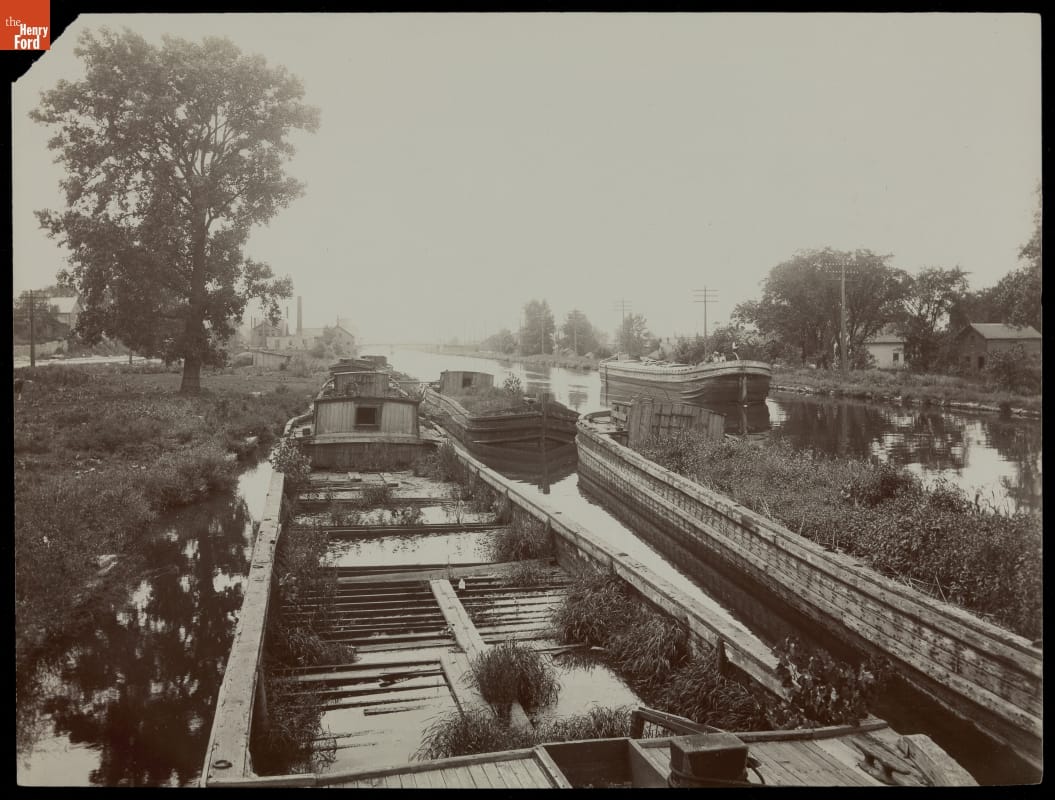
- Old Canal Boats at Lockport, Illinois, 1900-1906 - Opened in 1848, the 96-mile Illinois & Michigan Canal connected the Great Lakes with the Mississippi River, by way of the Chicago and Illinois Rivers. The canal's headquarters were in Lockport, Illinois, about 30 miles southwest of Chicago. This Detroit Publishing Company photograph shows canal boats there at the turn of the 20th century.
- 1900-1906
- Collections - Artifact
Old Canal Boats at Lockport, Illinois, 1900-1906
Opened in 1848, the 96-mile Illinois & Michigan Canal connected the Great Lakes with the Mississippi River, by way of the Chicago and Illinois Rivers. The canal's headquarters were in Lockport, Illinois, about 30 miles southwest of Chicago. This Detroit Publishing Company photograph shows canal boats there at the turn of the 20th century.
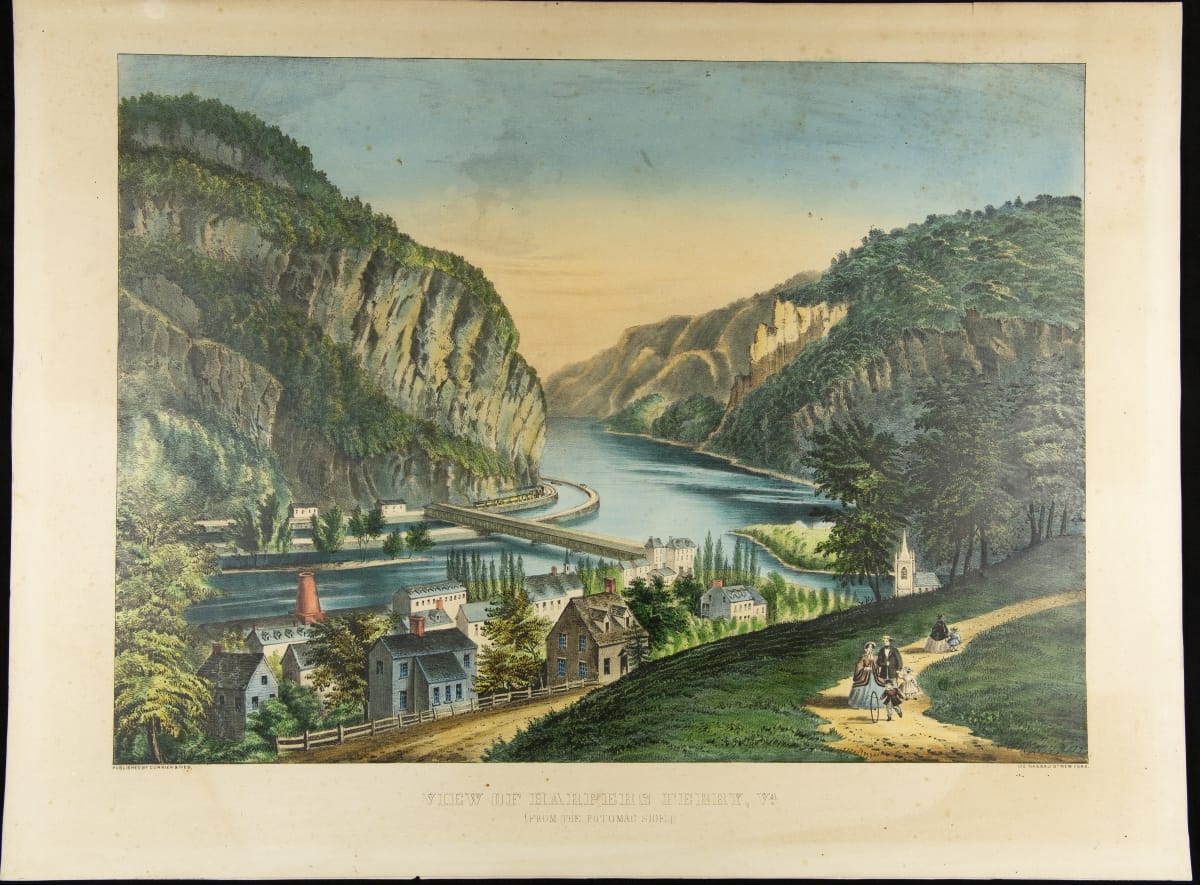
- View of Harpers Ferry, Va., circa 1860 - Harpers Ferry, Virginia, nestled between the Potomac and Shenandoah Rivers, was an important manufacturing and milling center in the 19th century, and a key transportation hub served by the Chesapeake & Ohio Canal and the Baltimore & Ohio Railroad. The community became a part of West Virginia in 1863 when that new state joined the Union during the Civil War.
- circa 1860
- Collections - Artifact
View of Harpers Ferry, Va., circa 1860
Harpers Ferry, Virginia, nestled between the Potomac and Shenandoah Rivers, was an important manufacturing and milling center in the 19th century, and a key transportation hub served by the Chesapeake & Ohio Canal and the Baltimore & Ohio Railroad. The community became a part of West Virginia in 1863 when that new state joined the Union during the Civil War.