
Search
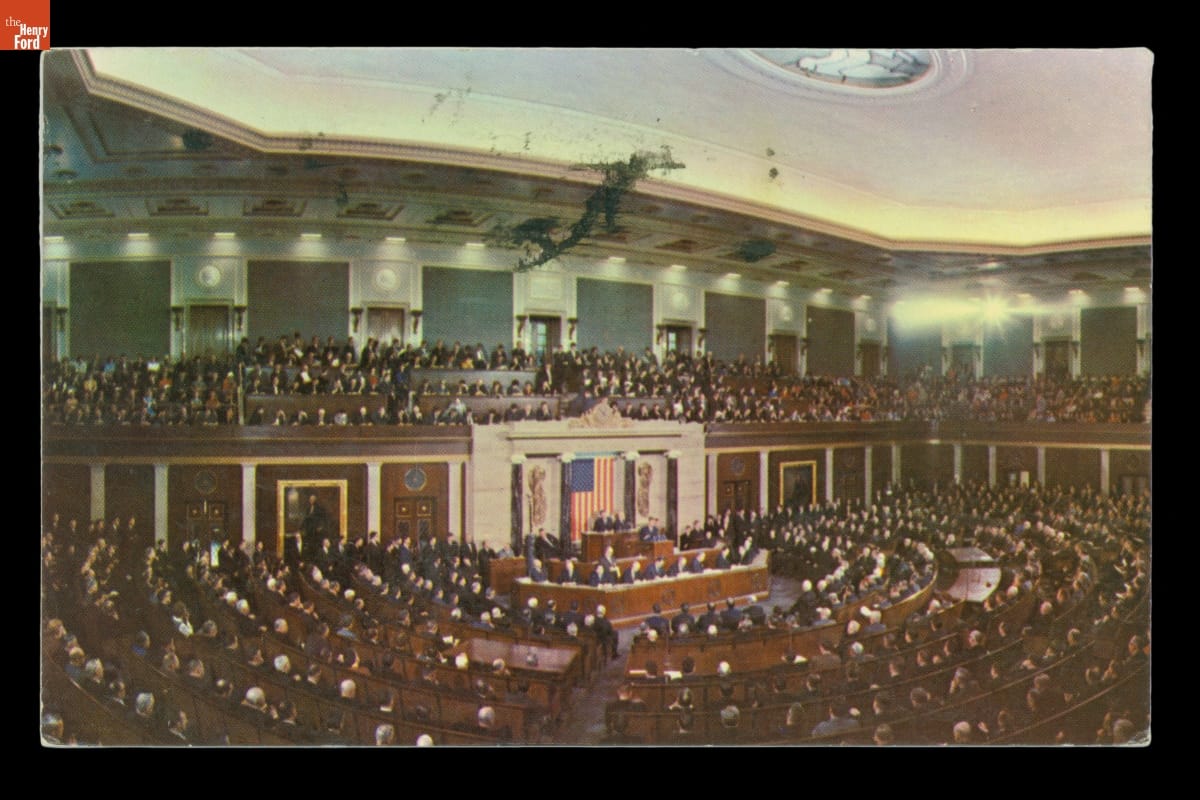
- President Kennedy Addressing a Joint Session of Congress, 1962 or 1963 - This picture postcard -- published by the United States Capitol Historical Society -- depicts President John F. Kennedy delivering a State of the Union message in a Joint Session of Congress during January of 1962 or 1963. It was mailed by Mr. and Mrs. Don Andrews on August 3, 1968, during a two-week vacation to Pennsylvania, Maryland, and Washington, D.C.
- 1962-1963
- Collections - Artifact
President Kennedy Addressing a Joint Session of Congress, 1962 or 1963
This picture postcard -- published by the United States Capitol Historical Society -- depicts President John F. Kennedy delivering a State of the Union message in a Joint Session of Congress during January of 1962 or 1963. It was mailed by Mr. and Mrs. Don Andrews on August 3, 1968, during a two-week vacation to Pennsylvania, Maryland, and Washington, D.C.
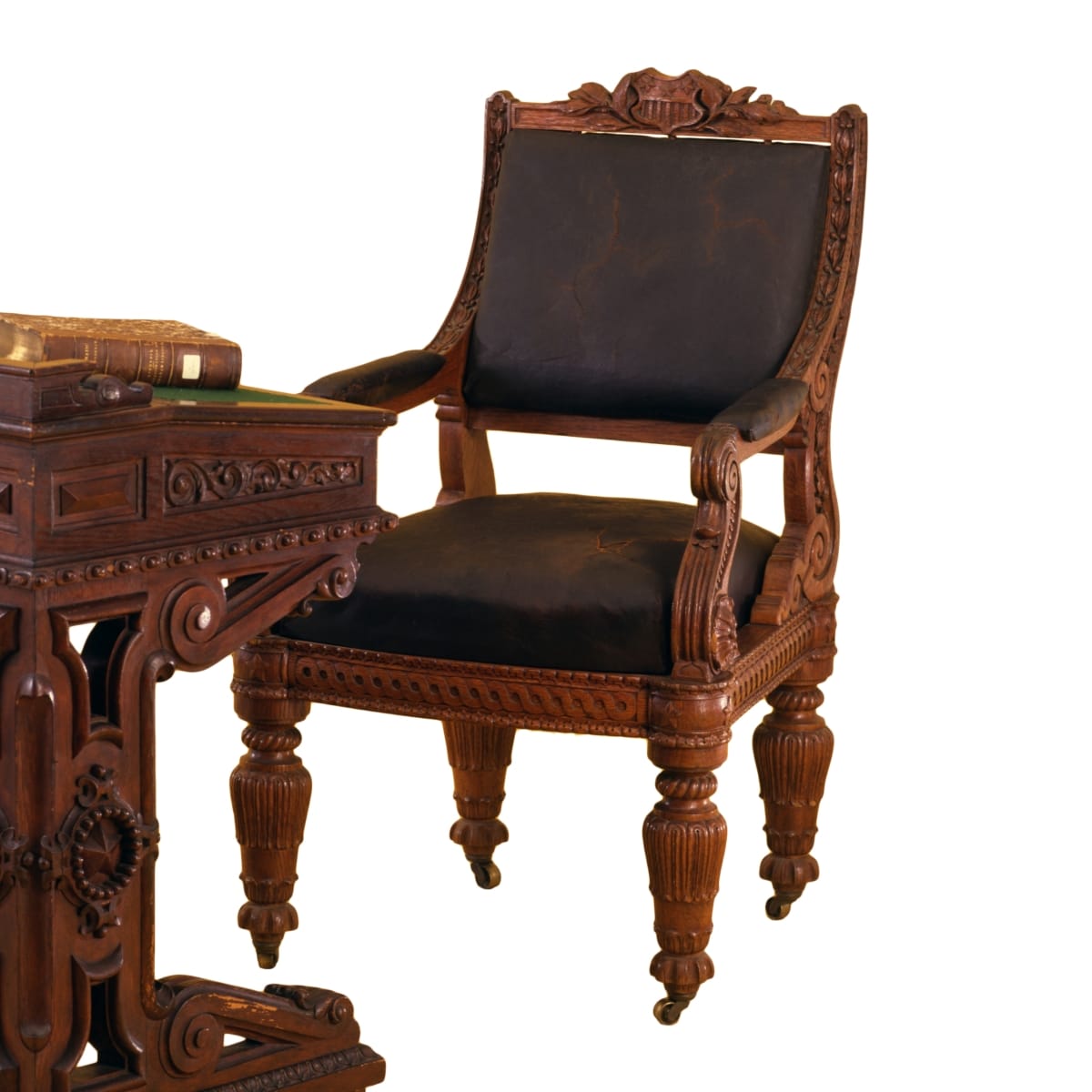
- Armchair Used in the United States House of Representatives, 1857-1873 - Thomas U. Walter, Architect of the Capitol, designed chairs like this one for use in the U.S. House of Representatives in 1857. However, members of the House found these impressive-looking chairs uncomfortable. The chairs were replaced in 1859 -- many sold at auction. Photographers like Mathew Brady and Alexander Gardner obtained these chairs as studio props and they appear in images taken during the 1860s.
- 1857
- Collections - Artifact
Armchair Used in the United States House of Representatives, 1857-1873
Thomas U. Walter, Architect of the Capitol, designed chairs like this one for use in the U.S. House of Representatives in 1857. However, members of the House found these impressive-looking chairs uncomfortable. The chairs were replaced in 1859 -- many sold at auction. Photographers like Mathew Brady and Alexander Gardner obtained these chairs as studio props and they appear in images taken during the 1860s.
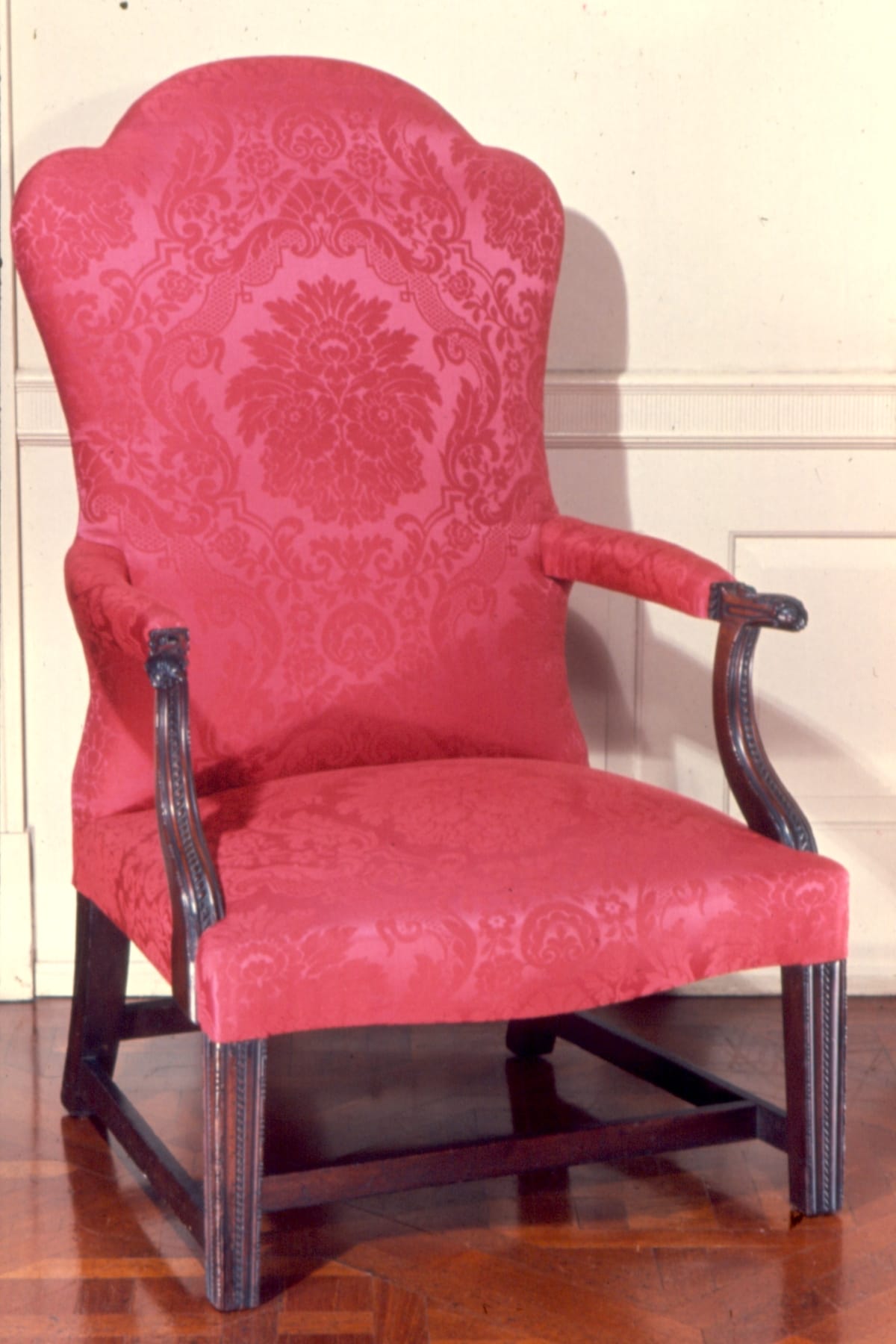
- Speaker's Chair Used in the United States House of Representatives in Philadelphia, 1790-1795 - This chair was made in the early 1790s for either the Speaker of the U.S. House of Representatives or the President of the U.S. Senate, both bodies then located in Philadelphia. We believe that it was later used by the U.S. Supreme Court, along with three similar chairs, now at the Independence National Historical Park, Philadelphia.
- 1790-1795
- Collections - Artifact
Speaker's Chair Used in the United States House of Representatives in Philadelphia, 1790-1795
This chair was made in the early 1790s for either the Speaker of the U.S. House of Representatives or the President of the U.S. Senate, both bodies then located in Philadelphia. We believe that it was later used by the U.S. Supreme Court, along with three similar chairs, now at the Independence National Historical Park, Philadelphia.
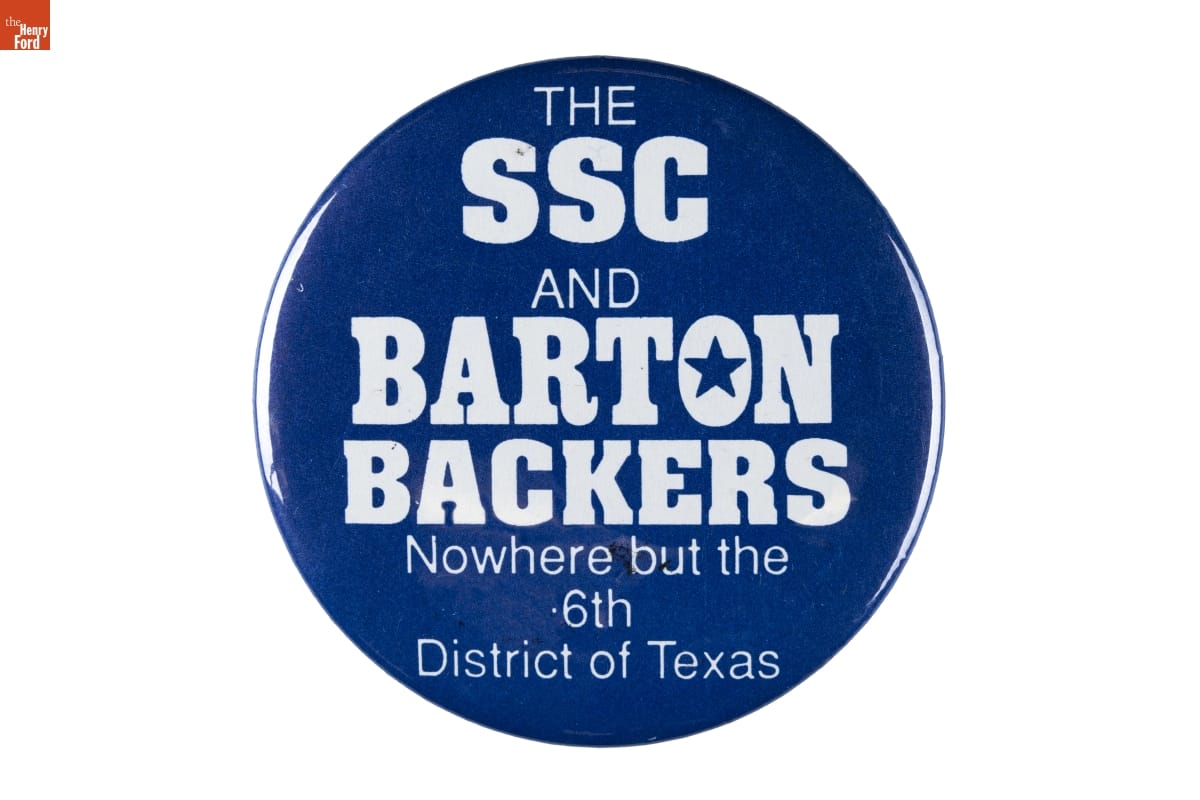
- "The SSC and Barton Backers Nowhere but the 6th District of Texas" Button, 1987-1993 - In the 1980s, several states vied to become the home of the Superconducting Super Collider (SSC), intended as the world's largest particle accelerator. The SSC would have enabled scientists to study the basic particles from which all matter is formed. Planners factored in public support, both positive and negative, before selecting Texas. The project, however, was canceled in 1993.
- 1987-1993
- Collections - Artifact
"The SSC and Barton Backers Nowhere but the 6th District of Texas" Button, 1987-1993
In the 1980s, several states vied to become the home of the Superconducting Super Collider (SSC), intended as the world's largest particle accelerator. The SSC would have enabled scientists to study the basic particles from which all matter is formed. Planners factored in public support, both positive and negative, before selecting Texas. The project, however, was canceled in 1993.
- "A Centennial Fourth of July Democratic Celebration," and United States Congress Debate on the Hamburgh Massacre, 1876 -
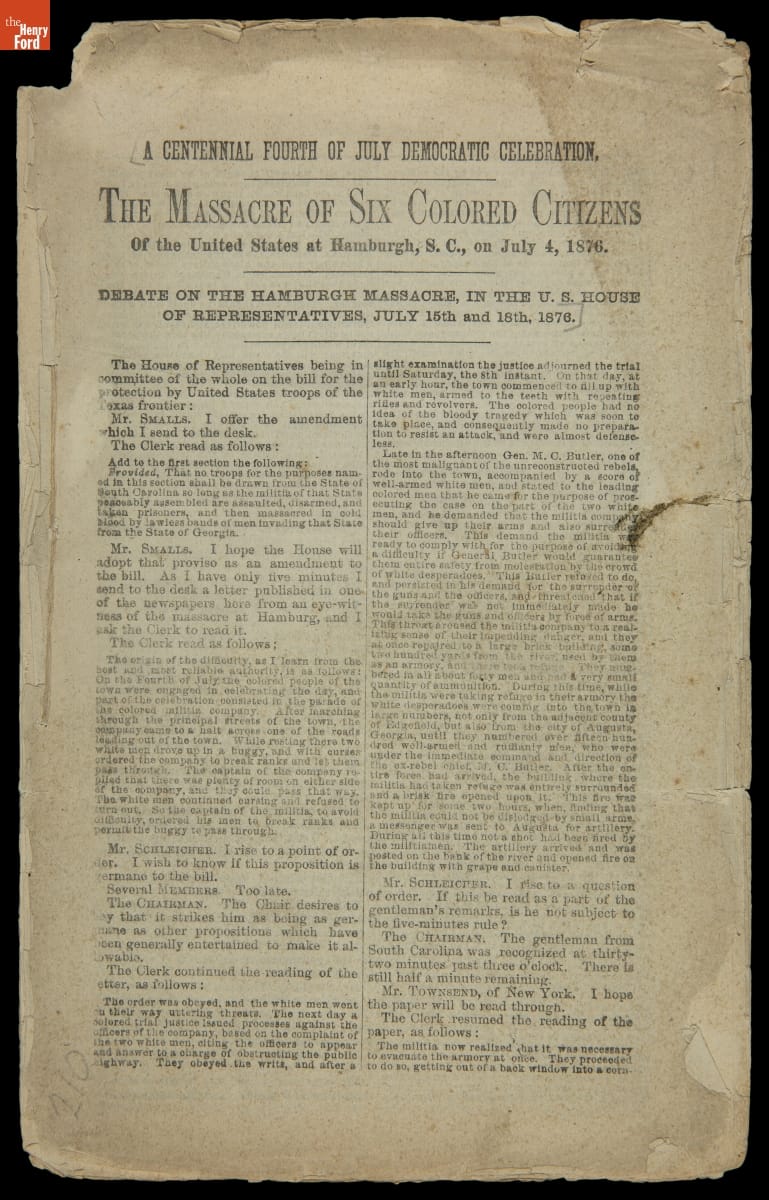
- July 04, 1876
- Collections - Artifact
"A Centennial Fourth of July Democratic Celebration," and United States Congress Debate on the Hamburgh Massacre, 1876
- Letter from John Trumbull to Thomas Claxton, February 3, 1821 - After completing his painting <EM>Declaration of Independence</EM>, John Trumbull authorized engraving plates made to create prints of this work. Trumbull sent an early proof to Thomas Claxton, Doorkeeper of the House of Representatives, who was to place the print in the Capitol Post Office so Congressmen and other officials could view it. Trumbull promised Claxton a commission on any sales of the print.
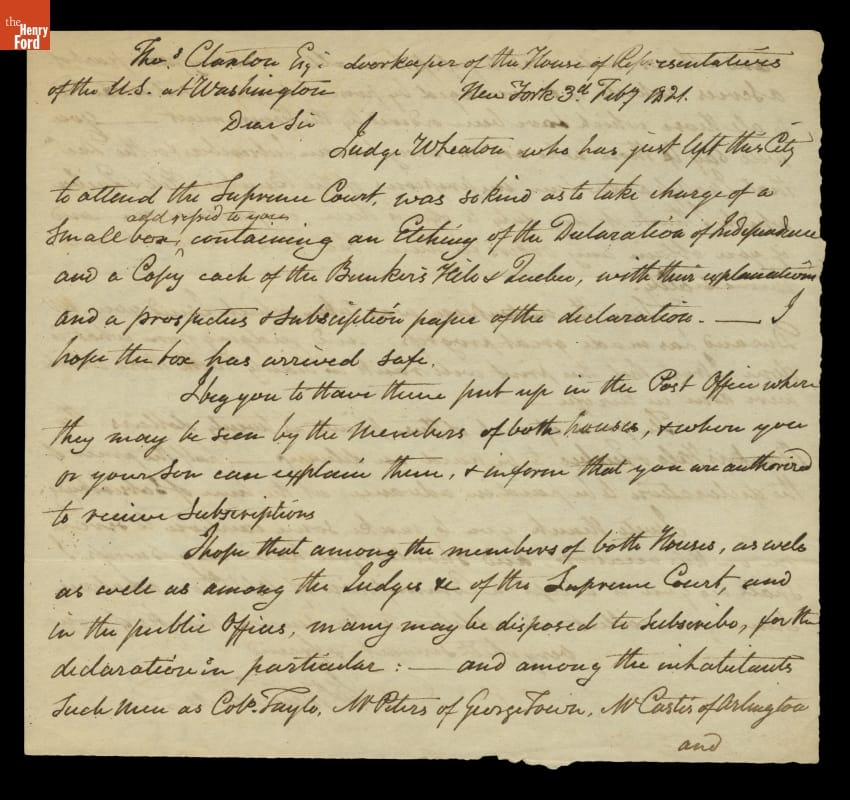
- February 03, 1821
- Collections - Artifact
Letter from John Trumbull to Thomas Claxton, February 3, 1821
After completing his painting Declaration of Independence, John Trumbull authorized engraving plates made to create prints of this work. Trumbull sent an early proof to Thomas Claxton, Doorkeeper of the House of Representatives, who was to place the print in the Capitol Post Office so Congressmen and other officials could view it. Trumbull promised Claxton a commission on any sales of the print.
- Desk Used in the United States House of Representatives, 1857-1873 - This desk and its companion chair (68.127.1) were designed by architect Thomas U. Walter for the United States House of Representatives Chamber in 1857, as part of an expansion of the Capitol. The pieces look impressive--but members of the House complained that they were too cumbersome. Within two years, many of the chairs were sold; by 1873 all of the pieces were removed.
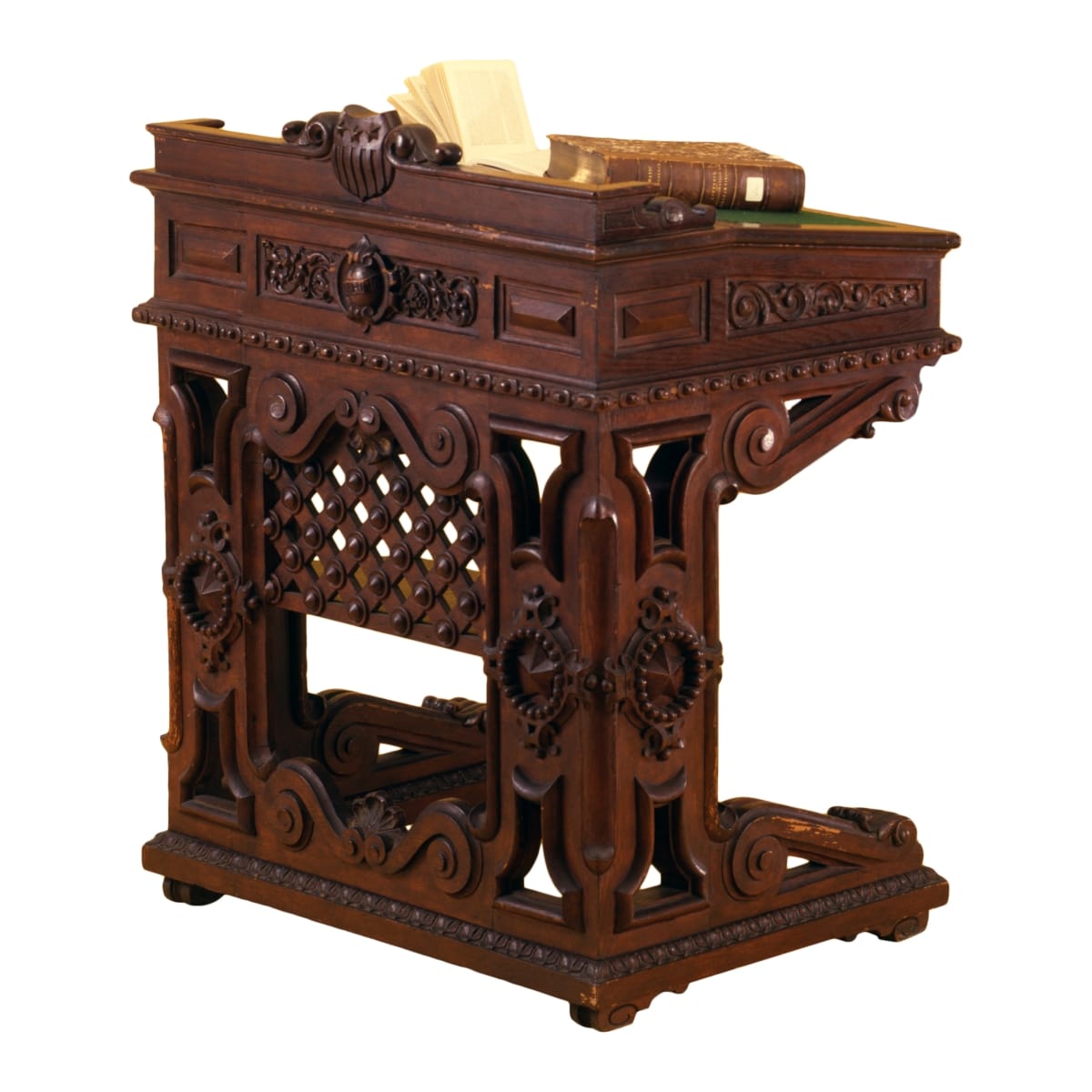
- 1857
- Collections - Artifact
Desk Used in the United States House of Representatives, 1857-1873
This desk and its companion chair (68.127.1) were designed by architect Thomas U. Walter for the United States House of Representatives Chamber in 1857, as part of an expansion of the Capitol. The pieces look impressive--but members of the House complained that they were too cumbersome. Within two years, many of the chairs were sold; by 1873 all of the pieces were removed.
- "Report of the Secretary of the Treasury of the United States on the Subject of Manufactures," 1791 -

- December 05, 1791
- Collections - Artifact
"Report of the Secretary of the Treasury of the United States on the Subject of Manufactures," 1791
- "End Witch Hunts, Abolish HUAC," circa 1960 - These poster stamps -- small postage stamp-sized labels -- called for the abolition of the House Un-American Activities Committee (HUAC). From 1938 to 1975, the committee was responsible for investigating alleged subversive activities by communists and fascists. The HUAC's tactics were often associated with political repression and unjust persecution, in what many called witch hunts reminiscent of the Salem Witch Trials.
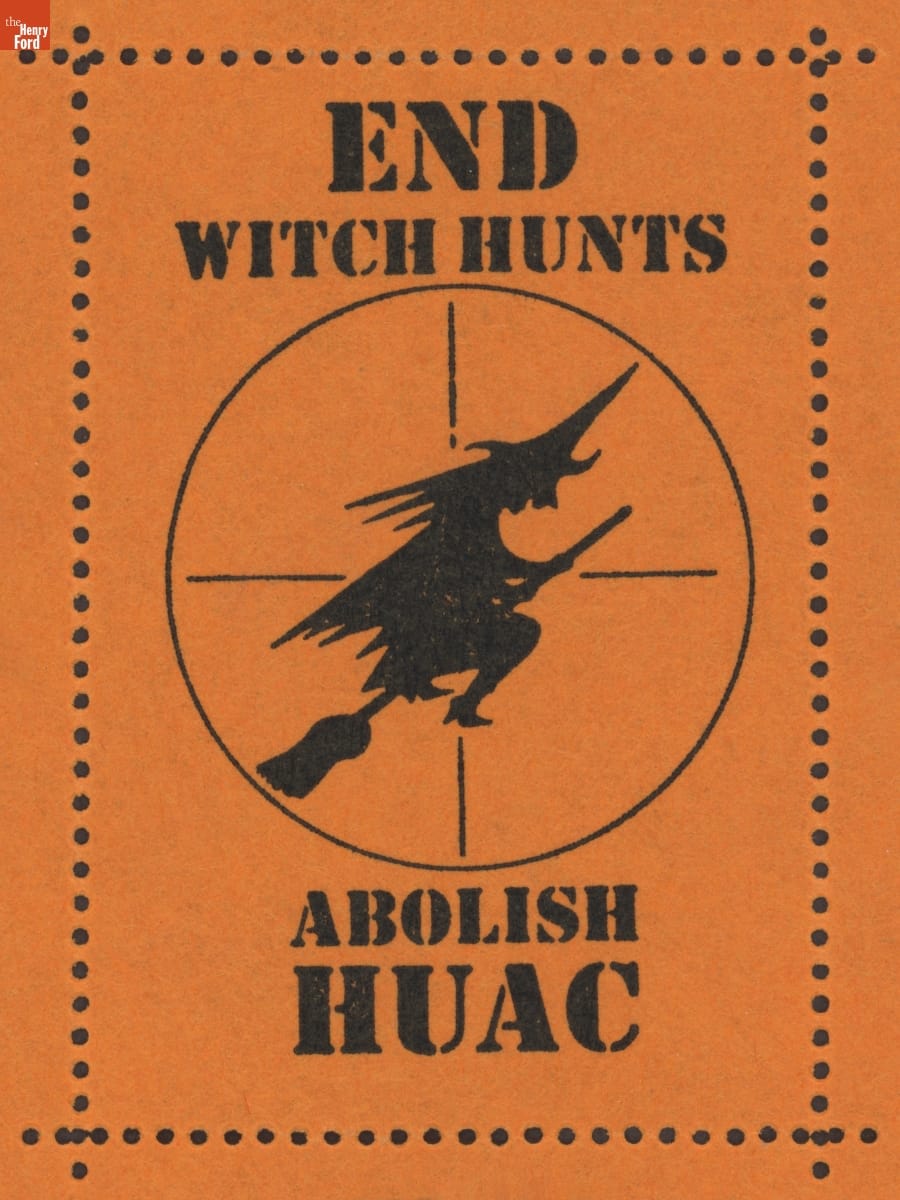
- circa 1960
- Collections - Artifact
"End Witch Hunts, Abolish HUAC," circa 1960
These poster stamps -- small postage stamp-sized labels -- called for the abolition of the House Un-American Activities Committee (HUAC). From 1938 to 1975, the committee was responsible for investigating alleged subversive activities by communists and fascists. The HUAC's tactics were often associated with political repression and unjust persecution, in what many called witch hunts reminiscent of the Salem Witch Trials.
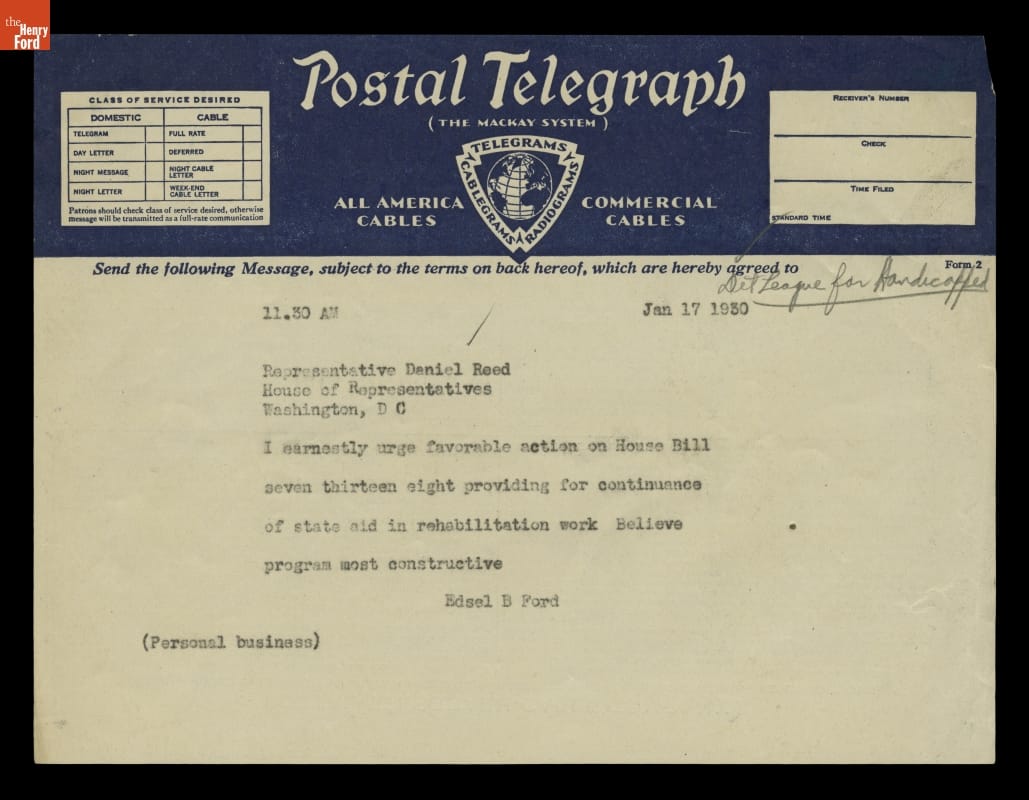
- Telegram from Edsel Ford to Representative Daniel Reed Supporting U. S. House Bill 7138, January 17, 1930 -
- January 17, 1930
- Collections - Artifact
Telegram from Edsel Ford to Representative Daniel Reed Supporting U. S. House Bill 7138, January 17, 1930