
Search
- Meeting Minutes from the Dearborn Township Branch of the Equal Suffrage League of Wayne County, July 11, 1918 - Suffragists in the early 20th century joined local suffrage leagues and associations to advocate for women's right to vote. In July 1918, the Dearborn (Michigan) chapter of the Equal Suffrage League of Wayne County met to learn about organizing efforts and elect officials. Michigan suffragists worked tirelessly over the next few months to pass a state suffrage amendment.
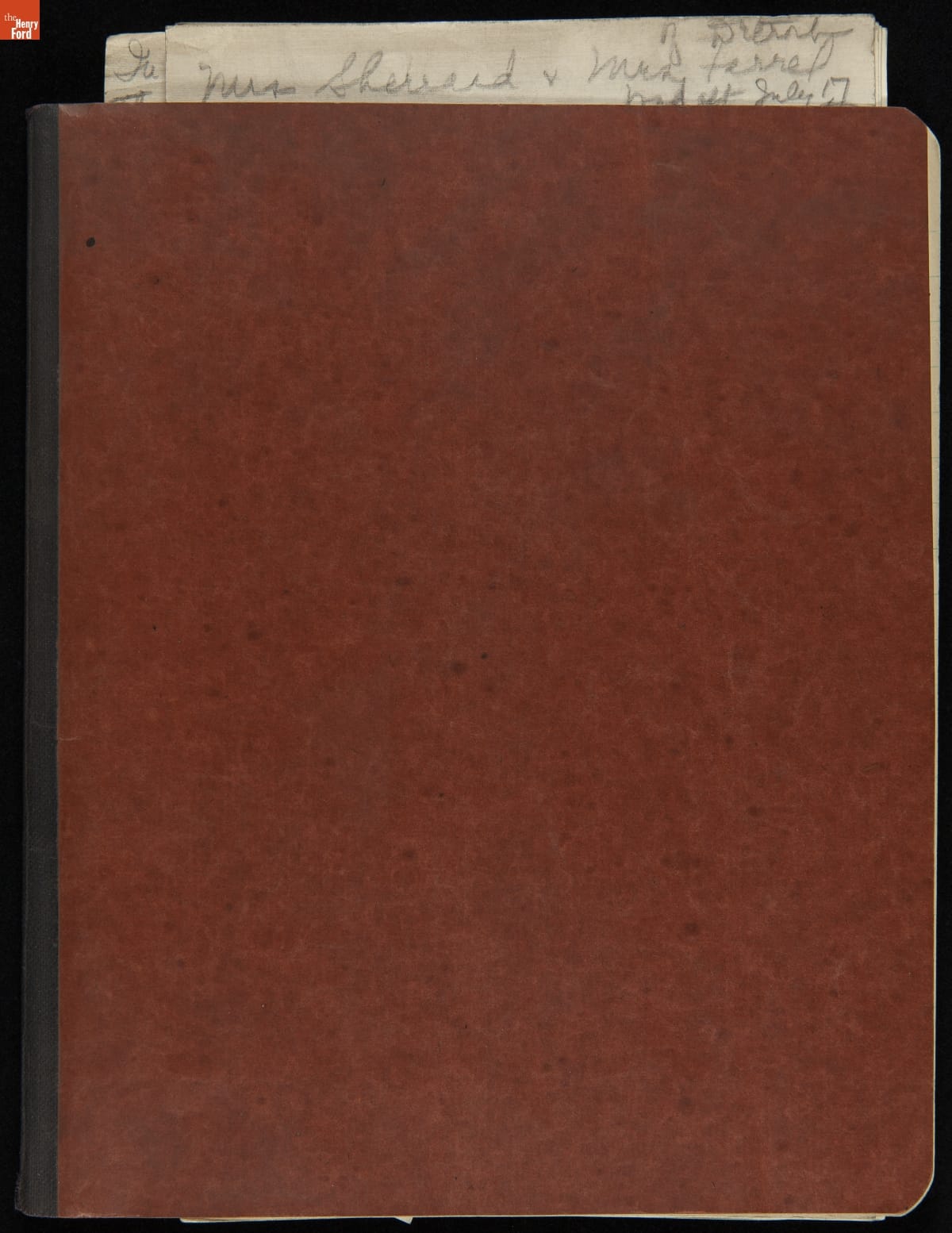
- July 11, 1918
- Collections - Artifact
Meeting Minutes from the Dearborn Township Branch of the Equal Suffrage League of Wayne County, July 11, 1918
Suffragists in the early 20th century joined local suffrage leagues and associations to advocate for women's right to vote. In July 1918, the Dearborn (Michigan) chapter of the Equal Suffrage League of Wayne County met to learn about organizing efforts and elect officials. Michigan suffragists worked tirelessly over the next few months to pass a state suffrage amendment.
- "Motor" Magazine, Bound Volume for January-September 1919 -
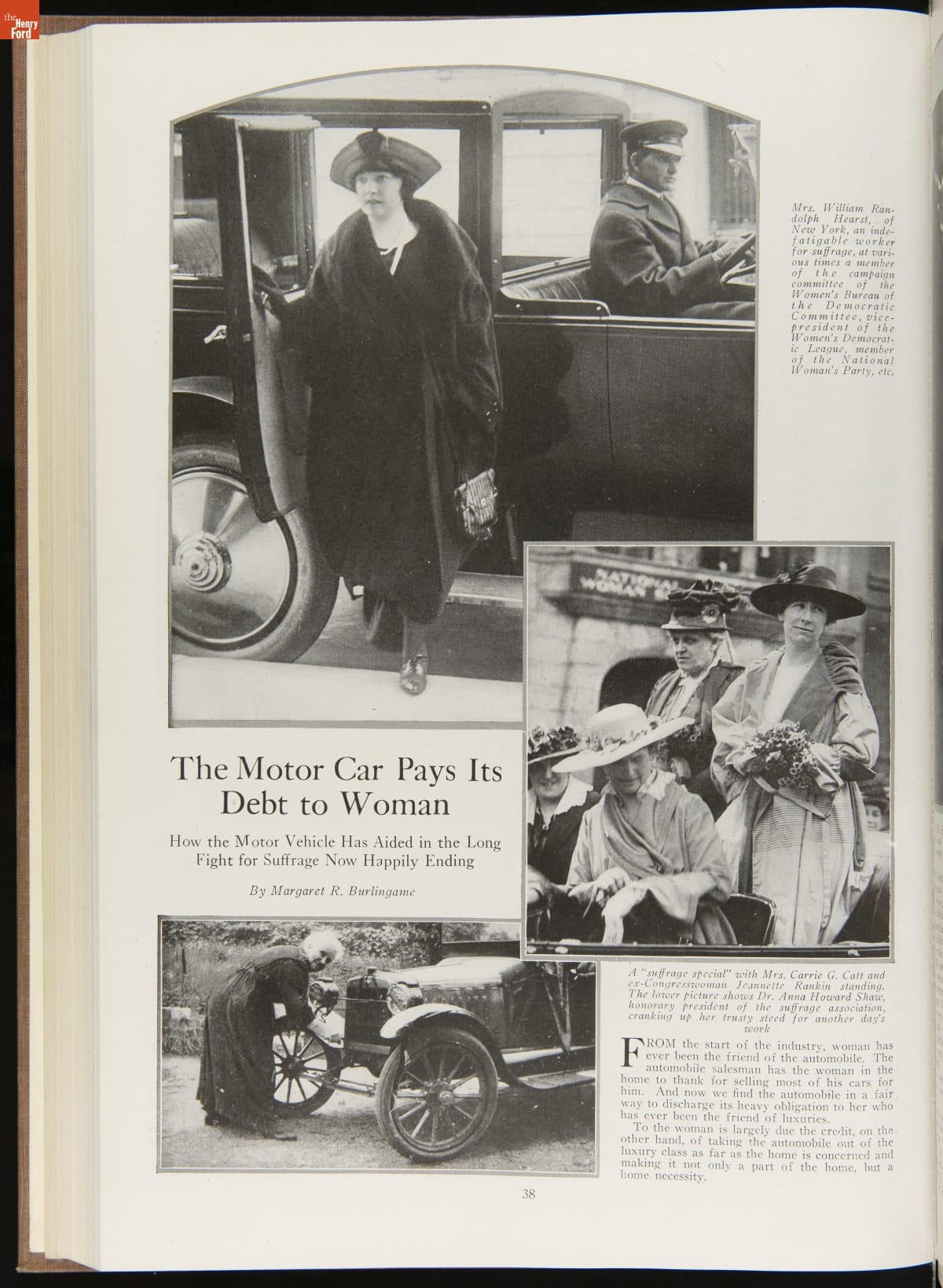
- January 1919-September 1919
- Collections - Artifact
"Motor" Magazine, Bound Volume for January-September 1919
- Olive Schultz at the Wheel of a Buick Automobile with Other Suffragists Prior to the New York to Washington, D.C. Suffrage Hike, 1913 - In 1913, National American Woman Suffrage Association (NAWSA) activist Rosalie Jones led a well-publicized hike from New York City to Washington, D.C. Jones's "army" of suffragists hiked more than 200 miles in 20 days, distributing literature and delivering speeches along the way. Olive Schultz piloted the group's scout vehicle. Reaching Washington on March 3, the hikers joined thousands of demonstrators in a NAWSA-organized suffrage procession.
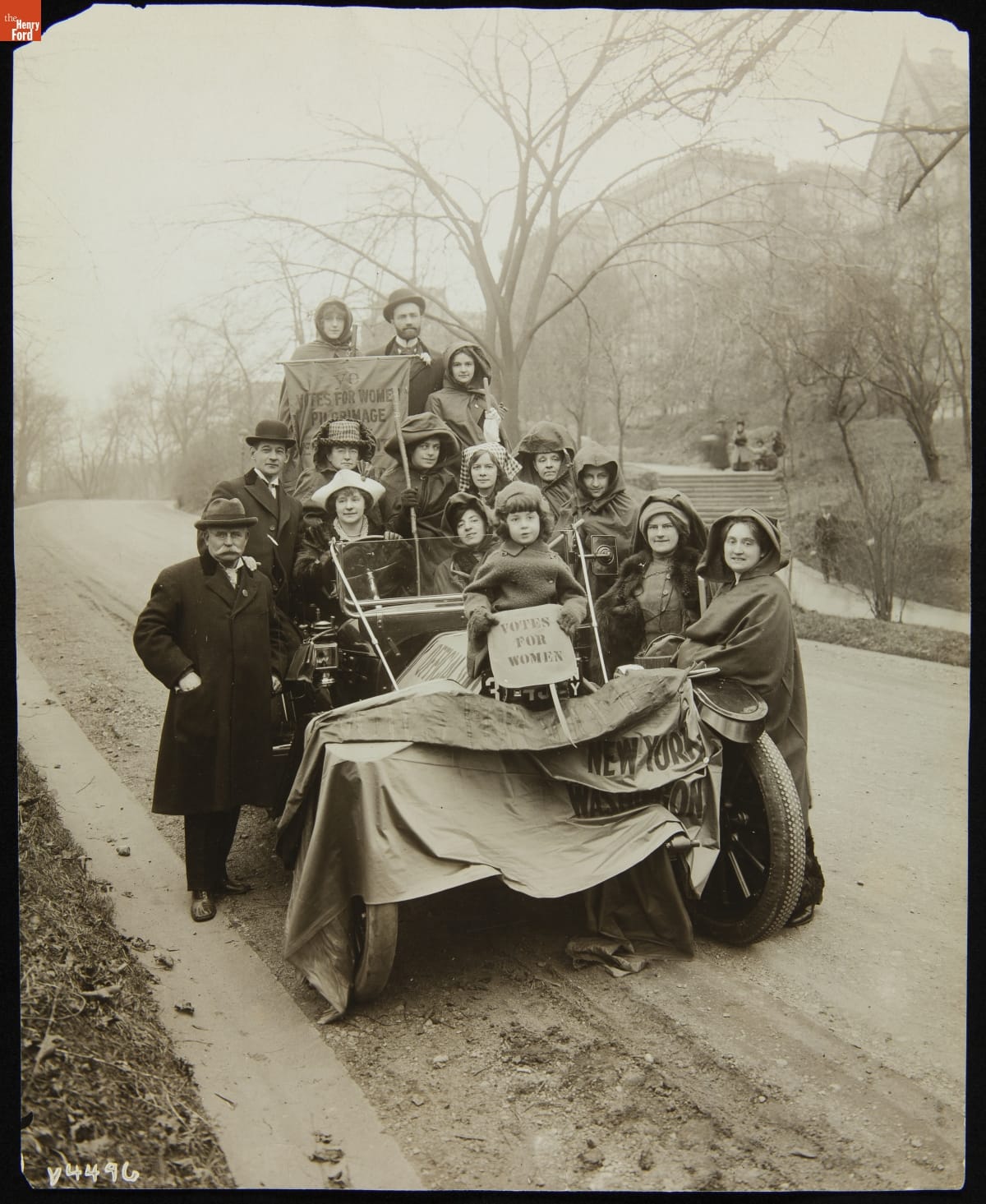
- 1913
- Collections - Artifact
Olive Schultz at the Wheel of a Buick Automobile with Other Suffragists Prior to the New York to Washington, D.C. Suffrage Hike, 1913
In 1913, National American Woman Suffrage Association (NAWSA) activist Rosalie Jones led a well-publicized hike from New York City to Washington, D.C. Jones's "army" of suffragists hiked more than 200 miles in 20 days, distributing literature and delivering speeches along the way. Olive Schultz piloted the group's scout vehicle. Reaching Washington on March 3, the hikers joined thousands of demonstrators in a NAWSA-organized suffrage procession.
- Postcard for Maryland Association Opposed to Woman Suffrage, "I Do Not Believe in Woman Suffrage," 1919-1920 - During the struggle for women's voting rights in the early 20th century, many men and some women strongly opposed the notion of women voting. These "anti-suffragists" argued that women were both physically and emotionally incapable of dealing with the strains of politics. This membership postcard for the Maryland Association Opposed to Woman Suffrage supported these assessments.
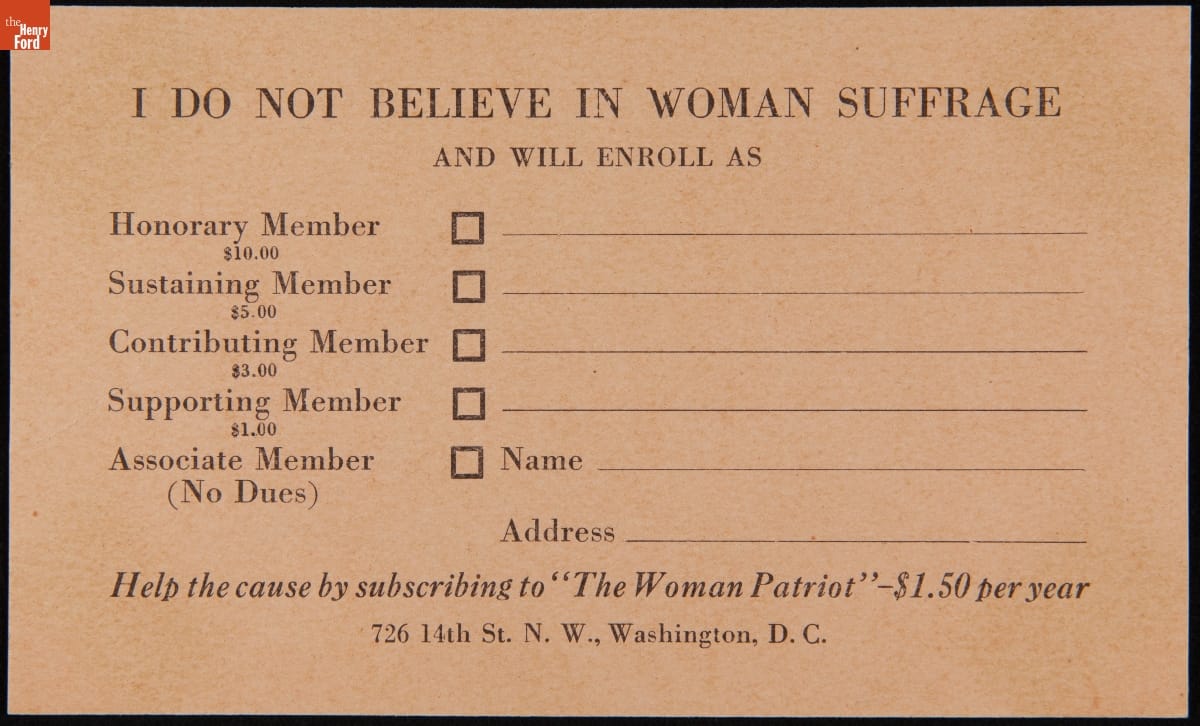
- 1919-1920
- Collections - Artifact
Postcard for Maryland Association Opposed to Woman Suffrage, "I Do Not Believe in Woman Suffrage," 1919-1920
During the struggle for women's voting rights in the early 20th century, many men and some women strongly opposed the notion of women voting. These "anti-suffragists" argued that women were both physically and emotionally incapable of dealing with the strains of politics. This membership postcard for the Maryland Association Opposed to Woman Suffrage supported these assessments.
- "We Do as Much, We Eat as Much, We Want as Much - Sojourner Truth," Voting Rights Poster, 2020 - Established in 1879 in Nashville, Hatch Show Print is the oldest working letterpress shop in the United States. They produced thousands of posters for the Grand Ole Opry, Ryman Auditorium, and other entertainment venues, nation-wide. Hatch's aesthetic is defined by its massive library of vintage wood type and hand-carved images. This poster was created in 2020 to support voting rights.
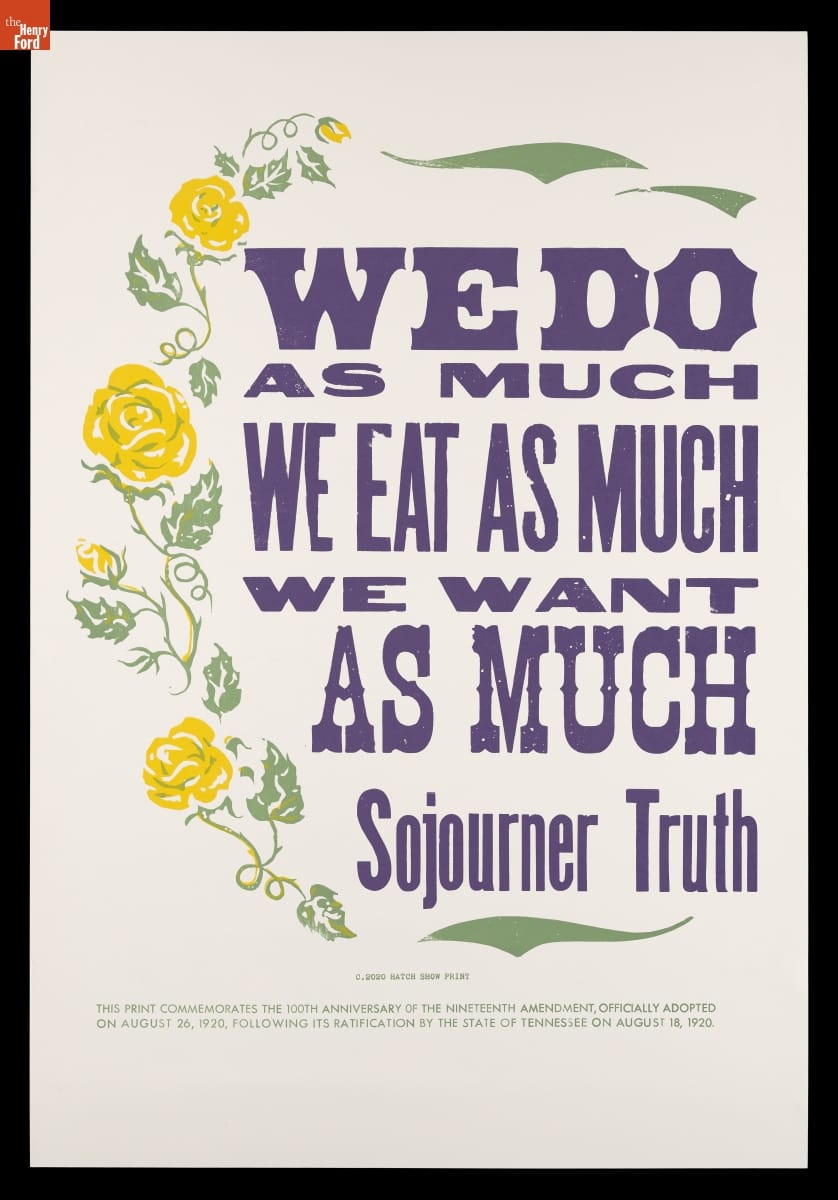
- 2020
- Collections - Artifact
"We Do as Much, We Eat as Much, We Want as Much - Sojourner Truth," Voting Rights Poster, 2020
Established in 1879 in Nashville, Hatch Show Print is the oldest working letterpress shop in the United States. They produced thousands of posters for the Grand Ole Opry, Ryman Auditorium, and other entertainment venues, nation-wide. Hatch's aesthetic is defined by its massive library of vintage wood type and hand-carved images. This poster was created in 2020 to support voting rights.
- The A-B-C of Voting, July 1932 - Arkansas ratified the 19th Amendment -- granting women the right to vote -- in 1919. More than a decade later, the Arkansas Federation of Women's Clubs -- hoping to increase voter participation -- published a pamphlet (reprinted in <em>The Homemaker</em> magazine) that provided women in Arkansas with the "fundamentals of voting." It explained who could vote and how to navigate the state's residency and poll tax requirements.
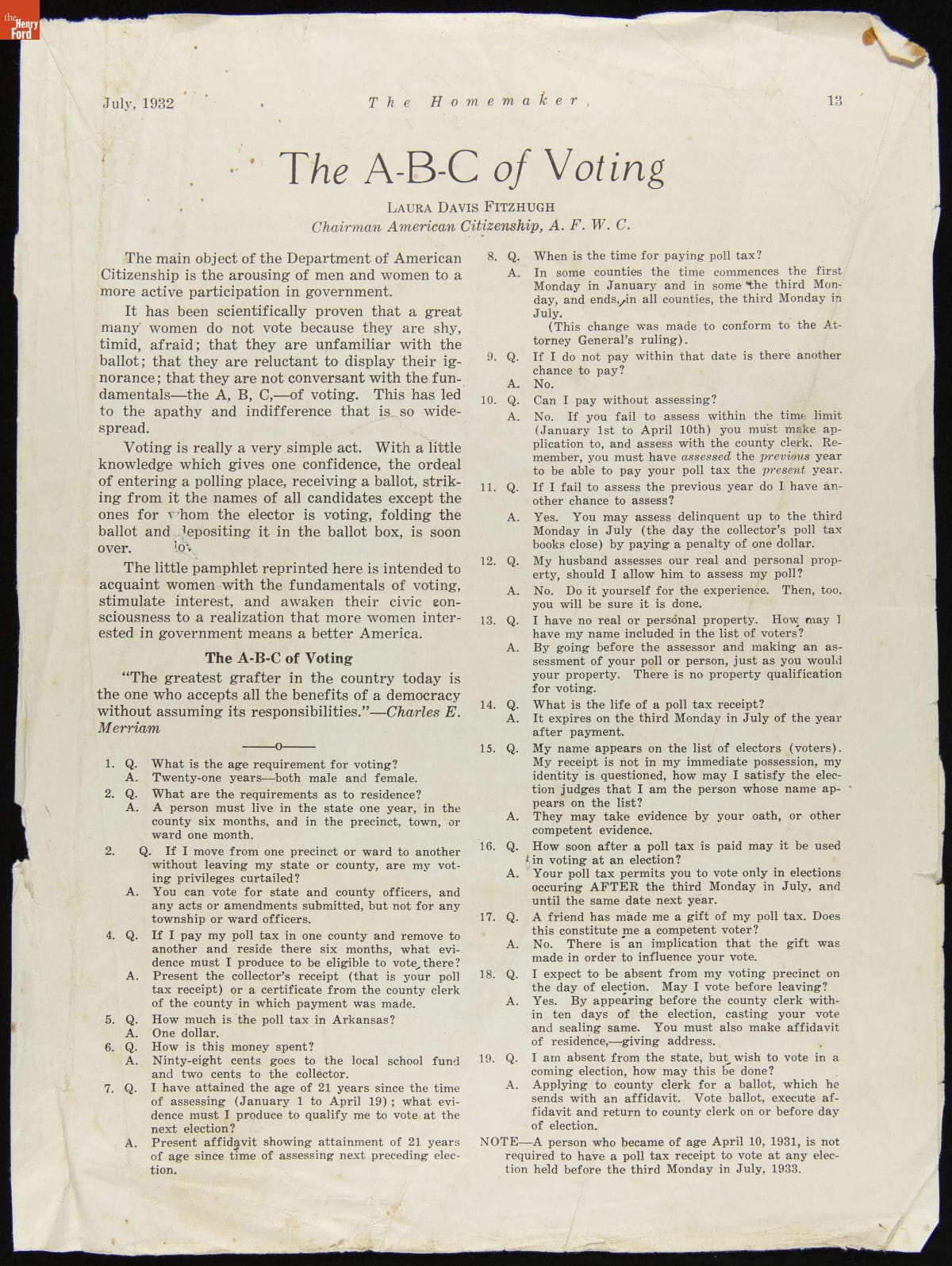
- July 01, 1932
- Collections - Artifact
The A-B-C of Voting, July 1932
Arkansas ratified the 19th Amendment -- granting women the right to vote -- in 1919. More than a decade later, the Arkansas Federation of Women's Clubs -- hoping to increase voter participation -- published a pamphlet (reprinted in The Homemaker magazine) that provided women in Arkansas with the "fundamentals of voting." It explained who could vote and how to navigate the state's residency and poll tax requirements.
- Poster, "Someone Struggled for Your Right to Vote. Use It. - Susan B. Anthony," 2020 - Established in 1879 in Nashville, Hatch Show Print is the oldest working letterpress shop in the United States. They produced thousands of posters for the Grand Ole Opry, Ryman Auditorium, and other entertainment venues, nation-wide. Hatch's aesthetic is defined by its massive library of vintage wood type and hand-carved images. This poster was created in 2020 to support voting rights.
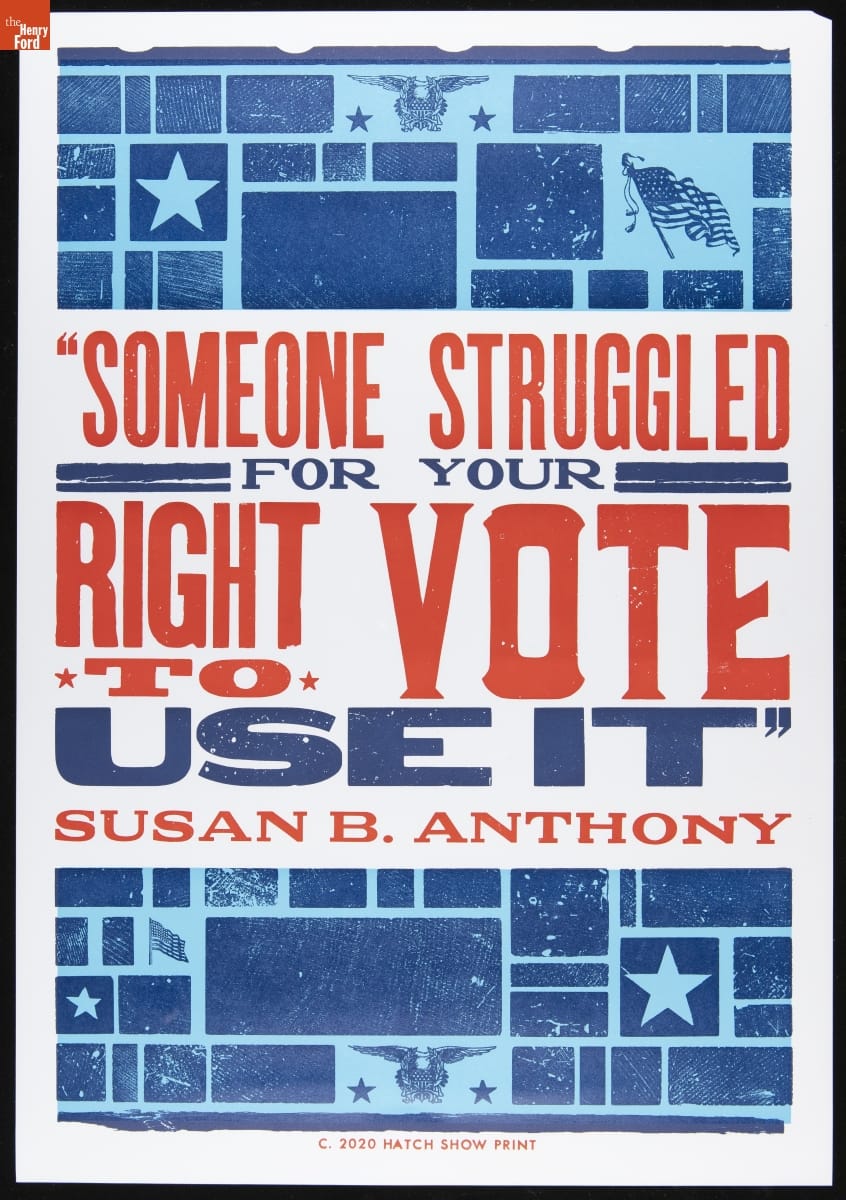
- 2020
- Collections - Artifact
Poster, "Someone Struggled for Your Right to Vote. Use It. - Susan B. Anthony," 2020
Established in 1879 in Nashville, Hatch Show Print is the oldest working letterpress shop in the United States. They produced thousands of posters for the Grand Ole Opry, Ryman Auditorium, and other entertainment venues, nation-wide. Hatch's aesthetic is defined by its massive library of vintage wood type and hand-carved images. This poster was created in 2020 to support voting rights.
- Some "Kernel" Arguments Opposed to Woman's Suffrage, 1913-1918 - During the struggle for women's voting rights in the early 20th century, many men and some women strongly opposed the notion of women voting. These "anti-suffragists" argued that women were both physically and emotionally incapable of dealing with the strains of politics. This pamphlet, issued by the Michigan Association Opposed to Woman Suffrage, lays out that organization's argument against the right of women to vote.
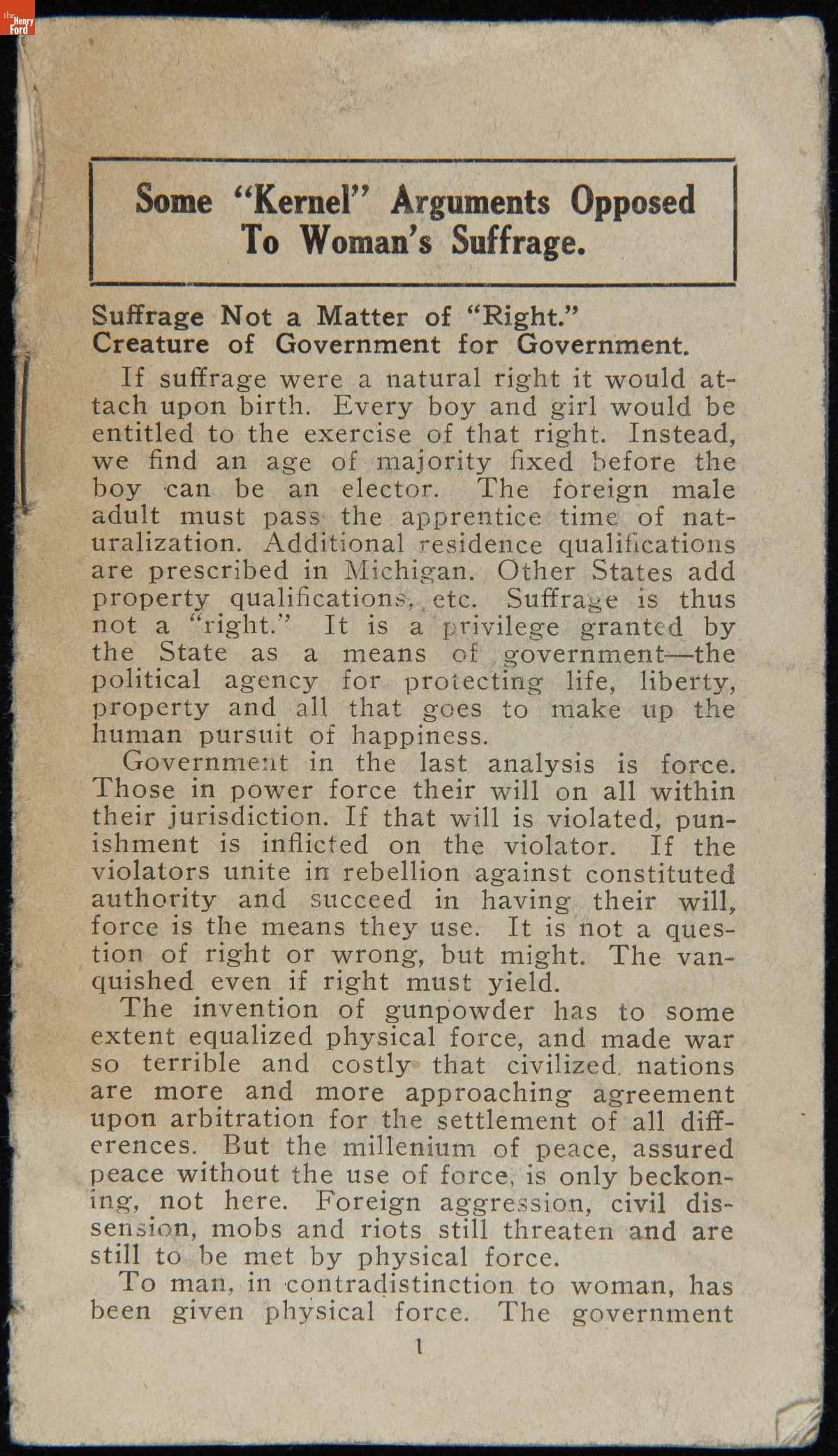
- 1913-1918
- Collections - Artifact
Some "Kernel" Arguments Opposed to Woman's Suffrage, 1913-1918
During the struggle for women's voting rights in the early 20th century, many men and some women strongly opposed the notion of women voting. These "anti-suffragists" argued that women were both physically and emotionally incapable of dealing with the strains of politics. This pamphlet, issued by the Michigan Association Opposed to Woman Suffrage, lays out that organization's argument against the right of women to vote.
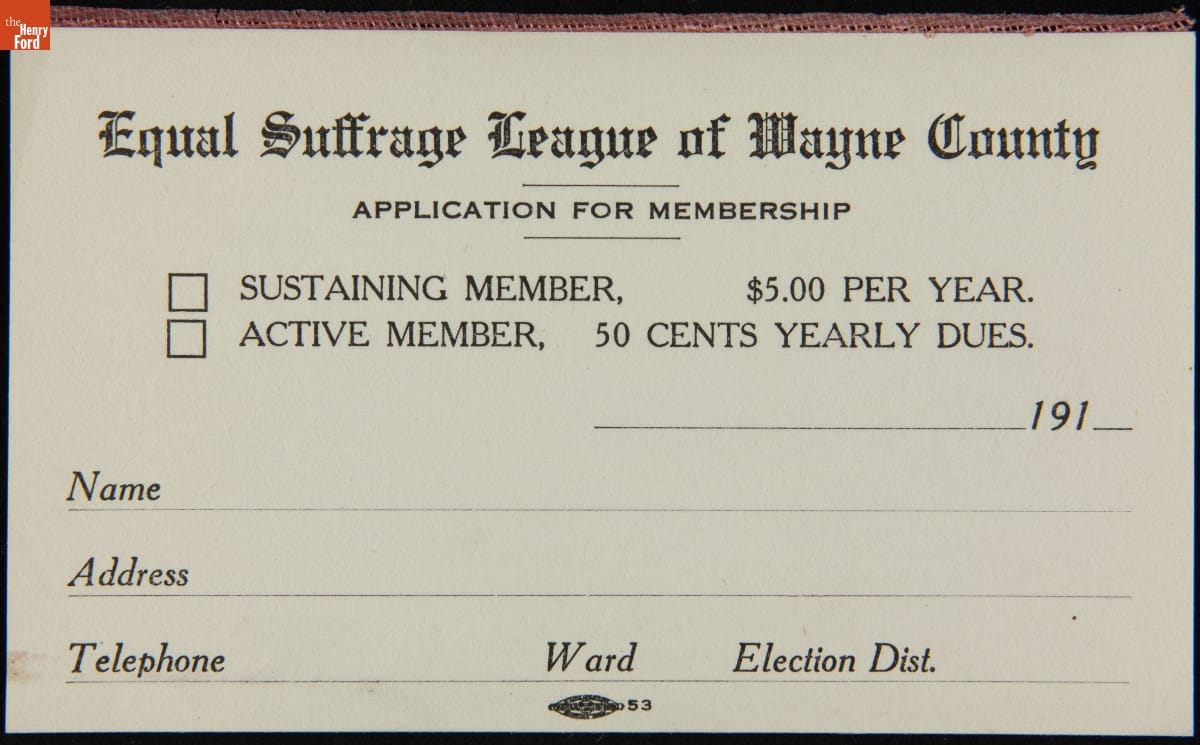
- Application for Membership to the Equal Suffrage League of Wayne County, circa 1918 - Suffragists in the early 20th century organized local suffrage leagues and associations to advocate for women's right to vote. In Michigan, members worked tirelessly to pass a state suffrage amendment. Elections in 1918 finally proved fruitful, and when a national amendment was put forward less than a year later, Michigan was one of the first states to approve it.
- circa 1918
- Collections - Artifact
Application for Membership to the Equal Suffrage League of Wayne County, circa 1918
Suffragists in the early 20th century organized local suffrage leagues and associations to advocate for women's right to vote. In Michigan, members worked tirelessly to pass a state suffrage amendment. Elections in 1918 finally proved fruitful, and when a national amendment was put forward less than a year later, Michigan was one of the first states to approve it.